Toxicology
Toxicology standards are used to study the harmful effects of substances on biological systems. These standards are essential in evaluating the safety and toxicity of drugs, chemicals, and environmental agents. CymitQuimica provides a wide selection of toxicology standards, enabling researchers to assess the potential risks associated with exposure to various compounds.
Found 13652 products of "Toxicology"
Sort by
Purity (%)
0
100
|
0
|
50
|
90
|
95
|
100
3β-Cholic Acid
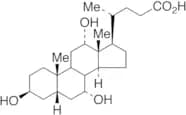
CAS:Controlled Product<p>Applications Possible Progesterone metabolite.<br>References Meng, L., et al.: J. Hepatol., 27, 346 (1997), Ho, C., et al.: Biochem., 45, 5695 (2006),<br></p>Formula:C24H40O5Color and Shape:White To Off-WhiteMolecular weight:408.57Nizatidine-d3
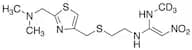
CAS:Controlled Product<p>Applications Labelled Nizatidine. Histamine H2-receptor antagonist related to Ranitidine (R120000). Antiulcerative.<br>References Callaghan, J.T., et al.: Clin. Pharmacol. Ther., 37, 162 (1985), Secor, J.W., et al.: Br. J. Clin. Pharmacol., 20, 710 (1985), Knadler, M.P., et al.: Drug Metab. Dispos., 14, 175 (1986), Wozniak, T.J., et al.: Anal. Profiles Drug Subs., 19, 397(1990)<br></p>Formula:C12D3H18N5O2S2Color and Shape:Light Yellow SolidMolecular weight:334.48Jasmonic Acid-d5 (Mixture of Diastereomers, (-)-trans major)
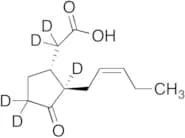
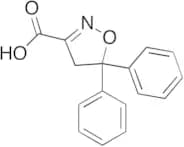
CAS:Controlled ProductFormula:C12D5H13O3Color and Shape:NeatMolecular weight:215.30Isocarboxazid
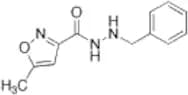
CAS:Controlled Product<p>Applications Monoamine oxidase inhibitor. Antidepressant.<br> Not a dangerous good if item is equal to or less than 1g/ml and there is less than 100g/ml in the package<br>References Rudy, B.C., et al.: Anal. Profiles Drug Subs., 2, 295 (1973),<br></p>Formula:C12H13N3O2Color and Shape:NeatMolecular weight:231.25Tianeptine Sodium Salt
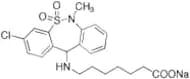
CAS:<p>Applications Tianeptine Sodium Salt is a tricyclic compound with psychostimulant, anti-ulcer and anti-emetic properties. Antidepressant.<br>References Malen, C., et al.: Experientia, 28, 811 (1972),<br></p>Formula:C21H24ClN2O4S·NaColor and Shape:Off-WhiteMolecular weight:458.93Monocarboxyisodecyl Phthalate-d4
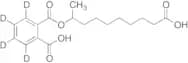
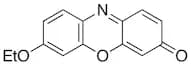
CAS:Controlled ProductFormula:C18H20D4O6Color and Shape:Off-WhiteMolecular weight:340.47-Ethoxy Resorufin
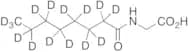
CAS:Controlled Product<p>Applications A fluorimetric substrate for cytochrome P450 IAI. Inhibits vasorelaxant responses to acetylcholine.<br>References Donato, M.T., et al.: Anal. Biochem., 213, 29 (1993), Oyekan, A.O., et al.: J. Pharmacol. Exp. Ther., 268, 262 (1994)<br></p>Formula:C14H11NO3Color and Shape:Orange To Dark RedMolecular weight:241.24N-Octanoyl-d15-glycine
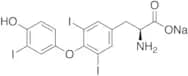
CAS:Controlled Product<p>Applications N-Octanoyl-d15-glycine is labelled N-Octanoylglycine (O239735) which is a derivative of Glycine (G615990) and is an amphiphilic lipoamino acid commonly used in cosmetics for its antibacterial properties. N-Octanoylglycine is the active ingredient in products designed to treat seborrheic dermatitis on the scalp and acne prone skin.<br>References Georgalas, A.: Cosmet. Toiletries, 127, 96 (2012); Nakamura, S.: Frag. J., 39, 36 (2011)<br></p>Formula:C10D15H4NO3Color and Shape:NeatMolecular weight:216.363,3’,5-Triiodo-L-thyronine Sodium Salt
CAS:Controlled ProductFormula:C15H11I3NO4·NaColor and Shape:Grey To PurpleMolecular weight:672.96Methoxyphenone
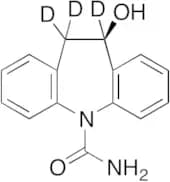
CAS:Controlled Product<p>Applications Methoxyphenone is a pesticidal compound, and it is used in preparation of Nitrones as herbicides.<br>References Campbell, Matthew J., et al:. PCT Int. Appl., (2018); Garizi, N., et al:.U.S. Pat. Appl. Publ., (2014);<br></p>Formula:C16H16O2Color and Shape:ColourlessMolecular weight:240.30(R)-10-Monohydroxy-10,11-dihydro Carbamazepine-d3
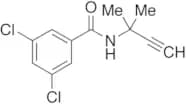
CAS:Controlled Product<p>Applications (R)-10-Monohydroxy-10,11-dihydro Carbamazepine-d3 is labelled (R)-10-Monohydroxy-10,11-dihydro Carbamazepine which is the metabolite of Oxcarbazepine (OXC) and Eslicarbazepine acetate, (BIA 2-093, ESL), novel central nervous system drugs.<br>References Duncan, J., et al.: Br. J. Clin. Pharmacol., 53, 123 (2002), Almeida, L., et al.: J. Clin. Pharmacol., 45, 1062 (2005), Coppola, G., et al.: CNS Drugs, 18, 133 (2004),<br></p>Formula:C15H11D3N2O2Color and Shape:White To Off-WhiteMolecular weight:257.3Propyzamide
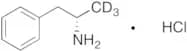
CAS:Controlled Product<p>Applications Selective pre-emergence herbicide.<br> Not a dangerous good if item is equal to or less than 1g/ml and there is less than 100g/ml in the package<br>References Viste, K.L., et al.: Science, 167, 280 (1970), Yoshii, K., et al.: J. Agric. Food Chem., 48, 2502 (2000), Paya, P., et al.: Anal. Bioanal. Chem., 389, 1697 (2007),<br></p>Formula:C12H11Cl2NOColor and Shape:WhiteMolecular weight:256.13Dexamfetamine-d3 Hydrochloride
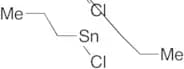
CAS:Controlled Product<p>Applications Labelled (S)-Amphetamine. CNS stimulant; anorexic. More active isomer of Amphetamine. Induces release of catecholamines and serotonin by displacing the monoamines from their vesicular storage sites; blocks catecholamine reuptake.Controlled substance (stimulant).<br> Not a dangerous good if item is equal to or less than 1g/ml and there is less than 100g/ml in the package<br>References Warren, M.R., et al.: J. Pharmacol. Exp. Ther., 85, 119 (1945), Behrendt, W.A, et al.: Arzneim.-Forsch., 13, 711 (1963), Seiden, L.S., Annu. Rev. Pharmacol. Toxicol., 32, 639 (1993),<br></p>Formula:C9H11D3ClNColor and Shape:NeatMolecular weight:174.69Dichlorodipropyltin
CAS:<p>Applications Dichlorodipropyltin is a diorganotin dihalide which has broad applications in both laboratory and industry. The Dichlorodipropyltin class of compounds can be used as a poly(vinyl chloride) stabilizers, fungicides and insecticides.<br> Not a dangerous good if item is equal to or less than 1g/ml and there is less than 100g/ml in the package<br>References Chandrasekaran, R.K. et al.: J. Organometallic Chem. 3, 215 (1981);<br></p>Formula:C6H14Cl2SnColor and Shape:WhiteMolecular weight:275.79Althiazide
CAS:<p>Applications Diuretic and antihypertensive.<br>References Twagirumukiza, M., et al.: Trop. Med. Int. Health, 15, 350 (2010), Gohil, V., et al.: Nat. Biotechnol., 28, 249 (2010), Peters, R., et al.: Anal. Bioanal. Chem., 396, 2583 (2010),<br></p>Formula:C11H14ClN3O4S3Color and Shape:NeatMolecular weight:383.89Pentachlorophenol Sodium Salt
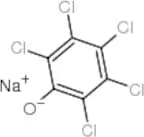
CAS:Controlled Product<p>Applications Pentachlorophenol Sodium Salt can be used in biological study of evaluation of interaction between pesticides and a cell membrane model by surface plasmon resonance spectroscopy analysis. One of the new POPs under the Stockholm Convention.<br> Not a dangerous good if item is equal to or less than 1g/ml and there is less than 100g/ml in the package<br>References Moriwaki, H., et al.: J Agr Food Chem, 65, 5390 (2017)<br></p>Formula:C6Cl5O·NaColor and Shape:Off-White To Light PurpleMolecular weight:288.32