Biochemicals and Reagents
Subcategories of "Biochemicals and Reagents"
- Biomolecules(98,572 products)
- By Biological Target(100,755 products)
- By Pharmacological Effects(6,938 products)
- Cryopreservatives(21 products)
- Desinfectants and Related Compounds(28 products)
- Hormones(467 products)
- Plant Biology(6,906 products)
- Secondary Metabolites(14,368 products)
Found 130507 products of "Biochemicals and Reagents"
BRUNOL6 Blocking Peptide
A synthetic peptide for use as a blocking control in assays to test for specificity of BRUNOL6 antibody, catalog no. 70R-4726Purity:Min. 95%Influenza A antibody (H3N2) (HRP)
Influenza A antibody (H3N2) (HRP) was raised in goat using Influenza A, strain Texas 1/77 (H3N2) as the immunogen.BHMT antibody
BHMT antibody was raised using the N terminal of BHMT corresponding to a region with amino acids AVEHPEAVRQLHREFLRAGSNVMQTFTFYASEDKLENRGNYVLEKISGQE
LYN antibody
LYN antibody was raised in Mouse using a purified recombinant fragment of LYN expressed in E. coli as the immunogen.PDK1 antibody
The 6-Fluoro-3-indoxyl-beta-D-galactopyranoside is a powerful antituberculosis drug that falls under the class of rifamycins. It is highly effective in treating tuberculosis infections due to its bactericidal activity. This active compound works by binding to DNA-dependent RNA polymerase, preventing transcription and replication of bacteria. Its efficacy has been proven through extensive research using the patch-clamp technique on human erythrocytes. The drug undergoes various metabolic transformations, including hydrolysis by esterases or glucuronidases, oxidation by cytochrome P450 enzymes, reduction by glutathione reductase, or conjugation with glucuronic acid. Additionally, it specifically targets markers expressed in Mycobacterium tuberculosis strains and inhibits their growth in culture.Purity:Min. 95%GSTK1 antibody
GSTK1 antibody was raised using the middle region of GSTK1 corresponding to a region with amino acids NLEHPEMLEKASRELWMRVWSRNEDITEPQSILAAAEKAGMSAEQAQGLLCD61 antibody
The CD61 antibody is a highly specialized antibody-drug that belongs to the class of antibodies known as polyclonal antibodies. It is specifically designed to target a specific antigen, known as CD61, which plays a crucial role in various biological processes including chemokine signaling and immune response. This antibody is widely used in research and diagnostic applications such as immunohistochemistry and flow cytometry.
SLC7A11 Blocking Peptide
A synthetic peptide for use as a blocking control in assays to test for specificity of SLC7A11 antibody, catalog no. 70R-6800Purity:Min. 95%SH3BGRL antibody
SH3BGRL antibody was raised using the middle region of SH3BGRL corresponding to a region with amino acids PQIFNESQYRGDYDAFFEARENNAVYAFLGLTAPPGSKEAEVQAKQQAMyc antibody
The Myc antibody is a polyclonal antibody that specifically targets the epidermal growth factor receptor (EGFR). It is commonly used in life sciences research for applications such as immunoassays, immunohistochemistry, and western blotting. This antibody has high affinity and specificity for EGFR, making it an ideal tool for studying the role of this receptor in various biological processes.Purity:Min. 95%EFCAB3 antibody
EFCAB3 antibody was raised using the N terminal of EFCAB3 corresponding to a region with amino acids MAVSEIKPKLKLNPLTKVPISHNKRDRDLPGSLQCQLQHKEKKLSASQMAOBOX6 Blocking Peptide
A synthetic peptide for use as a blocking control in assays to test for specificity of OBOX6 antibody, catalog no. 20R-1165Purity:Min. 95%CES6 Blocking Peptide
A synthetic peptide for use as a blocking control in assays to test for specificity of CES6 antibody, catalog no. 20R-1163Purity:Min. 95%TARBP2 Blocking Peptide
A synthetic peptide for use as a blocking control in assays to test for specificity of TARBP2 antibody, catalog no. 70R-1374
Purity:Min. 95%TDG antibody
The TDG antibody is a highly specific monoclonal antibody that targets the glycan structures on glycoproteins. It is widely used in life sciences research to study the role of glycans in various biological processes. The TDG antibody can be used for applications such as lectin blotting, glycan profiling, and immunohistochemistry. This antibody recognizes a polymorphic epitope that is activated by fatty acid treatment, making it a valuable tool for studying changes in glycosylation patterns. Additionally, the TDG antibody has been shown to interact with epithelial cadherin, suggesting a potential role in cell adhesion and signaling pathways. With its high specificity and sensitivity, this monoclonal antibody is an essential tool for researchers studying glycan-related processes in human proteins.
Vitamin D antibody
The Vitamin D antibody is an essential tool for immunoassays in the field of Life Sciences. This antibody is specifically designed to bind to Vitamin D and its metabolites, allowing for accurate detection and measurement in various assays. The antibody is highly specific and can be used in a variety of applications, including ELISA, Western blotting, and immunohistochemistry.MLC1 Blocking Peptide
A synthetic peptide for use as a blocking control in assays to test for specificity of MLC1 antibody, catalog no. 70R-5137Purity:Min. 95%PLEKHB2 antibody
PLEKHB2 antibody was raised using a synthetic peptide corresponding to a region with amino acids AYGYGPYGGAYPPGTQVVYAANGQAYAVPYQYPYAGLYGQQPANQVIIRESTAU1 antibody
STAU1 antibody was raised using a synthetic peptide corresponding to a region with amino acids LSVGGQQFNGKGKTRQAAKHDAAAKALRILQNEPLPERLEVNGRESEEENRabbit anti Mouse Lambda Chain (biotin)
Rabbit anti-mouse lambda chain (biotin) was raised in rabbit using murine lambda light chain as the immunogen.Purity:Min. 95%SLC10A4 Blocking Peptide
A synthetic peptide for use as a blocking control in assays to test for specificity of SLC10A4 antibody, catalog no. 70R-6295Purity:Min. 95%cRAF antibody
The cRAF antibody is a polyclonal antibody used in Life Sciences research. It specifically targets the cRAF protein, a tyrosine kinase receptor involved in various cellular processes such as endothelial growth and collagen synthesis. This antibody can be used to study the role of cRAF in signal transduction pathways and its interaction with other proteins and growth factors. Additionally, the cRAF antibody has been shown to have potential therapeutic applications, including the treatment of autoimmune disorders and certain types of cancer. Its high specificity and affinity make it a valuable tool for researchers studying protein-protein interactions and signaling pathways involving cRAF.VDAC2 antibody
VDAC2 antibody was raised using the N terminal of VDAC2 corresponding to a region with amino acids VKLDVKTKSCSGVEFSTSGSSNTDTGKVTGTLETKYKWCEYGLTFTEKWNZNF91 antibody
ZNF91 antibody was raised in rabbit using the N terminal of ZNF91 as the immunogenPurity:Min. 95%IMP3 Blocking Peptide
A synthetic peptide for use as a blocking control in assays to test for specificity of IMP3 antibody, catalog no. 70R-4709Purity:Min. 95%MIP5 protein
Region of MIP5 protein corresponding to amino acids QFTNDAETEL MMSKLPLENP VVLNSFHFAA DCCTSYISQS IPCSLMKSYF ETSSECSKPG VIFLTKKGRQ VCAKPSGPGV QDCMKKLKPY SI.Purity:Min. 95%NUP98 Blocking Peptide
A synthetic peptide for use as a blocking control in assays to test for specificity of NUP98 antibody, catalog no. 70R-5608Purity:Min. 95%HADH antibody
HADH antibody was raised in rabbit using the middle region of HADH as the immunogenPurity:Min. 95%AK2 Blocking Peptide
A synthetic peptide for use as a blocking control in assays to test for specificity of AK2 antibody, catalog no. 70R-3439Purity:Min. 95%SMYD4 antibody
SMYD4 antibody was raised in rabbit using the N terminal of SMYD4 as the immunogenPurity:Min. 95%Keratin 10 antibody
The Keratin 10 antibody is a highly specialized antibody that plays a crucial role in various biological processes. It is a protein-coupled receptor that binds to glutamate and acts as a heparin cofactor. This antibody is commonly used in Life Sciences research, particularly in the study of fetal hemoglobin and its regulation. Additionally, it has been extensively utilized in the field of medicine for the development of targeted therapies and diagnostic tools.Rabbit anti Chicken IgG (H + L) (FITC)
Rabbit anti-chicken IgG (H+L) (FITC) was raised in rabbit using chicken IgG whole molecule as the immunogen.Purity:Min. 95%SEPN1 Blocking Peptide
A synthetic peptide for use as a blocking control in assays to test for specificity of SEPN1 antibody, catalog no. 70R-8737Purity:Min. 95%C1orf104 antibody
C1orf104 antibody was raised using the middle region of C1orf104 corresponding to a region with amino acids APLSCPAPRAQVHRSTPMGRALLTRVLLEPLRPWACPRLPRSPPGGAQSG
NCX1 antibody
The NCX1 antibody is a monoclonal antibody that specifically targets the NCX1 protein. It is widely used in life sciences research to study the role of NCX1 in various cellular processes. This antibody has been shown to bind to NCX1 with high specificity and affinity, making it an ideal tool for studying the function and regulation of this protein.FTH1 protein
1-183 amino acids: MTTASTSQVR QNYHQDSEAA INRQINLELY ASYVYLSMSY YFDRDDVALK NFAKYFLHQS HEEREHAEKL MKLQNQRGGR IFLQDIKKPD CDDWESGLNA MECALHLEKN VNQSLLELHK LATDKNDPHL CDFIETHYLN EQVKAIKELG DHVTNLRKMG APESGLAEYL FDKHTLGDSD NESPurity:Min. 95%Goat anti Monkey IgG (H + L) (Alk Phos)
Goat anti Monkey IgG (H + L) secondary antibody (Alk Phos)Purity:Min. 95%SLC7A1 Blocking Peptide
A synthetic peptide for use as a blocking control in assays to test for specificity of SLC7A1 antibody, catalog no. 70R-6772Purity:Min. 95%Rabbit anti Sheep IgG (FITC)
Rabbit anti-sheep IgG (FITC) was raised in rabbit using sheep IgG F(ab')2 fragment as the immunogen.Purity:Min. 95%FAM50B Blocking Peptide
A synthetic peptide for use as a blocking control in assays to test for specificity of FAM50B antibody, catalog no. 70R-4226Purity:Min. 95%Lp-PLA2 monoclonal antibody
Lp-PLA2 monoclonal antibody is a powerful tool in the field of Life Sciences. This monoclonal antibody specifically targets and neutralizes Lp-PLA2, an enzyme involved in the formation of plaques in blood vessels. By inhibiting the activity of Lp-PLA2, this antibody helps to reduce inflammation and prevent the progression of cardiovascular diseases.ZNF266 Blocking Peptide
A synthetic peptide for use as a blocking control in assays to test for specificity of ZNF266 antibody, catalog no. 70R-8283
Purity:Min. 95%GPR75 antibody
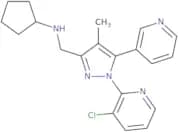
The GPR75 antibody is a highly effective neutralizing monoclonal antibody used in Life Sciences. It is specifically designed to target and inhibit the activity of GPR75, a hormone peptide receptor involved in various cellular processes. This antibody has been extensively studied and proven to have cytotoxic effects on cells expressing high levels of GPR75. Additionally, it has shown promising results in inhibiting the growth of collagen-producing cells and reducing lipoprotein lipase activity. The GPR75 antibody can be used as a powerful tool for research purposes, as well as in the development of therapeutic interventions targeting GPR75-mediated pathways. Its multidrug resistance properties make it an excellent candidate for combination therapy with other antibodies or antibiotics to enhance treatment efficacy.1-(3-Chloro-2-pyridinyl)-N-cyclopentyl-4-methyl-5-(3-pyridinyl)-1H-pyrazole-3-methanamine
CAS:1-(3-Chloro-2-pyridinyl)-N-cyclopentyl-4-methyl-5-(3-pyridinyl)-1H-pyrazole-3-methanamine is a selective antagonist, predominantly utilized in scientific research. This compound is synthetically derived through advanced organic chemistry techniques and is notable for its specificity and affinity towards particular receptor sites.Formula:C20H22ClN5Purity:Min. 95%Molecular weight:367.9 g/mol2-[(2S)-5,5-Dimethylmorpholin-2-yl]acetic acid
CAS:2-[(2S)-5,5-Dimethylmorpholin-2-yl]acetic acid (DMCM) is a potent antagonist of the excitatory amino acid receptor. It is an enantiomer of baclofen and has been shown to have similar pharmacological properties to baclofen. 2-[(2S)-5,5-Dimethylmorpholin-2-yl]acetic acid reversibly blocks the NMDA receptor and has a maximal effect when administered at low doses. This agent also blocks the GABA receptor and increases dopamine release in the nucleus accumbens. 2-[(2S)-5,5-Dimethylmorpholin-2-yl]acetic acid is used for research purposes only.Formula:C8H15NO3Purity:Min. 95%Molecular weight:173.21 g/molLRRC28 antibody
LRRC28 antibody was raised using the C terminal of LRRC28 corresponding to a region with amino acids KDLNFLSPISLPRSLLELLHCPLGHCHRCSEPMFTIVYPKLFPLRETPMAPDGF AA protein
Region of PDGF AA protein corresponding to amino acids MSIEEAVPAV CKTRTVIYEI PRSQVDPTSA NFLIWPPCVE VKRCTGCCNT SSVKCQPSRV HHRSVKVAKV EYVRKKPKLK EVQVRLEEHL ECACATSNLN PDHREEETGR RRESGKNRKR KRLKPT.
Purity:Min. 95%Tropomodulin 3 Blocking Peptide
A synthetic peptide for use as a blocking control in assays to test for specificity of TMOD3 antibody, catalog no. 70R-3615Purity:Min. 95%CD90.2 antibody
CD90.2 antibody was raised in rat using CD90.2/`Thy-1.2 alloantigen as the immunogen.
PEA15 antibody
The PEA15 antibody is a highly specialized monoclonal antibody used in the field of Life Sciences. It is specifically designed to target and inhibit the activity of creatine 3-kinase, a key enzyme involved in cellular growth and signaling pathways. This antibody has been extensively tested and validated using human serum samples, demonstrating its high specificity and efficacy.GABARAP antibody
GABARAP antibody was raised in rabbit using the C terminal of GABARAP as the immunogenPurity:Min. 95%CDC37 antibody
The CDC37 antibody is a monoclonal antibody that specifically targets CDC37, a protein that plays a crucial role in cell signaling and protein folding. This antibody has been extensively studied in the field of Life Sciences and has shown promising results in various applications. It can be used for research purposes such as immunoprecipitation, Western blotting, and immunohistochemistry.RAD18 antibody
The RAD18 antibody is a highly specific monoclonal antibody that targets the RAD18 protein. It has been widely used in Life Sciences research and diagnostics. This antibody is derived from mouse monoclonal antibodies and has been extensively characterized for its biophysical properties. The RAD18 antibody can be used for various applications, including Western blotting, immunoprecipitation, and immunohistochemistry. It has shown high affinity and specificity for the target protein in human serum samples. Additionally, this antibody has been utilized in studies involving botulinum toxin research, phosphatase activity assays, and adeno-associated virus-mediated gene delivery. Its ability to bind to the cytosolic protein RAD18 makes it an invaluable tool for researchers working in the field of DNA repair and replication. Whether you're studying cell signaling pathways or investigating disease mechanisms, the RAD18 antibody is an essential reagent to have in your lab arsenal.Synapsin antibody
The Synapsin antibody is a highly specialized monoclonal antibody used in the field of Life Sciences. It has been extensively tested and proven to have high affinity for the target receptor, making it an excellent tool for research purposes. This antibody specifically binds to activated receptors and exhibits neutralizing properties, effectively blocking their function. Additionally, it has been shown to interact with chemokines and phosphatases, further expanding its potential applications in various experimental settings. The Synapsin antibody is also capable of binding to alpha-fetoprotein and calmodulin, two important proteins involved in growth factor signaling pathways. Its versatility extends to adipose tissue studies as well, where it can be used to investigate cellular processes related to fat metabolism. With its reliable performance and compatibility with various detection methods such as immunofluorescence or Western blotting, this monoclonal antibody is an invaluable asset for researchers seeking to advance their understanding of complex biological systems.Purity:Min. 95%Rabbit anti Sheep IgG (H + L) (rhodamine)
Rabbit anti-sheep IgG (H+L) (Rhodamine) was raised in rabbit using sheep IgG whole molecule as the immunogen.Purity:Min. 95%Rabbit anti Rat IgG (FITC)
Rabbit anti-rat IgG (FITC) was raised in rabbit using rat IgG F(ab')2 fragment as the immunogen.Purity:Min. 95%



























![2-[(2S)-5,5-Dimethylmorpholin-2-yl]acetic acid](/_next/image/?url=https%3A%2Fstatic.cymitquimica.com%2Fproducts%2F3D%2Fthumb-webp%2FKGA41507.webp&w=3840&q=75)