Biochemicals and Reagents
Biochemicals and reagents are fundamental substances for research and development in fields such as biotechnology, molecular biology, pharmacology, and medicine. These products are essential for a variety of applications, including compound synthesis, biological sample analysis, metabolic process research, and drug production. At CymitQuimica, we offer a wide selection of high-quality, high-purity biochemicals and reagents suitable for various scientific and industrial needs. Our catalog includes enzymes, antibodies, nucleic acids, amino acids, and many other products, all designed to support researchers and professionals in their research and development projects, ensuring reliable and reproducible results.
Subcategories of "Biochemicals and Reagents"
- Biomolecules(99,118 products)
- By Biological Target(99,156 products)
- By Pharmacological Effects(6,788 products)
- Cryopreservatives(21 products)
- Desinfectants and Related Compounds(28 products)
- Hormones(346 products)
- Plant Biology(6,748 products)
- Secondary Metabolites(14,233 products)
Found 130579 products of "Biochemicals and Reagents"
Sort by
Purity (%)
0
100
|
0
|
50
|
90
|
95
|
100
DOK2 antibody
<p>DOK2 antibody was raised in rabbit using the C terminal of DOK2 as the immunogen</p>ZNF431 antibody
<p>ZNF431 antibody was raised in rabbit using the N terminal of ZNF431 as the immunogen</p>Purity:Min. 95%CD80 antibody
<p>The CD80 antibody is a collagen-based monoclonal antibody that is widely used in the field of Life Sciences. It specifically targets and binds to the CD80 protein, which is an important immune checkpoint molecule involved in T-cell activation. The antibody has been shown to effectively block the interaction between CD80 and its receptor, leading to the inhibition of T-cell activation and proliferation.</p>INSIG2 Blocking Peptide
<p>A synthetic peptide for use as a blocking control in assays to test for specificity of INSIG2 antibody, catalog no. 70R-6929</p>Purity:Min. 95%Keratin 8 antibody
<p>The Keratin 8 antibody is a disulfide bond-based polyclonal antibody that specifically targets and detects the presence of Keratin 8. This antibody is commonly used in life sciences research, particularly in studies involving cell biology and molecular biology. It can be used for various applications such as immunohistochemistry, western blotting, and ELISA.</p>Methamphetamine antibody
<p>Methamphetamine antibody was raised in mouse using methamphetamine (phenyl ring para position) as the immunogen.</p>HNRPM antibody
<p>HNRPM antibody was raised using the N terminal Of Hnrpm corresponding to a region with amino acids ATEIKMEEESGAPGVPSGNGAPGPKGEGERPAQNEKRKEKNIKRGGNRFE</p>Tetraspanin 6 Blocking Peptide
<p>A synthetic peptide for use as a blocking control in assays to test for specificity of TSPAN6 antibody, catalog no. 70R-5977</p>Purity:Min. 95%Enkephalin antibody
<p>Enkephalin antibody was raised in rabbit using synthetic met-enkephalin (Sigma) conjugated toBSA as the immunogen.</p>Purity:Min. 95%CD40 antibody (Azide Free)
<p>CD40 antibody (Azide free) was raised in rat using CD40 as the immunogen</p>14:0 Pc-d63
CAS:Controlled Product<p>14:0 Pc-d63 is a ligand that binds to the receptor site of GABA-A receptors. It has been shown to be an activator of this receptor, which may be due to its ability to bind and activate the ion channels in these receptors. 14:0 Pc-d63 can also bind to other proteins, inhibiting their activity. This ligand has been used as a research tool in cell biology, peptide chemistry, and antibody development.</p>Formula:C36H9NO8PD63Purity:Min. 95%Molecular weight:741.32 g/molCDC26 antibody
<p>CDC26 antibody was raised in rabbit using the C terminal of CDC26 as the immunogen</p>Purity:Min. 95%Goat anti Rabbit IgG (H + L) (Alk Phos)
<p>This antibody reacts with heavy (gamma) chains on rabbit IgG and light chains on all rabbit immunoglobulins.</p>Purity:Min. 95%SRPK1 Blocking Peptide
<p>A synthetic peptide for use as a blocking control in assays to test for specificity of SRPK1 antibody, catalog no. 70R-10336</p>Purity:Min. 95%Tmem147 Blocking Peptide
<p>A synthetic peptide for use as a blocking control in assays to test for specificity of Tmem147 antibody, catalog no. 70R-8854</p>Purity:Min. 95%USP37 antibody
<p>The USP37 antibody is a highly specialized monoclonal antibody that has neutralizing properties. It specifically targets E-cadherin, a protein involved in cell adhesion and signaling. This antibody has been extensively studied in the field of life sciences, particularly in the context of chemokine and interleukin-6 signaling pathways. It has also been used in various research techniques, such as immunofluorescence staining with phalloidin to visualize actin cytoskeleton, dopamine release assays, and electrophoresis studies involving fibrinogen. The USP37 antibody has shown promising results in granulosa cell research and has been utilized in agglutination assays for detecting erythropoietin levels. Its specificity and reliability make it a valuable tool for researchers working with antibodies.</p>TRPM5 antibody
<p>TRPM5 antibody was raised using the N terminal of TRPM5 corresponding to a region with amino acids EKHISEQRAGYGGTGSIEIPVLCLLVNGDPNTLERISRAVEQAAPWLILV</p>Purity:Min. 95%Abcb10 antibody
<p>Abcb10 antibody was raised in rabbit using the N terminal of Abcb10 as the immunogen</p>Purity:Min. 95%DHRS2 antibody
<p>DHRS2 antibody was raised in rabbit using the N terminal of DHRS2 as the immunogen</p>Purity:Min. 95%Desmoglein 2 Blocking Peptide
<p>A synthetic peptide for use as a blocking control in assays to test for specificity of DSG2 antibody, catalog no. 70R-6105</p>Purity:Min. 95%ACADL antibody
<p>The ACADL antibody is a neurotrophic factor monoclonal antibody that has shown promising results in various studies. This antibody acts as a growth factor and has the ability to promote cell survival and differentiation. It can be used in research settings to study the effects of neurotrophic factors on neuronal development and function.</p>SLC6A1 antibody
<p>SLC6A1 antibody was raised using a synthetic peptide corresponding to a region with amino acids CCINSCTSMFAGFVIFSIVGFMAHVTKRSIADVAASGPGLAFLAYPEAVT</p>Purity:Min. 95%ARPC3 Blocking Peptide
<p>A synthetic peptide for use as a blocking control in assays to test for specificity of ARPC3 antibody, catalog no. 70R-3074</p>Purity:Min. 95%Pin1 antibody
<p>Pin1 antibody was raised in mouse using recombinant human Pin1 (1-163aa) purified from E. coli as the immunogen.</p>SNAI1 antibody
<p>The SNAI1 antibody is a monoclonal antibody that specifically targets the SNAI1 protein. This protein plays a crucial role in various cellular processes, including cell growth and differentiation. The SNAI1 antibody has been extensively tested and validated for its specificity and sensitivity in detecting the presence of SNAI1 in different samples.</p>AKR1B1 Blocking Peptide
<p>A synthetic peptide for use as a blocking control in assays to test for specificity of AKR1B1 antibody, catalog no. 70R-1071</p>Purity:Min. 95%Rabbit anti Rat IgG (H + L) (rhodamine)
<p>Rabbit anti-rat IgG (H+L) (Rhodamine) was raised in rabbit using rat IgG whole molecule as the immunogen.</p>Purity:Min. 95%BSG antibody
<p>The BSG antibody is a monoclonal antibody that is used in the field of Life Sciences. It specifically targets and binds to BSG (basigin) protein, which is expressed on the surface of cardiomyocytes. This antibody has been shown to be effective in inhibiting the activation of BSG, making it a valuable tool for studying the role of BSG in various cellular processes. Additionally, the BSG antibody can be used as a diagnostic tool in human serum samples to detect the presence of activated BSG. With its cytotoxic properties, this monoclonal antibody has also shown promise as a potential treatment for certain types of cancer. Its ability to target nuclear proteins and inhibit protein kinases, such as mitogen-activated protein kinase and tyrosine kinases, makes it an important tool in both research and therapeutic applications.</p>KLC3 antibody
<p>KLC3 antibody was raised using the middle region of KLC3 corresponding to a region with amino acids MLNILALVYRDQNKYKEATDLLHDALQIREQTLGPEHPAVAATLNNLAVL</p>PLEKHA9 antibody
<p>PLEKHA9 antibody was raised using a synthetic peptide corresponding to a region with amino acids EALLWLKRGLKFLKGFLTEVKNGEKDIQTALNNAYGKTLRQHHGWVVRGV</p>MAGEB4 Blocking Peptide
<p>A synthetic peptide for use as a blocking control in assays to test for specificity of MAGEB4 antibody, catalog no. 70R-4031</p>Purity:Min. 95%CYP4X1 Blocking Peptide
<p>A synthetic peptide for use as a blocking control in assays to test for specificity of CYP4X1 antibody, catalog no. 70R-7249</p>Purity:Min. 95%TMPRSS3 antibody
<p>TMPRSS3 antibody was raised using the N terminal of TMPRSS3 corresponding to a region with amino acids MGENDPPAVEAPFSFRSLFGLDDLKISPVAPDADAVAAQILSLLPLKFFP</p>Corticosteroid Binding Globulin protein
<p>Corticosteroid Binding Globulin (CBG) protein is a growth factor that plays a crucial role in regulating the body's response to stress and inflammation. It binds to corticosteroids, such as cortisol, in the blood, controlling their availability and activity. CBG also interacts with reactive oxygen species and antibodies, contributing to immune system function.</p>Purity:Min. 95%CD40 ligand protein
<p>CD40 ligand protein is an activated protein that plays a crucial role in immune response and cell signaling. It is commonly used in research and diagnostic applications. The CD40 ligand protein has an antigen binding domain that interacts with the CD40 receptor on B cells, leading to their activation and differentiation. This protein can be used as a tool in various assays, such as chemiluminescent immunoassays or DNA vaccines. It can also be conjugated to other molecules, such as monoclonal antibodies or chemokines, for specific applications. The CD40 ligand protein is stable and can be easily immobilized on surfaces like carbon electrodes for electrode-based assays. Its structure consists of amino acid residues that are methylated, providing stability and enhancing its functionality. Researchers in the life sciences field often rely on this protein to investigate immune responses and develop new therapeutic strategies.</p>Purity:Min. 95%DGAT2L7 antibody
<p>DGAT2L7 antibody was raised in rabbit using the C terminal of DGAT2L7 as the immunogen</p>Purity:Min. 95%Myc antibody
<p>The Myc antibody is a highly specialized antibody used in Life Sciences research. It is designed to specifically target and bind to the c-myc protein, which plays a crucial role in cell growth and proliferation. This antibody is available in both polyclonal and monoclonal forms, providing researchers with options for their specific needs.</p>Purity:Min. 95%NR5A2 antibody
<p>NR5A2 antibody was raised in rabbit using a synthetic peptide conjugated to KLH as the immunogen.</p>Purity:Min. 95%MIA2 protein
<p>Region of MIA2 protein corresponding to amino acids MLESTKLLAD LKKCGDLECE ALINRVSAMR DYRGPDCRYL NFTKGEEISV YVKLAGERED LWAGSKGKEF GYFPRDAVQI EEVFISEEIQ MSTKESDFLC L.</p>Purity:Min. 95%CD4 antibody
<p>The CD4 antibody is a monoclonal antibody that specifically targets the CD4 antigen. This antibody is widely used in life sciences research to study the role of CD4 in various biological processes. The CD4 antigen is a glycoprotein found on the surface of T-helper cells, and it plays a crucial role in immune system regulation.</p>Cyclin H antibody
<p>The Cyclin H antibody is a highly specific monoclonal antibody that is used in Life Sciences research. It has been extensively tested and validated for its performance in various applications. This antibody is designed to target the cyclin H protein, which plays a crucial role in cell cycle regulation and growth factor signaling pathways.</p>Canine Coronavirus protein
<p>The Canine Coronavirus protein is a protein complex that is found in human serum. It is used in the field of Life Sciences for various purposes, including research and diagnostics. This protein complex can be used as a tool to study the interaction between viruses and host cells, as well as to develop inhibitors and monoclonal antibodies for therapeutic use. The Canine Coronavirus protein has also been shown to have viscosity-enhancing properties, which makes it useful in applications such as the measurement of creatine kinase levels in blood samples. Additionally, this protein complex can be used as a growth factor and has been found to form dimers with other proteins such as chemokines and interleukin-6. Overall, the Canine Coronavirus protein is a versatile tool that plays a crucial role in understanding and advancing our knowledge in the field of Life Sciences.</p>Purity:Min. 95%PPP1R13L antibody
<p>PPP1R13L antibody was raised in mouse using recombinant Human Protein Phosphatase 1, Regulatory (Inhibitor) Subunit 13 Like (Ppp1R13L)</p>MMD2 antibody
<p>MMD2 antibody was raised using the N terminal of MMD2 corresponding to a region with amino acids FAPRLLDFQKTKYARFMNHRVPAHKRYQPTEYEHAANCATHAFWIIPSIL</p>RUNX3 antibody
<p>RUNX3 antibody was raised in rabbit using the C terminal of RUNX3 as the immunogen</p>Purity:Min. 95%MCART6 antibody
<p>MCART6 antibody was raised using the middle region of MCART6 corresponding to a region with amino acids WPVLARNSLGSALYFSFKDPIQDGLAEQGLPHWVPALVSGSVNGTITCLV</p>Purity:Min. 95%IL11R α antibody
<p>IL11R alpha antibody was raised using the middle region of IL11RA corresponding to a region with amino acids FLLKFRLQYRPAQHPAWSTVEPAGLEEVITDAVAGLPHAVRVSARDFLDA</p>Purity:Min. 95%ALS2CR12 Blocking Peptide
<p>A synthetic peptide for use as a blocking control in assays to test for specificity of ALS2CR12 antibody, catalog no. 70R-3279</p>Purity:Min. 95%ITGB4 antibody
<p>The ITGB4 antibody is a highly specialized biomolecule that acts as an inhibitor of growth factors. It specifically targets nuclear and nucleotide molecules, preventing them from activating certain cellular processes. This monoclonal antibody has been shown to have a high affinity for the tyrosine residues on the surface of cells, effectively blocking their interaction with growth factor receptors.</p>OR2D3 Blocking Peptide
<p>A synthetic peptide for use as a blocking control in assays to test for specificity of OR2D3 antibody, catalog no. 70R-9860</p>Purity:Min. 95%FXYD5 antibody
<p>FXYD5 antibody was raised using the middle region of FXYD5 corresponding to a region with amino acids DETPQPQTQTQQLEGTDGPLVTDPETHKSTKAAHPTDDTTTLSERPSPST</p>Licoflavone A
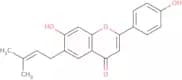
CAS:<p>Licoflavone A is a natural sweetener with inhibitory activity against bacteria, fungi and viruses. It has been shown to have an activity index of 0.7-0.8. Licoflavone A inhibits the growth of many bacteria such as Staphylococcus aureus, Escherichia coli, Streptococcus pneumoniae, Klebsiella pneumoniae, Salmonella enterica and Pseudomonas aeruginosa by binding to the enzyme PTP1B. The compound also inhibits phosphatase activity in echinatin and glycyrrhiza species and has been found to be active against influenza virus in vitro. Licoflavone A displays antioxidant properties by inhibiting lipid peroxidation in cells treated with hydrogen peroxide or other reactive oxygen species (ROS).</p>Formula:C20H18O4Purity:Min. 95%Molecular weight:322.4 g/molMBD1 antibody
<p>MBD1 antibody was raised using the middle region of MBD1 corresponding to a region with amino acids CKVWETEDTVEPTSTSWNPRGWPGTHVSLSPPPASMMWVSCRRSWCPSSQ</p>ROCK2 antibody
<p>The ROCK2 antibody is a protein that has neutralizing properties against collagen. It belongs to the class of polyclonal antibodies and is used in Life Sciences research. This antibody specifically targets ROCK2, which stands for Rho-associated coiled-coil containing protein kinase 2. ROCK2 is involved in various cellular processes, including cell proliferation, migration, and contraction. The ROCK2 antibody can be used for various applications such as immunohistochemistry, Western blotting, and enzyme-linked immunosorbent assays (ELISAs). It is available in both monoclonal and polyclonal forms. The antibody can be immobilized on chromatographic resins or used for protein-protein interaction studies. Additionally, it can be used to study the role of ROCK2 in hepatocyte growth factor signaling pathways or to investigate its binding partners such as angptl3 or growth factor binding proteins.</p>COMT Blocking Peptide
<p>A synthetic peptide for use as a blocking control in assays to test for specificity of COMT antibody, catalog no. 70R-7143</p>Purity:Min. 95%PAPOLB antibody
<p>PAPOLB antibody was raised using the middle region of PAPOLB corresponding to a region with amino acids MEEFRTMWVIGLGLKKPDNSEILSIDLTYDIQSFTDTVYRQAVNSKMFEM</p>