Biochemicals and Reagents
Subcategories of "Biochemicals and Reagents"
- Biomolecules(98,563 products)
- By Biological Target(101,024 products)
- By Pharmacological Effects(6,952 products)
- Cryopreservatives(21 products)
- Desinfectants and Related Compounds(28 products)
- Hormones(531 products)
- Plant Biology(6,903 products)
- Secondary Metabolites(14,369 products)
Found 130609 products of "Biochemicals and Reagents"
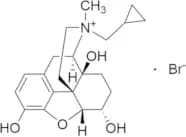
Methyl-5a-naltrexol Bromide
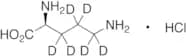
CAS:Controlled ProductFormula:C21H28NO4·BrColor and Shape:NeatMolecular weight:438.36L-Ornithine-d6 Hydrochloride
CAS:Controlled ProductApplications Labelled L-Ornithine. A non-essential amino acid for human development but is required intermediate in arginine biosynthesis. L-Ornithine is found in virtually all vertebrate tissues as well as incorporated into proteins, such as tyrocidine. Isolation from chicken excreta.
References Fattori, D. et al.: J. Med. Chem., 50, 550 (2007); Gomez-Alonso, S. et al.: J. Agric. Food Chem., 55, 608 (2007); Subramaniam, R. et al.: Bioorg. Med. Chem. Lett., 18, 3333 (2008);Formula:C52H6H6N2O2·ClHColor and Shape:White To Off-WhiteMolecular weight:174.66Tryptophol
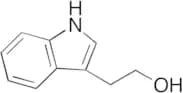
CAS:Controlled ProductApplications Tryptophol is a metabolite formed in the liver after disulfiram treatment that induces sleep in humans. It is also a secondary product of alcoholic fermentation.
References Cornford, E.M., et al.: J Clin Invest, 63, 1241-1248 (1979)Formula:C10H11NOColor and Shape:NeatMolecular weight:161.2L-Thioproline
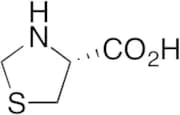
CAS:Applications L-Thioproline is used to create a monolayer on gold electrodes for the determination Copper(II). L-Thioproline has shown to be an effect inhibitor of proline absorption in Saccharomyces chevalieri.
Not a dangerous good if item is equal to or less than 1g/ml and there is less than 100g/ml in the package
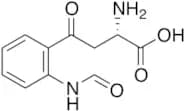
References Cui, X., et. al.: Sci. China Chem., 53, 257 (2010); Magana-Schwenchke, N., Schwencke, J.: BBA-Biomembranes, 173, 313 (1969)Formula:C4H7NO2SColor and Shape:NeatMolecular weight:133.17Formylkynurenine
CAS:Controlled ProductFormula:C11H12N2O4Color and Shape:NeatMolecular weight:236.224Phloxine B
CAS:Controlled ProductApplications Phloxine B acts as the sensitizers of dye-sensitized solar cells. Also, it is a fluorescein photoactive dye. Dyes and metabolites, Environmental Testing.
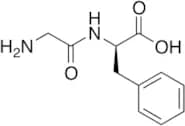
References Ren, P., et al.: Int. J. Photoenergy, 2135847/1-2135847/11 (2016);Formula:C20H2Br4Cl4O5·2NaColor and Shape:Red To Dark RedMolecular weight:829.63Glycyl-D-phenylalanine
CAS:Controlled ProductApplications Glycyl-D-phenylalanine (cas# 34258-14-5) is a useful research chemical.
Formula:C11H14N2O3Color and Shape:NeatMolecular weight:222.24Terphenyl Hydrogenated
CAS:Applications Terphenyl hydrogenated (cas# 61788-32-7) is a useful research chemical.
Not a dangerous good if item is equal to or less than 1g/ml and there is less than 100g/ml in the packageFormula:C18H22Color and Shape:Light YellowMolecular weight:238.372-Azidoethanamine Hydrochloride
CAS:Applications 2-Azidoethanamine Hydrochloride is used as a reagent for pyrrolobenzodiazepine dimers that are used in the treatment of proliferative disorder such as cancer.
References Song, Ho Young. et al., 135 pp. PCT Int. Appl. (2018);Formula:C2H6N4·HClColor and Shape:NeatMolecular weight:122.55Davis Oxaziridine
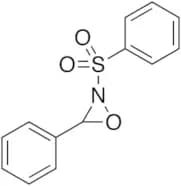
CAS:Controlled ProductApplications Davis Oxaziridine is an oxidizing agent used in the preparation of wide variety of pharmaceutical compounds.
References Davis, F. et al.: J. Org. Chem., 49, 3241 (1984); Cruz-Almanza, R. et al.: Tetrahed. Lett., 38, 183 (1997);Formula:C13H11NO3SColor and Shape:NeatMolecular weight:261.3Abamine
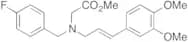
CAS:Controlled ProductApplications Abamine is an inhibitor of 9-Cis-Epoxycarotenoid dioxygenase (NCED), the key regulatory enzyme in the plant hormone abscisic acid (ABA) biosynthesis pathway.
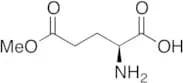
References Kitahata, N., et al.: Bioorg. Med. Chem., 14, 5555 (2006); Han, S., et al.: Bioorg. Med. Chem. Lett., 14, 3033 (2004)Formula:C21H24FNO4Color and Shape:NeatMolecular weight:373.42L-Glutamic Acid 5-Methyl Ester
CAS:Controlled ProductApplications L-Glutamic acid 5-methyl ester is a protected form of L-Glutamic acid (G596960). L-Glutamic acid is a nonessential amino acid that is important to the mammalian central nervous system. L-Glutamic acid is also a neurotransmitter for cone photoreceptors in the human brain and is used as a treatment for patients who have liver disease accompanied by encephalopathy (a condition termed ‘hepatic coma’).
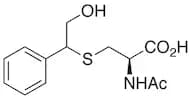
References Anderson, H., et al.: J. Nutr., 99, 82 (1969); Brandon, C. & Lam, D.: Proc. Nat. Acad. Sci., 80, 5117 (1983); McDermott Jr, W., et al.: New Engl. J. Med., 253, 1093 (1955)Formula:C6H11NO4Color and Shape:NeatMolecular weight:161.156N-Acetyl-S-(2-hydroxy-1-phenylethyl)-L-cysteine + N-Acetyl-S-(2-hydroxy-2-phenylethyl)-L-cysteine (Mixture)
CAS:Controlled ProductStability Hygroscopic
Applications A mixture of 2 metabolites of Styrene. The 2 regioisomers are in a roughly 3: 1ratio
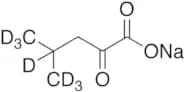
References Ryan, A., et al.: Drug Metab. Dispos., 5, 363 (1977), Delbressine, L., et al.: Xenobiotica, 11, 589 (1981), Truchon, G., et al.: J. Anal. Toxicol., 14, 227 (1990),Formula:C13H17NO4SColor and Shape:Off White SolidMolecular weight:283.344-Methyl-2-oxovaleric Acid-d7 Sodium Salt
CAS:Controlled ProductApplications Labelled 4-Methyl-2-oxovaleric Acid, an α-ketomonocarboxylic acid that triggers insulin release by acting upon receptor sites which differ from those occupied by amino acids. 4-Methyl-2-oxovaleric Acid is an intermediate in the metabolism of Leucine.
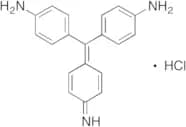
References Panten, U. et al.: Naun.-Schmied. Arch. Pharmacol., 291, 405 (1975); Vague, P. et al.: Diab. Metab., 1, 185 (1975); Francois, G. et al.: Lancet, 1, 858 (1984);Formula:C62H7H2O3·NaColor and Shape:NeatMolecular weight:159.17Pararosaniline Hydrochloride
CAS:Controlled ProductApplications Pararosaniline Hydrochloride is a red dye used for textiles. Dyes and metabolites, Environmental Testing.
References Abadulla, E., et al.: Appl. Environ. Microbiol., 66, 3357 (2000); Nyanhongo, G., et al.: Water Res., 36, 1449 (2002);Formula:C19H17N3·ClHColor and Shape:NeatMolecular weight:323.82Amaranth (>85%)
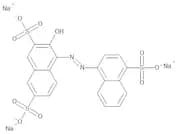
CAS:Controlled ProductApplications Amaranth is a food color additive that induces differential colon DNA damage in rat and mouse. Dyes and metabolites, Environmental Testing. Dyes and metabolites.
References Shimada, C., et al.: J. Toxicol. Sci., 35, 547 (2010); Goda, M., et al.: Shokuhin Eiseigaku Zasshi, 54, 188 (2013); Wang, M., et al.: J. Electroanal. Chem., 809, 117 (2018); Lu, L., et al.: Guangdong Huagong, 43, 117 (2016)Formula:C20H11N2O10S3·3NaPurity:>85%Color and Shape:Dark RedMolecular weight:604.474-Phenyl-3-buten-2-ol
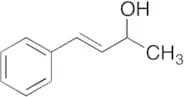
CAS:Controlled ProductApplications 4-Phenyl-3-buten-2-ol can be used as reagent/reactant for rhodium-catalyzed dynamic kinetic enantio-, chemo- and regioselective allylation of phenols/naphthols/hydroxypyridines with allylic carbonates. It can also be used in biological study for comparative study on quality of soy sauce produced from whole soybeans and defatted soybeans.
References Li, C., and Breit, B.: Chemistry- A European Journal, 22, 14655-14663 (2016); Li, X., et al.: Zhongguo Niangzao, 34, 22-26 (2015);Formula:C10H12OColor and Shape:NeatMolecular weight:148.2L-Valine-13C5,15N
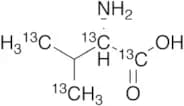
CAS:Controlled ProductApplications Labelled analogue of L-Vailne. L-Valine is an essential amino acid and one of 20 proteinogenic amino acids. L-Valine cannot be manufactured by the body and must be acquired through diet or supplementation. L-valine is found in grains, dairy products, mushrooms, meats, peanuts and soy proteins. L-Valine has been used in studies to attenuate arrhythmias and induce hypotensive effects.
References Choi, C.W. et al.: Anim. Feed Sci. Technol., 102, 15 (2002); Kolarski, D. et al.: Krmiva, 30, 155 (1988); Oba, M. et al.: J. Dairy Sci., 93, 2044 (2010); Mitrega, K. et al.: Pharmacol. Res., 64, 218 (2011);Formula:C5H1115NO2Color and Shape:NeatMolecular weight:123.1N-Boc-L-proline
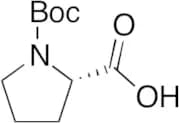
CAS:Controlled ProductApplications N-Boc-L-proline is a useful synthetic intermediate. It is used to synthesize Daclatasvir (D101500) which nhibits the HCV protein NS5A. Daclatasvir (D101500) can be used as a drug candidate for the treatment of hepatitis C (HCV).
References Gao, M., et al.: Nature, 465(7294), 96 (2010); Bell, T. W., Chem. Med. Chem., 5(10), 1663 (2010);Formula:C10H17NO4Color and Shape:NeatMolecular weight:215.254,4'-Methylenedianiline
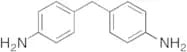
CAS:Controlled ProductApplications 4,4'-Methylenedianiline is used in the production of polyurethane foams and epoxy resins (1). Potential contributor in pulmonary arterial hypertension (PAH) in rats through alteration of the serotenergic transport system (2). Drinking water contaminant candidate list 3 (CCL 3) compound as per United States Environmental Protection Agency (EPA), environmental, and food contaminants. Dyes and metabolites, Environmental Testing.
Not a dangerous good if item is equal to or less than 1g/ml and there is less than 100g/ml in the package
References 1. Hebert V. et al.: Cardiovas. Toxicol., 2011 Dec;11(4):316-24.2. Carroll-Turpin, M. et al.: Toxicol. Sci. 2015 Sep;147(1):235-45Formula:C13H14N2Color and Shape:NeatMolecular weight:198.26