


Biochemicals and Reagents
Subcategories of "Biochemicals and Reagents"
- Biomolecules(98,574 products)
- By Biological Target(100,726 products)
- By Pharmacological Effects(6,937 products)
- Cryopreservatives(21 products)
- Desinfectants and Related Compounds(28 products)
- Hormones(439 products)
- Plant Biology(6,907 products)
- Secondary Metabolites(14,367 products)
Found 130493 products of "Biochemicals and Reagents"
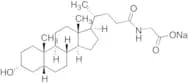
Glycolithocholic Acid Sodium Salt
CAS:Applications Glycolithocholic Acid Sodium Salt is a bile salt and may induce calcium uptake in human erythrocytes.
References Oelberg, D.G., et al.: Hepatology, 7 245-52 (1987);Formula:C26H42NNaO4Color and Shape:NeatMolecular weight:455.61Glycerol 1,3-Dipalmitate
CAS:Applications A glycidol fatty acid esters in edible oils. An acyl acceptor for the unspecific bifunctional wax ester synthase/acyl-CoA:Diacylglycerol acyltransferase.
References Masukawa, Y. et al.: J. Am. Oil. Chem. Soc., 88, 15 (2011); Kalscheuer, R. et al.: Eur. J. Lipid. Sci. Tech., 105, 578 (2003)Formula:C35H68O5Color and Shape:NeatMolecular weight:568.91Di-D-fructofuranose 1,2':2,1'-Dianhydride
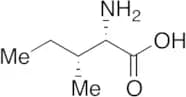
CAS:Controlled ProductFormula:C12H20O10Color and Shape:NeatMolecular weight:324.281L-Allo-isoleucine
CAS:Controlled ProductApplications L-alloisoleucine is a stereo-isomer of L-isoleucine (I820175) and is produced as a byproduct of isoleucine via transamination. L-allo-isoleucine has been suggested to induce epithelial β-defensin expression. In addition, L-allo-isoleucine is utilized in the biosynthesis pathway for coronamic acid.
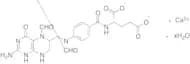
References Fehlbaum, P., et al.: Proc. Natl. Acad. Sci. USA 97, 12723 (2000); Parry, R. J., et al.: J. Am. Chem. Soc. 113, 1849 (1991)Formula:C6H13NO2Color and Shape:NeatMolecular weight:131.175,10-Diformyl-5,6,7,8-tetrahydro Folic Acid Calcium Salt Hydrate
CAS:Stability Hygroscopic
Applications 5,10-Diformyl-5,6,7,8-tetrahydrofolic acid is a derivative of the coenzyme 5,6,7,8-tetrahydrofolic acid which is essential in primary metabolism for reactions involving the transfer of a one-carbon unit at the formic acid, the formaldehyde or the methanol oxidation levels.
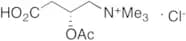
References Flaks, J.G., et al.: J. Biol. Chem., 228, 215 (1957),Formula:C21H21CaN7O8·x(H2O)·CaColor and Shape:YellowMolecular weight:557.527Acetyl L-Carnitine Hydrochloride
CAS:Applications Acetyl-L-carnitine is a mitochondrial metabolite that helps to transport fatty acids into the mitochondria for energy (1). Acetyl-L-carnitine also upregulate metabotropic glutamate receptor 2 (mGlu2) via NF-κB p65 acetylation (2,3). It exhibits antidepressant and neuroprotective properties.
References (1) Stephens, F. B., et al.: J Physiol. 581, 431 (2007) (2) Wang, S. M., et al.: J Psychiatr Res. 53, 30 (2014) (3) Cuccurazzu, B., et al.: Neuropsychopharmacology 38, 2220 (2013)Formula:C9H18NO4·ClColor and Shape:NeatMolecular weight:239.7(-)-Sweroside
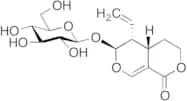
CAS:Controlled ProductApplications (-)-Sweroside is an active ingredient of iridoid glycoside isolated from the flower buds of Lonicera japonica THUNB. (-)-Sweroside has shown anti-inflammatory and analgesic activities.
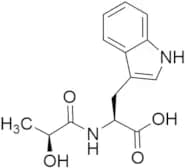
References Luo, Y., et. al.: Chem. Pharm. Bull., 57, 79 (2009); Keun, H., et. al.: Biosci. Biotech. Bioch., 74, 2022 (2010)Formula:C16H22O9Color and Shape:NeatMolecular weight:358.34N-Lactoyl-tryptophan
CAS:Controlled ProductFormula:C14H16N2O4Color and Shape:Off-WhiteMolecular weight:276.288Parathyroid Hormone Fragment (1-34)
CAS:Controlled ProductApplications A fragment of human parathyroid hormone (hPTH) peptide sequence containing the 34 N-terminal residues of hPTH. This fragment was also found to be an agonist at PTH1 and PTH2 receptors.
References Niall, et al.: Proc. Natl. Acad. Sci., 71, 384 (1974); Dobnig,T., et al.: Endocrinol., 138, 4607 (1997); Manabe. et al.: Bone., 40, 1475 (2007);Formula:C181H291N55O51S2Color and Shape:NeatMolecular weight:4117.72Poly(ethylene Glycol) ~600
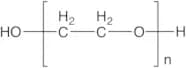
CAS:Controlled ProductApplications Poly(ethylene Glycol) molecules of an average molecular mass of 600. Poly(ethylene Glycol) is used in various applications from industrial chemistry to biological chemistry. Recent research has shown PEG maintains the ability to aid the spinal cord injury recovery process, helping the nerve impulse conduction process in animals. In rats, it has been shown to aid in the repair of severed sciatic axons, helping with nerve damage recovery. It is industrially produced as a lubricating substance for various surfaces to reduce friction. PEG is also used in the preparation of vesicle transport systems in with application towards diagnostic procedures or drug delivery methods.
References Borgens, R. et al.: J. Neurosci. Res., 66, 1179 (2001); Stavisky, R. et al.: Neurosci. Lett., 376, 98 (2005); Nalam, P. et al.: Tribiol. Lett., 37, 541 (2010); Steinmetz, N. et al.: J. Am. Chem. Soc., 131, 17093 (2009); Li, X. et al.: J. Am. Chem. Soc., 133, 11147 (2011); Li, L. et al.: Int. J. Pharm., 447, 192 (2013);Formula:H2O(C2H4O)nColor and Shape:Colourless To Off-WhiteMolecular weight:62.07Biotin-[2-(2-pyridyldithio)ethylamide]
CAS:Controlled ProductApplications A sulfhydryl reactive biotinylaton reagent.
References Carlsson, J., et al.: Biochem. J., 173, 723 (1978), Ghebrehiwet, B., et al.: J. Immunol. Methods, 110, 251 (1988)Formula:C17H24N4O2S3Color and Shape:White To Light YellowMolecular weight:412.59(4-Hydroxyphenyl)glycine
CAS:Applications (4-Hydroxyphenyl)glycine, is a key intermediate for the synthesis Cefpiramide (C243400), used as a β-lactam antibiotic.
References Xiao, R. Q., et al.: Guangzhou Huagong, 41, 111 (2013);Formula:C8H9NO3Color and Shape:Off White PowderMolecular weight:167.162Uvinul A Plus-d4
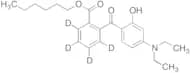
CAS:Controlled ProductApplications Uvinul A Plus-d4 is the labelled compound of Uvinul A Plus(U850300) which is a component of cosmetic emulsion with UV protection.
References Chang, M., et al.: J. Food Drug Anal., 9, 199 (2001), Simeoni, S., et al.: J. Pharm. Biomed. Anal., 38, 250 (2005), Vielhaber, G., et al.: Photochem. Photobiol. Sci., 5, 275 (2006), Lee, S., et al.: J. Cosmet. Sci., 59, 469 (2008),Formula:C24D4H27NO4Color and Shape:NeatMolecular weight:401.53L-Citrulline-d6
CAS:Controlled ProductApplications Labelled L-Citrulline. An amino acid, first isolated from the juice of watermelon, Citrullus vulgaris Schrad., Cucurbitaceae. Used in the treatment of asthenia.
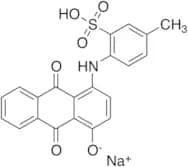
References Kurtz, et al.: J. Biol. Chem., 122, 477 (1938), Rajantie, J., et al.: J. Pediatr., 97, 927 (1980), Carpenter, T.O., et al.: N. Engl. J. Med., 312, 290 (1985),Formula:C62H6H7N3O3Color and Shape:NeatMolecular weight:181.22Acid Violet 43 (Technical Grade)
CAS:Controlled ProductApplications Acid Violet 43 (cas# 4430-18-6) is a useful research chemical.
Formula:C21H14NO6S·NaColor and Shape:NeatMolecular weight:431.396-Iodo Diosmin
CAS:Impurity Diosmin EP Impurity D
Applications 6-Iodo Diosmin (Diosmin EP Impurity D) is a Diosmin (D485200) impurity.Formula:C28H31IO15Color and Shape:Light YellowMolecular weight:734.44trans-4-Hydroxy-L-proline
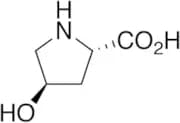
CAS:Controlled ProductApplications A natural constituent of animal structural proteins such as collagen and elastin. Several microorganisms producing proline trans-4- and cis-3-hydroxylase were discovered and these enzymes were applied to the industrial production of trans-4- and cis-3-hydroxy-L-proline.
References Langmaier, F. et al.: Int. J. Cosm. Sci., 24, 273 (2002); Lawrence, C., et al.: Biochem. J., 313, 185 (1996); Mori, H., et al.: J. Bacteriol.; 179, 5677 (1997); Clifton, I., et al.: Eur. J. Biochem., 268, 6625 (2001);Formula:C5H9NO3Color and Shape:NeatMolecular weight:131.131-(Azidomethyl)pyrene
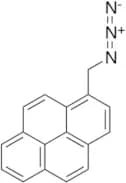
CAS:Controlled ProductApplications 1-(Azidomethyl)pyrene (cas# 1006061-57-9) is a useful research chemical.
Formula:C17H11N3Color and Shape:NeatMolecular weight:257.29O6-Methyl-2’-deoxyguanosine(>85%)
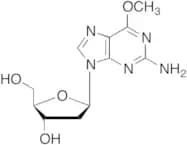
CAS:Controlled ProductApplications O6-Methyl-2’-deoxyguanosine is a ubiquitous DNA lesion formed by xenobiotic carcinogens and endogenous methylating agent, S-adenosyl-L-methionine. A mutagenic adducts formed by a potent tobacco carcinogen, 4-(Methylnitrosamino)-1-(3-pyridyl)-1-butanone (NNK).
References Patra, A., et al.: J. Biol. Chem., 291, 24304-24313 (2016); Gowda, A. S., et al.: Chem. Res. Toxicol., 29, 1894-1900 (2016)Formula:C11H15N5O4Purity:>85%Color and Shape:NeatMolecular weight:281.27(3S,4E)-5-[2-Cyclopropyl-4-(4-fluorophenyl)-3-quinolinyl]-3-hydroxy-4-pentenoic acid Sodium
Formula:C23H19FNO3·NaColor and Shape:NeatMolecular weight:399.4



![Biotin-[2-(2-pyridyldithio)ethylamide]](/_next/image/?url=https%3A%2Fstatic.cymitquimica.com%2Fproducts%2FTR%2Fthumb-webp%2FB391500.webp&w=3840&q=75)



![(3S,4E)-5-[2-Cyclopropyl-4-(4-fluorophenyl)-3-quinolinyl]-3-hydroxy-4-pentenoic acid Sodium](/_next/image/?url=https%3A%2Fstatic.cymitquimica.com%2Fproducts%2FTR%2Fthumb-webp%2FC661140.webp&w=3840&q=75)