Biochemicals and Reagents
Subcategories of "Biochemicals and Reagents"
- Biomolecules(98,575 products)
- By Biological Target(100,693 products)
- By Pharmacological Effects(6,937 products)
- Cryopreservatives(21 products)
- Desinfectants and Related Compounds(28 products)
- Hormones(400 products)
- Plant Biology(6,907 products)
- Secondary Metabolites(14,367 products)
Found 130493 products of "Biochemicals and Reagents"
Cytosine-5,6-d2
CAS:Controlled ProductApplications Cytosine-5,6-d2 (CAS# 106391-24-6) is a useful isotopically labeled research compound.
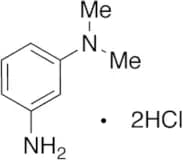
Formula:C42H2H3N3OColor and Shape:NeatMolecular weight:113.11N,N-Dimethyl-m-phenylenediamine, Dihydrochloride
CAS:Controlled ProductApplications N,N-Dimethyl-m-phenylenediamine, Dihydrochloride (cas# 3575-32-4) is a compound useful in organic synthesis.
Not a dangerous good if item is equal to or less than 1g/ml and there is less than 100g/ml in the packageFormula:C8H12N2·2ClHColor and Shape:NeatMolecular weight:209.12Kollisolv PEG 300
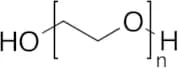
CAS:Controlled ProductApplications Kollisolv PEG 300 is used as a thickening agent and gel binder in the pharmaceutical industry.
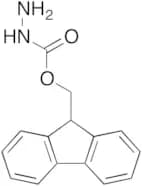
Formula:H2O(C2H4O)nColor and Shape:ColourlessMolecular weight:62.079-Fluorenylmethyl Carbazate
CAS:Controlled ProductFormula:C15H14N2O2Color and Shape:NeatMolecular weight:254.28Docosahexaenoic Acid Ethyl Ester
CAS:Controlled ProductApplications Omega-3 fatty acid found in marine fish oils and in many phospholipids. Major structural component of excitable membranes of the retina and brain; synthesized in the liver from α-linolenic acid. Nutritional supplement.
References Whitcutt, J.M., et al.: Biochem. J., et al.: 67, 60 (1957), Bazan, N.G., et al.: J. Ocul. Pharmacol., 10, 591 (1994), Makrides, M., et al.: Lipids, 31, 115 (1996),Formula:C24H36O2Color and Shape:NeatMolecular weight:356.54Ammeline
CAS:Applications Ammeline is a metabolite of Melamine (1) (M208700), which acts as a non-protein nitrogen food additive (2). Also present in pet foods as well (3).Drinking water contaminant candidate list 3 (CCL 3) compound as per United States Environmental Protection Agency (EPA). Environmental contaminants; Food contaminants.
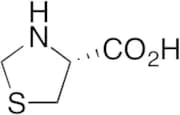
References 1. Mast RW. et al.: Food Chem Toxicol. 1983 Dec;21(6):807-10.2. Ehling S. et al.: Food Addit Contam. 2007 Dec;24(12):1319-25.3. Vail T. et al.: J Anal Toxicol. 2007 Jul-Aug;31(6):304-12.Formula:C3H5N5OColor and Shape:ColourlessMolecular weight:127.1L-Thioproline
CAS:Applications L-Thioproline is used to create a monolayer on gold electrodes for the determination Copper(II). L-Thioproline has shown to be an effect inhibitor of proline absorption in Saccharomyces chevalieri.
Not a dangerous good if item is equal to or less than 1g/ml and there is less than 100g/ml in the package
References Cui, X., et. al.: Sci. China Chem., 53, 257 (2010); Magana-Schwenchke, N., Schwencke, J.: BBA-Biomembranes, 173, 313 (1969)Formula:C4H7NO2SColor and Shape:NeatMolecular weight:133.17Poly(ethylene Glycol) ~6000
CAS:Controlled ProductApplications Poly(ethylene Glycol) molecules of an average molecular mass of 6000. Poly(ethylene Glycol) is used in various applications from industrial chemistry to biological chemistry. Recent research has shown PEG maintains the ability to aid the spinal cord injury recovery process, helping the nerve impulse conduction process in animals. In rats, it has been shown to aid in the repair of severed sciatic axons, helping with nerve damage recovery. It is industrially produced as a lubricating substance for various surfaces to reduce friction. PEG is also used in the preparation of vesicle transport systems in with application towards diagnostic procedures or drug delivery methods.
References Borgens, R. et al.: J. Neurosci. Res., 66, 1179 (2001); Stavisky, R. et al.: Neurosci. Lett., 376, 98 (2005); Nalam, P. et al.: Tribiol. Lett., 37, 541 (2010); Steinmetz, N. et al.: J. Am. Chem. Soc., 131, 17093 (2009); Li, X. et al.: J. Am. Chem. Soc., 133, 11147 (2011); Li, L. et al.: Int. J. Pharm., 447, 192 (2013)Formula:H2O(C2H4O)nColor and Shape:White To Off-WhiteMolecular weight:62.07N-(1,1-Dioxido-2,3-dihydro-3-thienyl)glycine
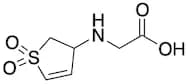
CAS:Controlled ProductApplications N-(1,1-dioxido-2,3-dihydro-3-thienyl)glycine (cas# 201990-24-1) is a useful research chemical.
Formula:C6H9NO4SColor and Shape:NeatMolecular weight:191.21(9Z,11E)-Methyl Ester 9,11-Octadecadienoate
CAS:Applications (9Z,11E) Methyl Ester 9,11-Octadecadienoic Acid is a fatty acid methyl ester that can be found in olive leaves and in suet oil.
References Jiang, J., et al.:Int. J. Mol. Sci., 16, 2864 (2015); Xie, Pu., et al.: Linchan Huaxue Yu Gongye, 34, 97 (2014)Formula:C19H34O2Color and Shape:NeatMolecular weight:294.475,7-Docosadiynoic Acid
CAS:Controlled ProductApplications Amphiphilic molecule used in the synthesis of artificial cell membranes for diagnostics and therapeutics.
References Deckert, A.A., et al.: Langmuir, 11, 643 (1995); Charych, D., and Nagy, J.O.: Chemtech, 26(9), 24 (1996); Pan, J.J. and Charych, D.: Langmuir, 13, 1365 (1997)Formula:C23H38O2Color and Shape:NeatMolecular weight:346.55rac Tenofovir-d6
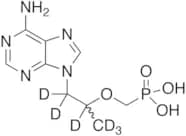
CAS:Controlled ProductApplications A deuterated acyclic phosphonate nucleotide analogue, reverse transcriptase inhibitor. Used as an anti-HIV agent. Antiviral.
Not a dangerous good if item is equal to or less than 1g/ml and there is less than 100g/ml in the package
References Shaw, J.-P., et al.: Pharm. Res., 14, 1824 (1997), Wyles, D., et al.: Clin Infect. Dis., 40, 174 (2005), Peng, J., et al.: J. Clin. Pharmacol., 46, 265 (2006), Seminari, E., et al.: J. Antimicrob. Chemother., 60, 831 (2007),Formula:C92H6H8N5O4PColor and Shape:Off White SolidMolecular weight:293.25KRN7000
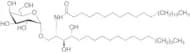
CAS:Controlled ProductStability Hygroscopic
Applications Galactosylceramides play an important roles in promoting the regulation of nerve cells, regulating protein kinase C activities and modulating the function of the hormone receptor. It has shown to have significant immunostimulatory and anti-umor activity in mice with liver metastasis of the Colon26 adenocarcinoma.
References Morita, M., et al.: J. Med. Chem., 38, 2176 (1995), Sakai, T., et al.: J. Med. Chem., 42, 1836 (1999),Formula:C50H99NO9Color and Shape:NeatMolecular weight:858.32DBCO-PEG5-NHS ester
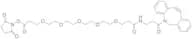
CAS:Controlled ProductApplications DBCO-PEG5-NHS ester (cas# 1378531-80-6) is a useful research chemical.
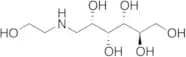
Formula:C36H43N3O11Color and Shape:NeatMolecular weight:693.74N-(2-Hydroxyethyl)-D-glucamine
CAS:Controlled ProductStability Hygroscopic
Applications N-(2-Hydroxyethyl)-D-glucamine, is a key intermediate for the synthesis of Miglitol (M344200), which is a potent α-glucosidase inhibitor, used as a new antidiabetic drug.
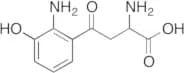
References You, Q. H., et al.: Zhongguo Xinyao Zazhi, 21, 1541 (2012); Lembcke, B., et al.: Digestion, 31, 120 (1985);Formula:C8H19NO6Color and Shape:NeatMolecular weight:225.243-Hydroxy-DL-kynurenine
CAS:Stability Hygroscopic
Applications 3-Hydroxy-DL-kynurenine is a tryptophan metabolite. Could be associated with symptoms in Parkinson's disease.
References Heilman, P. L., et al.: Movement Disorders, 35, 2028 (2020)Formula:C10H12N2O4Color and Shape:NeatMolecular weight:224.215-Azido-5-deoxy-D-fructose
CAS:Controlled ProductApplications 5-Azido-5-deoxy-D-fructose (cas# 94801-02-2) is a compound useful in organic synthesis.
Formula:C6H11N3O5Color and Shape:NeatMolecular weight:205.17Adenosine 5'-monophosphate monohydrate
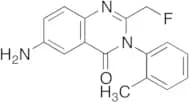
CAS:Controlled ProductFormula:C10H14N5O7P·H2OColor and Shape:NeatMolecular weight:365.23Afloqualone
CAS:Applications Afloqualone acts as a muscle relaxant in humans and may be used in the treatment of muscle spasms affecting rheumatoid arthritis.
References Farkas, S. et al.: J. Pharm. Toxicol. Meth., 52, 264 (2005); Yun, H. et al.: Talanta, 73, 635 (2007);Formula:C16H14FN3OColor and Shape:White To Off-WhiteMolecular weight:283.3Solvent Blue 104
CAS:Controlled ProductApplications Solvent Blue 104 (cas# 116-75-6) is a useful research chemical.
Formula:C32H30N2O2Color and Shape:Dark BlueMolecular weight:474.59