Biochemicals and Reagents
Subcategories of "Biochemicals and Reagents"
- Biomolecules(98,557 products)
- By Biological Target(101,014 products)
- By Pharmacological Effects(6,941 products)
- Cryopreservatives(21 products)
- Desinfectants and Related Compounds(28 products)
- Hormones(530 products)
- Plant Biology(6,903 products)
- Secondary Metabolites(14,371 products)
Found 130589 products of "Biochemicals and Reagents"
ADA antibody
ADA antibody was raised using the middle region of ADA corresponding to a region with amino acids ANYSLNTDDPLIFKSTLDTDYQMTKRDMGFTEEEFKRLNINAAKSSFLPEPurity:Min. 95%DHDDS Blocking Peptide
A synthetic peptide for use as a blocking control in assays to test for specificity of DHDDS antibody, catalog no. 70R-3031
Purity:Min. 95%KCNK10 Blocking Peptide
A synthetic peptide for use as a blocking control in assays to test for specificity of KCNK10 antibody, catalog no. 70R-1532
Purity:Min. 95%PF-06679142
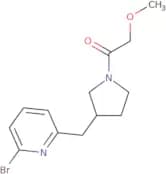
CAS:PF-06679142 is a research tool that is used for the study of receptor and ion channel interactions. It is an activator of the nicotinic acetylcholine receptor (nAChR) and has been shown to block ligand binding to the nAChR. PF-06679142 also binds to cell-surface receptors, such as the human epidermal growth factor receptor 2 (HER2), and may be useful in targeting cancer cells. This compound has been shown to inhibit protein synthesis by inhibiting peptide bond formation through competitive inhibition of aminopeptidase N. PF-06679142 belongs to a group of peptides called "N"-substituted glycine analogues, which are used as pharmacological tools for studying protein interactions.
Formula:C20H17F2NO3Purity:Min. 95%Molecular weight:357.3 g/molRef: 3D-SIC05966
Discontinued productMating factor α trifluoroacetate
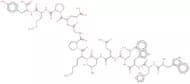
CAS:Mating factor α trifluoroacetate is a research tool with CAS No. 59401-28-4 that is used in Cell Biology, Pharmacology, and Ion channels. Mating factor α trifluoroacetate inhibits ligand binding to receptor by competing with the natural substrate for the active site. It has been shown to be an activator of ion channels, which allow ions to flow through the cell membrane. Mating factor α trifluoroacetate can also be used as a research tool in antibody production and protein interactions.
Formula:C82H114N20O17SPurity:Min. 95%Molecular weight:1,684.01 g/molRef: 3D-JCA40128
Discontinued productANP32B antibody
ANP32B antibody was raised using a synthetic peptide corresponding to a region with amino acids GLTAEFVNLEFLSLINVGLISVSNLPKLPKLKKLELSENRIFGGLDMLAE
MPP5 antibody
MPP5 antibody was raised using a synthetic peptide corresponding to a region with amino acids AVDCPGDLGTRMMPIRRSAQLERIRQQQEDMRRRREEEGKKQELDLNSSM
PRPF6 Blocking Peptide
A synthetic peptide for use as a blocking control in assays to test for specificity of PRPF6 antibody, catalog no. 70R-1449
Purity:Min. 95%Goat anti mouse IgG1
Mouse IgG1 antibody was raised in goat using mouse IgG1 in freunds adjuvant as the immunogen.Purity:Min. 95%PLP1 Blocking Peptide
A synthetic peptide for use as a blocking control in assays to test for specificity of PLP1 antibody, catalog no. 70R-7002
Purity:Min. 95%Phe-Lys(Fmoc)-PAB
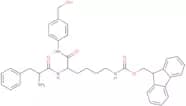
CAS:Phe-Lys(Fmoc)-PAB is a chemical compound that belongs to the category of peptide-based prodrugs, which is derived from synthetic sources with a focus on targeted delivery. This compound consists of phenylalanine and lysine residues, where the lysine is modified with a fluorenylmethyloxycarbonyl (Fmoc) protecting group and a p-aminobenzyl (PAB) linker. The mode of action involves utilizing the stable peptide bond and the cleavable PAB linker to deliver active agents in a controlled fashion, usually by enzyme-mediated cleavage at the target site.
Formula:C37H40N4O5Purity:Min. 95%Molecular weight:620.74 g/molRef: 3D-ZKD58403
Discontinued productTMCC1 Blocking Peptide
A synthetic peptide for use as a blocking control in assays to test for specificity of TMCC1 antibody, catalog no. 70R-6826
Purity:Min. 95%BAK1 antibody
The BAK1 antibody is a test compound used in Life Sciences research. It is a protein reagent that is commonly used in the field of Antibodies. This antibody specifically targets hematopoietic cells and can be used to study their function in various biological processes. The BAK1 antibody has high affinity for its target and can be used as an inhibitor to block specific interactions or signaling pathways. Additionally, it has been shown to have therapeutic potential in the field of pluripotent stem cell research, where it can be used to manipulate DNA double-strand breaks and promote cellular differentiation. With its versatility and wide range of applications, the BAK1 antibody is an essential tool for researchers in the Life Sciences field.
SFPQ antibody
SFPQ antibody was raised using a synthetic peptide corresponding to a region with amino acids PVIVEPLEQLDDEDGLPEKLAQKNPMYQKERETPPRFAQHGTFEYEYSQR
LIPG Blocking Peptide
A synthetic peptide for use as a blocking control in assays to test for specificity of LIPG antibody, catalog no. 70R-7841Purity:Min. 95%mGluR1 alpha antibody
mGluR1 alpha antibody was raised in rabbit using a synthetic peptide comprising internal residues of the human GluR1 alpha protein as the immunogen.Purity:Min. 95%Dopamine beta Hydroxylase antibody
The Dopamine beta Hydroxylase antibody is a highly specialized antibody used in the field of Life Sciences. It is a monoclonal antibody that specifically targets and binds to dopamine beta hydroxylase, an enzyme involved in the synthesis of norepinephrine. This antibody is commonly used in research and diagnostic assays to study the role of dopamine beta hydroxylase in various biological processes.