Biochemicals and Reagents
Subcategories of "Biochemicals and Reagents"
- Biomolecules(98,557 products)
- By Biological Target(101,015 products)
- By Pharmacological Effects(6,941 products)
- Cryopreservatives(21 products)
- Desinfectants and Related Compounds(28 products)
- Hormones(530 products)
- Plant Biology(6,903 products)
- Secondary Metabolites(14,371 products)
Found 130589 products of "Biochemicals and Reagents"
(2R,3S)-1-(((2aR,4S,4aS,6R,9S,11S,12S,12bS)-12b-Acetoxy-12-(benzoyloxy)-4,6,11-trihydroxy-4a,8,13,13-tetramethyl-5-oxo-2a,3,4,4a,5,6 ,9,10,11,12,12a,12b-dodecahydro-1H-7,11-methanocyclodeca[3,4]benzo[1,2-b]oxet-9-yl)oxy)-3-((tert-butoxycarbonyl)amino)-1-o
CAS:(2R,3S)-1-(((2aR,4S,4aS,6R,9S,11S,12S,12bS)-12b-Acetoxy-12-(benzoyloxy)-4,6,11-trihydroxy-4a,8,13
Formula:C51H60N2O19Purity:Min. 95%Molecular weight:1,005 g/molRef: 3D-KNB15597
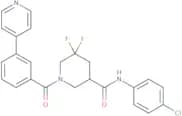
Discontinued productN-(4-Chlorophenyl)-5,5-difluoro-1-(3-(pyridin-4-yl)benzoyl)piperidine-3-carboxamide
CAS:N-(4-Chlorophenyl)-5,5-difluoro-1-(3-(pyridin-4-yl)benzoyl)piperidine-3-carboxamide is an advanced fluorinated piperidine derivative often used in biochemical research and drug development. This compound is synthesized through intricate organic chemistry techniques that typically involve multi-step processes designed to achieve precise structural functionalities. Its mode of action is based on interacting with target receptors or enzymes in biological systems, possibly altering their activity in a highly selective manner.Formula:C24H20ClF2N3O2Purity:Min. 95%Molecular weight:455.9 g/molRef: 3D-XBD09921
Discontinued productOrexin receptor antagonist 2
CAS:Orexin receptor antagonist 2 is a peptide that binds to orexin receptors. It inhibits the activity of the orexin receptor and has no effect on other receptors. This compound is used as a research tool to study the function of the orexin receptor. Orexin receptor antagonist 2 can be used in conjunction with antibodies to study protein interactions, or with ligands to study ligand-receptor interactions. Applications include ion channels and neurotransmitter receptors.
Formula:C25H31N5O2Purity:Min. 95%Molecular weight:433.5 g/molRef: 3D-HIC94075
Discontinued productTAK-448
CAS:TAK-448 is a peptide that inhibits the activation of ion channels. It binds to the ligand binding site of ion channels and blocks the passage of ions, thereby inhibiting the function of these proteins. TAK-448 has been shown to inhibit potassium, calcium, and sodium channels in vitro. This inhibitor also has an antagonist effect on GABA-A receptors in vivo. TAK-448 is a reagent for research in cell biology, pharmacology, and other fields. It can be used as a standard tool to study protein interactions or as an activator for receptor studies. TAK-448 is provided at high purity (greater than 99%) with no detectable contaminants.
Formula:C58H80N16O14Purity:Min. 95%Molecular weight:1,225.4 g/molRef: 3D-JZB31968
Discontinued product160 kDa Neurofilament protein
The 6-Fluoro-3-indoxyl-beta-D-galactopyranoside is a powerful antituberculosis drug that falls under the category of rifamycins. It is specifically designed to combat tuberculosis infection by targeting the active compounds responsible for bactericidal activity. This drug works by inhibiting bacterial growth through its binding to DNA-dependent RNA polymerase, effectively preventing transcription and replication. Its efficacy has been extensively tested using advanced techniques such as transcription-quantitative polymerase chain and patch-clamp technique.
Purity:Min. 95%Fenbendazole-amine sulfoxide
CAS:Fenbendazole-amine sulfoxide is a research tool that acts as an activator or ligand for receptor. It is a high-purity reagent for use in pharmacology and cell biology research. Fenbendazole-amine sulfoxide is used to study the function of ion channels and receptors, and its effects on antibody production. Fenbendazole-amine sulfoxide has been shown to inhibit the activity of protein interactions, which may be due to its inhibition of peptide binding or protein synthesis.
Formula:C13H11N3OSPurity:Min. 95%Molecular weight:257.31 g/molRef: 3D-UCA48926
Discontinued productANP32B Blocking Peptide
A synthetic peptide for use as a blocking control in assays to test for specificity of ANP32B antibody, catalog no. 70R-3066
Purity:Min. 95%FMO2 antibody
The FMO2 antibody is a monoclonal antibody that has been developed for its potential use as a medicament in the field of Life Sciences. This antibody exhibits cytotoxic properties and has been shown to induce cell cytotoxicity in various studies. It specifically targets and binds to a growth factor known as phosphorylcholine, inhibiting its activity and preventing further cell growth.
GRI918013
CAS:GRI918013 is a peptide that activates the bradykinin receptor. It inhibits the release of inflammatory mediators, such as prostaglandins, histamine, and leukotrienes from mast cells and other immune cells. GRI918013 has also been shown to inhibit ion channels, such as P/Q-type calcium channels.
Formula:C17H15Cl2FN2O4SPurity:Min. 95%Molecular weight:433.3 g/molRef: 3D-NMA68555
Discontinued productDDAH2 Blocking Peptide
A synthetic peptide for use as a blocking control in assays to test for specificity of DDAH2 antibody, catalog no. 70R-5792
Purity:Min. 95%BDP-13176
CAS:BDP-13176 is a peptide used as a research tool. It binds to the beta-adrenergic receptor and activates it. BDP-13176 is a high purity product with an ionic charge of -1. It has been shown to inhibit the activity of ion channels, such as voltage-gated calcium channels in neuroblastoma cells. This product also inhibits ligand binding to the beta-adrenergic receptor, which may be due to its ability to compete with endogenous ligands for binding site on the receptor. BDP-13176 is a potent activator of the beta-adrenergic receptor, with an EC50 of 6 nM in rat heart cells.
Formula:C24H22Cl2N6O2Purity:Min. 95%Molecular weight:497.4 g/molRef: 3D-QRD66061
Discontinued productFascin antibody
Fascin antibody is a highly specific monoclonal antibody that targets fascin, a protein involved in cell migration and adhesion. It binds to histidine residues on the fascin molecule, inhibiting its function and preventing tumor metastasis. This antibody has been extensively studied in various research fields, including cancer biology and immunology. Fascin antibody can be used in experiments to detect fascin expression levels in human serum samples or tissue sections. Additionally, it has been shown to have cytotoxic effects on cancer cells and can be used as a therapeutic agent in cancer treatment. The use of this antibody has also been explored in autoimmune diseases, where autoantibodies targeting fascin have been identified. Overall, Fascin antibody is a valuable tool for researchers in the Life Sciences field who are studying cell migration, tumor metastasis, and autoimmunity.
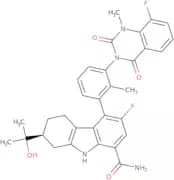
BMS-986142
CAS:Inhibitor of Bruton's tyrosine kinase (BTK)
Formula:C32H30F2N4O4Purity:Min. 95%Molecular weight:572.6 g/molKF 13218
CAS:KF 13218 is a research tool that is used as an activator to study the effects of ion channels on cell function. It binds to receptor sites and regulates the flow of ions through ion channels, which are protein structures that allow the passage of charged particles. KF 13218 has an affinity for ligand-gated ion channels, such as nicotinic acetylcholine receptors and serotonin 5HT3 receptors. This drug also has been shown to inhibit the activity of potassium channels in human neutrophils.
Formula:C20H20N2O3Purity:Min. 95%Molecular weight:336.4 g/molARN 272
CAS:ARN 272 is a fatty acid that has been shown to have anti-inflammatory effects. The mechanism of action of ARN 272 is unclear, but it may involve its ability to inhibit the uptake and reuptake of endocannabinoids. ARN 272 also inhibits the production of inflammatory pain signals in mice. This drug also blocks the binding of arachidonic acid to the CB1 receptor.
Formula:C27H20N4O2Purity:Min. 95%Molecular weight:432.47 g/molRef: 3D-NUA79385
Discontinued productN-De-2,4-difluorobenzyl dolutegravir
CAS:Dolutegravir is a non-nucleoside reverse transcriptase inhibitor that is used in the treatment of HIV. It is a competitive inhibitor of HIV-1 integrase and blocks HIV-1 replication by inhibiting the integration of viral DNA into the host cell genome. Dolutegravir binds to a specific region on the integrase protein, which prevents it from interacting with its target DNA sequence. This binding inhibits the incorporation of viral DNA into host cells, resulting in inhibition of viral replication. Dolutegravir also has been shown to have agonist activity at the human histamine H3 receptor and has potential as an anti-inflammatory agent.
Formula:C13H15N3O5Purity:Min. 95%Molecular weight:293.27 g/molRef: 3D-KJC08126
Discontinued productFAM78A Blocking Peptide
A synthetic peptide for use as a blocking control in assays to test for specificity of FAM78A antibody, catalog no. 70R-9322
Purity:Min. 95%PGM3 Blocking Peptide
A synthetic peptide for use as a blocking control in assays to test for specificity of PGM3 antibody, catalog no. 70R-4450
Purity:Min. 95%C1QB Blocking Peptide
A synthetic peptide for use as a blocking control in assays to test for specificity of C1QB antibody, catalog no. 70R-5990
Purity:Min. 95%