Biochemicals and Reagents
Subcategories of "Biochemicals and Reagents"
- Biomolecules(98,750 products)
- By Biological Target(100,261 products)
- By Pharmacological Effects(6,826 products)
- Cryopreservatives(21 products)
- Desinfectants and Related Compounds(28 products)
- Hormones(356 products)
- Plant Biology(6,896 products)
- Secondary Metabolites(14,348 products)
Found 130132 products of "Biochemicals and Reagents"
CD28 antibody (biotin)
CD28 antibody (biotin) was raised in hamster using CD28 costimulatory receptor as the immunogen.Purity:Min. 95%Molecular weight:0 g/molCD16 antibody (PE)
CD16 antibody (PE) was raised in mouse using human polymorphonuclear leukocytes as the immunogen.Purity:Min. 95%Molecular weight:0 g/molCD163 antibody (biotin)
CD163 antibody (biotin) was raised in mouse using human monocytes as the immunogen.CD106 antibody (Azide Free)
CD106 antibody (Azide free) was raised in rat using murine CD106/VCAM-1 as the immunogen.CD22 antibody (biotin)
CD22 antibody (biotin) was raised in rat using CD22 as the immunogen.Purity:Min. 95%Molecular weight:0 g/molDostarlimab
CAS:Dostarlimab binds with high affinity to human PD-1 and competitively inhibits its interaction with its ligands PD-L1 and PD-L2
CD45 antibody (FITC)
CD45 antibody was raised in Rat using CD45/LCA as the immunogen.Purity:Min. 95%Molecular weight:0 g/molCD45RC antibody (FITC)
CD45 antibody (FITC) was raised in Rat using as exon C-dependent epitope of CD45 glycoprotin as the immunogen.Purity:Min. 95%Molecular weight:0 g/molCD49d antibody (PE)
CD49d antibody (PE) was raised in mouse using human CD49d as the immunogen.Purity:Min. 95%Molecular weight:0 g/molCD11b antibody (Spectral Red)
CD11b antibody (CY5) was raised in rat using C57BL/10 murine splenic T-cells and concanavalin A-activted C57BL/10 splenocytes as the immunogen.Purity:Min. 95%Molecular weight:0 g/molCatestatin, human
Catestatin is a peptide that belongs to the family of activators. Catestatin is an activator of potassium channels and can be used as a research tool. It has been shown to bind to the Kv1.2 receptor, which is expressed in human heart and skeletal muscle cells. This peptide also inhibits calcium-activated potassium channels, thereby blocking the transmission of nerve impulses. Catestatin has been shown to inhibit protein interactions with G protein-coupled receptors (GPCRs) and ion channels, thereby regulating cellular signaling pathways involved in cell growth and differentiation.Purity:Min. 95%1-Myristoyl-sn-glycero-3-phosphocholine
CAS:1-Myristoyl-sn-glycero-3-phosphocholine is a phospholipid that is used as a surfactant. It has been shown to increase the volume of human serum and pancreatic enzymes, which may be due to its matrix effect on tissue samples. 1-Myristoyl-sn-glycero-3-phosphocholine also binds with fatty acids and kynurenine in vitro. In this experiment, it was observed that 1-myristoyl-sn glycero 3 phosphatecholine increased the activity of kynurenine hydroxylase, an enzyme involved in the metabolism of tryptophan. This suggests that 1 myristoyl sn glycero 3 phosphocholine may be beneficial for patients with chronic fatigue syndrome or depression who are deficient in serotonin.Formula:C22H46NO7PPurity:Min. 95%Molecular weight:467.58 g/molPTTG2 Blocking Peptide
A synthetic peptide for use as a blocking control in assays to test for specificity of PTTG2 antibody, catalog no. 70R-8929Purity:Min. 95%Human Albumin
Please enquire for more information about Human Albumin including the price, delivery time and more detailed product information at the technical inquiry form on this pageOvarian Cancer Antigen (CA 125)
Please enquire for more information about Ovarian Cancer Antigen (CA 125) including the price, delivery time and more detailed product information at the technical inquiry form on this pageCD44 antibody (PE)
CD44 antibody (PE) was raised in mouse using chicken CD44 as the immunogen.Purity:Min. 95%Molecular weight:0 g/molCD45.2 antibody (PE-CY7)
CD45.2 antibody (PE-CY7) was raised in mouse using CD45.2 as the immunogen.Purity:Min. 95%Molecular weight:0 g/molCD107a antibody (FITC)
CD107a antibody (FITC) was raised in rat using murine CD107a (LAMP-1) as the immunogen.Purity:Min. 95%Molecular weight:0 g/molCD11b antibody (Spectral Red)
CD11b antibody (PE was raised in rat using C57BL/10 murine splenic T-cells and concanavalin A-activted C57BL/10 splenocytes as the immunogen.Purity:Min. 95%Molecular weight:0 g/molCD45R antibody (Spectral Red)
CD45R antibody (Spectral Red) was raised in rat using abelson murine leukemia virus-induced pre-B tumor cells as the immunogen.
Purity:Min. 95%Molecular weight:0 g/molCD40 antibody (PE)
CD40 antibody (PE) was raised in rat using CD40 as the immunogen
Purity:Min. 95%Molecular weight:0 g/molCD102 antibody (PE)
CD102 antibody (biotin) was raised in rat using COS cells transfected with mouse ICAM-2 cDNA as the immunogen.Purity:Min. 95%Molecular weight:0 g/molCD24 antibody (Spectral Red)
CD24 antibody (Spectral Red) was raised in rat using murine heat stable antigen as the immunogen.
Purity:Min. 95%Molecular weight:0 g/molCD3e antibody (FITC)
CD3e antibody (FITC) was raised in hamster using T cell receptor complexes derived from C6VL-BS thymoma cells as the immunogen.Purity:Min. 95%Molecular weight:0 g/molCD44 antibody (FITC)
CD44 antibody (FITC) was raised in mouse using chicken CD44 as the immunogen.
Purity:Min. 95%Molecular weight:0 g/molCD103 antibody (PE)
CD103 antibody (biotin) was raised in hamster using murine CD103 as the immunogen.Purity:Min. 95%Molecular weight:0 g/molFAS Blocking Peptide
The FAS Blocking Peptide is a cytotoxic peptide that belongs to the Peptides and Biochemicals category. It is derived from Flavobacterium heparinum and is commonly used in research laboratories for various applications. This blocking peptide is designed to inhibit the binding of monoclonal antibodies or other binding proteins to FAS receptors, thereby preventing their activation. It can be used in studies related to growth factors, anti-MERTK antibodies, electrodes, animal serum, androgens, low-molecular-weight compounds, life sciences, DNA aptamers, monoclonal antibodies, and dextran sulfate. The FAS Blocking Peptide offers researchers a valuable tool for studying cellular processes and signaling pathways involving FAS receptors.Purity:Min. 95%CD3 antibody (Allophycocyanin-CY7)
CD3 antibody (Allophycocyanin) was raised in mouse using the epsilon chain of CD3/T-cell antigen receptor complex as the immunogen.Purity:Min. 95%Molecular weight:0 g/molCD19 antibody (Allophycocyanin-CY7)
CD19 antibody (PE-Texas Red) was raised in mouse using human CD19 as the immunogen.Purity:Min. 95%Molecular weight:0 g/molCD30 antibody (FITC)
CD30 antibody (FITC) was raised in hamster using recombinant murine CD30 extracellular domain-mouse IgG1 fusion protein as the immunogen.Purity:Min. 95%Molecular weight:0 g/molCD3e antibody (biotin)
CD3e antibody (biotin) was raised in mouse using porcine CD3e as the immunogen.
Purity:Min. 95%Molecular weight:0 g/molCD26 antibody (biotin)
CD26 antibody (biotin) was raised in mouse using human ocular melanoma cell line V+B2 as the immunogen.Purity:Min. 95%Molecular weight:0 g/molCD117 antibody (Spectral Red)
CD117 antibody (Allophycocyanin-CY7) was raised in rat using murine CD117/c-Kit as the immunogen.
Purity:Min. 95%Molecular weight:0 g/molCD45 antibody (biotin)
CD45 antibody (biotin) was raised in mouse using chicken CD45 as the immunogen.
Purity:Min. 95%Molecular weight:0 g/molCD20 antibody (Allophycocyanin-CY7)
CD20 antibody (Allophycocyanin-CY7) was raised in mouse using human CD20 as the immunogen.Purity:Min. 95%Molecular weight:0 g/molCD31 antibody (Allophycocyanin)
CD31 antibody (Allophycocyanin) was raised in rat using murine leukocyte cell line 32D as the immunogen.Purity:Min. 95%Molecular weight:0 g/molCD23 antibody (PE-CY7)
CD23 antibody (PE) was raised in rat using CD23 low affinity IgE Fc receptor as the immunogen.Purity:Min. 95%Molecular weight:0 g/molCD19 antibody (Spectral Red)
CD19 antibody (Spectral Red) was raised in mouse using human CD19 as the immunogen.Purity:Min. 95%Molecular weight:0 g/molOrnithine decarboxylase antibody
The Ornithine decarboxylase antibody is a family kinase inhibitor that belongs to the group of antibodies. It is specifically designed to target and inhibit the activity of ornithine decarboxylase, an enzyme involved in polyamine synthesis. This antibody can be used in various research applications in the life sciences field, including studying the role of ornithine decarboxylase in cellular processes such as cell growth, proliferation, and differentiation.Z-Gly-Pro-Leu
CAS:Z-Gly-Pro-Leu is a bacterial enzyme that belongs to the group of carboxypeptidases. It has an optimal pH of neutral ph, and can be found in ascidian tissue. Z-Gly-Pro-Leu is a synthetic substrate, and its sequences have been determined. Functional groups of this enzyme are carboxylic acid, hydroxyl, amine and thiol. This enzyme is used in the production of synthetic peptides and it has been shown to have a high level of activity on homogenates. It has also been shown to have an effector function in pancreatic tissue when injected subcutaneously.
Formula:C21H29N3O6Purity:Min. 95%Molecular weight:419.47 g/molCancer Hydrolase KIAA1363 Inhibitor, JW480
CAS:Please enquire for more information about Cancer Hydrolase KIAA1363 Inhibitor, JW480 including the price, delivery time and more detailed product information at the technical inquiry form on this pageFormula:C22H23NO2Purity:Min. 95%Molecular weight:333.42 g/molNeurokinin B (Human, Porcine, Bovine, Rat, Mouse)
As a member of the tachykinin neuropeptide family, Neurokinin B is involved in the dilation of blood vessels, the contraction of smooth muscles and the excitation of neurons. This product can be applied as a NK3 receptors selective agonist.Formula:C55H79N13O14S2CH3COOH•4H2OPurity:Min. 95%Molecular weight:1,312.49 g/molPleiotrophin, human
Human pleiotrophin is a peptide that belongs to the family of neuropeptides. It has been shown to bind to ion channels in the cell membrane and is believed to regulate their function. This protein also binds with high affinity to the receptor tyrosine kinase, which are important for many cellular functions including signal transduction and cell growth. Pleiotrophin has been used as a research tool for studying protein interactions and for understanding how ion channels work. It can be used to study the mechanisms of various diseases such as hypertension, asthma, and diabetes mellitus.Formula:C658H1079N197O198S12Purity:Min. 95%Molecular weight:15,302.6 g/molAmyloid Beta-Protein (Human, 1-40) Antiserum
Amyloid Beta-Protein (Human, 1-40) Antiserum is an antibody, which is a protein that recognizes and binds to a specific antigen. The Amyloid Beta-Protein (Human, 1-40) Antiserum can bind to amyloid beta protein in the brain and trigger immune system cells to clear it from the body. This antibody can also be used as a research tool for studying the structure of amyloid beta protein and how it affects human cells.Purity:Min. 95%N-(2-Acetyl-4,6-dimethylphenyl)-3-[[(3,4-dimethyl-5-isoxazolyl)amino]sulfonyl]-2-thiophenecarboxamide
CAS:N-(2-Acetyl-4,6-dimethylphenyl)-3-[[(3,4-dimethyl-5-isoxazolyl)amino]sulfonyl]-2-thiophenecarboxamide is a highly specific herbicide. It is synthesized through an intricate organic chemistry process involving sulfonylurea derivatives. The mode of action involves the inhibition of acetolactate synthase (ALS), an essential enzyme in the biosynthesis of branched-chain amino acids in plants. By disrupting this crucial pathway, it effectively halts protein synthesis and cell division, leading to the eventual death of the targeted weeds.Formula:C20H21N3O5S2Purity:Min. 95%Molecular weight:447.5 g/mol17(R)-Resolvin d1 methyl ester
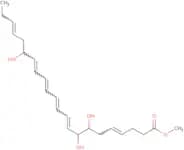
CAS:Please enquire for more information about 17(R)-Resolvin d1 methyl ester including the price, delivery time and more detailed product information at the technical inquiry form on this page
Formula:C23H34O5Purity:Min. 95%Molecular weight:390.5 g/molAziridinomitosene
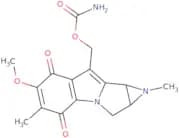
CAS:Aziridinomitosene is an analog of mitomycin C, a potent anticancer drug. It induces apoptosis in cancer cells by cross-linking DNA strands and inhibiting DNA synthesis. Aziridinomitosene also inhibits elastase activity, which is involved in the degradation of extracellular matrix proteins and is associated with tumor invasion and metastasis. This drug has been shown to be a potent inhibitor of various kinases, including Chinese hamster ovary cell kinase, human epidermal growth factor receptor kinase, and protein kinase C. Aziridinomitosene has demonstrated significant antitumor activity in various animal models, including lung cancer and colon cancer. Urinary excretion of this drug is rapid and complete within 48 hours after administration.
Formula:C16H17N3O5Purity:Min. 95%Molecular weight:331.32 g/mol
















![N-(2-Acetyl-4,6-dimethylphenyl)-3-[[(3,4-dimethyl-5-isoxazolyl)amino]sulfonyl]-2-thiophenecarboxam…](/_next/image/?url=https%3A%2Fstatic.cymitquimica.com%2Fproducts%2F3D%2Fthumb-webp%2FZNA45349.webp&w=3840&q=75)