Biochemicals and Reagents
Subcategories of "Biochemicals and Reagents"
- Biomolecules(98,557 products)
- By Biological Target(101,015 products)
- By Pharmacological Effects(6,941 products)
- Cryopreservatives(21 products)
- Desinfectants and Related Compounds(28 products)
- Hormones(530 products)
- Plant Biology(6,903 products)
- Secondary Metabolites(14,371 products)
Found 130589 products of "Biochemicals and Reagents"
HERC4 Blocking Peptide
A synthetic peptide for use as a blocking control in assays to test for specificity of HERC4 antibody, catalog no. 70R-8554
Purity:Min. 95%UTP23 Blocking Peptide
A synthetic peptide for use as a blocking control in assays to test for specificity of UTP23 antibody, catalog no. 70R-10099
Purity:Min. 95%Dihydromunduletone
CAS:Dihydromunduletone is a peptide inhibitor that binds to the receptor and prevents it from binding to its ligand. Dihydromunduletone is an activator of the GABA receptor, which is a ligand-gated ion channel. Dihydromunduletone also has been shown to act as an inhibitor of protein interactions, including those with other inhibitors or activators of the GABA receptor. Dihydromunduletone is a high-purity chemical reagent for use in research applications, such as pharmacology, cell biology, and biochemistry.
Formula:C25H28O6Purity:Min. 95%Molecular weight:424.5 g/molRef: 3D-ZBB78620
Discontinued productYGSY2P-IN-1
CAS:YGSY2P-IN-1 is a peptide that inhibits the activity of the receptor for Substance P. The peptide has a molecular weight of 2,096 Daltons and contains four amino acids: Tyr, Gly, Ser, and Phe. YGSY2P-IN-1 is competitive with respect to Substance P binding to the receptor and does not bind to other receptors. This peptide is soluble in water and has a purity of greater than 98%. It can be used as a research tool or an inhibitor in pharmacology studies.
Formula:C16H11F3N2O4Purity:Min. 95%Molecular weight:352.26 g/molRef: 3D-QWD00397
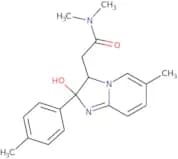
Discontinued productAlpha-hydroxyzolpidem
CAS:Please enquire for more information about Alpha-hydroxyzolpidem including the price, delivery time and more detailed product information at the technical inquiry form on this page
Formula:C19H23N3O2Purity:Min. 95%Molecular weight:325.4 g/molRef: 3D-TEA02614
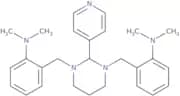
Discontinued productGANT 61
CAS:Inhibitor of transcription activator of the Hedgehog pathway Gli
Formula:C27H35N5Purity:Min. 95%Color and Shape:White/Off-White SolidMolecular weight:429.6 g/molGBA antibody
GBA antibody is a highly specific monoclonal antibody that targets molecules involved in necrosis factor-related apoptosis-inducing and growth factor signaling pathways. It binds to specific proteins within the protein complex, effectively neutralizing their activity. This antibody can be used in various applications in Life Sciences, including research and diagnostics. GBA antibody is available as both polyclonal and monoclonal antibodies, providing researchers with options for their specific experimental needs. It has been shown to have high affinity and specificity for its target molecule, making it a valuable tool in studying various biological processes. Additionally, GBA antibody has been tested and validated in human serum samples, ensuring its reliability and accuracy in clinical settings.
16:0 Pyrene pe
CAS:Pyrene pe is a peptide inhibitor that binds to the active site of protein kinases and inhibits their activity. It has been used as a tool for research in cell biology and pharmacology. Pyrene pe is used as a ligand in receptor-ligand binding assays, which are used to determine the affinity of an agonist or antagonist to its receptor. The 16:0 form of pyrene pe has shown to be an activator, while the 18:1 form has shown to be an inhibitor. Pyrene pe has a molecular weight of 706.5 Da and is soluble in DMSO, methanol, and water.
Formula:C53H85N2O10PSPurity:Min. 95%Molecular weight:973.29 g/molRef: 3D-KQD66959
Discontinued productABBV 744
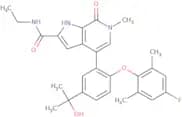
CAS:BET bromodomain inhibitor selective for BDII
Formula:C28H30FN3O4Purity:Min. 95%Molecular weight:491.55 g/molARHGAP28 Blocking Peptide
A synthetic peptide for use as a blocking control in assays to test for specificity of ARHGAP28 antibody, catalog no. 70R-3943
Purity:Min. 95%E2F3 Blocking Peptide
A synthetic peptide for use as a blocking control in assays to test for specificity of E2F3 antibody, catalog no. 70R-8240
Purity:Min. 95%Cycloartenyl ferulate
CAS:Cycloartenyl ferulate is a peptide that has been shown to inhibit the production of prostaglandin E2 and inhibit protein synthesis. Cycloartenyl ferulate inhibits protein interactions by binding to the receptor and blocking its binding site, which prevents activation of the receptor. Cycloartenyl ferulate can also be used as an activator or ligand in research tools such as antibody-drug conjugates (ADCs) or as a reagent in immunohistochemistry. Cycloartenyl ferulate is a high purity, life science product with CAS number 21238-33-5.
Formula:C40H58O4Purity:Min. 95%Molecular weight:602.9 g/molRef: 3D-WAA23833
Discontinued productTPH2 Blocking Peptide
A synthetic peptide for use as a blocking control in assays to test for specificity of TPH2 antibody, catalog no. 70R-2005
Purity:Min. 95%MCTP1 Blocking Peptide
A synthetic peptide for use as a blocking control in assays to test for specificity of MCTP1 antibody, catalog no. 70R-6811
Purity:Min. 95%d18024
CAS:D18024 is a peptide that belongs to the class of activator peptides. It activates the G-protein-coupled receptor (GPCR) coupled ion channels and can be used as a research tool for studying protein interactions. D18024 inhibits the activity of some ligands and receptors, such as angiotensin II, which are involved in blood pressure regulation. This peptide has been shown to activate protein kinase C, leading to phosphorylation of intracellular proteins.
D18024 is a ligand or inhibitor that binds to certain cell surface receptors and affects their function. This peptide is characterized by its high purity, with no detectable impurities on the HPLC chromatogram. CAS No: 110406-33-2Formula:C29H31ClFN3OPurity:Min. 95%Molecular weight:492 g/molSPATC1 Blocking Peptide
A synthetic peptide for use as a blocking control in assays to test for specificity of SPATC1 antibody, catalog no. 70R-4277
Purity:Min. 95%CEP55 Blocking Peptide
A synthetic peptide for use as a blocking control in assays to test for specificity of CEP55 antibody, catalog no. 70R-2148
Purity:Min. 95%GSK575594A
CAS:GSK575594A is a novel ligand that has been shown to bind to the benzodiazepine site of the GABAA receptor. The pharmacophore of GSK575594A is based on diazepam, which is a drug that blocks the activity of the neurotransmitter acetylcholine by binding to its receptor and preventing acetylcholine from activating muscle cells. GSK575594A prevents nicotinic acetylcholine receptors from being activated by acetylcholine and can be used for the treatment of muscle spasms. GSK575594A also has an affinity for cannabinoid receptors, which are found in brain tissue, and can be used for treating anxiety disorders. In addition, it binds to allosteric sites on cholinergic receptor proteins, which may result in modulating their function.
Formula:C24H23F2N3O3SPurity:Min. 95%Molecular weight:471.5 g/molRef: 3D-JLB41868
Discontinued productNEDD9 antibody
NEDD9 antibody was raised using the middle region of NEDD9 corresponding to a region with amino acids HPPPQLGQSVGSQNDAYDVPRGVQFLEPPAETSEKANPQERDGVYDVPLH
LONRF3 Blocking Peptide
A synthetic peptide for use as a blocking control in assays to test for specificity of LONRF3 antibody, catalog no. 70R-2616
Purity:Min. 95%Goat anti Llama IgG (H + L) (HRP)
This antibody reacts with heavy chains on llama IgG and light chains on all llama immunoglobulins.Purity:Min. 95%FGF1 protein
FGF1 protein is a recombinant protein that belongs to the class of monoclonal antibodies. It is commonly used in research and diagnostic applications. FGF1 protein has phosphatase activity and plays a crucial role in various cellular processes. It interacts with other proteins such as angptl3 and lipoprotein lipase, regulating their functions. This protein can be used in experiments involving hybridization, plasmids, and gene expression studies. FGF1 protein is also a growth factor that promotes cell proliferation and differentiation. It has neutralizing properties and can be used to block the effects of specific factors or chimeric proteins. In the field of life sciences, FGF1 protein is a valuable tool for studying adipose tissue development and related metabolic disorders.
Purity:Min. 95%CASP6 Blocking Peptide
A synthetic peptide for use as a blocking control in assays to test for specificity of CASP6 antibody, catalog no. 70R-9652
Purity:Min. 95%Hemoglobin protein
Haemoglobin protein is a biochemical compound that plays a crucial role in the transport of oxygen in the bloodstream. It consists of four subunits, each containing an iron-containing heme group that binds to oxygen molecules. Haemoglobin protein is responsible for carrying oxygen from the lungs to various tissues and organs in the body.Purity:Min. 95%TMEM30A antibody
TMEM30A antibody was raised using the N terminal of TMEM30A corresponding to a region with amino acids FTLEKSFEGNVFMYYGLSNFYQNHRRYVKSRDDSQLNGDSSALLNPSKECPurity:Min. 95%ApoJ antibody
ApoJ antibody was raised in goat using human apolipoprotein type J as the immunogen.Purity:Min. 95%EFEMP1 antibody
The EFEMP1 antibody is a cytotoxic monoclonal antibody that has neutralizing properties. It specifically targets alpha-fetoprotein, a protein that is often overexpressed in certain types of cancer cells. This antibody binds to the alpha-fetoprotein and inhibits its function, leading to cell death. The EFEMP1 antibody has been extensively studied in the field of life sciences and has shown promising results as a potential medicament for cancer treatment. Additionally, it has been found to interfere with collagen synthesis and inhibit the activity of growth factors, further contributing to its anti-cancer effects. This highly specialized antibody holds great potential in the development of targeted therapies for various types of cancers.
TIMELESS Blocking Peptide
A synthetic peptide for use as a blocking control in assays to test for specificity of TIMELESS antibody, catalog no. 20R-1198
Purity:Min. 95%CA 19-9 protein
CA 19-9 protein is a biomarker that is found in human serum. It can be detected using monoclonal antibodies and has various applications in research and diagnostics. The immobilization of CA 19-9 protein on an electrode surface allows for the development of cytotoxic or neutralizing assays, making it a valuable tool in studying immune responses. Additionally, CA 19-9 protein has antiangiogenic properties, which means it can inhibit the growth of new blood vessels. This makes it relevant in the field of cancer research, where angiogenesis plays a crucial role in tumor growth and metastasis. Furthermore, CA 19-9 protein can be used as a target for drug delivery systems or as a diagnostic marker for diseases such as pancreatic cancer. Its ability to induce lysis of certain cell types also makes it useful in studying cell death pathways and apoptotic processes involving caspase-9. Overall, CA 19-9 protein is an important molecule in the field of life sciencesPurity:Highly PurifiedERK1/2 antibody
ERK 1/2 antibody was raised in Mouse using a purified recombinant fragment of human MAPK1 expressed in E. coli as the immunogen.TGF beta 3 Blocking Peptide
A synthetic peptide for use as a blocking control in assays to test for specificity of TGFB3 antibody, catalog no. 70R-5699
Purity:Min. 95%Goat anti Rabbit IgG (H + L) (HRP)
Goat anti-rabbit IgG (H+L) (HRP) was raised in goat using rabbit IgG, whole molecule as the immunogen.Purity:Min. 95%FCGRT antibody
FCGRT antibody was raised using the N terminal of FCGRT corresponding to a region with amino acids GWLGPQQYLSYNSLRGEAEPCGAWVWENQVSWYWEKETTDLRIKEKLFLE
Purity:Min. 95%Calsyntenin 1 Blocking Peptide
A synthetic peptide for use as a blocking control in assays to test for specificity of CLSTN1 antibody, catalog no. 70R-6778
Purity:Min. 95%MBL2 Blocking Peptide
A synthetic peptide for use as a blocking control in assays to test for specificity of MBL2 antibody, catalog no. 70R-4596
Purity:Min. 95%RNF36 Blocking Peptide
A synthetic peptide for use as a blocking control in assays to test for specificity of RNF36 antibody, catalog no. 70R-8054
Purity:Min. 95%SMC2 Blocking Peptide
A synthetic peptide for use as a blocking control in assays to test for specificity of SMC2 antibody, catalog no. 70R-5610
Purity:Min. 95%KCNH6 antibody
KCNH6 antibody was raised using a synthetic peptide corresponding to a region with amino acids GKYRTISQIPQFTLNFVEFNLEKHRSSSTTEIEIIAPHKVVERTQNVTEK
LAMP1 Blocking Peptide
A synthetic peptide for use as a blocking control in assays to test for specificity of LAMP1 antibody, catalog no. 70R-9628
Purity:Min. 95%Mycoplasma pneumoniae antibody
Mycoplasma pneumoniae antibody is a product used in Life Sciences research to study protein-protein interactions. It is a monoclonal antibody that specifically targets and binds to Mycoplasma pneumoniae, a bacterium known to cause respiratory infections. The antibody can be used in various applications such as immunohistochemical detection, fluorescence immunochromatography, and polymerase chain reactions. It is highly specific and sensitive, making it an ideal tool for detecting the presence of Mycoplasma pneumoniae in samples such as human serum or cell cultures. This antibody can also be used to study the role of Mycoplasma pneumoniae in autoimmune diseases by investigating the presence of autoantibodies. Its high affinity for Mycoplasma pneumoniae antigens ensures accurate and reliable results in research experiments.
Pneumolysin antibody
Pneumolysin antibody is a polyclonal antibody that is used in Life Sciences research. It specifically targets pneumolysin, a protein produced by Streptococcus pneumoniae, which is responsible for causing pneumonia and other respiratory infections. This antibody has been shown to neutralize the activity of pneumolysin, preventing its damaging effects on host cells. Pneumolysin antibody can be used in various applications such as immunohistochemistry, ELISA, and Western blotting to study the role of pneumolysin in disease progression and to develop new therapeutic strategies. With its high specificity and affinity for pneumolysin, this antibody is a valuable tool for researchers in the field of infectious diseases.
Purity:Min. 95%