Biochemicals and Reagents
Subcategories of "Biochemicals and Reagents"
- Biomolecules(98,757 products)
- By Biological Target(100,261 products)
- By Pharmacological Effects(6,822 products)
- Cryopreservatives(21 products)
- Desinfectants and Related Compounds(28 products)
- Hormones(356 products)
- Plant Biology(6,893 products)
- Secondary Metabolites(14,348 products)
Found 130132 products of "Biochemicals and Reagents"
P69 (522-534), M. leprae
Catalogue peptide; min. 95% purity
Formula:C52H84N14O21Molecular weight:1,241.33 g/molPergolide mesylate
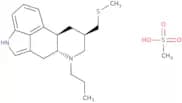
CAS:Controlled ProductD1 and D2 dopamine agonist
Formula:C20H30N2O3S2Purity:Min. 95%Color and Shape:White To Off-White SolidMolecular weight:410.6 g/molFMRF-related peptide, SDPFLRF-NH2
Catalogue peptide; min. 95% purity
Formula:C42H61N11O10Molecular weight:880.02 g/molα-Neo-Endorphin Analog
Catalogue peptide; min. 95% purity
Formula:C66H102N20O13Molecular weight:1,383.68 g/mol[D-Tyr27,36, D-Thr32]-Neuropeptide Y, human
Catalogue peptide; min. 95% purity
Formula:C189H285N55O57SMolecular weight:4,271.67 g/mol[Ala8]-Humanin, [Ala8]-HN, Shna
Catalogue peptide; min. 95% purity
Formula:C119H204N34O32SMolecular weight:2,655.23 g/molCorticostatin, human
Catalogue peptide; min. 95% purity
Formula:C157H261N49O43S6Molecular weight:3,715.47 g/molBiotin-LC-Neurogranin (28-43)
Catalogue peptide; min. 95% purity
Formula:C94H159N31O20S2Molecular weight:2,139.48 g/mol[Phe22] Big Endothelin-1 (19-37), human
Catalogue peptide; min. 95% purity
Formula:C104H152N26O26Molecular weight:2,182.53 g/molTNF-α(10-36) (human)
Catalogue peptide; min. 95% purity
Formula:C131H211N43O38Molecular weight:2,996.41 g/molAc-Choline Receptor α1(129-145)
Catalogue peptide; min. 95% purity
Formula:C90H136N22O28S2Molecular weight:2,038.34 g/molCrustacean Erythrophore Concentrating Hormone
Catalogue peptide; min. 95% purity
Formula:C45H59N11O11Molecular weight:930.04 g/molPeptide YY (3-36) (canine, mouse, porcine, rat)
Catalogue peptide; min. 95% purity
Formula:C190H288N54O57Molecular weight:4,240.64 g/molMyelin Oligodendrocyte Glycoprotein (35-55) (mouse, rat) trifluoroacetate
CAS:Myelin oligodendrocyte glycoprotein (MOG) is a myelin protein found in the central nervous system. MOG is a ligand for CD200, which is an inhibitory receptor expressed by astrocytes. It has been shown that MOG can induce the proliferation and differentiation of primary cultures of rat astrocytes in vitro. MOG induces the production of reactive oxygen species in mitochondria and increases the expression of acid-binding protein, which are both important factors in the demyelination process. MOG has also been implicated as a potential factor in the development of multiple sclerosis. Further research into this protein may lead to new treatments or cures for disorders such as encephalomyelitis, nervous system diseases, or even cancer.
Formula:C118H177N35O29S•C2HO2F3Purity:Min. 95%Color and Shape:PowderMolecular weight:2,695.98 g/mol[Tyr0]-α-CGRP, [Tyr0]-α-CGRP, rat
Catalogue peptide; min. 95% purity
Formula:C171H271N51O54S2Molecular weight:3,969.50 g/mol[Arg0] Met-Enkephalin
Catalogue peptide; min. 95% purity
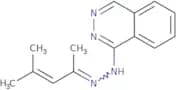
Formula:C33H47N9O8SMolecular weight:729.86 g/molBudralazine
CAS:Budralazine is a synthetic vasodilator, which is derived from a series of hydrazine analogs, known for their ability to modulate vascular tone. Its mode of action involves the direct relaxation of vascular smooth muscle. This relaxation leads to a decrease in peripheral vascular resistance and, consequently, a reduction in blood pressure. Intriguingly, Budralazine is thought to selectively target arterioles over veins, making it of particular interest in the study of vascular dynamics and hypertension.
Formula:C14H16N4Purity:Min. 95%Molecular weight:240.3 g/molRef: 3D-LBA79879
Discontinued productDisulfide biotin azide
CAS:Extraordinary strength of the streptavidin-biotin interaction allows for efficient capturing of even highly dilute targets; however, it makes recovery of proteins from affinity resins challenging. Conventional methods to elute biotinylated proteins from immobilized avidin include the following: (i) denaturation of streptavidin by boiling the resin in a denaturing buffer that may include high concentrations of chaotropic salts, (ii) trypsin digestion of proteins while they are bound to the resin, or (iii) elution of proteins with excess free biotin. These protocols can co-elute contaminant proteins by releasing nonspecifically bound proteins and/or naturally biotinylated proteins concurrently with labeled proteins. In addition, some of these methods can cause elution of high levels of resin-based peptides along with the proteins of interest, resulting in further sample contamination.
Disulfide Biotin Azide probe eliminates a major limitation of the streptavidin-biotin affinity purification. This reagent contains a biotin moiety linked to an azide moiety through a spacer arm containing a cleavable disulfide linker. Captured biomolecules can be efficiently released under mild conditions (50 mM dithiothreitol, 10 mM 2-mercaptoethanol or 1% sodium borohydride) and the small molecular fragment (188.25 Da) left on the labeled protein following cleavage. These features make the cleavable probe especially attractive for use in biomolecular labeling and proteomic studies.Formula:C27H48N8O7S3Purity:Min 95%Molecular weight:692.92 g/molGrowth Hormone Releasing Factor, GRF (1-40), amide, human
Catalogue peptide; min. 95% purity
Formula:C194H318N62O62SMolecular weight:4,543.14 g/molInsulin Receptor (1142-1153)
Catalogue peptide; min. 95% purity
Formula:C72H107N19O24Molecular weight:1,622.77 g/molBTK derived peptide
Catalogue peptide; min. 95% purity
Formula:C72H115N17O18S2Molecular weight:1,570.95 g/mol[Trp11] Neurotensin (8-13)
Catalogue peptide; min. 95% purity
Formula:C40H65N13O7Molecular weight:840.05 g/mol[D-Tyr11]-Neurotensin
Catalogue peptide; min. 95% purity
Formula:C78H121N21O20Molecular weight:1,673 g/mol[Lys0] g-1-MSH, amide
Catalogue peptide; min. 95% purity
Formula:C78H109N23O15SMolecular weight:1,640.95 g/molEC 23
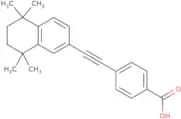
CAS:EC 23 is a synthetic retinoid that belongs to the class of chemical compounds called retinoids. Retinoids are natural or synthetic substances that have a high affinity for binding to receptors on the cell surface and activating them. EC 23 has been shown to induce bacterial enzymes that break down long-chain fatty acids, which are toxic to bacteria. It also has been shown to be potent inducers of cellular differentiation in certain animal models, including the mouse embryo eye. EC 23 binds with high affinity to bacterial enzyme and inhibits its activity. It also has been shown to inhibit the growth of certain types of cancer cells in culture, but not others.
Formula:C23H24O2Purity:Min. 95%Molecular weight:332.44 g/molALX-1393
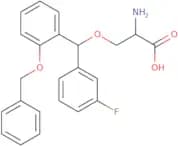
CAS:ALX-1393 is a synthetic compound that acts as an inhibitor, specifically targeting the glycine transporter 1 (GlyT1). As a small molecule inhibitor derived from chemical synthesis, it modulates neurotransmitter systems by blocking the reuptake of glycine, an important co-agonist of the NMDA receptor, in the central nervous system. The mode of action of ALX-1393 involves binding to the GlyT1 transporter, thereby increasing the synaptic concentration of glycine. This elevation in glycine levels enhances NMDA receptor function, which is crucial for synaptic plasticity, learning, and memory.
Formula:C23H22FNO4Purity:Min. 95%Molecular weight:395.4 g/molRef: 3D-ZMB16409
Discontinued product1,2-Dipalmitoyl-3-dimethylammonium-propane
CAS:1,2-Dipalmitoyl-3-dimethylammonium-propane is a cationic lipid, which is a type of synthetic lipid commonly used in biochemical and biophysical research. It is sourced from chemical synthesis, involving the formulation of lipid molecules with specific chemical modifications to confer particular properties. The mode of action of this compound involves its ability to integrate into lipid bilayers and form liposomes. These liposomes can encapsulate nucleic acids, facilitating their delivery into cells by merging with cell membranes, which is crucial for gene delivery applications.
Formula:C37H73NO4Purity:Min. 95%Molecular weight:595.98 g/mol




![[D-Tyr27,36, D-Thr32]-Neuropeptide Y, human](/_next/image/?url=https%3A%2Fstatic.cymitquimica.com%2Fproducts%2F3D%2Fthumb-webp%2FVAC-00911.webp&w=3840&q=75)
![[Ala8]-Humanin, [Ala8]-HN, Shna](/_next/image/?url=https%3A%2Fstatic.cymitquimica.com%2Fproducts%2F3D%2Fthumb-webp%2FVAC-00593.webp&w=3840&q=75)


![[Phe22] Big Endothelin-1 (19-37), human](/_next/image/?url=https%3A%2Fstatic.cymitquimica.com%2Fproducts%2F3D%2Fthumb-webp%2FVAC-00505.webp&w=3840&q=75)




![[Tyr0]-α-CGRP, [Tyr0]-α-CGRP, rat](/_next/image/?url=https%3A%2Fstatic.cymitquimica.com%2Fproducts%2F3D%2Fthumb-webp%2FVAC-00921.webp&w=3840&q=75)
![[Arg0] Met-Enkephalin](/_next/image/?url=https%3A%2Fstatic.cymitquimica.com%2Fproducts%2F3D%2Fthumb-webp%2FVAC-00699.webp&w=3840&q=75)



![[Trp11] Neurotensin (8-13)](/_next/image/?url=https%3A%2Fstatic.cymitquimica.com%2Fproducts%2F3D%2Fthumb-webp%2FVAC-00688.webp&w=3840&q=75)
![[D-Tyr11]-Neurotensin](/_next/image/?url=https%3A%2Fstatic.cymitquimica.com%2Fproducts%2F3D%2Fthumb-webp%2FVAC-00160.webp&w=3840&q=75)
![[Lys0] g-1-MSH, amide](/_next/image/?url=https%3A%2Fstatic.cymitquimica.com%2Fproducts%2F3D%2Fthumb-webp%2FVAC-00562.webp&w=3840&q=75)