Biochemicals and Reagents
Biochemicals and reagents are fundamental substances for research and development in fields such as biotechnology, molecular biology, pharmacology, and medicine. These products are essential for a variety of applications, including compound synthesis, biological sample analysis, metabolic process research, and drug production. At CymitQuimica, we offer a wide selection of high-quality, high-purity biochemicals and reagents suitable for various scientific and industrial needs. Our catalog includes enzymes, antibodies, nucleic acids, amino acids, and many other products, all designed to support researchers and professionals in their research and development projects, ensuring reliable and reproducible results.
Subcategories of "Biochemicals and Reagents"
- Biomolecules(99,127 products)
- By Biological Target(99,160 products)
- By Pharmacological Effects(6,787 products)
- Cryopreservatives(21 products)
- Desinfectants and Related Compounds(28 products)
- Hormones(346 products)
- Plant Biology(6,742 products)
- Secondary Metabolites(14,222 products)
Found 130581 products of "Biochemicals and Reagents"
Sort by
Purity (%)
0
100
|
0
|
50
|
90
|
95
|
100
BD3 antibody
<p>BD3 antibody was raised in rabbit using residues 23-33 [GIINTLQKYYC] of the 5-kDa human beta-defensin-3 protein as the immunogen.</p>Purity:Min. 95%Ku70 antibody
<p>The Ku70 antibody is a polyclonal antibody that specifically targets the Ku70 protein. This protein is involved in various cellular processes, including DNA repair and maintenance of genomic stability. The Ku70 antibody can be used in research and diagnostic applications to study the expression and localization of Ku70 in different cell types. It can also be used in techniques such as Western blotting, immunohistochemistry, and immunofluorescence to detect and quantify the levels of Ku70 protein. With its high specificity and sensitivity, this antibody provides valuable insights into the functions and mechanisms of Ku70 in various biological systems.</p>Purity:Min. 95%MOGAT2 antibody
<p>MOGAT2 antibody was raised using the middle region of MOGAT2 corresponding to a region with amino acids LLGIIVGGAQEALDARPGSFTLLLRNRKGFVRLALTHGAPLVPIFSFGEN</p>Purity:Min. 95%AKR1C1 protein (His tag)
<p>1-323 amino acids: MGSSHHHHHH SSGLVPRGSH MDSKYQCVKL NDGHFMPVLG FGTYAPAEVP KSKALEATKL AIEAGFRHID SAHLYNNEEQ VGLAIRSKIA DGSVKREDIF YTSKLWCNSH RPELVRPALE RSLKNLQLDY VDLYLIHFPV SVKPGEEVIP KDENGKILFD TVDLCATWEA VEKCKDAGLA KSIGVSNFNR RQLEMILNKP GLKYKPVCNQ VECHPYFNQR KLLDFCKSKD IVLVAYSALG SHREEPWVDP NSPVLLEDPV LCALAKKHKR TPALIALRYQ LQRGVVVLAK SYNEQRIRQN VQVFEFQLTS EEMKAIDGLN RNVRYLTLDI FAGPPNYPFS DEY</p>Purity:Min. 95%RAD51 antibody
<p>The RAD51 antibody is a highly specific polyclonal antibody that targets the RAD51 protein, an oncogene homolog involved in DNA repair and recombination. This antibody can be used for various applications, including Western blotting, immunohistochemistry, and immunofluorescence. It is available as both a monoclonal antibody and a polyclonal antibody.</p>NR0B1 antibody
<p>NR0B1 antibody was raised in rabbit using a synthetic peptide conjugated to KLH as the immunogen.</p>Purity:Min. 95%CD48 antibody
<p>The CD48 antibody is a monoclonal antibody that is used in the field of Life Sciences. It specifically targets CD48, a protein found on the surface of human cells. This antibody has been extensively studied and shown to have high affinity and specificity for CD48. It can be used in various research applications, such as immunohistochemistry, flow cytometry, and western blotting.</p>CAMSAP1L1 antibody
<p>CAMSAP1L1 antibody was raised in Rabbit using Human CAMSAP1L1 as the immunogen</p>VEGFR1 antibody
<p>The VEGFR1 antibody is a high-quality polyclonal antibody that specifically targets the vascular endothelial growth factor receptor 1 (VEGFR1). This antibody is widely used in life sciences research to study the role of VEGFR1 in various biological processes. It has been shown to effectively neutralize the activity of VEGFR1 and inhibit the binding of growth factors such as TGF-beta and epidermal growth factor to the receptor. The VEGFR1 antibody is highly specific and exhibits minimal cross-reactivity with other proteins, making it an ideal tool for studying VEGFR1 signaling pathways. It is available in both monoclonal and polyclonal forms, providing researchers with options based on their specific experimental needs. The antibody can be easily conjugated with streptavidin or used in combination with other antibodies for multiplexing experiments. With its exceptional performance and versatility, the VEGFR1 antibody is a valuable asset for researchers working with mesenchymal</p>TROVE2 antibody
<p>TROVE2 antibody was raised using the N terminal of TROVE2 corresponding to a region with amino acids QDGYVWQVTDMNRLHRFLCFGSEGGTYYIKEQKLGLENAEALIRLIEDGR</p>PCK1 antibody
<p>PCK1 antibody was raised using a synthetic peptide corresponding to a region with amino acids NGFFGVAPGTSVKTNPNAIKTIQKNTIFTNVAETSDGGVYWEGIDEPLAS</p>SJA710-6
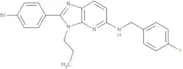
CAS:<p>SJA710-6 is a synthetic compound, which is a chemically engineered substance designed for scientific research. The source of this compound is a laboratory synthesis, wherein specific chemical reactions are utilized to create a molecule with potentially unique biological properties. The mode of action of SJA710-6 involves targeting particular cellular pathways, which could include pathways related to cellular signaling, metabolism, or gene expression. This precise targeting mechanism allows researchers to dissect complex biological processes and to explore the compound's effects at a molecular level.</p>Formula:C22H20BrFN4Purity:Min. 95%Molecular weight:439.3 g/molRabbit anti Mouse IgG (H + L) (HRP)
<p>This antibody reacts with heavy (gamma) chains on mouse IgG and light chains on all mouse immunoglobulins.</p>Purity:Min. 95%Human Growth Hormone antibody
<p>The Human Growth Hormone antibody is a cytotoxic protein that belongs to the category of antibodies in Life Sciences. It specifically targets and neutralizes the activity of human growth hormone. This monoclonal antibody has been extensively studied and shown to have a high affinity for its target, making it an effective tool for research purposes. The Human Growth Hormone antibody can be used in various applications, including Western blotting, immunohistochemistry, and flow cytometry. Its ability to bind to specific epitopes on the growth hormone molecule allows for precise detection and quantification. Additionally, this monoclonal antibody has been found to have neutralizing properties, inhibiting the biological activity of growth hormone. With its wide range of potential applications and proven efficacy, the Human Growth Hormone antibody is a valuable tool for researchers studying growth hormone-related processes such as adipose tissue development, bone growth, and metabolism regulation.</p>TLE2 antibody
<p>TLE2 antibody was raised in rabbit using the N terminal of TLE2 as the immunogen</p>Purity:Min. 95%FGF4 antibody
<p>FGF4 antibody was raised in rabbit using highly pure recombinant human FGF-4 as the immunogen.</p>Purity:Min. 95%SPATA5 antibody
<p>SPATA5 antibody was raised using the middle region of SPATA5 corresponding to a region with amino acids ALLALEEDIQANLIMKRHFTQALSTVTPRIPESLRRFYEDYQEKSGLHTL</p>CYSLTR2 antibody
<p>CYSLTR2 antibody was raised in rabbit using a synthetic peptide conjugated to KLH as the immunogen.</p>Purity:Min. 95%Akt antibody (Ser246)
<p>Akt, also known as Protein Kinase B (PKB), is a serine/threonine-specific kinase crucial for regulating key cellular functions, including growth, survival, metabolism, and proliferation. It operates within the PI3K/Akt/mTOR pathway, which integrates external signals to maintain cellular function and adaptation. Humans express three Akt isoforms—Akt1, Akt2, and Akt3—each encoded by a distinct gene. The activation of Akt generally starts when external signals like growth factors or insulin bind to cell surface receptors, activating phosphoinositide 3-kinase (PI3K). This leads to the production of phosphatidylinositol (3,4,5)-trisphosphate (PIP3) on the cell membrane, which attracts Akt to the membrane, where it undergoes phosphorylation at two specific sites, Thr308 and Ser473, to become fully active. Once activated, Akt moves through the cell to phosphorylate target proteins involved in various cellular pathways.The primary functions of Akt include promoting cell survival by inhibiting apoptosis through the inactivation of pro-apoptotic proteins like BAD and Caspase-9. It also supports cell growth and proliferation by activating mTOR, a central regulator of protein synthesis, while suppressing growth-arrest pathways. Akt plays a key role in metabolic regulation by increasing glucose uptake and glycolysis, largely through GLUT4 translocation and hexokinase activation, which is particularly important in muscle and fat tissues. It contributes to angiogenesis by upregulating VEGF expression, aiding tissue growth and repair, and it promotes cell migration, facilitating wound healing as well as the spread of cancer cells in malignancy. Due to its broad role in cell survival and growth, Akt is often hyperactivated in cancers, driving unchecked cell division and tumor growth, which makes the PI3K/Akt/mTOR pathway a target for many cancer therapies. Additionally, Akt's role in glucose metabolism links it to insulin signaling, where defects can impair glucose uptake, leading to insulin resistance and type 2 diabetes.</p>HSD17B11 antibody
<p>HSD17B11 antibody was raised in Rabbit using Human HSD17B11 as the immunogen</p>CCL2 antibody
<p>The CCL2 antibody is a highly effective inhibitor that belongs to the class of monoclonal antibodies. It works by neutralizing the activity of CCL2, a chemokine involved in inflammation and immune response. This antibody can be immobilized on various surfaces such as vitronectin-coated plates or electrodes for use in research and diagnostic applications in the field of Life Sciences. The CCL2 antibody has been shown to effectively block the binding of CCL2 to its receptor, thereby preventing the recruitment of immune cells to inflammatory sites. Additionally, it has been demonstrated to inhibit protease activity associated with CCL2 signaling pathways. This antibody is compatible with human serum and exhibits high specificity towards CCL2, making it an ideal tool for studying the role of this chemokine in various biological processes.</p>CCDC52 antibody
<p>CCDC52 antibody was raised using the N terminal of CCDC52 corresponding to a region with amino acids TVTDLTVHRATPEDLVRRHEIHKSKNRALVHWELQEKALKRKWRKQKPET</p>PIGF antibody
<p>PIGF antibody was raised using the N terminal of PIGF corresponding to a region with amino acids MKDNDIKRLLYTHLLCIFSIILSVFIPSLFLENFSILETHLTWLCICSGF</p>Purity:Min. 95%PLK1 antibody
<p>The PLK1 antibody is a highly specific monoclonal antibody that is used in Life Sciences research. It is designed to target and bind to the Polo-like kinase 1 (PLK1) protein, which plays a critical role in cell division and proliferation. The PLK1 antibody has been extensively validated for use in various applications, including immunohistochemistry, western blotting, and flow cytometry.</p>Purity:Min. 95%PIMT antibody
<p>PIMT antibody was raised in rabbit using residues 839-853 of the C terminus of the PIMT protein as the immunogen.</p>Purity:Min. 95%IGF BP5 antibody
<p>IGF BP5 antibody was raised in rabbit using highly pure recombinant human IGF-BP5 as the immunogen.</p>Purity:Min. 95%LC3 antibody
<p>The LC3 antibody is a growth factor monoclonal antibody that is commonly used in assays for cytotoxicity. It is widely used in the field of Life Sciences and has applications in various research areas. The LC3 antibody specifically targets antibodies that are involved in phosphatase and 3-kinase signaling pathways, making it an essential tool for studying these processes. Additionally, the LC3 antibody can be used to detect acetylation patterns on tyrosine kinase receptors and extracellular histones. Researchers also utilize this antibody to investigate the effects of inhibitors on these pathways. With its high specificity and reliability, the LC3 antibody is an indispensable tool for any researcher working in the field of Life Sciences.</p>Kos1 antibody
<p>Kos1 antibody was raised in rabbit using C terminal residues 421-434 [QNQVQSLPAGSAEP] of the 47 kDa mouse Kos1 protein as the immunogen.</p>Purity:Min. 95%GPRC5D antibody
<p>The GPRC5D antibody is an essential tool for immunoassays and research in the field of Life Sciences. This antibody specifically targets GPRC5D, a receptor protein that plays a role in various biological processes. It can be used in a wide range of applications, including binding studies, protein detection, and characterization. The GPRC5D antibody is available as both polyclonal and monoclonal antibodies, providing researchers with options to suit their specific needs. With its high specificity and affinity, this antibody ensures accurate and reliable results. Whether you are studying autoantibodies or developing antigen binding molecules, the GPRC5D antibody is an invaluable resource for your research endeavors. Trust in its exceptional performance and choose this antibody for your next project in Life Sciences.</p>STAT1 antibody
<p>The STAT1 antibody is a powerful tool in the field of Life Sciences. It is an antibody that specifically targets and binds to the STAT1 protein, which plays a crucial role in cell signaling and immune response. This antibody can be used in various applications, such as Western blotting, immunofluorescence, and immunohistochemistry.</p>TES antibody
<p>The TES antibody is a highly specialized monoclonal antibody that targets and binds to the TRPV4 antigen. This antibody is widely used in life sciences research, particularly in the study of interferon signaling pathways. It has been proven effective in detecting and quantifying TRPV4 expression levels in various experimental settings.</p>Goat anti Mouse IgM (Fab'2) (PE)
<p>Goat anti-mouse IgM (Fab'2) (PE) was raised in goat using murine IgM mu heavy chain as the immunogen.</p>Purity:Min. 95%ZNF488 antibody
<p>ZNF488 antibody was raised in rabbit using the N terminal of ZNF488 as the immunogen</p>Purity:Min. 95%NCOR1 antibody
<p>NCOR1 antibody was raised in rabbit using the N terminal of NCOR1 as the immunogen</p>Purity:Min. 95%FR α antibody
<p>The FR alpha antibody is a monoclonal antibody that specifically targets the FR alpha protein. This protein plays a crucial role in various biological processes, including fibrinogen binding, chemokine signaling, and E-cadherin-mediated cell adhesion. The FR alpha antibody is widely used in life sciences research to study the function and regulation of this protein.</p>Complement C9 antibody
<p>Complement C9 antibody was raised in goat using highly purified human complement protein as the immunogen.</p>GADD153 antibody
<p>The GADD153 antibody is a glycoprotein that is widely used in the field of life sciences and medicine. It is an essential tool for researchers working with pluripotent stem cells, as it can be used to detect the activation of GADD153, a key regulator of cell differentiation and apoptosis. The GADD153 antibody is also commonly used as a serum marker to monitor the effectiveness of certain drugs or treatments.</p>Purity:Min. 95%MSI1 antibody
<p>The 6-Fluoro-3-indoxyl-beta-D-galactopyranoside is a powerful antituberculosis drug that falls under the class of rifamycins. It is highly effective in treating tuberculosis infections and contains active compounds that exhibit bactericidal activity. This drug works by inhibiting bacterial growth through binding to DNA-dependent RNA polymerase, preventing transcription and replication. Its efficacy has been demonstrated using advanced techniques such as the patch-clamp technique on human erythrocytes. The drug undergoes various metabolic transformations, including hydrolysis by esterases or glucuronidases, oxidation by cytochrome P450 enzymes, reduction by glutathione reductase, or conjugation with glucuronic acid. Additionally, it specifically targets markers expressed at high levels in Mycobacterium tuberculosis strains, inhibiting their growth in culture.</p>NOL5A antibody
<p>NOL5A antibody was raised using a synthetic peptide corresponding to a region with amino acids EERLSFYETGEIPRKNLDVMKEAMVQAEEAAAEITRKLEKQEKKRLKKKK</p>NEUROG3 antibody
<p>The NEUROG3 antibody is a highly specialized cytotoxic agent that targets dinitrophenyl (DNP) antigens. It is a monoclonal antibody that has been extensively studied in the field of Life Sciences. This antibody has shown strong binding affinity to DNP antigens, leading to the lysis of cells expressing these antigens. The NEUROG3 antibody can be used in various research applications, including immunohistochemistry, flow cytometry, and Western blotting. Its unique glycosylation pattern ensures optimal binding and specificity. Additionally, this antibody has been shown to inhibit endothelial growth and interfere with β-catenin signaling pathways. With its potent cytotoxic properties and broad range of applications, the NEUROG3 antibody is a valuable tool for researchers in the field of enteroendocrine biology and beyond.</p>ACRV1 antibody
<p>ACRV1 antibody was raised using the N terminal of ACRV1 corresponding to a region with amino acids MNRFLLLMSLYLLGSARGTSSQPNELSGSIDHQTSVQQLPGEFFSLENPS</p>Purity:Min. 95%TLR7 antibody
<p>The TLR7 antibody is a powerful tool in the field of life sciences. This antibody specifically targets Toll-like receptor 7 (TLR7), which plays a crucial role in the immune response to viral infections. The TLR7 antibody is designed to bind to TLR7 and block its activity, preventing the activation of downstream signaling pathways.</p>CPA1 antibody
<p>The CPA1 antibody is a monoclonal antibody that specifically targets the CPA1 enzyme. This antibody has been extensively studied for its protease activity and its potential applications in the field of life sciences. It has been shown to effectively inhibit the activity of CPA1, which plays a crucial role in various physiological processes.</p>DNAJC1 antibody
<p>DNAJC1 antibody was raised using a synthetic peptide corresponding to a region with amino acids ELALQQYPRGSSDRWDKIARCVPSKSKEDCIARYKLLVELVQKKKQAKS</p>Purity:Min. 95%TTC6 antibody
<p>TTC6 antibody was raised using the C terminal of TTC6 corresponding to a region with amino acids MKDYQDAITLNPKYSLAYFNAGNIYFHHRQFSQASDYFSKALKFDPENEY</p>C10 antibody
<p>C10 antibody was raised in rabbit using highly pure recombinant murine C10 as the immunogen.</p>Purity:Min. 95%11-Dodecenyl acetate
CAS:<p>11-Dodecenyl acetate is a pheromone that is used in insect behavioral responses. It is found to be more effective for host plant volatiles and has been shown to elicit a behavioral response in lepidoptera, such as the tobacco budworm moth. It is also used as a synthetic pheromone because of its high efficacy and low cost. 11-Dodecenyl acetate has been shown to have functional groups that are capable of eliciting an odorant response. It has been shown to be upwind and can act as a binary or ternary mixture with other chemicals, such as hexadecanoic acid.</p>Formula:C14H26O2Purity:Min. 98%Molecular weight:226.35 g/molJAml antibody
<p>The JAml antibody is a highly effective medicament that consists of monoclonal antibodies. These antibodies are specifically designed to target and bind to nuclear proteins, making them ideal for various biochemical applications. The JAml antibody has been extensively tested and proven to be highly specific and sensitive in detecting the presence of helicobacter in samples. It can also be used to study the activation of various cellular pathways, as it binds to an amide group found in activated proteins. Additionally, the JAml antibody has shown promising results in regulating e-cadherin expression, a glycoprotein involved in cell adhesion. With its colloidal microsphere formulation, this antibody is easy to use and delivers accurate results. Whether you're conducting research or working in the field of life sciences, the JAml antibody is an indispensable tool for your laboratory.</p>DDB2 antibody
<p>DDB2 antibody was raised in mouse using recombinant Human Damage-Specific Dna Binding Protein 2, 48Kda (Ddb2)</p>SLC10A7 antibody
<p>SLC10A7 antibody was raised using a synthetic peptide corresponding to a region with amino acids TTFCDTFSNPNIDLDKFSLVLILFIIFSIQLSFMLLTFIFSTRNNSGFTP</p>Purity:Min. 95%BCL10 antibody
<p>BCL10 antibody was raised in rabbit using C terminal sequence [EMFLPLRSRTVSRQC] of Bcl10 as the immunogen.</p>Purity:Min. 95%FABP1 antibody
<p>FABP1 antibody was raised using the N terminal of FABP1 corresponding to a region with amino acids MSFSGKYQLQSQENFEAFMKAIGLPEELIQKGKDIKGVSEIVQNGKHFKF</p>GPR20 antibody
<p>GPR20 antibody was raised in rabbit using a synthetic peptide conjugated to KLH as the immunogen.</p>Purity:Min. 95%Estrogen Receptor β antibody (Ser105)
<p>Rabbit polyclonal Estrogen Receptor beta antibody (Ser105)</p>Leptin antibody
<p>The Leptin antibody is a powerful tool used in Life Sciences research. It is an antibody that specifically targets and binds to Leptin, a hormone involved in various physiological processes such as appetite regulation, energy balance, and metabolism. This antibody has been extensively studied and proven to be highly effective in experiments involving Leptin-related assays.</p>SLC5A3 antibody
<p>SLC5A3 antibody was raised in rabbit using a synthetic peptide conjugated to KLH as the immunogen.</p>Purity:Min. 95%Normal Mouse Serum
<p>Normal Mouse Serum is a high-quality product used in various Life Sciences applications. It is pegylated and contains annexin A2, oncostatin, c-myc antibodies, and other essential components. This serum is commonly used as an antigen for the production of monoclonal antibodies or as a control in experiments involving the inhibition of specific factors. Normal Mouse Serum is also widely employed in research related to growth hormone receptor and other signaling pathways. With its excellent quality and reliable performance, this serum ensures accurate and reproducible results in your experiments. Trust Normal Mouse Serum for all your research needs in Biospecimens, Serum, Plasma & Other Fluids.</p>Purity:Min. 95%Methylmalonyl-CoA Mutase protein
<p>Recombinant Human Methylmalonyl-CoA Mutase protein</p>Purity:≥85% PureMUTYH antibody
<p>The MUTYH antibody is a highly specialized serum marker used in the field of Life Sciences. It is an antibody that specifically targets and binds to the methyl transferase enzyme known as MUTYH. This enzyme plays a crucial role in DNA repair processes, ensuring the integrity of our genetic material.</p>SIRT4 antibody
<p>SIRT4 antibody was raised in rabbit using the N terminal of SIRT4 as the immunogen</p>Purity:Min. 95%