Biochemicals and Reagents
Subcategories of "Biochemicals and Reagents"
- Biomolecules(98,697 products)
- By Biological Target(100,169 products)
- By Pharmacological Effects(6,834 products)
- Cryopreservatives(21 products)
- Desinfectants and Related Compounds(28 products)
- Hormones(357 products)
- Plant Biology(6,896 products)
- Secondary Metabolites(14,347 products)
Found 130152 products of "Biochemicals and Reagents"
CEA protein (Preservative-free)
Purified native Human CEA protein (Preservative-free)Purity:>95% By Sds-Page And Electrophoresis1,2-Dipalmitoyl-3-dimethylammonium-propane
CAS:1,2-Dipalmitoyl-3-dimethylammonium-propane is a cationic lipid, which is a type of synthetic lipid commonly used in biochemical and biophysical research. It is sourced from chemical synthesis, involving the formulation of lipid molecules with specific chemical modifications to confer particular properties. The mode of action of this compound involves its ability to integrate into lipid bilayers and form liposomes. These liposomes can encapsulate nucleic acids, facilitating their delivery into cells by merging with cell membranes, which is crucial for gene delivery applications.
Formula:C37H73NO4Purity:Min. 95%Molecular weight:595.98 g/molL-MobileTrex
CAS:L-MobileTrex is an advanced analytical technology platform, which is a product of cutting-edge research in data science and computational modeling. This platform operates by integrating multi-dimensional datasets through sophisticated algorithms, providing enhanced data visualization and interpretability.
Formula:C23H23N5O5Purity:Min. 95%Molecular weight:449.46 g/molMS67N
CAS:Please enquire for more information about MS67N including the price, delivery time and more detailed product information at the technical inquiry form on this page
Formula:C52H59F4N9O7SPurity:Min. 95%Molecular weight:1,030.14 g/molCoibamide A
CAS:Please enquire for more information about Coibamide A including the price, delivery time and more detailed product information at the technical inquiry form on this page
Formula:C65H110N10O16Purity:Min. 95%Molecular weight:1,287.65 g/molRef: 3D-BC183236
Discontinued productS 25585
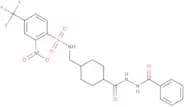
CAS:S 25585 is a psychostimulant that has been shown to modulate the function of animals. It can be used in the treatment of cancer and autoimmune diseases, as well as to induce overfeeding in animals. S 25585 is an endogenous molecule with a cyclic structure. The affinity for binding of S 25585 to its receptor may depend on whether it is bound or unbound at the time of binding. This drug also has anti-cancer effects, which are due to its ability to inhibit uptake and stabilize cells that are not undergoing cell division. 6-Fluoro-3-indoxyl-beta-D-galactopyranoside (Rifapentine) is an antituberculosis drug that belongs to the class of rifamycins. It is the most active of the rifamycins for the treatment of tuberculosis. Rifapentine inhibits bacterial growth by binding to DNA-dependent RNA polymerase, thereby preventing
Formula:C22H23F3N4O6SPurity:Min. 95%Molecular weight:528.5 g/molRef: 3D-NKA84950
Discontinued product1-Palmitoyl-2-Oleoyl-sn-Glycero-3-Phosphatidylethanolamine
CAS:1-Palmitoyl-2-Oleoyl-sn-Glycero-3-Phosphatidylethanolamine is a broad spectrum antimicrobial that has been shown to have binding properties to peptides. This compound can be used as a potential antimicrobial for the treatment of bacterial infections and gramicidin, an antibiotic that is active against bacteria. It has also been shown to permeabilize cell membranes, which may lead to its function as an antimicrobial agent. 1-Palmitoyl-2-Oleoyl-sn-Glycero-3-Phosphatidylethanolamine is water soluble and has been shown to have conformational properties. These conformational properties are responsible for its binding activity with peptides. 1POGPE is stable in both calorimetric assays and bilayers, which allows it to maintain its structure when interacting with other compounds. 1POGPE also has a high affinity forFormula:C39H76NO8PPurity:Min. 95%Molecular weight:718 g/molL 162389
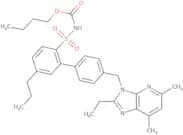
CAS:L 162389 is a synthetic, non-steroidal, anti-inflammatory drug (NSAID) that inhibits the enzyme cyclooxygenase. It inhibits the production of prostaglandins, which are known to cause pain and inflammation in the body. L 162389 is used for the treatment of inflammatory conditions such as rheumatoid arthritis and osteoarthritis.
Formula:C31H38N4O4SPurity:Min. 95%Molecular weight:562.7 g/molCB-1158
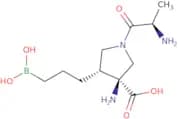
CAS:CB-1158 is an arginase inhibitor, which is a small molecule derived from a synthetic source designed to modulate immune functions. Its mode of action involves the inhibition of the arginase enzyme, a key player in the urea cycle responsible for the hydrolysis of arginine into ornithine and urea. By blocking arginase, CB-1158 effectively prevents the depletion of extracellular arginine, a vital amino acid required for the activation and proliferation of T cells within the immune system. This inhibition leads to enhanced immune responses against tumors.
Formula:C11H22BN3O5Purity:Min. 95%Molecular weight:287.12 g/molPigment red 48 (C.I. 15865)
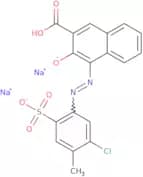
CAS:Pigment Red 48 (C.I. 15865) is a red organic pigment that is soluble in water and most organic solvents. It has a melting point of 200°C and is used in paints, plastics, textiles, paper, and other products. Pigment Red 48 (C.I. 15865) can be synthesized by the diazonium salt coupling reaction between an aromatic amine and an acid chloride. The pigment also has a hydroxyl group that enables it to form covalent bonds with other molecules such as polymers or proteins. Pigment Red 48 (C.I. 15865) is used in many products because of its high stability, excellent heat resistance, low toxicity, non-irritating properties, high transparency, and good color fastness to light and washing.BR> Pigment Red 48 (C.I. 15865) is not considered hazardous according to the Globally Harmonized System of Classification and Lab
Formula:C18H11ClN2Na2O6SPurity:Min. 95%Molecular weight:464.79 g/molParainfluenza Virus Type 2 Antigen
Parainfluenza viruses (PIVs) belong to the Paramyxoviridae family and are a common cause of respiratory infections, particularly in children.
There are four main types: Human Parainfluenza virus-1 (HPIV-1), HPIV-2, HPIV-3, and HPIV-4, each associated with different patterns of illness. HPIV-1 and HPIV-2 are the primary causes of colds and croup. HPIV-3 often leads to bronchitis and pneumonia, while it is thought HPIV-4 causes similar symptoms HPIV-3.
Parainfluenza viruses spread through respiratory droplets and while most infections are mild, infants, young children, and immunocompromised individuals may experience severe respiratory illness.
Parainfluenza Virus Type 2 Antigen has potential application in the development of diagnostic assays to detect antibodies in patient samples, confirming HPIV-2 infection. It can also be used as a research tool in vaccine development.Purity:Min. 95%