Electrophoresis
In this section, you can find all the reagents and materials necessary to perform electrophoresis, a vital laboratory technique used to separate proteins according to their molecular mass and charge. This technique is essential for analyzing the composition and purity of protein samples, as well as for studying nucleic acids and other biomolecules. Our selection includes high-quality electrophoresis buffers, gels, stains, and markers, along with apparatus and accessories designed to ensure accurate and efficient separation. These products are crucial for research in molecular biology, biochemistry, and genetics, providing reliable results for protein characterization, gene expression analysis, and other applications. At CymitQuimica, we provide everything you need to perform electrophoresis, supporting your research with precision and consistency.
Subcategories of "Electrophoresis"
Found 299 products of "Electrophoresis"
Sort by
Purity (%)
0
100
|
0
|
50
|
90
|
95
|
100
TRIS-Glycine Buffer 10X, GlenBiol™, suitable for molecular biology
Color and Shape:Clear, colourless liquidMolecular weight:-Acrylamide 4X solution
CAS:Formula:C3H5NOColor and Shape:Clear, colourless liquidMolecular weight:71.08Sodium chloride
CAS:Formula:NaClPurity:≥ 99.9% (dried basis)Color and Shape:White crystalline powderMolecular weight:58.44Acrylamide/Bis-acrylamide, 19:1, 30% solution
Color and Shape:Clear, colourless liquidMolecular weight:-Sodium hydroxide, 2.0M solution
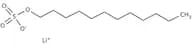
CAS:Formula:NaOHColor and Shape:Clear, colourless liquidMolecular weight:40.00Lithium Lauryl Sulphate extrapure, 99%
CAS:Formula:C12H25SO4LiPurity:min. 99%Color and Shape:White, Crystalline powder, Clear, ColourlessMolecular weight:272.30N,N-Methylene Bisacrylamide (bis-Acrylamide) 3x cryst. extrapure AR, 99.5%
CAS:Formula:C7H10N2O2Purity:min. 99.5%Color and Shape:White, Crystalline powder, Clear, ColourlessMolecular weight:154.1710X Tris-Glycine-SDS Buffer for molecular biology
SDS-PAGE is a method for separating proteins according to their movement in an electrical current and their molecular mass, which relates to the length of their polypeptide chains. A widely recognized system for this technique is the Laemmli system, introduced in 1970. It employs Tris-Glycine gels made up of a stacking gel and a resolving gel, utilizing varying acrylamide concentrations to achieve separation based on molecular weight. This traditional system incorporates a discontinuous buffer setup, with different pH levels and ionic strengths for the buffers: the running buffer (10X Tris-Glycine-SDS Gel Running Buffer) is set at pH 8.3, while the stacking gel operates at pH 6.8, and the resolving gel is at pH 8.8.Color and Shape:Clear, Colourless, Liquid10X Tris-Glycine pH-8.3 Tank Buffer for molecular biology
The 10X Tris-Glycine Buffer, with a pH of 8.3, is designed specifically for use in native PAGE gel electrophoresis. This buffer offers great convenience, as it can be diluted with distilled water or another suitable solvent according to the specific application prior to electrophoresis. Additionally, it is useful for the transfer of protein samples onto nitrocellulose membranes during western blotting. To prevent the gel from swelling during the transfer process and to enhance the binding of protein samples to nitrocellulose, the inclusion of methanol is essential.Color and Shape:Clear, Colourless, Liquid10X TE Buffer pH-8.0 for molecular biology
TE buffer, often called T10E1 buffer is formulated from two primary components: Tris and EDTA. Tris serves to stabilize the pH, while EDTA protects DNA and RNA by chelating metal ions that are necessary for the activity of degrading enzymes, such as nucleases. This combination effectively preserves the integrity of nucleic acids. For optimal RNA protection, the solution should be maintained at a pH of 7.5, while DNA is best stored at a pH of 8.0. Importantly, a pH of 8.0 is also suitable for storing both DNA and RNA T10E1 bufferColor and Shape:Clear, Colourless, Liquid10X Tris Buffered Saline (TBS) for molecular biology
Tris, short for tris(hydroxymethyl)aminomethane, is a commonly used primary amine known for its effectiveness as a buffering agent, particularly in the pH range of about 7.4, with a tolerance of ±0.1. This compound is advantageous because it does not precipitate calcium salts and aids in keeping manganese salts soluble. Additionally, Tris has a low UV absorbance, making it suitable for various experimental applications, although it is notably sensitive to changes in temperature. These characteristics contribute to its widespread use in biochemical and molecular biology experiments.Color and Shape:Clear, Colourless, LiquidAgarose High EEO for molecular biology
CAS:Color and Shape:White, Free flowing powder, Clear, Colourless10X Tris Buffered Saline Tween-20 (TBST) for molecular biology
10X Tris Buffered Saline Tween-20 (TBST) is a versatile wash solution widely used in Western blotting and ELISA. Its carefully balanced composition of pH stabilizers, salts, and detergents ensures efficient removal of unbound materials from membranes and microtiter plate wells. The Tris Buffered Saline with Tween 20 optimal formulation maintains a favorable buffering environment, preventing disruption of the critical antigen-antibody binding interactions. By effectively washing away excess components, TBST minimizes nonspecific background noise, thereby enhancing the signal-to-noise ratio and improving the overall sensitivity and accuracy of these assays.Color and Shape:Clear, Yellow tinted, Liquid