Heterocycles with Nitrogen (N)
Subcategories of "Heterocycles with Nitrogen (N)"
- Azepane(436 products)
- Benzotriazoles(438 products)
- Diazepanes(335 products)
- Imidazoles(4,031 products)
- Imidazolines(385 products)
- Isoxazole(1,088 products)
- Piperazines(3,758 products)
- Piperidines(8,442 products)
- Pyrazines(1,304 products)
- Pyrazole(5,960 products)
- Pyrazolidine(21 products)
- Pyrazoline(143 products)
- Pyridazine(860 products)
- Pyridines(22,005 products)
- Pyrimidine(6,084 products)
- Pyrroles(2,449 products)
- Pyrrolidines(5,840 products)
- Pyrroline(48 products)
- Pyrrolo[1,2-b]pyridazine(10 products)
- Tetrazole(531 products)
- Triazines(466 products)
- Triazoles(1,689 products)
Found 17863 products of "Heterocycles with Nitrogen (N)"
6-Bromo-2-(4-bromophenyl)-indole
CAS:6-Bromo-2-(4-bromophenyl)-indole is a fine chemical with CAS No. 28718-96-9 that can be used as a versatile building block for the synthesis of complex compounds, useful scaffold for research chemicals, and reaction component for speciality chemicals. This compound has high quality and is a reagent in the synthesis of other compounds.Formula:C14H9Br2NPurity:Min. 95%Color and Shape:Off white to pale yellow powder.Molecular weight:351.04 g/mol1-(1-Naphthylmethyl)piperazine
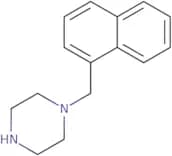
CAS:1-(1-Naphthylmethyl)piperazine (1-NMPP) is an antimicrobial agent that inhibits bacterial efflux pumps. It was shown to be active against Gram-positive bacteria, such as Erythromycin and tetracycline resistant mutants. 1-NMPP has been shown to inhibit the expression of efflux pump proteins in Gram-negative bacteria. One study showed that 1-NMPP can reverse the resistance of colistin and sulfa drugs in a multidrug resistant strain of Staphylococcus aureus. The mechanism of action for this drug is not yet known, but it may be due to its ability to prevent the synthesis of new efflux pump proteins by inhibiting translation or by decreasing mRNA stability.Formula:C15H18N2Purity:Min. 95%Color and Shape:Off-White PowderMolecular weight:226.32 g/mol3-Amino-2,6-dichloropyridine
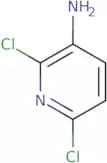
CAS:3-Amino-2,6-dichloropyridine is a carboxamidopyridine that is used as an antiplatelet agent. This drug inhibits the action of ADP and thrombin in platelets, thereby inhibiting platelet aggregation. 3-Amino-2,6-dichloropyridine has been shown to be effective when given orally and is not degraded by stomach acid. It has been shown to inhibit transcriptase activity in vitro. The drug also inhibits the synthesis of prostaglandin E2 (PGE2) through inhibition of cyclooxygenase (COX) enzymes and prevents platelet aggregation by suppressing the production of adenosine diphosphate (ADP).Purity:Min. 95%Color and Shape:PowderMolecular weight:162.92 g/mol5-Pyridin-3-yl-2H-pyrazol-3-ylamine
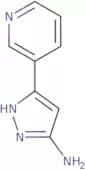
CAS:5-Pyridin-3-yl-2H-pyrazol-3-ylamine is a fine chemical with applications in the research and development of pharmaceuticals, agrochemicals, and other speciality chemicals. 5-Pyridin-3-yl-2H-pyrazol-3-ylamine is also a versatile building block for the synthesis of complex molecules. This compound can be used as a reagent or intermediate in organic reactions. It is also an excellent scaffold for the synthesis of complex molecules.Formula:C8H8N4Purity:Min. 95%Color and Shape:Off-white to pale yellow or beige solid.Molecular weight:160.18 g/mol2-Chloro-3-fluoropyridine
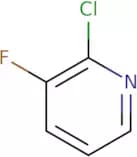
CAS:2-Chloro-3-fluoropyridine is a chemical compound that is classified as an allosteric modulator. It has a profile of physicochemical and spectrometric properties, which includes a pyridine ring with two chloro substituents and one fluorine atom. 2-Chloro-3-fluoropyridine can be transported by organic solvents such as benzene or chloroform, but not by water. This chemical reacts with copper chloride to form a cross-coupling reaction, which may be useful for the synthesis of complex organic molecules. 2-Chloro-3-fluoropyridine also has biological properties that include being a ligand for some receptors in the brain and central nervous system, as well as having antioxidant activity.
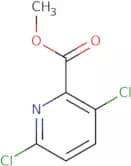
Formula:C5H3ClFNPurity:Min. 95%Color and Shape:Clear LiquidMolecular weight:131.54 g/molMethyl 3,6-dichloropyridine-2-carboxylate
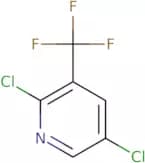
CAS:Methyl 3,6-dichloropyridine-2-carboxylate is a nitro compound that is used as a transport inhibitor. It has been shown to inhibit the transport of some organic compounds in h9c2 cells by binding to the active site of ATP synthase, which is required for energy production. Methyl 3,6-dichloropyridine-2-carboxylate has also been shown to modulate physiological effects in mice, such as modulating the activity of enzymes involved in fatty acid synthesis. This compound is synthetically derived from anthranilic acid and dichlorprop with oxadiazole as a starting material.Formula:C7H5Cl2NO2Purity:Min. 95%Color and Shape:PowderMolecular weight:206.03 g/mol2,5-Dichloro-3-(trifluoromethyl)pyridine
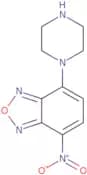
CAS:2,5-Dichloro-3-(trifluoromethyl)pyridine is a hypochlorite that is produced by the reaction of hydrazine and fluoro with sodium hypochlorite. It is a colorless solid with a molecular weight of 180.2. The compound has been used in spectroscopy to study the reaction mechanism of hypochlorites with various substrates.Formula:C6H2Cl2F3NPurity:Min. 95%Color and Shape:Slightly Yellow PowderMolecular weight:215.99 g/mol4-Nitro-7-(1-piperazinyl)-2,1,3-benzoxadiazole
CAS:4-Nitro-7-(1-piperazinyl)-2,1,3-benzoxadiazole is an analytical method for the determination of human serum and heart tissue. The dextran sulfate derivative of 4-nitro-7-(1-piperazinyl)-2,1,3-benzoxadiazole is fluorescent and reacts with trifluoroacetic acid to form a fluorescent derivative. This fluorescent derivative can be detected by spectrophotometry at excitation and emission wavelengths of 350 nm and 400 nm respectively. 4N7PB binds to fatty acids in biological samples (e.g., serum) through its piperazine moiety and fluoresces when excited by light at 340 nm. This reaction can be used as a probe for the presence of fatty acid metabolites in blood or other body fluids such as urine or cerebrospinal fluid. Chemical structures include: 4N7PB cis-(Formula:C10H11N5O3Purity:Min. 95%Color and Shape:SolidMolecular weight:249.23 g/mol[(3S,4R)-4-(4-Fluorophenyl)-3-piperidinyl]methanol
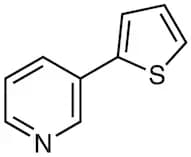
CAS:[(3S,4R)-4-(4-Fluorophenyl)-3-piperidinyl]methanol is a chemical with the molecular formula C10H17FN2O. It is a versatile building block that can be used as an intermediate in organic synthesis, or in the synthesis of complex compounds such as pharmaceuticals. This product has been shown to have high quality and is a useful reagent in research.Formula:C12H16FNOPurity:Min. 95%Color and Shape:PowderMolecular weight:209.26 g/mol3-(2-Thienyl)pyridine
CAS:Formula:C9H7NSPurity:>98.0%(GC)Color and Shape:White to Yellow to Green clear liquidMolecular weight:161.22N,N-Diethyl-5-methyl-[1,2,4]triazolo[5,1-b]pyrimidin-7-amine
CAS:N,N-Diethyl-5-methyl-[1,2,4]triazolo[5,1-b]pyrimidin-7-amine (MTX) is a drug that is used in the treatment of disease activity. It has been shown to have an effect on the production of redox potentials and energy metabolism. MTX also has an effect on cardiac muscle by inhibiting the enzyme activities associated with cardiac muscle contraction and relaxation. This drug has been shown to be effective in the treatment of bowel disease, injury, and basic protein as well as caproic acid production.Formula:C10H15N5Purity:Min. 95%Color and Shape:PowderMolecular weight:205.26 g/mol(3-Trifluoromethylpyrid-2-yl)hydrazine
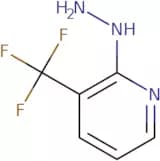
CAS:Building block for preparation of heteroaryltriazole derivativesFormula:C6H6F3N3Purity:Min. 95%Color and Shape:PowderMolecular weight:177.13 g/mol2-Methylimidazole
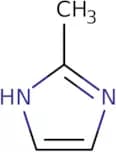
CAS:2-Methylimidazole is a crystalline solid that has been used in the preparation of coordination compounds. The compound is prepared by reacting 2-methylimidazole with an appropriate metal cyanide, such as copper cyanide or nickel cyanide. The crystal structure of 2-methylimidazole shows strong hydrogen bonding interaction between the nitrogen atoms and the carboxylate groups. This compound has been used in clinical pathology to detect increased levels of ammonia, uric acid, and lactic acid in the blood. 2-Methylimidazole is not toxic to humans but has shown some toxicity to mice when injected intravenously at high concentrations. It can be used as an analytical method for determining trace amounts of chlorine in chemical compounds by way of electrochemical impedance spectroscopy (EIS).Formula:C4H6N2Purity:Min. 95%Color and Shape:White Clear LiquidMolecular weight:82.1 g/mol1-Methyl-4-phenyl-piperazine
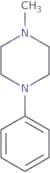
CAS:Controlled Product1-Methyl-4-phenyl-piperazine (MPP) is a drug that inhibits the serine protease and blocks the activation of tyrosine kinases. It is used in diagnostic testing to identify mutations in genes encoding for serine proteases, such as trypsin, chymotrypsin, and elastase. MPP has been shown to reduce blood pressure in rats by blocking the 5-HT4 receptor. This compound also enhances mitochondrial membrane potential and emits light when it is excited by an electron beam.Formula:C11H16N2Purity:Min. 95%Color and Shape:Colorless PowderMolecular weight:176.26 g/mol1-Pyrimidin-2-ylpiperidin-4-amine dihydrochloride
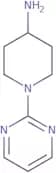
CAS:1-Pyrimidin-2-ylpiperidin-4-amine dihydrochloride is a high quality, crystalline compound with a CAS number of 1179369-48-2. It is an intermediate in the synthesis of various fine chemicals, including pharmaceuticals and pesticides. 1-Pyrimidin-2-ylpiperidin-4-amine dihydrochloride also has applications as a versatile building block for the synthesis of other compounds and is used as a reaction component in organic chemistry. This reagent can be used to synthesize many different compounds for use in research or medical purposes.Formula:C9H14N4·2HClPurity:Min. 95%Color and Shape:PowderMolecular weight:251.16 g/mol6-Amino-5(2,2-diethoxyethyl)-4-hydroxy pyrimidine
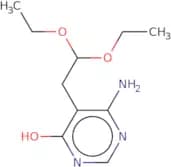
CAS:6-Amino-5(2,2-diethoxyethyl)-4-hydroxy pyrimidine is a reagent that is used in the synthesis of various chemical substances. It is a versatile building block and can be used as an intermediate for the production of fine chemicals. 6-Amino-5(2,2-diethoxyethyl)-4-hydroxy pyrimidine has been shown to have high reactivity and selectivity, making it a useful scaffold for organic synthesis. This compound can be used as an intermediate for the production of complex compounds such as pharmaceuticals, agrochemicals, or perfumes. 6-Amino-5(2,2-diethoxyethyl)-4-hydroxy pyrimidine is also known to be useful in research fields such as biology and medicine.Formula:C10H17N3O3Purity:Min. 95%Color and Shape:White PowderMolecular weight:227.26 g/mol6-Fluoropyridine-2-carbonyl chloride
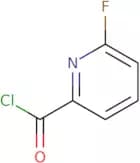
CAS:6-Fluoropyridine-2-carbonyl chloride (6FC) is a versatile building block that is used in the synthesis of complex compounds. It is also a reagent for organic chemistry, research chemicals, and speciality chemicals. 6FC has been shown to be useful as a building block for the preparation of high quality and useful intermediates. The compound reacts with nucleophiles in good yields to produce amines, nitriles, alcohols, and carboxylic acids. 6FC can also be used as a reaction component in organic reactions. It has been shown to be an excellent scaffold for the synthesis of bioactive molecules such as amino acid derivatives and natural products.Formula:C6H3ClFNOPurity:Min. 95%Color and Shape:White PowderMolecular weight:159.55 g/mol5-Pyridin-2-yl-2H-pyrazol-3-ylamine
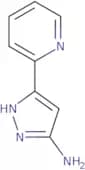
CAS:5-Pyridin-2-yl-2H-pyrazol-3-ylamine is a chemical intermediate that can be used in the synthesis of many different compounds. This compound is a versatile building block that can be used to make complex substances, as well as being an excellent reagent for research purposes. It has been shown to be useful as a reactant in the preparation of high quality chemicals and speciality chemicals. 5-Pyridin-2-yl-2H-pyrazol-3-ylamine is a fine chemical with CAS No. 92352-29-9.Formula:C8H8N4Purity:Min. 95%Color and Shape:Off-White Or Light Brown SolidMolecular weight:160.18 g/mol6-Bromo-7-azaindole
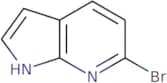
CAS:6-Bromo-7-azaindole is a homologous molecule. It is an electron deficient compound with a piperidine moiety at the 6 position and a nitrogen atom at the 7 position. The nitrogen atom substitutes for an oxygen atom, making this molecule reactive. The electron deficient nature of this molecule makes it suitable for use in transistors and other physicochemical devices. 6-Bromo-7-azaindole has been shown to be effective against carcinoma cells in vitro, as well as to inhibit tumor growth in vivo. This drug also causes homologous recombination by interacting with DNA in mammalian cells. 6-Bromo-7-azaindole binds to DNA, forming a covalent bond with the guanine base of DNA through the nitrogen atom, which is electron deficient.
Formula:C7H5BrN2Purity:Min. 95%Color and Shape:Off-White To Beige To Yellow SolidMolecular weight:197.03 g/molN-Phenyl-2,4,6-triphenyl pyridinium tetrafluoroborate
CAS:N-Phenyl-2,4,6-triphenyl pyridinium tetrafluoroborate is a crystalline material that is insoluble in water and organic solvents. It can be used as a monomer in the synthesis of polymers and for immobilization of enzymes. N-Phenyl-2,4,6-triphenyl pyridinium tetrafluoroborate can be used to reprocess technetium and has been shown to diffract x-rays with high resolution. This compound is also fluorescent with a long wavelength (620 nm) and can be used as a radioactive tracer.
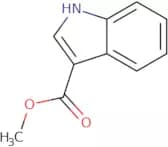
Formula:C29H22N·BF4Purity:Min. 95%Molecular weight:471.3 g/molIndole-3-carboxylic acid methyl ester
CAS:Controlled ProductIndole-3-carboxylic acid methyl ester is a quinoline derivative that is structurally related to the well-known antibiotic, ciprofloxacin. It has been shown to be cytotoxic against a variety of bacterial strains including Pseudomonas aeruginosa and Staphylococcus aureus. The mechanism of action for this compound is not yet fully understood, but it has been shown to inhibit collagen production in cell cultures and induce neuronal death in mice. Indole-3-carboxylic acid methyl ester also possesses anti-cancer properties and inhibits fatty acid synthesis. This compound also has antifungal effects against Candida albicans and other fungi.Formula:C10H9NO2Purity:Min. 98 Area-%Color and Shape:PowderMolecular weight:175.18 g/mol4-((4-methylphenyl)carbonyl)piperazinecarbaldehyde
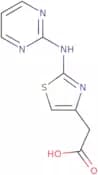
CAS:Please enquire for more information about 4-((4-methylphenyl)carbonyl)piperazinecarbaldehyde including the price, delivery time and more detailed product information at the technical inquiry form on this pagePurity:Min. 95%2-(4-(Pyrimidin-2-ylamino)-3,5-thiazolyl)acetic acid
CAS:Please enquire for more information about 2-(4-(Pyrimidin-2-ylamino)-3,5-thiazolyl)acetic acid including the price, delivery time and more detailed product information at the technical inquiry form on this pagePurity:Min. 95%3-((4-(2-Fluorophenyl)piperazinyl)carbonyl)pyridine-2-carboxylic acid
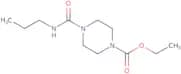
CAS:Controlled ProductPlease enquire for more information about 3-((4-(2-Fluorophenyl)piperazinyl)carbonyl)pyridine-2-carboxylic acid including the price, delivery time and more detailed product information at the technical inquiry form on this pageFormula:C17H16FN3O3Purity:Min. 90%Color and Shape:PowderMolecular weight:329.33 g/molethyl 4-(N-propylcarbamoyl)piperazinecarboxylate
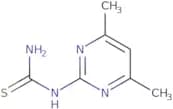
CAS:Please enquire for more information about ethyl 4-(N-propylcarbamoyl)piperazinecarboxylate including the price, delivery time and more detailed product information at the technical inquiry form on this pagePurity:Min. 95%4,6-Dimethylpyrimidin-2-ylthiourea
CAS:4,6-Dimethylpyrimidin-2-ylthiourea is a white crystalline solid with a melting point of about 150°C. It has been shown that 4,6-Dimethylpyrimidin-2-ylthiourea has two-dimensional crystal structure. The molecule is held together by hydrogen bonds.Purity:Min. 95%(4-{[5-(Trifluoromethyl)pyridin-2-yl]oxy}phenyl)amine
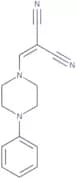
CAS:Please enquire for more information about (4-{[5-(Trifluoromethyl)pyridin-2-yl]oxy}phenyl)amine including the price, delivery time and more detailed product information at the technical inquiry form on this pageFormula:C12H9F3N2OPurity:Min. 95%Molecular weight:254.21 g/mol((4-Phenylpiperazinyl)methylene)methane-1,1-dicarbonitrile
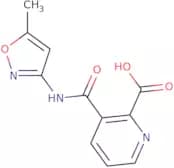
CAS:Please enquire for more information about ((4-Phenylpiperazinyl)methylene)methane-1,1-dicarbonitrile including the price, delivery time and more detailed product information at the technical inquiry form on this pageFormula:C14H14N4Purity:Min. 95%Color and Shape:PowderMolecular weight:238.29 g/mol3-(N-(5-methylisoxazol-3-yl)carbamoyl)pyridine-2-carboxylic acid
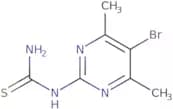
CAS:Please enquire for more information about 3-(N-(5-methylisoxazol-3-yl)carbamoyl)pyridine-2-carboxylic acid including the price, delivery time and more detailed product information at the technical inquiry form on this pagePurity:Min. 95%5-Bromo-4,6-dimethylpyrimidin-2-ylthiourea
CAS:Please enquire for more information about 5-Bromo-4,6-dimethylpyrimidin-2-ylthiourea including the price, delivery time and more detailed product information at the technical inquiry form on this pagePurity:Min. 95%2-(4-Nitrophenoxy)-3-chloro-5-trifluoromethyl pyridine
CAS:Please enquire for more information about 2-(4-Nitrophenoxy)-3-chloro-5-trifluoromethyl pyridine including the price, delivery time and more detailed product information at the technical inquiry form on this page
Purity:Min. 95%N-Nitrosopiperazine
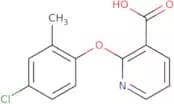
CAS:N-Nitrosopiperazine is a nitrosating agent that forms N-nitrosamines in the body. It is used to produce anthelmintic drugs, such as albendazole and mebendazole. It is also used to activate aromatic amines. Piperazine reacts with electrophilic nucleophiles by nucleophilic attack at the alpha carbon of the piperazine ring to form substituted piperazines. The reaction proceeds via a S1 mechanism and the rate of formation is proportional to the concentration of substrate and inversely proportional to pH. N-Nitrosopiperazine has been shown to be present in human urine samples, with a formation rate that increases significantly when exposed to acidic conditions. This drug was found to have immunotoxic effects, including induction of chronic oral toxicity, autoimmune diseases, and cancer in rats.Formula:C4H9N3OPurity:Min. 95%Color and Shape:Slightly Yellow PowderMolecular weight:115.13 g/mol2-(4-Chloro-2-methylphenoxy)pyridine-3-carboxylic acid
CAS:Please enquire for more information about 2-(4-Chloro-2-methylphenoxy)pyridine-3-carboxylic acid including the price, delivery time and more detailed product information at the technical inquiry form on this pageFormula:C13H10ClNO3Purity:Min. 95%Color and Shape:PowderMolecular weight:263.68 g/mol2-((4-(Benzo[3,4-d]1,3-dioxolan-5-ylmethyl)piperazinyl)carbonyl)cyclohexanecarboxylic acid
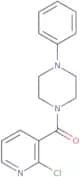
CAS:Please enquire for more information about 2-((4-(Benzo[3,4-d]1,3-dioxolan-5-ylmethyl)piperazinyl)carbonyl)cyclohexanecarboxylic acid including the price, delivery time and more detailed product information at the technical inquiry form on this pageFormula:C20H26N2O5Purity:Min. 95%Color and Shape:PowderMolecular weight:374.43 g/mol1-(2-chloronicotinoyl)-4-phenylpiperazine
CAS:Controlled ProductPlease enquire for more information about 1-(2-chloronicotinoyl)-4-phenylpiperazine including the price, delivery time and more detailed product information at the technical inquiry form on this page
Purity:Min. 95%Color and Shape:PowderMolecular weight:301.77 g/mol1-[3-chloro-5-(trifluoromethyl)-2-pyridinyl]-4-piperidinecarboxylic acid
CAS:1-[3-Chloro-5-(trifluoromethyl)-2-pyridinyl]-4-piperidinecarboxylic acid (3CFP) is a phenoxy carboxamide that is an anticonvulsant. 3CFP has been shown to be effective in animal models of seizure and has a potency that exceeds that of phenobarbital. It also has potent anticonvulsant activity against seizures induced by pentylenetetrazole and electroshock. 3CFP binds to the GABA receptor, which is important for the regulation of neuronal excitability and is the target for many types of antiepileptic drugs. The chlorine atom in 3CFP may contribute to its pharmacological properties because it can form a covalent bond with amino acids like cysteine, which are important for protein synthesis.Purity:Min. 95%4-[(1H-Benzimidazol-2-yl)oxy]-3-methyl-2-pyridinecarboxylic acid
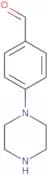
CAS:Please enquire for more information about 4-[(1H-Benzimidazol-2-yl)oxy]-3-methyl-2-pyridinecarboxylic acid including the price, delivery time and more detailed product information at the technical inquiry form on this pageFormula:C14H11N3O3Purity:Min. 95%Molecular weight:269.26 g/mol4-Piperazin-1-yl-benzaldehyde
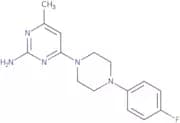
CAS:4-Piperazin-1-yl-benzaldehyde (PPBA) is a natural product that has been shown to have effects on animals and cells. PPBA can be used as an antidote for sulfite poisoning, which is caused by the ingestion of sulfites in food or drink. The mechanism of PPBA's effects is not fully known, but it may involve the inhibition of sulfite reductase, which converts sulfites into sulfates. It also reversibly forms a complex with the transition state of the reaction, enhancing the rate of this reaction. This enhancement is due to a low detection limit and shift in solution temperature. PPBA has been shown to have fluorescence and fluorescent properties when exposed to light, making it useful for endogenous labeling.Formula:C11H14N2OPurity:Min. 95%Molecular weight:190.24 g/mol6-(4-(4-Fluorophenyl)piperazinyl)-4-methylpyrimidine-2-ylamine
CAS:Please enquire for more information about 6-(4-(4-Fluorophenyl)piperazinyl)-4-methylpyrimidine-2-ylamine including the price, delivery time and more detailed product information at the technical inquiry form on this pageFormula:C15H18FN5Purity:Min. 95%Color and Shape:PowderMolecular weight:287.34 g/mol5-Methyl-3-(4-phenylpiperazinyl)cyclohex-2-en-1-one
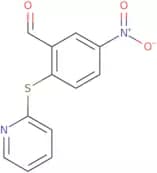
CAS:Please enquire for more information about 5-Methyl-3-(4-phenylpiperazinyl)cyclohex-2-en-1-one including the price, delivery time and more detailed product information at the technical inquiry form on this pageFormula:C17H22N2OPurity:Min. 95%Color and Shape:PowderMolecular weight:270.37 g/mol5-Nitro-2-(2'-pyridinethio)benzaldehyde
CAS:Please enquire for more information about 5-Nitro-2-(2'-pyridinethio)benzaldehyde including the price, delivery time and more detailed product information at the technical inquiry form on this page
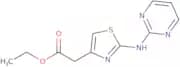
Purity:Min. 95%ethyl 2-(4-(pyrimidin-2-ylamino)-3,5-thiazolyl)acetate
CAS:Please enquire for more information about ethyl 2-(4-(pyrimidin-2-ylamino)-3,5-thiazolyl)acetate including the price, delivery time and more detailed product information at the technical inquiry form on this page
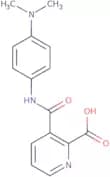
Purity:Min. 95%3-(N-(4-(Dimethylamino)phenyl)carbamoyl)pyridine-2-carboxylic acid
CAS:Please enquire for more information about 3-(N-(4-(Dimethylamino)phenyl)carbamoyl)pyridine-2-carboxylic acid including the price, delivery time and more detailed product information at the technical inquiry form on this pageFormula:C15H15N3O3Purity:Min. 95%Color and Shape:PowderMolecular weight:285.3 g/mol1-(Pyrimidin-2-yl)thiourea
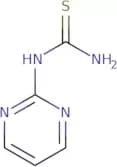
CAS:1-(Pyrimidin-2-yl)thiourea (1PTU) is a sulfur-containing compound with coordination properties. It is an allylamine derivative that contains a thiourea group. 1PTU has been shown to be able to form a crystalline solid in the presence of sulfur, and its spectra can be used as a probe for sulfur content. The thermal analysis of 1PTU reveals that it has two main decomposition peaks at 280°C and 500°C, which are attributed to the elimination of H 2 S and SO 2 respectively. The kinetic parameters for 1PTU have been determined by calorimetry experiments, yielding values of k = 0.0013 s−1 and K = 6×10⁻⁴ M−1s−1. The electron density distribution for the molecule is given by:Formula:C5H6N4SPurity:Min. 95%Color and Shape:PowderMolecular weight:154.19 g/mol4-Nitro-N-pyridin-2-ylbenzamide
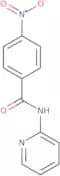
CAS:Please enquire for more information about 4-Nitro-N-pyridin-2-ylbenzamide including the price, delivery time and more detailed product information at the technical inquiry form on this page
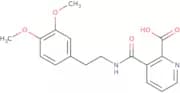
Formula:C12H9N3O3Purity:Min. 95%Color and Shape:PowderMolecular weight:243.22 g/mol3-(N-(2-(3,4-dimethoxyphenyl)ethyl)carbamoyl)pyridine-2-carboxylic acid
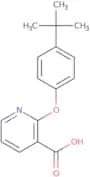
CAS:Please enquire for more information about 3-(N-(2-(3,4-dimethoxyphenyl)ethyl)carbamoyl)pyridine-2-carboxylic acid including the price, delivery time and more detailed product information at the technical inquiry form on this pagePurity:Min. 95%2-(4-(tert-Butyl)phenoxy)pyridine-3-carboxylic acid
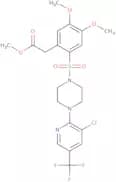
CAS:Please enquire for more information about 2-(4-(tert-Butyl)phenoxy)pyridine-3-carboxylic acid including the price, delivery time and more detailed product information at the technical inquiry form on this pageFormula:C16H17NO3Purity:Min. 95%Color and Shape:PowderMolecular weight:271.31 g/molmethyl 2-(2-((4-(3-chloro-5-(trifluoromethyl)(2-pyridyl))piperazinyl)sulfonyl)-4,5-dimethoxyphenyl)acetate
CAS:Please enquire for more information about methyl 2-(2-((4-(3-chloro-5-(trifluoromethyl)(2-pyridyl))piperazinyl)sulfonyl)-4,5-dimethoxyphenyl)acetate including the price, delivery time and more detailed product information at the technical inquiry form on this page
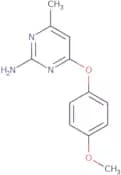
Purity:Min. 95%4-(4-Methoxyphenoxy)-6-methyl-2-pyrimidinamine
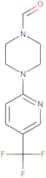
CAS:Please enquire for more information about 4-(4-Methoxyphenoxy)-6-methyl-2-pyrimidinamine including the price, delivery time and more detailed product information at the technical inquiry form on this pageFormula:C12H13N3O2Purity:Min. 95%Color and Shape:PowderMolecular weight:231.25 g/mol4-(5-(Trifluoromethyl)-2-pyridyl)piperazinecarbaldehyde
CAS:Please enquire for more information about 4-(5-(Trifluoromethyl)-2-pyridyl)piperazinecarbaldehyde including the price, delivery time and more detailed product information at the technical inquiry form on this pageFormula:C11H12F3N3OPurity:Min. 95%Color and Shape:PowderMolecular weight:259.23 g/mol


![[(3S,4R)-4-(4-Fluorophenyl)-3-piperidinyl]methanol](/_next/image/?url=https%3A%2Fstatic.cymitquimica.com%2Fproducts%2F3D%2Fthumb-webp%2FFF92100.webp&w=3840&q=75)

![N,N-Diethyl-5-methyl-[1,2,4]triazolo[5,1-b]pyrimidin-7-amine](/_next/image/?url=https%3A%2Fstatic.cymitquimica.com%2Fproducts%2F3D%2Fthumb-webp%2FFD153326.webp&w=3840&q=75)



![(4-{[5-(Trifluoromethyl)pyridin-2-yl]oxy}phenyl)amine](/_next/image/?url=https%3A%2Fstatic.cymitquimica.com%2Fproducts%2F3D%2Fthumb-webp%2FFT130504.webp&w=3840&q=75)


![2-((4-(Benzo[3,4-d]1,3-dioxolan-5-ylmethyl)piperazinyl)carbonyl)cyclohexanecarboxylic acid](/_next/image/?url=https%3A%2Fstatic.cymitquimica.com%2Fproducts%2F3D%2Fthumb-webp%2FFB169464.webp&w=3840&q=75)
![1-[3-chloro-5-(trifluoromethyl)-2-pyridinyl]-4-piperidinecarboxylic acid](/_next/image/?url=https%3A%2Fstatic.cymitquimica.com%2Fproducts%2F3D%2Fthumb-webp%2FFC170003.webp&w=3840&q=75)
![4-[(1H-Benzimidazol-2-yl)oxy]-3-methyl-2-pyridinecarboxylic acid](/_next/image/?url=https%3A%2Fstatic.cymitquimica.com%2Fproducts%2F3D%2Fthumb-webp%2FFB156806.webp&w=3840&q=75)