Heterocycles with Nitrogen (N)
In this category, you will find a wide variety of nitrogen-containing heterocycles. Heterocycles are carbon chains that form a cycle in which at least one position is occupied by a heteroatom, in this case, nitrogen. These compounds are integral in the synthesis of pharmaceuticals, agrochemicals, and dyes, offering unique reactivity and stability. At CymitQuimica, we provide a comprehensive selection of high-quality nitrogen-containing heterocycles to support your research and industrial applications
Subcategories of "Heterocycles with Nitrogen (N)"
- Azepane(434 products)
- Benzotriazoles(436 products)
- Diazepanes(331 products)
- Imidazoles(4,011 products)
- Imidazolines(385 products)
- Isoxazole(1,077 products)
- Piperazines(3,736 products)
- Piperidines(8,405 products)
- Pyrazines(1,299 products)
- Pyrazole(5,921 products)
- Pyrazolidine(21 products)
- Pyrazoline(142 products)
- Pyridazine(856 products)
- Pyridines(21,917 products)
- Pyrimidine(6,041 products)
- Pyrroles(2,443 products)
- Pyrrolidines(5,816 products)
- Pyrroline(48 products)
- Pyrrolo[1,2-b]pyridazine(10 products)
- Tetrazole(510 products)
- Triazines(462 products)
- Triazoles(1,680 products)
Show 14 more subcategories
Found 17855 products of "Heterocycles with Nitrogen (N)"
Sort by
Purity (%)
0
100
|
0
|
50
|
90
|
95
|
100
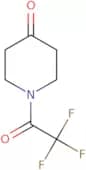
1-(Trifluoroacetyl)-4-piperidinone
CAS:Controlled Product<p>Please enquire for more information about 1-(Trifluoroacetyl)-4-piperidinone including the price, delivery time and more detailed product information at the technical inquiry form on this page</p>Formula:C7H8F3NO2Purity:Min. 95%Molecular weight:195.14 g/molRef: 3D-FT81631
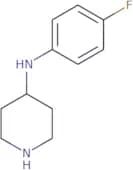
Discontinued productN-(4-Fluorophenyl)piperidin-4-amine
CAS:Controlled Product<p>Fentanyl is a synthetic opioid that is similar to morphine. It has been used in human studies for its analgesic effects. Fentanyl has been shown to have a high potential for abuse and can cause life-threatening respiratory depression. It can be administered orally, intravenously, or by inhalation. The drug is metabolized by the liver into several inactive metabolites. Fentanyl is an analog of the natural opioid peptide endorphin and binds to δ-opioid receptors in the central nervous system, which are involved in the regulation of pain. This drug also has antinociceptive properties at low doses and δ-opioid agonist activity at higher doses.</p>Formula:C11H15FN2Purity:Min. 95%Molecular weight:194.25 g/molRef: 3D-FF116998
Discontinued product1-(4-Fluorobenzoyl)piperidin-4-one
CAS:Controlled Product<p>Please enquire for more information about 1-(4-Fluorobenzoyl)piperidin-4-one including the price, delivery time and more detailed product information at the technical inquiry form on this page</p>Formula:C12H12FNO2Purity:Min. 95%Molecular weight:221.23 g/molRef: 3D-FF51371
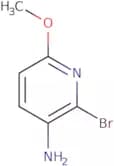
Discontinued product2-Bromo-6-methoxypyridin-3-amine
CAS:<p>2-Bromo-6-methoxypyridin-3-amine is a perovskite that has been shown to have a high photoluminescence quantum yield and can be used in solar cells. This compound interacts with both the ligands and the acceptors, boosting the efficiency of these compounds. The 2-bromo-6 methoxypyridin-3 amine is a semiconductor with an electron affinity of 1.9 eV and a band gap of 1.6 eV. It has been shown to be efficient as a photoluminescent material in nanocrystals.</p>Formula:C6H7BrN2OPurity:Min. 95%Molecular weight:203.04 g/molRef: 3D-FB140331
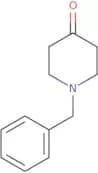
Discontinued productN-Benzyl-4-piperidone
CAS:Controlled Product<p>N-Benzyl-4-piperidone is a potent antagonist of the histamine H1 receptor. It binds to the receptor in vivo, and it has been shown that this binding leads to a decrease in the release of neurotransmitters in the central nervous system. This drug is used for the treatment of hiv infection and for other conditions such as allergic rhinitis, chronic idiopathic urticaria, and vasomotor rhinitis. N-Benzyl-4-piperidone inhibits the reaction between propionyl chloride and dibutyltin oxide to form a dialkyl tin compound by an acylation reaction. The low energy released during this reaction may be due to hydrogen bonding between this drug and water molecules.</p>Formula:C12H15NOPurity:Min. 95%Color and Shape:Colorless Clear LiquidMolecular weight:189.25 g/molRef: 3D-FB18366
Discontinued product