Heterocycles with Nitrogen (N)
In this category, you will find a wide variety of nitrogen-containing heterocycles. Heterocycles are carbon chains that form a cycle in which at least one position is occupied by a heteroatom, in this case, nitrogen. These compounds are integral in the synthesis of pharmaceuticals, agrochemicals, and dyes, offering unique reactivity and stability. At CymitQuimica, we provide a comprehensive selection of high-quality nitrogen-containing heterocycles to support your research and industrial applications
Subcategories of "Heterocycles with Nitrogen (N)"
- Azepane(434 products)
- Benzotriazoles(436 products)
- Diazepanes(331 products)
- Imidazoles(4,006 products)
- Imidazolines(385 products)
- Isoxazole(1,077 products)
- Piperazines(3,735 products)
- Piperidines(8,394 products)
- Pyrazines(1,297 products)
- Pyrazole(5,919 products)
- Pyrazolidine(21 products)
- Pyrazoline(142 products)
- Pyridazine(856 products)
- Pyridines(21,910 products)
- Pyrimidine(6,038 products)
- Pyrroles(2,440 products)
- Pyrrolidines(5,814 products)
- Pyrroline(48 products)
- Pyrrolo[1,2-b]pyridazine(10 products)
- Tetrazole(510 products)
- Triazines(462 products)
- Triazoles(1,679 products)
Show 14 more subcategories
Found 17855 products of "Heterocycles with Nitrogen (N)"
Sort by
Purity (%)
0
100
|
0
|
50
|
90
|
95
|
100
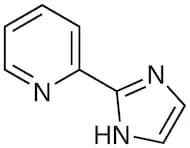
2-(1H-Imidazol-2-yl)pyridine
CAS:Formula:C8H7N3Purity:>98.0%(GC)(T)Color and Shape:White to Light yellow to Light orange powder to crystalMolecular weight:145.173-Bromo-5-methylpyridine
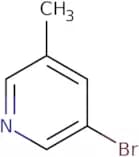
CAS:<p>3-Bromo-5-methylpyridine is a synthetic compound that has been found in the filtrate of a diethyl malonate synthesis. It was also observed as an impurity in the hydrogenation reduction of 3-bromo-5-methylpyridine. The addition of sodium nitrite to toluene results in the formation of 3-bromo-5-methylpyridine, which is an acidic organic compound.</p>Formula:C6H6BrNPurity:Min. 95%Color and Shape:PowderMolecular weight:172.02 g/molMethyl 2,4-dichloropyrimidine-5-carboxylate
CAS:<p>Methyl 2,4-dichloropyrimidine-5-carboxylate is a versatile building block for the synthesis of complex compounds. It has been used as a reagent for research, and as an intermediate in the synthesis of pharmaceuticals and other chemicals. Methyl 2,4-dichloropyrimidine-5-carboxylate can be used as a high quality intermediate for the production of pharmaceuticals, such as Tamsulosin. This compound is also known to have useful scaffold properties.</p>Formula:C6H4N2O2Cl2Purity:Min. 95%Color and Shape:White PowderMolecular weight:207.01 g/mol6-Hydroxyquinoline-(1H)-2-one
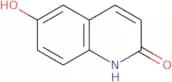
CAS:<p>6-Hydroxyquinoline-(1H)-2-one is an organic compound that has been shown to inhibit the uptake of carbostyril by bacterial cells. This inhibition causes increased uptake of xanthurenic acid and anthranilic acid, which are two compounds that are found in wastewater treatment. 6-Hydroxyquinoline-(1H)-2-one may be a potential anticancer agent, as it inhibits the growth of astroglia cells and bladder cancer cells. It also reacts with acylation reactions to form quinolinic acid, which has been shown to have anticancer effects.</p>Formula:C9H7NO2Purity:Min. 95%Color and Shape:White SolidMolecular weight:161.16 g/mol2-Chloro-5-chloromethylpyridine
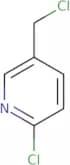
CAS:<p>2-Chloro-5-chloromethylpyridine is a nicotinic acetylcholine analog. It is synthesized by chlorinating anhydrous sodium and phosphorus pentachloride in the presence of sodium carbonate. 2-Chloro-5-chloromethylpyridine is soluble in water, but insoluble in organic solvents. The synthesis produces a yellow solution that contains hydrogen chloride, hydrogen fluoride, and other products such as 2-chloropyridinol and 2-methylpyridine. The yield of this reaction is not reported.END></p>Formula:C6H5Cl2NPurity:Min. 95%Color and Shape:White To Yellow SolidMolecular weight:162.02 g/mol4-(Piperidin-1-ylmethyl)benzaldehyde
CAS:<p>4-(Piperidin-1-ylmethyl)benzaldehyde is a benzyl compound that has been shown to inhibit the activity of some imidazole compounds. It has been shown to have an agonistic effect on h3 receptors, and can be used for the treatment of anxiety disorders. This compound can be used in drug design as a linker or pharmacophore for other compounds. 4-(Piperidin-1-ylmethyl)benzaldehyde can be synthesized from commercially available materials, which makes it worth further exploration.</p>Formula:C13H17NOPurity:Min. 95%Color and Shape:PowderMolecular weight:203.28 g/mol2,2':6',2'-Terpyridine-4,4',4''-tricarboxylic acid
CAS:<p>2,2':6',2'-Terpyridine-4,4',4''-tricarboxylic acid is a model system that has been studied for its photochemical properties. In this molecule, there are two carboxyl groups and three pyridine rings. The molecule can be protonated easily by electron transfer to form a positively charged anion. This allows the molecule to undergo electron transfer reactions with other molecules in the presence of radiation or visible light. 2,2':6',2'-Terpyridine-4,4',4''-tricarboxylic acid absorbs photons easily and then transfers its energy to a nearby electron. The electron then passes on the energy to another molecule, which can produce a photocurrent.</p>Formula:C18H11N3O6Purity:Min. 95%Color and Shape:Brown SolidMolecular weight:365.3 g/mol1-(2-Hydroxyethyl)-4-methylpiperazine
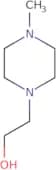
CAS:<p>1-(2-Hydroxyethyl)-4-methylpiperazine is an organic compound with the formula CHN(CHOH)CHNH. It is a colorless, viscous liquid that is soluble in water and has a pungent odor. The chemical is used as a viscosity control agent and as an intermediate in the manufacture of other chemicals. 1-(2-Hydroxyethyl)-4-methylpiperazine can be synthesized by the reaction of ethylene oxide with amines, or by quaternization of diethanolamine with chloroethane. 1-(2-Hydroxyethyl)-4-methylpiperazine is used in industrial applications such as in ion exchange resins and to control the viscosity of drilling fluids. It has been detected at low levels in surface waters and soils, where it may be derived from wastewater treatment plants or atmospheric deposition.</p>Formula:C7H16N2OPurity:Min. 95%Color and Shape:PowderMolecular weight:144.21 g/mol2-Methyl-5-nitroimidazole-1-propanol
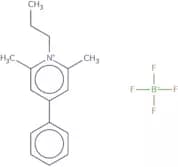
CAS:<p>2-Methyl-5-nitroimidazole-1-propanol (2MI) is a matrix effect correction reagent that can be used to reconstitute the original concentrations of drugs in plasma and urine samples. It is also used for sample preparation, validation and quality control. 2MI has been shown to bind with cervical cancer cells, which may be due to its ability to bind with drug receptors on the surface of these cells. A liquid chromatography-mass spectrometry (LC-MS/MS) method was developed to measure 2MI in plasma and urine samples. The method was validated using test samples and showed good agreement with the target concentration.</p>Formula:C7H11N3O3Purity:Min. 95%Color and Shape:PowderMolecular weight:185.18 g/mol2,6-Diethyl-4-phenyl-1-propylpyridinium tetrafluoroborate
CAS:<p>2,6-Diethyl-4-phenyl-1-propylpyridinium tetrafluoroborate is a building block and a versatile intermediate in organic synthesis. It can be used as a reactant in the preparation of fine chemicals and pharmaceuticals. 2,6-Diethyl-4-phenyl-1-propylpyridinium tetrafluoroborate has been shown to produce high quality reaction products with good yield.</p>Formula:C16H20N·BF4Purity:Min. 95%Molecular weight:313.14 g/mol3-Hydroxy-1-methylpyridin-4(1H)-one
CAS:<p>3-Hydroxypyridin-4(1H)-one is a compound that belongs to the group of organic compounds called pyridines. It is a colorless, crystalline solid with a melting point of 210 °C. 3-Hydroxypyridin-4(1H)-one is soluble in ether and chloroform. 3-Hydroxypyridin-4(1H)-one forms complexes with metal ions such as copper, zinc, and nickel. The stability constants for these complexes are in the order of Cu > Zn > Ni. Potentiometric titration experiments show that the ligands are stronger bases than water and therefore react more strongly with copper ions than hydroxide ions.</p>Formula:C6H7NO2Purity:Min. 95%Color and Shape:PowderMolecular weight:125.13 g/mol2,3-Diethyl-5-methylpyrazine
CAS:<p>2,3-Diethyl-5-methylpyrazine is a methyl ketone that is used as a model for fatty acids. It has been shown to be an important precursor for the synthesis of unsaturated ketones. 2,3-Diethyl-5-methylpyrazine can be produced by the reaction of acetone with ethylene and then subjected to acid catalyzed cyclization. This compound also has a characteristic odor that has been described as "fruity" or "spicy." It is used in the production of butyric acid, which is an important industrial chemical.</p>Formula:C9H14N2Purity:Min. 95%Color and Shape:Colorless PowderMolecular weight:150.22 g/mol1-Allylpiperazine
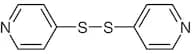
CAS:<p>1-Allylpiperazine is a synthetic molecule that has affinity values for the binding sites of 4-hydroxy-3-nitrophenylacetic acid and zearalenone. It has been shown to have anticancer activity in vitro, as well as antiadrenergic effects by acting as a competitive antagonist at adrenergic receptors. This compound also has potential use as a template molecule for the design of novel drugs with anticancer and antiadrenergic activity. 1-Allylpiperazine is synthesized from the monomers trimethylolpropane and piperazine in two steps. It is also known to be an inhibitor of cellular protein synthesis.</p>Formula:C7H14N2Purity:Min. 95%Color and Shape:Colourless to yellow liquid.Molecular weight:126.2 g/mol4,4'-Dipyridyl Disulfide
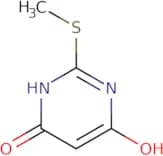
CAS:Formula:C10H8N2S2Purity:>97.0%(GC)(T)Color and Shape:White to Light yellow to Light red powder to crystalMolecular weight:220.312-Methylthio-4,6-dihydroxypyrimidine
CAS:<p>2-Methylthio-4,6-dihydroxypyrimidine is an organic compound that has a hypsochromic and bathochromic effect. This ligand belongs to the group of neutral compounds and is found in its intramolecular hydrogen form. It also reacts with hydrochloric acid to form tautomers. 2-Methylthio-4,6-dihydroxypyrimidine can exist in two tautomeric forms: the chloride and oxalyl forms. The vibrational frequencies of these tautomers are different. 2-Methylthio-4,6-dihydroxypyrimidine is an intermediate in the synthesis of other chemical compounds such as chloropropionates, methanesulfonic acid, and piperazine.</p>Formula:C5H6N2O2SPurity:Min. 95%Color and Shape:PowderMolecular weight:158.18 g/mol6-Bromopyrrolo[2,1-f][1,2,4]triazin-4(3H)-one
CAS:<p>Kinase inhibitor mimicking quinazoline kinase inhibitor scaffold</p>Formula:C6H4BrN3OPurity:Min. 95%Color and Shape:Yellow PowderMolecular weight:214.02 g/mol1,2,2,6,6-Pentamethyl-4-piperidone
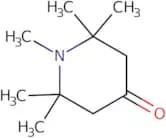
CAS:<p>1,2,2,6,6-Pentamethyl-4-piperidone (PMP) is a fluorescent molecule with a characteristic emission maximum at 519 nm. PMP has been shown to bind to the amyloid beta protein in Alzheimer's disease and fluoresce when bound. This fluorescence is quenched by deuteration of the molecule. The use of PMP as a tracer for monitoring the transport of water and nitrogen through plants has also been investigated. In this study, PMP was found to be an effective probe for analysing plant growth and development.</p>Formula:C10H19NOPurity:Min. 95%Color and Shape:Colorless Clear LiquidMolecular weight:169.27 g/mol3,5-Diamino-6-chloropyrazine-2-carboxylic acid methyl ester
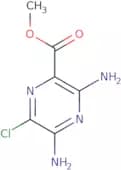
CAS:<p>3,5-Diamino-6-chloropyrazine-2-carboxylic acid methyl ester is a low binding, mitochondrial labeling agent. It is photolabile and can be used in the study of respiratory complex activity. 3,5-Diamino-6-chloropyrazine-2-carboxylic acid methyl ester has been shown to inhibit the enzyme mitochondrial complex I and II. The azido group on the molecule is homologous to a phosphate group in ATP and can be used as a substrate analogue for ATP synthase. This allows 3,5-Diamino-6-chloropyrazine-2-carboxylic acid methyl ester to be used as an experimental tool for studying ATP synthesis.</p>Formula:C6H7ClN4O2Purity:Min. 95%Color and Shape:PowderMolecular weight:202.6 g/mol3-Aminoquinuclidine dihydrochloride
CAS:<p>3-Aminoquinuclidine dihydrochloride (3-AQDH) is a chiral quinuclidine derivative that is an acetylcholine receptor agonist. It has been shown to bind to the α7 nicotinic acetylcholine receptor with high affinity and selectivity. 3-AQDH has also been shown to crosslink the cholinergic receptor, which may lead to increased sensitivity of the receptor. The binding constants between 3-AQDH and the α7 nicotinic acetylcholine receptors are very high and it has been shown to be enantiopure in its synthesis. 3-AQDH also has a hydrophilic interaction chromatography profile, which separates it from other compounds. This agent may have potential use as a drug for treating Alzheimer's disease and Parkinson's disease due to its ability to inhibit acetylcholinesterase activity.</p>Purity:Min. 95%Color and Shape:PowderMolecular weight:199.12 g/molSodium 3,5,6-trichloro-2-pyridinol
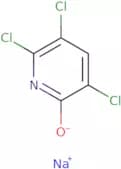
CAS:<p>Sodium 3,5,6-trichloro-2-pyridinol is an inorganic compound that has been shown to be an effective biocide for the removal of hydrogen chloride and hydroxide solution. The optimal reaction was found to be at pH 10.3 with a reaction vessel containing 1% sodium hydroxide solution and a concentration of 0.2 grams per liter of hydrogen chloride. This compound reacts with hydrogen chloride to form hydrochloric acid (HCl) and sodium 3,5,6-trichloro-2-pyridinol hydrochloride (NCTP), which can then be removed by wastewater treatment or precipitation as sodium chloride. NCTP is also used for the treatment of skin conditions such as acne and eczema.</p>Formula:C5HCl3NONaPurity:Min. 95%Color and Shape:Off-White SolidMolecular weight:220.42 g/mol








![6-Bromopyrrolo[2,1-f][1,2,4]triazin-4(3H)-one](/_next/image/?url=https%3A%2Fstatic.cymitquimica.com%2Fproducts%2F3D%2Fthumb-webp%2FFB63187.webp&w=3840&q=75)