Heterocycles with Nitrogen (N)
Subcategories of "Heterocycles with Nitrogen (N)"
- Azepane(436 products)
- Benzotriazoles(438 products)
- Diazepanes(335 products)
- Imidazoles(4,031 products)
- Imidazolines(386 products)
- Isoxazole(1,088 products)
- Piperazines(3,766 products)
- Piperidines(8,483 products)
- Pyrazines(1,305 products)
- Pyrazole(5,969 products)
- Pyrazolidine(21 products)
- Pyrazoline(144 products)
- Pyridazine(861 products)
- Pyridines(22,100 products)
- Pyrimidine(6,131 products)
- Pyrroles(2,469 products)
- Pyrrolidines(5,845 products)
- Pyrroline(50 products)
- Pyrrolo[1,2-b]pyridazine(10 products)
- Tetrazole(532 products)
- Triazines(468 products)
- Triazoles(1,693 products)
Found 17890 products of "Heterocycles with Nitrogen (N)"
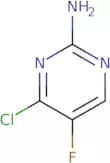
4-chloro-5-fluoropyrimidin-2-amine
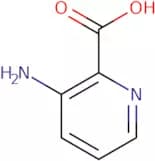
CAS:Please enquire for more information about 4-chloro-5-fluoropyrimidin-2-amine including the price, delivery time and more detailed product information at the technical inquiry form on this pageFormula:C4H3ClFN3Purity:Min. 95%Molecular weight:147.54 g/mol3-Aminopicolinic acid
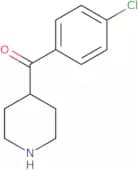
CAS:3-Aminopicolinic acid is a carboxylate that can be found in the cytosol, mitochondria, and nucleus of cells. It is an efficient method for the synthesis of picolinic acid from 3-aminopyridine-2-carboxylic acid. The synthesis of picolinic acid has been shown to have structural analogs to molecules involved in nucleotide metabolism such as single-stranded DNA, mitochondrial DNA, and mitochondrial RNA. 3-Aminopicolinic acid has been shown to increase renal blood flow by stabilizing complexes with chloride and phosphoenolpyruvate. This compound also enhances the renal excretion of picolinic acid. 3-Desacetylcefotaxime potassium Tilmicosin Gatifloxacin 3-Aminopicolinic acidFormula:C6H6N2O2Purity:Min. 95 Area-%Color and Shape:Yellow PowderMolecular weight:138.12 g/mol4-(4-Chlorobenzoyl)piperidine
CAS:Please enquire for more information about 4-(4-Chlorobenzoyl)piperidine including the price, delivery time and more detailed product information at the technical inquiry form on this pagePurity:Min. 95%1-(4-Methoxyphenyl)-7-oxo-6-(4-(2-oxopiperidin-1-yl)phenyl)-4,5,6,7-tetrahydro-1H-pyrazolo[3,4-c]pyridine-3-carboxylic acid
CAS:Apixaban is a novel, orally active, and selective factor Xa inhibitor. It is the first oral anticoagulant that has been developed to inhibit both free and clot-bound thrombin. Apixaban binds reversibly to the active site of factor Xa and inhibits factor Xa-mediated conversion of prothrombin to thrombin, resulting in an increased concentration of prothrombin in blood. Apixaban also inhibits the activity of thrombin-activated protein C (APC) that degrades fibrin clots by proteolytic cleavage of fibrinogen. This drug has a crystalline form with a particle size between 10 and 100 μm.Formula:C25H24N4O5Purity:Min. 95%Molecular weight:460.48 g/molCiprofloxacin piperazinyl-N4-sulfate
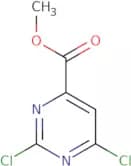
CAS:Ciprofloxacin is a fluoroquinolone antibiotic with potent activity against many Gram-negative and Gram-positive bacteria. It is used in the treatment of urinary tract infections, respiratory tract infections, skin and soft tissue infections, bone and joint infections, and intra-abdominal infections. Ciprofloxacin piperazinyl-N4-sulfate has the potential to interact with other drugs. It binds to human serum albumin (HSA) and may be excreted into breast milk. The drug is well absorbed orally but has poor bioavailability due to rapid metabolism by the liver. Ciprofloxacin piperazinyl-N4-sulfate has been shown to have pharmacokinetic properties that are independent of dose or duration of administration.Formula:C17H18FN3O6SPurity:Min. 95%Molecular weight:411.41 g/molMethyl 2,4-dichloropyrimidine-6-carboxylate
CAS:Please enquire for more information about Methyl 2,4-dichloropyrimidine-6-carboxylate including the price, delivery time and more detailed product information at the technical inquiry form on this pageFormula:C6H4Cl2N2O2Purity:Min. 95%Color and Shape:Off-White To Yellow SolidMolecular weight:207.01 g/mol4'-Amino-2,2':6',2''-terpyridine
CAS:4'-Amino-2,2':6',2''-terpyridine is a versatile chemical building block that can be used in the synthesis of complex compounds. It is a high quality reagent and useful intermediate for the production of speciality chemicals. 4'-Amino-2,2':6',2''-terpyridine can also be used as a reaction component or scaffold to produce other compounds. CAS No. 193944-66-0Formula:C15H12N4Purity:Min. 97.0 Area-%Molecular weight:248.29 g/molRef: 3D-J-400550
-Unit-ggTo inquire1gTo inquire5gTo inquire10gTo inquire500mgTo inquire2500mgTo inquire5-Methyl-4,5,6,7-tetrahydrothiazolo[5,4-c]pyridine-2-carboxylic acid hydrochloride
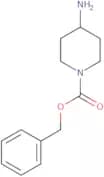
CAS:Intermediate in the synthesis of edoxabanFormula:C8H10N2O2S·HClPurity:Min. 95%Molecular weight:234.7 g/molBenzyl 4-aminopiperidine-1-carboxylate
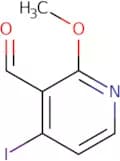
CAS:Please enquire for more information about Benzyl 4-aminopiperidine-1-carboxylate including the price, delivery time and more detailed product information at the technical inquiry form on this pageFormula:C13H18N2O2Purity:Min. 95%Color and Shape:PowderMolecular weight:234.29 g/mol4-Iodo-2-methoxypyridine-3-carboxaldehyde
CAS:4-Iodo-2-methoxypyridine-3-carboxaldehyde is a disubstituted compound that has insulin-like properties. It inhibits the activity of the insulin receptor, which may contribute to its insulin-like growth factor effects. This inhibitor also targets the protein kinase, which is responsible for the response of cells to insulin. 4-Iodo-2-methoxypyridine 3 carboxaldehyde has been shown to inhibit IGF1R and malonate ion, and it may have potential as an oral treatment for diabetes.Formula:C7H6INO2Purity:Min. 95%Molecular weight:263.03 g/molMelarsomine dihydrochloride
CAS:Please enquire for more information about Melarsomine dihydrochloride including the price, delivery time and more detailed product information at the technical inquiry form on this pageFormula:C13H21AsN8S2•(HCl)2Purity:Min. 95%Molecular weight:501.34 g/molNoratropine hydrochloride
CAS:Please enquire for more information about Noratropine hydrochloride including the price, delivery time and more detailed product information at the technical inquiry form on this pageFormula:C16H21NO3•HClPurity:Min. 95%Molecular weight:311.8 g/molHaloperidol nonanoate
CAS:Controlled ProductPlease enquire for more information about Haloperidol nonanoate including the price, delivery time and more detailed product information at the technical inquiry form on this page
Formula:C30H39ClFNO3Purity:Min. 95%Molecular weight:516.09 g/mol3-Ethyl haloperidol decanoate
CAS:Please enquire for more information about 3-Ethyl haloperidol decanoate including the price, delivery time and more detailed product information at the technical inquiry form on this page
Formula:C33H45ClFNO3Purity:Min. 95%Molecular weight:558.17 g/molN-Isopropyl carvedilol
CAS:Please enquire for more information about N-Isopropyl carvedilol including the price, delivery time and more detailed product information at the technical inquiry form on this page
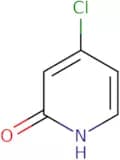
Formula:C27H32N2O4Purity:Min. 95%Molecular weight:448.56 g/mol4-Chloro-2-hydroxypyridine
CAS:4-Chloro-2-hydroxypyridine is a chemical substance that has been shown to inhibit the replication of viruses in cell culture. It has demonstrated antiobesity effects in animal studies, but its mechanism is not well understood. This substance may be a thioxanthone derivative, which are heterocyclic compounds containing oxygen and sulfur. 4-Chloro-2-hydroxypyridine can crosslink DNA and form adducts with deoxyribose sugars. It also has affinity for sequences containing pyridones and imidazopyridines.
Formula:C5H4ClNOPurity:Min. 95%Molecular weight:129.54 g/mol2,5-Difluoropyridine
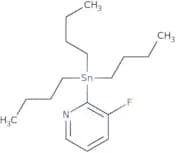
CAS:2,5-Difluoropyridine is a ligand that is used in the synthesis of pharmaceuticals and other organic compounds. 2,5-Difluoropyridine is typically activated by a metal ion (e.g., palladium) to form an organometallic complex. The orientation of substituents on the difluoropyridine ring can affect its reactivity and selectivity. For example, chlorine atoms interact with the electrophilic carbon atom in the ring and orientations with electron withdrawing groups are more reactive than those with electron donating groups. 2,5-Difluoropyridine can be used as a cross-coupling reagent for Grignard reactions and nucleophilic substitution reactions. It also has been shown to inhibit human erythrocyte pyruvate kinase activity in vitro and may be useful for the treatment of diabetic complications such as neuropathy or retinopathy.Formula:C5H3F2NPurity:Min. 95%Color and Shape:Clear LiquidMolecular weight:115.08 g/mol3-Fluoro-2-(tributylstannyl)pyridine
CAS:Controlled ProductPlease enquire for more information about 3-Fluoro-2-(tributylstannyl)pyridine including the price, delivery time and more detailed product information at the technical inquiry form on this page
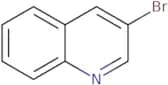
Formula:C17H30FNSnPurity:Min. 95%Molecular weight:386.14 g/mol3-Bromoquinoline
CAS:3-Bromoquinoline is a brominated quinoline derivative that can be synthesized by cross-coupling reactions. The compound's chemical structure is similar to the 3-azidoquinoline, which was studied in quantum theory and molecular modeling. The 3-bromoquinoline molecule has been shown to exist in two different coordination geometries: octahedral and trigonal bipyramidal. In the octahedral geometry, the 3-bromoquinoline molecule is bound to three bromine atoms and one nitrogen atom, with an intramolecular hydrogen bond between the nitrogen atom and the quinoline ring system. The trigonal bipyramidal geometry also features an intramolecular hydrogen bond between the nitrogen atom and quinoline ring system, as well as a halogen bonding interaction with one of the three bromine atoms.
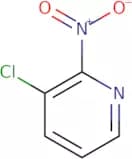
Formula:C9H6BrNPurity:Min. 95%Color and Shape:Yellow PowderMolecular weight:208.05 g/mol3-Chloro-2-nitropyridine
CAS:3-Chloro-2-nitropyridine is a chemical compound that has been shown to have anticancer activity. It is a structural analog of the nucleophilic piperazine, which can react with hydrogen fluoride in an electrophilic substitution reaction to form 3-chloro-2-nitropyridine oxide. The anticancer activity of this compound may be due to its ability to inhibit the growth of tumor cells by binding to the d4 receptor, inhibiting the production of inflammatory cytokines and growth factors. 3-Chloro-2-nitropyridine has also been shown to have antiinflammatory activities, which may be due to its inhibition of nitric oxide synthesis and 5'-lipoxygenase.Formula:C5H3N2O2ClPurity:Min. 95%Color and Shape:PowderMolecular weight:158.54 g/mol

![1-(4-Methoxyphenyl)-7-oxo-6-(4-(2-oxopiperidin-1-yl)phenyl)-4,5,6,7-tetrahydro-1H-pyrazolo[3,4-c]p…](/_next/image/?url=https%3A%2Fstatic.cymitquimica.com%2Fproducts%2F3D%2Fthumb-webp%2FFM155764.webp&w=3840&q=75)


![5-Methyl-4,5,6,7-tetrahydrothiazolo[5,4-c]pyridine-2-carboxylic acid hydrochloride](/_next/image/?url=https%3A%2Fstatic.cymitquimica.com%2Fproducts%2F3D%2Fthumb-webp%2FFM63141.webp&w=3840&q=75)