Heterocycles with Nitrogen (N)
In this category, you will find a wide variety of nitrogen-containing heterocycles. Heterocycles are carbon chains that form a cycle in which at least one position is occupied by a heteroatom, in this case, nitrogen. These compounds are integral in the synthesis of pharmaceuticals, agrochemicals, and dyes, offering unique reactivity and stability. At CymitQuimica, we provide a comprehensive selection of high-quality nitrogen-containing heterocycles to support your research and industrial applications
Subcategories of "Heterocycles with Nitrogen (N)"
- Azepane(434 products)
- Benzotriazoles(436 products)
- Diazepanes(331 products)
- Imidazoles(4,006 products)
- Imidazolines(385 products)
- Isoxazole(1,077 products)
- Piperazines(3,735 products)
- Piperidines(8,396 products)
- Pyrazines(1,299 products)
- Pyrazole(5,919 products)
- Pyrazolidine(21 products)
- Pyrazoline(142 products)
- Pyridazine(856 products)
- Pyridines(21,911 products)
- Pyrimidine(6,038 products)
- Pyrroles(2,440 products)
- Pyrrolidines(5,814 products)
- Pyrroline(48 products)
- Pyrrolo[1,2-b]pyridazine(10 products)
- Tetrazole(510 products)
- Triazines(462 products)
- Triazoles(1,679 products)
Show 14 more subcategories
Found 17855 products of "Heterocycles with Nitrogen (N)"
Sort by
Purity (%)
0
100
|
0
|
50
|
90
|
95
|
100
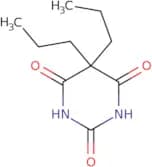
5,5-Dipropylpyrimidine-2,4,6(1H,3H,5H)-trione
CAS:Controlled Product<p>5,5-Dipropylpyrimidine-2,4,6(1H,3H,5H)-trione is a molecule that is used as a food additive. It has been shown to inhibit the growth of cancer cells in heart tissue. The optimum concentration for this compound is 0.02% (w/v) and it has been found to be effective at concentrations up to 0.1%. The protonation of 5,5-dipropylpyrimidine-2,4,6(1H,3H,5H)-trione depends on its pH value and it can be protonated by potassium ions or sodium ions. The polycarboxylic acid form of 5,5-dipropylpyrimidine-2,4,6(1H,3H,5H)-trione is more stable than its free acid form. This molecule has also been shown to have properties similar to those of</p>Formula:C10H16N2O3Purity:Min. 95%Molecular weight:212.25 g/mol2-[(4-Phenylpiperazin-1-yl)carbonyl]phenol
CAS:Controlled Product<p>Please enquire for more information about 2-[(4-Phenylpiperazin-1-yl)carbonyl]phenol including the price, delivery time and more detailed product information at the technical inquiry form on this page</p>Formula:C17H18N2O2Purity:Min. 95%Molecular weight:282.34 g/mol1-(4-Methoxyphenyl)-7-oxo-6-(4-(2-oxopiperidin-1-yl)phenyl)-4,5,6,7-tetrahydro-1H-pyrazolo[3,4-c]pyridine-3-carboxylic acid
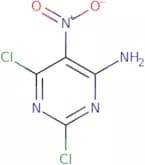
CAS:<p>Apixaban is a novel, orally active, and selective factor Xa inhibitor. It is the first oral anticoagulant that has been developed to inhibit both free and clot-bound thrombin. Apixaban binds reversibly to the active site of factor Xa and inhibits factor Xa-mediated conversion of prothrombin to thrombin, resulting in an increased concentration of prothrombin in blood. Apixaban also inhibits the activity of thrombin-activated protein C (APC) that degrades fibrin clots by proteolytic cleavage of fibrinogen. This drug has a crystalline form with a particle size between 10 and 100 μm.</p>Formula:C25H24N4O5Purity:Min. 95%Molecular weight:460.48 g/mol2,6-Dichloro-5-nitropyrimidin-4-amine
CAS:<p>2,6-Dichloro-5-nitropyrimidin-4-amine is a chlorinating agent that reacts with aliphatic and aromatic amines to form substituted pyrimidines. The substitution pattern of the product depends on the regioselectivity of the reaction. 2,6-Dichloro-5-nitropyrimidin-4-amine is one of the few chlorinating agents that react with propylamine. Substitution at position 2 of the purine ring has been found to be more selective than substitution at position 6. The 2,6-dichloropyrimidine can also be used as a nitro group source in chemical synthesis or as an intermediate in production of other compounds.</p>Formula:C4H2Cl2N4O2Purity:Min. 95%Color and Shape:SolidMolecular weight:208.99 g/mol1-(4-Amino-6,7-dimethoxy-2-quinazolinyl)-4-[(tetrahydro-2-furanyl)carbonxyl]piperazine hydrochloride
CAS:<p>Terazosin HCL dehydrate is an inhibitor of alpha-1 adrenergic receptors. This results in vasodilation followed by a reduction in urethral resistance, venous return to the heart and peripheral vascular resistance. In particular Terazosin HCL hydrate’s ability to recover urine flow and alleviate symptoms in patients with benign prostatic hyperplasia is of benefit to the therapeutic and clinical industries.</p>Formula:C19H26ClN5O4Purity:Min. 95%Molecular weight:423.89 g/mol1-[(4-Chlorophenyl)phenylmethyl]piperazine
CAS:Controlled Product<p>1-[(4-Chlorophenyl)phenylmethyl]piperazine is an analytical reagent that is used in the determination of meclozine, a drug used for the treatment of nausea and vomiting. 1-[(4-Chlorophenyl)phenylmethyl]piperazine is a nucleophile, which means that it can donate electrons to other molecules. It can be used as a catalyst to increase the rate of chemical reactions. 1-[(4-Chlorophenyl)phenylmethyl]piperazine may also be used in wastewater treatment because it has been shown to have phospholipidosis inhibiting properties. The levorotatory form (1R-enantiomer) of this compound has been shown to inhibit protein synthesis in vitro and is an amine oxidase inhibitor that binds to proteins with nitrogen atoms. This nucleophilic compound may also be converted into an n-oxide or dinucleotide phosphate by hydrochloric acid and</p>Formula:C17H19ClN2Purity:Min. 95%Molecular weight:286.8 g/mol3-Hydroxy-1-methylpyridinium iodide
CAS:<p>3-Hydroxy-1-methylpyridinium iodide is a solute that has a molecular weight of 183.12 and the chemical formula CHNO. It is synthesized by the reaction of hydrogen peroxide with pyridinium dichromate in the presence of vitamin B6. 3-Hydroxy-1-methylpyridinium iodide has been shown to be an effective probe for 13C NMR spectroscopy and can be used as a boronic ester with an electron withdrawing group. The synthesis of 3-hydroxy-1-methylpyridinium iodide may also include halides such as bromo or chloro compounds, which are added to increase the solubility of the product.</p>Formula:C6H8NOPurity:Min. 95%Molecular weight:110.13 g/molN-Pyrazinylcarbonyl-L-phenylalanine methyl ester
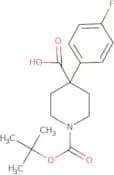
CAS:<p>Please enquire for more information about N-Pyrazinylcarbonyl-L-phenylalanine methyl ester including the price, delivery time and more detailed product information at the technical inquiry form on this page</p>Formula:C15H15N3O3Purity:Min. 95%Molecular weight:285.3 g/molBoc-4-(4-fluorophenyl)-piperidine-4-carboxylic acid
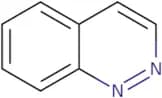
CAS:<p>Please enquire for more information about Boc-4-(4-fluorophenyl)-piperidine-4-carboxylic acid including the price, delivery time and more detailed product information at the technical inquiry form on this page</p>Formula:C17H22FNO4Purity:Min. 95%Molecular weight:323.36 g/molCinnoline
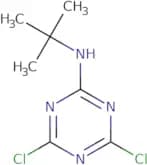
CAS:<p>Cinnoline is a chemical compound that is structurally similar to phenol, containing a hydroxyl group, two nitrogen atoms and a cyclic structure. Cinnoline has been shown to have anti-inflammatory activity in rats with adjuvant-induced arthritis. The mechanism of the anti-inflammatory effect of cinnoline is not fully understood, but it may be due to its stability and ability to bind to biological molecules or its conformational properties. Cinnoline does not react with nitric acid, making it a good candidate for use in infectious diseases such as tuberculosis. It has also been shown to be stable in human serum and has low pharmacokinetic properties. The fluorescence intensity of cinnoline was found to increase when exposed to an electrochemical potential and can be used as a probe molecule for pharmacokinetics studies.</p>Formula:C8H6N2Purity:Min. 95%Color and Shape:PowderMolecular weight:130.15 g/mol2-(tert-Butylamino)-4,6-dichloro-1,3,5-triazine
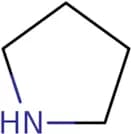
CAS:<p>Please enquire for more information about 2-(tert-Butylamino)-4,6-dichloro-1,3,5-triazine including the price, delivery time and more detailed product information at the technical inquiry form on this page</p>Formula:C7H10Cl2N4Purity:Min. 95%Molecular weight:221.09 g/molPyrrolidine
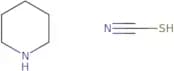
CAS:<p>Pyrrolidine is a hypoglycemic agent that has been shown to have antibacterial efficacy against some gram-positive bacteria. It inhibits bacterial growth by binding to the enzyme ribonucleotide reductase, which is required for DNA synthesis. Pyrrolidine also has an antimicrobial effect on human cells and is a substrate for the enzyme IDO1, which may be responsible for many of its biological effects. Pyrrolidine binds to methanol solvent and has been shown to inhibit the activity of endometrial cells by reducing glucose uptake. The reaction with methanol solvent also causes pyrrolidine molecules to change conformation, making them more susceptible to inhibition by IDO1.</p>Formula:C4H9NPurity:Min. 95%Color and Shape:Colorless Clear LiquidMolecular weight:71.12 g/molThiocyanic acidpiperidine
CAS:Controlled Product<p>Thiocyanic acidpiperidine is a substrate for film hydroxide solution. It reacts with hydrochloric acid to form hydrogen chloride and thiocyanate ion. Thiocyanic acidpiperidine is a reactive compound that can be used as a radiation-sensitive reagent in the synthesis of β-unsaturated ketones. The reaction is carried out in an immiscible solvent such as dichloromethane or chloroform and sodium hydroxide solution. This efficient method has been shown to be useful for the preparation of β-unsaturated ketones.</p>Formula:C6H12N2SPurity:Min. 95%Molecular weight:144.24 g/mol10-[2-(1-Methyl-2-piperidinyl)ethyl]-2-(methylthio)-10H-phenothiazine hydrochloride
CAS:Controlled Product<p>The drug, 10-[2-(1-methyl-2-piperidinyl)ethyl]-2-(methylthio)-10H-phenothiazine hydrochloride (CGP 46660), is a competitive antagonist at the human histamine H3 receptor. It has been shown to bind to the histamine H3 receptor in the range of 0.001 to 1 μM and is selective for this receptor over other receptors. CGP 46660 is an optical sensor that can be used in titration calorimetry experiments to measure changes in heat production when it binds to histamine H3 receptors. The drug also has been shown to inhibit guanine nucleotide-binding protein (G protein) signaling pathways and brain functions such as memory formation, learning, and attention span. These effects were demonstrated in humans by measuring EEG activity. The optimum concentration of CGP 46660 for these effects was found to be between 0.01 and 10 μM.</p>Formula:C21H27ClN2S2Purity:Min. 95%Color and Shape:PowderMolecular weight:407.04 g/molNoratropine hydrochloride
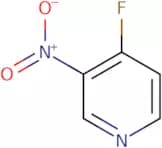
CAS:<p>Please enquire for more information about Noratropine hydrochloride including the price, delivery time and more detailed product information at the technical inquiry form on this page</p>Formula:C16H21NO3•HClPurity:Min. 95%Molecular weight:311.8 g/mol4-Fluoro-3-nitropyridine
CAS:<p>4-Fluoro-3-nitropyridine is a reactive chemical that can react with alcohols, amines, and amino acids. It has been shown to have absorption spectra in the ultraviolet region of the light spectrum. 4-Fluoro-3-nitropyridine is also a pyridine derivative.</p>Formula:C5H3FN2O2Purity:Min. 95%Color and Shape:Off-White PowderMolecular weight:142.09 g/mol5-Chloro-2-(ethylsulfonyl)pyrimidine-4-carboxylic acid
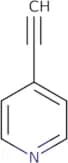
CAS:<p>Please enquire for more information about 5-Chloro-2-(ethylsulfonyl)pyrimidine-4-carboxylic acid including the price, delivery time and more detailed product information at the technical inquiry form on this page</p>Formula:C7H7ClN2O4SPurity:Min. 95%Molecular weight:250.66 g/mol4-Ethynylpyridine
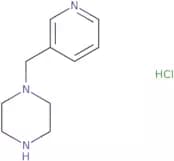
CAS:<p>4-Ethynylpyridine is a yellow solid that is soluble in most organic solvents. It has been shown to be an inhibitor of Cox-2, which is a pro-inflammatory enzyme. 4-Ethynylpyridine also inhibits the production of nitric oxide by inhibiting the enzyme inducible nitric oxide synthase (iNOS). This compound also has high cytotoxicity and can be used for photodynamic therapy. The chemical structure of 4-ethynylpyridine is composed of nitrogen atoms, carbon atoms, and hydrogen atoms. 4-Ethynylpyridine forms a complex with 2-phenylbutyric acid through electrochemical studies, which is important for its pharmacological properties.</p>Formula:C7H5NPurity:Min. 95%Color and Shape:PowderMolecular weight:103.12 g/mol1-(Pyridin-3-ylmethyl)piperazineHydrochloride
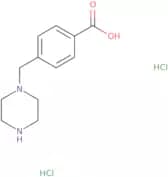
CAS:Controlled Product<p>Please enquire for more information about 1-(Pyridin-3-ylmethyl)piperazineHydrochloride including the price, delivery time and more detailed product information at the technical inquiry form on this page</p>Formula:C10H16ClN3Purity:Min. 95%Molecular weight:213.71 g/mol4-(Piperazinomethyl)benzoic acid, dihydrochloride
CAS:Controlled Product<p>Please enquire for more information about 4-(Piperazinomethyl)benzoic acid, dihydrochloride including the price, delivery time and more detailed product information at the technical inquiry form on this page</p>Formula:C12H18Cl2N2O2Purity:Min. 95%Molecular weight:293.19 g/mol

![2-[(4-Phenylpiperazin-1-yl)carbonyl]phenol](/_next/image/?url=https%3A%2Fstatic.cymitquimica.com%2Fproducts%2F3D%2Fthumb-webp%2FFP131062.webp&w=3840&q=75)
![1-(4-Methoxyphenyl)-7-oxo-6-(4-(2-oxopiperidin-1-yl)phenyl)-4,5,6,7-tetrahydro-1H-pyrazolo[3,4-c]p…](/_next/image/?url=https%3A%2Fstatic.cymitquimica.com%2Fproducts%2F3D%2Fthumb-webp%2FFM155764.webp&w=3840&q=75)
![1-(4-Amino-6,7-dimethoxy-2-quinazolinyl)-4-[(tetrahydro-2-furanyl)carbonxyl]piperazine hydrochlori…](/_next/image/?url=https%3A%2Fstatic.cymitquimica.com%2Fproducts%2F3D%2Fthumb-webp%2FFA28036.webp&w=3840&q=75)
![1-[(4-Chlorophenyl)phenylmethyl]piperazine](/_next/image/?url=https%3A%2Fstatic.cymitquimica.com%2Fproducts%2F3D%2Fthumb-webp%2FFC20350.webp&w=3840&q=75)

![10-[2-(1-Methyl-2-piperidinyl)ethyl]-2-(methylthio)-10H-phenothiazine hydrochloride](/_next/image/?url=https%3A%2Fstatic.cymitquimica.com%2Fproducts%2F3D%2Fthumb-webp%2FFT28238.webp&w=3840&q=75)