Heterocycles with Nitrogen (N)
In this category, you will find a wide variety of nitrogen-containing heterocycles. Heterocycles are carbon chains that form a cycle in which at least one position is occupied by a heteroatom, in this case, nitrogen. These compounds are integral in the synthesis of pharmaceuticals, agrochemicals, and dyes, offering unique reactivity and stability. At CymitQuimica, we provide a comprehensive selection of high-quality nitrogen-containing heterocycles to support your research and industrial applications
Subcategories of "Heterocycles with Nitrogen (N)"
- Azepane(434 products)
- Benzotriazoles(436 products)
- Diazepanes(331 products)
- Imidazoles(4,006 products)
- Imidazolines(385 products)
- Isoxazole(1,077 products)
- Piperazines(3,735 products)
- Piperidines(8,398 products)
- Pyrazines(1,299 products)
- Pyrazole(5,919 products)
- Pyrazolidine(21 products)
- Pyrazoline(142 products)
- Pyridazine(856 products)
- Pyridines(21,911 products)
- Pyrimidine(6,038 products)
- Pyrroles(2,440 products)
- Pyrrolidines(5,814 products)
- Pyrroline(48 products)
- Pyrrolo[1,2-b]pyridazine(10 products)
- Tetrazole(510 products)
- Triazines(462 products)
- Triazoles(1,679 products)
Show 14 more subcategories
Found 17855 products of "Heterocycles with Nitrogen (N)"
Sort by
Purity (%)
0
100
|
0
|
50
|
90
|
95
|
100
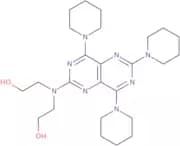
Dipyridamole tripiperidine
CAS:<p>Please enquire for more information about Dipyridamole tripiperidine including the price, delivery time and more detailed product information at the technical inquiry form on this page</p>Formula:C25H40N8O2Purity:95%NmrMolecular weight:484.64 g/mol2,5-Pyridinedicarboxylic acid
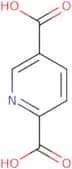
CAS:<p>2,5-Pyridinedicarboxylic acid is a white crystalline solid that is soluble in water and alcohol. It has been shown to be an effective catalyst for the oxidation of hydrocarbons. 2,5-Pyridinedicarboxylic acid also binds with metal hydroxides and forms hydrogen bonding interactions. This compound may be used as a catalyst in the production of nitric acid from ammonia, or in the manufacture of picolinic acid. 2,5-Pyridinedicarboxylic acid has a pK value of 7.4 and an optimum pH of 7. 2,5-Pyridinedicarboxylic acid can also react with sodium salts to form a n-oxide that coordinates with nitrogen atoms to give coordination geometry in which each atom is bonded to four other atoms (e.g., square planar). The molecular formula for this compound is C6H4N2O</p>Formula:C7H5NO4Purity:Min. 95%Molecular weight:167.12 g/mol3-Propionylpyridine
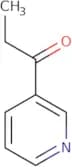
CAS:<p>3-Propionylpyridine is a metabolite of valine and isovaleric acid. It has been shown to be the major component in horse breath. 3-Propionylpyridine can be used as a marker for identification of horses, and can be used to distinguish between different breeds and sexes. 3-Propionylpyridine is also an intermediate in the synthesis of many drugs, including antibiotics, such as penicillin. The enzyme that catalyzes the formation of 3-Propionylpyridine from valine is tryptophanase, which plays an important role in amino acid metabolism. The active site on tryptophanase contains three hydrogen bonds that form with the substrate. This molecule also has two hydrogens that are transferred during catalysis, which takes place at a specific site called the active site.</p>Formula:C8H9NOPurity:Min. 95%Molecular weight:135.16 g/molPyridine-3-carboxaldehyde
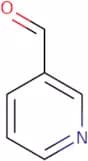
CAS:<p>Pyridine-3-carboxaldehyde is a heterocyclic compound that is structurally related to nicotinic acid and picolinic acid. It has been shown to have anti-tumor activity, with hl-60 cells as the model system. Pyridine-3-carboxaldehyde has also been shown to be toxic to bacteria in biological studies. The chemical stability of this compound was studied by Langmuir adsorption isotherm and electrochemical impedance spectroscopy. It was found that pyridine-3-carboxaldehyde is stable at a pH range of 7 to 8 and at temperatures up to 60 degrees Celsius.</p>Formula:C6H5NOPurity:Min. 95%Color and Shape:Clear LiquidMolecular weight:107.11 g/mol2,3-Difluoro pyridine
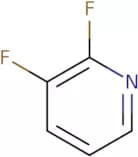
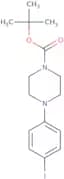
CAS:<p>2,3-Difluoro pyridine is an organic compound with the chemical formula C6H3F2N. It is a colorless liquid that has a strong odor and a boiling point of 147°C. 2,3-Difluoro pyridine has antibacterial properties and can be used to treat bacterial infections by inhibiting the synthesis of proteins in bacterial cells. This inhibition prevents the formation of new cell walls, which leads to cell death. 2,3-Difluoro pyridine is also used as an intermediate in organic chemistry reactions involving hydrogen fluoride. The transport properties of this compound are low due to its high melting point and low solubility in water. There are three different polymorphs for 2,3-difluoropyridine: form II, form III and form IV, with form II being the most common. Form II has a trigonal planar molecular geometry, whereas forms III and IV have tetragonal</p>Formula:C5H3F2NPurity:Min. 95%Color and Shape:Clear LiquidMolecular weight:115.08 g/moltert-Butyl 4-(4-iodophenyl)tetrahydro-1(2H)-pyrazinecarboxylate
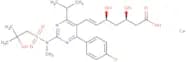
CAS:Controlled Product<p>Please enquire for more information about tert-Butyl 4-(4-iodophenyl)tetrahydro-1(2H)-pyrazinecarboxylate including the price, delivery time and more detailed product information at the technical inquiry form on this page</p>Formula:C15H21IN2O2Purity:Min. 95%Molecular weight:388.24 g/molS-Desmethyl-S-(2-hydroxy-2-methylpropyl) rosuvastatin calcium
CAS:<p>Please enquire for more information about S-Desmethyl-S-(2-hydroxy-2-methylpropyl) rosuvastatin calcium including the price, delivery time and more detailed product information at the technical inquiry form on this page</p>Formula:(C25H34FN3O7S)2•CaPurity:Min. 95%Molecular weight:1,119.24 g/mol3-Ethyl 5-methyl 2-[(2-aminoethoxy)methyl]-4-(2-chlorophenyl)-6-methylpyridine-3,5-dicarboxylate hydrochloride
CAS:<p>Please enquire for more information about 3-Ethyl 5-methyl 2-[(2-aminoethoxy)methyl]-4-(2-chlorophenyl)-6-methylpyridine-3,5-dicarboxylate hydrochloride including the price, delivery time and more detailed product information at the technical inquiry form on this page</p>Formula:C20H23ClN2O5•HClPurity:Min. 95%Molecular weight:443.32 g/molCinnoline
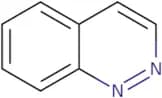
CAS:<p>Cinnoline is a chemical compound that is structurally similar to phenol, containing a hydroxyl group, two nitrogen atoms and a cyclic structure. Cinnoline has been shown to have anti-inflammatory activity in rats with adjuvant-induced arthritis. The mechanism of the anti-inflammatory effect of cinnoline is not fully understood, but it may be due to its stability and ability to bind to biological molecules or its conformational properties. Cinnoline does not react with nitric acid, making it a good candidate for use in infectious diseases such as tuberculosis. It has also been shown to be stable in human serum and has low pharmacokinetic properties. The fluorescence intensity of cinnoline was found to increase when exposed to an electrochemical potential and can be used as a probe molecule for pharmacokinetics studies.</p>Formula:C8H6N2Purity:Min. 95%Color and Shape:PowderMolecular weight:130.15 g/molNoratropine hydrochloride
CAS:<p>Please enquire for more information about Noratropine hydrochloride including the price, delivery time and more detailed product information at the technical inquiry form on this page</p>Formula:C16H21NO3•HClPurity:Min. 95%Molecular weight:311.8 g/mol1-(2,3-Dimethylphenyl)-piperazine monohydrochloride
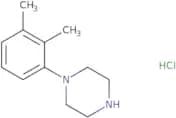
CAS:Controlled Product<p>Piperazine monohydrochloride is a white crystalline powder that is soluble in water and ethanol. It has a molecular weight of 208.23 and a melting point of 117-119°C. Piperazine monohydrochloride exhibits anti-inflammatory properties, which may be due to its inhibition of prostaglandin synthesis.</p>Purity:Min. 95%1-(4-Methoxy-pyridin-2-yl)-ethanone
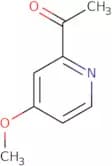
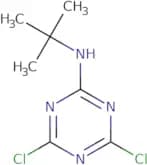
CAS:<p>Please enquire for more information about 1-(4-Methoxy-pyridin-2-yl)-ethanone including the price, delivery time and more detailed product information at the technical inquiry form on this page</p>Formula:C8H9NO2Purity:Min. 95%Molecular weight:151.16 g/mol2-(tert-Butylamino)-4,6-dichloro-1,3,5-triazine
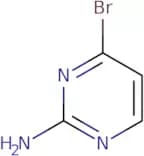
CAS:<p>Please enquire for more information about 2-(tert-Butylamino)-4,6-dichloro-1,3,5-triazine including the price, delivery time and more detailed product information at the technical inquiry form on this page</p>Formula:C7H10Cl2N4Purity:Min. 95%Molecular weight:221.09 g/mol2-Amino-4-bromopyrimidine
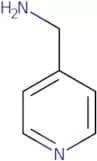
CAS:<p>Please enquire for more information about 2-Amino-4-bromopyrimidine including the price, delivery time and more detailed product information at the technical inquiry form on this page</p>Formula:C4H4BrN3Purity:Min. 95%Color and Shape:White PowderMolecular weight:174 g/molPyridin-4-ylmethanamine
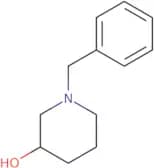
CAS:<p>Pyridin-4-ylmethanamine is a chemical compound that contains a pyridine ring and an amine (-NH2) group. It is usually used as a building block for the synthesis of other compounds. Pyridin-4-ylmethanamine can be synthesized from picolinic acid, which is obtained through a reaction with sodium hydrochloride in an alkaline solution. This reaction proceeds via two steps: first, the formation of a pyridinecarboxylic acid ester and then the addition of ammonia to form pyridin-4-ylmethanamine. The transfer reactions that occur during this process are highly dependent on temperature and pH. The frequency shift effect can be observed when pyridin-4-ylmethanamine interacts with amines, which changes its absorption spectrum.</p>Formula:C6H8N2Purity:Min. 95%Color and Shape:Colorless Clear LiquidMolecular weight:108.14 g/mol1-Benzyl-3-piperidinol
CAS:<p>1-Benzyl-3-piperidinol is a synthetic chemical that has been used as a long-acting calcium antagonist. It is synthesized by the reaction of 1,2-dibromoethane with piperidine and benzaldehyde in the presence of an acid catalyst. The reaction yield is high, and impurities are low. This drug substance is soluble in organic solvents, such as chloroform, ethyl acetate, and ether. The synthesis process uses chiral catalysts to produce the desired enantiomeric form of the drug substance. The use of immobilized catalysts improves the conversion rate, kinetic parameters, and reaction yield of this process.</p>Formula:C12H17NOPurity:Min. 95%Color and Shape:PowderMolecular weight:191.27 g/mol2-Chloro-4-pyrimidinecarbonitrile
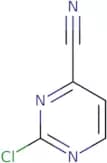
CAS:<p>2-Chloro-4-pyrimidinecarbonitrile is a synthetic compound that belongs to the group of phenylpyrimidines. It inhibits the tyrosine kinase activity and cytokine production in cells. 2-Chloro-4-pyrimidinecarbonitrile is used as an immunomodulatory agent in the treatment of cancer, autoimmune disorders and other immune dysfunctions. This drug also has anti-inflammatory properties and can be used for the treatment of inflammatory bowel diseases, such as ulcerative colitis or Crohn's disease. 2CPCN is metabolized by deamination and demethylation, which leads to the formation of nitrite ion, a reactive nitrogen species that can cause DNA damage.</p>Formula:C5H2ClN3Purity:Min. 95%Molecular weight:139.54 g/mol4-Dimethylaminopyridinium Bromide Perbromide
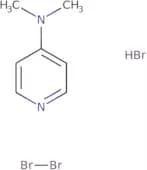
CAS:Controlled Product<p>4-Dimethylaminopyridinium Bromide Perbromide is a synthetic compound that contains a phenolic hydroxyl group. It reacts with chloride to form the perbromide salt, which is anhydrous and insoluble in water. The compound has been shown to inhibit the growth of cancer cells by interfering with DNA replication and transcription.</p>Formula:C7H11Br3N2Purity:Min. 95%Molecular weight:362.89 g/molMethyl 6-methyl-2-oxo-4-phenyl-1,2,3,4-tetrahydropyrimidine-5-carboxylate
CAS:<p>Please enquire for more information about Methyl 6-methyl-2-oxo-4-phenyl-1,2,3,4-tetrahydropyrimidine-5-carboxylate including the price, delivery time and more detailed product information at the technical inquiry form on this page</p>Formula:C13H14N2O3Purity:Min. 95%Molecular weight:246.26 g/molApixaban-d3
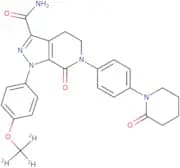
CAS:Controlled Product<p>Please enquire for more information about Apixaban-d3 including the price, delivery time and more detailed product information at the technical inquiry form on this page</p>Formula:C25H22D3N5O4Purity:Min. 95%Molecular weight:462.52 g/mol

![3-Ethyl 5-methyl 2-[(2-aminoethoxy)methyl]-4-(2-chlorophenyl)-6-methylpyridine-3,5-dicarboxylate h…](/_next/image/?url=https%3A%2Fstatic.cymitquimica.com%2Fproducts%2F3D%2Fthumb-webp%2FFE183833.webp&w=3840&q=75)