Heterocycles with Nitrogen (N)
In this category, you will find a wide variety of nitrogen-containing heterocycles. Heterocycles are carbon chains that form a cycle in which at least one position is occupied by a heteroatom, in this case, nitrogen. These compounds are integral in the synthesis of pharmaceuticals, agrochemicals, and dyes, offering unique reactivity and stability. At CymitQuimica, we provide a comprehensive selection of high-quality nitrogen-containing heterocycles to support your research and industrial applications
Subcategories of "Heterocycles with Nitrogen (N)"
- Azepane(434 products)
- Benzotriazoles(436 products)
- Diazepanes(331 products)
- Imidazoles(4,011 products)
- Imidazolines(385 products)
- Isoxazole(1,077 products)
- Piperazines(3,736 products)
- Piperidines(8,405 products)
- Pyrazines(1,299 products)
- Pyrazole(5,921 products)
- Pyrazolidine(21 products)
- Pyrazoline(142 products)
- Pyridazine(856 products)
- Pyridines(21,917 products)
- Pyrimidine(6,041 products)
- Pyrroles(2,443 products)
- Pyrrolidines(5,816 products)
- Pyrroline(48 products)
- Pyrrolo[1,2-b]pyridazine(10 products)
- Tetrazole(510 products)
- Triazines(462 products)
- Triazoles(1,680 products)
Show 14 more subcategories
Found 17855 products of "Heterocycles with Nitrogen (N)"
Sort by
Purity (%)
0
100
|
0
|
50
|
90
|
95
|
100
5-Bromo-2-(methylthio)pyrimidine
CAS:<p>5-Bromo-2-(methylthio)pyrimidine is a synthetic compound that has been used to synthesize palladium complexes. It can also be used in the synthesis of vitamin B1, which is an essential nutrient for humans and animals. 5-Bromo-2-(methylthio)pyrimidine binds with magnesium and reacts with sulfoxide, nucleophilic attack and electronegativity. 5-Bromo-2-(methylthio)pyrimidine is activated by 2-chlorobenzothiazole and hydrogen chloride, which leads to nucleophilic attack on the electrophilic carbon atom. This causes a displacement reaction with the elimination of chlorine gas and production of dihydro.</p>Formula:C5H5BrN2SPurity:Min. 95%Molecular weight:205.08 g/mol(R)-4-N-Boc-2-hydroxymethyl-piperazine
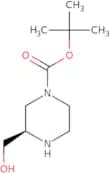
CAS:<p>Please enquire for more information about (R)-4-N-Boc-2-hydroxymethyl-piperazine including the price, delivery time and more detailed product information at the technical inquiry form on this page</p>Formula:C10H20N2O3Purity:Min. 95%Molecular weight:216.28 g/mol2,4,6-Trichloropyrimidine
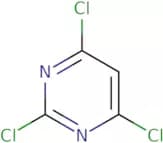
CAS:<p>2,4,6-Trichloropyrimidine is an antimicrobial agent that belongs to the chemical class of pyrimidine compounds. It inhibits bacterial growth by cross-linking with amino acids and nucleic acids in the cell wall, thereby inhibiting protein synthesis. 2,4,6-Trichloropyrimidine is also a cross-linking agent for polymers such as polyurethane and vinyl chloride. This compound has been shown to be effective against P. aeruginosa and other bacteria that are resistant to antibiotics. 2,4,6-Trichloropyrimidine reacts with water vapor or oxygen nucleophiles to form hydrogen chloride and amine groups. These reactions can be used for identification of this compound in the laboratory.</p>Formula:C4HCl3N2Purity:Min. 95%Color and Shape:PowderMolecular weight:183.42 g/mol(3R,4R)-3-[(6-Amino-4-pyrimidinyl)methylamino]-4-methyl-β-oxo-1-piperidinepropanenitrile
CAS:<p>Please enquire for more information about (3R,4R)-3-[(6-Amino-4-pyrimidinyl)methylamino]-4-methyl-β-oxo-1-piperidinepropanenitrile including the price, delivery time and more detailed product information at the technical inquiry form on this page</p>Formula:C14H20N6OPurity:Min. 95%Molecular weight:288.35 g/mol(αR)-α-(2-Chlorophenyl)-2H-tetrazole-2-ethanol
CAS:<p>Please enquire for more information about (αR)-α-(2-Chlorophenyl)-2H-tetrazole-2-ethanol including the price, delivery time and more detailed product information at the technical inquiry form on this page</p>Formula:C9H9ClN4OPurity:Min. 95%Molecular weight:224.65 g/mol4-Chloro-N-[2-(1,2-dihydro-2-oxo-4-quinolinyl)ethyl]benzamide
CAS:<p>Please enquire for more information about 4-Chloro-N-[2-(1,2-dihydro-2-oxo-4-quinolinyl)ethyl]benzamide including the price, delivery time and more detailed product information at the technical inquiry form on this page</p>Formula:C18H15ClN2O2Purity:Min. 95%Molecular weight:326.78 g/molD-Carnosine trifluoroacetate
CAS:<p>Please enquire for more information about D-Carnosine trifluoroacetate including the price, delivery time and more detailed product information at the technical inquiry form on this page</p>Formula:C9H14N4O3•(C2HF3O2)xPurity:Min. 95%2-(4-Methyl-2-phenyl-1-piperazinyl)-3-pyridinemethanol
CAS:<p>2-(4-Methyl-2-phenyl-1-piperazinyl)-3-pyridinemethanol is an impurity in hexane that is generated during the reaction of pyridine with acetonitrile. The impurity is removed by crystallizing it from methanol. 2-(4-Methyl-2-phenyl-1-piperazinyl)-3-pyridinemethanol has a high efficiency, and can be used to synthesize hexamethyldisiloxane. This product can be used as a metal catalyst for reactions involving alkali metals or metal halides. It can also be used as an alcohol solvent, but not hydrogenated.</p>Formula:C17H21N3OPurity:Min. 95%Color and Shape:White to off white powderMolecular weight:283.37 g/mol5-Ethylpyridine-2-carboxylic acid
CAS:<p>5-Ethylpyridine-2-carboxylic acid is a biologically active compound that is biosynthesized from the amino acid tryptophan. This compound is also known as 5-ethylpicolinic acid or 5-ethylpyridin-2-yl carboxylic acid. It is a phytoalexin, which is an antimicrobial agent produced by plants to inhibit pathogen growth. 5-Ethylpyridine-2-carboxylic acid has been shown to be effective against picolinic acid phosphoribosyltransferase and flavopereirine reductase in vitro, and has also been shown to have antimicrobial properties against Escherichia coli, Staphylococcus aureus, and Bacillus cereus. 5-Ethylpyridine-2-carboxylic acid can be prepared by reacting ethyl acetoacetate with pyridine</p>Formula:C8H9NO2Purity:Min. 95%Color and Shape:Off-White PowderMolecular weight:151.16 g/mol3-(cis-4-(2-(4-(2,3-Dichlorophenyl)piperazin-1-yl)ethyl)cyclohexyl)-1,1-dimethylurea
CAS:<p>Please enquire for more information about 3-(cis-4-(2-(4-(2,3-Dichlorophenyl)piperazin-1-yl)ethyl)cyclohexyl)-1,1-dimethylurea including the price, delivery time and more detailed product information at the technical inquiry form on this page</p>Formula:C21H32Cl2N4OPurity:Min. 95%Molecular weight:427.41 g/mol4-{[4-(4-Methyloxyphenyl)-piperazin-1-yl]-phenyl}-2,4-dihydro-[1,2,4]-triazol-3-one
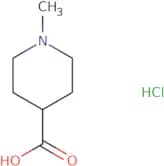
CAS:<p>Please enquire for more information about 4-{[4-(4-Methyloxyphenyl)-piperazin-1-yl]-phenyl}-2,4-dihydro-[1,2,4]-triazol-3-one including the price, delivery time and more detailed product information at the technical inquiry form on this page</p>Formula:C19H21N5O2Purity:Min. 95%Molecular weight:351.4 g/mol1-Methylpiperidine-4-carboxylic acid hydrochloride
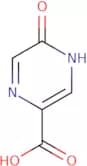
CAS:<p>1-Methylpiperidine-4-carboxylic acid hydrochloride is a betaine. Betaines are intermediates in the biosynthesis of phosphocholine, which is an important component of all cell membranes. 1-Methylpiperidine-4-carboxylic acid hydrochloride has been analyzed and quantified in fruits and plants such as beets, bananas, oranges, and tomatoes. It can be found in the roots of plants and has been shown to inhibit abiotic stress. This compound is also present in the human body as a result of its ingestion from food sources. 1-Methylpiperidine-4-carboxylic acid hydrochloride inhibits proline synthesis by competing with glycine for the enzyme choline acetyltransferase. It also inhibits synthesis of pipecolic acid (a precursor for histamine) by competing with glycine for the enzyme choline acetyltransferase.</p>Formula:C7H14NO2ClPurity:Min. 95%Molecular weight:179.64 g/mol5-Hydroxypyrazine-2-carboxylic acid
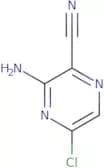
CAS:<p>5-Hydroxypyrazine-2-carboxylic acid is a drug that inhibits the activation of proteins involved in cell signaling pathways. It has been shown to have an inhibitory effect on the activation of protein kinase C, which plays a key role in the proliferation and differentiation of cells. 5-Hydroxypyrazine-2-carboxylic acid also inhibits sorafenib, a drug used for the treatment of cancer. Sorafenib is metabolized in rats by cytochrome P450 (CYP) enzymes, which are found in human liver tissue as well. The metabolism rate of sorafenib can be reduced by coadministration with caffeine or other substances that induce CYP activity. 5-Hydroxypyrazine-2-carboxylic acid is not active against pyrazinoic acid and pyrazine-2 carboxylate, which are metabolites produced by CYP enzymes.</p>Formula:C5H4N2O3Purity:Min. 98 Area-%Color and Shape:Brown PowderMolecular weight:140.1 g/mol3-Amino-5-chloropyrazine-2-carbonitrile
CAS:<p>Please enquire for more information about 3-Amino-5-chloropyrazine-2-carbonitrile including the price, delivery time and more detailed product information at the technical inquiry form on this page</p>Formula:C5H3ClN4Purity:Min. 95%Molecular weight:154.56 g/molCoproporphyrin III
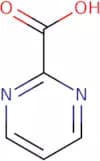
CAS:<p>Please enquire for more information about Coproporphyrin III including the price, delivery time and more detailed product information at the technical inquiry form on this page</p>Formula:C36H38N4O8Purity:Min. 95%Molecular weight:654.71 g/mol2-Pyrimidine-carboxylic acid
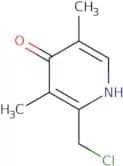
CAS:<p>2-Pyrimidine-carboxylic acid is a biologically active molecule that can be found in the human body. It is a derivative of pyrimidine, which belongs to the group of purines. 2-Pyrimidine-carboxylic acid has been shown to inhibit the nicotinic acetylcholine receptor and α7 nicotinic acetylcholine receptor, which are receptors for acetylcholine. This molecule also has antihypertensive activity and has been shown to have therapeutic effects in psychotic disorders. 2-Pyrimidine-carboxylic acid binds to picolinic acid, which is an important intermediate in the metabolism of tryptophan, and hydroxyl group, which is essential for many biological functions. It also reacts with copper ions and forms a complex that is x-ray crystal structure confirmed. This complex may be used as a herbicide resistance inducer or as a chemical species for receptor binding studies or chemical reactions.</p>Formula:C5H4N2O2Purity:Min. 95%Color and Shape:PowderMolecular weight:124.1 g/mol2-Chloromethyl-3,5-dimethylpyridin-4-ol
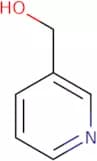
CAS:<p>Please enquire for more information about 2-Chloromethyl-3,5-dimethylpyridin-4-ol including the price, delivery time and more detailed product information at the technical inquiry form on this page</p>Formula:C8H10ClNOPurity:Min. 95%Molecular weight:171.62 g/mol3-Pyridinemethanol
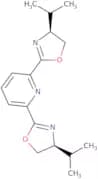
CAS:<p>3-Pyridinemethanol is a chemical compound that is soluble in water. It has a molecular weight of 92.07 grams per mole, and the chemical formula CH3CH2NH. 3-Pyridinemethanol is used as a reagent for the synthesis of organic compounds, such as chlorides, esters, amides, nitriles, and thioamides. 3-Pyridinemethanol reacts with chloride to form an intermediate which reacts with water to produce hydrochloric acid and ammonium chloride. This reaction also produces heat, which can be used to generate energy or power other reactions. br> br> A nanotube was synthesized from 3-pyridinemethanol by using a template made from nickel atoms arranged in a hexagonal pattern on the surface of an indium tin oxide (ITO) glass substrate. The nanotubes are about 5 nm in diameter and can be up</p>Formula:C6H7NOPurity:Min. 95%Molecular weight:109.13 g/mol(S,S)-2,6-Bis(4-isopropyl-2-oxazolin-2-yl)pyridine
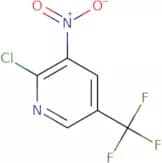
CAS:<p>Ligand used to prepare ruthenium complexes for asymmetric catalysis</p>Formula:C17H23N3O2Purity:Min. 95%Color and Shape:White PowderMolecular weight:301.38 g/mol2-chloro-3-nitro-5-(trifluoromethyl)pyridine
CAS:<p>Please enquire for more information about 2-chloro-3-nitro-5-(trifluoromethyl)pyridine including the price, delivery time and more detailed product information at the technical inquiry form on this page</p>Formula:C6H2ClF3N2O2Purity:Min. 95%Molecular weight:226.54 g/mol


![(3R,4R)-3-[(6-Amino-4-pyrimidinyl)methylamino]-4-methyl-β-oxo-1-piperidinepropanenitrile](/_next/image/?url=https%3A%2Fstatic.cymitquimica.com%2Fproducts%2F3D%2Fthumb-webp%2FFA184079.webp&w=3840&q=75)

![4-Chloro-N-[2-(1,2-dihydro-2-oxo-4-quinolinyl)ethyl]benzamide](/_next/image/?url=https%3A%2Fstatic.cymitquimica.com%2Fproducts%2F3D%2Fthumb-webp%2FFC184071.webp&w=3840&q=75)


![4-{[4-(4-Methyloxyphenyl)-piperazin-1-yl]-phenyl}-2,4-dihydro-[1,2,4]-triazol-3-one](/_next/image/?url=https%3A%2Fstatic.cymitquimica.com%2Fproducts%2F3D%2Fthumb-webp%2FFM25920.webp&w=3840&q=75)