Heterocycles with Nitrogen (N)
In this category, you will find a wide variety of nitrogen-containing heterocycles. Heterocycles are carbon chains that form a cycle in which at least one position is occupied by a heteroatom, in this case, nitrogen. These compounds are integral in the synthesis of pharmaceuticals, agrochemicals, and dyes, offering unique reactivity and stability. At CymitQuimica, we provide a comprehensive selection of high-quality nitrogen-containing heterocycles to support your research and industrial applications
Subcategories of "Heterocycles with Nitrogen (N)"
- Azepane(434 products)
- Benzotriazoles(436 products)
- Diazepanes(331 products)
- Imidazoles(4,011 products)
- Imidazolines(385 products)
- Isoxazole(1,077 products)
- Piperazines(3,736 products)
- Piperidines(8,405 products)
- Pyrazines(1,299 products)
- Pyrazole(5,921 products)
- Pyrazolidine(21 products)
- Pyrazoline(142 products)
- Pyridazine(856 products)
- Pyridines(21,917 products)
- Pyrimidine(6,041 products)
- Pyrroles(2,443 products)
- Pyrrolidines(5,816 products)
- Pyrroline(48 products)
- Pyrrolo[1,2-b]pyridazine(10 products)
- Tetrazole(510 products)
- Triazines(462 products)
- Triazoles(1,680 products)
Show 14 more subcategories
Found 17855 products of "Heterocycles with Nitrogen (N)"
Sort by
Purity (%)
0
100
|
0
|
50
|
90
|
95
|
100
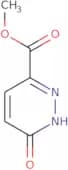
Methyl 6-oxo-1,6-dihydropyridazine-3-carboxylate
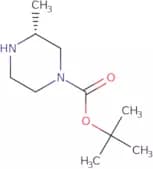
CAS:<p>Please enquire for more information about Methyl 6-oxo-1,6-dihydropyridazine-3-carboxylate including the price, delivery time and more detailed product information at the technical inquiry form on this page</p>Formula:C6H6N2O3Purity:Min. 95%Molecular weight:154.12 g/mol(R)-4-Boc-2-methylpiperazine
CAS:<p>(R)-4-Boc-2-methylpiperazine is a picolinamide dehydrogenase inhibitor that is used to treat type 2 diabetes. It has been shown to reduce blood glucose levels in animal models and human subjects with type 2 diabetes mellitus. The mechanism of action is thought to be via inhibition of the 11β-hydroxysteroid dehydrogenase, which increases insulin sensitivity. This drug also has good oral bioavailability, does not cause weight gain, and has an acceptable safety profile.</p>Formula:C10H20N2O2Purity:Min. 95%Color and Shape:White PowderMolecular weight:200.28 g/mol4,6-Dichloro-5-nitro-2-propylthiopyrimidine
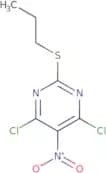
CAS:<p>Intermediate in the synthesis of ticagrelor</p>Formula:C7H7Cl2N3O2SPurity:Min. 95%Molecular weight:268.12 g/molN-Benzyl-4-piperidone
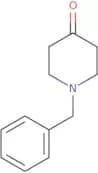
CAS:Controlled Product<p>N-Benzyl-4-piperidone is a potent antagonist of the histamine H1 receptor. It binds to the receptor in vivo, and it has been shown that this binding leads to a decrease in the release of neurotransmitters in the central nervous system. This drug is used for the treatment of hiv infection and for other conditions such as allergic rhinitis, chronic idiopathic urticaria, and vasomotor rhinitis. N-Benzyl-4-piperidone inhibits the reaction between propionyl chloride and dibutyltin oxide to form a dialkyl tin compound by an acylation reaction. The low energy released during this reaction may be due to hydrogen bonding between this drug and water molecules.</p>Formula:C12H15NOPurity:Min. 95%Color and Shape:Colorless Clear LiquidMolecular weight:189.25 g/mol2-Aminoimidazole sulfate
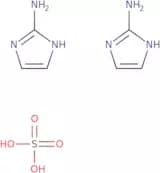
CAS:<p>2-Aminoimidazole sulfate is a chemical compound that is used as a transfection reagent. It has been shown to have high transfection efficiency with low cytotoxicity. The diameter of the molecule is in the range of 2 - 3 nm, which allows it to be taken up by cells and thus be active in them. This chemical can be dehydrogenated to form imidazole-2-sulfonic acid, which may interact with other molecules. There have been many advances in this area, including modifications and gaseous forms of the molecule. Research into the interactions of this compound with other chemicals and their effects on cellular uptake are ongoing.</p>Formula:C3H5N3•(H2O4S)0Purity:Min. 95%Color and Shape:Off-White PowderMolecular weight:264.26 g/mol1-Hydroxypyridine-2-thione zinc
CAS:<p>Zinc pyrithione is a chemical compound that can be used as an antifungal agent. It has been shown to have genotoxic activity in vitro and in vivo. Zinc pyrithione binds to the surface of the fungal cell wall and inhibits the synthesis of ergosterol, a component of the fungal cell membrane. This binding prevents the formation of an ergosterol-zinc complex with cytochrome P450 enzymes, which are required for sterol biosynthesis, leading to inhibition of energy metabolism. The model system for zinc pyrithione is a mixture of 1-hydroxypyridine-2-thione (1HP) and zinc ions in water. Some studies have shown that zinc pyrithione can cause long-term toxicity, including glycol ether toxicity, when applied topically on hair or skin. Acute toxicities may include skin irritation or contact dermatitis from shampoos containing this substance.</p>Formula:C10H8N2O2S2ZnPurity:Min. 95%Color and Shape:White/Off-White SolidMolecular weight:317.69 g/mol2,4-Dibromopyridine
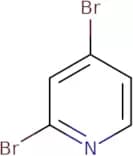
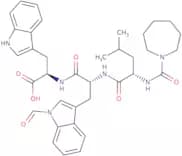
CAS:<p>2,4-Dibromopyridine is a brominated derivative of pyridine. It is synthesized through the substitution of two bromine atoms for two hydrogens on the pyridine ring. This synthesis can be achieved by disubstitution or cross-coupling reactions. The reaction products are nucleophilic and react with electrophiles to produce substitution products. The reaction mechanism is thought to involve a six-membered transition state, which has been observed using X-ray absorption spectroscopy.</p>Formula:C5H3Br2NPurity:Min. 95%Color and Shape:White To Off-White SolidMolecular weight:236.89 g/molBQ-610 Azepane-1-carbonyl-Leu-D-Trp(For)-D-Trp-OH
CAS:<p>BQ-610 is a novel peptide that has been shown to reduce the severity of mucosal inflammation in animal models of inflammatory bowel disease. It functions by binding to myofibroblasts, which are cells that produce an extracellular matrix and collagen. BQ-610 also blocks signalling pathways that are responsible for the production of TNF-α, MMP-2, and other molecules involved in the pathogenesis of inflammatory bowel disease. BQ-610 is effective at reducing inflammation in animal models of colitis, but not in human colonic epithelial cells or human colonic tissue.</p>Formula:C36H44N6O6Purity:Min. 95%Molecular weight:656.77 g/mol2-[Chloro(4-chlorophenyl)methyl]-pyridine
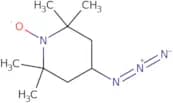
CAS:<p>Please enquire for more information about 2-[Chloro(4-chlorophenyl)methyl]-pyridine including the price, delivery time and more detailed product information at the technical inquiry form on this page</p>Formula:C12H9Cl2NPurity:Min. 95%Molecular weight:238.11 g/mol4-Azido-2,2,6,6-tetramethyl-1-piperidinyloxy
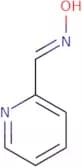
CAS:<p>4-Azido-2,2,6,6-tetramethyl-1-piperidinyloxy is a fine chemical that is a versatile building block useful in research and synthesis. It has been used as a reaction component in the preparation of other compounds. This compound is also an intermediate for the production of other chemicals.</p>Formula:C9H17N4OPurity:Min. 95%Color and Shape:PowderMolecular weight:197.26 g/molPyridine-2-aldoxime
CAS:<p>Pyridine-2-aldoxime is a chemical compound that is used as a pesticide. It is an inhibitor of acetylcholinesterase, and it can be toxic at low doses. Pyridine-2-aldoxime binds to the active site of acetylcholinesterase and prevents the breakdown of acetylcholine by this enzyme, leading to paralysis of the respiratory muscles. Pyridine-2-aldoxime has been shown to be effective against chronic oral exposure to sarin gas, with lethal dose (LD) values ranging from 0.5–1 mg/kg in rats.</p>Formula:C6H6N2OPurity:Min. 95%Color and Shape:White PowderMolecular weight:122.12 g/mol3-(cis-4-(2-(4-(2,3-Dichlorophenyl)piperazin-1-yl)ethyl)cyclohexyl)-1,1-dimethylurea
CAS:<p>Please enquire for more information about 3-(cis-4-(2-(4-(2,3-Dichlorophenyl)piperazin-1-yl)ethyl)cyclohexyl)-1,1-dimethylurea including the price, delivery time and more detailed product information at the technical inquiry form on this page</p>Formula:C21H32Cl2N4OPurity:Min. 95%Molecular weight:427.41 g/molD-Carnosine trifluoroacetate
CAS:<p>Please enquire for more information about D-Carnosine trifluoroacetate including the price, delivery time and more detailed product information at the technical inquiry form on this page</p>Formula:C9H14N4O3•(C2HF3O2)xPurity:Min. 95%4-Chloro-N-[2-(1,2-dihydro-2-oxo-4-quinolinyl)ethyl]benzamide
CAS:<p>Please enquire for more information about 4-Chloro-N-[2-(1,2-dihydro-2-oxo-4-quinolinyl)ethyl]benzamide including the price, delivery time and more detailed product information at the technical inquiry form on this page</p>Formula:C18H15ClN2O2Purity:Min. 95%Molecular weight:326.78 g/mol5-Hydroxypyrazine-2-carboxylic acid
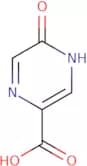
CAS:<p>5-Hydroxypyrazine-2-carboxylic acid is a drug that inhibits the activation of proteins involved in cell signaling pathways. It has been shown to have an inhibitory effect on the activation of protein kinase C, which plays a key role in the proliferation and differentiation of cells. 5-Hydroxypyrazine-2-carboxylic acid also inhibits sorafenib, a drug used for the treatment of cancer. Sorafenib is metabolized in rats by cytochrome P450 (CYP) enzymes, which are found in human liver tissue as well. The metabolism rate of sorafenib can be reduced by coadministration with caffeine or other substances that induce CYP activity. 5-Hydroxypyrazine-2-carboxylic acid is not active against pyrazinoic acid and pyrazine-2 carboxylate, which are metabolites produced by CYP enzymes.</p>Formula:C5H4N2O3Purity:Min. 98 Area-%Color and Shape:Brown PowderMolecular weight:140.1 g/mol4-Acetyl-piperidine-1-carboxylic acid tert-butyl ester
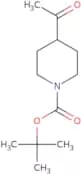
CAS:<p>4-Acetylpiperidine-1-carboxylic acid tert-butyl ester is a tert-butyl ester of 4-acetylpiperidine. It can be prepared by the reaction of sodium azide with chloroform and tert-butyl alcohol. The resulting product is a white solid that can be used as an intermediate in organic synthesis.</p>Formula:C12H21NO3Purity:Min. 95%Molecular weight:227.3 g/mol5-Methylpyrimidine-2-carboxylic acid
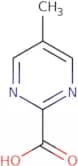
CAS:<p>Please enquire for more information about 5-Methylpyrimidine-2-carboxylic acid including the price, delivery time and more detailed product information at the technical inquiry form on this page</p>Formula:C6H6N2O2Purity:Min. 95%Molecular weight:138.12 g/mol4-Hydroxypiperidine
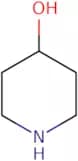
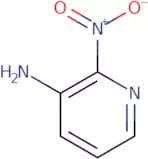
CAS:<p>4-Hydroxypiperidine is a molecule with a carbonyl group. It is the most active and selective CCR5 receptor antagonist that has been studied to date. 4-Hydroxypiperidine inhibits HIV infection by preventing the binding of HIV to its receptor on the surface of white blood cells, thereby preventing it from entering these cells. 4-Hydroxypiperidine also acts as an anti-inflammatory agent in chronic bronchitis patients, due to its ability to inhibit prostaglandin synthesis. The chemical ionization mass spectra of this molecule show peaks for methyl ethyl, malic acid, and hydroxyl groups. These properties make 4-hydroxypiperidine a useful candidate for drug development against inflammatory diseases and several cancers.</p>Formula:C5H11NOPurity:Min. 95%Molecular weight:101.15 g/mol3-Amino-2-nitropyridine
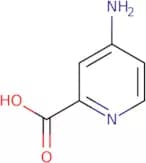
CAS:<p>3-Amino-2-nitropyridine is a heterocyclic compound that is an oxidation product of 2,4,6-trinitrotoluene. 3-Amino-2-nitropyridine is a potent inhibitor of the d4 receptor and has been shown to be active in animal models of cancer and autoimmune diseases. The mechanism of action of this drug is not well understood, but it has been found to inhibit cell proliferation in vitro by binding to nucleophilic sites on the receptor. Nitrobenzoic acid may also contribute to its activity. 3-Amino-2-nitropyridine inhibits inflammatory responses by inhibiting cell proliferation and migration.</p>Formula:C5H5N3O2Purity:Min. 95%Molecular weight:139.11 g/mol4-Aminopicolinic acid
CAS:<p>4-Aminopicolinic acid is a synthetic amine that has been shown to activate plant science. 4-Aminopicolinic acid is a cyclic peptide with two subunits, one of which is 4-amino-3-pyridinecarboxylic acid. This compound has been synthesized from picolinic acid, an agriculturally important compound that is found in plant and animal tissues. The synthesis of 4-aminopicolinic acid involves the reaction of picolinic acid with nitrous oxide, followed by hydrolysis and oxidation to form the desired product. Hplc analyses have confirmed the presence of picolinic acid in extracts from various plants containing this compound.</p>Formula:C6H6N2O2Purity:Min. 95%Color and Shape:White To Beige Or Pink To Light Brown SolidMolecular weight:138.12 g/mol


![2-[Chloro(4-chlorophenyl)methyl]-pyridine](/_next/image/?url=https%3A%2Fstatic.cymitquimica.com%2Fproducts%2F3D%2Fthumb-webp%2FFC152996.webp&w=3840&q=75)
![4-Chloro-N-[2-(1,2-dihydro-2-oxo-4-quinolinyl)ethyl]benzamide](/_next/image/?url=https%3A%2Fstatic.cymitquimica.com%2Fproducts%2F3D%2Fthumb-webp%2FFC184071.webp&w=3840&q=75)