Hydrazines
Hydrazines are organic compounds characterized by the presence of a hydrazine group (N2H4). These compounds are used in various chemical reactions, including as intermediates in pharmaceuticals and agrochemicals. At CymitQuimica, we offer a wide selection of high-quality hydrazines to support your research and industrial applications, ensuring reliable and efficient results. Our selection includes hydrazines suitable for a wide range of chemical syntheses and experimental requirements.
Found 1360 products of "Hydrazines"
Sort by
Purity (%)
0
100
|
0
|
50
|
90
|
95
|
100
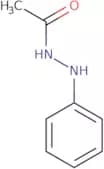
1-Acetyl-2-phenylhydrazine
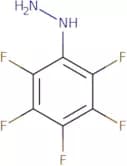
CAS:Reacts with oxyhaemoglobin to form free radicals; induces haemolytic anaemiaFormula:C8H10N2OPurity:Min. 95%Color and Shape:White PowderMolecular weight:150.18 g/molPentafluorophenyl hydrazine
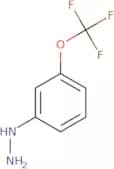
CAS:Pentafluorophenyl hydrazine is an organic compound with the formula CHC(F)NH. It is a reactive species that participates in chemical reactions involving free radicals, such as oxidative DNA damage. Pentafluorophenyl hydrazine reacts with fatty acids to form trifluoroacetyl esters and pentafluorophenyl esters, which can be analyzed by gas chromatography-mass spectrometry. Pentafluorophenyl hydrazine is also used for the preparation of hydrochloric acid and carbonyl group derivatives. This compound can be prepared by reacting trifluoroacetic acid with phenol or phenol ethers under acidic conditions.Formula:C6F5NHNH2Purity:Min. 95%Color and Shape:White PowderMolecular weight:198.09 g/mol1-(3-(Trifluoromethoxy)phenyl)hydrazine hydrochloride
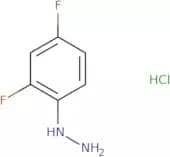
CAS:1-(3-(Trifluoromethoxy)phenyl)hydrazine hydrochloride is a reagent that can be used as a reaction component in organic synthesis. It is also a useful scaffold for the preparation of high-quality research chemicals and other versatile building blocks. 1-(3-(Trifluoromethoxy)phenyl)hydrazine hydrochloride is an intermediate in the synthesis of complex compounds, such as fine chemicals.Formula:C7H7F3N2OPurity:Min. 95%Molecular weight:192.14 g/mol2,4-Difluorophenylhydrazine hydrochloride
CAS:2,4-Difluorophenylhydrazine hydrochloride is a synthetic analgesic that is used to produce pain relief. It can be synthesized by refluxing 2,4-difluoroaniline and hydrazine in acetonitrile. The yield of the reaction depends on the catalyst used. An acid catalyst such as pyridine or benzoic acid will yield more product than a base such as potassium carbonate. The synthesis of 2,4-difluorophenylhydrazine hydrochloride can also be achieved by reacting phenylhydrazine with an alkyl halide in the presence of a base. This process yields pyrazoles, which are then converted to 2,4-difluorophenylhydrazine hydrochloride by treatment with hydrochloric acid. 2,4-Difluorophenylhydrazine hydrochloride is an antibacterial agent that hasFormula:C6H7ClF2N2Purity:Min. 95%Color and Shape:PowderMolecular weight:180.58 g/mol3-Chlorophenylhydrazine hydrochloride
CAS:3-Chlorophenylhydrazine hydrochloride is a pyrazole that has been shown to have potent antibacterial activity. It is used in the treatment of inflammatory diseases and has been shown to be effective against Helicobacter pylori, which causes gastritis, peptic ulcers, and stomach cancer. 3-Chlorophenylhydrazine hydrochloride is an acidic compound with a molecular weight of 192.2 g/mol. It contains a pyrazole ring that is eluted with hydrochloric acid and reacts with gyrase enzymes in bacteria, inhibiting DNA synthesis. 3-Chlorophenylhydrazine hydrochloride also has anti-inflammatory properties due to its ability to inhibit prostaglandin synthesis.Formula:C6H7ClN2•HClPurity:Min. 95%Color and Shape:PowderMolecular weight:179.05 g/mol2,4,6-Trichlorophenylhydrazine
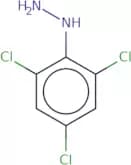
CAS:2,4,6-Trichlorophenylhydrazine is an industrial chemical that has been used as a precursor for the production of other chemicals. It is also a potential cancer therapeutic agent. 2,4,6-Trichlorophenylhydrazine inhibits tumor growth in human studies by inhibiting cellular proliferation and inducing apoptosis. It reacts with hydrochloric acid to form a reactive intermediate that reacts with free radicals to produce cytotoxic products that damage DNA and inhibit tumor growth. The efficiency of this process depends on the pH of the reaction mixture and the concentrations of 2,4,6-trichlorophenylhydrazine and hydrochloric acid. This compound has high cytotoxicity in cells in culture. Malondialdehyde levels have been shown to increase after exposure to this chemical. Analysis of acetylated fatty acids from 2,4,6-trichlorophenylhydrazine-treated cells showed significant changes in fatty acid compositionFormula:C6H5Cl3N2Purity:Min. 95%Color and Shape:PowderMolecular weight:211.48 g/mol3-Chlorophenylhydrazine sulphate
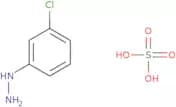
CAS:3-Chlorophenylhydrazine sulphate is a chemical compound that is made by the reaction of 3-chlorophenol and hydrazine. It has been shown to be stable when mixed with other compounds, such as acetone. 3-Chlorophenylhydrazine sulphate has a reaction time of one hour when it is reacted with sodium hydrogen sulfate and zinc powder in a liquid chromatography column. The final product is detected using chromatography detection, which can detect the presence of sulfates. This chemical compound can be used to make other chemicals, such as thiosulfate or hydrochloric acid.
Formula:C12H14Cl2N4•H2O4SPurity:Min. 95%Color and Shape:PowderMolecular weight:383.25 g/mol(2-Bromo-6-fluorophenyl)hydrazine hydrochloride
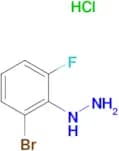
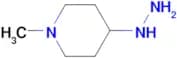
CAS:Formula:C6H7BrClFN2Purity:97%Color and Shape:No data available.Molecular weight:241.494-Hydrazino-1-methylpiperidine
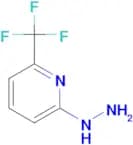
CAS:Formula:C6H15N3Purity:95.0%Color and Shape:SolidMolecular weight:129.2072-Hydrazino-6-(trifluoromethyl)pyridine
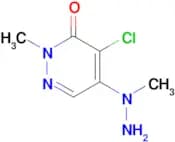
CAS:Formula:C6H6F3N3Purity:95.0%Color and Shape:SolidMolecular weight:177.134-Chloro-2-methyl-5-(1-methylhydrazin-1-yl)-2,3-dihydropyridazin-3-one
CAS:Purity:98%Molecular weight:188.6199951