Aliphatic compounds and derivatives
Found 8753 products of "Aliphatic compounds and derivatives"
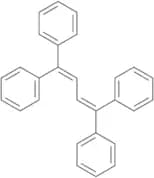
1,1,4,4-Tetraphenyl-1,3-butadiene
CAS:1,1,4,4-Tetraphenyl-1,3-butadiene is a chemical compound that is stable in air and water. It has been shown to be active against pluripotent cells which are the precursor of all cells in the body. 1,1,4,4-Tetraphenyl-1,3-butadiene has been used for a number of biochemical research studies and has been shown to have electrochemical properties as an electrode material. This compound also has high values for toxicological studies. It can be found in the atmosphere at low levels but can also be released into the environment from industrial sources such as electric arc furnaces or coal burning plants.
Formula:C28H22Purity:Min. 99.0%Color and Shape:White PowderMolecular weight:358.47 g/mol1,2-Bis(chlorodimethylsilyl)ethane
CAS:1,2-Bis(chlorodimethylsilyl)ethane is a reactive chemical that is synthesized from hydroxychloroformates and hydrogen chloride. It reacts with silicon to form chlorosilanes, which are then used in the polymerization of siloxanes. 1,2-Bis(chlorodimethylsilyl)ethane has been shown to be an effective initiator for the polymerization of methyl methacrylate and ethylene glycol dimethacrylate. 1,2-Bis(chlorodimethylsilyl)ethane is also used as a hydroxyl group donor in organic reactions.
Formula:C6H16Cl2Si2Purity:Min. 95 Area-%Color and Shape:PowderMolecular weight:215.27 g/mol2-Bromo-3,3,3-trifluoro-1-propene
CAS:Controlled Product2-Bromo-3,3,3-trifluoro-1-propene is a chemical compound that has been synthesized in an asymmetric reaction. The reactant is bromopropane and the product is 2,2,2-trifluoropropene. The methylene group on the propene molecule is activated by the nucleophilic attack of a fluoride ion from hydrogen fluoride to form a cavity with a highly strained bond. The kinetic study of this reaction revealed that the activation energy for the reaction is 42 kJ/mol. Palladium-catalyzed coupling reactions are catalyzed by palladium and require nonpolar solvents such as toluene or dichloromethane. This type of reaction has been shown to be exothermic with an isolated yield of 1%.
Formula:C3H2BrF3Purity:Min. 95%Color and Shape:Colorless PowderMolecular weight:174.95 g/mol