


Aliphatic compounds and derivatives
Found 8755 products of "Aliphatic compounds and derivatives"
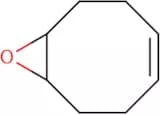
1,2-Epoxy-5-cyclooctene
CAS:1,2-Epoxy-5-cyclooctene is a cyclic epoxide that undergoes ring opening with the addition of a nucleophile. This reaction is catalyzed by a bromonium ion, which acts as the electrophile. The product of this reaction is 2-hydroxy-1,2-epoxycyclohexane. 1,2-Epoxy-5-cyclooctene has been used in synthesizing various compounds such as monoepoxides and hydrosilanes. It can also be used to produce compounds that are difficult to access through other methods. 1,2-Epoxy-5-cyclooctene has been studied using x-ray crystallography and conformational analysis.
Formula:C8H12OPurity:Min. 98 Area-%Color and Shape:Clear LiquidMolecular weight:124.18 g/molRef: 3D-FE03990
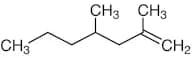
Discontinued product2,4-Dimethyl-1-heptene
CAS:Formula:C9H18Purity:>98.0%(GC)Color and Shape:Colorless to Almost colorless clear liquidMolecular weight:126.242-Nonene (cis- and trans- mixture)
CAS:Formula:C9H18Purity:>94.0%(GC)Color and Shape:Colorless to Almost colorless clear liquidMolecular weight:126.242-[Nitroso(phenylmethyl)amino]benzoic Acid
CAS:Controlled ProductFormula:C14H12N2O3Color and Shape:NeatMolecular weight:256.2572-Bromo-3,3,3-trifluoro-1-propene
CAS:Controlled Product2-Bromo-3,3,3-trifluoro-1-propene is a chemical compound that has been synthesized in an asymmetric reaction. The reactant is bromopropane and the product is 2,2,2-trifluoropropene. The methylene group on the propene molecule is activated by the nucleophilic attack of a fluoride ion from hydrogen fluoride to form a cavity with a highly strained bond. The kinetic study of this reaction revealed that the activation energy for the reaction is 42 kJ/mol. Palladium-catalyzed coupling reactions are catalyzed by palladium and require nonpolar solvents such as toluene or dichloromethane. This type of reaction has been shown to be exothermic with an isolated yield of 1%.
Formula:C3H2BrF3Purity:Min. 95%Color and Shape:Colorless PowderMolecular weight:174.95 g/mol



![2-[Nitroso(phenylmethyl)amino]benzoic Acid](/_next/image/?url=https%3A%2Fstatic.cymitquimica.com%2Fproducts%2FTR%2Fthumb-webp%2FN472575.webp&w=3840&q=75)

