Silanes
Subcategories of "Silanes"
Found 1235 products of "Silanes"
n-DECYLTRIETHOXYSILANE
CAS:Alkyl Silane - Conventional Surface Bonding
Aliphatic, fluorinated aliphatic or substituted aromatic hydrocarbon substituents are the hydrophobic entities which enable silanes to induce surface hydrophobicity. The organic substitution of the silane must be non-polar. The hydrophobic effect of the organic substitution can be related to the free energy of transfer of hydrocarbon molecules from an aqueous phase to a homogeneous hydrocarbon phase. A successful hydrophobic coating must eliminate or mitigate hydrogen bonding and shield polar surfaces from interaction with water by creating a non-polar interphase. Although silane and silicone derived coatings are in general the most hydrophobic, they maintain a high degree of permeability to water vapor. This allows coatings to breathe and reduce deterioration at the coating interface associated with entrapped water. Since ions are not transported through non-polar silane and silicone coatings, they offer protection to composite structures ranging from pigmented coatings to rebar reinforced concrete. A selection guide for hydrophobic silanes can be found on pages 22-31 of the Hydrophobicity, Hydrophilicity and Silane Surface Modification brochure.
n-Decyltriethoxysilane; Triethoxysilyldecane
Trialkoxy silaneFormula:C16H36O3SiPurity:97%Color and Shape:Straw LiquidMolecular weight:304.541,3-DIVINYLTETRAMETHYLDISILOXANE
CAS:Alkenylsilane Cross-Coupling Agent
The cross-coupling reaction is a highly useful methodology for the formation of carbon-carbon bonds. It involves two reagents, with one typically being a suitable organometallic reagent - the nucleophile - and the other a suitable organic substrate, normally an unsaturated halide, tosylate or similar - the electrophile.
1,3-Divinyltetramethyldisiloxane; Diethenyltetramethyldisiloxane; Tetramethyldivinyldisiloxane; Divinyltetramethyldisiloxane
Silicone end-capperPotential vinyl nucleophile in cross-coupling reactionsModifier for vinyl addition silicone formulationsPotential vinyl donor in cross-coupling reactionsExtensive review of silicon based cross-coupling agents: Denmark, S. E. et al. "Organic Reactions, Volume 75" Denmark, S. E. ed., John Wiley and Sons, 233, 2011Formula:C8H18OSi2Purity:97%Color and Shape:LiquidMolecular weight:186.4Ref: 3H-SID4613.0
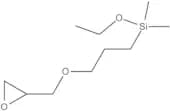
Discontinued product(3-GLYCIDOXYPROPYL)DIMETHYLETHOXYSILANE
CAS:(3-Glycidoxypropyl)dimethylethoxysilane; 3-(2,3-epoxypropoxypropyl)dimethylethoxysilane
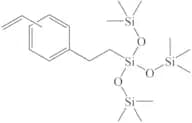
Epoxy functional monoalkoxy silaneUsed in microparticle surface modificationCoupling agent for UV cure and epoxy systemsEpoxy silane treated surfaces convert to hydrophilic-diols when exposed to moistureFormula:C10H22O3SiPurity:97%Color and Shape:Straw LiquidMolecular weight:218.37STYRYLETHYLTRIS(TRIMETHYLSILOXY)SILANE, mixed isomers, tech
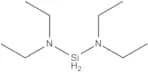
CAS:Formula:C19H38O3Si4Purity:techColor and Shape:Straw LiquidMolecular weight:426.84BIS(DIETHYLAMINO)SILANE
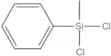
CAS:Formula:C8H22N2SiPurity:97%Color and Shape:Straw LiquidMolecular weight:174.16PHENYLMETHYLDICHLOROSILANE
CAS:Aromatic Silane - Conventional Surface Bonding
Aliphatic, fluorinated aliphatic or substituted aromatic hydrocarbon substituents are the hydrophobic entities which enable silanes to induce surface hydrophobicity. The organic substitution of the silane must be non-polar. The hydrophobic effect of the organic substitution can be related to the free energy of transfer of hydrocarbon molecules from an aqueous phase to a homogeneous hydrocarbon phase. A successful hydrophobic coating must eliminate or mitigate hydrogen bonding and shield polar surfaces from interaction with water by creating a non-polar interphase. Although silane and silicone derived coatings are in general the most hydrophobic, they maintain a high degree of permeability to water vapor. This allows coatings to breathe and reduce deterioration at the coating interface associated with entrapped water. Since ions are not transported through non-polar silane and silicone coatings, they offer protection to composite structures ranging from pigmented coatings to rebar reinforced concrete. A selection guide for hydrophobic silanes can be found on pages 22-31 of the Hydrophobicity, Hydrophilicity and Silane Surface Modification brochure.
Arylsilane Cross-Coupling Agent
The cross-coupling reaction is a highly useful methodology for the formation of carbon-carbon bonds. It involves two reagents, with one typically being a suitable organometallic reagent - the nucleophile - and the other a suitable organic substrate, normally an unsaturated halide, tosylate or similar - the electrophile.
Phenylmethyldichlorosilane; Methylphenyldichlorosilane; Dichloromethylphenylsilane
Viscosity, 20 °C: 1.2 cStΔHvap: 48.1 kJ/molVapor pressure, 82.5 °C: 13 mmMonomer for high temperature siliconesReacts well under the influence of NaOH versus fluoride activation w/ aryl chlorides, bromides, and iodidesFormula:C7H8Cl2SiPurity:97%Color and Shape:LiquidMolecular weight:191.13Ref: 3H-SIP6738.0
Discontinued product1,3-DIPHENYL-1,1,3,3-TETRAMETHYLDISILAZANE
CAS:Phenyl-Containing Blocking Agent
Used as a protecting group for reactive hydrogens in alcohols, amines, thiols, and carboxylic acids. Organosilanes are hydrogen-like, can be introduced in high yield, and can be removed under selective conditions. They are stable over a wide range of reaction conditions and can be removed in the presence of other functional groups, including other protecting groups. The tolerance of silylated alcohols to chemical transformations summary is presented in Table 1 of the Silicon-Based Blocking Agents brochure.
Aromatic Silane - Conventional Surface Bonding
Aliphatic, fluorinated aliphatic or substituted aromatic hydrocarbon substituents are the hydrophobic entities which enable silanes to induce surface hydrophobicity. The organic substitution of the silane must be non-polar. The hydrophobic effect of the organic substitution can be related to the free energy of transfer of hydrocarbon molecules from an aqueous phase to a homogeneous hydrocarbon phase. A successful hydrophobic coating must eliminate or mitigate hydrogen bonding and shield polar surfaces from interaction with water by creating a non-polar interphase. Although silane and silicone derived coatings are in general the most hydrophobic, they maintain a high degree of permeability to water vapor. This allows coatings to breathe and reduce deterioration at the coating interface associated with entrapped water. Since ions are not transported through non-polar silane and silicone coatings, they offer protection to composite structures ranging from pigmented coatings to rebar reinforced concrete. A selection guide for hydrophobic silanes can be found on pages 22-31 of the Hydrophobicity, Hydrophilicity and Silane Surface Modification brochure.
Diphenyltetramethyldisilazane; N-(Dimethylphenylsilyl)-1,1-dimethyl-1-phenyl silane amine; N-(Dimethylphenylsilyl)-1,1-dimethyl-1-phenylsilylamine
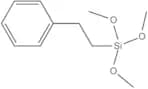
Similar to SIP6728.0Emits ammonia upon reactionUsed for silylation of capillary columnsSummary of selective deprotection conditions is provided in Table 7 through Table 20 of the Silicon-Based Blocking Agents brochureFormula:C16H23NSi2Purity:97%Color and Shape:LiquidMolecular weight:285.54PHENETHYLTRIMETHOXYSILANE, tech
CAS:Aromatic Silane - Conventional Surface Bonding
Aliphatic, fluorinated aliphatic or substituted aromatic hydrocarbon substituents are the hydrophobic entities which enable silanes to induce surface hydrophobicity. The organic substitution of the silane must be non-polar. The hydrophobic effect of the organic substitution can be related to the free energy of transfer of hydrocarbon molecules from an aqueous phase to a homogeneous hydrocarbon phase. A successful hydrophobic coating must eliminate or mitigate hydrogen bonding and shield polar surfaces from interaction with water by creating a non-polar interphase. Although silane and silicone derived coatings are in general the most hydrophobic, they maintain a high degree of permeability to water vapor. This allows coatings to breathe and reduce deterioration at the coating interface associated with entrapped water. Since ions are not transported through non-polar silane and silicone coatings, they offer protection to composite structures ranging from pigmented coatings to rebar reinforced concrete. A selection guide for hydrophobic silanes can be found on pages 22-31 of the Hydrophobicity, Hydrophilicity and Silane Surface Modification brochure.
Phenethyltrimethoxysilane; Phenylethyltrimethoxysilane; Trimethoxy(2-phenylethyl)silane
Contains α-, β-isomersComponent in optical coating resinsIn combination with TEOS,SIT7110.0, forms hybrid silicalite-1 molecular sievesFormula:C11H18O3SiPurity:97%Color and Shape:Straw To Dark Amber LiquidMolecular weight:226.35Ref: 3H-SIP6722.6
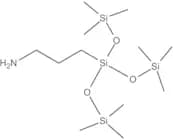
Discontinued product3-AMINOPROPYLTRIS(TRIMETHYLSILOXY)SILANE, 95%
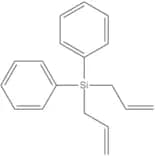
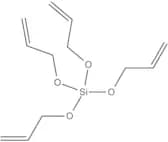
CAS:Formula:C12H35NO3SiPurity:95%Color and Shape:Straw LiquidMolecular weight:353.76DIALLYLDIPHENYLSILANE, 92%
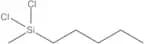
CAS:Formula:C18H20SiPurity:92%Color and Shape:LiquidMolecular weight:264.44PENTYLMETHYLDICHLOROSILANE
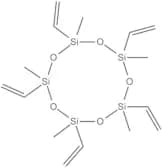
CAS:Formula:C6H14Cl2SiPurity:97%Color and Shape:Straw LiquidMolecular weight:185.17PENTAVINYLPENTAMETHYLCYCLOPENTASILOXANE, 92%
CAS:Formula:C15H30O5Si5Purity:92%Color and Shape:LiquidMolecular weight:430.82VINYLTRICHLOROSILANE
CAS:Formula:C2H3Cl3SiPurity:97%Color and Shape:Straw Amber LiquidMolecular weight:161.49Ref: 3H-SIV9110.0
Discontinued productTRIETHOXYSILYL MODIFIED POLY-1,2-BUTADIENE, 50% in volatile silicone
CAS:Triethoxysilyl modified poly-1,2-butadiene; vinyltriethoxysilane-1,2-butadiene copolymer; triethoxysilyl modified poly(1,2-butadiene)
Multi-functional polymeric trialkoxy silane50% in volatile silicone (decamethylcyclopentasiloxane)Hydrophobic modified polybutadieneViscosity: 600-1200 cStPrimer coating for silicone rubbersColor and Shape:Pale Yellow Amber LiquidMolecular weight:3500-45003-ISOCYANOTOPROPYLTRIMETHOXYSILANE, 92%
CAS:3-Isocyanotopropyltrimethoxysilane; trimethoxysilylpropylisocyanate
Isocyanate functional trialkoxy silaneViscosity: 1.4 cStCoupling agent for urethanes, polyols, and aminesComponent in hybrid organic/inorganic urethanesFormula:C7H15NO4SiPurity:92%Color and Shape:Straw LiquidMolecular weight:205.29Ref: 3H-SII6456.0
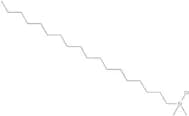
Discontinued productn-OCTADECYLDIMETHYLCHLOROSILANE, 70% in toluene
CAS:Alkyl Silane - Conventional Surface Bonding
Aliphatic, fluorinated aliphatic or substituted aromatic hydrocarbon substituents are the hydrophobic entities which enable silanes to induce surface hydrophobicity. The organic substitution of the silane must be non-polar. The hydrophobic effect of the organic substitution can be related to the free energy of transfer of hydrocarbon molecules from an aqueous phase to a homogeneous hydrocarbon phase. A successful hydrophobic coating must eliminate or mitigate hydrogen bonding and shield polar surfaces from interaction with water by creating a non-polar interphase. Although silane and silicone derived coatings are in general the most hydrophobic, they maintain a high degree of permeability to water vapor. This allows coatings to breathe and reduce deterioration at the coating interface associated with entrapped water. Since ions are not transported through non-polar silane and silicone coatings, they offer protection to composite structures ranging from pigmented coatings to rebar reinforced concrete. A selection guide for hydrophobic silanes can be found on pages 22-31 of the Hydrophobicity, Hydrophilicity and Silane Surface Modification brochure.
n-Octadecyldimethylchlorosilane; Dimethyl-n-octadecylchlorosilane; Chlorodimethyloctadecylsilane; Chlorodimethylsilyl-n-octadecane
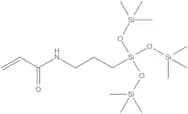
Contains 5-10% C18 isomers70% in tolueneFormula:C20H43ClSiColor and Shape:Straw Amber LiquidMolecular weight:347.13-ACRYLAMIDOPROPYLTRIS(TRIMETHYLSILOXY)SILANE, tech
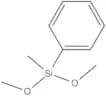
CAS:Formula:C15H37NO4Si4Purity:95%Color and Shape:SolidMolecular weight:407.8PHENYLMETHYLDIMETHOXYSILANE
CAS:Aromatic Silane - Conventional Surface Bonding
Aliphatic, fluorinated aliphatic or substituted aromatic hydrocarbon substituents are the hydrophobic entities which enable silanes to induce surface hydrophobicity. The organic substitution of the silane must be non-polar. The hydrophobic effect of the organic substitution can be related to the free energy of transfer of hydrocarbon molecules from an aqueous phase to a homogeneous hydrocarbon phase. A successful hydrophobic coating must eliminate or mitigate hydrogen bonding and shield polar surfaces from interaction with water by creating a non-polar interphase. Although silane and silicone derived coatings are in general the most hydrophobic, they maintain a high degree of permeability to water vapor. This allows coatings to breathe and reduce deterioration at the coating interface associated with entrapped water. Since ions are not transported through non-polar silane and silicone coatings, they offer protection to composite structures ranging from pigmented coatings to rebar reinforced concrete. A selection guide for hydrophobic silanes can be found on pages 22-31 of the Hydrophobicity, Hydrophilicity and Silane Surface Modification brochure.
Phenylmethyldimethoxysilane; Methylphenyldimethoxysilane; Dimethoxymethylphenylsilane
Viscosity, 20 °C: 1.65 cStAdditive to coupling agent systems, increasing interface flexibility, UV stabilityDialkoxy silaneFormula:C9H14O2SiPurity:97%Color and Shape:Straw LiquidMolecular weight:182.29Ref: 3H-SIP6740.0
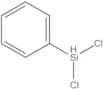
Discontinued productPHENYLDICHLOROSILANE
CAS:Formula:C6H6Cl2SiPurity:95%Color and Shape:Straw LiquidMolecular weight:177.1LITHIUM HEXAMETHYLDISILAZIDE 1M in tetrahydrofuran
CAS:Formula:C6H18LiNSi2Color and Shape:Yellow To Amber LiquidMolecular weight:167.33Ref: 3H-SIL6467.4
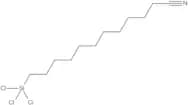
Discontinued product11-CYANOUNDECYLTRICHLOROSILANE
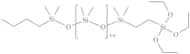
CAS:Formula:C12H22Cl3NSiPurity:97%Color and Shape:Straw LiquidMolecular weight:314.76Ω-BUTYLPOLY(DIMETHYLSILOXANYL)ETHYLTRIETHOXYSILANE, tech
CAS:Alkyl Silane - Conventional Surface Bonding
Aliphatic, fluorinated aliphatic or substituted aromatic hydrocarbon substituents are the hydrophobic entities which enable silanes to induce surface hydrophobicity. The organic substitution of the silane must be non-polar. The hydrophobic effect of the organic substitution can be related to the free energy of transfer of hydrocarbon molecules from an aqueous phase to a homogeneous hydrocarbon phase. A successful hydrophobic coating must eliminate or mitigate hydrogen bonding and shield polar surfaces from interaction with water by creating a non-polar interphase. Although silane and silicone derived coatings are in general the most hydrophobic, they maintain a high degree of permeability to water vapor. This allows coatings to breathe and reduce deterioration at the coating interface associated with entrapped water. Since ions are not transported through non-polar silane and silicone coatings, they offer protection to composite structures ranging from pigmented coatings to rebar reinforced concrete. A selection guide for hydrophobic silanes can be found on pages 22-31 of the Hydrophobicity, Hydrophilicity and Silane Surface Modification brochure.
ω-Butylpoly(dimethylsiloxanyl)ethyltriethoxysilane; α-Butyl-ω-triethoxysilylethyl terminated polydimethylsiloxane
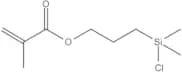
5-8 (Me2SiO)Hydrophobic surface treatmentFormula:C24H52O3SiColor and Shape:Straw LiquidMolecular weight:416.763-METHACRYLOXYPROPYLDIMETHYLCHLOROSILANE, tech
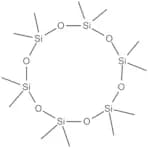
CAS:Formula:C9H17ClO2SiPurity:90%Color and Shape:Straw LiquidMolecular weight:220.77DODECAMETHYLCYCLOHEXASILOXANE
CAS:Formula:C12H36O6Si6Purity:97%Color and Shape:LiquidMolecular weight:445.9311-BROMOUNDECYLTRICHLOROSILANE, 95%
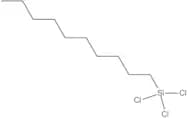
CAS:Formula:C11H22BrCl3SiPurity:95%Color and Shape:Straw LiquidMolecular weight:368.64n-DECYLTRICHLOROSILANE
CAS:Alkyl Silane - Conventional Surface Bonding
Aliphatic, fluorinated aliphatic or substituted aromatic hydrocarbon substituents are the hydrophobic entities which enable silanes to induce surface hydrophobicity. The organic substitution of the silane must be non-polar. The hydrophobic effect of the organic substitution can be related to the free energy of transfer of hydrocarbon molecules from an aqueous phase to a homogeneous hydrocarbon phase. A successful hydrophobic coating must eliminate or mitigate hydrogen bonding and shield polar surfaces from interaction with water by creating a non-polar interphase. Although silane and silicone derived coatings are in general the most hydrophobic, they maintain a high degree of permeability to water vapor. This allows coatings to breathe and reduce deterioration at the coating interface associated with entrapped water. Since ions are not transported through non-polar silane and silicone coatings, they offer protection to composite structures ranging from pigmented coatings to rebar reinforced concrete. A selection guide for hydrophobic silanes can be found on pages 22-31 of the Hydrophobicity, Hydrophilicity and Silane Surface Modification brochure.
n-Decyltrichlorosilane; Trichlorosilyldecane; TrichlorodecylsilaneFormula:C10H21Cl3SiPurity:97%Color and Shape:Straw LiquidMolecular weight:275.72HEXAMETHYLCYCLOTRISILOXANE, 98%
CAS:Hexamethylcyclotrisiloxane (HMCTS, D3)
Undergoes ring-opening anionic polymerizationReacts with three equivalents of an organolithium reagent to give derivatized dimethylsilanolsFormula:C6H18O3Si3Purity:98%Color and Shape:SolidMolecular weight:222.46Ref: 3H-SIH6105.1
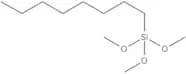
Discontinued productn-OCTYLTRIMETHOXYSILANE
CAS:Alkyl Silane - Conventional Surface Bonding
Aliphatic, fluorinated aliphatic or substituted aromatic hydrocarbon substituents are the hydrophobic entities which enable silanes to induce surface hydrophobicity. The organic substitution of the silane must be non-polar. The hydrophobic effect of the organic substitution can be related to the free energy of transfer of hydrocarbon molecules from an aqueous phase to a homogeneous hydrocarbon phase. A successful hydrophobic coating must eliminate or mitigate hydrogen bonding and shield polar surfaces from interaction with water by creating a non-polar interphase. Although silane and silicone derived coatings are in general the most hydrophobic, they maintain a high degree of permeability to water vapor. This allows coatings to breathe and reduce deterioration at the coating interface associated with entrapped water. Since ions are not transported through non-polar silane and silicone coatings, they offer protection to composite structures ranging from pigmented coatings to rebar reinforced concrete. A selection guide for hydrophobic silanes can be found on pages 22-31 of the Hydrophobicity, Hydrophilicity and Silane Surface Modification brochure.
n-Octyltrimethoxysilane; Trimethoxysilyloctane
Viscosity: 1.0 cStVapor pressure, 75 °: 0.1 mmTreatment for particles used in non-aqueous liquid dispersionsTrialkoxy silaneFormula:C11H26O3SiPurity:97%Color and Shape:Straw LiquidMolecular weight:234.41Ref: 3H-SIO6715.5
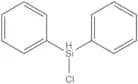
Discontinued productDIPHENYLCHLOROSILANE, tech
CAS:Formula:C12H11ClSiPurity:techColor and Shape:Straw LiquidMolecular weight:218.76(N,N-DIMETHYLAMINO)TRIETHYLSILANE
CAS:Trialkylsilyl Blocking Agent
Used as a protecting group for reactive hydrogens in alcohols, amines, thiols, and carboxylic acids. Organosilanes are hydrogen-like, can be introduced in high yield, and can be removed under selective conditions. They are stable over a wide range of reaction conditions and can be removed in the presence of other functional groups, including other protecting groups. The tolerance of silylated alcohols to chemical transformations summary is presented in Table 1 of the Silicon-Based Blocking Agents brochure.
N,N-Dimethylaminotriethylsilane; Triethylsilyldimethylamine
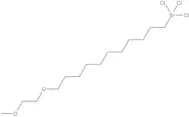
Very reactive triethylsilyl protecting groupDimethylamine by-product producedUsed primarily for the protection of alcoholsCan be used to protect amines and carboxylic acidsSummary of selective deprotection conditions is provided in Table 7 through Table 20 of the Silicon-Based Blocking Agents brochureFormula:C8H21NSiPurity:97%Color and Shape:Straw LiquidMolecular weight:159.3511-(2-METHOXYETHOXY)UNDECYLTRICHLOROSILANE
CAS:Tipped PEG Silane (363.83 g/mol)
PEO, Trichlorosilane termination utilized for hydrophilic surface modificationDual functional PEGylation reagentForms self-assembled monolayers with "hydrophilic tips"Hydrogen bonding hydrophilic silane
Related Products
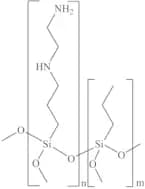
SIM6493.3: 2-[METHOXY(TRIETHYLENEOXY)]- (11-TRIETHOXYSILYL)UNDECANOATE, tech-95Formula:NoColor and Shape:Straw LiquidMolecular weight:259.10103N-(2-AMINOETHYL)-3-AMINOPROPYLTRIMETHOXYSILANE-PROPYLTRIMETHOXYSILANE, oligomeric co-hydrolysate
Diamine Functional Polymeric Silane
Silane coupling agents have the ability to form a durable bond between organic and inorganic materials to generate desired heterogeneous environments or to incorporate the bulk properties of different phases into a uniform composite structure. The general formula has two classes of functionality. The hydrolyzable group forms stable condensation products with siliceous surfaces and other oxides such as those of aluminum, zirconium, tin, titanium, and nickel. The organofunctional group alters the wetting or adhesion characteristics of the substrate, utilizes the substrate to catalyze chemical transformations at the heterogeneous interface, orders the interfacial region, or modifies its partition characteristics, and significantly effects the covalent bond between organic and inorganic materials.
N-(2-Aminoethyl)-3-aminopropyltrimethoxsilane-propyltrimethoxysilane,N-[3-(trimethoxysilyl)propyl]ethylenediamine-(trimethoxysilyl)propane, oligomeric co-hydrolysate
Cohydrolysate of SIA0591.1 and SIP6918.0Color and Shape:Straw LiquidMolecular weight:222.36ISOTETRASILANE
CAS:Volatile Higher Silane
Volatile higher silanes are low temperature, high deposition rate precursors. By appropriate selection of precursor and deposition conditions, silicon deposition can be shifted from amorphous hydrogenated silicon toward microcrystalline silicon structures. As the number of silicon atoms increases beyond two, electrons are capable of sigma–sigma bond conjugation. The dissociative adsorption of two of the three hydrogen atoms on terminal silicon atoms has a lower energy barrier.
Isotetrasilane; (Trisilyl)silane; 2-Silyltrisilane
PYROPHORICAIR TRANSPORT FORBIDDEN?Hvap: 32.5 kJ/molPrecursor for low temp. epitaxy of doped crystalline siliconEmployed in low temperature CVD of amorphous siliconFormula:H10Si4Purity:98%Color and Shape:Colourless LiquidMolecular weight:122.42