Silanes
Subcategories of "Silanes"
Found 1234 products of "Silanes"
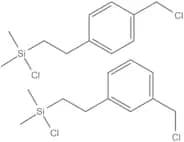
((CHLOROMETHYL)PHENYLETHYL)DIMETHYLCHLOROSILANE
CAS:Mixed m-, p-isomers
Formula:C11H16Cl2SiPurity:97%Color and Shape:Straw LiquidMolecular weight:247.241,4-BIS(TRIETHOXYSILYL)BENZENE
CAS:Formula:C18H34O6Si2Purity:97%Color and Shape:LiquidMolecular weight:402.641,1,3,3,5,5-HEXAMETHYLCYCLOTRISILAZANE
CAS:Bridging Silicon-Based Blocking Agent
Used as a protecting group for reactive hydrogens in alcohols, amines, thiols, and carboxylic acids. Organosilanes are hydrogen-like, can be introduced in high yield, and can be removed under selective conditions. They are stable over a wide range of reaction conditions and can be removed in the presence of other functional groups, including other protecting groups. The tolerance of silylated alcohols to chemical transformations summary is presented in Table 1 of the Silicon-Based Blocking Agents brochure.
Alkyl Silane - Conventional Surface Bonding
Aliphatic, fluorinated aliphatic or substituted aromatic hydrocarbon substituents are the hydrophobic entities which enable silanes to induce surface hydrophobicity. The organic substitution of the silane must be non-polar. The hydrophobic effect of the organic substitution can be related to the free energy of transfer of hydrocarbon molecules from an aqueous phase to a homogeneous hydrocarbon phase. A successful hydrophobic coating must eliminate or mitigate hydrogen bonding and shield polar surfaces from interaction with water by creating a non-polar interphase. Although silane and silicone derived coatings are in general the most hydrophobic, they maintain a high degree of permeability to water vapor. This allows coatings to breathe and reduce deterioration at the coating interface associated with entrapped water. Since ions are not transported through non-polar silane and silicone coatings, they offer protection to composite structures ranging from pigmented coatings to rebar reinforced concrete. A selection guide for hydrophobic silanes can be found on pages 22-31 of the Hydrophobicity, Hydrophilicity and Silane Surface Modification brochure.
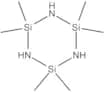
Hexamethylcyclotrisilazane; Hexamethylcyclotrisilazane; 2,2,4,4,6,6-Hexamethylcyclotrisilazane
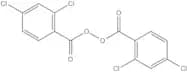
Viscosity, 20 °C: 1.7 cStΔHform: 553 kJ/molDielectric constant: 1000Hz: 2.57Dipole moment: 0.92 debyePolymerizes to polydimethylsilazane oligomer in presence of Ru/H2Modifies positive resists for O2 plasma resistanceSilylates diols with loss of ammoniaSimilar in reactivity to HMDS, SIH6110.0Summary of selective deprotection conditions is provided in Table 7 through Table 20 of the Silicon-Based Blocking Agents brochureFormula:C6H21N3Si3Purity:97%Color and Shape:LiquidMolecular weight:219.512,4-DICHLOROBENZOYL PEROXIDE, 50% in polydimethylsiloxane
CAS:Formula:C14H6Cl4O4Color and Shape:Off-White SolidMolecular weight:380.03-THIOCYANATOPROPYLTRIETHOXYSILANE, 92%
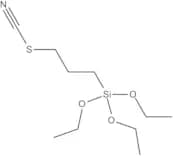
CAS:3-Thiocyanatopropyltriethoxysilane; 3-(triethoxysilyl)propylthiocyanate
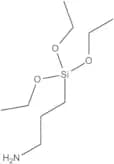
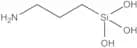
Thiocyanate functional trialkoxy silaneSulfur functional coupling agentMasked isothiocyanate functionalityComplexing agent for Ag, Au, Pd, PtPotential adhesion promoter for goldFormula:C10H21NO3SSiPurity:92%Color and Shape:Straw Yellowish LiquidMolecular weight:263.433-AMINOPROPYLSILANETRIOL, 22-25% in water
CAS:3-Aminopropylsilanetriol, 3-trihydroxysilylpropylamine; 22-25% in water
Monoamino functional water-borne silaneMainly oligomers; monomeric at concentrations <5%pH: 10.0-10.5No VOC primary amine coupling agentInternal hydrogen bonding stabilizes solutionSee WSA-7011 for greater hydrolytic stabilityFormula:C3H11NO3SiColor and Shape:Yellow To Dark Amber LiquidMolecular weight:137.21TRIETHYLCHLOROSILANE
CAS:Trialkylsilyl Blocking Agent
Used as a protecting group for reactive hydrogens in alcohols, amines, thiols, and carboxylic acids. Organosilanes are hydrogen-like, can be introduced in high yield, and can be removed under selective conditions. They are stable over a wide range of reaction conditions and can be removed in the presence of other functional groups, including other protecting groups. The tolerance of silylated alcohols to chemical transformations summary is presented in Table 1 of the Silicon-Based Blocking Agents brochure.
Triethylchlorosilane; Chlorotriethylsilane; TES-Cl
Stability of ethers intermediate between TMS and TBS ethersGood for 1°, 2°, 3° alcoholsCan be cleaved in presence of TBS, TIPS and TBDPS ethersUsed primarily for the protection of alcoholsCan be used to protect amines and carboxylic acidsSummary of selective deprotection conditions is provided in Table 7 through Table 20 of the Silicon-Based Blocking Agents brochureFormula:C6H15ClSiPurity:97%Color and Shape:LiquidMolecular weight:150.72DIPHENYLMETHYLCHLOROSILANE
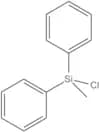
CAS:Phenyl-Containing Blocking Agent
Used as a protecting group for reactive hydrogens in alcohols, amines, thiols, and carboxylic acids. Organosilanes are hydrogen-like, can be introduced in high yield, and can be removed under selective conditions. They are stable over a wide range of reaction conditions and can be removed in the presence of other functional groups, including other protecting groups. The tolerance of silylated alcohols to chemical transformations summary is presented in Table 1 of the Silicon-Based Blocking Agents brochure.
Aromatic Silane - Conventional Surface Bonding
Aliphatic, fluorinated aliphatic or substituted aromatic hydrocarbon substituents are the hydrophobic entities which enable silanes to induce surface hydrophobicity. The organic substitution of the silane must be non-polar. The hydrophobic effect of the organic substitution can be related to the free energy of transfer of hydrocarbon molecules from an aqueous phase to a homogeneous hydrocarbon phase. A successful hydrophobic coating must eliminate or mitigate hydrogen bonding and shield polar surfaces from interaction with water by creating a non-polar interphase. Although silane and silicone derived coatings are in general the most hydrophobic, they maintain a high degree of permeability to water vapor. This allows coatings to breathe and reduce deterioration at the coating interface associated with entrapped water. Since ions are not transported through non-polar silane and silicone coatings, they offer protection to composite structures ranging from pigmented coatings to rebar reinforced concrete. A selection guide for hydrophobic silanes can be found on pages 22-31 of the Hydrophobicity, Hydrophilicity and Silane Surface Modification brochure.
Diphenylmethylchlorosilane; Methyldiphenylchlorosilane; Chloro(methyl)diphenylsilane
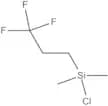
Viscosity: 5.3 cStΔHvap: 623.7 kJ/molSurface tension: 40.0 mN/mVapor pressure, 125 °C: 3 mmThermal conductivity: 0.112 W/m°Cα-Silylates esters, lactones; precursors to silyl enolatesC-Silylates carbamates as shown in the enantioselective example w/ a neryl carbamateStability versus other silyl ethers studiedSummary of selective deprotection conditions is provided in Table 7 through Table 20 of the Silicon-Based Blocking Agents brochureFormula:C13H13ClSiPurity:97%Color and Shape:LiquidMolecular weight:232.78(3,3,3-TRIFLUOROPROPYL)DIMETHYLCHLOROSILANE
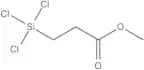
CAS:Formula:C5H10ClF3SiPurity:97%Color and Shape:Straw LiquidMolecular weight:190.672-(CARBOMETHOXY)ETHYLTRICHLOROSILANE, tech
CAS:Formula:C4H7Cl3O2SiPurity:95%Color and Shape:Straw LiquidMolecular weight:221.543-[METHOXY(POLYETHYLENEOXY)6-9]PROPYLHEPTAMETHYLTRISILOXANE, tech
CAS:PEGylated Silicone, Trisiloxane (559-691 g/mol)
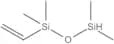
PEO, Trisiloxane termination utilized for hydrophilic surface modificationPEGylation reagent"Super-wetter", surface tension of 0.1% aqueous solution: 21-22 mN/mViscosity: 22 cStFormula:CH3O(CH2CH2O)6-9(CH2)3(CH3)[OSi(CH3)3]2SiColor and Shape:Pale Yellow LiquidMolecular weight:559-691VINYL-1,1,3,3-TETRAMETHYLDISILOXANE
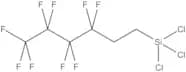
CAS:Formula:C6H16OSi2Purity:97%Color and Shape:Straw LiquidMolecular weight:160.36NONAFLUOROHEXYLTRICHLOROSILANE
CAS:Fluoroalkyl Silane - Conventional Surface Bonding
Aliphatic, fluorinated aliphatic or substituted aromatic hydrocarbon substituents are the hydrophobic entities which enable silanes to induce surface hydrophobicity. The organic substitution of the silane must be non-polar. The hydrophobic effect of the organic substitution can be related to the free energy of transfer of hydrocarbon molecules from an aqueous phase to a homogeneous hydrocarbon phase. A successful hydrophobic coating must eliminate or mitigate hydrogen bonding and shield polar surfaces from interaction with water by creating a non-polar interphase. Although silane and silicone derived coatings are in general the most hydrophobic, they maintain a high degree of permeability to water vapor. This allows coatings to breathe and reduce deterioration at the coating interface associated with entrapped water. Since ions are not transported through non-polar silane and silicone coatings, they offer protection to composite structures ranging from pigmented coatings to rebar reinforced concrete. A selection guide for hydrophobic silanes can be found on pages 22-31 of the Hydrophobicity, Hydrophilicity and Silane Surface Modification brochure.
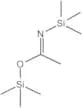
Nonafluorohexyltrichlorosilane; 1-(Trichlorosilyl)nonafluorofluorohexaneFormula:C6H4Cl3F9SiPurity:97%Color and Shape:Straw LiquidMolecular weight:381.53N,O-BIS(TRIMETHYLSILYL)ACETAMIDE
CAS:Trimethylsilyl Blocking Agent
Used as a protecting group for reactive hydrogens in alcohols, amines, thiols, and carboxylic acids. Organosilanes are hydrogen-like, can be introduced in high yield, and can be removed under selective conditions. They are stable over a wide range of reaction conditions and can be removed in the presence of other functional groups, including other protecting groups. The tolerance of silylated alcohols to chemical transformations summary is presented in Table 1 of the Silicon-Based Blocking Agents brochure.
Alkyl Silane - Conventional Surface Bonding
Aliphatic, fluorinated aliphatic or substituted aromatic hydrocarbon substituents are the hydrophobic entities which enable silanes to induce surface hydrophobicity. The organic substitution of the silane must be non-polar. The hydrophobic effect of the organic substitution can be related to the free energy of transfer of hydrocarbon molecules from an aqueous phase to a homogeneous hydrocarbon phase. A successful hydrophobic coating must eliminate or mitigate hydrogen bonding and shield polar surfaces from interaction with water by creating a non-polar interphase. Although silane and silicone derived coatings are in general the most hydrophobic, they maintain a high degree of permeability to water vapor. This allows coatings to breathe and reduce deterioration at the coating interface associated with entrapped water. Since ions are not transported through non-polar silane and silicone coatings, they offer protection to composite structures ranging from pigmented coatings to rebar reinforced concrete. A selection guide for hydrophobic silanes can be found on pages 22-31 of the Hydrophobicity, Hydrophilicity and Silane Surface Modification brochure.
Bis(Trimethylsilyl)acetamide; N,O-Bis(trimethylsilyl)acetamide; Trimethylsilyl-N-Trimethylsilylacetamidate; BSA
More reactive than SIH6110.0Releases neutral acetamide upon reactionBoth silyl groups usedUsed for silylation in analytical applicationsReactions catalyzed by acidForms enol silyl ethers in ionic liquidsNafion SAC-13 has been shown to be a recyclable catalyst for the trimethylsilylation of primary, secondary, and tertiary alcohols in excellent yields and short reaction timesSummary of selective deprotection conditions is provided in Table 7 through Table 20 of the Silicon-Based Blocking Agents brochureFormula:C8H21NOSi2Purity:95%Color and Shape:Straw LiquidMolecular weight:203.43BIS[(p-DIMETHYLSILYL)PHENYL]ETHER, 96%
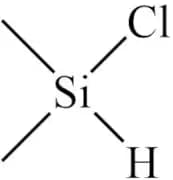
CAS:Formula:C16H22OSi2Purity:96%Color and Shape:LiquidMolecular weight:286.52DIMETHYLCHLOROSILANE, 98%
CAS:Tri-substituted Silane Reducing Agent
Organosilanes are hydrocarbon-like and possess the ability to serve as both ionic and free-radical reducing agents. These reagents and their reaction by-products are safer and more easily handled and disposed than many other reducing agents. The metallic nature of silicon and its low electronegativity relative to hydrogen lead to polarization of the Si-H bond yielding a hydridic hydrogen and a milder reducing agent compared to aluminum-, boron-, and other metal-based hydrides. A summary of some key silane reductions are presented in Table 1 of the Silicon-Based Reducing Agents brochure.
Dimethylchlorosilane; Chlorodimethylsilane; Dimethylsilyl chloride
ΔHvap: 26.2 kJ/molSurface tension: 17.1 mN/mSpecific heat: 1.13 J/g/°CThermal conductivity: 0.116 W/mKCritical temperature: 202 °CUndergoes hydrosilylation reactionsEnantioselectively converts ?-hydroxyketones to 1,2-diolsWill form high-boiling polymeric by-products with aqueous work-upExtensive review of silicon based reducing agents: Larson, G.; Fry, J. L. "Ionic and Organometallic-Catalyzed Organosilane Reductions", Wipf, P., Ed.; Wiley, 2007Formula:C2H7ClSiPurity:98%Color and Shape:Straw LiquidMolecular weight:94.62PHENETHYLTRICHLOROSILANE
CAS:Aromatic Silane - Conventional Surface Bonding
Aliphatic, fluorinated aliphatic or substituted aromatic hydrocarbon substituents are the hydrophobic entities which enable silanes to induce surface hydrophobicity. The organic substitution of the silane must be non-polar. The hydrophobic effect of the organic substitution can be related to the free energy of transfer of hydrocarbon molecules from an aqueous phase to a homogeneous hydrocarbon phase. A successful hydrophobic coating must eliminate or mitigate hydrogen bonding and shield polar surfaces from interaction with water by creating a non-polar interphase. Although silane and silicone derived coatings are in general the most hydrophobic, they maintain a high degree of permeability to water vapor. This allows coatings to breathe and reduce deterioration at the coating interface associated with entrapped water. Since ions are not transported through non-polar silane and silicone coatings, they offer protection to composite structures ranging from pigmented coatings to rebar reinforced concrete. A selection guide for hydrophobic silanes can be found on pages 22-31 of the Hydrophobicity, Hydrophilicity and Silane Surface Modification brochure.
Phenethyltrichlorosilane; 2-(Trichlorosilylethyl) benzene; Trichloro(2-phenylethyl)silane
Contains α-, β-isomersTreated surface contact angle, water: 88°Formula:C8H9Cl3SiPurity:97%Color and Shape:Pale Yellow LiquidMolecular weight:239.6SIVATE E610: ENHANCED AMINE FUNCTIONAL SILANE
CAS:SIVATE E610 (Enhanced AMEO)
Enhanced silane blend of aminopropyltriethoxysilane (SIA0610.0), 1,2-bis(triethoxysilyl)ethane (SIB1817.0) and bis(3-triethoxysilylpropyl)amine (SIB1824.5)Performance extended to non-siliceous surfacesImproved mechanical properties and corrosion resistance of metal substratesSuperior film forming properties in primer applicationsHigher bond strength in aggressive aqueous conditionsImparts composites and primers with long-term durability in a wide range of environmentsApplications include: adhesives for metallic and silicon-based substrates, coupling agent for thermoset and thermoplastic composites, functional micro-particles for adhesives and sealants
Enhanced Amine Functional Trialkoxy Silane
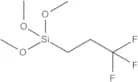
Silane coupling agents have the ability to form a durable bond between organic and inorganic materials to generate desired heterogeneous environments or to incorporate the bulk properties of different phases into a uniform composite structure. The general formula has two classes of functionality. The hydrolyzable group forms stable condensation products with siliceous surfaces and other oxides such as those of aluminum, zirconium, tin, titanium, and nickel. The organofunctional group alters the wetting or adhesion characteristics of the substrate, utilizes the substrate to catalyze chemical transformations at the heterogeneous interface, orders the interfacial region, or modifies its partition characteristics, and significantly effects the covalent bond between organic and inorganic materials.Formula:C9H23NO3SiColor and Shape:Colourless To Straw LiquidMolecular weight:221.37(3,3,3-TRIFLUOROPROPYL)TRIMETHOXYSILANE, 98%
CAS:Formula:C6H13F3O3SiPurity:98%Color and Shape:Straw LiquidMolecular weight:218.25



![3-[METHOXY(POLYETHYLENEOXY)6-9]PROPYLHEPTAMETHYLTRISILOXANE, tech](/_next/image/?url=https%3A%2Fstatic.cymitquimica.com%2Fproducts%2F3H%2Fthumb-webp%2FSIM6492.6.webp&w=3840&q=75)
![BIS[(p-DIMETHYLSILYL)PHENYL]ETHER, 96%](/_next/image/?url=https%3A%2Fstatic.cymitquimica.com%2Fproducts%2F3H%2Fthumb-webp%2FSIB1090.0.webp&w=3840&q=75)