Silanes
Subcategories of "Silanes"
Found 1234 products of "Silanes"
TRIETHOXYSILYL MODIFIED POLY-1,2-BUTADIENE, 50% in volatile silicone
CAS:Triethoxysilyl modified poly-1,2-butadiene; vinyltriethoxysilane-1,2-butadiene copolymer; triethoxysilyl modified poly(1,2-butadiene)
Multi-functional polymeric trialkoxy silane50% in volatile silicone (decamethylcyclopentasiloxane)Hydrophobic modified polybutadieneViscosity: 600-1200 cStPrimer coating for silicone rubbersColor and Shape:Pale Yellow Amber LiquidMolecular weight:3500-4500TRIVINYLMETHYLSILANE
CAS:Formula:C7H12SiPurity:95%Color and Shape:Straw LiquidMolecular weight:124.26SIVATE A610: ACTIVATED AMINE FUNCTIONAL SILANE
CAS:SIVATE A610 (Activated AMEO)
Activated silane blend of aminopropyltriethoxysilane (SIA0610.0) and (1-(3-triethoxysilyl)propyl)-2,2-diethoxy-1-aza-silacyclopentane (SIT8187.2)Reacts at high speed (seconds compared to hours)Does not require moisture or hydrolysis to initiate surface reactivityReacts with a greater variety of substratesPrimer for high speed UV cure systems (e.g. acrylated urethanes)
Activated Amine Functional Trialkoxy Silane
Silane coupling agents have the ability to form a durable bond between organic and inorganic materials to generate desired heterogeneous environments or to incorporate the bulk properties of different phases into a uniform composite structure. The general formula has two classes of functionality. The hydrolyzable group forms stable condensation products with siliceous surfaces and other oxides such as those of aluminum, zirconium, tin, titanium, and nickel. The organofunctional group alters the wetting or adhesion characteristics of the substrate, utilizes the substrate to catalyze chemical transformations at the heterogeneous interface, orders the interfacial region, or modifies its partition characteristics, and significantly effects the covalent bond between organic and inorganic materials.Formula:C9H23NO3SiColor and Shape:Colourless To Straw LiquidMolecular weight:221.37Ref: 3H-SIA0610.A1
Discontinued productTRIETHYLSILANE, 98%
CAS:Tri-substituted Silane Reducing Agent
Organosilanes are hydrocarbon-like and possess the ability to serve as both ionic and free-radical reducing agents. These reagents and their reaction by-products are safer and more easily handled and disposed than many other reducing agents. The metallic nature of silicon and its low electronegativity relative to hydrogen lead to polarization of the Si-H bond yielding a hydridic hydrogen and a milder reducing agent compared to aluminum-, boron-, and other metal-based hydrides. A summary of some key silane reductions are presented in Table 1 of the Silicon-Based Reducing Agents brochure.
Triethylsilane; Triethylsilyl hydride; Triethylsilicon hydride
Viscosity: 4.9 cStDipole moment: 0.75 debyeSurface tension: 20.7 mN/mΔHform: -172 kJ/molΔHcomb: -5,324 kJ/molVapor pressure, 20 °: 40 mmSilylates tertiary alcohols in presence of tris(pentafluorophenyl)boraneSilylates arenes in presence of Ru catalyst and t-butylethyleneUsed in reductive cyclization of ynalsReadily converted directly to triethylsilyl carboxylatesUsed to reduce metal saltsEnhances deprotection of t-butoxycarbonyl-protected amines and tert-butyl estersUsed in the reductive amidation of oxazolidinones with amino acids to provide dipeptidesConverts aldehydes to symmetrical and unsymmetrical ethersUsed in the ‘in-situ’ preparation of diborane and haloboranesExtensive review of silicon based reducing agents: Larson, G.; Fry, J. L. "Ionic and Organometallic-Catalyzed Organosilane Reductions", Wipf, P., Ed.; Wiley, 2007Formula:C6H16SiPurity:98%Color and Shape:Colourless LiquidMolecular weight:116.28Ref: 3H-SIT8330.0
Discontinued productn-DECYLTRIETHOXYSILANE
CAS:Alkyl Silane - Conventional Surface Bonding
Aliphatic, fluorinated aliphatic or substituted aromatic hydrocarbon substituents are the hydrophobic entities which enable silanes to induce surface hydrophobicity. The organic substitution of the silane must be non-polar. The hydrophobic effect of the organic substitution can be related to the free energy of transfer of hydrocarbon molecules from an aqueous phase to a homogeneous hydrocarbon phase. A successful hydrophobic coating must eliminate or mitigate hydrogen bonding and shield polar surfaces from interaction with water by creating a non-polar interphase. Although silane and silicone derived coatings are in general the most hydrophobic, they maintain a high degree of permeability to water vapor. This allows coatings to breathe and reduce deterioration at the coating interface associated with entrapped water. Since ions are not transported through non-polar silane and silicone coatings, they offer protection to composite structures ranging from pigmented coatings to rebar reinforced concrete. A selection guide for hydrophobic silanes can be found on pages 22-31 of the Hydrophobicity, Hydrophilicity and Silane Surface Modification brochure.
n-Decyltriethoxysilane; Triethoxysilyldecane
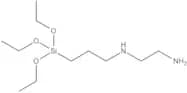
Trialkoxy silaneFormula:C16H36O3SiPurity:97%Color and Shape:Straw LiquidMolecular weight:304.54N-(2-AMINOETHYL)-3-AMINOPROPYLTRIETHOXYSILANE, 92%
CAS:Diamino Functional Trialkoxy Silane
Silane coupling agents have the ability to form a durable bond between organic and inorganic materials to generate desired heterogeneous environments or to incorporate the bulk properties of different phases into a uniform composite structure. The general formula has two classes of functionality. The hydrolyzable group forms stable condensation products with siliceous surfaces and other oxides such as those of aluminum, zirconium, tin, titanium, and nickel. The organofunctional group alters the wetting or adhesion characteristics of the substrate, utilizes the substrate to catalyze chemical transformations at the heterogeneous interface, orders the interfacial region, or modifies its partition characteristics, and significantly effects the covalent bond between organic and inorganic materials.
N-(2-Aminoethyl)-3-aminopropyltriethoxysilane; N-[3-(Triethoxysilyl)propyl]-1,2-ethanediamine; N-[3-(Triethoxysilyl)propyl]-ethylenediamine
Primary amine with an internal secondary amine coupling agent for UV cure and epoxy systemsUsed in microparticle surface modificationSlower hydrolysis rate than SIA0591.0 and SIA0592.6Formula:C11H28N2O3SiPurity:92%Color and Shape:Straw LiquidMolecular weight:264.551,2-BIS(TRIMETHOXYSILYL)ETHANE, tech
CAS:Non-functional Alkoxy Silane
Silane coupling agents have the ability to form a durable bond between organic and inorganic materials to generate desired heterogeneous environments or to incorporate the bulk properties of different phases into a uniform composite structure. The general formula has two classes of functionality. The hydrolyzable group forms stable condensation products with siliceous surfaces and other oxides such as those of aluminum, zirconium, tin, titanium, and nickel. The organofunctional group alters the wetting or adhesion characteristics of the substrate, utilizes the substrate to catalyze chemical transformations at the heterogeneous interface, orders the interfacial region, or modifies its partition characteristics, and significantly effects the covalent bond between organic and inorganic materials.
Dipodal Silane
Dipodal silanes are a series of adhesion promoters that have intrinsic hydrolytic stabilities up to ~10,000 times greater than conventional silanes and are used in applications such as plastic optics, multilayer printed circuit boards and as adhesive primers for ferrous and nonferrous metals. They have the ability to form up to six bonds to a substrate compared to conventional silanes with the ability to form only three bonds to a substrate. Many conventional coupling agents are frequently used in combination with 10-40% of a non-functional dipodal silane, where the conventional coupling agent provides the appropriate functionality for the application, and the non-functional dipodal silane provides increased durability. Also known as bis-silanes additives enhance hydrolytic stability, which impacts on increased product shelf life, ensures better substrate bonding and also leads to improved mechanical properties in coatings as well as composite applications.
Alkyl Silane - Dipodal Surface Bonding
Aliphatic, fluorinated aliphatic or substituted aromatic hydrocarbon substituents are the hydrophobic entities which enable silanes to induce surface hydrophobicity. The organic substitution of the silane must be non-polar. The hydrophobic effect of the organic substitution can be related to the free energy of transfer of hydrocarbon molecules from an aqueous phase to a homogeneous hydrocarbon phase. A successful hydrophobic coating must eliminate or mitigate hydrogen bonding and shield polar surfaces from interaction with water by creating a non-polar interphase. Although silane and silicone derived coatings are in general the most hydrophobic, they maintain a high degree of permeability to water vapor. This allows coatings to breathe and reduce deterioration at the coating interface associated with entrapped water. Since ions are not transported through non-polar silane and silicone coatings, they offer protection to composite structures ranging from pigmented coatings to rebar reinforced concrete. A selection guide for hydrophobic silanes can be found on pages 22-31 of the Hydrophobicity, Hydrophilicity and Silane Surface Modification brochure.
1,2-Bis(trimethoxysilyl)ethane; 3,3,6,6-Tetramethoxy-2,7-dioxa-3,6-disilaoctane
Caution: Inhalation HazardAir Transport ForbiddenVapor pressure, 20 °C: 0.08 mmEmployed in fabrication of multilayer printed circuit boardsFormula:C8H22O6Si2Purity:95%Color and Shape:LiquidMolecular weight:270.43DI-t-BUTOXYDIACETOXYSILANE, 95%
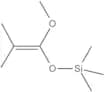
CAS:Formula:C12H24O6SiPurity:95%Color and Shape:LiquidMolecular weight:292.41-METHOXY-1-(TRIMETHYLSILOXY)-2-METHYL-1-PROPENE
CAS:Trimethylsilyl Blocking Agent
Used as a protecting group for reactive hydrogens in alcohols, amines, thiols, and carboxylic acids. Organosilanes are hydrogen-like, can be introduced in high yield, and can be removed under selective conditions. They are stable over a wide range of reaction conditions and can be removed in the presence of other functional groups, including other protecting groups. The tolerance of silylated alcohols to chemical transformations summary is presented in Table 1 of the Silicon-Based Blocking Agents brochure.
1- Methoxy-1-trimethysiloxy-2-methyl-1-propene; Methyl(trimethylsilyl)dimethylketene acetal; 1-Methoxy-2-methyl-1-(trimethylsiloxy)propene
Used for silylation of acids, alcohols, thiols, amides and ketonesNafion SAC-13 has been shown to be a recyclable catalyst for the trimethylsilylation of primary, secondary, and tertiary alcohols in excellent yields and short reaction timesSummary of selective deprotection conditions is provided in Table 7 through Table 20 of the Silicon-Based Blocking Agents brochureFormula:C8H18O2SiPurity:97%Color and Shape:Straw LiquidMolecular weight:174.31Ref: 3H-SIM6496.0
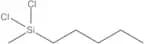
Discontinued productPENTYLMETHYLDICHLOROSILANE
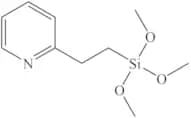
CAS:Formula:C6H14Cl2SiPurity:97%Color and Shape:Straw LiquidMolecular weight:185.172-(2-PYRIDYLETHYL)TRIMETHOXYSILANE
CAS:2-(2-Pyridylethyl)trimethoxysilane, 2-(trimethoxysilylethyl)pyridine
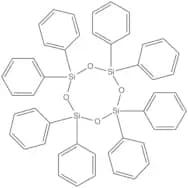
Monoamino functional trialkoxy silaneUsed in microparticle surface modificationFormula:C10H17NO3SiPurity:97%Color and Shape:Straw Amber LiquidMolecular weight:227.33OCTAPHENYLCYCLOTETRASILOXANE, 95%
CAS:Formula:C48H40O4Si4Color and Shape:White SolidMolecular weight:793.18Ref: 3H-SIO6705.0
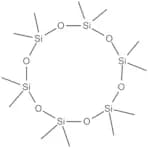
Discontinued productDODECAMETHYLCYCLOHEXASILOXANE
CAS:Formula:C12H36O6Si6Purity:97%Color and Shape:LiquidMolecular weight:445.93n-OCTADECYLMETHYLDICHLOROSILANE, 97%
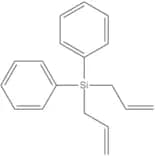
CAS:Formula:C19H40Cl2SiPurity:97% including isomersColor and Shape:Straw LiquidMolecular weight:367.52DIALLYLDIPHENYLSILANE, 92%
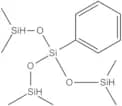
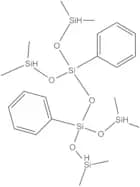
CAS:Formula:C18H20SiPurity:92%Color and Shape:LiquidMolecular weight:264.44PHENYLTRIS(DIMETHYLSILOXY)SILANE
CAS:Siloxane-Based Silane Reducing Agent
Organosilanes are hydrocarbon-like and possess the ability to serve as both ionic and free-radical reducing agents. These reagents and their reaction by-products are safer and more easily handled and disposed than many other reducing agents. The metallic nature of silicon and its low electronegativity relative to hydrogen lead to polarization of the Si-H bond yielding a hydridic hydrogen and a milder reducing agent compared to aluminum-, boron-, and other metal-based hydrides. A summary of some key silane reductions are presented in Table 1 of the Silicon-Based Reducing Agents brochure.
Phenyltris(dimethylsiloxy)silane; Phenyl hydride cross-linker; 3-[(Dimethylsilyl)oxy]-1,1,5,5-tetramethyl-3-phenyltrisiloxane
High molecular weight silane reducing agentCrosslinker for vinylphenylsilicone 2-component elastomersExtensive review of silicon based reducing agents: Larson, G.; Fry, J. L. "Ionic and Organometallic-Catalyzed Organosilane Reductions", Wipf, P., Ed.; Wiley, 2007Formula:C12H26O3Si4Purity:97%Color and Shape:LiquidMolecular weight:330.68Ref: 3H-SIP6826.0
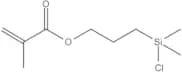
Discontinued product3-METHACRYLOXYPROPYLDIMETHYLCHLOROSILANE, tech
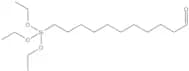
CAS:Formula:C9H17ClO2SiPurity:90%Color and Shape:Straw LiquidMolecular weight:220.77TRIETHOXYSILYLUNDECANAL, tech
CAS:Aldehyde Functional Trialkoxy Silane
Silane coupling agents have the ability to form a durable bond between organic and inorganic materials to generate desired heterogeneous environments or to incorporate the bulk properties of different phases into a uniform composite structure. The general formula has two classes of functionality. The hydrolyzable group forms stable condensation products with siliceous surfaces and other oxides such as those of aluminum, zirconium, tin, titanium, and nickel. The organofunctional group alters the wetting or adhesion characteristics of the substrate, utilizes the substrate to catalyze chemical transformations at the heterogeneous interface, orders the interfacial region, or modifies its partition characteristics, and significantly effects the covalent bond between organic and inorganic materials.
Triethoxysilylundecanal
Treated surface contact angle, water: 70°Long chain coupling agent for DNAProvides greater stability for coupled proteins than shorter alkyl homologsLong chain homolog of triethoxysilylbutyraldehyde (SIT8185.3)Formula:C17H36O4SiPurity:techColor and Shape:Straw LiquidMolecular weight:332.5611-BROMOUNDECYLTRICHLOROSILANE, 95%
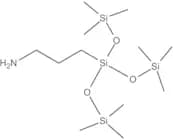
CAS:Formula:C11H22BrCl3SiPurity:95%Color and Shape:Straw LiquidMolecular weight:368.643-AMINOPROPYLTRIS(TRIMETHYLSILOXY)SILANE, 95%
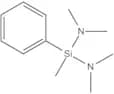
CAS:Formula:C12H35NO3SiPurity:95%Color and Shape:Straw LiquidMolecular weight:353.76PHENYLMETHYLBIS(DIMETHYLAMINO)SILANE
CAS:Aromatic Silane - Conventional Surface Bonding
Aliphatic, fluorinated aliphatic or substituted aromatic hydrocarbon substituents are the hydrophobic entities which enable silanes to induce surface hydrophobicity. The organic substitution of the silane must be non-polar. The hydrophobic effect of the organic substitution can be related to the free energy of transfer of hydrocarbon molecules from an aqueous phase to a homogeneous hydrocarbon phase. A successful hydrophobic coating must eliminate or mitigate hydrogen bonding and shield polar surfaces from interaction with water by creating a non-polar interphase. Although silane and silicone derived coatings are in general the most hydrophobic, they maintain a high degree of permeability to water vapor. This allows coatings to breathe and reduce deterioration at the coating interface associated with entrapped water. Since ions are not transported through non-polar silane and silicone coatings, they offer protection to composite structures ranging from pigmented coatings to rebar reinforced concrete. A selection guide for hydrophobic silanes can be found on pages 22-31 of the Hydrophobicity, Hydrophilicity and Silane Surface Modification brochure.
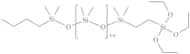
Phenylmethylbis(dimethylamino)silane; Bis(dimethylamino)methylphenylsilane; Bis(dimethylamino)phenylmethylsilane; N,N,N',N',1-Pentamethyl-1-phenylsilanediamineFormula:C11H20N2SiPurity:97%Color and Shape:Straw LiquidMolecular weight:208.38Ω-BUTYLPOLY(DIMETHYLSILOXANYL)ETHYLTRIETHOXYSILANE, tech
CAS:Alkyl Silane - Conventional Surface Bonding
Aliphatic, fluorinated aliphatic or substituted aromatic hydrocarbon substituents are the hydrophobic entities which enable silanes to induce surface hydrophobicity. The organic substitution of the silane must be non-polar. The hydrophobic effect of the organic substitution can be related to the free energy of transfer of hydrocarbon molecules from an aqueous phase to a homogeneous hydrocarbon phase. A successful hydrophobic coating must eliminate or mitigate hydrogen bonding and shield polar surfaces from interaction with water by creating a non-polar interphase. Although silane and silicone derived coatings are in general the most hydrophobic, they maintain a high degree of permeability to water vapor. This allows coatings to breathe and reduce deterioration at the coating interface associated with entrapped water. Since ions are not transported through non-polar silane and silicone coatings, they offer protection to composite structures ranging from pigmented coatings to rebar reinforced concrete. A selection guide for hydrophobic silanes can be found on pages 22-31 of the Hydrophobicity, Hydrophilicity and Silane Surface Modification brochure.
ω-Butylpoly(dimethylsiloxanyl)ethyltriethoxysilane; α-Butyl-ω-triethoxysilylethyl terminated polydimethylsiloxane
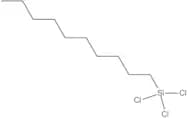
5-8 (Me2SiO)Hydrophobic surface treatmentFormula:C24H52O3SiColor and Shape:Straw LiquidMolecular weight:416.76n-DECYLTRICHLOROSILANE
CAS:Alkyl Silane - Conventional Surface Bonding
Aliphatic, fluorinated aliphatic or substituted aromatic hydrocarbon substituents are the hydrophobic entities which enable silanes to induce surface hydrophobicity. The organic substitution of the silane must be non-polar. The hydrophobic effect of the organic substitution can be related to the free energy of transfer of hydrocarbon molecules from an aqueous phase to a homogeneous hydrocarbon phase. A successful hydrophobic coating must eliminate or mitigate hydrogen bonding and shield polar surfaces from interaction with water by creating a non-polar interphase. Although silane and silicone derived coatings are in general the most hydrophobic, they maintain a high degree of permeability to water vapor. This allows coatings to breathe and reduce deterioration at the coating interface associated with entrapped water. Since ions are not transported through non-polar silane and silicone coatings, they offer protection to composite structures ranging from pigmented coatings to rebar reinforced concrete. A selection guide for hydrophobic silanes can be found on pages 22-31 of the Hydrophobicity, Hydrophilicity and Silane Surface Modification brochure.
n-Decyltrichlorosilane; Trichlorosilyldecane; TrichlorodecylsilaneFormula:C10H21Cl3SiPurity:97%Color and Shape:Straw LiquidMolecular weight:275.721,3-DIPHENYLTETRAKIS(DIMETHYLSILOXY)DISILOXANE, 92%
CAS:Formula:C20H38O5Si6Purity:92%Color and Shape:LiquidMolecular weight:527.03HEXAMETHYLCYCLOTRISILOXANE, 98%
CAS:Hexamethylcyclotrisiloxane (HMCTS, D3)
Undergoes ring-opening anionic polymerizationReacts with three equivalents of an organolithium reagent to give derivatized dimethylsilanolsFormula:C6H18O3Si3Purity:98%Color and Shape:SolidMolecular weight:222.46Ref: 3H-SIH6105.1
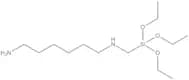
Discontinued productN-(6-AMINOHEXYL)AMINOMETHYLTRIETHOXYSILANE, 92%
CAS:Diamino Functional Trialkoxy Silane
Silane coupling agents have the ability to form a durable bond between organic and inorganic materials to generate desired heterogeneous environments or to incorporate the bulk properties of different phases into a uniform composite structure. The general formula has two classes of functionality. The hydrolyzable group forms stable condensation products with siliceous surfaces and other oxides such as those of aluminum, zirconium, tin, titanium, and nickel. The organofunctional group alters the wetting or adhesion characteristics of the substrate, utilizes the substrate to catalyze chemical transformations at the heterogeneous interface, orders the interfacial region, or modifies its partition characteristics, and significantly effects the covalent bond between organic and inorganic materials.
N-(6-Aminohexyl)aminomethyltriethoxysilane; N-[6-Triethoxysilyl)methyl]hexamethylethylenediamine
Primary amine and an internal secondary amine coupling agent for UV cure and epoxy systemsUsed in microparticle surface modificationFormula:C13H32N2O3SiPurity:92%Color and Shape:Straw LiquidMolecular weight:292.49(N,N-DIMETHYLAMINO)TRIETHYLSILANE
CAS:Trialkylsilyl Blocking Agent
Used as a protecting group for reactive hydrogens in alcohols, amines, thiols, and carboxylic acids. Organosilanes are hydrogen-like, can be introduced in high yield, and can be removed under selective conditions. They are stable over a wide range of reaction conditions and can be removed in the presence of other functional groups, including other protecting groups. The tolerance of silylated alcohols to chemical transformations summary is presented in Table 1 of the Silicon-Based Blocking Agents brochure.
N,N-Dimethylaminotriethylsilane; Triethylsilyldimethylamine
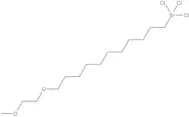
Very reactive triethylsilyl protecting groupDimethylamine by-product producedUsed primarily for the protection of alcoholsCan be used to protect amines and carboxylic acidsSummary of selective deprotection conditions is provided in Table 7 through Table 20 of the Silicon-Based Blocking Agents brochureFormula:C8H21NSiPurity:97%Color and Shape:Straw LiquidMolecular weight:159.3511-(2-METHOXYETHOXY)UNDECYLTRICHLOROSILANE
CAS:Tipped PEG Silane (363.83 g/mol)
PEO, Trichlorosilane termination utilized for hydrophilic surface modificationDual functional PEGylation reagentForms self-assembled monolayers with "hydrophilic tips"Hydrogen bonding hydrophilic silane
Related Products
SIM6493.3: 2-[METHOXY(TRIETHYLENEOXY)]- (11-TRIETHOXYSILYL)UNDECANOATE, tech-95Formula:NoColor and Shape:Straw LiquidMolecular weight:259.1010310-UNDECENYLTRICHLOROSILANE
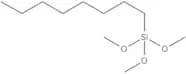
CAS:Formula:C11H21Cl3SiPurity:97%Color and Shape:Straw LiquidMolecular weight:287.74n-OCTYLTRIMETHOXYSILANE
CAS:Alkyl Silane - Conventional Surface Bonding
Aliphatic, fluorinated aliphatic or substituted aromatic hydrocarbon substituents are the hydrophobic entities which enable silanes to induce surface hydrophobicity. The organic substitution of the silane must be non-polar. The hydrophobic effect of the organic substitution can be related to the free energy of transfer of hydrocarbon molecules from an aqueous phase to a homogeneous hydrocarbon phase. A successful hydrophobic coating must eliminate or mitigate hydrogen bonding and shield polar surfaces from interaction with water by creating a non-polar interphase. Although silane and silicone derived coatings are in general the most hydrophobic, they maintain a high degree of permeability to water vapor. This allows coatings to breathe and reduce deterioration at the coating interface associated with entrapped water. Since ions are not transported through non-polar silane and silicone coatings, they offer protection to composite structures ranging from pigmented coatings to rebar reinforced concrete. A selection guide for hydrophobic silanes can be found on pages 22-31 of the Hydrophobicity, Hydrophilicity and Silane Surface Modification brochure.
n-Octyltrimethoxysilane; Trimethoxysilyloctane
Viscosity: 1.0 cStVapor pressure, 75 °: 0.1 mmTreatment for particles used in non-aqueous liquid dispersionsTrialkoxy silaneFormula:C11H26O3SiPurity:97%Color and Shape:Straw LiquidMolecular weight:234.41Ref: 3H-SIO6715.5
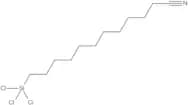
Discontinued product11-CYANOUNDECYLTRICHLOROSILANE
CAS:Formula:C12H22Cl3NSiPurity:97%Color and Shape:Straw LiquidMolecular weight:314.76LITHIUM HEXAMETHYLDISILAZIDE 1M in tetrahydrofuran
CAS:Formula:C6H18LiNSi2Color and Shape:Yellow To Amber LiquidMolecular weight:167.33Ref: 3H-SIL6467.4
Discontinued product2-[(ACETOXY(POLYETHYLENEOXY)PROPYL]TRIETHOXYSILANE, 95%
CAS:Ester Functional Trialkoxy Silane
Silane coupling agents have the ability to form a durable bond between organic and inorganic materials to generate desired heterogeneous environments or to incorporate the bulk properties of different phases into a uniform composite structure. The general formula has two classes of functionality. The hydrolyzable group forms stable condensation products with siliceous surfaces and other oxides such as those of aluminum, zirconium, tin, titanium, and nickel. The organofunctional group alters the wetting or adhesion characteristics of the substrate, utilizes the substrate to catalyze chemical transformations at the heterogeneous interface, orders the interfacial region, or modifies its partition characteristics, and significantly effects the covalent bond between organic and inorganic materials.
Hydrophilic Silane - Polar - Hydrogen Bonding
Aliphatic, fluorinated aliphatic or substituted aromatic hydrocarbon substituents are the hydrophobic entities which enable silanes to induce surface hydrophobicity. The organic substitution of the silane must be non-polar. The hydrophobic effect of the organic substitution can be related to the free energy of transfer of hydrocarbon molecules from an aqueous phase to a homogeneous hydrocarbon phase. A successful hydrophobic coating must eliminate or mitigate hydrogen bonding and shield polar surfaces from interaction with water by creating a non-polar interphase. Although silane and silicone derived coatings are in general the most hydrophobic, they maintain a high degree of permeability to water vapor. This allows coatings to breathe and reduce deterioration at the coating interface associated with entrapped water. Since ions are not transported through non-polar silane and silicone coatings, they offer protection to composite structures ranging from pigmented coatings to rebar reinforced concrete. A selection guide for hydrophobic silanes can be found on pages 22-31 of the Hydrophobicity, Hydrophilicity and Silane Surface Modification brochure.
2-[(Acetoxy(polyethyleneoxy)propyl]triethoxysilane; (Triethoxysilylpropylpolyethylene oxide)acetate
Viscosity: 50 cStFunctional PEG Silane (500-700 g/mol)PEO, Ester, Triethoxysilane termination utilized for hydrophilic surface modificationDual functional PEGylation reagentHydrogen bonding hydrophilic silaneUsed in microparticle surface modificationFormula:CH3O(C2H4O)6-9(CH2)3Si(OCH3)3Purity:95%Color and Shape:Straw Amber LiquidMolecular weight:500-700












![2-[(ACETOXY(POLYETHYLENEOXY)PROPYL]TRIETHOXYSILANE, 95%](/_next/image/?url=https%3A%2Fstatic.cymitquimica.com%2Fproducts%2F3H%2Fthumb-webp%2FSIA0078.0.webp&w=3840&q=75)