Synthetic Organic Chemistry
Synthetic organic chemistry is a branch of chemistry focused on the design and construction of organic molecules through controlled chemical reactions. This field plays a crucial role in the development of pharmaceuticals, agrochemicals, polymers, and advanced materials. At CymitQuimica, we offer a comprehensive range of high-purity reagents, catalysts, and building blocks essential for synthetic organic chemistry. Our catalog includes a variety of functionalized compounds, protecting groups, chiral auxiliaries, and coupling reagents, all meticulously tested for quality and consistency. By providing top-quality materials, we support researchers and industry professionals in achieving precise and efficient synthetic transformations, facilitating the discovery and development of innovative chemical entities and complex organic structures. Our products enable advancements in medicinal chemistry, material science, and chemical biology, driving progress in both research and industrial applications.
Subcategories of "Synthetic Organic Chemistry"
- Acids and Synthetic Reagents(15,049 products)
- Building Blocks(248,201 products)
- C-C Bond Forming Reactions(885 products)
- Protecting Groups(2,696 products)
- Reagents for Functional Group Introduction/Modification(1,021 products)
Found 207 products of "Synthetic Organic Chemistry"
Sort by
Purity (%)
0
100
|
0
|
50
|
90
|
95
|
100
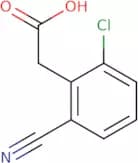
2-(2-chloro-6-cyanophenyl)acetic acid
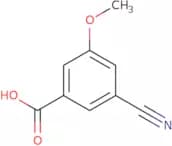
CAS:<p>Versatile small molecule scaffold</p>Formula:C9H6ClNO2Purity:Min. 95%Molecular weight:195.6 g/mol3-cyano-5-methoxybenzoic acid
CAS:<p>Versatile small molecule scaffold</p>Formula:C9H7NO3Purity:Min. 95%Molecular weight:177.16 g/mol1-[(tert-butoxy)carbonyl]-3-cyanopyrrolidine-3-carboxylic acid
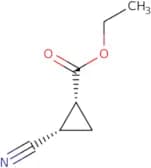
CAS:<p>Versatile small molecule scaffold</p>Formula:C11H16N2O4Purity:Min. 95%Molecular weight:240.3 g/molcis-ethyl (1R,2S)-2-cyanocyclopropane-1-carboxylate
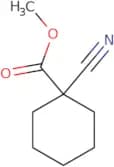
CAS:<p>Versatile small molecule scaffold</p>Formula:C7H9NO2Purity:Min. 95%Molecular weight:139.15 g/molMethyl 1-cyanocyclohexanecarboxylate
CAS:<p>Versatile small molecule scaffold</p>Formula:C9H13NO2Purity:Min. 95%Molecular weight:167.21 g/molMethyl 2-cyano-3-methylbenzoate
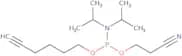
CAS:<p>Versatile small molecule scaffold</p>Formula:C10H9NO2Purity:Min. 95%Molecular weight:175.18 g/mol5-Hexyn-1-yl-(2-cyanoethyl)-(N,N-diisopropyl)-phosphoramidite
CAS:<p>Please enquire for more information about 5-Hexyn-1-yl-(2-cyanoethyl)-(N,N-diisopropyl)-phosphoramidite including the price, delivery time and more detailed product information at the technical inquiry form on this page</p>Purity:Min. 95%Methyl 5-cyanopicolinate
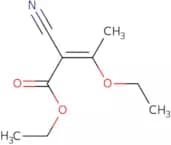
CAS:<p>Methyl 5-cyanopicolinate is a medicinal compound that is used in the treatment of various diseases. It has been shown to block the activation of plasminogen by plasmin, which prevents the breakdown of fibrin and other proteins. Methyl 5-cyanopicolinate has also been found to be an inhibitor of acetylcholinesterase, which leads to increased acetylcholine levels in the brain and can be used for the treatment of Alzheimer's disease. The synthesis and chemical studies of this substance are still ongoing.</p>Formula:C8H6N2O2Purity:Min. 95%Molecular weight:162.15 g/molethyl (2E)-2-cyano-3-ethoxybut-2-enoate
CAS:<p>Ethyl (2E)-2-cyano-3-ethoxybut-2-enoate is an activated ester that can be synthesized by the reaction of ethyl chloroformate and 2-aminoacrylic acid in ethanol. This compound is used as a reagent for the synthesis of amidrazones, which are used as reactive intermediates in organic chemistry. The x-ray structural analysis shows that it is a racemic mixture of two diastereomers, with the more stable configuration being the one with the trans double bond on the benzene ring. It has been shown to have an nmr spectrum consisting of two signals at δ = 3.47 ppm and δ = 3.53 ppm, respectively, in a two dimensional nmr analysis.</p>Formula:C9H13NO3Purity:Min. 95%Molecular weight:183.21 g/mol5-cyano-3-methylpyridine-2-carboxylic acid
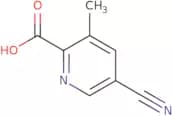
CAS:<p>5-cyano-3-methylpyridine-2-carboxylic acid is a medicinal drug used to treat chronic diseases. It belongs to the group of p-glycoprotein (Pgp) inhibitors, which are trifluoromethylated compounds that are effluxed by Pgp from cells. 5-cyano-3-methylpyridine-2-carboxylic acid has been shown to inhibit BACE1, an enzyme responsible for the production of amyloid beta, which can lead to Alzheimer's disease. This compound also inhibits neural cell growth and nervous system activity in rats. The trifluoromethyl group in this molecule is important for optimization as it increases the affinity for binding with proteins.</p>Formula:C8H6N2O2Purity:Min. 95%Molecular weight:162.14 g/molmethyl 2,5-dicyanobenzoate
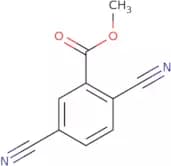
CAS:<p>Versatile small molecule scaffold</p>Formula:C10H6N2O2Purity:Min. 95%Molecular weight:186.17 g/molEthyl trans-2-cyanocyclopropane-1-carboxylate
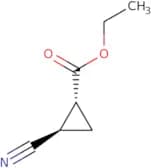
CAS:<p>Versatile small molecule scaffold</p>Formula:C7H9NO2Purity:Min. 95%Molecular weight:139.15 g/mol2-(4-cyanophenyl)-N-methylacetamide
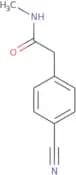
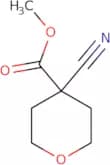
CAS:<p>Versatile small molecule scaffold</p>Formula:C10H10N2OPurity:Min. 95%Molecular weight:174.2 g/molMethyl 4-cyanotetrahydro-2H-pyran-4-carboxylate
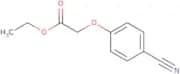
CAS:<p>Versatile small molecule scaffold</p>Formula:C8H11NO3Purity:Min. 95%Molecular weight:169.18 g/molEthyl 2-(4-cyanophenoxy)acetate
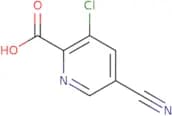
CAS:<p>Versatile small molecule scaffold</p>Formula:C11H11NO3Purity:Min. 95%Molecular weight:205.21 g/mol3-Chloro-5-cyano-2-pyridinecarboxylic acid
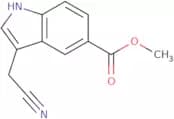
CAS:<p>Versatile small molecule scaffold</p>Formula:C7H3ClN2O2Purity:Min. 95%Molecular weight:182.56 g/molMethyl 3-(cyanomethyl)-1H-indole-5-carboxylate
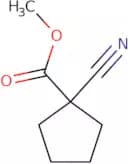
CAS:<p>Versatile small molecule scaffold</p>Formula:C12H10N2O2Purity:Min. 95%Molecular weight:214.22 g/molMethyl 1-cyanocyclopentanecarboxylate
CAS:<p>Versatile small molecule scaffold</p>Formula:C8H11NO2Purity:Min. 95%Molecular weight:153.18 g/molMethyl 5-cyano-1H-pyrrole-2-carboxylate
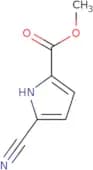
CAS:<p>Methyl 5-cyano-1H-pyrrole-2-carboxylate is a chiral, intramolecular catalysis inhibitor of the enzyme acetylcholinesterase. It is a potent compound that inhibits the activity of this enzyme and prevents the breakdown of acetylcholine in the brain. Methyl 5-cyano-1H-pyrrole-2-carboxylate binds to the active site with an axial orientation and has been shown to be selective for parp-1. This molecule also inhibits other enzymes that are involved in protein synthesis and cell signaling, such as alkenes and alkaloids. Methyl 5-cyano-1H-pyrrole-2-carboxylate may have therapeutic value as a treatment for Alzheimer's disease due to its ability to inhibit acetylcholinesterase activity.</p>Formula:C7H6N2O2Purity:Min. 95%Molecular weight:150.13 g/mol6-chloro-5-cyanopyridine-2-carboxylic acid
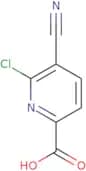
CAS:<p>6-Chloro-5-cyanopyridine-2-carboxylic acid is an antitumor agent that inhibits tumor cell proliferation and induces cell death. It has been shown to be a selective inhibitor of the enzyme hepg2, which is involved in the conversion of cholesterol to bile acids. 6-Chloro-5-cyanopyridine-2-carboxylic acid has also been shown to inhibit the growth of tumor cells by binding to pyrimidine derivatives and acylating them. This reaction leads to the formation of reactive nitrogen species that cause DNA damage and lead to apoptotic cell death. The compound can be synthesized efficiently through an acylation reaction with benzoyl chloride.</p>Formula:C7H3ClN2O2Purity:Min. 95%Molecular weight:182.6 g/mol

![1-[(tert-butoxy)carbonyl]-3-cyanopyrrolidine-3-carboxylic acid](/_next/image/?url=https%3A%2Fstatic.cymitquimica.com%2Fproducts%2F3D%2Fthumb-webp%2FIWB75928.webp&w=3840&q=75)