Synthetic Organic Chemistry
Synthetic organic chemistry is a branch of chemistry focused on the design and construction of organic molecules through controlled chemical reactions. This field plays a crucial role in the development of pharmaceuticals, agrochemicals, polymers, and advanced materials. At CymitQuimica, we offer a comprehensive range of high-purity reagents, catalysts, and building blocks essential for synthetic organic chemistry. Our catalog includes a variety of functionalized compounds, protecting groups, chiral auxiliaries, and coupling reagents, all meticulously tested for quality and consistency. By providing top-quality materials, we support researchers and industry professionals in achieving precise and efficient synthetic transformations, facilitating the discovery and development of innovative chemical entities and complex organic structures. Our products enable advancements in medicinal chemistry, material science, and chemical biology, driving progress in both research and industrial applications.
Subcategories of "Synthetic Organic Chemistry"
- Acids and Synthetic Reagents(15,027 products)
- Building Blocks(248,194 products)
- C-C Bond Forming Reactions(885 products)
- Protecting Groups(2,696 products)
- Reagents for Functional Group Introduction/Modification(1,021 products)
Found 207 products of "Synthetic Organic Chemistry"
Sort by
Purity (%)
0
100
|
0
|
50
|
90
|
95
|
100
Sodium hexacyanoferrate(II) decahydrate
CAS:<p>Oxidant, food additive, explosive and chemical reagent</p>Formula:C6FeN6•(H2O)10•Na4Purity:Min. 99%Color and Shape:Slightly Yellow Yellow Crystalline Powder PowderMolecular weight:484.06 g/molMethyl 3,3-bis(methylthio)-2-cyanoacrylate
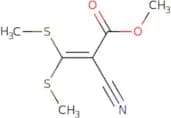
CAS:<p>Methyl 3,3-bis(methylthio)-2-cyanoacrylate is a diphenyl ether that is used as a bactericide. It has been shown to be effective against both Gram-positive and Gram-negative bacteria. Methyl 3,3-bis(methylthio)-2-cyanoacrylate is synthesized by the reaction of malonate with dimethylamine chloride in the presence of hydrochloric acid salt in order to produce chloride ions. The reaction is then heated, which causes the methyl 3,3-bis(methylthio)-2-cyanoacrylate to form. This compound is soluble in organic solvents such as formic acid and can be purified by recrystallization or by distillation.</p>Formula:C7H9NO2S2Purity:Min. 95%Molecular weight:203.28 g/mol4-[(4-cyanophenyl)disulfanyl]benzonitrile
CAS:<p>Please enquire for more information about 4-[(4-cyanophenyl)disulfanyl]benzonitrile including the price, delivery time and more detailed product information at the technical inquiry form on this page</p>Formula:C14H8N2S2Purity:Min. 95%Molecular weight:268.36 g/molAmmonium iron(III) hexacyanoferrate(II) hydrate, tech.
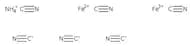
CAS:<p>It is employed as a intermediate for pharmaceuticals. Also used in decorative cosmetics. This Thermo Scientific Chemicals brand product was originally part of the Alfa Aesar product portfolio. Some documentation and label information may refer to the legacy brand. The original Alfa Aesar product / item code or SKU reference has not changed as a part of the brand transition to Thermo Scientific Chemicals.</p>Formula:(NH4)FeFe(CN)6•xH2OColor and Shape:Dark blue, PowderMolecular weight:285.83(anhy)Phosphoramidous acid, N,N-bis(1-methylethyl)-, bis(2-cyanoethyl) ester
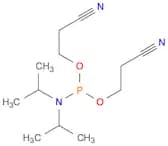
CAS:Formula:C12H22N3O2PPurity:95%Color and Shape:LiquidMolecular weight:271.2957Sodium hexacyanoferrate (II)
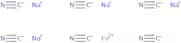
CAS:Controlled Product<p>Sodium hexacyanoferrate (II) is a salt of hexacyanoferrate (II) and sodium carbonate. It is used as an oxidizing agent in analytical chemistry, organic synthesis, and the production of ceramics. The compound has high resistance to enzyme activities and also exhibits high reactivity with nitrite ion. Sodium hexacyanoferrate (II) can be used to generate a reaction solution for the determination of ferrocyanide. This salt reacts with citric acid or sodium citrate to yield ferricyanide, which is then determined by measuring the amount of light absorbed at 510 nm. The mechanism for this reaction is believed to be the following: Sodium hexacyanoferrate (II) + 2NaOH → Na2[Fe(CN)6] + 2Na2CO3 Sodium hexacyanoferrate (II) + 3NaCl → Fe(CN)6 + Na3Cl +</p>Formula:Na4FePurity:Min. 95%Color and Shape:PowderMolecular weight:303.91 g/molTrihexyl(tetradecyl)phosphonium decanoate, min. 95% CYPHOS® IL 103
CAS:<p>Trihexyl(tetradecyl)phosphonium decanoate, min. 95% CYPHOS® IL 103</p>Formula:(C6H13)3(C14H29)PCH3(CH2)8COOPurity:min. 95%Color and Shape:pale yellow semi solidMolecular weight:655.11

![4-[(4-cyanophenyl)disulfanyl]benzonitrile](/_next/image/?url=https%3A%2Fstatic.cymitquimica.com%2Fproducts%2F3D%2Fthumb-webp%2FGAA33951.webp&w=3840&q=75)