Synthetic Organic Chemistry
Subcategories of "Synthetic Organic Chemistry"
- Acids and Synthetic Reagents(20,064 products)
- Building Blocks(256,406 products)
- C-C Bond Forming Reactions(886 products)
- Protecting Groups(2,685 products)
- Reagents for Functional Group Introduction/Modification(1,030 products)
Found 202 products for "Synthetic Organic Chemistry".
- Lower prices
- Higher prices
- Lower purities
- Higher purities
- Faster estimated delivery
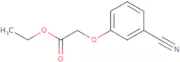
Ethyl 2-(3-cyanophenoxy)acetate
CAS:Versatile small molecule scaffold
Formula:C11H11NO3Purity:Min. 95%Molecular weight:205.21 g/mol2-[4-(2,2-Dicyanovinyl)-N-ethyl-3-Methylaniline]ethyl carbanilate
CAS:Please enquire for more information about 2-[4-(2,2-Dicyanovinyl)-N-ethyl-3-Methylaniline]ethyl carbanilate including the price, delivery time and more detailed product information at the technical inquiry form on this pageFormula:C22H22N4O2Purity:Min. 95%Molecular weight:374.44 g/molMethyl 3-cyanobicyclo[1.1.1]pentane-1-carboxylate
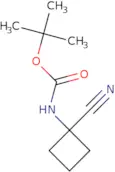
CAS:Versatile small molecule scaffoldFormula:C8H9NO2Purity:Min. 95%Molecular weight:151.16 g/moltert-Butyl N-(1-cyanocyclobutyl)carbamate
CAS:Versatile small molecule scaffold
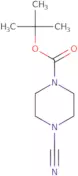
Formula:C10H16N2O2Purity:Min. 95%Molecular weight:196.25 g/moltert-butyl 4-cyanopiperazine-1-carboxylate
CAS:Versatile small molecule scaffold
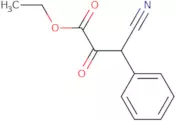
Formula:C10H17N3O2Purity:Min. 95%Molecular weight:211.26 g/molEthyl 3-cyano-3-phenylpyruvate
CAS:Ethyl 3-cyano-3-phenylpyruvate is a chemical compound that is used as an antiviral agent. It has been shown in vitro to inhibit influenza virus and depression. Ethyl 3-cyano-3-phenylpyruvate is synthesized by the alkylation of furyl with phenyl group, followed by the reduction of the tetronic acid formed. The antiviral activity of ethyl 3-cyano-3-phenylpyruvate was analyzed by assessing the ability to inhibit viral replication and production of new viruses. The sodium salt form of this compound is used in foodstuff as a preservative.
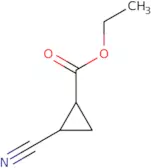
Formula:C12H11NO3Purity:Min. 95%Molecular weight:217.22 g/molethyl 2-cyanocyclopropane-1-carboxylate
CAS:Ethyl 2-cyanocyclopropane-1-carboxylate is a reactive chemical reagent that can be used to synthesize a variety of compounds. It is an aliphatic compound with a carbonyl group at the end of the molecule and belongs to a class of compounds called chlorohydrins. Ethyl 2-cyanocyclopropane-1-carboxylate has been used as an organoindium compound for the synthesis of stilbene derivatives. It can also be used to synthesize chlorinated alkenes, oxiranes, and other cyclopropanes. Ethyl 2-cyanocyclopropane-1-carboxylate can react with alcohols or phenols in presence of acid to form acetals or ketals, respectively.
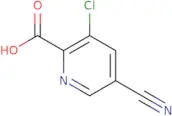
Formula:C7H9NO2Purity:Min. 95%Molecular weight:139.15 g/mol3-Chloro-5-cyano-2-pyridinecarboxylic acid
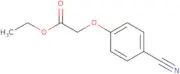
CAS:Versatile small molecule scaffoldFormula:C7H3ClN2O2Purity:Min. 95%Molecular weight:182.56 g/molEthyl 2-(4-cyanophenoxy)acetate
CAS:Versatile small molecule scaffold
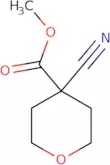
Formula:C11H11NO3Purity:Min. 95%Molecular weight:205.21 g/molMethyl 4-cyanotetrahydro-2H-pyran-4-carboxylate
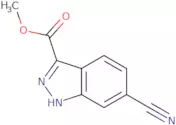
CAS:Versatile small molecule scaffoldFormula:C8H11NO3Purity:Min. 95%Molecular weight:169.18 g/molMethyl 6-cyano-1H-indazole-3-carboxylate
CAS:Versatile small molecule scaffoldFormula:C10H7N3O2Purity:Min. 95%Molecular weight:201.18 g/moltert-Butyl 4-(2-cyanoacetyl)piperidine-1-carboxylate
CAS:Versatile small molecule scaffold
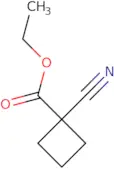
Formula:C13H20N2O3Purity:Min. 95%Molecular weight:252.31 g/molEthyl 1-cyanocyclobutanecarboxylate
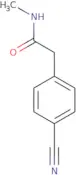
CAS:Ethyl 1-cyanocyclobutanecarboxylate is a cyclic molecule that belongs to the homologues of ethylene. This compound has been shown to react with carbanions in the presence of a base to form anionic initiator molecules. Ethyl 1-cyanocyclobutanecarboxylate can be used as an experimental monomer for ring-opening polymerization reactions, which are nonquantitative and may require temperatures as high as 110°C. The rate of these reactions is determined by the concentration of monomers, which should be made as monodisperse as possible.Formula:C8H11NO2Purity:Min. 95%Molecular weight:153.18 g/mol2-(4-cyanophenyl)-N-methylacetamide
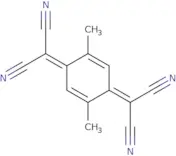
CAS:Versatile small molecule scaffoldFormula:C10H10N2OPurity:Min. 95%Molecular weight:174.2 g/mol2,5-Dimethyl-7,7,8,8-tetracyanoquinodimethane
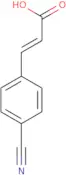
CAS:2,5-Dimethyl-7,7,8,8-tetracyanoquinodimethane is a layered compound that has been modified to have magnetic properties. This modification can be used for research purposes and the magnetically induced transfer of elements between compounds. 2,5-Dimethyl-7,7,8,8-tetracyanoquinodimethane can also be modified by adding an acceptor group to one of the layers in order to create an optical probe. The structural modifications of this molecule make it possible to create a sponge that can be used as a nanoreactor for catalysis or other reactions.Formula:C14H8N4Purity:Min. 95%Color and Shape:PowderMolecular weight:232.25 g/mol2-Propenoic acid, 3-(4-cyanophenyl)-, (E)-
CAS:2-Propenoic acid, 3-(4-cyanophenyl)-, (E)- is a fatty acid that is used in the production of biodiesel. This reaction is catalyzed by an acid methyl ester, which can be either reactive or unreactive. The product of this reaction - fatty acid methyl esters - has significant activity as an anion and has a high boiling point. It also has the potential to be used as a fuel in the future.
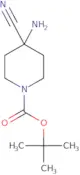
Formula:C10H7NO2Purity:Min. 95%Molecular weight:173.17 g/mol4-Amino-4-cyanopiperidine, N1-BOC protected
CAS:Versatile small molecule scaffold
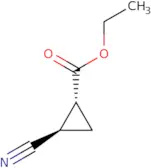
Formula:C11H19N3O2Purity:Min. 95%Molecular weight:225.29 g/molEthyl trans-2-cyanocyclopropane-1-carboxylate
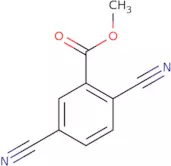
CAS:Versatile small molecule scaffoldFormula:C7H9NO2Purity:Min. 95%Molecular weight:139.15 g/molmethyl 2,5-dicyanobenzoate
CAS:Versatile small molecule scaffold
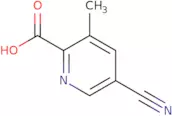
Formula:C10H6N2O2Purity:Min. 95%Molecular weight:186.17 g/mol5-cyano-3-methylpyridine-2-carboxylic acid
CAS:5-cyano-3-methylpyridine-2-carboxylic acid is a medicinal drug used to treat chronic diseases. It belongs to the group of p-glycoprotein (Pgp) inhibitors, which are trifluoromethylated compounds that are effluxed by Pgp from cells. 5-cyano-3-methylpyridine-2-carboxylic acid has been shown to inhibit BACE1, an enzyme responsible for the production of amyloid beta, which can lead to Alzheimer's disease. This compound also inhibits neural cell growth and nervous system activity in rats. The trifluoromethyl group in this molecule is important for optimization as it increases the affinity for binding with proteins.Formula:C8H6N2O2Purity:Min. 95%Molecular weight:162.14 g/mol

![2-[4-(2,2-Dicyanovinyl)-N-ethyl-3-Methylaniline]ethyl carbanilate](https://static.cymitquimica.com/products/3D/thumb-webp/FD171547.webp)
![Methyl 3-cyanobicyclo[1.1.1]pentane-1-carboxylate](https://static.cymitquimica.com/products/3D/thumb-webp/GGA32962.webp)