Building Blocks
Subcategories of "Building Blocks"
- Boronic Acids & Boronic Acid Derivatives(5,778 products)
- Chiral Building Blocks(1,243 products)
- Hydrocarbon Building Blocks(6,099 products)
- Organic Building Blocks(61,038 products)
Found 205376 products of "Building Blocks"
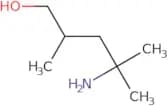
4-Amino-2,4-dimethylpentan-1-ol
CAS:Versatile small molecule scaffold
Formula:C7H17NOPurity:Min. 95%Molecular weight:131.22 g/molRef: 3D-EEC95245
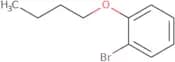
Discontinued product1-Bromo-2-butoxybenzene
CAS:1-Bromo-2-butoxybenzene is a chemical compound that is used in the manufacture of zinc oxide. It is also used as an electrolyte in dye-sensitized solar cells. In these cells, 1-bromo-2-butoxybenzene acts as an electron donor, which provides electrons to the redox dye on the surface of the semiconductor. This process leads to recombination, where electrons and holes recombine to produce electricity. The introduction of alkoxy groups into 1-bromo-2-butoxybenzene molecules allows for increased stability and efficiency in dye-sensitized solar cells.
Formula:C10H13BrOPurity:Min. 95%Molecular weight:229.11 g/molRef: 3D-ECA51430
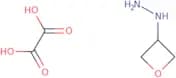
Discontinued product(Oxetan-3-yl)hydrazine, oxalic acid
CAS:Versatile small molecule scaffold
Formula:C5H10N2O5Purity:Min. 95%Molecular weight:178.1 g/mol3-([(tert-Butoxy)carbonyl]amino)-2-(cyclopentylmethyl)propanoic acid
CAS:Versatile small molecule scaffold
Formula:C14H25NO4Purity:Min. 95%Molecular weight:271.35 g/molRef: 3D-XXC61525
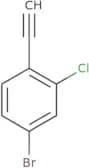
Discontinued product4-Bromo-2-chloro-1-ethynylbenzene
CAS:Versatile small molecule scaffold
Formula:C8H4BrClPurity:Min. 95%Molecular weight:215.47 g/molRef: 3D-DPC57336
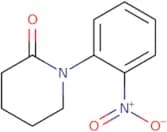
Discontinued product2-Piperidinone, 1-(2-nitrophenyl)-
CAS:Versatile small molecule scaffold
Formula:C11H12N2O3Purity:Min. 95%Molecular weight:220.22 g/molRef: 3D-DIA50992
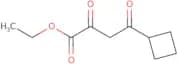
Discontinued productEthyl 4-cyclobutyl-2,4-dioxobutanoate
CAS:Versatile small molecule scaffoldFormula:C10H14O4Purity:Min. 95%Molecular weight:198.22 g/molRef: 3D-XYB95559
Discontinued product2-isopropyltetrahydro-4H-pyran-4-one
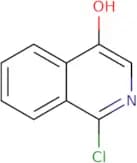
CAS:Versatile small molecule scaffoldFormula:C8H14O2Purity:Min. 95%Molecular weight:142.19 g/mol1-Chloroisoquinolin-4-ol
CAS:1-Chloroisoquinolin-4-ol is a phenylpyrimidine with anti-inflammatory properties. It is used in the treatment of sensitivity and mediated diseases, such as osteoarthritis, rheumatoid arthritis, and ankylosing spondylitis. 1-Chloroisoquinolin-4-ol inhibits the enzymatic activity of matrix metalloproteinases (MMPs), which are enzymes that break down collagen and other proteins in the body. The inhibition of MMPs by 1-chloroisoquinolin-4-ol leads to reduced inflammation and pain. This compound is also an effective inhibitor of the activities of chloride channels involved in acid secretion by cells in the stomach lining, thus inhibiting acid production. 1-Chloroisoquinolin-4-ol has been shown to have anticholesterolemic effects on liver cells due to its ability to inhibit cholesterol synthesis through inhibition of HMG CoA
Formula:C9H6ClNOPurity:Min. 95%Molecular weight:179.6 g/molRef: 3D-DAA33643
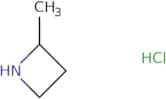
Discontinued product2-Methylazetidine hydrochloride
CAS:Versatile small molecule scaffold
Formula:C4H10ClNPurity:Min. 95%Molecular weight:107.58 g/mol(2S)-2-Amino-4-(aminooxy)butanoic acid dihydrochloride
CAS:Versatile small molecule scaffold
Formula:C4H12Cl2N2O3Purity:Min. 95%Molecular weight:207.1 g/molRef: 3D-YAA70165
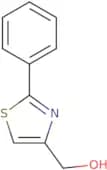
Discontinued product4-(Hydroxymethyl)-2-phenyl-1,3-thiazole
CAS:4-(Hydroxymethyl)-2-phenyl-1,3-thiazole is a versatile compound that has various applications in research and chemical synthesis. It is commonly used as a building block for the synthesis of organic compounds, including antibodies and research chemicals. This compound has been found to exhibit potent antiangiogenic properties, making it valuable in the field of cancer research. Additionally, 4-(Hydroxymethyl)-2-phenyl-1,3-thiazole can be used as a precursor in the synthesis of important pharmaceuticals such as cephalosporins and taxol. Its unique structure allows for diverse chemical reactions, making it an essential tool for chemists and researchers alike. Whether you're working on developing new drugs or exploring novel chemical reactions, 4-(Hydroxymethyl)-2-phenyl-1,3-thiazole is an indispensable compound that will help drive your scientific endeavors forward.
Formula:C10H9NOSPurity:Min. 95%Molecular weight:191.25 g/mol5-Amino-1-methyl-1,2,3,4-tetrahydropyrimidine-2,4-dione
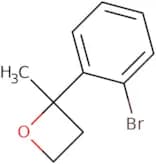
CAS:Versatile small molecule scaffoldFormula:C5H7N3O2Purity:Min. 95%Molecular weight:141.13 g/mol2-(2-Bromophenyl)-2-methyloxetane
CAS:Versatile small molecule scaffold
Formula:C10H11BrOPurity:Min. 95%Molecular weight:227.1 g/molRef: 3D-CGC24401
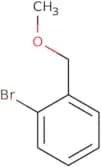
Discontinued product1-Bromo-2-(methoxymethyl)benzene
CAS:1-Bromo-2-(methoxymethyl)benzene is a boronic acid that is used in the synthesis of palladium complexes. It is synthesized by reacting 1-bromobenzene with methanol and methoxymethyl chloride. The 1-bromo-2-(methoxymethyl)benzene has been used as a ligand for palladium complexes, which are often used to catalyze organic reactions, such as the metathesis reaction. Synthetic methods have been developed to produce the compound and NMR spectra have been obtained to provide kinetic data on these reactions.
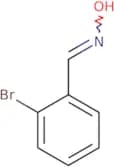
Formula:C8H9BrOPurity:Min. 95%Molecular weight:201.06 g/mol2-Bromobenzaldoxime
CAS:2-Bromobenzaldoxime is a biologically active molecule that has been shown to have significant physiological activities. It is an aldehyde, which is metabolized by the liver or kidneys into the corresponding alcohol, 2-bromoethanol. 2-Bromobenzaldoxime has been shown to be synthesized from diethyl ether and potassium phosphate in the presence of amino acids. The reaction proceeds with dehydration of the intermediate bromohydrin to form an aldoxime. This molecule can be used as a pharmaceutical drug for various diseases such as diabetes mellitus, hypertension, and inflammation.
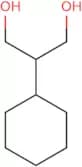
Formula:C7H6BrNOPurity:Min. 95%Molecular weight:200.03 g/mol2-Cyclohexylpropane-1,3-diol
CAS:2-Cyclohexylpropane-1,3-diol is a substrate for porcine pancreatic lipase. It is hydrolyzed by this enzyme, which is stereoselective and enantioselective. 2-Cyclohexylpropane-1,3-diol also has properties that are similar to angiotensin, a peptide that is secreted by the human body. This substance can be used as a solvent for other organic compounds in chemical reactions.
Formula:C9H18O2Purity:Min. 95%Molecular weight:158.24 g/mol3-(Hydroxymethyl)-1,2,3,4-tetrahydroquinoxalin-2-one
CAS:Versatile small molecule scaffold
Formula:C9H10N2O2Purity:Min. 95%Molecular weight:178.19 g/molRef: 3D-YFA01290
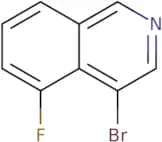
Discontinued product4-Bromo-5-fluoro-isoquinoline
CAS:Versatile small molecule scaffold
Formula:C9H5BrFNPurity:Min. 95%Molecular weight:226.04 g/molRef: 3D-BPA45758
Discontinued productN-{4-[(Carbamimidoylmethyl)sulfanyl]phenyl}-2,2-dimethylpropanamide hydrochloride
CAS:Versatile small molecule scaffoldFormula:C13H20ClN3OSPurity:Min. 95%Molecular weight:301.84 g/molRef: 3D-YGC03402
Discontinued product1-{[1-(Bromomethyl)cyclopropyl]methoxy}-3-(methoxymethyl)benzene
CAS:Versatile small molecule scaffold
Formula:C13H17BrO2Purity:Min. 95%Molecular weight:285.18 g/molRef: 3D-YGC03501
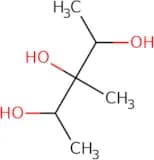
Discontinued product3-Methylpentane-2,3,4-triol
CAS:Versatile small molecule scaffold
Formula:C6H14O3Purity:Min. 95%Molecular weight:134.17 g/molRef: 3D-BAA18510
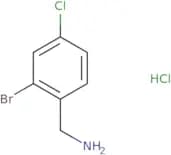
Discontinued product(2-Bromo-4-chlorophenyl)methanamine hydrochloride
CAS:Versatile small molecule scaffold
Formula:C7H8BrCl2NPurity:Min. 95%Molecular weight:256.95 g/molRef: 3D-YGD27370
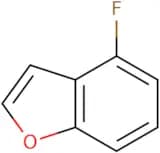
Discontinued product4-Fluorobenzofuran
CAS:Versatile small molecule scaffold
Formula:C8H5FOPurity:Min. 95%Molecular weight:136.12 g/molRef: 3D-ZAA41058
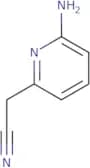
Discontinued product2-(6-Aminopyridin-2-yl)acetonitrile
CAS:Versatile small molecule scaffold
Formula:C7H7N3Purity:Min. 95%Molecular weight:133.15 g/molRef: 3D-ARA77668
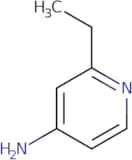
Discontinued product2-Ethylpyridin-4-amine
CAS:2-Ethylpyridin-4-amine is a pyridine that can be synthesized from the amination of 4-nitrophenol. It can also be synthesized by acylation of 2-ethylpyridine with ethyl chloroformate followed by cyclization. This compound has shown to have high yields in reactions involving pyridines and it is often used as a precursor for other compounds.
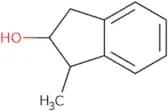
Formula:C7H10N2Purity:Min. 95%Molecular weight:122.17 g/mol1-Methyl-2,3-dihydro-1H-inden-2-ol
CAS:Versatile small molecule scaffold
Formula:C10H12OPurity:Min. 95%Molecular weight:148.2 g/molRef: 3D-ACA82313
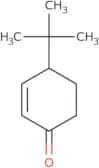
Discontinued product4-tert-Butylcyclohex-2-en-1-one
CAS:Versatile small molecule scaffold
Formula:C10H16OPurity:Min. 95%Molecular weight:152.23 g/molRef: 3D-AAA93707
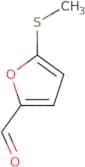
Discontinued product5-(Methylsulfanyl)furan-2-carbaldehyde
CAS:Versatile small molecule scaffold
Formula:C6H6O2SPurity:Min. 95%Molecular weight:142.18 g/molRef: 3D-AAA93294
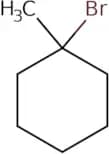
Discontinued product1-Bromo-1-methylcyclohexane
CAS:1-Bromo-1-methylcyclohexane is a monomolecular gas that is used as an intermediate in organic synthesis. It reacts with halides to form cyclopentyl derivatives. This reaction has been shown to be faster than the corresponding reaction of 1-bromocyclohexane with chlorides or bromides. The rate of this reaction may be due to the polarizability and conformational changes of the molecule upon substitution by a methyl group. 1-Bromo-1-methylcyclohexane is also an ionizing reagent, which means it can cause electrophilic reactions to occur on other molecules. It has been found that the solvent effect on this product can affect its reactivity, with solvents such as water having more of an effect than solvents such as benzene. 1-Bromo-1-methylcyclohexane has been shown to interact with other compounds in both transfer and complex
Formula:C7H13BrPurity:Min. 95%Molecular weight:177.08 g/molRef: 3D-AAA93177
Discontinued productN-[Carbamothioyl(phenyl)methyl]benzamide
CAS:Versatile small molecule scaffold
Formula:C15H14N2OSPurity:Min. 95%Molecular weight:270.3 g/molRef: 3D-AAA89278
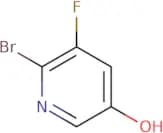
Discontinued product6-Bromo-5-fluoropyridin-3-ol
CAS:Versatile small molecule scaffold
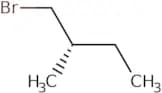
Formula:C5H3BrFNOPurity:Min. 95%Molecular weight:191.99 g/mol(S)-(+)-1-Bromo-2-methylbutane
CAS:(S)-(+)-1-Bromo-2-methylbutane is a chiral molecule with two stereoisomers, the cis and trans forms. The cis form has been observed to be the more stable of the two. It is a functional theory that these two forms are not mirror images of each other because they have different conformations. (S)-(+)-1-Bromo-2-methylbutane has been used in the synthesis of a number of important molecules. The stereoisomers can be distinguished by conformational analysis and optical microscopy. (S)-(+)-1-Bromo-2-methylbutane also has an application in biotechnology for use as a precursor for hydrazones, which are important in organic chemistry and molecular biology, such as DNA sequencing.
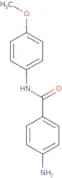
Formula:C5H11BrPurity:Min. 95%Molecular weight:151.04 g/mol4-Amino-n-(4-methoxyphenyl)benzamide
CAS:4-Amino-N-(4-methoxyphenyl)benzamide is a catalytic sulfamate that has been optimized for use in the synthesis of benzimidazole derivatives. 4-Amino-N-(4-methoxyphenyl)benzamide is used as a reagent for the preparation of aldehydes from sulfamic acid and various types of carboxylic acids. The reaction mechanism involves nucleophilic attack by the hydroxyl group from the sulfamate on the carbonyl carbon atom to form an intermediate, which then reacts with water to release hydrogen sulfate and form a new double bond.
Formula:C14H14N2O2Purity:Min. 95%Molecular weight:242.27 g/molRef: 3D-AAA89135
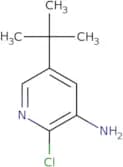
Discontinued product5-tert-Butyl-2-chloropyridin-3-amine
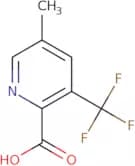
CAS:Versatile small molecule scaffoldFormula:C9H13ClN2Purity:Min. 95%Molecular weight:184.66 g/mol5-Methyl-3-(trifluoromethyl)picolinic acid
CAS:Versatile small molecule scaffold
Formula:C8H6F3NO2Purity:Min. 95%Molecular weight:205.13 g/molRef: 3D-LYB53531
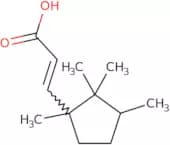
Discontinued product3-(1,2,2,3-Tetramethylcyclopentyl)prop-2-enoic acid
CAS:Versatile small molecule scaffold
Formula:C12H20O2Purity:Min. 95%Molecular weight:196.29 g/molRef: 3D-LJB31686
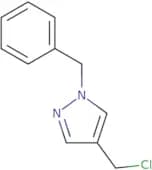
Discontinued product1-Benzyl-4-(chloromethyl)-1H-pyrazole
CAS:Controlled ProductVersatile small molecule scaffoldFormula:C11H11ClN2Purity:Min. 95%Molecular weight:206.67 g/molMethyl[1-(4-methylphenyl)butan-2-yl]amine
CAS:Controlled ProductVersatile small molecule scaffoldFormula:C12H19NPurity:Min. 95%Molecular weight:177.29 g/molRef: 3D-LJB19921
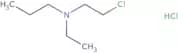
Discontinued productN-(2-Chloroethyl)-N-ethylpropan-1-amine hydrochloride
CAS:Controlled ProductVersatile small molecule scaffold
Formula:C7H17Cl2NPurity:Min. 95%Molecular weight:186.12 g/molRef: 3D-NAA10593
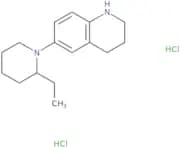
Discontinued product6-(2-Ethylpiperidin-1-yl)-1,2,3,4-tetrahydroquinoline dihydrochloride
CAS:Versatile small molecule scaffoldFormula:C16H26Cl2N2Purity:Min. 95%Molecular weight:317.3 g/molRef: 3D-LIC71538
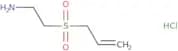
Discontinued product3-(2-Aminoethanesulfonyl)prop-1-ene hydrochloride
CAS:Versatile small molecule scaffold
Formula:C5H12ClNO2SPurity:Min. 95%Molecular weight:185.67 g/molRef: 3D-LIC71387
Discontinued product1-Benzenesulfonyl-piperidine-4-carboxylic acid ethyl ester
CAS:1-Benzenesulfonyl-piperidine-4-carboxylic acid ethyl ester is an inhibitor of acetylcholinesterase. It is a white solid that can be synthesized in two steps from commercially available starting materials. Inhibition of this enzyme leads to the accumulation of acetylcholine, which causes increased stimulation of nicotinic and muscarinic receptors. This drug has been shown to have IC50 values that are similar to those of the reference inhibitor donepezil. 1-Benzenesulfonyl-piperidine-4-carboxylic acid ethyl ester also interacts with sulfonyl chlorides, butyrylcholinesterase, and other proteins in a manner similar to donepezil. The molecular docking studies suggest that this compound binds competitively with the active site of acetylcholinesterase.
Formula:C14H19NO4SPurity:Min. 95%Molecular weight:297.37 g/molRef: 3D-LEA62726
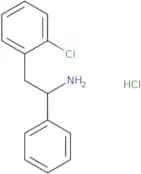
Discontinued product2-(2-Chlorophenyl)-1-phenylethan-1-amine hydrochloride
CAS:Controlled ProductVersatile small molecule scaffoldFormula:C14H15Cl2NPurity:Min. 95%Molecular weight:268.2 g/molRef: 3D-KZB44044
Discontinued product2-[1-(2,2-Difluoroethyl)piperidin-4-yl]acetic acid
CAS:Versatile small molecule scaffoldFormula:C9H15F2NO2Purity:Min. 95%Molecular weight:207.22 g/molRef: 3D-KWB24621
Discontinued producttert-Butyl 4-hydroxy-4-(piperidin-4-yl)piperidine-1-carboxylate
CAS:Versatile small molecule scaffold
Formula:C15H28N2O3Purity:Min. 95%Molecular weight:284.4 g/molRef: 3D-KQD93086
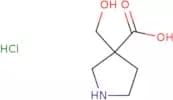
Discontinued product3-(Hydroxymethyl)pyrrolidine-3-carboxylic acid hydrochloride
CAS:Versatile small molecule scaffold
Formula:C6H12ClNO3Purity:Min. 95%Molecular weight:181.6 g/molRef: 3D-KQD93069
Discontinued product2-{[(9H-Fluoren-9-yl)methoxy]carbonyl}-2-azabicyclo[2.2.2]oct-7-ene-6-carboxylic acid
CAS:Versatile small molecule scaffold
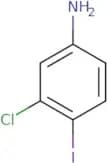
Formula:C23H21NO4Purity:Min. 95%Molecular weight:375.4 g/mol3-Chloro-4-iodoaniline
CAS:3-Chloro-4-iodoaniline is an activated, synthetic chemical that is used in the preparation of a variety of chemicals. 3-Chloro-4-iodoaniline can be prepared by the reaction of chloroacetic acid with nitrobenzene and hydrochloric acid. The compound may be purified by vacuum filtration and recrystallization from water. It is also a precursor to other chemicals that are used in the production of polyhalogenated aromatic compounds. 3-Chloro-4-iodoaniline has been found to react with amines and form the corresponding amides, which may be useful for chemical synthesis.
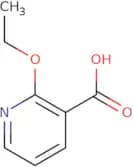
Formula:C6H5ClINPurity:Min. 95%Molecular weight:253.47 g/mol2-Ethoxy-nicotinic acid
CAS:2-Ethoxy-nicotinic acid is an inorganic compound that contains oxygen and hydrogen. It has been shown to interact with amines, carboxylates, and other inorganic compounds. 2-Ethoxy-nicotinic acid is a supramolecular complex consisting of naphthyridine and ethoxy groups. The hydrogen bonding interactions between the ethoxy groups and the amine groups are what make this molecule magnetic. The isomers of this compound have been synthesized and diffraction experiments have shown that it has a cyclic structure. Compounds similar to 2-Ethoxy-nicotinic acid include malonate, which has two carboxylate groups. This molecule also reacts with hydrogen gas at high temperatures to produce hydrogen gas and carbon dioxide.
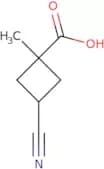
Formula:C8H9NO3Purity:Min. 95%Molecular weight:167.16 g/mol3-Cyano-1-methylcyclobutane-1-carboxylic acid
CAS:Versatile small molecule scaffoldFormula:C7H9NO2Purity:Min. 95%Molecular weight:139.15 g/molRef: 3D-NKD04501
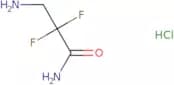
Discontinued product3-Amino-2,2-difluoropropanamide hydrochloride
CAS:Versatile small molecule scaffold
Formula:C3H7ClF2N2OPurity:Min. 95%Molecular weight:160.55 g/molRef: 3D-NKD09321
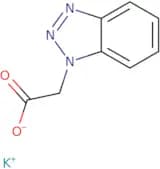
Discontinued productPotassium 2-(1H-1,2,3-benzotriazol-1-yl)acetate
CAS:Versatile small molecule scaffold
Formula:C8H6KN3O2Purity:Min. 95%Molecular weight:215.25 g/mol2-Bromo-7-phenyl-5H-[1,3,4]thiadiazolo[3,2-a]pyrimidin-5-one
CAS:Versatile small molecule scaffold
Formula:C11H6BrN3OSPurity:Min. 95%Molecular weight:308.16 g/molRef: 3D-JYB10753
Discontinued product1-Methyl-1,7-diazaspiro[4.5]decane dihydrochloride
CAS:Versatile small molecule scaffold
Formula:C9H20Cl2N2Purity:Min. 95%Molecular weight:227.17 g/molRef: 3D-NKD10054
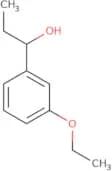
Discontinued product1-(3-Ethoxyphenyl)propan-1-ol
CAS:Versatile small molecule scaffold
Formula:C11H16O2Purity:Min. 95%Molecular weight:180.24 g/molRef: 3D-JLB56759
Discontinued product{6-[(2-Fluorophenyl)methoxy]pyridin-3-yl}methanol
CAS:Versatile small molecule scaffoldFormula:C13H12FNO2Purity:Min. 95%Molecular weight:233.24 g/molRef: 3D-NSA04964
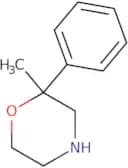
Discontinued product2-Methyl-2-phenylmorpholine
CAS:2-Methyl-2-phenylmorpholine is an industrial chemical that has a c1-c4 alkyl group. It can be used in the production of antidepressants, such as Tofranil, and other drugs. 2-Methyl-2-phenylmorpholine is also used in the industrial production of polymers.
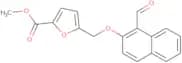
Formula:C11H15NOPurity:Min. 95%Molecular weight:177.24 g/mol5-(1-Formyl-naphthalen-2-yloxymethyl)-furan-2-carboxylic acid methyl ester
CAS:Versatile small molecule scaffold
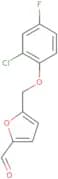
Formula:C18H14O5Purity:Min. 95%Molecular weight:310.3 g/mol5-(2-Chloro-4-fluorophenoxymethyl)furan-2-carbaldehyde
CAS:Versatile small molecule scaffold
Formula:C12H8ClFO3Purity:Min. 95%Molecular weight:254.64 g/molRef: 3D-NSA22197
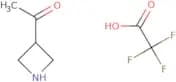
Discontinued product1-(Azetidin-3-yl)ethan-1-one, trifluoroacetic acid
CAS:Versatile small molecule scaffoldFormula:C7H10F3NO3Purity:Min. 95%Molecular weight:213.15 g/mol3-(3-Methoxypropoxy)azetidine hydrochloride
CAS:Versatile small molecule scaffoldFormula:C7H16ClNO2Purity:Min. 95%Molecular weight:181.66 g/molRef: 3D-JCC20791
Discontinued product3-[(2,2,3,3-Tetrafluoropropoxy)methyl]benzoic acid
CAS:Versatile small molecule scaffoldFormula:C11H10F4O3Purity:Min. 95%Molecular weight:266.19 g/molRef: 3D-NSA46600
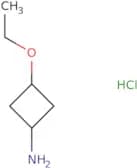
Discontinued productrac-(1R,3R)-3-Ethoxycyclobutan-1-amine hydrochloride
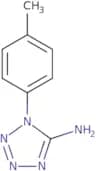
CAS:Versatile small molecule scaffoldFormula:C6H14ClNOPurity:Min. 95%Molecular weight:151.63 g/mol1-(4-Methylphenyl)-1H-1,2,3,4-tetrazol-5-amine
CAS:Versatile small molecule scaffold
Formula:C8H9N5Purity:Min. 95%Molecular weight:175.19 g/molRef: 3D-PBA88977
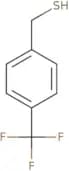
Discontinued product4-(Trifluoromethyl)benzyl mercaptan
CAS:4-(Trifluoromethyl)benzyl mercaptan is a chemical that has been used as an additive to organic solar cells. It has been shown to improve the performance of these devices by reducing interfacial recombination and increasing electron mobility. This chemical also has semiconducting properties, which have been demonstrated by its ability to be translated in an electron microscope. In addition, 4-(Trifluoromethyl)benzyl mercaptan interacts with many solvents, such as chloroform and dichloromethane, leading to changes in their properties.
Formula:C8H7F3SPurity:Min. 95%Molecular weight:192.2 g/molRef: 3D-IEA49924
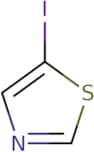
Discontinued product5-Iodo-1,3-thiazole
CAS:Versatile small molecule scaffold
Formula:C3H2INSPurity:Min. 95%Molecular weight:211.03 g/molRef: 3D-IEA30661
Discontinued product2-Bromo-3,3,3-trifluoro-1-propene
CAS:Controlled Product2-Bromo-3,3,3-trifluoro-1-propene is a chemical compound that has been synthesized in an asymmetric reaction. The reactant is bromopropane and the product is 2,2,2-trifluoropropene. The methylene group on the propene molecule is activated by the nucleophilic attack of a fluoride ion from hydrogen fluoride to form a cavity with a highly strained bond. The kinetic study of this reaction revealed that the activation energy for the reaction is 42 kJ/mol. Palladium-catalyzed coupling reactions are catalyzed by palladium and require nonpolar solvents such as toluene or dichloromethane. This type of reaction has been shown to be exothermic with an isolated yield of 1%.
Formula:C3H2BrF3Purity:Min. 95%Color and Shape:Colorless PowderMolecular weight:174.95 g/mol4-Chloro-2-hydroxy-6-methylphenylboronic acid
CAS:Versatile small molecule scaffoldFormula:C7H8BClO3Purity:Min. 95%Molecular weight:186.4 g/mol1-Hydroxycyclopentane-1-carbonitrile
CAS:1-Hydroxycyclopentane-1-carbonitrile is a monomer that is hydrolyzed to form benzoin and cyanohydrins. It can be used in the production of scifinder as a monomer or dimerizer.
Formula:C6H9NOPurity:Min. 95%Molecular weight:111.14 g/mol3-Hydroxy-5-methylpyridine
CAS:3-Hydroxy-5-methylpyridine (3HMP) is a chemical substance that has been classified as an amine. It is a product of the metabolism of purines, which are nitrogenous bases found in DNA and RNA. 3HMP is produced by aerogenic bacteria (such as Enterobacter), and can be used to estimate the number of these bacteria present in water samples. 3HMP has been shown to have antiviral properties against influenza virus, and can be used as a biomarker for the presence of other viruses in animals. 3HMP also has mineralization properties, which have been studied extensively, particularly with regards to pancreatic disease.
Formula:C6H7NOPurity:Min. 95%Color and Shape:PowderMolecular weight:109.13 g/molRef: 3D-FH16174
Discontinued product8-Bromo-2-methylimidazo[1,2-a]pyridine
CAS:Versatile small molecule scaffold
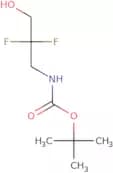
Formula:C8H7N2BrPurity:Min. 95%Molecular weight:211.05 g/moltert-Butyl (2,2-difluoro-3-hydroxypropyl)carbamate
CAS:Versatile small molecule scaffoldFormula:C10H13NO4Purity:Min. 95%Molecular weight:211.21 g/mol4,5-Dihydro-1H-imidazol-2-amine hydrochloride
CAS:Please enquire for more information about 4,5-Dihydro-1H-imidazol-2-amine hydrochloride including the price, delivery time and more detailed product information at the technical inquiry form on this page
Formula:C3H7N3•HClPurity:Min. 95%Molecular weight:121.57 g/molRef: 3D-FD183639
Discontinued product4,5-Dihydroxy-2,3-Pentanedione
CAS:4,5-Dihydroxy-2,3-pentanedione is a carbonyl compound that is the product of the oxidation of ascorbic acid. It is used in wastewater treatment and has antimicrobial properties against infectious diseases. This compound has been shown to inhibit protein synthesis by binding to the ribosome and preventing the formation of peptide bonds between amino acids. 4,5-Dihydroxy-2,3-pentanedione has also been shown to bind to plasma proteins, which may be due to its acyl chain structure. 4,5-Dihydroxy-2,3-pentanedione can be synthesized in a catalytic mechanism that involves dehydroascorbic acid and molecular oxygen.
Formula:C5H8O4Purity:Min. 95%Color and Shape:PowderMolecular weight:132.11 g/molRef: 3D-FD180770
Discontinued productPiperyline
CAS:Piperyline is an alkanoic acid that has shown to be effective against skin cancer. It also has antimicrobial properties, which may be due to its ability to bind metal ions and form polymeric compounds. Piperyline inhibits microbial growth by inhibiting the synthesis of proteins and nucleic acids. The antimicrobial activity is related to its cationic polymerization with hydroxyl groups, which forms a structure that can inhibit microbial enzymes and disrupt microbial cell membranes. This compound also interacts with the skin's natural lipids, making it difficult for microorganisms to attach and grow on the skin. Piperyline is synthesized in organic chemistry laboratories as an amide precursor of other pharmaceuticals such as penicillin.
Formula:C16H17NO3Purity:Min. 95%Molecular weight:271.31 g/mol

![3-([(tert-Butoxy)carbonyl]amino)-2-(cyclopentylmethyl)propanoic acid](/_next/image/?url=https%3A%2Fstatic.cymitquimica.com%2Fproducts%2F3D%2Fthumb-webp%2FXXC61525.webp&w=3840&q=75)
![N-{4-[(Carbamimidoylmethyl)sulfanyl]phenyl}-2,2-dimethylpropanamide hydrochloride](/_next/image/?url=https%3A%2Fstatic.cymitquimica.com%2Fproducts%2F3D%2Fthumb-webp%2FYGC03402.webp&w=3840&q=75)
![1-{[1-(Bromomethyl)cyclopropyl]methoxy}-3-(methoxymethyl)benzene](/_next/image/?url=https%3A%2Fstatic.cymitquimica.com%2Fproducts%2F3D%2Fthumb-webp%2FYGC03501.webp&w=3840&q=75)
![N-[Carbamothioyl(phenyl)methyl]benzamide](/_next/image/?url=https%3A%2Fstatic.cymitquimica.com%2Fproducts%2F3D%2Fthumb-webp%2FAAA89278.webp&w=3840&q=75)
![Methyl[1-(4-methylphenyl)butan-2-yl]amine](/_next/image/?url=https%3A%2Fstatic.cymitquimica.com%2Fproducts%2F3D%2Fthumb-webp%2FLJB19921.webp&w=3840&q=75)

![2-[1-(2,2-Difluoroethyl)piperidin-4-yl]acetic acid](/_next/image/?url=https%3A%2Fstatic.cymitquimica.com%2Fproducts%2F3D%2Fthumb-webp%2FKWB24621.webp&w=3840&q=75)
![2-{[(9H-Fluoren-9-yl)methoxy]carbonyl}-2-azabicyclo[2.2.2]oct-7-ene-6-carboxylic acid](/_next/image/?url=https%3A%2Fstatic.cymitquimica.com%2Fproducts%2F3D%2Fthumb-webp%2FNKD00993.webp&w=3840&q=75)
![2-Bromo-7-phenyl-5H-[1,3,4]thiadiazolo[3,2-a]pyrimidin-5-one](/_next/image/?url=https%3A%2Fstatic.cymitquimica.com%2Fproducts%2F3D%2Fthumb-webp%2FJYB10753.webp&w=3840&q=75)
![1-Methyl-1,7-diazaspiro[4.5]decane dihydrochloride](/_next/image/?url=https%3A%2Fstatic.cymitquimica.com%2Fproducts%2F3D%2Fthumb-webp%2FNKD10054.webp&w=3840&q=75)
![{6-[(2-Fluorophenyl)methoxy]pyridin-3-yl}methanol](/_next/image/?url=https%3A%2Fstatic.cymitquimica.com%2Fproducts%2F3D%2Fthumb-webp%2FNSA04964.webp&w=3840&q=75)

![3-[(2,2,3,3-Tetrafluoropropoxy)methyl]benzoic acid](/_next/image/?url=https%3A%2Fstatic.cymitquimica.com%2Fproducts%2F3D%2Fthumb-webp%2FNSA46600.webp&w=3840&q=75)



![8-Bromo-2-methylimidazo[1,2-a]pyridine](/_next/image/?url=https%3A%2Fstatic.cymitquimica.com%2Fproducts%2F3D%2Fthumb-webp%2FUXB37475.webp&w=3840&q=75)