


Building Blocks
Subcategories of "Building Blocks"
- Boronic Acids & Boronic Acid Derivatives(5,778 products)
- Chiral Building Blocks(1,243 products)
- Hydrocarbon Building Blocks(6,099 products)
- Organic Building Blocks(61,038 products)
Found 205376 products of "Building Blocks"
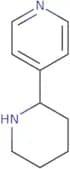
4-(Piperidin-2-yl)pyridine
CAS:Versatile small molecule scaffold
Formula:C10H14N2Purity:Min. 95%Molecular weight:162.23 g/molRef: 3D-TFA92451
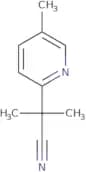
Discontinued product2-Methyl-2-(5-methylpyridin-2-yl)propanenitrile
CAS:Versatile small molecule scaffold
Formula:C10H12N2Purity:Min. 95%Molecular weight:160.22 g/molRef: 3D-EMB02197
Discontinued product1-(Pyridin-3-yl)-1H-pyrazole-4-carboxylic acid hydrochloride
CAS:Versatile small molecule scaffold
Formula:C9H8ClN3O2Purity:Min. 95%Molecular weight:225.63 g/mol2-[(3-Nitrophenyl)formamido]acetic acid
CAS:2-[(3-Nitrophenyl)formamido]acetic acid (2NPA) is a modifying agent that has been used in the modification of carboxyl groups. It can react with nucleophiles to form adducts and with carbodiimides to form ureas. 2NPA reacts with amino acids, peptides, and other nitrogenous compounds at their carboxyl groups to form ester or amide bonds. The nature of the residues after modification varies depending on the nature of the carboxyl group that was modified.
Formula:C9H8N2O5Purity:Min. 95%Molecular weight:224.17 g/molRef: 3D-AAA61710
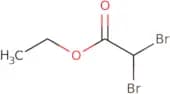
Discontinued productAcetic acid, dibromo-, ethyl ester
CAS:Acetic acid, dibromo-, ethyl ester is a reactive molecule that can be used as a nucleophilic substituent. It has hydroxyl group and ruthenium complex. It is a particle that can be used in the production of monoclonal antibodies. Acetic acid, dibromo-, ethyl ester also has viscosity and polycarboxylic acid. This chemical reacts with β-unsaturated ketones to form polymerization initiator. Acetic acid, dibromo-, ethyl ester also has carbonyl group and monoclonal antibodies. Acetic acid, dibromo-, ethyl ester can be conjugated with ethyl bromoacetate to produce conjugates.
Formula:C4H6Br2O2Purity:Min. 95%Molecular weight:245.9 g/mol1-(1H-Imidazol-2-yl)propan-2-ol hydrochloride
CAS:Versatile small molecule scaffoldFormula:C6H11ClN2OPurity:Min. 95%Molecular weight:162.62 g/molRef: 3D-UFC04093
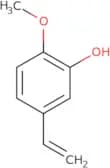
Discontinued product5-Ethenyl-2-methoxyphenol
CAS:5-Ethenyl-2-methoxyphenol is a volatile compound that has been isolated from the bark of the cinnamon tree. It has shown anticancer activities "in vitro" and "in vivo". 5-Ethenyl-2-methoxyphenol has been shown to be demethylated by cytochrome P450 enzymes, which may result in its antitumor activity. This active compound can also be detected in postharvested fruit and vegetables as well as processed foods such as apple juice, tomato sauce, and dried fruits. 5-Ethenyl-2-methoxyphenol is responsible for the characteristic flavor of cinnamon, so it is often used as a flavoring agent in food processing.
Formula:C9H10O2Purity:Min. 95%Color and Shape:PowderMolecular weight:150.17 g/mol2',3'-Dihydro-1'H-spiro[cyclopropane-1,4'-quinoline]
CAS:Versatile small molecule scaffold
Formula:C11H13NPurity:Min. 95%Molecular weight:159.23 g/molRef: 3D-ECC59829
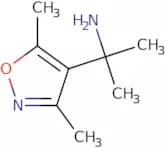
Discontinued product2-(Dimethyl-1,2-oxazol-4-yl)propan-2-amine
CAS:Versatile small molecule scaffold
Formula:C8H14N2OPurity:Min. 95%Molecular weight:154.21 g/molRef: 3D-VKC10832
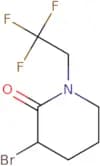
Discontinued product3-Bromo-1-(2,2,2-trifluoroethyl)piperidin-2-one
CAS:Versatile small molecule scaffold
Formula:C7H9BrF3NOPurity:Min. 95%Molecular weight:260.05 g/molRef: 3D-DHA94636
Discontinued productAmyl Acetate
CAS:Amyl acetate is a reactive, volatile organic compound that is used in the manufacture of plasticizers, resins, and synthetic rubber. It is also used as a solvent for dyes and pigments, as well as a flavoring agent in food processing. Amyl acetate has been shown to have antimicrobial properties against human pathogens such as methicillin-resistant Staphylococcus aureus (MRSA), Escherichia coli, and Salmonella enterica. The antimicrobial activity of this molecule may be due to its ability to react with cellular components such as proteins and lipids. Amyl acetate also inhibits the growth of microorganisms by inhibiting their synthesis of essential biomolecules like amino acids and nucleic acids.
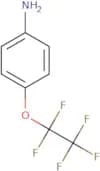
Formula:C7H14O2Purity:Min. 95%Molecular weight:130.19 g/mol4-(Perfluoroethoxy)aniline
CAS:Versatile small molecule scaffold
Formula:C8H6F5NOPurity:Min. 95%Molecular weight:227.13 g/molRef: 3D-AAA71785
Discontinued productMethyl[2-(prop-2-yn-1-yloxy)ethyl]amine hydrochloride
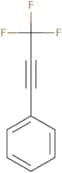
CAS:Versatile small molecule scaffoldFormula:C6H12ClNOPurity:Min. 95%Molecular weight:149.62 g/mol(3,3,3-Trifluoroprop-1-yn-1-yl)benzene
CAS:(3,3,3-Trifluoroprop-1-yn-1-yl)benzene is a reaction product that can be used to inhibit the activity of metalloprotease and as an anti-cancer agent. This compound inhibits the enzyme that causes chronic kidney disease and degenerative diseases. It is a potent inhibitor of metalloprotease, which is involved in cancer progression, fatty acid synthesis and bone formation. The effective dose for this drug is between 1 and 10mg/kg body weight. It has been shown to have an asymmetric synthesis with the use of amido groups. (3,3,3-Trifluoroprop-1-yn-1-yl)benzene also has antirheumatic properties due to its ability to inhibit proteases such as matrix metalloproteinases and cathepsins.
Formula:C9H5F3Purity:Min. 95%Molecular weight:170.13 g/molRef: 3D-AAA77262
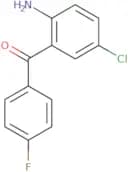
Discontinued product4-Chloro-2-(4-fluorobenzoyl)aniline
CAS:Versatile small molecule scaffold
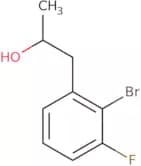
Formula:C13H9ClFNOPurity:Min. 95%Molecular weight:249.67 g/mol1-(2-Bromo-3-fluorophenyl)propan-2-ol
CAS:Versatile small molecule scaffoldFormula:C9H10BrFOPurity:Min. 95%Molecular weight:233.08 g/molRef: 3D-UFC04202
Discontinued product3-Chloro-N-[2-(4-methyl-1,3-thiazol-5-yl)-2-oxoethyl]propanamide
CAS:Versatile small molecule scaffoldFormula:C9H11ClN2O2SPurity:Min. 95%Molecular weight:246.71 g/molRef: 3D-CHC38015
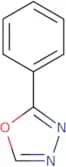
Discontinued product2-Phenyl-1,3,4-oxadiazole
CAS:2-Phenyl-1,3,4-oxadiazole is a 2-phenyloxazole with an oxygen atom at the 1 position. It is a white crystalline solid that is soluble in water and has antibacterial properties. This chemical can be used as a catalyst for the synthesis of organic compounds. 2-Phenyl-1,3,4-oxadiazole reacts with nitro groups to form oxime derivatives and has been shown to inhibit the growth of fungi such as Candida albicans and Aspergillus niger. 2-Phenyl-1,3,4-oxadiazole can also be used as an antifungal agent against Trichophyton rubrum.
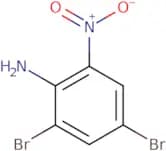
2-Phenyl-1,3,4-oxadiazole may be synthesized by reacting phenol with acetone in the presence of nitric acid or sulfuric acid. The structural formula for this compound isFormula:C8H6N2OPurity:Min. 95%Molecular weight:146.15 g/mol2,4-Dibromo-6-nitroaniline
CAS:2,4-Dibromo-6-nitroaniline is a nitro compound that has been used in the production of dyes. It is also used as a component in the synthesis of other organic compounds. 2,4-Dibromo-6-nitroaniline can be produced by electrolysis of an acid solution containing radical cations and benzene. The radical cations are formed by proton transfer from the acid to the benzene, followed by electron transfer from benzene to the electrode. This process results in the formation of nitro groups on the benzene ring, which undergoes oxidation to form 2,4-dibromo-6-nitroaniline. The cyclic voltammetry shows that this process occurs via two pathways: one with a fast rate and one with a slow rate. The mechanism for this reaction is not yet known.
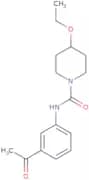
Formula:C6H4Br2N2O2Purity:Min. 95%Molecular weight:295.92 g/molN-(3-Acetylphenyl)-4-ethoxypiperidine-1-carboxamide
CAS:Versatile small molecule scaffold
Formula:C16H22N2O3Purity:Min. 95%Molecular weight:290.36 g/molRef: 3D-ECC89688
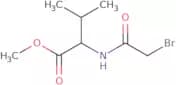
Discontinued productMethyl (2S)-2-(2-bromoacetamido)-3-methylbutanoate
CAS:Versatile small molecule scaffoldFormula:C8H14BrNO3Purity:Min. 95%Molecular weight:252.11 g/molRef: 3D-UGA70139
Discontinued product9,9-Difluoro-1,4-dioxaspiro[5.5]undecan-5-one
CAS:Versatile small molecule scaffold
Formula:C9H12F2O3Purity:Min. 95%Molecular weight:206.19 g/molRef: 3D-UGD71258
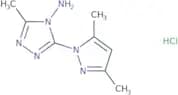
Discontinued product3-(3,5-Dimethyl-1H-pyrazol-1-yl)-5-methyl-4H-1,2,4-triazol-4-amine hydrochloride
CAS:Versatile small molecule scaffold
Formula:C8H13ClN6Purity:Min. 95%Molecular weight:228.68 g/molRef: 3D-AAA88092
Discontinued product[2-(2-Ethoxyethoxy)ethyl](methyl)amine
CAS:Versatile small molecule scaffold
Formula:C7H17NO2Purity:Min. 95%Molecular weight:147.22 g/mol[1-(Propan-2-yl)-1H-1,2,4-triazol-5-yl]methanamine
CAS:Versatile small molecule scaffoldFormula:C6H12N4Purity:Min. 95%Molecular weight:140.19 g/molRef: 3D-UIC24186
Discontinued product4-(5-{[(3-Phenyl-1,2,4-oxadiazol-5-yl)methyl]sulfanyl}-1,3,4-oxadiazol-2-yl)pyridine
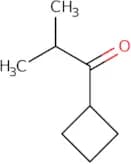
CAS:Versatile small molecule scaffoldFormula:C16H11N5O2SPurity:Min. 95%Molecular weight:337.4 g/mol1-Cyclobutyl-2-methylpropan-1-one
CAS:Versatile small molecule scaffold
Formula:C8H14OPurity:Min. 95%Molecular weight:126.2 g/molRef: 3D-ABA11133
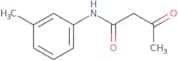
Discontinued productN-(3-Methylphenyl)-3-oxobutanamide
CAS:Versatile small molecule scaffold
Formula:C11H13NO2Purity:Min. 95%Molecular weight:191.23 g/molRef: 3D-ABA23346
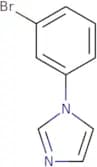
Discontinued product1-(3-Bromophenyl)-1H-imidazole
CAS:Versatile small molecule scaffold
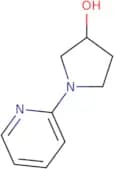
Formula:C9H7BrN2Purity:Min. 95%Molecular weight:223.07 g/mol(3S)-1-(Pyridin-2-yl)pyrrolidin-3-ol
CAS:Versatile small molecule scaffold
Formula:C9H12N2OPurity:Min. 95%Molecular weight:164.2 g/molRef: 3D-VKB58871
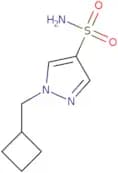
Discontinued product1-(Cyclobutylmethyl)-1H-pyrazole-4-sulfonamide
CAS:Versatile small molecule scaffoldFormula:C8H13N3O2SPurity:Min. 95%Molecular weight:215.28 g/molRef: 3D-ULC80520
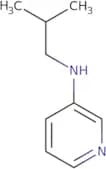
Discontinued productN-(2-Methylpropyl)pyridin-3-amine
CAS:Versatile small molecule scaffold
Formula:C9H14N2Purity:Min. 95%Molecular weight:150.22 g/molRef: 3D-ABA56010
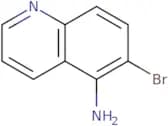
Discontinued product5-Amino-6-bromoquinoline
CAS:Versatile small molecule scaffold
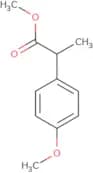
Formula:C9H7BrN2Purity:Min. 95%Molecular weight:223.07 g/molMethyl 2-(4-methoxyphenyl)propanoate
CAS:Versatile small molecule scaffold
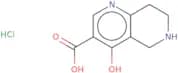
Formula:C11H14O3Purity:Min. 95%Molecular weight:194.23 g/mol4-Hydroxy-5,6,7,8-tetrahydro-1,6-naphthyridine-3-carboxylic acid hydrochloride
CAS:Versatile small molecule scaffold
Formula:C9H11ClN2O3Purity:Min. 95%Molecular weight:230.6 g/molRef: 3D-UND36914
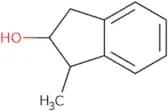
Discontinued product1-Methyl-2,3-dihydro-1H-inden-2-ol
CAS:Versatile small molecule scaffold
Formula:C10H12OPurity:Min. 95%Molecular weight:148.2 g/molRef: 3D-ACA82313
Discontinued product(1,2-Thiazol-5-yl)methanamine hydrochloride
CAS:Versatile small molecule scaffold
Formula:C4H7ClN2SPurity:Min. 95%Molecular weight:150.63 g/molRef: 3D-VID41014
Discontinued producttert-Butyl N-[1-(methoxymethyl)-3-oxocyclobutyl]carbamate
CAS:Versatile small molecule scaffold
Formula:C11H19NO4Purity:Min. 95%Molecular weight:229.3 g/molRef: 3D-UND37086
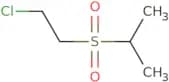
Discontinued product2-(2-Chloroethanesulfonyl)propane
CAS:Versatile small molecule scaffold
Formula:C5H11ClO2SPurity:Min. 95%Molecular weight:170.66 g/molRef: 3D-CXB10075
Discontinued product1-(tert-Butyldimethylsilyl)-1H,2H,3H-pyrrolo[2,3-b]pyridine
CAS:Versatile small molecule scaffoldFormula:C13H22N2SiPurity:Min. 95%Molecular weight:234.41 g/molRef: 3D-EFB21438
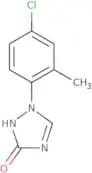
Discontinued product1-(4-Chloro-2-methylphenyl)-2,3-dihydro-1H-1,2,4-triazol-3-one
CAS:Versatile small molecule scaffoldFormula:C9H8ClN3OPurity:Min. 95%Molecular weight:209.63 g/molRef: 3D-SBA09763
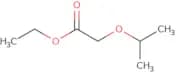
Discontinued productEthyl 2-(propan-2-yloxy)acetate
CAS:Ethyl 2-(propan-2-yloxy)acetate is a high concentration organometallic compound that is an active substance. The organometallic compound consists of a magnesium atom, an aliphatic hydrocarbon group, and a polyolefin. It has been shown to have a blood pressure lowering effect in rats. Ethyl 2-(propan-2-yloxy)acetate is an ester compound that acts as an intermediate in the production of other substances with therapeutic properties.
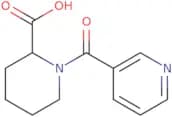
Formula:C7H14O3Purity:Min. 95%Molecular weight:146.18 g/mol1-(Pyridine-3-carbonyl)piperidine-2-carboxylic acid
CAS:Versatile small molecule scaffold
Formula:C12H14N2O3Purity:Min. 95%Molecular weight:234.25 g/molRef: 3D-SCA69159
Discontinued product3-(Oxiran-2-yl)oxane
CAS:Versatile small molecule scaffold
Formula:C7H12O2Purity:Min. 95%Molecular weight:128.2 g/molRef: 3D-IJC18473
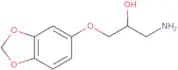
Discontinued product1-Amino-3-(1,3-dioxaindan-5-yloxy)propan-2-ol
CAS:Versatile small molecule scaffold
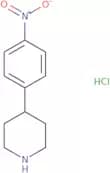
Formula:C10H13NO4Purity:Min. 95%Molecular weight:211.21 g/mol4-(4-Nitrophenyl)piperidine hydrochloride
CAS:Versatile small molecule scaffold
Formula:C11H15ClN2O2Purity:Min. 95%Molecular weight:242.7 g/molRef: 3D-IKB19493
Discontinued product(3,4-Dihydro-2H-chromen-6-ylmethyl)ae hydrochloride
CAS:Versatile small molecule scaffold
Formula:C10H14ClNOPurity:Min. 95%Molecular weight:199.68 g/mol4-(Piperazin-1-yl)isoquinoline dihydrochloride
CAS:Versatile small molecule scaffold
Formula:C13H17Cl2N3Purity:Min. 95%Molecular weight:286.2 g/molRef: 3D-ILB29289
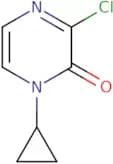
Discontinued product3-Chloro-1-cyclopropyl-1,2-dihydropyrazin-2-one
CAS:Versatile small molecule scaffold
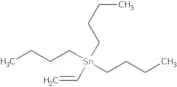
Formula:C7H7ClN2OPurity:Min. 95%Molecular weight:170.59 g/molVinyltributyltin
CAS:Controlled ProductVinyltributyltin is a dibutyltin oxide (DBTO) enantiomer that has been shown to inhibit the HIV-1 protease. Vinyltributyltin has also been shown to reduce inflammation in bowel disease, as well as to have synergistic effects with other drugs in the treatment of cancer and inflammatory bowel disease. The mechanism of action of vinyltributyltin is not yet known, but it may be related to its ability to inhibit the quinazolone-dependent formation of reactive oxygen species. Vinyltributyltin also inhibits the NS3 protease, which is an enzyme involved in hepatitis C virus replication.
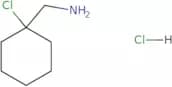
Formula:C14H30SnPurity:Min. 95%Color and Shape:Colorless Clear LiquidMolecular weight:317.1 g/mol(1-Chlorocyclohexyl)methanamine hydrochloride
CAS:Versatile small molecule scaffold
Formula:C7H15Cl2NPurity:Min. 95%Molecular weight:184.1 g/molRef: 3D-SBA00983
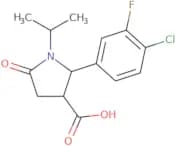
Discontinued product2-(4-Chloro-3-fluorophenyl)-5-oxo-1-(propan-2-yl)pyrrolidine-3-carboxylic acid
CAS:Versatile small molecule scaffoldFormula:C14H15ClFNO3Purity:Min. 95%Molecular weight:299.72 g/molRef: 3D-HHC67933
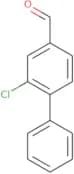
Discontinued product3-Chloro-4-phenylbenzaldehyde
CAS:Versatile small molecule scaffold
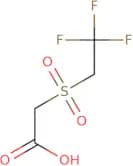
Formula:C13H9ClOPurity:Min. 95%Molecular weight:216.66 g/mol2-(2,2,2-Trifluoroethanesulfonyl)acetic acid
CAS:Trifloxacin is a broad-spectrum antibacterial drug that belongs to the class of formyloxy compounds and the cephalosporin family. It has been shown to be active against both Gram-positive and Gram-negative bacteria, with activity against strains resistant to penicillin, ampicillin, erythromycin, and chloramphenicol. Trifloxacin binds to the bacterial ribosome by displacement of a pyridyl group in the ribosomal RNA, inhibiting protein synthesis. This binding inhibits cell growth by preventing the production of proteins that are vital for cell division.
br>
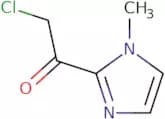
Trifloxacin has also been found to inhibit DNA gyrase and topoisomerase IV in vitro. Trifloxacin's mechanism of action is similar to that of other quinolones such as norfloxacin and ciprofloxacin.Formula:C4H5F3O4SPurity:Min. 95%Molecular weight:206.14 g/mol2-Chloro-1-(1-methyl-1H-imidazol-2-yl)ethan-1-one
CAS:Versatile small molecule scaffold
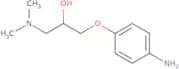
Formula:C6H7ClN2OPurity:Min. 95%Molecular weight:158.58 g/mol1-(4-Aminophenoxy)-3-(dimethylamino)propan-2-ol
CAS:Versatile small molecule scaffold
Formula:C11H18N2O2Purity:Min. 95%Molecular weight:210.27 g/molRef: 3D-KKA04560
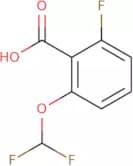
Discontinued product2-(Difluoromethoxy)-6-fluorobenzoic acid
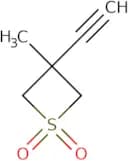
CAS:Versatile small molecule scaffoldFormula:C8H5F3O3Purity:Min. 95%Molecular weight:206.12 g/mol3-Ethynyl-3-methylthietane 1,1-dioxide
CAS:Versatile small molecule scaffold
Formula:C6H8O2SPurity:Min. 95%Molecular weight:144.2 g/molRef: 3D-KQD93720
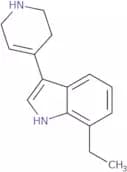
Discontinued product7-Ethyl-3-(1,2,3,6-tetrahydropyridin-4-yl)-1H-indole
CAS:Versatile small molecule scaffoldFormula:C15H18N2Purity:Min. 95%Molecular weight:226.32 g/molRef: 3D-KTA35413
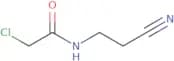
Discontinued product2-Chloro-N-(2-cyanoethyl)acetamide
CAS:2-Chloro-N-(2-cyanoethyl)acetamide is a potent and selective inhibitor of the protein kinase C (PKC). The PKC protein kinases are enzymes that regulate the activity of cells in response to stimuli. 2-Chloro-N-(2-cyanoethyl)acetamide has been shown to be effective against some viruses and tumor cells, but not against bacteria. It inhibits the growth of some cancer cells and has been shown to inhibit the replication of animal viruses such as influenza virus. This drug is also used for treatment of abdominal infections, hepatitis, pancreatitis, mesenteric adenitis, and animals with cancer. 2-Chloro-N-(2-cyanoethyl)acetamide can act as a noncompetitive inhibitor by binding to a site on the enzyme that is different from ATP binding site.
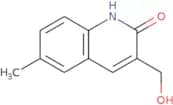
Formula:C5H7ClN2OPurity:Min. 95%Molecular weight:146.57 g/mol3-(Hydroxymethyl)-6-methyl-2(1H)-quinolinone
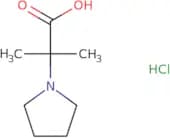
CAS:Versatile small molecule scaffoldFormula:C11H11NO2Purity:Min. 95%Molecular weight:189.21 g/mol2-Methyl-2-(pyrrolidin-1-yl)propanoic acid hydrochloride
CAS:Versatile small molecule scaffold
Formula:C8H16ClNO2Purity:Min. 95%Molecular weight:193.67 g/mol9-Cyclopropyl-9-azabicyclo[3.3.1]nonan-3-amine
CAS:Versatile small molecule scaffoldFormula:C11H20N2Purity:Min. 95%Molecular weight:180.29 g/molRef: 3D-KYB65907
Discontinued product1-Ethyl-1,3-dihydro-2,1,3-benzothiadiazole 2,2-dioxide
CAS:Versatile small molecule scaffold
Formula:C8H10N2O2SPurity:Min. 95%Molecular weight:198.24 g/molRef: 3D-KYC67060
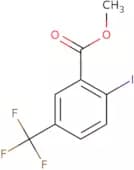
Discontinued productMethyl 2-iodo-5-(trifluoromethyl)benzoate
CAS:Versatile small molecule scaffold
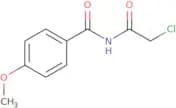
Formula:C9H6F3IO2Purity:Min. 95%Molecular weight:330.04 g/molN-(2-Chloroacetyl)-4-methoxybenzamide
CAS:Versatile small molecule scaffold
Formula:C10H10ClNO3Purity:Min. 95%Molecular weight:227.64 g/mol5-[3-(Trifluoromethoxy)phenyl]thiophene-2-carboxylic acid
CAS:Versatile small molecule scaffoldFormula:C12H7F3O3SPurity:Min. 95%Molecular weight:288.24 g/molRef: 3D-LAC74775
Discontinued product2-Bromo-3,3,3-trifluoro-1-propene
CAS:Controlled Product2-Bromo-3,3,3-trifluoro-1-propene is a chemical compound that has been synthesized in an asymmetric reaction. The reactant is bromopropane and the product is 2,2,2-trifluoropropene. The methylene group on the propene molecule is activated by the nucleophilic attack of a fluoride ion from hydrogen fluoride to form a cavity with a highly strained bond. The kinetic study of this reaction revealed that the activation energy for the reaction is 42 kJ/mol. Palladium-catalyzed coupling reactions are catalyzed by palladium and require nonpolar solvents such as toluene or dichloromethane. This type of reaction has been shown to be exothermic with an isolated yield of 1%.
Formula:C3H2BrF3Purity:Min. 95%Color and Shape:Colorless PowderMolecular weight:174.95 g/mol3-Hydroxy-5-methylpyridine
CAS:3-Hydroxy-5-methylpyridine (3HMP) is a chemical substance that has been classified as an amine. It is a product of the metabolism of purines, which are nitrogenous bases found in DNA and RNA. 3HMP is produced by aerogenic bacteria (such as Enterobacter), and can be used to estimate the number of these bacteria present in water samples. 3HMP has been shown to have antiviral properties against influenza virus, and can be used as a biomarker for the presence of other viruses in animals. 3HMP also has mineralization properties, which have been studied extensively, particularly with regards to pancreatic disease.
Formula:C6H7NOPurity:Min. 95%Color and Shape:PowderMolecular weight:109.13 g/molRef: 3D-FH16174
Discontinued product8-Bromo-2-methylimidazo[1,2-a]pyridine
CAS:Versatile small molecule scaffold
Formula:C8H7N2BrPurity:Min. 95%Molecular weight:211.05 g/mol1-Hydroxycyclopentane-1-carbonitrile
CAS:1-Hydroxycyclopentane-1-carbonitrile is a monomer that is hydrolyzed to form benzoin and cyanohydrins. It can be used in the production of scifinder as a monomer or dimerizer.
Formula:C6H9NOPurity:Min. 95%Molecular weight:111.14 g/mol4,5-Dihydro-1H-imidazol-2-amine hydrochloride
CAS:Please enquire for more information about 4,5-Dihydro-1H-imidazol-2-amine hydrochloride including the price, delivery time and more detailed product information at the technical inquiry form on this page
Formula:C3H7N3•HClPurity:Min. 95%Molecular weight:121.57 g/molRef: 3D-FD183639
Discontinued product4-Chloro-2-hydroxy-6-methylphenylboronic acid
CAS:Versatile small molecule scaffoldFormula:C7H8BClO3Purity:Min. 95%Molecular weight:186.4 g/moltert-Butyl (2,2-difluoro-3-hydroxypropyl)carbamate
CAS:Versatile small molecule scaffoldFormula:C10H13NO4Purity:Min. 95%Molecular weight:211.21 g/mol4,5-Dihydroxy-2,3-Pentanedione
CAS:4,5-Dihydroxy-2,3-pentanedione is a carbonyl compound that is the product of the oxidation of ascorbic acid. It is used in wastewater treatment and has antimicrobial properties against infectious diseases. This compound has been shown to inhibit protein synthesis by binding to the ribosome and preventing the formation of peptide bonds between amino acids. 4,5-Dihydroxy-2,3-pentanedione has also been shown to bind to plasma proteins, which may be due to its acyl chain structure. 4,5-Dihydroxy-2,3-pentanedione can be synthesized in a catalytic mechanism that involves dehydroascorbic acid and molecular oxygen.
Formula:C5H8O4Purity:Min. 95%Color and Shape:PowderMolecular weight:132.11 g/molRef: 3D-FD180770
Discontinued productPiperyline
CAS:Piperyline is an alkanoic acid that has shown to be effective against skin cancer. It also has antimicrobial properties, which may be due to its ability to bind metal ions and form polymeric compounds. Piperyline inhibits microbial growth by inhibiting the synthesis of proteins and nucleic acids. The antimicrobial activity is related to its cationic polymerization with hydroxyl groups, which forms a structure that can inhibit microbial enzymes and disrupt microbial cell membranes. This compound also interacts with the skin's natural lipids, making it difficult for microorganisms to attach and grow on the skin. Piperyline is synthesized in organic chemistry laboratories as an amide precursor of other pharmaceuticals such as penicillin.
Formula:C16H17NO3Purity:Min. 95%Molecular weight:271.31 g/mol


![2-[(3-Nitrophenyl)formamido]acetic acid](/_next/image/?url=https%3A%2Fstatic.cymitquimica.com%2Fproducts%2F3D%2Fthumb-webp%2FAAA61710.webp&w=3840&q=75)

![2',3'-Dihydro-1'H-spiro[cyclopropane-1,4'-quinoline]](/_next/image/?url=https%3A%2Fstatic.cymitquimica.com%2Fproducts%2F3D%2Fthumb-webp%2FECC59829.webp&w=3840&q=75)

![Methyl[2-(prop-2-yn-1-yloxy)ethyl]amine hydrochloride](/_next/image/?url=https%3A%2Fstatic.cymitquimica.com%2Fproducts%2F3D%2Fthumb-webp%2FUFC04155.webp&w=3840&q=75)
![3-Chloro-N-[2-(4-methyl-1,3-thiazol-5-yl)-2-oxoethyl]propanamide](/_next/image/?url=https%3A%2Fstatic.cymitquimica.com%2Fproducts%2F3D%2Fthumb-webp%2FCHC38015.webp&w=3840&q=75)
![9,9-Difluoro-1,4-dioxaspiro[5.5]undecan-5-one](/_next/image/?url=https%3A%2Fstatic.cymitquimica.com%2Fproducts%2F3D%2Fthumb-webp%2FUGD71258.webp&w=3840&q=75)
amine](/_next/image/?url=https%3A%2Fstatic.cymitquimica.com%2Fproducts%2F3D%2Fthumb-webp%2FAAC06291.webp&w=3840&q=75)
![[1-(Propan-2-yl)-1H-1,2,4-triazol-5-yl]methanamine](/_next/image/?url=https%3A%2Fstatic.cymitquimica.com%2Fproducts%2F3D%2Fthumb-webp%2FUIC24186.webp&w=3840&q=75)
![4-(5-{[(3-Phenyl-1,2,4-oxadiazol-5-yl)methyl]sulfanyl}-1,3,4-oxadiazol-2-yl)pyridine](/_next/image/?url=https%3A%2Fstatic.cymitquimica.com%2Fproducts%2F3D%2Fthumb-webp%2FULB93670.webp&w=3840&q=75)
![tert-Butyl N-[1-(methoxymethyl)-3-oxocyclobutyl]carbamate](/_next/image/?url=https%3A%2Fstatic.cymitquimica.com%2Fproducts%2F3D%2Fthumb-webp%2FUND37086.webp&w=3840&q=75)
![1-(tert-Butyldimethylsilyl)-1H,2H,3H-pyrrolo[2,3-b]pyridine](/_next/image/?url=https%3A%2Fstatic.cymitquimica.com%2Fproducts%2F3D%2Fthumb-webp%2FEFB21438.webp&w=3840&q=75)


![9-Cyclopropyl-9-azabicyclo[3.3.1]nonan-3-amine](/_next/image/?url=https%3A%2Fstatic.cymitquimica.com%2Fproducts%2F3D%2Fthumb-webp%2FKYB65907.webp&w=3840&q=75)

![5-[3-(Trifluoromethoxy)phenyl]thiophene-2-carboxylic acid](/_next/image/?url=https%3A%2Fstatic.cymitquimica.com%2Fproducts%2F3D%2Fthumb-webp%2FLAC74775.webp&w=3840&q=75)


![8-Bromo-2-methylimidazo[1,2-a]pyridine](/_next/image/?url=https%3A%2Fstatic.cymitquimica.com%2Fproducts%2F3D%2Fthumb-webp%2FUXB37475.webp&w=3840&q=75)





