Building Blocks
Subcategories of "Building Blocks"
- Boronic Acids & Boronic Acid Derivatives(5,778 products)
- Chiral Building Blocks(1,243 products)
- Hydrocarbon Building Blocks(6,098 products)
- Organic Building Blocks(61,036 products)
Found 205240 products of "Building Blocks"
4-{3-Methyl-1H-pyrazolo[3,4-b]pyridin-1-yl}benzoic acid
CAS:Versatile small molecule scaffoldFormula:C14H11N3O2Purity:Min. 95%Molecular weight:253.26 g/molEthyl 2-[(4-amino-5-cyanopyrimidin-2-yl)sulfanyl]acetate
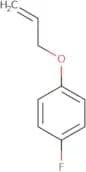
CAS:Versatile small molecule scaffoldFormula:C9H10N4O2SPurity:Min. 95%Molecular weight:238.27 g/mol1-Fluoro-4-(prop-2-en-1-yloxy)benzene
CAS:Versatile small molecule scaffold
Formula:C9H9FOPurity:Min. 95%Molecular weight:152.16 g/molRef: 3D-NAA99072
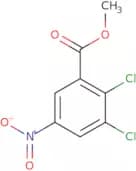
Discontinued productMethyl 2,3-dichloro-5-nitrobenzoate
CAS:Versatile small molecule scaffold
Formula:C8H5Cl2NO4Purity:Min. 95%Molecular weight:250.03 g/molRef: 3D-NCA10554
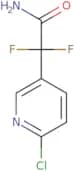
Discontinued product2-(6-Chloropyridin-3-yl)-2,2-difluoroacetamide
CAS:Versatile small molecule scaffoldFormula:C7H5ClF2N2OPurity:Min. 95%Molecular weight:206.58 g/molRef: 3D-NKD14959
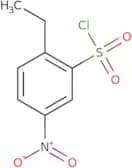
Discontinued product2-Ethyl-5-nitrobenzene-1-sulfonyl chloride
CAS:Versatile small molecule scaffold
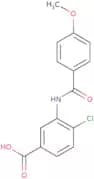
Formula:C8H8ClNO4SPurity:Min. 95%Molecular weight:249.67 g/mol4-Chloro-3-(4-methoxybenzamido)benzoic acid
CAS:Versatile small molecule scaffold
Formula:C15H12ClNO4Purity:Min. 95%Molecular weight:305.71 g/molRef: 3D-FRB50804
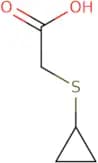
Discontinued product2-(Cyclopropylsulfanyl)acetic acid
CAS:Versatile small molecule scaffold
Formula:C5H8O2SPurity:Min. 95%Molecular weight:132.18 g/molN'-(3-Hydroxyphenyl)-N,N-dimethylsulfamide
CAS:Versatile small molecule scaffold
Formula:C8H12N2O3SPurity:Min. 95%Molecular weight:216.26 g/molRef: 3D-PWA80729
Discontinued producttert-Butyl N-{4-[1-(4-bromophenoxy)ethyl]phenyl}carbamate
CAS:Versatile small molecule scaffold
Formula:C19H22BrNO3Purity:Min. 95%Molecular weight:392.3 g/molRef: 3D-PZC05838
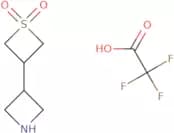
Discontinued product3-(1,1-dioxido-3-thietanyl)-azetidine 2,2,2-trifluoroacetate
CAS:Versatile small molecule scaffold
Formula:C8H12F3NO4SPurity:Min. 95%Molecular weight:275.25 g/molRef: 3D-PZC06126
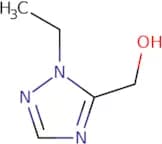
Discontinued product(1-Ethyl-1H-1,2,4-triazol-5-yl)methanol
CAS:Versatile small molecule scaffold
Formula:C5H9N3OPurity:Min. 95%Molecular weight:127.14 g/mol6-(4-{[(9H-Fluoren-9-yl)methoxy]carbonyl}piperazin-1-yl)pyridazine-3-carboxylic acid
CAS:Versatile small molecule scaffold
Formula:C24H22N4O4Purity:Min. 95%Molecular weight:430.5 g/molRef: 3D-QID29084
Discontinued product3-Amino-4-methyl-N-[3-(trifluoromethyl)phenyl]benzene-1-sulfonamide
CAS:Versatile small molecule scaffoldFormula:C14H13F3N2O2SPurity:Min. 95%Molecular weight:330.33 g/molRef: 3D-QXA20922
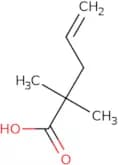
Discontinued product2,2-Dimethyl-4-pentenoic Acid
CAS:2,2-Dimethyl-4-pentenoic acid is a decarboxylating agent that converts the carboxylic acid group to an aldehyde. It is commonly used as a reducing agent in organic synthesis, especially for the conversion of esters and nitriles to alcohols and amines respectively. The synthesis of 2,2-dimethyl-4-pentenoic acid is achieved by reacting piperidine with propylene oxide. This reaction proceeds via a six-membered ring intermediate that decomposes to form the final product. The reaction can be catalyzed with peroxide or hydrogen peroxide, which leads to a high yield. 2,2-Dimethyl-4-pentenoic acid has been shown to be effective against hyperproteinemia and lipogenous disorders such as steatosis and cholestasis.
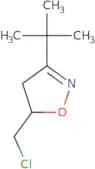
Formula:C7H12O2Purity:Min. 95%Molecular weight:128.17 g/mol3-tert-Butyl-5-(chloromethyl)-4,5-dihydro-1,2-oxazole
CAS:Versatile small molecule scaffoldFormula:C8H14ClNOPurity:Min. 95%Molecular weight:175.65 g/molRef: 3D-RDC44061
Discontinued product2-(Sulfanylmethyl)-4H-pyrido[1,2-a]pyrimidin-4-one
CAS:Versatile small molecule scaffold
Formula:C9H8N2OSPurity:Min. 95%Molecular weight:192.24 g/molRef: 3D-RQB69641
Discontinued producttert-Butyl N-{4-ethynylbicyclo[2.2.2]octan-1-yl}carbamate
CAS:Versatile small molecule scaffoldFormula:C15H23NO2Purity:Min. 95%Molecular weight:249.35 g/molRef: 3D-SGC55140
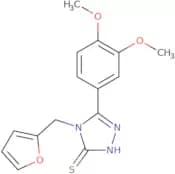
Discontinued product5-(3,4-Dimethoxyphenyl)-4-(furan-2-ylmethyl)-4H-1,2,4-triazole-3-thiol
CAS:Versatile small molecule scaffold
Formula:C15H15N3O3SPurity:Min. 95%Molecular weight:317.4 g/molRef: 3D-SQA23740
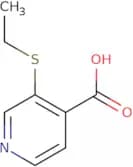
Discontinued product3-(Ethylsulfanyl)pyridine-4-carboxylic acid
CAS:Versatile small molecule scaffoldFormula:C8H9NO2SPurity:Min. 95%Molecular weight:183.23 g/molRef: 3D-SXB02194
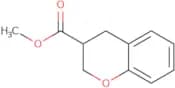
Discontinued productMethyl chroman-3-carboxylate
CAS:Versatile small molecule scaffold
Formula:C11H12O3Purity:Min. 95%Molecular weight:192.21 g/mol8-Chloro-3-methyl-1H-pyrrolo[3,2-c]quinoline
CAS:Versatile small molecule scaffoldFormula:C12H9ClN2Purity:Min. 95%Molecular weight:216.66 g/molRef: 3D-TCA49997
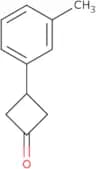
Discontinued product3-(3-Methylphenyl)cyclobutan-1-one
CAS:Versatile small molecule scaffold
Formula:C11H12OPurity:Min. 95%Molecular weight:160.21 g/molRef: 3D-TJA86756
Discontinued product4-(5-{[(3-Phenyl-1,2,4-oxadiazol-5-yl)methyl]sulfanyl}-1,3,4-oxadiazol-2-yl)pyridine
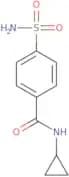
CAS:Versatile small molecule scaffoldFormula:C16H11N5O2SPurity:Min. 95%Molecular weight:337.4 g/molN-Cyclopropyl-4-sulfamoylbenzamide
CAS:N-Cyclopropyl-4-sulfamoylbenzamide is a sulfonamide antibiotic that inhibits the growth of bacteria by blocking the synthesis of folic acid. It has been shown to be effective against Escherichia coli, Salmonella enterica, and Staphylococcus aureus. N-Cyclopropyl-4-sulfamoylbenzamide is metabolized in the liver by cytochrome P450 enzymes and excreted in the urine. The rate of metabolism is determined by mutant enzyme activity. This drug has been shown to inhibit detoxification enzymes such as Triticum aestivum desmethylase and acetolactate synthase, which may be responsible for its toxic effects on plants.Formula:C10H12N2O3SPurity:Min. 95%Molecular weight:240.28 g/molRef: 3D-URB13516
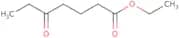
Discontinued productEthyl 5-oxoheptanoate
CAS:Ethyl 5-oxoheptanoate is a clear, colorless liquid that can be synthesized by reacting benzene with acetone. The synthesis of ethyl 5-oxoheptanoate is an example of a Friedel-Crafts reaction. This chemical is soluble in organic solvents such as acetone and cyclohexane and has low toxicity. It can be used as a reagent for the preparation of esters from alcohols, phenols, or carboxylic acids. Ethyl 5-oxoheptanoate can also be used to prepare resorcinol, which is a precursor to polymers and dyes, by hydrogenation of the molecule. Preparative methods are often used to produce this product because it has limited solubility in water.
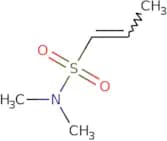
Formula:C9H16O3Purity:Min. 95%Molecular weight:172.22 g/molN,N-Dimethylprop-1-ene-1-sulfonamide
CAS:Versatile small molecule scaffold
Formula:C5H11NO2SPurity:Min. 95%Molecular weight:149.2 g/molRef: 3D-VCA78500
Discontinued product5-(3H-Pyrazol-3-ylidene)-1,2,4-triazolidine-3-thione
CAS:Versatile small molecule scaffold
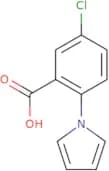
Formula:C5H5N5SPurity:Min. 95%Molecular weight:167.19 g/mol5-Chloro-2-(1H-pyrrol-1-yl)benzoic acid
CAS:Versatile small molecule scaffoldFormula:C11H8ClNO2Purity:Min. 95%Color and Shape:PowderMolecular weight:221.64 g/molRef: 3D-FCA54033
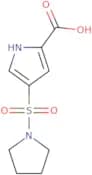
Discontinued product4-(Pyrrolidine-1-sulfonyl)-1H-pyrrole-2-carboxylic acid
CAS:Versatile small molecule scaffoldFormula:C9H12N2O4SPurity:Min. 95%Molecular weight:244.27 g/molRef: 3D-VJB69308
Discontinued product2-[(4-Aminophenyl)sulfanyl]-5-chlorobenzonitrile
CAS:Versatile small molecule scaffold
Formula:C13H9ClN2SPurity:Min. 95%Molecular weight:260.74 g/molRef: 3D-VJC36571
Discontinued product1-[3-(1-Aminoethyl)phenyl]imidazolidin-2-one
CAS:Versatile small molecule scaffold
Formula:C11H15N3OPurity:Min. 95%Molecular weight:205.26 g/molRef: 3D-VJC67923
Discontinued product2,2,2-Trifluoro-1-[1-(4-methylcyclohexyl)-1H-pyrazol-4-yl]ethan-1-one
CAS:Versatile small molecule scaffoldFormula:C12H15F3N2OPurity:Min. 95%Molecular weight:260.26 g/molRef: 3D-VJC71138
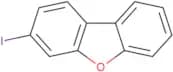
Discontinued product3-Iododibenzofuran
CAS:3-Iododibenzofuran is a fluorescent compound that has been used as a probe for the study of neutral endopeptidase activity. The compound is characterized by a high degree of thermal stability and an inhibitory potency at pH 7.0 that is approximately 3 orders of magnitude greater than that of the active site inhibitor, anthracene. 3-Iododibenzofuran can be synthesized using chemoenzymatic methods, with efficiencies and profiles that are similar to those obtained in the conventional method. This probe can also be used to investigate the functional role of proteins in living cells or tissues.
3-Iodobenzofuran has been shown to have pressor effects in rats and can cause tetrazole (a type of explosive) to detonate when heated, which makes it unsuitable for use in devices such as explosives or pyrotechnics.Formula:C12H7IOPurity:Min. 95%Molecular weight:294.09 g/molRef: 3D-FAA89629
Discontinued productrac-(3aR,6aS)-Hexahydropyrrolo[3,4-c]pyrrol-1(2H)-one hydrochloride
CAS:Versatile small molecule scaffoldFormula:C6H11ClN2OPurity:Min. 95%Molecular weight:162.62 g/mol4-Chloro-2-hydroxy-6-methylphenylboronic acid
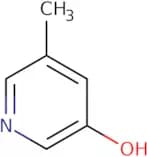
CAS:Versatile small molecule scaffoldFormula:C7H8BClO3Purity:Min. 95%Molecular weight:186.4 g/mol3-Hydroxy-5-methylpyridine
CAS:3-Hydroxy-5-methylpyridine (3HMP) is a chemical substance that has been classified as an amine. It is a product of the metabolism of purines, which are nitrogenous bases found in DNA and RNA. 3HMP is produced by aerogenic bacteria (such as Enterobacter), and can be used to estimate the number of these bacteria present in water samples. 3HMP has been shown to have antiviral properties against influenza virus, and can be used as a biomarker for the presence of other viruses in animals. 3HMP also has mineralization properties, which have been studied extensively, particularly with regards to pancreatic disease.
Formula:C6H7NOPurity:Min. 95%Color and Shape:PowderMolecular weight:109.13 g/molRef: 3D-FH16174
Discontinued product2-Bromo-3,3,3-trifluoro-1-propene
CAS:Controlled Product2-Bromo-3,3,3-trifluoro-1-propene is a chemical compound that has been synthesized in an asymmetric reaction. The reactant is bromopropane and the product is 2,2,2-trifluoropropene. The methylene group on the propene molecule is activated by the nucleophilic attack of a fluoride ion from hydrogen fluoride to form a cavity with a highly strained bond. The kinetic study of this reaction revealed that the activation energy for the reaction is 42 kJ/mol. Palladium-catalyzed coupling reactions are catalyzed by palladium and require nonpolar solvents such as toluene or dichloromethane. This type of reaction has been shown to be exothermic with an isolated yield of 1%.
Formula:C3H2BrF3Purity:Min. 95%Color and Shape:Colorless PowderMolecular weight:174.95 g/mol4,5-Dihydroxy-2,3-Pentanedione
CAS:4,5-Dihydroxy-2,3-pentanedione is a carbonyl compound that is the product of the oxidation of ascorbic acid. It is used in wastewater treatment and has antimicrobial properties against infectious diseases. This compound has been shown to inhibit protein synthesis by binding to the ribosome and preventing the formation of peptide bonds between amino acids. 4,5-Dihydroxy-2,3-pentanedione has also been shown to bind to plasma proteins, which may be due to its acyl chain structure. 4,5-Dihydroxy-2,3-pentanedione can be synthesized in a catalytic mechanism that involves dehydroascorbic acid and molecular oxygen.
Formula:C5H8O4Purity:Min. 95%Color and Shape:PowderMolecular weight:132.11 g/molRef: 3D-FD180770
Discontinued productPiperyline
CAS:Piperyline is an alkanoic acid that has shown to be effective against skin cancer. It also has antimicrobial properties, which may be due to its ability to bind metal ions and form polymeric compounds. Piperyline inhibits microbial growth by inhibiting the synthesis of proteins and nucleic acids. The antimicrobial activity is related to its cationic polymerization with hydroxyl groups, which forms a structure that can inhibit microbial enzymes and disrupt microbial cell membranes. This compound also interacts with the skin's natural lipids, making it difficult for microorganisms to attach and grow on the skin. Piperyline is synthesized in organic chemistry laboratories as an amide precursor of other pharmaceuticals such as penicillin.
Formula:C16H17NO3Purity:Min. 95%Molecular weight:271.31 g/mol
![4-{3-Methyl-1H-pyrazolo[3,4-b]pyridin-1-yl}benzoic acid](/_next/image/?url=https%3A%2Fstatic.cymitquimica.com%2Fproducts%2F3D%2Fthumb-webp%2FMMB60004.webp&w=3840&q=75)

![Ethyl 2-[(4-amino-5-cyanopyrimidin-2-yl)sulfanyl]acetate](/_next/image/?url=https%3A%2Fstatic.cymitquimica.com%2Fproducts%2F3D%2Fthumb-webp%2FMMB60132.webp&w=3840&q=75)

![tert-Butyl N-{4-[1-(4-bromophenoxy)ethyl]phenyl}carbamate](/_next/image/?url=https%3A%2Fstatic.cymitquimica.com%2Fproducts%2F3D%2Fthumb-webp%2FPZC05838.webp&w=3840&q=75)
![6-(4-{[(9H-Fluoren-9-yl)methoxy]carbonyl}piperazin-1-yl)pyridazine-3-carboxylic acid](/_next/image/?url=https%3A%2Fstatic.cymitquimica.com%2Fproducts%2F3D%2Fthumb-webp%2FQID29084.webp&w=3840&q=75)
![3-Amino-4-methyl-N-[3-(trifluoromethyl)phenyl]benzene-1-sulfonamide](/_next/image/?url=https%3A%2Fstatic.cymitquimica.com%2Fproducts%2F3D%2Fthumb-webp%2FQXA20922.webp&w=3840&q=75)
![2-(Sulfanylmethyl)-4H-pyrido[1,2-a]pyrimidin-4-one](/_next/image/?url=https%3A%2Fstatic.cymitquimica.com%2Fproducts%2F3D%2Fthumb-webp%2FRQB69641.webp&w=3840&q=75)
![tert-Butyl N-{4-ethynylbicyclo[2.2.2]octan-1-yl}carbamate](/_next/image/?url=https%3A%2Fstatic.cymitquimica.com%2Fproducts%2F3D%2Fthumb-webp%2FSGC55140.webp&w=3840&q=75)
![8-Chloro-3-methyl-1H-pyrrolo[3,2-c]quinoline](/_next/image/?url=https%3A%2Fstatic.cymitquimica.com%2Fproducts%2F3D%2Fthumb-webp%2FTCA49997.webp&w=3840&q=75)
![4-(5-{[(3-Phenyl-1,2,4-oxadiazol-5-yl)methyl]sulfanyl}-1,3,4-oxadiazol-2-yl)pyridine](/_next/image/?url=https%3A%2Fstatic.cymitquimica.com%2Fproducts%2F3D%2Fthumb-webp%2FULB93670.webp&w=3840&q=75)

![2-[(4-Aminophenyl)sulfanyl]-5-chlorobenzonitrile](/_next/image/?url=https%3A%2Fstatic.cymitquimica.com%2Fproducts%2F3D%2Fthumb-webp%2FVJC36571.webp&w=3840&q=75)
![1-[3-(1-Aminoethyl)phenyl]imidazolidin-2-one](/_next/image/?url=https%3A%2Fstatic.cymitquimica.com%2Fproducts%2F3D%2Fthumb-webp%2FVJC67923.webp&w=3840&q=75)
![2,2,2-Trifluoro-1-[1-(4-methylcyclohexyl)-1H-pyrazol-4-yl]ethan-1-one](/_next/image/?url=https%3A%2Fstatic.cymitquimica.com%2Fproducts%2F3D%2Fthumb-webp%2FVJC71138.webp&w=3840&q=75)
![rac-(3aR,6aS)-Hexahydropyrrolo[3,4-c]pyrrol-1(2H)-one hydrochloride](/_next/image/?url=https%3A%2Fstatic.cymitquimica.com%2Fproducts%2F3D%2Fthumb-webp%2FVXC58134.webp&w=3840&q=75)