


Building Blocks
Subcategories of "Building Blocks"
- Boronic Acids & Boronic Acid Derivatives(5,778 products)
- Chiral Building Blocks(1,243 products)
- Hydrocarbon Building Blocks(6,099 products)
- Organic Building Blocks(61,038 products)
Found 205376 products of "Building Blocks"
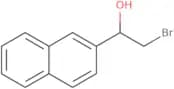
2-Bromo-1-(naphthalen-2-yl)ethan-1-ol
CAS:Versatile small molecule scaffold
Formula:C12H11BrOPurity:Min. 95%Molecular weight:251.12 g/molRef: 3D-RDA57104
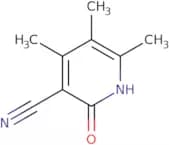
Discontinued product2-Hydroxy-4,5,6-trimethylnicotinonitrile
CAS:Versatile small molecule scaffoldFormula:C9H10N2OPurity:Min. 95%Molecular weight:162.19 g/molRef: 3D-RDA59159
Discontinued product1-[4-(2,4-Dimethylbenzoyl)piperidin-1-yl]ethan-1-one
CAS:Versatile small molecule scaffold
Formula:C16H21NO2Purity:Min. 95%Molecular weight:259.34 g/molRef: 3D-SAC64246
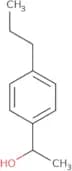
Discontinued product(1R)-1-(4-Propylphenyl)ethan-1-ol
CAS:Versatile small molecule scaffold
Formula:C11H16OPurity:Min. 95%Molecular weight:164.24 g/molRef: 3D-FEA36441
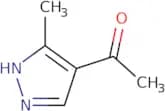
Discontinued product1-(5-Methyl-1H-Pyrazol-4-Yl)Ethanone
CAS:Phenylhydrazine is a white crystalline solid with a molecular weight of 150.25, and the molecular formula C6H5NHN. It is soluble in water, alcohol, ether and chloroform. Phenylhydrazine can react with an acid chloride to form a hydrazone; this reaction is used in the synthesis of some pharmaceuticals. The most common use of phenylhydrazine is as a precursor to various pharmaceuticals, such as antipyretics and anti-inflammatory agents. Phenylhydrazine reacts with zinc chloride to form 1-(5-methyl-1H-pyrazol-4-yl)ethanone.
Formula:C6H8N2OPurity:Min. 95%Molecular weight:124.14 g/molRef: 3D-FEA22404
Discontinued product[2-(Methoxymethyl)-1,3-thiazol-5-yl]methanol
CAS:Versatile small molecule scaffold
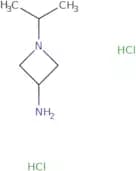
Formula:C6H9NO2SPurity:Min. 95%Molecular weight:159.21 g/mol1-(1-Methylethyl)-3-azetidinamine, hydrochloride (1:2)
CAS:1-(1-Methylethyl)-3-azetidinamine, hydrochloride (1:2) is a synthetic compound that has been shown to be a potent and selective γ-secretase modulator. It is a triol with an alcohol group at C-3 and two hydroxyl groups at C-4 and C-5. This compound has been shown to inhibit the production of cycloartenol from soybean oil in vitro, which may be due to its inhibition of γ-secretase activity. 1-(1-Methylethyl)-3-azetidinamine, hydrochloride (1:2) also has the potential for use as a target compound for research purposes.Formula:C6H16Cl2N2Purity:Min. 95%Molecular weight:187.11 g/molRef: 3D-SEA54656
Discontinued product6-(Bromomethyl)-3-phenyl-5H,6H-[1,2,4]triazolo[3,4-b][1,3]thiazole
CAS:Versatile small molecule scaffold
Formula:C11H10BrN3SPurity:Min. 95%Molecular weight:296.19 g/molRef: 3D-SEB00446
Discontinued product5-(3H-Pyrazol-3-ylidene)-1,2,4-triazolidine-3-thione
CAS:Versatile small molecule scaffold
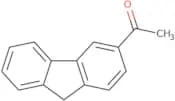
Formula:C5H5N5SPurity:Min. 95%Molecular weight:167.19 g/mol1-(9H-Fluoren-3-yl)ethan-1-one
CAS:Versatile small molecule scaffold
Formula:C15H12OPurity:Min. 95%Molecular weight:208.25 g/molRef: 3D-FCA71848
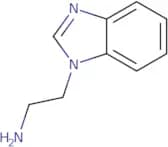
Discontinued product2-(1H-1,3-Benzodiazol-1-yl)ethan-1-amine
CAS:Versatile small molecule scaffold
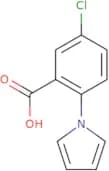
Formula:C9H11N3Purity:Min. 95%Molecular weight:161.2 g/mol5-Chloro-2-(1H-pyrrol-1-yl)benzoic acid
CAS:Versatile small molecule scaffoldFormula:C11H8ClNO2Purity:Min. 95%Color and Shape:PowderMolecular weight:221.64 g/molRef: 3D-FCA54033
Discontinued product2-Methyl-1-phenylbut-3-yn-2-ol
CAS:Versatile small molecule scaffold
Formula:C11H12OPurity:Min. 95%Molecular weight:160.21 g/molRef: 3D-FCA37374
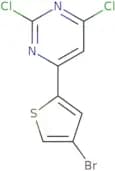
Discontinued product4-(4-Bromothiophen-2-yl)-2,6-dichloropyrimidine
CAS:Versatile small molecule scaffold
Formula:C8H3BrCl2N2SPurity:Min. 95%Molecular weight:310 g/molRef: 3D-SIC83929
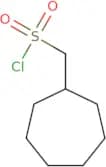
Discontinued productCycloheptylmethanesulfonyl chloride
CAS:Cycloheptylmethanesulfonyl chloride is a heterocyclic compound that has been shown to cause neurotoxicity, or nerve damage. It inhibits the activity of two enzymes, acetylcholinesterase and butyrylcholinesterase, which are responsible for regulating the production of the neurotransmitter acetylcholine in the brain. Cycloheptylmethanesulfonyl chloride also inhibits other enzymes involved in the synthesis of proteins in neurons, leading to neuronal damage. Cycloheptylmethanesulfonyl chloride has been shown to be effective against neurological disorders such as neurodegenerative diseases and nerve damage.Formula:C8H15ClO2SPurity:Min. 95%Molecular weight:210.72 g/molRef: 3D-SJA45987
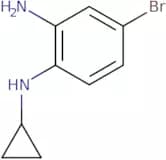
Discontinued product4-Bromo-1-N-cyclopropylbenzene-1,2-diamine
CAS:Versatile small molecule scaffoldFormula:C9H11BrN2Purity:Min. 95%Molecular weight:227.1 g/molRef: 3D-STB29141
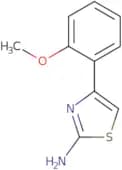
Discontinued product4-(2-Methoxy-phenyl)-thiazol-2-ylamine
CAS:4-(2-Methoxy-phenyl)-thiazol-2-ylamine is a flavonoid that is synthesized by the condensation of luteolin with salicylaldehyde. It has been shown to have antibacterial activity against strains of P. aeruginosa and S. aureus, with MIC values of 12.5 µg/mL and 25 µg/mL, respectively. The MIC value for 4-(2-Methoxy-phenyl)-thiazol-2-ylamine against E. coli was found to be 100 µg/mL. 4-(2-Methoxy-phenyl)-thiazol-2-ylamine has been shown to inhibit the growth of organisms such as Escherichia coli, Streptococcus pneumoniae and Staphylococcus aureus in vitro. This compound is not active against Gram positive bacteria such as Bacillus subtilis or GramFormula:C10H10N2OSPurity:Min. 95%Molecular weight:206.27 g/molRef: 3D-TDA20995
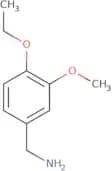
Discontinued product(4-Ethoxy-3-methoxybenzyl)amine
CAS:Research has shown that (4-Ethoxy-3-methoxybenzyl)amine (EMBA) is a potent inhibitor of bacterial growth. The alkylation of EMBA with methylamine and benzene leads to the formation of aureus, which is an antibiotic that can be used to treat staphylococcus infections. In addition, EMBA can also be methylated with hydroxylamine to form benzylamine, a compound that inhibits the synthesis of the cell wall in bacteria. These properties make EMBA an effective antimicrobial agent.
Formula:C10H15NO2Purity:Min. 95%Molecular weight:181.23 g/molRef: 3D-TDA48914
Discontinued product4-Chloro-N-[2-(diethylamino)ethyl]aniline
CAS:Versatile small molecule scaffoldFormula:C12H19ClN2Purity:Min. 95%Molecular weight:226.74 g/molRef: 3D-FAA42735
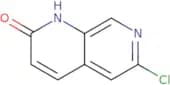
Discontinued product6-Chloro-1,2-dihydro-1,7-naphthyridin-2-one
CAS:Versatile small molecule scaffold
Formula:C8H5ClN2OPurity:Min. 95%Molecular weight:180.59 g/molRef: 3D-TDA49368
Discontinued product[1-(Propan-2-yl)-1H-1,2,4-triazol-5-yl]methanamine
CAS:Versatile small molecule scaffoldFormula:C6H12N4Purity:Min. 95%Molecular weight:140.19 g/molRef: 3D-UIC24186
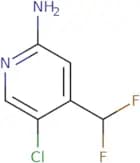
Discontinued product5-Chloro-4-(difluoromethyl)pyridin-2-amine
CAS:Versatile small molecule scaffold
Formula:C6H5ClF2N2Purity:Min. 95%Molecular weight:178.57 g/molRef: 3D-EXC66046
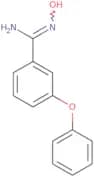
Discontinued productN'-Hydroxy-3-phenoxybenzene-1-carboximidamide
CAS:Versatile small molecule scaffoldFormula:C13H12N2O2Purity:Min. 95%Molecular weight:228.25 g/molRef: 3D-UTB35558
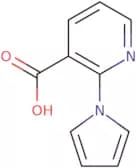
Discontinued product2-(1H-Pyrrol-1-yl)pyridine-3-carboxylic acid
CAS:Versatile small molecule scaffold
Formula:C10H8N2O2Purity:Min. 95%Molecular weight:188.18 g/molRef: 3D-EGA01405
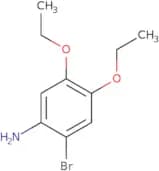
Discontinued product2-Bromo-4,5-diethoxyaniline
CAS:Versatile small molecule scaffold
Formula:C10H14BrNO2Purity:Min. 95%Molecular weight:260.13 g/mol2-Methyl-3-[2-(morpholin-4-yl)ethoxy]phenol
CAS:Versatile small molecule scaffold
Formula:C13H19NO3Purity:Min. 95%Molecular weight:237.29 g/molRef: 3D-UTB37022
Discontinued product4-[(4-Methoxyphenyl)methyl]azetidin-2-one
CAS:Versatile small molecule scaffoldFormula:C11H13NO2Purity:Min. 95%Molecular weight:191.23 g/molRef: 3D-EFC81230
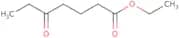
Discontinued productEthyl 5-oxoheptanoate
CAS:Ethyl 5-oxoheptanoate is a clear, colorless liquid that can be synthesized by reacting benzene with acetone. The synthesis of ethyl 5-oxoheptanoate is an example of a Friedel-Crafts reaction. This chemical is soluble in organic solvents such as acetone and cyclohexane and has low toxicity. It can be used as a reagent for the preparation of esters from alcohols, phenols, or carboxylic acids. Ethyl 5-oxoheptanoate can also be used to prepare resorcinol, which is a precursor to polymers and dyes, by hydrogenation of the molecule. Preparative methods are often used to produce this product because it has limited solubility in water.
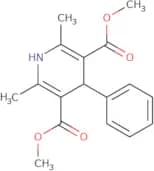
Formula:C9H16O3Purity:Min. 95%Molecular weight:172.22 g/molDimethyl 2,6-dimethyl-4-phenyl-1,4-dihydropyridine-3,5-dicarboxylate
CAS:Dimethyl 2,6-dimethyl-4-phenyl-1,4-dihydropyridine-3,5-dicarboxylate is a radioligand that binds to calcium channels. It is used as a radioligand in binding studies to determine the affinity of various drugs for specific types of calcium channels. Dimethyl 2,6-dimethyl-4-phenyl-1,4-dihydropyridine 3,5 dicarboxylate has been shown to bind specifically to a particular class of calcium channel antagonists (i.e., monosubstituted) and can be used as a pharmacological probe for the study of these compounds.Formula:C17H19NO4Purity:Min. 95%Molecular weight:301.34 g/molRef: 3D-VCA67778
Discontinued product5-[(Phenylthio)methyl]-2-furoic acid
CAS:Versatile small molecule scaffold
Formula:C12H10O3SPurity:Min. 95%Molecular weight:234.27 g/molRef: 3D-EDA50496
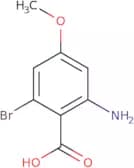
Discontinued product2-Amino-6-bromo-4-methoxybenzoic acid
CAS:Versatile small molecule scaffold
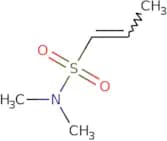
Formula:C8H8BrNO3Purity:Min. 95%Molecular weight:246.06 g/molN,N-Dimethylprop-1-ene-1-sulfonamide
CAS:Versatile small molecule scaffold
Formula:C5H11NO2SPurity:Min. 95%Molecular weight:149.2 g/molRef: 3D-VCA78500
Discontinued product3-(4-Ethylphenyl)butanoic acid
CAS:Versatile small molecule scaffold
Formula:C12H16O2Purity:Min. 95%Molecular weight:192.25 g/molRef: 3D-DCA08649
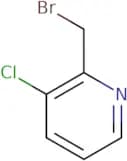
Discontinued product2-(bromomethyl)-3-chloropyridine
CAS:Versatile small molecule scaffold
Formula:C6H5BrClNPurity:Min. 95%Molecular weight:206.47 g/molRef: 3D-CZB51576
Discontinued product3-Chloro-N-[2-(4-methyl-1,3-thiazol-5-yl)-2-oxoethyl]propanamide
CAS:Versatile small molecule scaffoldFormula:C9H11ClN2O2SPurity:Min. 95%Molecular weight:246.71 g/molRef: 3D-CHC38015
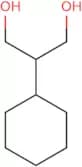
Discontinued product2-Cyclohexylpropane-1,3-diol
CAS:2-Cyclohexylpropane-1,3-diol is a substrate for porcine pancreatic lipase. It is hydrolyzed by this enzyme, which is stereoselective and enantioselective. 2-Cyclohexylpropane-1,3-diol also has properties that are similar to angiotensin, a peptide that is secreted by the human body. This substance can be used as a solvent for other organic compounds in chemical reactions.
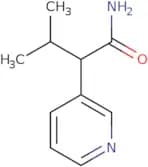
Formula:C9H18O2Purity:Min. 95%Molecular weight:158.24 g/mol3-Methyl-2-(pyridin-3-yl)butanamide
CAS:Versatile small molecule scaffold
Formula:C10H14N2OPurity:Min. 95%Molecular weight:178.23 g/molRef: 3D-BFC36176
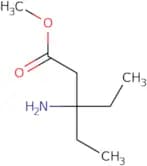
Discontinued productMethyl 3-amino-3-ethylpentanoate
CAS:Versatile small molecule scaffold
Formula:C8H17NO2Purity:Min. 95%Molecular weight:159.23 g/molRef: 3D-BFC28653
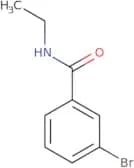
Discontinued product3-Bromo-N-ethylbenzamide
CAS:Versatile small molecule scaffold
Formula:C9H10BrNOPurity:Min. 95%Molecular weight:228.09 g/molRef: 3D-BBA81910
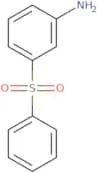
Discontinued product3-(Benzenesulfonyl)aniline
CAS:Versatile small molecule scaffold
Formula:C12H11NO2SPurity:Min. 95%Molecular weight:233.29 g/molRef: 3D-BBA81549
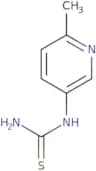
Discontinued product(6-Methylpyridin-3-yl)thiourea
CAS:Versatile small molecule scaffold
Formula:C7H9N3SPurity:Min. 95%Molecular weight:167.23 g/molRef: 3D-VRA13075
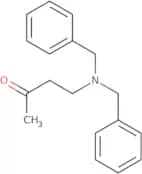
Discontinued product4-(dibenzylamino)butan-2-one
CAS:Versatile small molecule scaffold
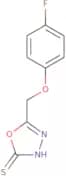
Formula:C18H21NOPurity:Min. 95%Molecular weight:267.37 g/mol5-(4-Fluorophenoxymethyl)-1,3,4-oxadiazole-2-thiol
CAS:Versatile small molecule scaffoldFormula:C9H7FN2O2SPurity:Min. 95%Molecular weight:226.23 g/molRef: 3D-VSA22441
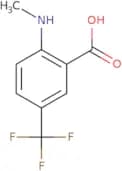
Discontinued product2-(Methylamino)-5-(trifluoromethyl)benzoic acid
CAS:Versatile small molecule scaffold
Formula:C9H8F3NO2Purity:Min. 95%Molecular weight:219.16 g/molRef: 3D-VSA47960
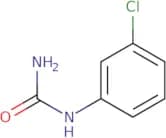
Discontinued product3-Chlorophenylurea
CAS:3-Chlorophenylurea is a quinazolinone that inhibits the growth of candida glabrata. This compound has been shown to inhibit efflux pumps, which are proteins that pump out drugs from the cell. 3-Chlorophenylurea has been shown to inhibit the efflux of fluconazole, a drug used to treat fungal infections, and thiourea, a compound that is known for its cytotoxicity. The inhibition of these two compounds suggests that 3-chlorophenylurea could be an efflux pump inhibitor.
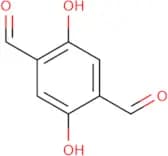
Formula:C7H7ClN2OPurity:Min. 95%Molecular weight:170.6 g/mol2,5-Dihydroxyterephthalaldehyde
CAS:2,5-Dihydroxyterephthalaldehyde (2,5-DTPA) is a sugar alcohol that is used in the production of polyester. It can be synthesized by electrochemical methods and is produced as an intermediate in the synthesis of 2,5-dihydroxypentane-1,5-diyldimethanol. The optical properties and chemical stability of 2,5-DTPA are determined by its protonation state. The protonation state depends on the pH of the solution or solvent. 2,5-DTPA has two isomers: one with an intramolecular hydrogen bond and one without. 2,5-DTPA also exists as an enol form at high pH values and as a keto form at low pH values. This compound has been shown to have liver protective effects against cell death induced by oxidative stress in animal models.
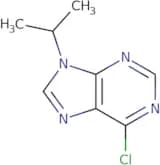
Formula:C8H6O4Purity:Min. 95%Molecular weight:166.13 g/mol6-Chloro-9-(propan-2-yl)-9H-purine
CAS:6-Chloro-9-(propan-2-yl)-9H-purine is an intermediate in the synthesis of nucleoside analogues. It is obtained by the catalyzed reaction of acetonitrile and purines, which undergoes regioisomerization to form a mixture of 6-chloro-9-(propyl)- and 6-chloro-9-(butyl)purine. This intermediate can be used for the alkynylation of amino acids or peptides with alkynes. The selective formation of one regioisomer can be achieved by using a chiral catalyst or by reacting with an optically active reagent such as (+)-camphor sulfonic acid.
Formula:C8H9ClN4Purity:Min. 95%Molecular weight:196.64 g/molRef: 3D-AVA53908
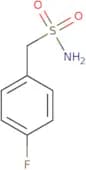
Discontinued product(4-Fluorophenyl)methanesulfonamide
CAS:Versatile small molecule scaffold
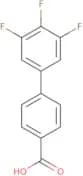
Formula:C7H8FNO2SPurity:Min. 95%Molecular weight:189.21 g/mol4-(3,4,5-Trifluorophenyl)benzoic acid
CAS:Versatile small molecule scaffold
Formula:C13H7F3O2Purity:Min. 95%Molecular weight:252.19 g/molRef: 3D-AMB90850
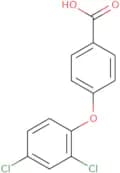
Discontinued product4-(2,4-Dichlorophenoxy)benzoic acid
CAS:Versatile small molecule scaffold
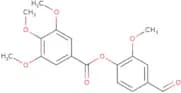
Formula:C13H8Cl2O3Purity:Min. 95%Molecular weight:283.1 g/mol4-Formyl-2-methoxyphenyl 3,4,5-trimethoxybenzoate
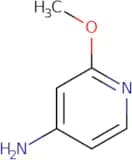
CAS:Versatile small molecule scaffoldFormula:C18H18O7Purity:Min. 95%Molecular weight:346.3 g/mol(4-Aminopyridin-2-yl)methanol
CAS:Versatile small molecule scaffold
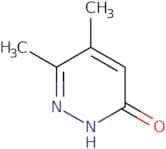
Formula:C6H8N2OPurity:Min. 95%Molecular weight:124.14 g/mol5,6-Dimethylpyridazin-3(2H)-one
CAS:Versatile small molecule scaffold
Formula:C6H8N2OPurity:Min. 95%Molecular weight:124.14 g/mol[2-(2-Ethoxyethoxy)ethyl](methyl)amine
CAS:Versatile small molecule scaffold
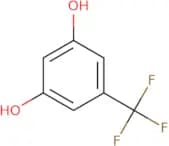
Formula:C7H17NO2Purity:Min. 95%Molecular weight:147.22 g/mol5-(Trifluoromethyl)benzene-1,3-diol
CAS:Versatile small molecule scaffold
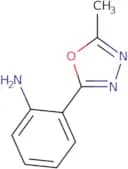
Formula:C7H5F3O2Purity:Min. 95%Molecular weight:178.11 g/mol2-(5-Methyl-1,3,4-oxadiazol-2-yl)aniline
CAS:Versatile small molecule scaffold
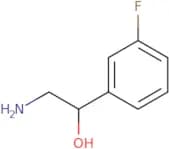
Formula:C9H9N3OPurity:Min. 95%Molecular weight:175.19 g/mol2-Amino-1-(3-fluorophenyl)ethanol
CAS:Versatile small molecule scaffold
Formula:C8H10FNOPurity:Min. 95%Molecular weight:155.17 g/molRef: 3D-AAA40296
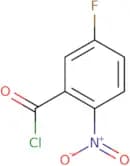
Discontinued product5-Fluoro-2-nitrobenzoyl chloride
CAS:5-Fluoro-2-nitrobenzoyl chloride is a conformationally locked macrocyclic compound that has been synthesized by solid phase synthesis. It is found in two conformational states and can be made to switch between these two states by applying a force to the molecule. This conformation can be controlled by changing the side chain of 5-fluoro-2-nitrobenzoyl chloride, which can be done experimentally. The conformational behavior of this macrocycle was studied using molecular dynamics simulations and it was found that there are four possible conformations for the molecule. The conformations with different side chains were found to have different energies, which could be used as a measure of their relative stability.
Formula:C7H3ClFNO3Purity:Min. 95%Molecular weight:203.55 g/mol4-(Aminomethyl)-N-(2-methoxyethyl)aniline
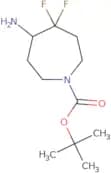
CAS:Versatile small molecule scaffoldFormula:C10H16N2OPurity:Min. 95%Molecular weight:180.25 g/moltert-Butyl 5-amino-4,4-difluoroazepane-1-carboxylate
CAS:Versatile small molecule scaffold
Formula:C11H20F2N2O2Purity:Min. 95%Molecular weight:250.29 g/molRef: 3D-XLD51829
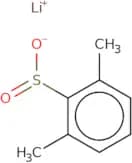
Discontinued product2,6-dimethylbenzene-1-sulfinate lithium
CAS:Versatile small molecule scaffoldFormula:C8H9LiO2SPurity:Min. 95%Molecular weight:176.2 g/molRef: 3D-XLD55962
Discontinued productMethyl 3-tert-butyl-1,2,3,4-tetrahydroquinoline-6-carboxylate hydrochloride
CAS:Versatile small molecule scaffoldFormula:C15H22ClNO2Purity:Min. 95%Molecular weight:283.8 g/molRef: 3D-XLD59631
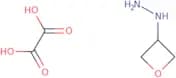
Discontinued product(Oxetan-3-yl)hydrazine, oxalic acid
CAS:Versatile small molecule scaffold
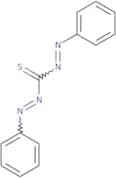
Formula:C5H10N2O5Purity:Min. 95%Molecular weight:178.1 g/mol1,3-Bis(phenylimino)thiourea
CAS:Versatile small molecule scaffold
Formula:C13H10N4SPurity:Min. 95%Molecular weight:254.31 g/molRef: 3D-YAA21642
Discontinued productMethyl 5-bromo-3-(bromomethyl)furan-2-carboxylate
CAS:Versatile small molecule scaffold
Formula:C7H6Br2O3Purity:Min. 95%Molecular weight:297.93 g/mol2-(5-Chloro-1-methyl-1H-imidazol-2-yl)-2,2-difluoroacetic acid hydrochloride
CAS:Versatile small molecule scaffoldFormula:C6H6Cl2F2N2O2Purity:Min. 95%Molecular weight:247 g/molRef: 3D-YGC02390
Discontinued product4-Acetyl-5-methyl-3-(propan-2-yl)-1H-pyrrole-2-carboxylic acid
CAS:Versatile small molecule scaffold
Formula:C11H15NO3Purity:Min. 95%Molecular weight:209.24 g/molRef: 3D-YGC02414
Discontinued producttert-Butyl (2,2-difluoro-3-hydroxypropyl)carbamate
CAS:Versatile small molecule scaffoldFormula:C10H13NO4Purity:Min. 95%Molecular weight:211.21 g/mol4,5-Dihydro-1H-imidazol-2-amine hydrochloride
CAS:Please enquire for more information about 4,5-Dihydro-1H-imidazol-2-amine hydrochloride including the price, delivery time and more detailed product information at the technical inquiry form on this page
Formula:C3H7N3•HClPurity:Min. 95%Molecular weight:121.57 g/molRef: 3D-FD183639
Discontinued product2-Bromo-3,3,3-trifluoro-1-propene
CAS:Controlled Product2-Bromo-3,3,3-trifluoro-1-propene is a chemical compound that has been synthesized in an asymmetric reaction. The reactant is bromopropane and the product is 2,2,2-trifluoropropene. The methylene group on the propene molecule is activated by the nucleophilic attack of a fluoride ion from hydrogen fluoride to form a cavity with a highly strained bond. The kinetic study of this reaction revealed that the activation energy for the reaction is 42 kJ/mol. Palladium-catalyzed coupling reactions are catalyzed by palladium and require nonpolar solvents such as toluene or dichloromethane. This type of reaction has been shown to be exothermic with an isolated yield of 1%.
Formula:C3H2BrF3Purity:Min. 95%Color and Shape:Colorless PowderMolecular weight:174.95 g/mol8-Bromo-2-methylimidazo[1,2-a]pyridine
CAS:Versatile small molecule scaffold
Formula:C8H7N2BrPurity:Min. 95%Molecular weight:211.05 g/mol3-Hydroxy-5-methylpyridine
CAS:3-Hydroxy-5-methylpyridine (3HMP) is a chemical substance that has been classified as an amine. It is a product of the metabolism of purines, which are nitrogenous bases found in DNA and RNA. 3HMP is produced by aerogenic bacteria (such as Enterobacter), and can be used to estimate the number of these bacteria present in water samples. 3HMP has been shown to have antiviral properties against influenza virus, and can be used as a biomarker for the presence of other viruses in animals. 3HMP also has mineralization properties, which have been studied extensively, particularly with regards to pancreatic disease.
Formula:C6H7NOPurity:Min. 95%Color and Shape:PowderMolecular weight:109.13 g/molRef: 3D-FH16174
Discontinued product4-Chloro-2-hydroxy-6-methylphenylboronic acid
CAS:Versatile small molecule scaffoldFormula:C7H8BClO3Purity:Min. 95%Molecular weight:186.4 g/mol1-Hydroxycyclopentane-1-carbonitrile
CAS:1-Hydroxycyclopentane-1-carbonitrile is a monomer that is hydrolyzed to form benzoin and cyanohydrins. It can be used in the production of scifinder as a monomer or dimerizer.
Formula:C6H9NOPurity:Min. 95%Molecular weight:111.14 g/mol4,5-Dihydroxy-2,3-Pentanedione
CAS:4,5-Dihydroxy-2,3-pentanedione is a carbonyl compound that is the product of the oxidation of ascorbic acid. It is used in wastewater treatment and has antimicrobial properties against infectious diseases. This compound has been shown to inhibit protein synthesis by binding to the ribosome and preventing the formation of peptide bonds between amino acids. 4,5-Dihydroxy-2,3-pentanedione has also been shown to bind to plasma proteins, which may be due to its acyl chain structure. 4,5-Dihydroxy-2,3-pentanedione can be synthesized in a catalytic mechanism that involves dehydroascorbic acid and molecular oxygen.
Formula:C5H8O4Purity:Min. 95%Color and Shape:PowderMolecular weight:132.11 g/molRef: 3D-FD180770
Discontinued productPiperyline
CAS:Piperyline is an alkanoic acid that has shown to be effective against skin cancer. It also has antimicrobial properties, which may be due to its ability to bind metal ions and form polymeric compounds. Piperyline inhibits microbial growth by inhibiting the synthesis of proteins and nucleic acids. The antimicrobial activity is related to its cationic polymerization with hydroxyl groups, which forms a structure that can inhibit microbial enzymes and disrupt microbial cell membranes. This compound also interacts with the skin's natural lipids, making it difficult for microorganisms to attach and grow on the skin. Piperyline is synthesized in organic chemistry laboratories as an amide precursor of other pharmaceuticals such as penicillin.
Formula:C16H17NO3Purity:Min. 95%Molecular weight:271.31 g/mol

![1-[4-(2,4-Dimethylbenzoyl)piperidin-1-yl]ethan-1-one](/_next/image/?url=https%3A%2Fstatic.cymitquimica.com%2Fproducts%2F3D%2Fthumb-webp%2FSAC64246.webp&w=3840&q=75)
![[2-(Methoxymethyl)-1,3-thiazol-5-yl]methanol](/_next/image/?url=https%3A%2Fstatic.cymitquimica.com%2Fproducts%2F3D%2Fthumb-webp%2FSAC79344.webp&w=3840&q=75)
![6-(Bromomethyl)-3-phenyl-5H,6H-[1,2,4]triazolo[3,4-b][1,3]thiazole](/_next/image/?url=https%3A%2Fstatic.cymitquimica.com%2Fproducts%2F3D%2Fthumb-webp%2FSEB00446.webp&w=3840&q=75)


![4-Chloro-N-[2-(diethylamino)ethyl]aniline](/_next/image/?url=https%3A%2Fstatic.cymitquimica.com%2Fproducts%2F3D%2Fthumb-webp%2FFAA42735.webp&w=3840&q=75)
![[1-(Propan-2-yl)-1H-1,2,4-triazol-5-yl]methanamine](/_next/image/?url=https%3A%2Fstatic.cymitquimica.com%2Fproducts%2F3D%2Fthumb-webp%2FUIC24186.webp&w=3840&q=75)
![2-Methyl-3-[2-(morpholin-4-yl)ethoxy]phenol](/_next/image/?url=https%3A%2Fstatic.cymitquimica.com%2Fproducts%2F3D%2Fthumb-webp%2FUTB37022.webp&w=3840&q=75)
![4-[(4-Methoxyphenyl)methyl]azetidin-2-one](/_next/image/?url=https%3A%2Fstatic.cymitquimica.com%2Fproducts%2F3D%2Fthumb-webp%2FEFC81230.webp&w=3840&q=75)
![5-[(Phenylthio)methyl]-2-furoic acid](/_next/image/?url=https%3A%2Fstatic.cymitquimica.com%2Fproducts%2F3D%2Fthumb-webp%2FEDA50496.webp&w=3840&q=75)

![3-Chloro-N-[2-(4-methyl-1,3-thiazol-5-yl)-2-oxoethyl]propanamide](/_next/image/?url=https%3A%2Fstatic.cymitquimica.com%2Fproducts%2F3D%2Fthumb-webp%2FCHC38015.webp&w=3840&q=75)
amine](/_next/image/?url=https%3A%2Fstatic.cymitquimica.com%2Fproducts%2F3D%2Fthumb-webp%2FAAC06291.webp&w=3840&q=75)






![8-Bromo-2-methylimidazo[1,2-a]pyridine](/_next/image/?url=https%3A%2Fstatic.cymitquimica.com%2Fproducts%2F3D%2Fthumb-webp%2FUXB37475.webp&w=3840&q=75)




