Building Blocks
Subcategories of "Building Blocks"
- Boronic Acids & Boronic Acid Derivatives(5,778 products)
- Chiral Building Blocks(1,243 products)
- Hydrocarbon Building Blocks(6,098 products)
- Organic Building Blocks(61,036 products)
Found 205240 products of "Building Blocks"
4-Methyl-1,2-oxazolidin-4-ol hydrochloride
CAS:Versatile small molecule scaffold
Formula:C4H10ClNO2Purity:Min. 95%Molecular weight:139.6 g/molRef: 3D-XLD15344
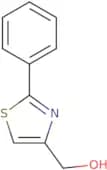
Discontinued product4-(Hydroxymethyl)-2-phenyl-1,3-thiazole
CAS:4-(Hydroxymethyl)-2-phenyl-1,3-thiazole is a versatile compound that has various applications in research and chemical synthesis. It is commonly used as a building block for the synthesis of organic compounds, including antibodies and research chemicals. This compound has been found to exhibit potent antiangiogenic properties, making it valuable in the field of cancer research. Additionally, 4-(Hydroxymethyl)-2-phenyl-1,3-thiazole can be used as a precursor in the synthesis of important pharmaceuticals such as cephalosporins and taxol. Its unique structure allows for diverse chemical reactions, making it an essential tool for chemists and researchers alike. Whether you're working on developing new drugs or exploring novel chemical reactions, 4-(Hydroxymethyl)-2-phenyl-1,3-thiazole is an indispensable compound that will help drive your scientific endeavors forward.
Formula:C10H9NOSPurity:Min. 95%Molecular weight:191.25 g/mol4-Chloro-2-iodo-5-methylaniline
CAS:Versatile small molecule scaffold
Formula:C7H7ClINPurity:Min. 95%Molecular weight:267.49 g/molRef: 3D-YEC23350
Discontinued product1-(1-Methylpiperidin-4-yl)-1H-pyrazol-4-amine hydrochloride
CAS:Versatile small molecule scaffold
Formula:C9H17ClN4Purity:Min. 95%Molecular weight:216.71 g/molrac-(1R,5S)-4-Oxaspiro[bicyclo[3.2.0]heptane-6,1'-cyclopentane]-7-one, cis
CAS:Versatile small molecule scaffold
Formula:C10H14O2Purity:Min. 95%Molecular weight:166.2 g/molRef: 3D-HCD80674
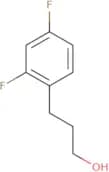
Discontinued product3-(2,4-Difluorophenyl)propan-1-ol
CAS:Versatile small molecule scaffold
Formula:C9H10F2OPurity:Min. 95%Molecular weight:172.17 g/molRef: 3D-HNB20467
Discontinued product2-Chloropyridine-4-sulfonamide
CAS:Versatile small molecule scaffold
Formula:C5H5ClN2O2SPurity:Min. 95%Molecular weight:192.62 g/molRef: 3D-HXB76738
Discontinued productCyclopentyloxybenzene
CAS:Cyclopentyloxybenzene is a bidentate ligand that binds to the active site of cyclic AMP phosphodiesterase, inhibiting the enzyme's ability to break down cyclic AMP. Cyclopentyloxybenzene also has an antioxidant effect, which may be due to its ability to prevent the production of reactive oxygen species. This compound emits light when it reacts with deuterium atoms. When deuterated, cyclopentyloxybenzene does not react as quickly and has a higher yield than non-deuterated compounds. It also has transport properties that make it ideal for reactions in organic solvents. The reaction time is slower than other bidentate ligands, but the energy efficiency is greater due to the reduced activation energy required for chemical reactions.
Formula:C11H14OPurity:Min. 95%Molecular weight:162.23 g/molRef: 3D-IBA18668
Discontinued product3-Bromo-2-methyl-furan
CAS:3-Bromo-2-methyl-furan is a substituted quinoline. It is a synthetic reagent that can be used for the synthesis of bromofuran derivatives. The methyl group on the 3rd carbon atom in 3-bromo-2-methyl-furan is a substituent that can be exchanged with other substituents, such as alkylation, to produce a variety of products.
3-Bromo-2-methyl furan has been shown to be able to extract metal ions from their complexes and form stable complexes. This property makes it an ideal reagent for metalation reactions.Formula:C5H5BrOPurity:Min. 95%Molecular weight:161 g/molRef: 3D-IDA45706
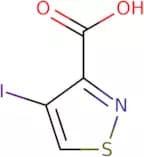
Discontinued product4-Iodo-1,2-thiazole-3-carboxylic acid
CAS:Versatile small molecule scaffoldFormula:C4H2INO2SPurity:Min. 95%Molecular weight:255.04 g/molRef: 3D-JBD31882
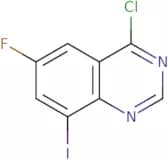
Discontinued product4-Chloro-6-fluoro-8-iodoquinazoline
CAS:Versatile small molecule scaffold
Formula:C8H3ClFIN2Purity:Min. 95%Molecular weight:308.48 g/molRef: 3D-JBD31990
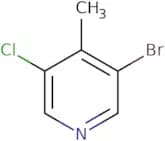
Discontinued product3-Bromo-5-chloro-4-methylpyridine
CAS:Versatile small molecule scaffold
Formula:C6H5BrClNPurity:Min. 95%Molecular weight:206.47 g/mol3-Chloro-4-iodoaniline
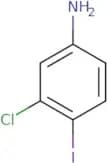
CAS:3-Chloro-4-iodoaniline is an activated, synthetic chemical that is used in the preparation of a variety of chemicals. 3-Chloro-4-iodoaniline can be prepared by the reaction of chloroacetic acid with nitrobenzene and hydrochloric acid. The compound may be purified by vacuum filtration and recrystallization from water. It is also a precursor to other chemicals that are used in the production of polyhalogenated aromatic compounds. 3-Chloro-4-iodoaniline has been found to react with amines and form the corresponding amides, which may be useful for chemical synthesis.
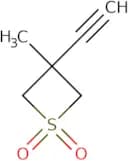
Formula:C6H5ClINPurity:Min. 95%Molecular weight:253.47 g/mol3-Ethynyl-3-methylthietane 1,1-dioxide
CAS:Versatile small molecule scaffold
Formula:C6H8O2SPurity:Min. 95%Molecular weight:144.2 g/molRef: 3D-KQD93720
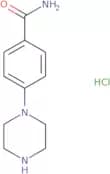
Discontinued product4-(Piperazin-1-yl)benzamide hydrochloride
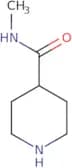
CAS:Versatile small molecule scaffoldFormula:C11H16ClN3OPurity:Min. 95%Molecular weight:241.72 g/molN-Methylpiperidine-4-carboxamide
CAS:Versatile small molecule scaffold
Formula:C7H14N2OPurity:Min. 95%Molecular weight:142.2 g/molRef: 3D-BAA90369
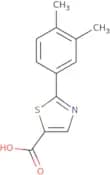
Discontinued product2-(3,4-Dimethylphenyl)-1,3-thiazole-5-carboxylic acid
CAS:Versatile small molecule scaffold
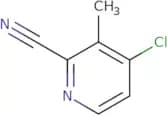
Formula:C12H11NO2SPurity:Min. 95%Molecular weight:233.29 g/mol4-chloro-3-methylpyridine-2-carbonitrile
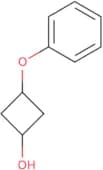
CAS:Rabeprazole is a proton pump inhibitor with antacid and anti-ulcer properties. It works by reducing the amount of acid produced in the stomach. Rabeprazole is used to treat conditions that cause excess stomach acid, such as Zollinger-Ellison syndrome and gastroesophageal reflux disease (GERD). Rabeprazole sodium is an alternative formulation of rabeprazole that has been modified to make it easier to dissolve in water.Formula:C7H5ClN2Purity:Min. 95%Molecular weight:152.58 g/mol(1R,3R)-3-Phenoxycyclobutan-1-ol
CAS:Versatile small molecule scaffold
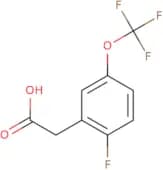
Formula:C10H12O2Purity:Min. 95%Molecular weight:164.2 g/mol2-Fluoro-5-(trifluoromethoxy)phenylacetic acid
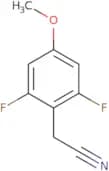
CAS:Versatile small molecule scaffoldFormula:C9H6F4O3Purity:Min. 95%Molecular weight:238.14 g/mol2,6-Difluoro-4-methoxyphenylacetonitrile
CAS:Versatile small molecule scaffold
Formula:C9H7F2NOPurity:Min. 95%Molecular weight:183.16 g/mol3,6-Dimethyl-1-{[(propan-2-yl)carbamoyl]methyl}-1H-pyrazolo[3,4-b]pyridine-4-carboxylic acid
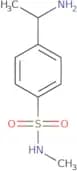
CAS:Versatile small molecule scaffoldFormula:C14H18N4O3Purity:Min. 95%Molecular weight:290.32 g/mol4-(1-Aminoethyl)-N-methylbenzene-1-sulfonamide
CAS:Versatile small molecule scaffold
Formula:C9H14N2O2SPurity:Min. 95%Molecular weight:214.29 g/mol4-Chloro-5H,6H,7H-pyrimido[4,5-b][1,4]oxazin-6-one
CAS:Versatile small molecule scaffoldFormula:C6H4ClN3O2Purity:Min. 95%Molecular weight:185.57 g/molRef: 3D-LYB52467
Discontinued product1-[(4-Chlorophenyl)methyl]-3,6-dimethyl-1H-pyrazolo[3,4-b]pyridine-4-carboxylic acid
CAS:Versatile small molecule scaffold
Formula:C16H14ClN3O2Purity:Min. 95%Molecular weight:315.75 g/mol4-{3-Methyl-1H-pyrazolo[3,4-b]pyridin-1-yl}benzoic acid
CAS:Versatile small molecule scaffoldFormula:C14H11N3O2Purity:Min. 95%Molecular weight:253.26 g/molEthyl 2-[(4-amino-5-cyanopyrimidin-2-yl)sulfanyl]acetate
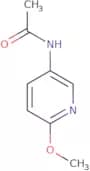
CAS:Versatile small molecule scaffoldFormula:C9H10N4O2SPurity:Min. 95%Molecular weight:238.27 g/molN-(6-Methoxypyridin-3-yl)acetamide
CAS:Versatile small molecule scaffold
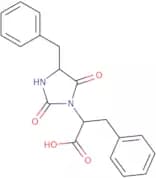
Formula:C8H10N2O2Purity:Min. 95%Molecular weight:166.18 g/mol2-(4-Benzyl-2,5-dioxoimidazolidin-1-yl)-3-phenylpropanoic acid
CAS:Versatile small molecule scaffoldFormula:C19H18N2O4Purity:Min. 95%Molecular weight:338.4 g/molRef: 3D-NAA58909
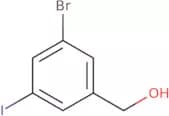
Discontinued product(3-bromo-5-iodophenyl)methanol
CAS:Versatile small molecule scaffold
Formula:C7H6BrIOPurity:Min. 95%Molecular weight:312.9 g/molRef: 3D-NHA81308
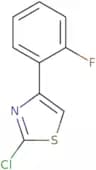
Discontinued product2-Chloro-4-(2-fluorophenyl)-1,3-thiazole
CAS:Versatile small molecule scaffold
Formula:C9H5ClFNSPurity:Min. 95%Molecular weight:213.66 g/molRef: 3D-NXB12206
Discontinued product2-(Pyrrolidin-3-yl)ethanol hydrochloride
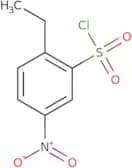
CAS:Versatile small molecule scaffoldFormula:C6H13NO·HClPurity:Min. 95%Molecular weight:151.64 g/mol2-Ethyl-5-nitrobenzene-1-sulfonyl chloride
CAS:Versatile small molecule scaffold
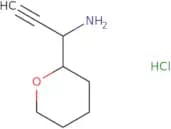
Formula:C8H8ClNO4SPurity:Min. 95%Molecular weight:249.67 g/mol1-(Oxan-2-yl)prop-2-yn-1-amine hydrochloride
CAS:Versatile small molecule scaffoldFormula:C8H14ClNOPurity:Min. 95%Molecular weight:175.65 g/molRef: 3D-PED67166
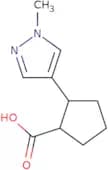
Discontinued product2-(1-Methyl-1H-pyrazol-4-yl)cyclopentane-1-carboxylic acid
CAS:Versatile small molecule scaffold
Formula:C10H14N2O2Purity:Min. 95%Molecular weight:194.23 g/molRef: 3D-QKC24389
Discontinued product2-Bromo-3,3,3-trifluoro-1-propene
CAS:Controlled Product2-Bromo-3,3,3-trifluoro-1-propene is a chemical compound that has been synthesized in an asymmetric reaction. The reactant is bromopropane and the product is 2,2,2-trifluoropropene. The methylene group on the propene molecule is activated by the nucleophilic attack of a fluoride ion from hydrogen fluoride to form a cavity with a highly strained bond. The kinetic study of this reaction revealed that the activation energy for the reaction is 42 kJ/mol. Palladium-catalyzed coupling reactions are catalyzed by palladium and require nonpolar solvents such as toluene or dichloromethane. This type of reaction has been shown to be exothermic with an isolated yield of 1%.
Formula:C3H2BrF3Purity:Min. 95%Color and Shape:Colorless PowderMolecular weight:174.95 g/mol3-Hydroxy-5-methylpyridine
CAS:3-Hydroxy-5-methylpyridine (3HMP) is a chemical substance that has been classified as an amine. It is a product of the metabolism of purines, which are nitrogenous bases found in DNA and RNA. 3HMP is produced by aerogenic bacteria (such as Enterobacter), and can be used to estimate the number of these bacteria present in water samples. 3HMP has been shown to have antiviral properties against influenza virus, and can be used as a biomarker for the presence of other viruses in animals. 3HMP also has mineralization properties, which have been studied extensively, particularly with regards to pancreatic disease.
Formula:C6H7NOPurity:Min. 95%Color and Shape:PowderMolecular weight:109.13 g/molRef: 3D-FH16174
Discontinued product4-Chloro-2-hydroxy-6-methylphenylboronic acid
CAS:Versatile small molecule scaffoldFormula:C7H8BClO3Purity:Min. 95%Molecular weight:186.4 g/mol4,5-Dihydroxy-2,3-Pentanedione
CAS:4,5-Dihydroxy-2,3-pentanedione is a carbonyl compound that is the product of the oxidation of ascorbic acid. It is used in wastewater treatment and has antimicrobial properties against infectious diseases. This compound has been shown to inhibit protein synthesis by binding to the ribosome and preventing the formation of peptide bonds between amino acids. 4,5-Dihydroxy-2,3-pentanedione has also been shown to bind to plasma proteins, which may be due to its acyl chain structure. 4,5-Dihydroxy-2,3-pentanedione can be synthesized in a catalytic mechanism that involves dehydroascorbic acid and molecular oxygen.
Formula:C5H8O4Purity:Min. 95%Color and Shape:PowderMolecular weight:132.11 g/molRef: 3D-FD180770
Discontinued productPiperyline
CAS:Piperyline is an alkanoic acid that has shown to be effective against skin cancer. It also has antimicrobial properties, which may be due to its ability to bind metal ions and form polymeric compounds. Piperyline inhibits microbial growth by inhibiting the synthesis of proteins and nucleic acids. The antimicrobial activity is related to its cationic polymerization with hydroxyl groups, which forms a structure that can inhibit microbial enzymes and disrupt microbial cell membranes. This compound also interacts with the skin's natural lipids, making it difficult for microorganisms to attach and grow on the skin. Piperyline is synthesized in organic chemistry laboratories as an amide precursor of other pharmaceuticals such as penicillin.
Formula:C16H17NO3Purity:Min. 95%Molecular weight:271.31 g/mol


![rac-(1R,5S)-4-Oxaspiro[bicyclo[3.2.0]heptane-6,1'-cyclopentane]-7-one, cis](/_next/image/?url=https%3A%2Fstatic.cymitquimica.com%2Fproducts%2F3D%2Fthumb-webp%2FHCD80674.webp&w=3840&q=75)


![3,6-Dimethyl-1-{[(propan-2-yl)carbamoyl]methyl}-1H-pyrazolo[3,4-b]pyridine-4-carboxylic acid](/_next/image/?url=https%3A%2Fstatic.cymitquimica.com%2Fproducts%2F3D%2Fthumb-webp%2FLQB40013.webp&w=3840&q=75)
![4-Chloro-5H,6H,7H-pyrimido[4,5-b][1,4]oxazin-6-one](/_next/image/?url=https%3A%2Fstatic.cymitquimica.com%2Fproducts%2F3D%2Fthumb-webp%2FLYB52467.webp&w=3840&q=75)
![1-[(4-Chlorophenyl)methyl]-3,6-dimethyl-1H-pyrazolo[3,4-b]pyridine-4-carboxylic acid](/_next/image/?url=https%3A%2Fstatic.cymitquimica.com%2Fproducts%2F3D%2Fthumb-webp%2FMMB59774.webp&w=3840&q=75)
![4-{3-Methyl-1H-pyrazolo[3,4-b]pyridin-1-yl}benzoic acid](/_next/image/?url=https%3A%2Fstatic.cymitquimica.com%2Fproducts%2F3D%2Fthumb-webp%2FMMB60004.webp&w=3840&q=75)
![Ethyl 2-[(4-amino-5-cyanopyrimidin-2-yl)sulfanyl]acetate](/_next/image/?url=https%3A%2Fstatic.cymitquimica.com%2Fproducts%2F3D%2Fthumb-webp%2FMMB60132.webp&w=3840&q=75)