Building Blocks
Subcategories of "Building Blocks"
- Boronic Acids & Boronic Acid Derivatives(5,780 products)
- Chiral Building Blocks(1,239 products)
- Hydrocarbon Building Blocks(6,100 products)
- Organic Building Blocks(61,005 products)
Found 205234 products of "Building Blocks"
3-Methyl-1-phenyl-1H-pyrazolo[3,4-b]pyridin-5-amine hydrochloride
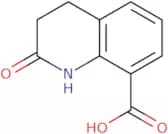
CAS:Versatile small molecule scaffoldFormula:C13H13ClN4Purity:Min. 95%Molecular weight:260.72 g/mol2-Oxo-1,2,3,4-tetrahydroquinoline-8-carboxylic acid
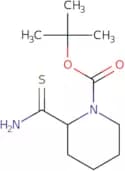
CAS:Versatile small molecule scaffoldFormula:C10H9NO3Purity:Min. 95%Molecular weight:191.18 g/moltert-Butyl 2-carbamothioylpiperidine-1-carboxylate
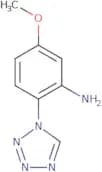
CAS:Versatile small molecule scaffoldFormula:C11H20N2O2SPurity:Min. 95%Molecular weight:244.35 g/mol5-Methoxy-2-(1H-tetrazol-1-yl)aniline
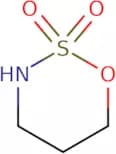
CAS:Versatile small molecule scaffoldFormula:C8H9N5OPurity:Min. 95%Molecular weight:191.19 g/mol1,2λ⁶,3-Oxathiazinane-2,2-dione
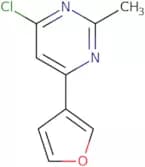
CAS:1,2λ⁶,3-Oxathiazinane-2,2-dione is a cyclization reaction product of 1,2λ⁶,3-oxathiazine and 2-mercaptobenzothiazole. It is an intramolecular reaction that produces a six-membered ring containing two heteroatoms. This product can be used as a reagent for the oxidation of sulfamates to sulfoxides. The radical reaction mechanism of this compound has been studied with the use of intermediacy and mechanistic studies. Hypervalent cations catalyze this process and it occurs in the presence of organic esters.Formula:C3H7NO3SPurity:Min. 95%Molecular weight:137.16 g/mol4-Chloro-6-(3-furyl)-2-methylpyrimidine
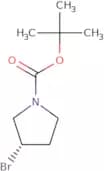
CAS:Versatile small molecule scaffoldFormula:C9H7ClN2OPurity:Min. 95%Molecular weight:194.62 g/mol(S)-tert-Butyl 3-bromopyrrolidine-1-carboxylate
CAS:(S)-tert-Butyl 3-bromopyrrolidine-1-carboxylate is a reagent that can be used for the synthesis of chiral compounds. It reacts with chlorosulfonyl isocyanate to form an N-substituted sulfonamide. This reaction proceeds with high stereoselectivity, yielding the desired product in high yield and enantiomeric excess. (S)-tert-Butyl 3-bromopyrrolidine-1-carboxylate can also be used as a desulfonylation reagent and has been shown to react with c1–c6 alkoxy groups to form alcohols. (S)-tert-Butyl 3-bromopyrrolidine-1-carboxylate reacts with nitro groups to form nitroso derivatives, octane to produce cyclohexanones, benzyl group to make phenols, piperidine toFormula:C9H16BrNO2Purity:Min. 95%Molecular weight:250.13 g/mol[R]-1-Boc-3-Bromopyrrolidine
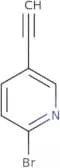
CAS:Versatile small molecule scaffoldFormula:C9H16BrNO2Purity:Min. 95%Molecular weight:250.14 g/mol2-Bromo-5-ethynylpyridine
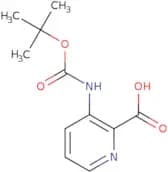
CAS:Versatile small molecule scaffoldFormula:C7H4BrNPurity:Min. 95%Molecular weight:182.02 g/mol3-(Boc-amino)pyridine-2-carboxylic acid
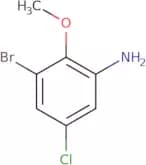
CAS:3-(Boc-amino)pyridine-2-carboxylic acid is a chiral, stereoselective compound that can be synthesized by reacting an achiral amine with a carbamic acid. The yields of the reaction are high and the product is obtained in a single step. 3-(Boc-amino)pyridine-2-carboxylic acid can be used as an intermediate for the synthesis of β-lactams, which are important for their antibiotic properties. The diastereomer is formed when the amino group on the molecule interacts with either right or left side of the carbonyl group. This interaction leads to different configurations and stereoisomers.Formula:C11H14N2O4Purity:Min. 95%Molecular weight:238.24 g/mol3-Bromo-5-chloro-2-methoxyaniline
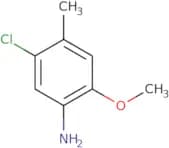
CAS:Versatile small molecule scaffoldFormula:C7H7BrClNOPurity:Min. 95%Molecular weight:236.49 g/mol5-Chloro-2-methoxy-4-methylaniline
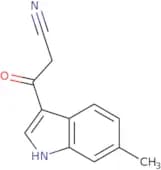
CAS:Versatile small molecule scaffoldFormula:C8H10ClNOPurity:Min. 95%Molecular weight:171.63 g/mol3-(6-Methyl-1H-indol-3-yl)-3-oxopropanenitrile
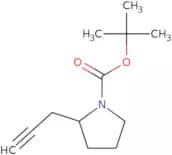
CAS:Versatile small molecule scaffoldFormula:C12H10N2OPurity:Min. 95%Molecular weight:198.22 g/moltert-Butyl 2-(prop-2-yn-1-yl)pyrrolidine-1-carboxylate
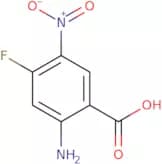
CAS:Versatile small molecule scaffoldFormula:C12H19NO2Purity:Min. 95%Molecular weight:209.28 g/mol2-Amino-4-fluoro-5-nitrobenzoic acid
CAS:2-Amino-4-fluoro-5-nitrobenzoic acid is a synthetic compound that has been shown to be an anticancer agent. It inhibits the growth of cancer cells by binding to the biological targets, such as DNA and RNA. 2-Amino-4-fluoro-5-nitrobenzoic acid also has antiviral properties, which may be related to its ability to inhibit protein synthesis and prevent virus replication. This compound has been shown to have anticancer effects in various types of cancer, including colon cancer, breast cancer, and leukemia. 2AFBA is a bicyclic heterocycle with two amino groups attached to the same ring at different positions.Formula:C7H5FN2O4Purity:Min. 95%Molecular weight:200.12 g/mol3-(3-Oxomorpholin-4-yl)benzoic acid
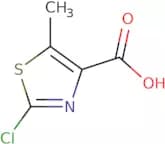
CAS:Versatile small molecule scaffoldFormula:C11H11NO4Purity:Min. 95%Molecular weight:221.21 g/mol2-chloro-5-methyl-1,3-thiazole-4-carboxylic acid
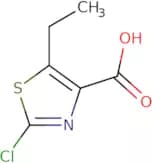
CAS:Versatile small molecule scaffoldFormula:C5H4ClNO2SPurity:Min. 95%Molecular weight:177.6 g/mol2-chloro-5-ethyl-1,3-thiazole-4-carboxylic acid
CAS:Versatile small molecule scaffoldFormula:C6H6ClNO2SPurity:Min. 95%Molecular weight:191.6 g/moltert-Butyl 6-bromo-3,4-dihydrospiro[1-benzopyran-2,4'-piperidine]-1'-carboxylate
CAS:Versatile small molecule scaffoldFormula:C18H24BrNO3Purity:Min. 95%Molecular weight:382.3 g/molMethyl 5-fluoro-2-formylbenzoate
CAS:Versatile small molecule scaffoldFormula:C9H7FO3Purity:Min. 95%Molecular weight:182.15 g/mol8-bromoimidazo[1,2-a]pyridine-2-carbaldehyde
CAS:Versatile small molecule scaffoldFormula:C8H5BrN2OPurity:Min. 95%Molecular weight:225.05 g/mol7-bromo-2-methylimidazo[1,2-a]pyridine
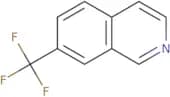
CAS:Versatile small molecule scaffoldFormula:C8H7BrN2Purity:Min. 95%Molecular weight:211.06 g/mol7-(Trifluoromethyl)isoquinoline
CAS:Versatile small molecule scaffoldFormula:C10H6F3NPurity:Min. 95%Molecular weight:197.16 g/mol2-Benzyl-2,6-diazaspiro[3.3]heptane dihydrochloride
CAS:Versatile small molecule scaffoldFormula:C12H16N2Purity:Min. 95%Molecular weight:188.27 g/mol2-Boc-2,7-diazaspiro[4.4]nonane-6-one
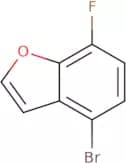
CAS:2-Boc-2,7-diazaspiro[4.4]nonane-6-one is a tertiary amine that has three hydrogen bonds to the carbonyl group and one to the nitrogen atom in the 2 position of the pyran ring. The compound exists as two conformations: one with a chair conformation and another with a boat conformation. In each case, the tertiary amine hydrogen bonds to the carbonyl carbon atom. The chair conformation is favored because it has less steric strain on the tertiary amine nitrogen atom than does the boat conformation.Formula:C12H20N2O3Purity:Min. 95%Molecular weight:240.3 g/mol4-Bromo-7-fluoro-1-benzofuran
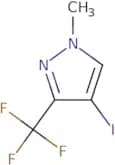
CAS:Versatile small molecule scaffoldFormula:C8H4OFBrPurity:Min. 95%Molecular weight:215.02 g/mol4-Iodo-1-methyl-3-trifluoromethyl-1H-pyrazole
CAS:Versatile small molecule scaffold
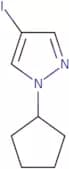
Formula:C5H4F3IN2Purity:Min. 95%Molecular weight:276 g/mol1-Cyclopentyl-4-iodo-1H-pyrazole
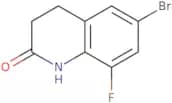
CAS:Versatile small molecule scaffoldFormula:C8H11IN2Purity:Min. 95%Molecular weight:262.09 g/mol6-Bromo-8-fluoro-1,2,3,4-tetrahydroquinolin-2-one
CAS:Versatile small molecule scaffold
Formula:C9H7BrFNOPurity:Min. 95%Molecular weight:244.06 g/mol2-Benzyl-2,6-diazaspiro[3.3]heptane
CAS:Versatile small molecule scaffold
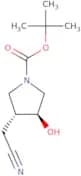
Formula:C12H16N2Purity:Min. 95%Molecular weight:188.27 g/molrac-tert-Butyl (3R,4S)-3-(cyanomethyl)-4-hydroxypyrrolidine-1-carboxylate
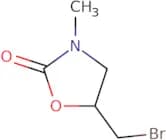
CAS:Versatile small molecule scaffoldFormula:C11H18N2O3Purity:Min. 95%Molecular weight:226.3 g/mol5-(Bromomethyl)-3-methyl-1,3-oxazolidin-2-one
CAS:Versatile small molecule scaffoldFormula:C5H8BrNO2Purity:Min. 95%Molecular weight:194.03 g/molMethyl 4-(dimethylamino)-3-hydroxybenzoate
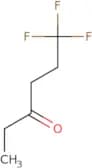
CAS:Versatile small molecule scaffoldFormula:C10H13NO3Purity:Min. 95%Molecular weight:195.2 g/mol6,6,6-Trifluorohexan-3-one
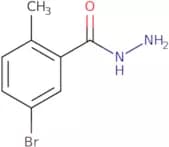
CAS:Versatile small molecule scaffoldFormula:C6H9F3OPurity:Min. 95%Molecular weight:154.13 g/mol5-bromo-2-methylbenzohydrazide
CAS:Versatile small molecule scaffold
Formula:C8H9BrN2OPurity:Min. 95%Molecular weight:229.08 g/molN,4-Dimethyl-4H-1,2,4-triazol-3-amine hydroiodide
CAS:Versatile small molecule scaffoldFormula:C4H9IN4Purity:Min. 95%Molecular weight:240.05 g/mol2,2-Dimethyloxan-3-one
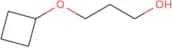
CAS:Versatile small molecule scaffoldFormula:C7H12O2Purity:Min. 95%Molecular weight:128.17 g/mol3-Cyclobutoxypropan-1-ol
CAS:Versatile small molecule scaffoldFormula:C7H14O2Purity:Min. 95%Molecular weight:130.18 g/mol(R)-N-Boc-2-aminobutylamine
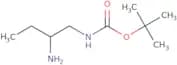
CAS:Versatile small molecule scaffoldFormula:C9H20N2O2Purity:Min. 95%Molecular weight:188.27 g/moltert-Butyl 1,4,5-oxadiazepane-4-carboxylate
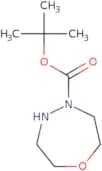
CAS:Versatile small molecule scaffoldFormula:C9H18N2O3Purity:Min. 95%Molecular weight:202.25 g/mol(E)-2-(Furan-2-yl)ethene-1-sulfonyl fluoride
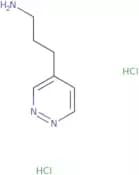
CAS:Versatile small molecule scaffoldFormula:C6H5FO3SPurity:Min. 95%Molecular weight:176.17 g/mol3-(Pyridazin-4-yl)propan-1-amine dihydrochloride
CAS:Versatile small molecule scaffold
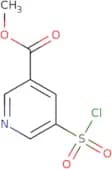
Formula:C7H13Cl2N3Purity:Min. 95%Molecular weight:210.1 g/molMethyl 5-(chlorosulfonyl)pyridine-3-carboxylate
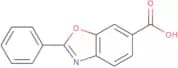
CAS:Versatile small molecule scaffoldFormula:C7H6ClNO4SPurity:Min. 95%Molecular weight:235.65 g/mol2-Phenyl-1,3-benzoxazole-6-carboxylic acid
CAS:Versatile small molecule scaffoldFormula:C14H9NO3Purity:Min. 95%Color and Shape:PowderMolecular weight:239.23 g/mol2-(4-Nitro-1H-indol-1-yl)acetic acid
CAS:Versatile small molecule scaffoldFormula:C10H8N2O4Purity:Min. 95%Molecular weight:220.18 g/moltert-Butyl N-(1-formylcyclohexyl)carbamate
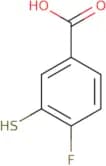
CAS:Versatile small molecule scaffoldFormula:C12H21NO3Purity:Min. 95%Molecular weight:227.3 g/mol4-Fluoro-3-sulfanylbenzoic acid
CAS:Versatile small molecule scaffoldFormula:C7H5FO2SPurity:Min. 95%Molecular weight:172.18 g/molBicyclo[2.2.1]hept-2-en-2-ylboronic acid pinacol ester
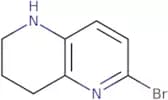
CAS:Versatile small molecule scaffoldFormula:C13H23BO3Purity:Min. 95%Molecular weight:238.13 g/mol6-bromo-1,2,3,4-tetrahydro-1,5-naphthyridine
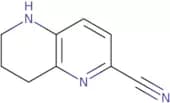
CAS:Versatile small molecule scaffoldFormula:C8H9BrN2Purity:Min. 95%Molecular weight:213.1 g/mol5,6,7,8-Tetrahydro-1,5-naphthyridine-2-carbonitrile
CAS:Versatile small molecule scaffoldFormula:C9H9N3Purity:Min. 95%Molecular weight:159.19 g/moltert-Butyl 2-[(pentan-3-ylidene)amino]acetate
CAS:Versatile small molecule scaffoldFormula:C11H21NO2Purity:Min. 95%Molecular weight:199.29 g/mol3-Cyclopropyl-3-methylbutan-1-ol
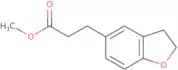
CAS:Versatile small molecule scaffoldFormula:C8H16OPurity:Min. 95%Molecular weight:128.21 g/molMethyl 3-(2,3-dihydro-1-benzofuran-5-yl)propanoate
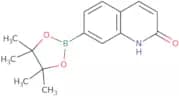
CAS:Versatile small molecule scaffoldFormula:C12H14O3Purity:Min. 95%Molecular weight:206.24 g/mol7-(Tetramethyl-1,3,2-dioxaborolan-2-yl)-1,2-dihydroquinolin-2-one
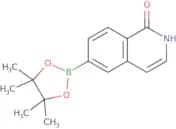
CAS:Versatile small molecule scaffoldFormula:C15H18BNO3Purity:Min. 95%Molecular weight:271.12 g/mol6-(4,4,5,5-Tetramethyl-1,3,2-dioxaborolan-2-yl)-2H-isoquinolin-1-one
CAS:Versatile small molecule scaffoldFormula:C15H18BNO3Purity:Min. 95%Molecular weight:271.11 g/mol7-(4,4,5,5-Tetramethyl-1,3,2-dioxaborolan-2-yl)-2H-benzo[b][1,4]oxazin-3(4H)-one
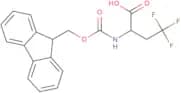
CAS:Versatile small molecule scaffoldFormula:C14H18BNO4Purity:Min. 95%Molecular weight:275.11 g/molFMOC-2-Amino-4,4,4-trifluorobutyric acid
CAS:Versatile small molecule scaffold
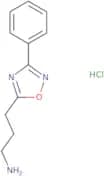
Formula:C19H16F3NO4Purity:Min. 95%Molecular weight:379.3 g/mol3-(3-Phenyl-1,2,4-oxadiazol-5-yl)propan-1-amine hydrochloride
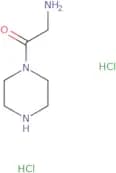
CAS:Versatile small molecule scaffoldFormula:C11H14ClN3OPurity:Min. 95%Molecular weight:239.7 g/mol2-Amino-1-(piperazin-1-yl)ethan-1-one dihydrochloride
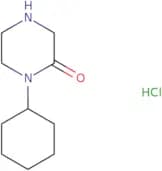
CAS:Versatile small molecule scaffoldFormula:C6H15Cl2N3OPurity:Min. 95%Molecular weight:216.11 g/mol1-Cyclohexylpiperazin-2-one hydrochloride
CAS:Versatile small molecule scaffold
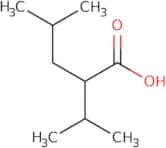
Formula:C10H19ClN2OPurity:Min. 95%Molecular weight:218.72 g/mol4-Methyl-2-(propan-2-yl)pentanoic acid
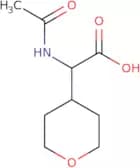
CAS:Versatile small molecule scaffoldFormula:C9H18O2Purity:Min. 95%Molecular weight:158.24 g/mol2-Acetamido-2-(oxan-4-yl)acetic acid
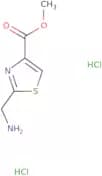
CAS:Versatile small molecule scaffoldFormula:C9H15NO4Purity:Min. 95%Molecular weight:201.22 g/molMethyl 2-(Aminomethyl)-1,3-Thiazole-4-Carboxylate Dihydrochloride
CAS:Versatile small molecule scaffoldFormula:C6H10Cl2N2O2SPurity:Min. 95%Molecular weight:245.13 g/mol2-({[(9H-Fluoren-9-yl)methoxy]carbonyl}amino)-2-(2-methoxyphenyl)acetic acid
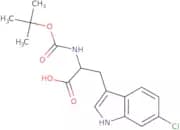
CAS:Versatile small molecule scaffoldFormula:C24H21NO5Purity:Min. 95%Molecular weight:403.4 g/mol6-Chloro-N-Boc-DL-tryptophan
CAS:Versatile small molecule scaffold
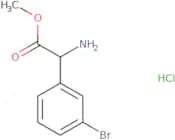
Formula:C16H19ClN2O4Purity:Min. 95%Molecular weight:338.79 g/molMethyl Amino(3-bromophenyl)acetate Hydrochloride
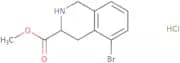
CAS:Versatile small molecule scaffoldFormula:C9H10NO2Br·HClPurity:Min. 95%Molecular weight:280.54 g/mol5-Bromo-1,2,3,4-tetrahydroisoquinoline-3-carboxylic acid methyl ester hydrochloride
CAS:Versatile small molecule scaffold
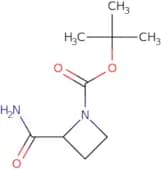
Formula:C11H13BrClNO2Purity:Min. 95%Molecular weight:306.58 g/moltert-Butyl 2-carbamoylazetidine-1-carboxylate
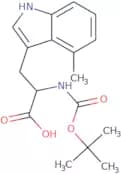
CAS:Tert-Butyl 2-carbamoylazetidine-1-carboxylate is a covalent inhibitor of the enzyme lipase, which is responsible for breaking down fats and other lipids in the body. Tert-Butyl 2-carbamoylazetidine-1-carboxylate has been shown to inhibit the production of prostaglandins, which are involved in inflammation. It also inhibits cellular monoacylglycerol lipase (MAGL) and cyclooxygenase 2 (COX2). This agent can be used to treat inflammatory disorders, such as arthritis and colitis.Formula:C9H16N2O3Purity:Min. 95%Molecular weight:200.24 g/molBoc-4-methyl-DL-tryptophan
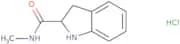
CAS:Versatile small molecule scaffoldFormula:C17H22N2O4Purity:Min. 95%Molecular weight:318.37 g/molN-Methyl-2,3-dihydro-1H-indole-2-carboxamide hydrochloride
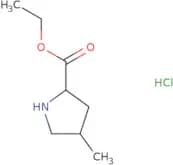
CAS:Versatile small molecule scaffoldFormula:C10H13ClN2OPurity:Min. 95%Molecular weight:212.67 g/molEthyl 4-methylpyrrolidine-2-carboxylate hydrochloride
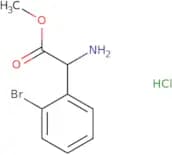
CAS:Versatile small molecule scaffoldFormula:C8H16ClNO2Purity:Min. 95%Molecular weight:193.67 g/molMethyl amino(2-bromophenyl)acetate hydrochloride
CAS:Versatile small molecule scaffold
Formula:C9H11BrClNO2Purity:Min. 95%Molecular weight:280.54 g/mol2-{[(9H-Fluoren-9-yl)methoxy]carbonyl}-6-methoxy-1H,2H,3H,4H,9H-pyrido[3,4-b]indole-1-carboxylic acid
CAS:Versatile small molecule scaffoldFormula:C28H24N2O5Purity:Min. 95%Molecular weight:468.5 g/mol3-cyclopentyl-2-({[(9h-fluoren-9-yl)methoxy]carbonyl}amino)propanoic acid
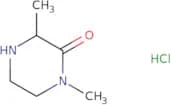
CAS:Versatile small molecule scaffoldFormula:C23H25NO4Purity:Min. 95%Molecular weight:379.4 g/mol1,3-Dimethylpiperazin-2-one hydrochloride
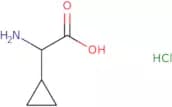
CAS:Versatile small molecule scaffoldFormula:C6H12N2O·HClPurity:Min. 95%Molecular weight:164.64 g/molAmino(cyclopropyl)acetic acid HCl
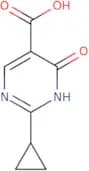
CAS:Amino(cyclopropyl)acetic acid HCl is a synthetic insecticide that belongs to the class of carbamates. It is used as a contact and stomach poison for controlling insects such as cockroaches, fleas, and ticks. Amino(cyclopropyl)acetic acid HCl has been shown to have an LD50 of 1.6 mg/kg after oral administration in rats. The compound also inhibits the synthesis of proteins in insects and has been validated using bioassays against a range of target pests.Formula:C5H9NO2·ClHPurity:Min. 95%Molecular weight:151.59 g/mol2-Cyclopropyl-6-oxo-1,6-dihydropyrimidine-5-carboxylic acid
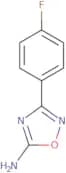
CAS:Versatile small molecule scaffoldFormula:C8H8N2O3Purity:Min. 95%Molecular weight:180.16 g/mol3-(4-Fluorophenyl)-1,2,4-oxadiazol-5-amine
CAS:Versatile small molecule scaffoldFormula:C8H6FN3OPurity:Min. 95%Molecular weight:179.15 g/mol(2R,3S)-4-{[(9H-Fluoren-9-yl)methoxy]carbonyl}-2-methylmorpholine-3-carboxylic acid
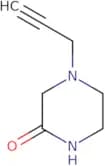
CAS:Versatile small molecule scaffoldFormula:C21H21NO5Purity:Min. 95%Molecular weight:367.4 g/mol4-(Prop-2-yn-1-yl)piperazin-2-one
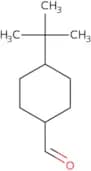
CAS:Versatile small molecule scaffoldFormula:C7H10N2OPurity:Min. 95%Molecular weight:138.17 g/mol4-tert-Butylcyclohexane-1-carbaldehyde
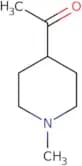
CAS:Versatile small molecule scaffoldFormula:C11H20OPurity:Min. 95%Molecular weight:168.28 g/mol1-(1-Methyl-piperidin-4-yl)-ethanone
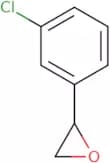
CAS:Versatile small molecule scaffoldFormula:C8H15NOPurity:Min. 95%Molecular weight:141.21 g/mol2-(3-Chloro-phenyl)-oxirane
CAS:2-(3-Chloro-phenyl)-oxirane is a reactive molecule with the chemical formula C6H4ClO2. It is an epoxide that can be obtained by ring-opening of acetone cyanohydrin. 2-(3-Chloro-phenyl)-oxirane has been used as a glycosidic bond in the synthesis of α-amino acid derivatives and as a substrate for ring opening polymerization. This compound is also used to study the mechanism of enantioselective reactions, such as kinetic and thermodynamic studies, which can lead to the development of new methods for producing enantiopure compounds. 2-(3-Chloro-phenyl)-oxirane has been shown to inhibit growth in E. coli K12 and S. typhimurium at concentrations between 10 and 100 μM; it also inhibits growth in ovary cells at concentrations between 5 and 50 μM. The inhibition of bacterialFormula:C8H7ClOPurity:Min. 95%Molecular weight:154.6 g/mol2-(3-Nitrophenyl)oxirane
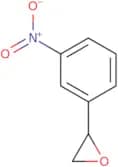
CAS:2-(3-Nitrophenyl)oxirane is an oxidase inhibitor that inhibits the activity of many oxidases, including monoamine oxidases and aldehyde oxidases. It has been shown to inhibit the oxidative deamination of dibenamine, which is catalyzed by dehydrogenase. 2-(3-Nitrophenyl)oxirane also reacts with metal ions such as copper and zinc, forming a complex that can be reduced back to the parent compound by acceptor molecules such as NADH or glutathione. 2-(3-Nitrophenyl)oxirane binds to receptors in the brain and other organs and may inhibit neurotransmitter release from nerve endings. 2-(3-Nitrophenyl)oxirane inhibits acid production by inhibiting the activity of acid cholinesterase, which breaks down acetylcholine at synapses. The resulting accumulation of acetylcholine leads to paralysis of muscles in voluntary muscles (eFormula:C8H7NO3Purity:Min. 95%Molecular weight:165.15 g/mol3-(4-Nitrophenyl)propan-1-ol
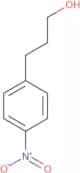
CAS:Versatile small molecule scaffold
Formula:C9H11NO3Purity:Min. 95%Molecular weight:181.19 g/mol2-Methyl-decahydroquinoline
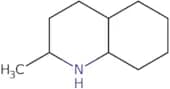
CAS:2-Methyl-decahydroquinoline is a chemical compound of the quinoline group. It is a colorless solid that can be prepared by reacting carbon disulfide with chloroacetanilides in the presence of hydrochloric acid. The reaction mechanism of 2-methyl-decahydroquinoline is based on the substitution of chlorine by hydrogen, which produces an alkylthio group. This compound can be used to treat wastewater and has been found to have growth regulatory properties when used as an alkylsulfonyl fluoride reagent. It also has been shown to be a potential intermediate for the synthesis of thiocarbamates, oxime derivatives, and c1-c4 haloalkyls.
Formula:C10H19NPurity:Min. 95%Molecular weight:153.26 g/mol1-(4-Bromophenyl)-5-methyl-1H-1,2,3-triazole-4-carboxylic acid
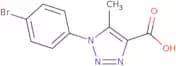
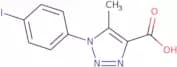
CAS:Versatile small molecule scaffoldFormula:C10H8BrN3O2Purity:Min. 95%Molecular weight:282.1 g/mol1-(4-Iodophenyl)-5-methyl-1H-1,2,3-triazole-4-carboxylic acid
CAS:Versatile small molecule scaffold
Formula:C10H8IN3O2Purity:Min. 95%Molecular weight:329.09 g/molPropionic acid N'-phenyl-hydrazide
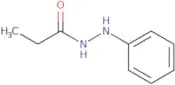
CAS:Versatile small molecule scaffold
Formula:C9H12N2OPurity:Min. 95%Molecular weight:164.2 g/mol2,5-Dicyanopyridine
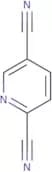
CAS:2,5-Dicyanopyridine is a ligand that can form coordination complexes with metal ions. It has been shown to form a trimeric structure in nonpolar solvents. 2,5-Dicyanopyridine is also able to act as a substrate for the hydroxy group and cyclopenta ring cleavage of epoxides. The unpaired electron on the nitrogen atom in 2,5-dicyanopyridine makes it an excellent nucleophile in nature. This property may be used to convert feedstock into valuable products such as ammonia or ethylene oxide.
Formula:C7H3N3Purity:Min. 95%Molecular weight:129.12 g/mol3-Bromo-4,5-dimethoxybenzoic acid
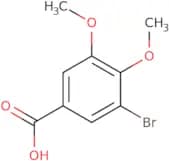
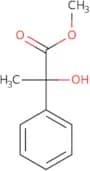
CAS:3-Bromo-4,5-dimethoxybenzoic acid is an ether that is used in the synthesis of bromophenols. It can be prepared by reacting bromonaphthalene with sodium methoxide in methanol. 3-Bromo-4,5-dimethoxybenzoic acid has a methyl ether side chain. The compound is also known as bromophenol and it is a polysiphonia extract. This compound reacts with phenols to form ethers and the reaction product can then be purified by crystallization or vacuum distillation.Formula:C9H9BrO4Purity:Min. 95%Molecular weight:261.07 g/molMethyl 2-hydroxy-2-phenylpropanoate
CAS:Methyl 2-hydroxy-2-phenylpropanoate is an organic compound that contains a nitrogen atom. It is the product of the reaction between Grignard reagent and alkynyl group. This reactive chemical can be used in agricultural chemistry as a fungicide. Methyl 2-hydroxy-2-phenylpropanoate also has a functional group and can be used as an analog for other compounds, such as oxazolidinones and alkynyl amines. Methyl 2-hydroxy-2-phenylpropanoate may be synthesized by reacting methyl 2-chloroacetoacetate with hydroxylamine. The nitrogen atoms on this molecule are important for the formation of bonds with other molecules, which is why it is so reactive. Methyl 2-hydroxy-2-phenylpropanoate has been shown to inhibit collagen production in plants and to have receptor activity against fungi.
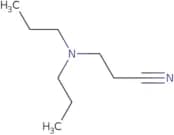
Formula:C10H12O3Purity:Min. 95%Molecular weight:180.2 g/mol3-(Dipropylamino)propanenitrile
CAS:Versatile small molecule scaffoldFormula:C9H18N2Purity:Min. 95%Molecular weight:154.25 g/molRef: 3D-VAA73311
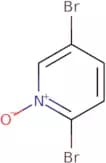
1g798.00€5gTo inquire10gTo inquire100mg202.00€250mg310.00€500mgTo inquire2500mg1,155.00€2,5-Dibromopyridine 1-oxide
CAS:Versatile small molecule scaffold
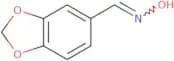
Formula:C5H3Br2NOPurity:Min. 95%Molecular weight:252.89 g/molN-(1,3-Dioxaindan-5-ylmethylidene)hydroxylamine
CAS:Controlled ProductN-(1,3-Dioxaindan-5-ylmethylidene)hydroxylamine is a chemical compound that is used as an intermediate in the synthesis of other compounds. It has been shown to increase tyrosinase activity and inhibit tyrosinase production in vitro. N-(1,3-Dioxaindan-5-ylmethylidene)hydroxylamine is also an aldoxime, which reacts with aluminium to form an insoluble aluminium hydroxide precipitate. This reaction can be used to precipitate aluminum from solution. Reaction with sodium carbonate forms an insoluble sodium carbonate precipitate, which can be useful for removing residual aluminum after precipitation. The reaction of N-(1,3-dioxaindan-5-ylmethylidene)hydroxylamine with propionate or methyl ethyl chloride produces a polymerized product and piperonal respectively. Reaction of this compound with benzoic acid yields theFormula:C8H7NO3Purity:Min. 95%Molecular weight:165.15 g/mol4-(Chloroacetyl)-3,4-dihydro-2H-1,4-benzothiazine
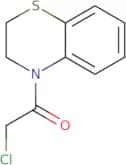
CAS:Versatile small molecule scaffoldFormula:C10H10ClNOSPurity:Min. 95%Molecular weight:227.71 g/mol2-(Diethoxymethyl)thiirane
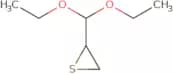
CAS:Versatile small molecule scaffoldFormula:C7H14O2SPurity:Min. 95%Molecular weight:162.25 g/molEthyl 4,6-dioxoheptanoate
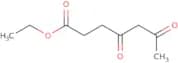
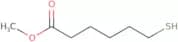
CAS:Versatile small molecule scaffoldFormula:C9H14O4Purity:Min. 95%Molecular weight:186.2 g/molMethyl 6-sulfanylhexanoate
CAS:Methyl 6-sulfanylhexanoate (MSH) is a diphenylacetylene derivative that has been shown to be able to form a chemical bond with gold nanoparticles. MSH can be synthesized by the reaction of sulfur, ammonia, and methyl alcohol in an ionic liquid, followed by phase transfer catalytic reduction. This compound has been shown to act as a functional group for the synthesis of amides and sulfides. MSH also has the ability to absorb infrared light due to its thiolate functional group. In addition, MSH is able to function as a hydrogen-bonding donor or acceptor in chemical reactions, which can be useful for sensors or indicator compounds.Formula:C7H14O2SPurity:Min. 95%Molecular weight:162.25 g/mol
![3-Methyl-1-phenyl-1H-pyrazolo[3,4-b]pyridin-5-amine hydrochloride](/_next/image/?url=https%3A%2Fstatic.cymitquimica.com%2Fproducts%2F3D%2Fthumb-webp%2FUWC30026.webp&w=3840&q=75)

![[R]-1-Boc-3-Bromopyrrolidine](/_next/image/?url=https%3A%2Fstatic.cymitquimica.com%2Fproducts%2F3D%2Fthumb-webp%2FUXA66097.webp&w=3840&q=75)

![tert-Butyl 6-bromo-3,4-dihydrospiro[1-benzopyran-2,4'-piperidine]-1'-carboxylate](/_next/image/?url=https%3A%2Fstatic.cymitquimica.com%2Fproducts%2F3D%2Fthumb-webp%2FUXB37464.webp&w=3840&q=75)

![8-bromoimidazo[1,2-a]pyridine-2-carbaldehyde](/_next/image/?url=https%3A%2Fstatic.cymitquimica.com%2Fproducts%2F3D%2Fthumb-webp%2FUXB37512.webp&w=3840&q=75)
![7-bromo-2-methylimidazo[1,2-a]pyridine](/_next/image/?url=https%3A%2Fstatic.cymitquimica.com%2Fproducts%2F3D%2Fthumb-webp%2FUXB37540.webp&w=3840&q=75)
![2-Benzyl-2,6-diazaspiro[3.3]heptane dihydrochloride](/_next/image/?url=https%3A%2Fstatic.cymitquimica.com%2Fproducts%2F3D%2Fthumb-webp%2FUXB37585.webp&w=3840&q=75)
![2-Boc-2,7-diazaspiro[4.4]nonane-6-one](/_next/image/?url=https%3A%2Fstatic.cymitquimica.com%2Fproducts%2F3D%2Fthumb-webp%2FUXB37644.webp&w=3840&q=75)
![2-Benzyl-2,6-diazaspiro[3.3]heptane](/_next/image/?url=https%3A%2Fstatic.cymitquimica.com%2Fproducts%2F3D%2Fthumb-webp%2FUXB50828.webp&w=3840&q=75)






![Bicyclo[2.2.1]hept-2-en-2-ylboronic acid pinacol ester](/_next/image/?url=https%3A%2Fstatic.cymitquimica.com%2Fproducts%2F3D%2Fthumb-webp%2FUYB02146.webp&w=3840&q=75)
![tert-Butyl 2-[(pentan-3-ylidene)amino]acetate](/_next/image/?url=https%3A%2Fstatic.cymitquimica.com%2Fproducts%2F3D%2Fthumb-webp%2FUYB08673.webp&w=3840&q=75)

![7-(4,4,5,5-Tetramethyl-1,3,2-dioxaborolan-2-yl)-2H-benzo[b][1,4]oxazin-3(4H)-one](/_next/image/?url=https%3A%2Fstatic.cymitquimica.com%2Fproducts%2F3D%2Fthumb-webp%2FUYB13057.webp&w=3840&q=75)
![2-({[(9H-Fluoren-9-yl)methoxy]carbonyl}amino)-2-(2-methoxyphenyl)acetic acid](/_next/image/?url=https%3A%2Fstatic.cymitquimica.com%2Fproducts%2F3D%2Fthumb-webp%2FUYB18323.webp&w=3840&q=75)
![2-{[(9H-Fluoren-9-yl)methoxy]carbonyl}-6-methoxy-1H,2H,3H,4H,9H-pyrido[3,4-b]indole-1-carboxylic a…](/_next/image/?url=https%3A%2Fstatic.cymitquimica.com%2Fproducts%2F3D%2Fthumb-webp%2FUYB41681.webp&w=3840&q=75)
![3-cyclopentyl-2-({[(9h-fluoren-9-yl)methoxy]carbonyl}amino)propanoic acid](/_next/image/?url=https%3A%2Fstatic.cymitquimica.com%2Fproducts%2F3D%2Fthumb-webp%2FUYB42204.webp&w=3840&q=75)
![(2R,3S)-4-{[(9H-Fluoren-9-yl)methoxy]carbonyl}-2-methylmorpholine-3-carboxylic acid](/_next/image/?url=https%3A%2Fstatic.cymitquimica.com%2Fproducts%2F3D%2Fthumb-webp%2FUYB60331.webp&w=3840&q=75)