Building Blocks
Subcategories of "Building Blocks"
- Boronic Acids & Boronic Acid Derivatives(5,781 products)
- Chiral Building Blocks(1,242 products)
- Hydrocarbon Building Blocks(6,101 products)
- Organic Building Blocks(61,038 products)
Found 205338 products of "Building Blocks"
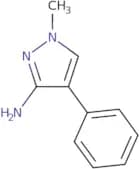
1-Methyl-4-phenyl-1H-pyrazol-3-amine
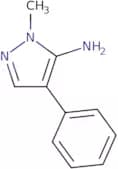
CAS:1-Methyl-4-phenyl-1H-pyrazol-3-amine is a ligand that has structural similarity to the class of pyrimidine derivatives. It also binds to the pharmacophoric sites of the receptor. 1MPD has shown affinity for both dopamine and serotonin receptors, but not for other receptors, in vitro.Formula:C10H11N3Purity:Min. 95%Molecular weight:173.21 g/mol1H-Pyrazol-5-amine, 1-methyl-4-phenyl-
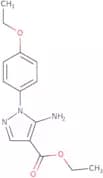
CAS:Versatile small molecule scaffoldFormula:C10H11N3Purity:Min. 95%Molecular weight:173.21 g/molEthyl 5-amino-1-(4-ethoxyphenyl)-1H-pyrazole-4-carboxylate
CAS:Versatile small molecule scaffold
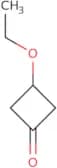
Formula:C14H17N3O3Purity:Min. 95%Molecular weight:275.3 g/mol3-Ethoxycyclobutan-1-one
CAS:Versatile small molecule scaffold
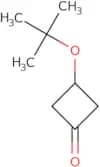
Formula:C6H10O2Purity:Min. 95%Molecular weight:114.14 g/mol-3(tert-butoxy)cyclobutanone
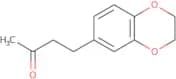
CAS:The compound (-3(tert-butoxy)cyclobutanone) is a stereoselective hydroxylation of 4-cyanopyridine catalyzed by acetonitrile in the presence of sodium as a base. The reaction product is an unsymmetrical aldehyde with two hydroxyl groups on opposite sides of the ring. This synthesis can be carried out in one step, and the amines that are used as starting materials can be varied to synthesize different products. The reaction proceeds via nucleophilic attack on the nitro group of 5-nitroquinoline by chloride ion to yield an intermediate that undergoes hydrolysis with water and elimination of chloride ion to give 2-hydroxy-5-(tosyloxy)pyridine. This intermediate then reacts with ferrocene and vinyl ether in acetonitrile to give (-3(tert-butoxy)cyclobutanone).Formula:C8H14O2Purity:Min. 95%Molecular weight:142.2 g/mol4-(2,3-Dihydro-1,4-benzodioxin-6-yl)butan-2-one
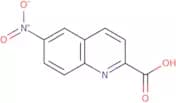
CAS:Versatile small molecule scaffoldFormula:C12H14O3Purity:Min. 95%Molecular weight:206.24 g/mol6-nitroquinoline-2-carboxylic acid
CAS:Versatile small molecule scaffoldFormula:C10H6N2O4Purity:Min. 95%Molecular weight:218.2 g/molN-[(2-Oxocyclohexyl)methyl]formamide
CAS:Versatile small molecule scaffold
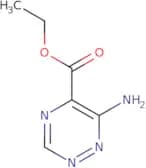
Formula:C8H13NO2Purity:Min. 95%Molecular weight:155.19 g/molEthyl 6-amino-1,2,4-triazine-5-carboxylate
CAS:Versatile small molecule scaffold
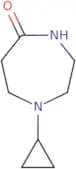
Formula:C6H8N4O2Purity:Min. 95%Molecular weight:168.15 g/mol1-Cyclopropyl-1,4-diazepan-5-one
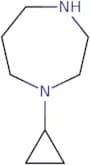
CAS:Versatile small molecule scaffoldFormula:C8H14N2OPurity:Min. 95%Molecular weight:154.21 g/mol1-cyclopropyl-1,4-diazepane
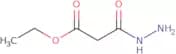
CAS:1-Cyclopropyl-1,4-diazepane is a serotonin receptor antagonist that has been shown to inhibit platelet aggregation by inhibiting the release of serotonin from platelets. It inhibits the binding of histamine to its receptor and prevents the activation of H3 receptors in the brain. 1-Cyclopropyl-1,4-diazepane is an aromatic heterocycle that binds to benzamide receptors on the transporter protein. This drug inhibits serotonin reuptake by blocking serotonin transporters and may also inhibit cox-1 activity. 1-Cyclopropyl-1,4-diazepane may be used for treating disorders such as ischemic heart disease, angina pectoris, and hypertension.Formula:C8H16N2Purity:Min. 95%Molecular weight:140.22 g/molN1-Ethylmalonohydrazide
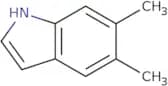
CAS:N1-Ethylmalonohydrazide (NEMH) is a hydroxylase ligand that has been shown to have anticancer activity. It binds to the active site of the enzyme, which converts 4-nitrophenylacetic acid into 4-aminophenol and carbon dioxide. NEMH is a precursor to the anticancer drug, melphalan. The anticancer activity of NEMH is due to its ability to crosslink DNA molecules, thereby inhibiting DNA synthesis. It also has an effect on the conformation of the molecule and may be responsible for its anti-cancer effects.Formula:C5H10N2O3Purity:Min. 95%Color and Shape:PowderMolecular weight:146.14 g/mol5,6-Dimethyl-1H-indole
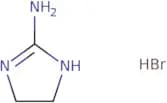
CAS:Versatile small molecule scaffoldFormula:C10H11NPurity:Min. 95%Molecular weight:145.2 g/molImidazolidin-2-imine hydrobromide
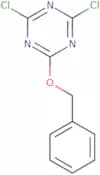
CAS:Versatile small molecule scaffoldFormula:C3H8BrN3Purity:Min. 95%Molecular weight:166.02 g/mol2-(Benzyloxy)-4,6-dichloro-1,3,5-triazine
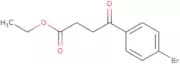
CAS:2-(Benzyloxy)-4,6-dichloro-1,3,5-triazine is an aromatic compound that has a benzene ring at the end of its structure. This compound undergoes cleavage reactions with chlorides and toluene. The 2-(Benzyloxy)-4,6-dichloro-1,3,5-triazine can be used in Friedel-Crafts reactions to produce benzene from ethylene. It also can be used in the production of ethers by reacting with alcohols.Formula:C10H7Cl2N3OPurity:Min. 95%Molecular weight:256.08 g/molEthyl 4-(4-bromophenyl)-4-oxobutyrate
CAS:Versatile small molecule scaffoldFormula:C12H13BrO3Purity:Min. 95%Molecular weight:285.13 g/mol2-[3-(Trifluoromethyl)phenyl]morpholine
CAS:2-[3-(Trifluoromethyl)phenyl]morpholine (TFM) is a hydrophobic, insoluble compound that can be reconstituted in water at a concentration of 0.2%. TFM has been shown to have an affinity for cancer cells. It targets the cell membrane and enters the cell through iontophoresis by inserting itself into the lipid bilayer. Once inside, it disrupts the cell membrane and induces apoptosis by disrupting protein synthesis. TFM is used in diagnostic tests to detect cancerous cells and as a diluent for other drugs during injection procedures. This drug should only be administered in high concentrations (above 5 mg/mL).Formula:C11H12F3NOPurity:Min. 95%Molecular weight:231.21 g/mol1,3-Dicyclopropylpropane-1,3-dione
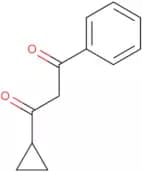
CAS:Versatile small molecule scaffoldFormula:C9H12O2Purity:Min. 95%Molecular weight:152.19 g/mol1-Cyclopropyl-3-phenylpropane-1,3-dione
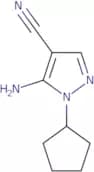
CAS:Versatile small molecule scaffoldFormula:C12H12O2Purity:Min. 95%Molecular weight:188.22 g/mol5-Amino-1-cyclopentyl-1H-pyrazole-4-carbonitrile
CAS:Versatile small molecule scaffold
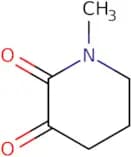
Formula:C9H12N4Purity:Min. 95%Molecular weight:176.22 g/mol1-Methylpiperidine-2,3-dione
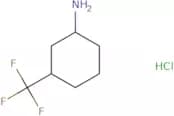
CAS:Versatile small molecule scaffoldFormula:C6H9NO2Purity:Min. 95%Molecular weight:127.14 g/molrac-(1R,3S)-3-(Trifluoromethyl)cyclohexan-1-amine hydrochloride
CAS:Versatile small molecule scaffold
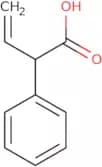
Formula:C7H13ClF3NPurity:Min. 95%Molecular weight:203.63 g/mol2-Phenylbut-3-enoic acid
CAS:2-Phenylbut-3-enoic acid is an organic compound that contains a hydroxyl group in its molecular structure. This compound can be synthesized by the ring opening of a cyclopropane carboxylic acid and an alkene. The reaction takes place at temperatures between -78 and -35 degrees Celsius, which is below the boiling point of water. 2-Phenylbut-3-enoic acid is often used as a reagent for catalyzing reactions, especially those that are kinetically controlled. The nucleophile (a reactive chemical species with an affinity for positively charged regions of other molecules) can react with protonated carbonyl groups to form acylium ions, which are highly reactive. These reactions are known as carbonyl addition reactions or Michael reactions. 2-Phenylbut-3-enoic acid also has the ability to act as a nucleophile and react with alkyl halides, such as methoxy
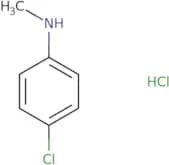
Formula:C10H10O2Purity:Min. 95%Molecular weight:162.18 g/molN-Methyl 4-chloroaniline hydrochloride
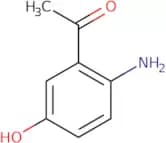
CAS:N-Methyl 4-chloroaniline hydrochloride is a cholinesterase inhibitor that belongs to the group of organochlorines. It has been shown to be effective in demethylation and epoxidase activity in vitro. N-Methyl 4-chloroaniline hydrochloride is also an aminotransferase inhibitor, which inhibits the synthesis of the amino acid methionine. This drug has been shown to have an effect on rat liver microsomes and has been used as a model system for studying enzyme activities. The fluorescence assay shows that this compound binds to DNA and inhibits its transcription and replication, inhibiting cell growth.Formula:C7H9Cl2NPurity:Min. 95%Molecular weight:178.06 g/mol1-(2-Amino-5-hydroxyphenyl)ethanone
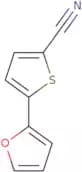
CAS:1-(2-Amino-5-hydroxyphenyl)ethanone is an inhibitor of topoisomerase enzymes. It binds to the enzyme, preventing it from breaking and rejoining DNA strands. This inhibition leads to abnormal DNA replication and cell death. The potency of this compound is determined by its ability to inhibit the enzyme in a kinetically competitive manner. 1-(2-Amino-5-hydroxyphenyl)ethanone has been shown to have inhibitory properties against acetaminophen (APAP)-induced liver injury in rats, and can be used as a synthetic intermediate for other drugs or chemical compounds.Formula:C8H9NO2Purity:Min. 95%Molecular weight:151.16 g/mol5-(5-Methylthiophen-2-yl)thiophene-2-carboxylic acid
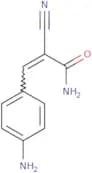
CAS:Versatile small molecule scaffoldFormula:C9H5NOSPurity:Min. 95%Molecular weight:175.21 g/mol3-(4-Aminophenyl)-2-cyanoprop-2-enamide
CAS:Versatile small molecule scaffold
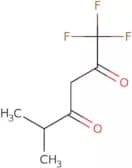
Formula:C10H9N3OPurity:Min. 95%Molecular weight:187.2 g/mol1,1,1-Trifluoro-5-methylhexane-2,4-dione
CAS:1,1,1-Trifluoro-5-methylhexane-2,4-dione is a fluorinated organic molecule that has been synthesized in the laboratory. It is an oily liquid with a boiling point of 56 °C and a melting point of -74 °C. The compound has been shown to crystallize in the orthorhombic system. 1,1,1-Trifluoro-5-methylhexane-2,4-dione can be used as a precursor in the synthesis of other compounds. This molecule is also expected to have properties that allow it to be used as an efficient x-ray absorber and x-ray fluorescence agent for spectroscopy studies at synchrotron radiation facilities.Formula:C7H9F3O2Purity:Min. 95%Molecular weight:182.14 g/molThiabicyclo[3.1.0]hexane-3,3-dione
CAS:Versatile small molecule scaffold
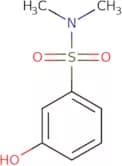
Formula:C5H8O2SPurity:Min. 95%Molecular weight:132.18 g/mol3-Hydroxy-N,N-dimethylbenzene-1-sulfonamide
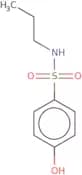
CAS:Versatile small molecule scaffoldFormula:C8H11NO3SPurity:Min. 95%Molecular weight:201.25 g/mol4-Hydroxy-N-propylbenzene-1-sulfonamide
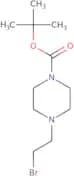
CAS:Versatile small molecule scaffoldFormula:C9H13NO3SPurity:Min. 95%Molecular weight:215.3 g/moltert-Butyl 4-(2-bromoethyl)piperazine-1-carboxylate
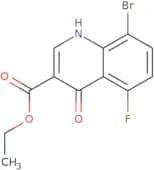
CAS:Versatile small molecule scaffoldFormula:C11H21N2O2BrPurity:Min. 95%Molecular weight:293.2 g/molEthyl 8-bromo-5-fluoro-4-hydroxyquinoline-3-carboxylate
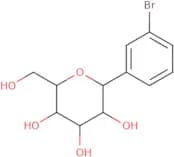
CAS:Ethyl 8-bromo-5-fluoro-4-hydroxyquinoline-3-carboxylate is a potent benzodiazepine receptor antagonist. It binds to the benzodiazepine receptor, preventing the binding of benzodiazepines and other drugs that act on this receptor. This drug has been shown to be a high affinity antagonist and has been successfully used in clinical trials for the treatment of anxiety disorders. The pharmacophore of ethyl 8-bromo-5-fluoro-4-hydroxyquinoline-3 -carboxylate is described by stepwise descriptor analysis, which identifies overlapping profiles with other benzodiazepine antagonists.Formula:C12H9BrFNO3Purity:Min. 95%Molecular weight:314.11 g/mol(2S,3R,4R,5S,6R)-2-(3-Bromophenyl)-6-(hydroxymethyl)oxane-3,4,5-triol
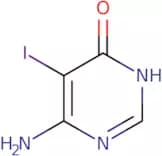
CAS:Versatile small molecule scaffoldFormula:C12H15BrO5Purity:Min. 95%Molecular weight:319.15 g/mol6-Amino-5-iodopyrimidin-4-ol
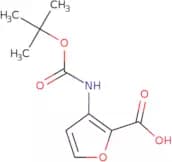
CAS:Versatile small molecule scaffoldFormula:C4H4IN3OPurity:Min. 95%Molecular weight:237 g/mol3-((tert-Butoxycarbonyl)amino)furan-2-carboxylic acid
CAS:Versatile small molecule scaffoldFormula:C10H13NO5Purity:Min. 95%Molecular weight:227.21 g/molFuro[3,2-d]pyrimidin-4(3H)-one
CAS:Furo[3,2-d]pyrimidin-4(3H)-one is a heterocyclic compound that has been reported to have anticoccidial properties. This compound has been shown to inhibit the growth of Eimeria tenella and Eimeria acervulina in vitro. Furo[3,2-d]pyrimidin-4(3H)-one also inhibits the synthesis of DNA in these protozoa.Formula:C6H4N2O2Purity:Min. 95%Molecular weight:136.11 g/mol5-[(tert-butoxy)carbonyl]-4H,5H,6H,7H-pyrazolo[1,5-a]pyrazine-3-carboxylic acid
CAS:Versatile small molecule scaffoldFormula:C12H17N3O4Purity:Min. 95%Molecular weight:267.3 g/mol1-Phenyl-3-(piperazin-1-yl)pyrrolidin-2-one
CAS:Versatile small molecule scaffoldFormula:C14H19N3OPurity:Min. 95%Molecular weight:245.32 g/molrac-3-[(2R,6S)-2,6-Dimethylmorpholin-4-yl]propan-1-ol
CAS:Versatile small molecule scaffoldFormula:C9H19NO2Purity:Min. 95%Molecular weight:173.3 g/mol4-[(3,4-Dihydro-2H-pyrrol-5-yl)amino]benzoic acid
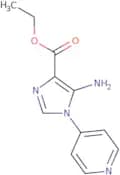
CAS:Versatile small molecule scaffoldFormula:C11H12N2O2Purity:Min. 95%Molecular weight:204.22 g/molEthyl 5-amino-1-(pyridin-4-yl)-1H-imidazole-4-carboxylate
CAS:Versatile small molecule scaffoldFormula:C11H12N4O2Purity:Min. 95%Molecular weight:232.24 g/molMethyl 2-[3,5-dimethyl-1-(pyridin-2-yl)-1H-pyrazol-4-yl]propanoate
CAS:Versatile small molecule scaffoldFormula:C14H17N3O2Purity:Min. 95%Molecular weight:259.3 g/molEthyl 2-[3-(trifluoromethyl)phenoxy]propanoate
CAS:Versatile small molecule scaffoldFormula:C12H13F3O3Purity:Min. 95%Molecular weight:262.22 g/mol4-Amino-2-cyclopropyl-2,3-dihydro-1H-isoindol-1-one
CAS:Versatile small molecule scaffoldFormula:C11H12N2OPurity:Min. 95%Molecular weight:188.23 g/mol1-(2-Bromo-5-methyl-1,3-thiazol-4-yl)ethan-1-one
CAS:Versatile small molecule scaffoldFormula:C6H6BrNOSPurity:Min. 95%Molecular weight:220.09 g/mol2-Bromo-6,7-dihydrobenzo[D]thiazol-4(5H)-one
CAS:Versatile small molecule scaffoldFormula:C7H6BrNOSPurity:Min. 95%Molecular weight:232.1 g/mol3-Amino-2-(4-fluorophenyl)propan-1-ol hydrochloride
CAS:Versatile small molecule scaffoldFormula:C9H13ClFNOPurity:Min. 95%Molecular weight:205.66 g/mol3-Amino-2-(4-methoxyphenyl)propan-1-ol hydrochloride
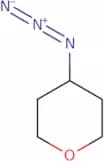
CAS:Versatile small molecule scaffoldFormula:C10H16ClNO2Purity:Min. 95%Molecular weight:217.69 g/mol4-Azidooxane
CAS:Versatile small molecule scaffoldFormula:C5H9N3OPurity:Min. 95%Molecular weight:127.1 g/mol2-[2-(Diphenylmethoxy)acetamido]-2-phenylacetamide
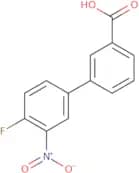
CAS:Versatile small molecule scaffoldFormula:C23H22N2O3Purity:Min. 95%Molecular weight:374.4 g/mol4'-Fluoro-3'-nitrobiphenyl-3-carboxylic acid
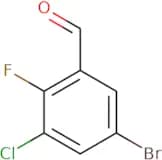
CAS:Versatile small molecule scaffoldFormula:C13H8FNO4Purity:Min. 95%Molecular weight:261.21 g/mol5-bromo-3-chloro-2-fluorobenzaldehyde
CAS:Versatile small molecule scaffoldFormula:C7H3BrClFOPurity:Min. 95%Molecular weight:237.5 g/mol6-[(3-Methoxyphenyl)methyl]-4-methyl-5H,6H-[1,2]diazolo[3,4-c]pyrazol-3-amine
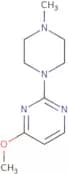
CAS:Versatile small molecule scaffoldFormula:C13H15N5OPurity:Min. 95%Molecular weight:257.29 g/mol4-Methoxy-2-(4-methylpiperazin-1-yl)pyrimidine
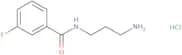
CAS:Versatile small molecule scaffoldFormula:C10H16N4OPurity:Min. 95%Molecular weight:208.26 g/molN-(3-Aminopropyl)-3-fluorobenzamide hydrochloride
CAS:Versatile small molecule scaffoldFormula:C10H14ClFN2OPurity:Min. 95%Molecular weight:232.68 g/mol4-Cyanobenzoic acid
CAS:4-Cyanobenzoic acid (4CB) is a benzene derivative that inhibits the activity of tyrosinase, an enzyme involved in the production of melanin. It is synthesized by reacting 2,4-dichlorobenzoic acid with sodium hydroxide and acetone. 4CB has been shown to have a potent inhibitory effect on the enzyme, with an isolated yield of up to 83%. The compound also shows strong hydrogen bonding interactions with water molecules and coordinates in a geometry where one of its oxygen atoms is double bonded to two nitrogen atoms. This structural analysis suggests that 4 CB may bind to tyrosinase through adsorption mechanism.
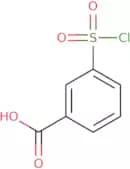
Formula:C8H5NO2Purity:Min. 95%Color and Shape:White PowderMolecular weight:147.13 g/mol3-(Chlorosulfonyl)benzoic acid
CAS:3-(Chlorosulfonyl)benzoic acid is a synthetic compound that inhibits histone lysine methylation. It has been shown to protect against neuronal injury and cognitive impairment. 3-(Chlorosulfonyl)benzoic acid also has an inhibitory effect on the activation of Sirt2, which is an enzyme involved in cellular processes such as cancer, diabetes, inflammation, and aging. 3-(Chlorosulfonyl)benzoic acid has low potency and is not very soluble in water. It can be used to treat metabolic disorders by increasing the amount of insulin released from the pancreas and lowering blood glucose levels.Formula:C7H5ClO4SPurity:Min. 95%Molecular weight:220.63 g/mol5-Chloro-1H-imidazo[4,5-b]pyridin-2(3H)-one
CAS:5-Chloro-1H-imidazo[4,5-b]pyridin-2(3H)-one is a chemical compound that is used in analytical chemistry as an insecticide. It has been shown to cause genotoxic activity in weevils exposed to light. The compound has also been shown to have long term efficacy in plants and toxicity studies on animals. 5-Chloro-1H-imidazo[4,5-b]pyridin-2(3H)-one is metabolized by detoxification enzymes and excreted through the urine.Purity:Min. 95%6-Chloro-1-methylpyridin-2(1H)-one
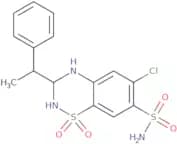
CAS:6-Chloro-1-methylpyridin-2(1H)-one is an insecticide and a heterocyclic compound. It is used to kill insects such as mites, ticks, and fleas. 6-Chloro-1-methylpyridin-2(1H)-one is also known as chlorantraniliprole, which has been shown to be effective against arthropods that are resistant to other compounds. This compound has an n-oxide group on the pyridine ring, which makes it more toxic than other compounds that have only one nitro group.Purity:Min. 95%6-Chloro-3,4-dihydro-3-(a-methylbenzyl)-2H-1,2,4-benzothiadiazine-7-sulfonamide 1,1-dioxide
CAS:6-Chloro-3,4-dihydro-3-(a-methylbenzyl)-2H-1,2,4-benzothiadiazine-7-sulfonamide 1,1-dioxide is an active metabolite of the drug benzbromarone. It is primarily administered as a diuretic to treat high blood pressure and congestive heart failure. The pharmacodynamics of this drug are related to its ability to inhibit the activity of sodium channels in vascular smooth muscle cells and thereby reduce the force of contraction and relax the vessel wall. 6CBDMTD has shown an increase in glomerular filtration rate in patients with congestive heart failure. This drug also decreases the plasma concentration of fatty acids by inhibiting the formation of lipoprotein particles. 6CBDMTD has been shown to be effective at lowering diastolic and systolic blood pressure levels in patients with hypertension.Formula:C15H16ClN3O4S2Purity:Min. 95%Molecular weight:401.89 g/molChlorobutanol
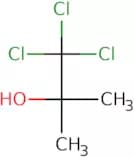
CAS:Chlorobutanol is an antimicrobial agent that is used in the preservation of pharmaceuticals, cosmetics, and other products. It has been shown to be effective against a variety of bacterial and fungal organisms. Chlorobutanol is also used as a preservative in topical ophthalmic preparations. In addition, chlorobutanol has been found to be a potent inhibitor of histone deacetylase (HDAC) activity, which may be due to its ability to bind to the active site of HDACs. This binding prevents acetylation of lysine residues on histones, thereby preventing transcriptional activation.Formula:C4H7OCl3Purity:Min. 95%Color and Shape:White To Off-White SolidMolecular weight:177.46 g/mol4-Chloro-2-aminophenol
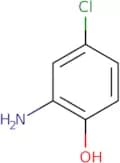
CAS:4-Chloro-2-aminophenol is a chemical compound that can be found in nature or synthesized. It has antibacterial properties and is used as an antimicrobial agent. 4-Chloro-2-aminophenol inhibits the growth of bacteria by inhibiting nitrogenase enzyme activity, which is required for the production of amino acids and nucleic acids. This compound also induces cytotoxicity and significant cell death in colorectal adenocarcinoma cells. 4-Chloro-2-aminophenol is a weak acid that reacts with hydrochloric acid to form a diazonium salt, which reacts with benzene to form an intramolecular hydrogen bond. The final product of this reaction is a solid phase microextraction (SPME) sorbent that can be used to extract analytes from liquid samples.
Formula:C6H6ClNOPurity:Min. 95%Molecular weight:143.57 g/mol5-Chloro-4-methylpyrimidine
CAS:Please enquire for more information about 5-Chloro-4-methylpyrimidine including the price, delivery time and more detailed product information at the technical inquiry form on this pageFormula:C5H5ClN2Purity:Min. 95%Molecular weight:128.56 g/mol2-Chloro-10-[3-[[3-(dimethylamino)propyl]methylamino]propyl]phenothiazine dihydrochloride
CAS:Please enquire for more information about 2-Chloro-10-[3-[[3-(dimethylamino)propyl]methylamino]propyl]phenothiazine dihydrochloride including the price, delivery time and more detailed product information at the technical inquiry form on this pageFormula:C21H28ClN3S•(HCl)2Purity:Min. 95%Molecular weight:462.91 g/molCinidon ethyl
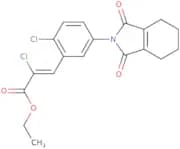
CAS:Please enquire for more information about Cinidon ethyl including the price, delivery time and more detailed product information at the technical inquiry form on this pageFormula:C19H17Cl2NO4Purity:Min. 95%Color and Shape:PowderMolecular weight:394.2 g/mol1-(2-Chlorophenyl)-2-(2H-tetrazol-2-yl)ethanone
CAS:Please enquire for more information about 1-(2-Chlorophenyl)-2-(2H-tetrazol-2-yl)ethanone including the price, delivery time and more detailed product information at the technical inquiry form on this page
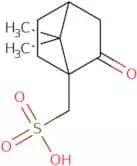
Formula:C9H7ClN4OPurity:Min. 95%Molecular weight:222.63 g/molDL-10-Camphorsulfonic acid
CAS:DL-10-Camphorsulfonic acid is a reaction component, reagent, and useful scaffold that can be used as a high quality research chemical. DL-10-Camphorsulfonic acid is a versatile building block for complex compounds with many uses, including as a speciality chemical for use in pharmaceuticals or as an intermediate for fine chemicals. It is also useful in the manufacture of many types of chemical products, such as pesticides and herbicides. DL-10-Camphorsulfonic acid can be used to produce dl-camphor sulfonic acid, which is an important ingredient in the production of plastics. CAS No. 5872-08-2.Formula:C10H16O4SPurity:Min. 95%Color and Shape:PowderMolecular weight:232.3 g/mol4-Chloro-1H-imidazo[4,5-c]pyridine
CAS:4-Chloro-1H-imidazo[4,5-c]pyridine (4CI) is a nucleoside analog that inhibits the replication of RNA and DNA. It has significant inhibitory activity against herpes simplex virus type 1 and human immunodeficiency virus type 1 (HIV-1). 4CI inhibits the synthesis of adenosine, an important component in the synthesis of RNA and DNA. This drug also has antiviral properties against influenza A and B viruses. 4CI's effect on plasma cholesterol levels is thought to be due to inhibition of 3-hydroxy-3-methylglutaryl coenzyme A reductase.Formula:C6H4ClN3Purity:Min. 95%Color and Shape:Off-White SolidMolecular weight:153.57 g/mol2-(Chloromethyl)-4-methylquinazoline
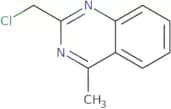
CAS:Inhibitor of SIRT1 deacetylase
Formula:C10H9ClN2Purity:Min. 95%Color and Shape:Off-White To Yellow SolidMolecular weight:192.64 g/molCopper(I) trifluoromethanesulfonate benzene complex
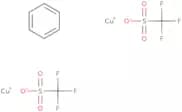
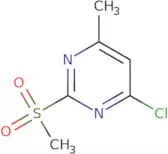
CAS:Copper trifluoromethanesulfonate is a copper complex that inhibits the activity of thrombin receptor and other diazo compounds. It has been shown to inhibit the activity of the cannabinoid receptors, sodium channels, and voltage-gated potassium channels. Copper trifluoromethanesulfonate can be used in organic chemistry as an alkylating agent or to form thioacetals. The activity of this compound is chiral, meaning that it can exist as two different enantiomers: (1) (S)-(+)-Copper(I) trifluoromethanesulfonate benzene complex and (2) (R)-(-)-Copper(I) trifluoromethanesulfonate benzene complex. These two enantiomers have different chemical properties, including their ability to bind to protein receptors.Formula:(CF3SO3Cu)2•C6H6Purity:Min. 95%Color and Shape:PowderMolecular weight:503.34 g/mol4-Chloro-6-methyl-2-(methylsulfonyl)pyrimidine
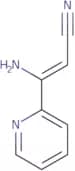
CAS:Versatile small molecule scaffoldFormula:C6H7ClN2O2SPurity:Min. 95%Molecular weight:206.65 g/mol3-Amino-3-(2-pyridinyl)acrylonitrile
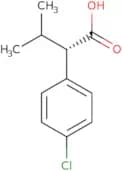
CAS:Versatile small molecule scaffoldFormula:C8H7N3Purity:Min. 95%Molecular weight:145.17 g/mol(S)-2-(4-Chlorophenyl)-3-methylbutanoic acid
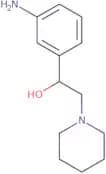
CAS:(S)-2-(4-Chlorophenyl)-3-methylbutanoic acid is a chiral molecule that has been shown to be an inhibitor of isovaleric acid. It can be used as a marker for the amino acid sequence. It has been reported that (S)-2-(4-chlorophenyl)-3-methylbutanoic acid is an endogenous metabolite in humans and its concentration can be measured by enzyme-linked immunosorbent assay, high-performance liquid chromatography, and optical monitoring. This compound has also been studied as a potential therapeutic agent for the treatment of Alzheimer's disease due to its ability to inhibit acetylcholinesterase activity. It can also be conjugated with other molecules to form amide or ester conjugates.Formula:C11H13ClO2Purity:Min. 95%Molecular weight:212.67 g/mol1-(3-Aminophenyl)-2-(piperidin-1-yl)ethan-1-ol
CAS:Versatile small molecule scaffoldFormula:C13H20N2OPurity:Min. 95%Molecular weight:220.31 g/mol6-Methylindolo[1,2-c]quinazolin-12-amine
CAS:6-Methylindolo[1,2-c]quinazolin-12-amine is a heterotetracyclic compound that contains a heterocyclic ring. It has been shown to inhibit the growth of bacteria and fungi, as well as promote apoptosis in cancer cells. 6-Methylindolo[1,2-c]quinazolin-12-amine also exhibits anti-inflammatory properties and can be used for the treatment of inflammatory diseases such as asthma.Formula:C16H13N3Purity:Min. 95%Molecular weight:247.29 g/molCyclooctane-1,5-diol
CAS:Cyclooctane-1,5-diol is a compound that consists of a carbonyl group and a hydroxyl group. It can be synthesized by the dehydrogenation of α-pinene. Cyclooctane-1,5-diol has been shown to have vibrational properties that are similar to those of intramolecular hydrogen. The 13C NMR spectrum displays strong signals at δ=54.7, δ=61.2, and δ=71.8 ppm corresponding to the carbonyl group and hydroxyl groups in the molecule. Cyclooctane-1,5-diol also has an ultraviolet absorption maximum at 265 nm and is a good nucleophile because it contains a reactive proton on its carbonyl group. Cyclooctane-1,5-diol is soluble in water and has chemical reactions with other compounds such as flavin or dinucleotide phosphate.br>br>Formula:C8H16O2Purity:Min. 95%Molecular weight:144.21 g/mol4-[(4-Methylphenyl)amino]-2,3-dihydro-1,6-thiophene-1,1-dione
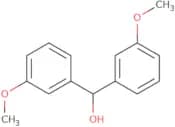
CAS:Versatile small molecule scaffoldFormula:C11H13NO2SPurity:Min. 95%Molecular weight:223.29 g/molBis(3-methoxyphenyl)methanol
CAS:Versatile small molecule scaffoldFormula:C15H16O3Purity:Min. 95%Molecular weight:244.28 g/mol2-{[(tert-butoxy)carbonyl]amino}-2-(4-methoxyphenyl)acetic acid
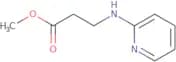
CAS:Versatile small molecule scaffoldFormula:C14H19NO5Purity:Min. 95%Molecular weight:281.3 g/molMethyl 3-(pyridin-2-ylamino)propanoate
CAS:Versatile small molecule scaffoldFormula:C9H12N2O2Purity:Min. 95%Molecular weight:180.2 g/mol5H,6H,7H,8H-Imidazo[1,2-a]pyridine-3-carboxylic acid
CAS:Versatile small molecule scaffoldFormula:C8H10N2O2Purity:Min. 95%Molecular weight:166.18 g/mol[1,2,4]Triazolo[1,5-a]pyrazin-8-amine
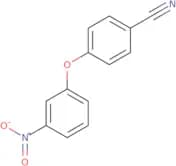
CAS:Versatile small molecule scaffoldFormula:C5H5N5Purity:Min. 95%Molecular weight:135.13 g/mol4-(3-Nitrophenoxy)benzonitrile
CAS:Versatile small molecule scaffold
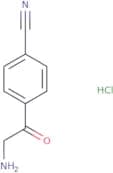
Formula:C13H8N2O3Purity:Min. 95%Molecular weight:240.21 g/mol4-(2-Aminoacetyl)benzonitrile hydrochloride
CAS:Versatile small molecule scaffoldFormula:C9H9ClN2OPurity:Min. 95%Molecular weight:196.63 g/mol5-[4-(Trifluoromethyl)phenyl]furan-2-carbaldehyde
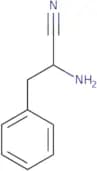
CAS:Versatile small molecule scaffoldFormula:C12H7F3O2Purity:Min. 95%Molecular weight:240.18 g/mol2-Amino-3-phenylpropanenitrile
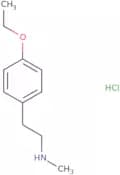
CAS:2-Amino-3-phenylpropanenitrile is an active form of a sulfoxide that has been shown to be effective in the treatment of brain tumors. It is chiral, with two enantiomers, and can be used as a diagnostic tool for the detection of brain tumors. The mechanism of action of 2-amino-3-phenylpropanenitrile is not fully understood, but it has been shown to have therapeutic effects on brain tumors in animal models. The stereoselective properties of this drug make it an attractive candidate for optimization and cancer treatment. Optimization studies have focused on the use of potassium t-butoxide in asymmetric synthesis, which may lead to improved therapeutic efficacy and reduced toxicity.Formula:C9H10N2Purity:Min. 95%Molecular weight:146.19 g/mol2-(4-Ethoxyphenyl)-N-methylethanamine hydrochloride
CAS:Controlled ProductVersatile small molecule scaffold
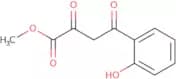
Formula:C11H18ClNOPurity:Min. 95%Molecular weight:215.72 g/molMethyl 4-(2-hydroxyphenyl)-2,4-dioxobutanoate
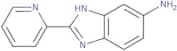
CAS:Methyl 4-(2-hydroxyphenyl)-2,4-dioxobutanoate is an organic compound that belongs to the class of pyrrole derivatives. It is a precursor for the synthesis of a number of pharmaceuticals and other organic compounds. Methyl 4-(2-hydroxyphenyl)-2,4-dioxobutanoate can be prepared by condensation of formaldehyde with 2,4-dihydroxyphenylacetic acid in acidic media. This reaction gives a mixture of methyl 4-(2-hydroxyphenyl)-2,4-dioxobutanoate and methyl 3-(2-hydroxyphenyl)-3,5-dioxopentanoate. The major product can be purified by recrystallization from methanol or ethanol.Formula:C11H10O5Purity:Min. 95%Molecular weight:222.19 g/mol2-(Pyridin-2-yl)-1H-1,3-benzodiazol-5-amine
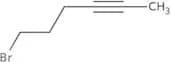
CAS:Versatile small molecule scaffoldFormula:C12H10N4Purity:Min. 95%Molecular weight:210.23 g/mol6-Bromohex-2-yne
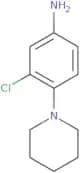
CAS:Versatile small molecule scaffoldFormula:C6H9BrPurity:Min. 95%Molecular weight:161.04 g/mol3-Chloro-4-piperidin-1-yl-phenylamine
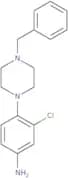
CAS:Versatile small molecule scaffoldFormula:C11H15ClN2Purity:Min. 95%Molecular weight:210.71 g/mol4-(4-Benzyl-1-piperazinyl)-3-chlorophenylamine
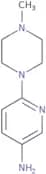
CAS:Versatile small molecule scaffoldFormula:C17H20ClN3Purity:Min. 95%Molecular weight:301.82 g/mol3-Amino-6-(4-methylpiperazin-1-yl)pyridine
CAS:Versatile small molecule scaffoldFormula:C10H16N4Purity:Min. 95%Molecular weight:192.26 g/mol3,6-Dibromopyrazolo[1,5-a]pyrimidine
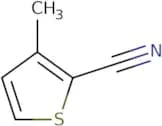
CAS:Versatile small molecule scaffoldFormula:C6H3Br2N3Purity:Min. 95%Molecular weight:276.92 g/mol3-Methylthiophene-2-carbonitrile
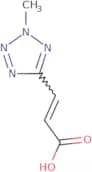
CAS:3-Methylthiophene-2-carbonitrile is a crystalline solid that is soluble in water and has a boiling point of 115°C. This compound can be found as a gas or liquid at room temperature. 3-Methylthiophene-2-carbonitrile has been shown to undergo vaporization at high temperatures, with an enthalpy of vaporization of -5.5 kJ/mol. The structural formula for this compound is CH3CSCH3, which is made up of two methyl groups and one thiophene ring. 3-Methylthiophene-2-carbonitrile has been shown to have an energy of -4.6 kJ/mol when heated to 100°C, making it a very stable molecule.Formula:C6H5NSPurity:Min. 95%Molecular weight:123.18 g/mol(2E)-3-(2-Methyl-2H-1,2,3,4-tetrazol-5-yl)prop-2-enoic acid
CAS:Versatile small molecule scaffoldFormula:C5H6N4O2Purity:Min. 95%Molecular weight:154.13 g/mol[2-Amino-3-(trifluoromethyl)phenyl]methanol
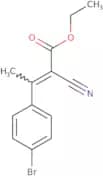
CAS:Versatile small molecule scaffoldFormula:C8H8F3NOPurity:Min. 95%Molecular weight:191.15 g/molEthyl 3-(4-bromophenyl)-2-cyanobut-2-enoate
CAS:Versatile small molecule scaffoldFormula:C13H12BrNO2Purity:Min. 95%Molecular weight:294.14 g/mol6-Methyl-2-(pyridin-2-yl)pyrimidin-4-ol
CAS:Versatile small molecule scaffoldFormula:C10H9N3OPurity:Min. 95%Molecular weight:187.2 g/mol

![N-[(2-Oxocyclohexyl)methyl]formamide](/_next/image/?url=https%3A%2Fstatic.cymitquimica.com%2Fproducts%2F3D%2Fthumb-webp%2FFBA83764.webp&w=3840&q=75)
![2-[3-(Trifluoromethyl)phenyl]morpholine](/_next/image/?url=https%3A%2Fstatic.cymitquimica.com%2Fproducts%2F3D%2Fthumb-webp%2FFBA91489.webp&w=3840&q=75)

![Thiabicyclo[3.1.0]hexane-3,3-dione](/_next/image/?url=https%3A%2Fstatic.cymitquimica.com%2Fproducts%2F3D%2Fthumb-webp%2FFBA98834.webp&w=3840&q=75)
![Furo[3,2-d]pyrimidin-4(3H)-one](/_next/image/?url=https%3A%2Fstatic.cymitquimica.com%2Fproducts%2F3D%2Fthumb-webp%2FFBB25508.webp&w=3840&q=75)
![5-[(tert-butoxy)carbonyl]-4H,5H,6H,7H-pyrazolo[1,5-a]pyrazine-3-carboxylic acid](/_next/image/?url=https%3A%2Fstatic.cymitquimica.com%2Fproducts%2F3D%2Fthumb-webp%2FFBC21448.webp&w=3840&q=75)

![rac-3-[(2R,6S)-2,6-Dimethylmorpholin-4-yl]propan-1-ol](/_next/image/?url=https%3A%2Fstatic.cymitquimica.com%2Fproducts%2F3D%2Fthumb-webp%2FFBC56571.webp&w=3840&q=75)
![4-[(3,4-Dihydro-2H-pyrrol-5-yl)amino]benzoic acid](/_next/image/?url=https%3A%2Fstatic.cymitquimica.com%2Fproducts%2F3D%2Fthumb-webp%2FFBC57262.webp&w=3840&q=75)
![Methyl 2-[3,5-dimethyl-1-(pyridin-2-yl)-1H-pyrazol-4-yl]propanoate](/_next/image/?url=https%3A%2Fstatic.cymitquimica.com%2Fproducts%2F3D%2Fthumb-webp%2FFBC67316.webp&w=3840&q=75)
![Ethyl 2-[3-(trifluoromethyl)phenoxy]propanoate](/_next/image/?url=https%3A%2Fstatic.cymitquimica.com%2Fproducts%2F3D%2Fthumb-webp%2FFBC67340.webp&w=3840&q=75)


![2-Bromo-6,7-dihydrobenzo[D]thiazol-4(5H)-one](/_next/image/?url=https%3A%2Fstatic.cymitquimica.com%2Fproducts%2F3D%2Fthumb-webp%2FFBC70398.webp&w=3840&q=75)


![2-[2-(Diphenylmethoxy)acetamido]-2-phenylacetamide](/_next/image/?url=https%3A%2Fstatic.cymitquimica.com%2Fproducts%2F3D%2Fthumb-webp%2FFBC77910.webp&w=3840&q=75)
![6-[(3-Methoxyphenyl)methyl]-4-methyl-5H,6H-[1,2]diazolo[3,4-c]pyrazol-3-amine](/_next/image/?url=https%3A%2Fstatic.cymitquimica.com%2Fproducts%2F3D%2Fthumb-webp%2FFBC80428.webp&w=3840&q=75)

![5-Chloro-1H-imidazo[4,5-b]pyridin-2(3H)-one](/_next/image/?url=https%3A%2Fstatic.cymitquimica.com%2Fproducts%2F3D%2Fthumb-webp%2FFC142316.webp&w=3840&q=75)


![2-Chloro-10-[3-[[3-(dimethylamino)propyl]methylamino]propyl]phenothiazine dihydrochloride](/_next/image/?url=https%3A%2Fstatic.cymitquimica.com%2Fproducts%2F3D%2Fthumb-webp%2FFC183794.webp&w=3840&q=75)
![4-Chloro-1H-imidazo[4,5-c]pyridine](/_next/image/?url=https%3A%2Fstatic.cymitquimica.com%2Fproducts%2F3D%2Fthumb-webp%2FFC32403.webp&w=3840&q=75)
![6-Methylindolo[1,2-c]quinazolin-12-amine](/_next/image/?url=https%3A%2Fstatic.cymitquimica.com%2Fproducts%2F3D%2Fthumb-webp%2FFCA33812.webp&w=3840&q=75)

![4-[(4-Methylphenyl)amino]-2,3-dihydro-1,6-thiophene-1,1-dione](/_next/image/?url=https%3A%2Fstatic.cymitquimica.com%2Fproducts%2F3D%2Fthumb-webp%2FFCA35770.webp&w=3840&q=75)
![2-{[(tert-butoxy)carbonyl]amino}-2-(4-methoxyphenyl)acetic acid](/_next/image/?url=https%3A%2Fstatic.cymitquimica.com%2Fproducts%2F3D%2Fthumb-webp%2FFCA36276.webp&w=3840&q=75)
![5H,6H,7H,8H-Imidazo[1,2-a]pyridine-3-carboxylic acid](/_next/image/?url=https%3A%2Fstatic.cymitquimica.com%2Fproducts%2F3D%2Fthumb-webp%2FFCA36504.webp&w=3840&q=75)
![[1,2,4]Triazolo[1,5-a]pyrazin-8-amine](/_next/image/?url=https%3A%2Fstatic.cymitquimica.com%2Fproducts%2F3D%2Fthumb-webp%2FFCA36618.webp&w=3840&q=75)
![5-[4-(Trifluoromethyl)phenyl]furan-2-carbaldehyde](/_next/image/?url=https%3A%2Fstatic.cymitquimica.com%2Fproducts%2F3D%2Fthumb-webp%2FFCA37777.webp&w=3840&q=75)
![3,6-Dibromopyrazolo[1,5-a]pyrimidine](/_next/image/?url=https%3A%2Fstatic.cymitquimica.com%2Fproducts%2F3D%2Fthumb-webp%2FFCA40568.webp&w=3840&q=75)
![[2-Amino-3-(trifluoromethyl)phenyl]methanol](/_next/image/?url=https%3A%2Fstatic.cymitquimica.com%2Fproducts%2F3D%2Fthumb-webp%2FFCA41460.webp&w=3840&q=75)