Building Blocks
Subcategories of "Building Blocks"
- Boronic Acids & Boronic Acid Derivatives(5,783 products)
- Chiral Building Blocks(1,242 products)
- Hydrocarbon Building Blocks(6,105 products)
- Organic Building Blocks(61,055 products)
Found 205383 products of "Building Blocks"
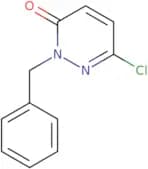
2-Benzyl-6-chloro-2,3-dihydropyridazin-3-one
CAS:2-Benzyl-6-chloro-2,3-dihydropyridazin-3-one is a Grignard reagent that reacts with electrophiles to form organometallic compounds. It is used in organic chemistry as a nucleophilic agent in the formation of carbon–carbon bonds and other types of reactions. 2-Benzyl-6-chloro-2,3-dihydropyridazin-3-one can also be used to produce alkyl magnesium bromides from alcohols and chlorides. The transformation of 2,2'-bipyridine into 2,2'-bipyrimidine is one example of this reaction.Formula:C11H9ClN2OPurity:Min. 95%Molecular weight:220.65 g/mol2,6-Dichloroquinoline-4-carbonitrile
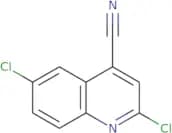
CAS:Versatile small molecule scaffoldFormula:C10H4Cl2N2Purity:Min. 95%Molecular weight:223.05 g/mol2-{[(Benzyloxy)carbonyl]amino}-4-carbamoylbutanoic acid
CAS:2-{[(Benzyloxy)carbonyl]amino}-4-carbamoylbutanoic acid is a peptidomimetic that inhibits β-catenin signaling, leading to decreased cell proliferation. This compound has been shown to inhibit the growth of cancer cells and to be effective in preventing an outbreak of corynebacterium. 2-{[(Benzyloxy)carbonyl]amino}-4-carbamoylbutanoic acid was also shown to reduce the production of fatty acids and viral life. This compound is synthetic and can be made by microbial biotransformation or protein–protein interaction. It has been shown that this peptidomimetic binds with high affinity to coronaviruses, which may lead to new treatments for coronavirus infections.Formula:C13H16N2O5Purity:Min. 95%Molecular weight:280.28 g/molEthyl 5-hydroxy-4-oxo-4H-chromene-2-carboxylate
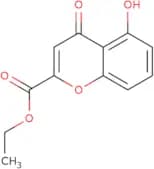
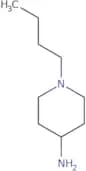
CAS:Ethyl 5-hydroxy-4-oxo-4H-chromene-2-carboxylate is a chromone that is used in the synthesis of other compounds.Formula:C12H10O5Purity:Min. 95%Molecular weight:234.2 g/mol1-Butylpiperidin-4-amine
CAS:Versatile small molecule scaffold
Formula:C9H20N2Purity:Min. 95%Molecular weight:156.27 g/mol4,5-Dimethyl-1H-indole-2-carboxylic acid
CAS:Versatile small molecule scaffoldFormula:C11H11NO2Purity:Min. 95%Molecular weight:189.21 g/mol5-bromo-4-methyl-1H-indole-2-carboxylic acid
CAS:Versatile small molecule scaffoldFormula:C10H8BrNO2Purity:Min. 95%Molecular weight:254.1 g/mol5-Chloro-4-methyl-1H-indole-2-carboxylic acid
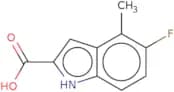
CAS:Versatile small molecule scaffoldFormula:C10H8ClNO2Purity:Min. 95%Molecular weight:209.63 g/mol5-Fluoro-4-methyl-1H-indole-2-carboxylic acid
CAS:Versatile small molecule scaffold
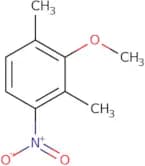
Formula:C10H8FNO2Purity:Min. 95%Molecular weight:193.2 g/mol2-Methoxy-1,3-dimethyl-4-nitrobenzene
CAS:Versatile small molecule scaffold
Formula:C9H11NO3Purity:Min. 95%Molecular weight:181.19 g/mol3-(6-Methylpyridin-3-yl)propan-1-ol
CAS:Versatile small molecule scaffoldFormula:C9H13NOPurity:Min. 95%Molecular weight:151.21 g/mol4-tert-Butylpiperidin-2-one
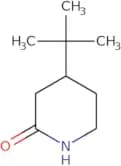
CAS:Versatile small molecule scaffold
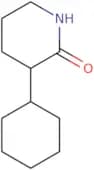
Formula:C9H17NOPurity:Min. 95%Molecular weight:155.24 g/mol3-Cyclohexylpiperidin-2-one
CAS:Versatile small molecule scaffold
Formula:C11H19NOPurity:Min. 95%Molecular weight:181.27 g/mol5-(Trifluoromethyl)piperidin-2-one
CAS:Versatile small molecule scaffold
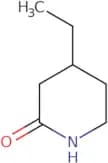
Formula:C6H8F3NOPurity:Min. 95%Molecular weight:167.13 g/mol4-Ethylpiperidin-2-one
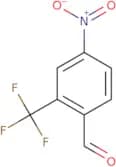
CAS:4-Ethylpiperidin-2-one is a receptor tyrosine kinase inhibitor that binds to the ATP binding site of the enzyme, thereby inhibiting its activity. 4-Ethylpiperidin-2-one has been shown to inhibit the growth of xenograft tumor cells in mice by blocking tyrosine kinases, which are involved in cellular proliferation and differentiation. This drug has also been shown to have anti-inflammatory effects in rats due to its ability to inhibit prostaglandin synthesis. 4-Ethylpiperidin-2-one is metabolized by CYP3A4 and CYP2D6. It is also an organometallic compound that can bind to metal ions such as iron or copper with high affinity. The chemical structure of 4-ethylpiperidin-2-one consists of a piperidine ring connected at one end to an aldehyde group and at the other end to an oxindFormula:C7H13NOPurity:Min. 95%Molecular weight:127.18 g/mol4-Nitro-2-(trifluoromethyl)benzaldehyde
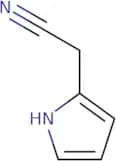
CAS:Versatile small molecule scaffoldFormula:C8H4F3NO3Purity:Min. 95%Molecular weight:219.12 g/mol2-(1H-Pyrrol-2-yl)acetonitrile
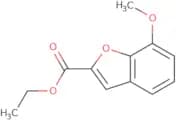
CAS:2-(1H-Pyrrol-2-yl)acetonitrile is an inorganic compound that is used as a synthetic intermediate. It is a salt form of the chemical, which is soluble in water and has a pH value of 10. 2-(1H-Pyrrol-2-yl)acetonitrile reacts with alkali metals to produce hydrogen gas and ammonia. This reaction can be used for the treatment of organic wastes such as composting or wastewater treatment. 2-(1H-Pyrrol-2-yl)acetonitrile has been shown to react with cyclic hydrocarbons and aromatic heterocycles under acidic conditions at room temperature. The rate of this reaction depends on the flow rate and persulfate concentration.Formula:C6H6N2Purity:Min. 95%Molecular weight:106.13 g/molEthyl 7-methoxy-1-benzofuran-2-carboxylate
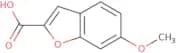
CAS:Versatile small molecule scaffoldFormula:C12H12O4Purity:Min. 95%Molecular weight:220.22 g/mol6-Methoxybenzofuran-2-carboxylic acid
CAS:6-Methoxybenzofuran-2-carboxylic acid is a synthetic compound that can be used as an intermediate in organic synthesis. It is stable and resistant to aqueous conditions, making it suitable for use in organic synthesis. 6-Methoxybenzofuran-2-carboxylic acid is also analogous to benzofurancarboxylic acids, which are characterized by their dianionic character. It has been shown to react with aldehydes at low temperatures and form tetrahydrofuran derivatives. 6-Methoxybenzofuran-2-carboxylic acid can be metallated with various metals to form stable complexes.
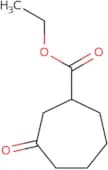
Formula:C10H8O4Purity:Min. 95%Molecular weight:192.17 g/molEthyl 3-oxocycloheptane-1-carboxylate
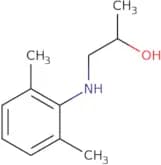
CAS:Versatile small molecule scaffoldFormula:C10H16O3Purity:Min. 95%Molecular weight:184.23 g/mol1-(2,6-Dimethylphenylamino)-propan-2-ol
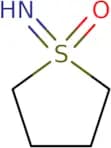
CAS:Versatile small molecule scaffoldFormula:C11H17NOPurity:Min. 95%Molecular weight:179.26 g/molS,S-Tetramethylenesulphoximide
CAS:Versatile small molecule scaffoldFormula:C4H9NOSPurity:Min. 95%Molecular weight:119.19 g/mol2-(N-Methyl3-nitrobenzenesulfonamido)acetic acid
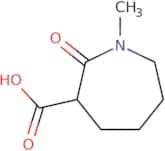
CAS:2-(N-Methyl3-nitrobenzenesulfonamido)acetic acid, also known as 2-NMBSA or MTSEA, is a cell biology research tool that can be used to study ion channels, peptides and receptors. 2-NMBSA is primarily used to study the interaction between ligands and their receptors. It has been shown to activate potassium channels. This product is a white solid with a molecular weight of 258.2 g/mol.Formula:C9H10N2O6SPurity:Min. 95%Molecular weight:274.25 g/mol1-Methyl-2-oxoazepane-3-carboxylic acid
CAS:Versatile small molecule scaffoldFormula:C8H13NO3Purity:Min. 95%Molecular weight:171.19 g/molMethyl 1-benzylpiperidine-3-carboxylate
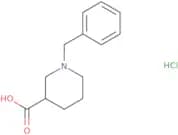
CAS:Methyl 1-benzylpiperidine-3-carboxylate is a neurotoxin that causes Parkinson's disease, which is characterized by the death of dopamine neurons in the substantia nigra. It has been shown to bind to dopamine receptors and inhibit neurotransmission. The biological activity of methyl 1-benzylpiperidine-3-carboxylate was demonstrated as a result of its ability to inhibit the binding of oxadiazole derivatives, which are ligands for these receptors. Methyl 1-benzylpiperidine-3-carboxylate also has an agonistic effect on oxadiazole analogues and increases their biological activity.Formula:C14H19NO2Purity:Min. 95%Molecular weight:233.31 g/mol1-Benzylpiperidine-3-carboxylic acid hydrochloride
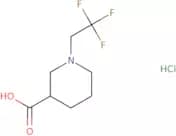
CAS:Versatile small molecule scaffoldFormula:C13H18ClNO2Purity:Min. 95%Molecular weight:255.75 g/mol1-(2,2,2-Trifluoroethyl)piperidine-3-carboxylic acid hydrochloride
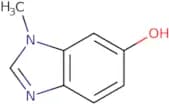
CAS:Versatile small molecule scaffoldFormula:C8H13ClF3NO2Purity:Min. 95%Molecular weight:247.64 g/mol1-Methyl-1H-1,3-benzodiazol-6-ol
CAS:Versatile small molecule scaffoldFormula:C8H8N2OPurity:Min. 95%Molecular weight:148.16 g/mol1-bromo-6-methoxyhexane
CAS:1-bromo-6-methoxyhexane is a reportedly analog of hexane. It has been shown to have cancer chemopreventative properties in vivo and antioxidant potency in vitro. 1-bromo-6-methoxyhexane also has been shown to inhibit the growth of cancer cells by inhibiting mitochondrial function, which is responsible for energy production. The cytosolic and mitochondrial concentrations of 1-bromo-6-methoxyhexane are about equal, suggesting that transport mechanisms may exist for this molecule. The alkyl substituents on the molecule affect its antioxidant potency, with methoxy groups being the most potent. It has been demonstrated that 1-bromo-6-methoxyhexane can be used as a radiation protectant, although it is not clear how it interacts with DNA.
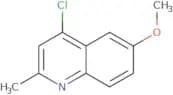
Formula:C7H15BrOPurity:Min. 95%Molecular weight:195.1 g/mol4-Chloro-6-methoxy-2-methyl-quinoline
CAS:4-Chloro-6-methoxy-2-methyl-quinoline is a nitronium salt that belongs to the group of quinoline derivatives. It inhibits histone deacetylases (HDACs) and transcriptional coactivators, which are enzymes involved in regulating gene expression. 4-Chloro-6-methoxy-2-methyl-quinoline has been shown to synergistically inhibit HDACs with pyridoxal 5'-phosphate (P5P), a form of vitamin B6, and to reactivate latent HIV. The drug has been tested on Indian patients with chronic hepatitis B virus infection and showed promising results.Formula:C11H10ClNOPurity:Min. 95%Molecular weight:207.66 g/mol2-[4-(Pyridin-2-ylmethoxy)phenyl]acetic acid
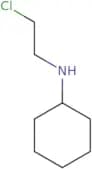
CAS:Versatile small molecule scaffoldFormula:C14H13NO3Purity:Min. 95%Molecular weight:243.26 g/molN-(2-Chloroethyl)cyclohexanamine hydrochloride
CAS:Versatile small molecule scaffold
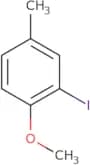
Formula:C8H16ClNPurity:Min. 95%Molecular weight:161.67 g/mol3-Iodo-4-methoxytoluene
CAS:3-Iodo-4-methoxytoluene is a colorless liquid that is slightly acidic, with a boiling point of 215 degrees Celsius. It has a density of 0.907 grams per cubic centimeter and a melting point of -78 degrees Celsius. 3-Iodo-4-methoxytoluene has been used in the production of amines, functional groups, and other complex molecules. It can be used as an intermediate in the synthesis of diazotization products that are used to produce synthetic fibers or fabrics. 3-Iodo-4-methoxytoluene interacts with other compounds such as acetonitrile, which may have an effect on its regiospecificity.
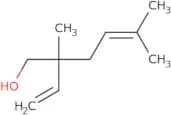
Formula:C8H9IOPurity:Min. 95%Molecular weight:248.06 g/mol2-Ethenyl-2,5-dimethylhex-4-en-1-ol
CAS:2-Ethenyl-2,5-dimethylhex-4-en-1-ol is a conformationally restricted analog of flecainide. It has been shown to have an antipyrine-like activity in the rat and is a potential antineoplastic drug for use in women with breast cancer. 2EMHE has also been shown to have long term effects on serum levels in infants and children. It is metabolized by CYP3A4, which may be blocked by drugs such as erythromycin or ketoconazole. The metabolism of 2EMHE leads to the formation of hydroxylamines that are reactive with nucleophilic sites on DNA, causing strand breaks and inhibition of DNA synthesis. This drug also inhibits neutrophil chemotaxis in vitro and causes neutropenia when given intravenously to rats.
Formula:C10H18OPurity:Min. 95%Molecular weight:154.25 g/mol1-(2,2-Dimethylcyclopropyl)-1-propanone
CAS:Versatile small molecule scaffoldFormula:C8H14OPurity:Min. 95%Molecular weight:126.2 g/mol2-Acetylamino-thiazole-4-carboxylic acid
CAS:2-Acetylamino-thiazole-4-carboxylic acid is a sulphoxide metabolite of 2-acetylamino-4,5,6,7-tetrahydrothiazolo[4,5,-c]pyridine. It is metabolized to mercapturic acid and sulphone by the enzyme cytochrome P450. This metabolite is also found in urine as a result of its metabolism by the enzyme N-acetyltransferase.Formula:C6H6N2O3SPurity:Min. 95%Molecular weight:186.19 g/molN-(7-Nitro-3,4-dihydro-2H-chromen-6-yl)acetamide
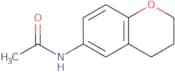
CAS:Versatile small molecule scaffoldFormula:C11H12N2O4Purity:Min. 95%Molecular weight:236.22 g/molN-(3,4-Dihydro-2H-1-benzopyran-6-yl)acetamide
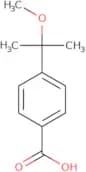
CAS:Versatile small molecule scaffoldFormula:C11H13NO2Purity:Min. 95%Molecular weight:191.23 g/mol4-(2-Methoxypropan-2-yl)benzoic acid
CAS:Versatile small molecule scaffold
Formula:C11H14O3Purity:Min. 95%Molecular weight:194.23 g/mol2-Benzyl-1,2,3,4-tetrahydroquinoline
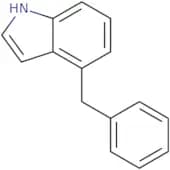
CAS:Versatile small molecule scaffoldFormula:C16H17NPurity:Min. 95%Molecular weight:223.31 g/mol4-Benzyl-1H-indole
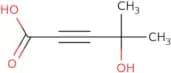
CAS:4-Benzyl-1H-indole is a chemical compound that belongs to the class of dihydroisoquinolines. This drug has shown anti-HIV activity in vitro and in vivo. It has been tested for its ability to inhibit HIV replication and protein–protein interaction with human immunodeficiency virus type 1 (HIV-1) proteins. 4-Benzyl-1H-indole inhibits the growth of HIV by binding to the gp41 coiled coil, thereby preventing the conformational change necessary for fusion with host cells. The clinical use of this compound is limited due to its low solubility in water and poor oral bioavailability.Formula:C15H13NPurity:Min. 95%Molecular weight:207.27 g/mol4-Hydroxy-4-methyl-pent-2-ynoic acid
CAS:4-Hydroxy-4-methyl-pent-2-ynoic acid is an organic compound with the formula CH(CH)COH. It is a methyl ester of propiolic acid. 4-Hydroxy-4-methyl-pent-2-ynoic acid can be synthesized from propiolic acid by reacting it with copper chloride and iodides in the presence of a catalytic amount of concentrated sulfuric acid. This reaction affords the methyl ester in high yield. The synthesis of 4-hydroxypropionic acid is analogous to that of acrylic acid, which also yields a methyl ester on chlorination. 4HMP has been used as an intermediate in the production of vitamin A by carbonylation, and as a precursor to propionic acid and its derivatives. 4HMP can also be used as an intermediate for making other chemicals such as dyes, pharmaceuticals, and polymers.
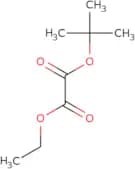
Formula:C6H8O3Purity:Min. 95%Molecular weight:128.13 g/molOxalic acid tert-butyl ester ethyl ester
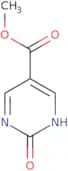
CAS:Oxalic acid tert-butyl ester ethyl ester is an organic compound that is a byproduct of the production of methyl acetate. It has been shown to have antitumor and anti-inflammatory effects in animal studies. Oxalic acid tert-butyl ester ethyl ester contains a 7-chloro group, which is also present in deoxyharringtonine. The latter drug has been used to treat tumours and inflammatory conditions. In addition, oxalic acid tert-butyl ester ethyl ester can be converted into cephalotaxine (a natural alkaloid), which has been shown to be effective against cancer cells and inflammation.Formula:C8H14O4Purity:Min. 95%Molecular weight:174.2 g/molMethyl 2-oxo-1,2-dihydropyrimidine-5-carboxylate
CAS:Versatile small molecule scaffold
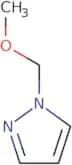
Formula:C6H6N2O3Purity:Min. 95%Molecular weight:154.12 g/mol1-(Methoxymethyl)pyrazole
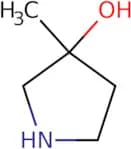
CAS:Versatile small molecule scaffoldFormula:C5H8N2OPurity:Min. 95%Molecular weight:112.13 g/mol3-Methylpyrrolidin-3-ol
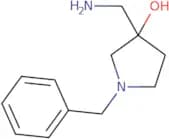
CAS:Versatile small molecule scaffoldFormula:C5H11NO·HClPurity:Min. 95%Molecular weight:137.61 g/mol3-(aminomethyl)-1-benzylpyrrolidin-3-ol
CAS:Versatile small molecule scaffoldFormula:C12H18N2OPurity:Min. 95%Molecular weight:206.3 g/mol1-Benzyl-3-[(methylamino)methyl]pyrrolidin-3-ol dihydrochloride
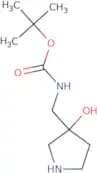
CAS:Versatile small molecule scaffoldFormula:C13H22Cl2N2OPurity:Min. 95%Molecular weight:293.23 g/mol3-(boc-aminomethyl)-3-hydroxypyrrolidine
CAS:Versatile small molecule scaffold
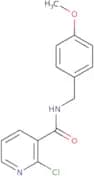
Formula:C10H20N2O3Purity:Min. 95%Molecular weight:216.28 g/mol2-Chloro-N-(4-methoxybenzyl)nicotinamide
CAS:Versatile small molecule scaffold
Formula:C14H13ClN2O2Purity:Min. 95%Molecular weight:276.72 g/mol2-(Bromomethyl)-5-methylimidazo[1,2-a]pyridine hydrobromide
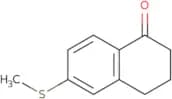
CAS:Versatile small molecule scaffoldFormula:C9H10Br2N2Purity:Min. 95%Molecular weight:306 g/mol6-(Methylsulfanyl)-1,2,3,4-tetrahydronaphthalen-1-one
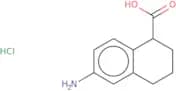
CAS:Versatile small molecule scaffoldFormula:C11H12OSPurity:Min. 95%Molecular weight:192.28 g/mol6-Amino-1,2,3,4-tetrahydronaphthalene-1-carboxylic acid hydrochloride
CAS:Versatile small molecule scaffoldFormula:C11H14ClNO2Purity:Min. 95%Molecular weight:227.7 g/mol7-Oxobicyclo[2.2.1]hept-5-ene-2-carboxylic acid
CAS:Versatile small molecule scaffoldFormula:C8H8O3Purity:Min. 95%Molecular weight:152.15 g/molMethyl 2-(3-methylphenoxy)propanoate
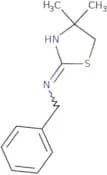
CAS:Versatile small molecule scaffoldFormula:C11H14O3Purity:Min. 95%Molecular weight:194.23 g/molN-Benzyl-4,4-dimethyl-4,5-dihydro-1,3-thiazol-2-amine
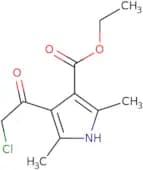
CAS:Versatile small molecule scaffoldFormula:C12H16N2SPurity:Min. 95%Molecular weight:220.34 g/molEthyl 4-(2-chloroacetyl)-2,5-dimethyl-1H-pyrrole-3-carboxylate
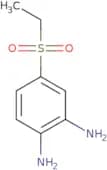
CAS:Versatile small molecule scaffoldFormula:C11H14ClNO3Purity:Min. 95%Molecular weight:243.68 g/mol4-(Ethanesulfonyl)benzene-1,2-diamine
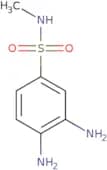
CAS:Versatile small molecule scaffoldFormula:C8H12N2O2SPurity:Min. 95%Molecular weight:200.26 g/mol3,4-Diamino-N-methylbenzene-1-sulfonamide
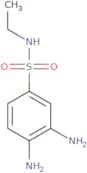
CAS:Versatile small molecule scaffoldFormula:C7H11N3O2SPurity:Min. 95%Molecular weight:201.25 g/mol3,4-Diamino-N-ethylbenzene-1-sulfonamide
CAS:Versatile small molecule scaffoldFormula:C8H13N3O2SPurity:Min. 95%Molecular weight:215.28 g/mol2-(2-Ethoxyethoxy)acetaldehyde
CAS:Versatile small molecule scaffold
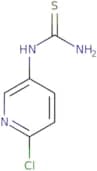
Formula:C6H12O3Purity:Min. 95%Molecular weight:132.16 g/mol(6-Chloropyridin-3-yl)thiourea
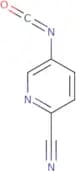
CAS:Versatile small molecule scaffoldFormula:C6H6ClN3SPurity:Min. 95%Molecular weight:187.65 g/mol5-Isocyanatopyridine-2-carbonitrile
CAS:Versatile small molecule scaffoldFormula:C7H3N3OPurity:Min. 95%Molecular weight:145.12 g/mol(1S,4S)-2-Thia-5-azabicyclo[2.2.1]heptane hydrochloride
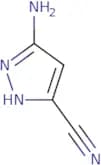
CAS:Versatile small molecule scaffoldFormula:C5H10ClNSPurity:Min. 95%Molecular weight:151.66 g/mol5-Amino-1H-pyrazole-3-carbonitrile
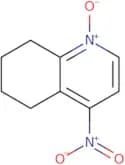
CAS:5-Amino-1H-pyrazole-3-carbonitrile (APC) is a pyrazolopyrimidine compound. It is used as a starting material in organic synthesis, for example to prepare dithioesters and dithioacetals. The transformation of the APC molecule is accomplished by reacting it with either an alcohol or acid chloride.Formula:C4H4N4Purity:Min. 95%Molecular weight:108.1 g/mol4-Nitro-5,6,7,8-tetrahydroquinolin-1-ium-1-olate
CAS:Versatile small molecule scaffold
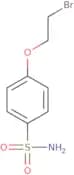
Formula:C9H10N2O3Purity:Min. 95%Molecular weight:194.19 g/mol4-(2-Bromoethoxy)benzene-1-sulfonamide
CAS:Versatile small molecule scaffoldFormula:C8H10BrNO3SPurity:Min. 95%Molecular weight:280.14 g/mol(2S)-2-Amino-N,N-dimethylpropanamide hydrochloride
CAS:Versatile small molecule scaffoldFormula:C5H13ClN2OPurity:Min. 95%Molecular weight:152.62 g/mol(1S,4S)-2-Methyl-2,5-diazabicyclo[2.2.1]heptane dihydrobromide
CAS:Versatile small molecule scaffold
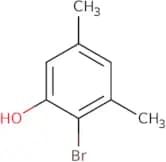
Formula:C6H12N2·2HBrPurity:Min. 95%Molecular weight:274 g/mol2-bromo-3,5-dimethylphenol
CAS:Versatile small molecule scaffoldFormula:C8H9BrOPurity:Min. 95%Molecular weight:201.06 g/mol1-[(2,4-Dichlorophenyl)methyl]-1H-pyrazolo[3,4-d]pyrimidin-4-ol
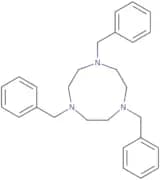
CAS:Versatile small molecule scaffoldFormula:C12H8Cl2N4OPurity:Min. 95%Molecular weight:295.12 g/mol1,4,7-Tribenzyl-1,4,7-triazonane
CAS:1,4,7-Tribenzyl-1,4,7-triazonane is a crystalline compound that belongs to the group of ligands. This compound has a benzyl group in its structure and can be used as a transition metal complexing agent. The bond cleavage reaction of 1,4,7-tribenzyl-1,4,7-triazonane is catalyzed by a coordination chemical reaction with transition metals. It has been shown to form complexes with nickel and palladium. The kinetic isotope effect for this process has been reported to be large due to the presence of two hydrogen atoms in one molecule. This means that the molecule is more reactive at the site where it contains the hydrogen atom that is heavier isotopically.Formula:C27H33N3Purity:Min. 95%Molecular weight:399.6 g/moltert-butyl N-[(3-methylpyrrolidin-3-yl)methyl]carbamate
CAS:Versatile small molecule scaffoldFormula:C11H22N2O2Purity:Min. 95%Molecular weight:214.3 g/mol{[4-(Bromomethyl)phenyl]methoxy}(tert-butyl)dimethylsilane
CAS:Versatile small molecule scaffoldFormula:C14H23BrOSiPurity:Min. 95%Molecular weight:315.32 g/mol2-{[(tert-Butoxy)carbonyl]amino}hexanoic acid
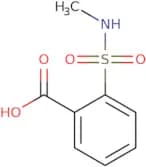
CAS:Versatile small molecule scaffoldFormula:C11H21NO4Purity:Min. 95%Molecular weight:231.29 g/mol2-(Methylsulfamoyl)benzoic acid
CAS:Versatile small molecule scaffold
Formula:C8H9NO4SPurity:Min. 95%Molecular weight:215.23 g/mol4-{[(Pyridin-3-yl)methyl]sulfanyl}aniline
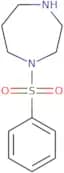
CAS:Versatile small molecule scaffoldFormula:C12H12N2SPurity:Min. 95%Molecular weight:216.3 g/mol1-(Benzenesulfonyl)-1,4-diazepane
CAS:Versatile small molecule scaffold
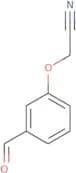
Formula:C11H16N2O2SPurity:Min. 95%Molecular weight:240.32 g/mol2-(3-Formylphenoxy)acetonitrile
CAS:Versatile small molecule scaffold
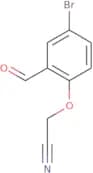
Formula:C9H7NO2Purity:Min. 95%Molecular weight:161.16 g/mol(4-Bromo-2-formylphenoxy)acetonitrile
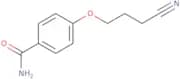
CAS:Versatile small molecule scaffoldFormula:C9H6BrNO2Purity:Min. 95%Molecular weight:240.05 g/mol4-(3-Cyanopropoxy)-benzamide
CAS:Versatile small molecule scaffoldFormula:C11H12N2O2Purity:Min. 95%Molecular weight:204.22 g/mol4-[4-(Hydroxymethyl)phenoxy]butanenitrile
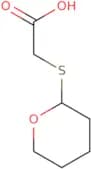
CAS:Versatile small molecule scaffoldFormula:C11H13NO2Purity:Min. 95%Molecular weight:191.23 g/mol2-(Oxan-2-ylsulfanyl)acetic acid
CAS:Versatile small molecule scaffoldFormula:C7H12O3SPurity:Min. 95%Molecular weight:176.24 g/mol6-bromothieno[3,2-b]thiophene-2-carboxylic acid
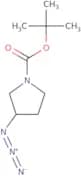
CAS:Versatile small molecule scaffoldFormula:C7H3BrO2S2Purity:Min. 95%Molecular weight:263.1 g/moltert-Butyl (3S)-3-azidopyrrolidine-1-carboxylate
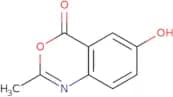
CAS:Versatile small molecule scaffoldFormula:C9H16N4O2Purity:Min. 95%Molecular weight:212.25 g/mol6-Hydroxy-2-methyl-4H-3,1-benzoxazin-4-one
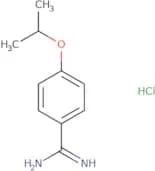
CAS:Versatile small molecule scaffoldFormula:C9H7NO3Purity:Min. 95%Molecular weight:177.16 g/mol4-(Propan-2-yloxy)benzene-1-carboximidamide hydrochloride
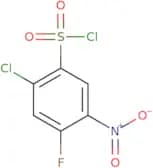
CAS:Versatile small molecule scaffoldFormula:C10H15ClN2OPurity:Min. 95%Molecular weight:214.69 g/mol2-Chloro-4-fluoro-5-nitrobenzene-1-sulfonyl chloride
CAS:2-Chloro-4-fluoro-5-nitrobenzene-1-sulfonyl chloride is a synthetic, hydrolyzed nitroarene that is used as an intermediate for the synthesis of herbicides. It can be used to reduce carboxylic acids and carboxylic esters to produce alcohols and organic acids, respectively. 2C4FNS has been shown to react with iodides to form chloroiodide ions. Inorganic base reacts with 2C4FNS in the presence of water to form a redox cycle that produces chloride ions. Chloride ions can then react with carboxylic acids or carboxylic esters to form the corresponding acid chloride or ester chloride, respectively.Formula:C6H2Cl2FNO4SPurity:Min. 95%Molecular weight:274.05 g/moltert-Butyl[(4-fluorophenyl)methyl]amine
CAS:Versatile small molecule scaffoldFormula:C11H16FNPurity:Min. 95%Molecular weight:181.25 g/mol4-chloro-2-methyl-6-phenylthieno[2,3-d]pyrimidine
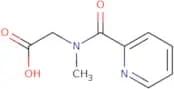
CAS:Versatile small molecule scaffoldFormula:C13H9ClN2SPurity:Min. 95%Molecular weight:260.74 g/mol2-(N-Methyl-1-pyridin-2-ylformamido)acetic acid
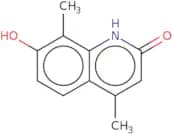
CAS:Versatile small molecule scaffoldFormula:C9H10N2O3Purity:Min. 95%Molecular weight:194.19 g/mol7-Hydroxy-4,8-dimethyl-1,2-dihydroquinolin-2-one
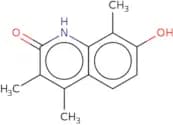
CAS:Versatile small molecule scaffoldFormula:C11H11NO2Purity:Min. 95%Molecular weight:189.2 g/mol7-Hydroxy-3,4,8-trimethyl-1,2-dihydroquinolin-2-one
CAS:Versatile small molecule scaffoldFormula:C12H13NO2Purity:Min. 95%Molecular weight:203.2 g/mol2-{4-[(4-Chlorophenyl)methoxy]phenyl}acetic acid
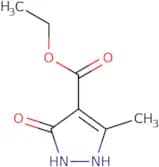
CAS:Versatile small molecule scaffoldFormula:C15H13ClO3Purity:Min. 95%Molecular weight:276.71 g/molEthyl 5-methyl-3-oxo-2,3-dihydro-1H-pyrazole-4-carboxylate
CAS:Versatile small molecule scaffold
Formula:C7H10N2O3Purity:Min. 95%Molecular weight:170.17 g/mol[4-(Diethoxymethyl)phenyl]methanol
CAS:Versatile small molecule scaffoldFormula:C12H18O3Purity:Min. 95%Molecular weight:210.27 g/mol2,4-Dibromo-3,5-dimethylaniline
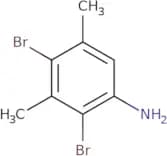
CAS:Versatile small molecule scaffoldFormula:C8H9Br2NPurity:Min. 95%Molecular weight:278.97 g/mol3-(Pyridin-2-yloxy)propan-1-amine
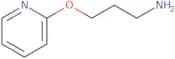
CAS:Versatile small molecule scaffoldFormula:C8H12N2OPurity:Min. 95%Molecular weight:152.19 g/mol1-(2-Bromoethoxy)-3-ethylbenzene
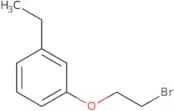
CAS:Versatile small molecule scaffoldFormula:C10H13BrOPurity:Min. 95%Molecular weight:229.11 g/mol1-(3-Methoxyphenyl)cyclohexan-1-amine
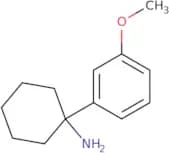
CAS:Controlled ProductVersatile small molecule scaffoldFormula:C13H19NOPurity:Min. 95%Molecular weight:205.3 g/mol

![2-{[(Benzyloxy)carbonyl]amino}-4-carbamoylbutanoic acid](/_next/image/?url=https%3A%2Fstatic.cymitquimica.com%2Fproducts%2F3D%2Fthumb-webp%2FACA51614.webp&w=3840&q=75)







![2-[4-(Pyridin-2-ylmethoxy)phenyl]acetic acid](/_next/image/?url=https%3A%2Fstatic.cymitquimica.com%2Fproducts%2F3D%2Fthumb-webp%2FACA59641.webp&w=3840&q=75)



![1-Benzyl-3-[(methylamino)methyl]pyrrolidin-3-ol dihydrochloride](/_next/image/?url=https%3A%2Fstatic.cymitquimica.com%2Fproducts%2F3D%2Fthumb-webp%2FAFA03339.webp&w=3840&q=75)
![2-(Bromomethyl)-5-methylimidazo[1,2-a]pyridine hydrobromide](/_next/image/?url=https%3A%2Fstatic.cymitquimica.com%2Fproducts%2F3D%2Fthumb-webp%2FAFA04056.webp&w=3840&q=75)
![7-Oxobicyclo[2.2.1]hept-5-ene-2-carboxylic acid](/_next/image/?url=https%3A%2Fstatic.cymitquimica.com%2Fproducts%2F3D%2Fthumb-webp%2FAFA09166.webp&w=3840&q=75)


![(1S,4S)-2-Thia-5-azabicyclo[2.2.1]heptane hydrochloride](/_next/image/?url=https%3A%2Fstatic.cymitquimica.com%2Fproducts%2F3D%2Fthumb-webp%2FAFA13643.webp&w=3840&q=75)

![(1S,4S)-2-Methyl-2,5-diazabicyclo[2.2.1]heptane dihydrobromide](/_next/image/?url=https%3A%2Fstatic.cymitquimica.com%2Fproducts%2F3D%2Fthumb-webp%2FAFA22462.webp&w=3840&q=75)
![1-[(2,4-Dichlorophenyl)methyl]-1H-pyrazolo[3,4-d]pyrimidin-4-ol](/_next/image/?url=https%3A%2Fstatic.cymitquimica.com%2Fproducts%2F3D%2Fthumb-webp%2FAFA24057.webp&w=3840&q=75)
![tert-butyl N-[(3-methylpyrrolidin-3-yl)methyl]carbamate](/_next/image/?url=https%3A%2Fstatic.cymitquimica.com%2Fproducts%2F3D%2Fthumb-webp%2FAFA29087.webp&w=3840&q=75)
![{[4-(Bromomethyl)phenyl]methoxy}(tert-butyl)dimethylsilane](/_next/image/?url=https%3A%2Fstatic.cymitquimica.com%2Fproducts%2F3D%2Fthumb-webp%2FAFA32020.webp&w=3840&q=75)
![2-{[(tert-Butoxy)carbonyl]amino}hexanoic acid](/_next/image/?url=https%3A%2Fstatic.cymitquimica.com%2Fproducts%2F3D%2Fthumb-webp%2FAFA34248.webp&w=3840&q=75)
![4-{[(Pyridin-3-yl)methyl]sulfanyl}aniline](/_next/image/?url=https%3A%2Fstatic.cymitquimica.com%2Fproducts%2F3D%2Fthumb-webp%2FAFA38242.webp&w=3840&q=75)
![4-[4-(Hydroxymethyl)phenoxy]butanenitrile](/_next/image/?url=https%3A%2Fstatic.cymitquimica.com%2Fproducts%2F3D%2Fthumb-webp%2FAFA43956.webp&w=3840&q=75)
![6-bromothieno[3,2-b]thiophene-2-carboxylic acid](/_next/image/?url=https%3A%2Fstatic.cymitquimica.com%2Fproducts%2F3D%2Fthumb-webp%2FAFA49306.webp&w=3840&q=75)
![tert-Butyl[(4-fluorophenyl)methyl]amine](/_next/image/?url=https%3A%2Fstatic.cymitquimica.com%2Fproducts%2F3D%2Fthumb-webp%2FAFA64089.webp&w=3840&q=75)
![4-chloro-2-methyl-6-phenylthieno[2,3-d]pyrimidine](/_next/image/?url=https%3A%2Fstatic.cymitquimica.com%2Fproducts%2F3D%2Fthumb-webp%2FAFA66099.webp&w=3840&q=75)
![2-{4-[(4-Chlorophenyl)methoxy]phenyl}acetic acid](/_next/image/?url=https%3A%2Fstatic.cymitquimica.com%2Fproducts%2F3D%2Fthumb-webp%2FAFA72151.webp&w=3840&q=75)
![[4-(Diethoxymethyl)phenyl]methanol](/_next/image/?url=https%3A%2Fstatic.cymitquimica.com%2Fproducts%2F3D%2Fthumb-webp%2FAFA73444.webp&w=3840&q=75)