Building Blocks
This section contains fundamental products for the synthesis of organic and biological compounds. Building blocks are the essential starting materials used to construct complex molecules through various chemical reactions. They play a critical role in drug discovery, material science, and chemical research. At CymitQuimica, we offer a diverse range of high-quality building blocks to support your innovative research and industrial projects, ensuring you have the essential components for successful synthesis.
Subcategories of "Building Blocks"
- Boronic Acids & Boronic Acid Derivatives(5,778 products)
- Chiral Building Blocks(1,242 products)
- Hydrocarbon Building Blocks(6,098 products)
- Organic Building Blocks(61,084 products)
Found 198714 products of "Building Blocks"
Sort by
Purity (%)
0
100
|
0
|
50
|
90
|
95
|
100
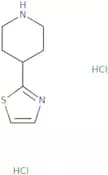
4-(1,3-Thiazol-2-yl)piperidine dihydrochloride
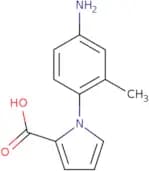
CAS:<p>Versatile small molecule scaffold</p>Formula:C8H14Cl2N2SPurity:Min. 95%Molecular weight:241.18 g/mol1-(4-Amino-2-methylphenyl)-1H-pyrrole-2-carboxylic acid
CAS:<p>Versatile small molecule scaffold</p>Formula:C12H12N2O2Purity:Min. 95%Molecular weight:216.24 g/mol3-benzyl-3-azabicyclo[3.1.1]heptan-6-one
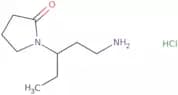
CAS:<p>3-benzyl-3-azabicyclo[3.1.1]heptan-6-one (BAH) is a selective derivatization reagent that reacts with ketones to form cyclobutanes, which are more stable than the corresponding ketones. The product is selectively derivatized at the nitrogen atom of the piperidine ring. BAH is used as a chemical intermediate in medicinal chemistry, such as for the synthesis of piperidines and other heterocycles. This compound has been shown to be efficient in converting 1,2-dihydropyridines into 1,2-dihydroquinolines with high yields and high levels of purity. BAH is also used for the synthesis of multigram quantities of peptides and proteins by postsynthetic modifications on natural amino acids or unnatural amino acids with reactive functional groups such as azide or bromide.</p>Formula:C13H15NOPurity:Min. 95%Molecular weight:201.27 g/mol1-(1-Aminopentan-3-yl)pyrrolidin-2-one hydrochloride
CAS:Versatile small molecule scaffoldFormula:C9H19ClN2OPurity:Min. 95%Molecular weight:206.71 g/mol4-({[1-(Ethanesulfonyl)piperidin-4-yl]carbamoyl}amino)benzoic acid
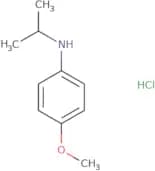
CAS:<p>Versatile small molecule scaffold</p>Formula:C15H21N3O5SPurity:Min. 95%Molecular weight:355.4 g/mol4-Methoxy-N-(propan-2-yl)aniline hydrochloride
CAS:<p>Versatile small molecule scaffold</p>Formula:C10H16ClNOPurity:Min. 95%Molecular weight:201.69 g/moltert-Butyl N-(cyanomethyl)-N-ethylcarbamate
CAS:<p>Versatile small molecule scaffold</p>Formula:C9H16N2O2Purity:Min. 95%Molecular weight:184.24 g/mol3-(Ethylamino)-2-methylpropanoic acid hydrochloride
CAS:<p>Versatile small molecule scaffold</p>Formula:C6H14ClNO2Purity:Min. 95%Molecular weight:167.63 g/mol2-(Chloromethyl)-4-ethylmorpholine
CAS:<p>Versatile small molecule scaffold</p>Formula:C7H14ClNOPurity:Min. 95%Molecular weight:163.64 g/mol2,3-Dihydro-1,4-benzodioxin-5-ylmethanamine dihydrochloride
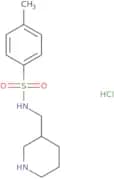
CAS:<p>2,3-Dihydro-1,4-benzodioxin-5-ylmethanamine dihydrochloride is a conformationally restricted analog of the neurotransmitter dopamine. It has a methyl group at the 2 and 3 positions of the piperidine ring and a hydrogen bond between the carbonyl groups on the 1 and 4 positions. The crystal structure of this molecule is composed of a twisted chair form with torsion angles of about 155°.<br>!--</p>Formula:C9H13Cl2NO2Purity:Min. 95%Molecular weight:238.11 g/mol4-Methyl-N-(piperidin-3-ylmethyl)benzene-1-sulfonamide hydrochloride
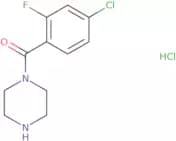
CAS:<p>Versatile small molecule scaffold</p>Formula:C13H21ClN2O2SPurity:Min. 95%Molecular weight:304.84 g/mol1-(4-Chloro-2-fluorobenzoyl)piperazine hydrochloride
CAS:Versatile small molecule scaffoldFormula:C11H13Cl2FN2OPurity:Min. 95%Molecular weight:279.13 g/mol3-[3-(Aminomethyl)phenyl]-1-phenylurea hydrochloride
CAS:<p>Versatile small molecule scaffold</p>Formula:C14H16ClN3OPurity:Min. 95%Molecular weight:277.75 g/mol3-(Bromomethyl)-6-fluoro-1-methyl-1,2-dihydroquinoxalin-2-one
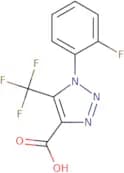
CAS:<p>Versatile small molecule scaffold</p>Formula:C10H8BrFN2OPurity:Min. 95%Molecular weight:271.09 g/mol1-(2-Fluorophenyl)-5-(trifluoromethyl)-1H-1,2,3-triazole-4-carboxylic acid
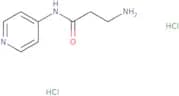
CAS:<p>Versatile small molecule scaffold</p>Formula:C10H5F4N3O2Purity:Min. 95%Molecular weight:275.16 g/mol3-Amino-N-(pyridin-4-yl)propanamide dihydrochloride
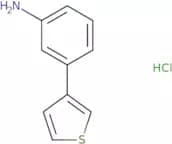
CAS:<p>Versatile small molecule scaffold</p>Formula:C8H13Cl2N3OPurity:Min. 95%Molecular weight:238.11 g/mol3-(Thiophen-3-yl)aniline hydrochloride
CAS:<p>Versatile small molecule scaffold</p>Formula:C10H10ClNSPurity:Min. 95%Molecular weight:211.71 g/mol2-Methyl-2-[(5-oxo-5,6,7,8-tetrahydronaphthalen-2-yl)oxy]propanoic acid
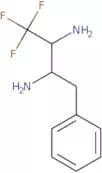
CAS:<p>Versatile small molecule scaffold</p>Formula:C14H16O4Purity:Min. 95%Molecular weight:248.27 g/mol1,1,1-Trifluoro-4-phenylbutane-2,3-diamine
CAS:<p>Versatile small molecule scaffold</p>Formula:C10H13F3N2Purity:Min. 95%Molecular weight:218.22 g/molMethyl 4-({[1-(ethanesulfonyl)piperidin-4-yl]carbamoyl}amino)benzoate
CAS:Versatile small molecule scaffoldFormula:C16H23N3O5SPurity:Min. 95%Molecular weight:369.4 g/molHexahydro-1H-pyrrolo[2,1-c]morpholine-3-carbothioamide
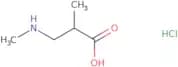
CAS:Versatile small molecule scaffoldFormula:C8H14N2OSPurity:Min. 95%Molecular weight:186.28 g/mol2-Methyl-3-(methylamino)propanoic acid hydrochloride
CAS:<p>Versatile small molecule scaffold</p>Formula:C5H12ClNO2Purity:Min. 95%Molecular weight:153.61 g/mol2-[6-Methyl-4-oxo-2-(pyrimidin-2-yl)-1,4-dihydropyrimidin-5-yl]acetic acid
CAS:<p>2-[6-Methyl-4-oxo-2-(pyrimidin-2-yl)-1,4-dihydropyrimidin-5-yl]acetic acid is a research tool that is used to study protein interactions and receptor binding. It has been shown to be an activator of ion channels, as well as a ligand for the receptor. 2-[6-Methyl-4-oxo-2-(pyrimidin-2-yl)-1,4-dihydropyrimidin-5-yl]acetic acid has been shown to inhibit GPCR activity in vitro, which may lead to the development of new treatments for diseases caused by GPCRs.</p>Formula:C11H10N4O3Purity:Min. 95%Molecular weight:246.22 g/mol{4-[(3-Fluorophenyl)methoxy]phenyl}methanamine hydrochloride
CAS:<p>Versatile small molecule scaffold</p>Formula:C14H15ClFNOPurity:Min. 95%Molecular weight:267.72 g/molBenzyl 2-[(chlorosulfonyl)methyl]pyrrolidine-1-carboxylate
CAS:<p>Versatile small molecule scaffold</p>Formula:C13H16ClNO4SPurity:Min. 95%Molecular weight:317.79 g/mol2-[5-Methyl-2-(thiophen-3-yl)-1,3-oxazol-4-yl]acetic acid
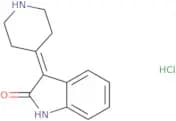
CAS:<p>Versatile small molecule scaffold</p>Formula:C10H9NO3SPurity:Min. 95%Molecular weight:223.25 g/mol3-(Piperidin-4-ylidene)-2,3-dihydro-1H-indol-2-one hydrochloride
CAS:<p>Versatile small molecule scaffold</p>Formula:C13H15ClN2OPurity:Min. 95%Molecular weight:250.72 g/mol2,2,2-Trifluoroethyl N-(5-phenyl-1,2,4-triazin-3-yl)carbamate
CAS:Versatile small molecule scaffoldFormula:C12H9F3N4O2Purity:Min. 95%Molecular weight:298.22 g/mol1,3-Dimethyl-2,4-dioxo-1H,2H,3H,4H-pyrido[2,3-d]pyrimidine-6-sulfonyl chloride
CAS:<p>Versatile small molecule scaffold</p>Formula:C9H8ClN3O4SPurity:Min. 95%Molecular weight:289.7 g/mol1-Dodecylsulfanylcarboximidoyl-4-methylpiperidine hydrobromide
CAS:<p>Versatile small molecule scaffold</p>Formula:C19H39BrN2SPurity:Min. 95%Molecular weight:407.5 g/molMethyl 3-methyl-7-oxo-6H,7H-[1,2]oxazolo[3,4-d]pyridazine-4-carboxylate
CAS:<p>Versatile small molecule scaffold</p>Formula:C8H7N3O4Purity:Min. 95%Molecular weight:209.16 g/mol5-Bromo-1-[2-(diethylamino)ethyl]-2,3-dihydro-1H-indole-2,3-dione hydrochloride
CAS:<p>Versatile small molecule scaffold</p>Formula:C14H18BrClN2O2Purity:Min. 95%Molecular weight:361.66 g/molN-(Thiophen-3-ylmethyl)aniline hydrochloride
CAS:<p>Versatile small molecule scaffold</p>Formula:C11H12ClNSPurity:Min. 95%Molecular weight:225.74 g/mol4-[3-(3-Oxobut-1-en-1-yl)phenoxy]butanenitrile
CAS:<p>Versatile small molecule scaffold</p>Formula:C14H15NO2Purity:Min. 95%Molecular weight:229.27 g/moltert-Butyl N-[1-(N'-hydroxycarbamimidoyl)cyclopentyl]carbamate
CAS:<p>Versatile small molecule scaffold</p>Formula:C11H21N3O3Purity:Min. 95%Molecular weight:243.3 g/mol1-(1-Phenylethyl)-1H-pyrazol-3-amine
CAS:<p>Versatile small molecule scaffold</p>Formula:C11H13N3Purity:Min. 95%Molecular weight:187.24 g/mol1-[3-(4-Fluorophenoxy)propyl]-5-methyl-1H-pyrazol-3-amine
CAS:<p>Versatile small molecule scaffold</p>Formula:C13H16FN3OPurity:Min. 95%Molecular weight:249.28 g/mol1-cyclopropyl-1h-pyrazol-3-amine
CAS:<p>1-Cyclopropyl-1H-pyrazol-3-amine is an alkylation agent that is used in the synthesis of pyrazole derivatives. It can be produced by coupling of 1,2-diamines with 3-chloropyrazole. The coupling reaction typically requires a base to activate the amine. 1-Cyclopropyl-1H-pyrazol-3-amine can also be synthesized from cyclopropylamine and acetyl chloride. This reagent has been shown to react with a variety of aromatic compounds to produce pyrazoles.</p>Formula:C6H9N3Purity:Min. 95%Molecular weight:123.16 g/mol[(3-Methylthiophen-2-yl)methyl](propan-2-yl)amine hydrochloride
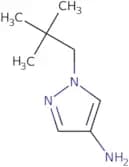
CAS:<p>Versatile small molecule scaffold</p>Formula:C9H16ClNSPurity:Min. 95%Molecular weight:205.75 g/mol1-(2,2-Dimethylpropyl)-1H-pyrazol-4-amine
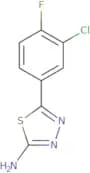
CAS:<p>Versatile small molecule scaffold</p>Formula:C8H15N3Purity:Min. 95%Molecular weight:153.22 g/mol5-(3-Chloro-4-fluorophenyl)-1,3,4-thiadiazol-2-amine
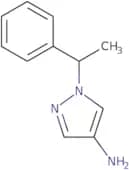
CAS:<p>Versatile small molecule scaffold</p>Formula:C8H5ClFN3SPurity:Min. 95%Molecular weight:229.66 g/mol1-(1-Phenylethyl)-1H-pyrazol-4-amine
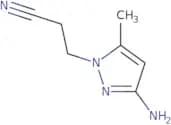
CAS:<p>Versatile small molecule scaffold</p>Formula:C11H13N3Purity:Min. 95%Molecular weight:187.24 g/mol3-(3-Amino-5-methyl-1H-pyrazol-1-yl)propanenitrile
CAS:<p>Versatile small molecule scaffold</p>Formula:C7H10N4Purity:Min. 95%Molecular weight:150.18 g/mol3-[(2S)-4-[(tert-Butoxy)carbonyl]-2-methylpiperazin-1-yl]propanoic acid
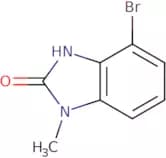
CAS:<p>Versatile small molecule scaffold</p>Formula:C13H24N2O4Purity:Min. 95%Molecular weight:272.34 g/mol4-Bromo-1-methyl-2,3-dihydro-1H-1,3-benzodiazol-2-one
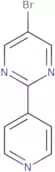
CAS:Versatile small molecule scaffoldFormula:C8H7BrN2OPurity:Min. 95%Molecular weight:227.06 g/mol5-Bromo-2-(pyridin-4-yl)pyrimidine
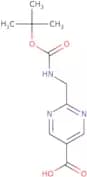
CAS:<p>Versatile small molecule scaffold</p>Formula:C9H6BrN3Purity:Min. 95%Molecular weight:236.07 g/mol2-(((tert-Butoxycarbonyl)amino)methyl)pyrimidine-5-carboxylic acid
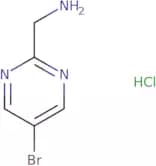
CAS:<p>Versatile small molecule scaffold</p>Formula:C11H15N3O4Purity:Min. 95%Molecular weight:253.25 g/mol(5-bromopyrimidin-2-yl)methanamine hcl
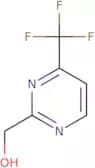
CAS:<p>Versatile small molecule scaffold</p>Formula:C5H7BrClN3Purity:Min. 95%Molecular weight:224.49 g/mol(4-(Trifluoromethyl)pyrimidin-2-yl)methanol
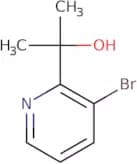
CAS:<p>Versatile small molecule scaffold</p>Formula:C6H5F3N2OPurity:Min. 95%Molecular weight:178.11 g/mol2-(3-Bromopyridin-2-yl)propan-2-ol
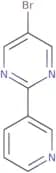
CAS:Versatile small molecule scaffoldFormula:C8H10BrNOPurity:Min. 95%Molecular weight:216.08 g/mol5-Bromo-2-(pyridin-3-yl)pyrimidine
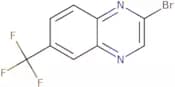
CAS:<p>Versatile small molecule scaffold</p>Formula:C9H6BrN3Purity:Min. 95%Molecular weight:236.07 g/mol2-Bromo-6-(trifluoromethyl)quinoxaline
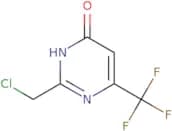
CAS:<p>Versatile small molecule scaffold</p>Formula:C9H4BrF3N2Purity:Min. 95%Molecular weight:277.04 g/mol2-(Chloromethyl)-6-(trifluoromethyl)pyrimidin-4-ol
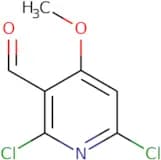
CAS:<p>Versatile small molecule scaffold</p>Formula:C6H4ClF3N2OPurity:Min. 95%Molecular weight:212.56 g/mol2,6-Dichloro-4-methoxypyridine-3-carbaldehyde
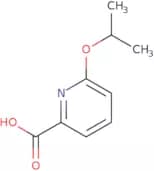
CAS:<p>Versatile small molecule scaffold</p>Formula:C7H5Cl2NO2Purity:Min. 95%Molecular weight:206.02 g/mol6-(Propan-2-yloxy)pyridine-2-carboxylic acid
CAS:<p>Versatile small molecule scaffold</p>Formula:C9H11NO3Purity:Min. 95%Molecular weight:181.19 g/mol5-Chloro-2-cyclopropylpyrimidine-4-carboxylic acid
CAS:<p>5-Chloro-2-cyclopropylpyrimidine-4-carboxylic acid is a herbicide that is used in the agriculturally and environmentally. The herbicide inhibits the growth of plants by inhibiting photosynthesis, which may be due to its ability to inhibit chlorophyll synthesis. 5-Chloro-2-cyclopropylpyrimidine-4-carboxylic acid also has nitro and cyano groups that are responsible for this activity. 5-Chloro-2-cyclopropylpyrimidine-4-carboxylic acid is derived from aliphatic compounds and aromatic compounds.</p>Formula:C8H7ClN2O2Purity:Min. 95%Molecular weight:198.6 g/molEthyl 2-(chloromethyl)-6-methylpyrimidine-4-carboxylate
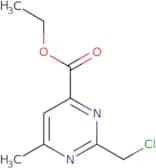
CAS:<p>Versatile small molecule scaffold</p>Formula:C9H11ClN2O2Purity:Min. 95%Molecular weight:214.65 g/mol2,4-Dibromo-1,3-oxazole
CAS:<p>2,4-Dibromo-1,3-oxazole is a nitro compound and an important intermediate in the synthesis of herbicides. It is also used to produce coatings and as a reagent for organic synthesis. The compound can be synthesized by the palladium-catalyzed coupling of phenyl bromides with 2,4-dichloro-1,3-oxazole. 2,4-Dibromo-1,3-oxazole has been shown to have potent horticultural activity against plant diseases caused by anions such as fusarium oxysporum. This compound has a pharmacokinetic profile that is favourable for oral administration in humans. The lysine analogues are converted into picolinic acid and then to 2,4-dibromo-1,3-oxazole in the body. The dialkylamino substituents on the molecule are believed to be responsible</p>Formula:C3HBr2NOPurity:Min. 95%Molecular weight:226.85 g/mol4-Phenyl-1,3-oxazole-5-carboxylic acid
CAS:<p>Versatile small molecule scaffold</p>Formula:C10H7NO3Purity:Min. 95%Molecular weight:189.17 g/mol2-Cyclopropyl-6-methylpyrimidine-4-carboxylic acid
CAS:<p>Versatile small molecule scaffold</p>Formula:C9H10N2O2Purity:Min. 95%Molecular weight:178.19 g/mol2-Chloro-5-methyl-1,3-oxazole-4-carboxylic acid
CAS:<p>Versatile small molecule scaffold</p>Formula:C5H4ClNO3Purity:Min. 95%Molecular weight:161.54 g/moltert-Butyl N-[(5-aminopyrimidin-2-yl)methyl]carbamate
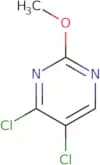
CAS:<p>Versatile small molecule scaffold</p>Formula:C10H16N4O2Purity:Min. 95%Molecular weight:224.3 g/mol4,5-Dichloro-2-methoxypyrimidine
CAS:Versatile small molecule scaffoldFormula:C5H4Cl2N2OPurity:Min. 95%Molecular weight:179 g/mol1-(5-Phenylpyrimidin-2-yl)methanamine hydrochloride
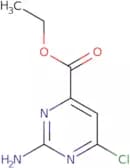
CAS:<p>Versatile small molecule scaffold</p>Formula:C11H12ClN3Purity:Min. 95%Molecular weight:221.68 g/molEthyl 2-amino-6-chloropyrimidine-4-carboxylate
CAS:<p>Versatile small molecule scaffold</p>Formula:C7H8ClN3O2Purity:Min. 95%Molecular weight:201.61 g/mol5-Bromo-2-(trifluoromethyl)-1,3-oxazole-4-carboxylic acid
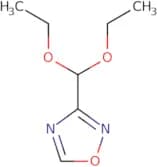
CAS:<p>Versatile small molecule scaffold</p>Formula:C5HBrF3NO3Purity:Min. 95%Molecular weight:259.97 g/mol3-(Diethoxymethyl)-1,2,4-oxadiazole
CAS:<p>Versatile small molecule scaffold</p>Formula:C7H12N2O3Purity:Min. 95%Molecular weight:172.2 g/mol2-(Trifluoromethyl)-1,3-oxazole-4-carbonitrile
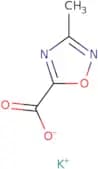
CAS:<p>Versatile small molecule scaffold</p>Formula:C5HF3N2OPurity:Min. 95%Molecular weight:162.07 g/molPotassium 3-methyl-1,2,4-oxadiazole-5-carboxylate
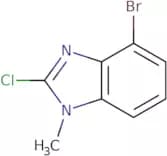
CAS:<p>Versatile small molecule scaffold</p>Formula:C4H3KN2O3Purity:Min. 95%Molecular weight:166.18 g/mol4-Bromo-2-chloro-1-methyl-1H-benzimidazole
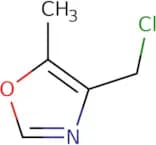
CAS:<p>Versatile small molecule scaffold</p>Formula:C8H6BrClN2Purity:Min. 95%Molecular weight:245.5 g/molOxazole, 4-(chloromethyl)-5-methyl-
CAS:<p>Versatile small molecule scaffold</p>Formula:C5H6ClNOPurity:Min. 95%Molecular weight:131.56 g/mol5-Methyl-1,3-oxazole-4-carboxamide
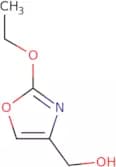
CAS:<p>5-Methyl-1,3-oxazole-4-carboxamide is a chiral, stereoselective, synthetic compound. It is a congener of benzofuranone and macrocyclic cinnamyl. This compound has been shown to be efficient in the cyclodehydration of diazoketones. The reaction yields high yields of 5-methyl-1,3-oxazole-4-carboxylic acid with good stereoselectivity. 5-Methyl-1,3-oxazole-4 carboxamide can also be used as a metal carbene for the synthesis of substituted benzo[d]isothiazoles.</p>Formula:C5H6N2O2Purity:Min. 95%Molecular weight:126.11 g/mol(2-Ethoxy-1,3-oxazol-4-yl)methanol
CAS:Versatile small molecule scaffoldFormula:C6H9NO3Purity:Min. 95%Molecular weight:143.14 g/mol(4-Bromo-1,3-oxazol-2-yl)methanol
CAS:<p>Versatile small molecule scaffold</p>Formula:C4H4BrNO2Purity:Min. 95%Molecular weight:177.98 g/mol2-(6-Chloropyridin-3-yl)-2,2-difluoroacetic acid
CAS:<p>Versatile small molecule scaffold</p>Formula:C7H4ClF2NO2Purity:Min. 95%Molecular weight:207.56 g/mol2-{4-[(tert-Butoxy)carbonyl]piperazin-1-yl}-2-methylpropanoic acid
CAS:Versatile small molecule scaffoldFormula:C13H24N2O4Purity:Min. 95%Molecular weight:272.34 g/mol3-Bromo-4-iodopyridin-2-amine
CAS:Versatile small molecule scaffoldFormula:C5H4BrIN2Purity:Min. 95%Molecular weight:298.91 g/mol4-Oxo-1-(pyridin-4-yl)cyclohexane-1-carbonitrile
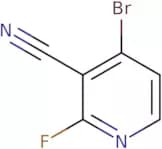
CAS:Versatile small molecule scaffoldFormula:C12H12N2OPurity:Min. 95%Molecular weight:200.24 g/mol4-Bromo-2-fluoropyridiine-3-carbonitrile
CAS:<p>Versatile small molecule scaffold</p>Formula:C6H2BrFN2Purity:Min. 95%Molecular weight:201 g/mol2-(2-Chloropyridin-4-yl)propan-2-ol
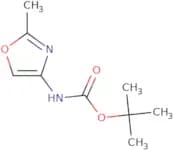
CAS:<p>Versatile small molecule scaffold</p>Formula:C8H10ClNOPurity:Min. 95%Molecular weight:171.62 g/moltert-Butyl N-(2-methyl-1,3-oxazol-4-yl)carbamate
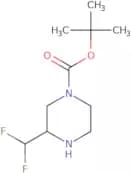
CAS:<p>Versatile small molecule scaffold</p>Formula:C9H14N2O3Purity:Min. 95%Molecular weight:198.22 g/moltert-butyl 3-(difluoromethyl)piperazine-1-carboxylate
CAS:<p>Versatile small molecule scaffold</p>Formula:C10H18F2N2O2Purity:Min. 95%Molecular weight:236.3 g/mol2-Ethoxy-1,3-oxazole-4-carboxamide
CAS:<p>Versatile small molecule scaffold</p>Formula:C6H8N2O3Purity:Min. 95%Molecular weight:156.1 g/mol2-Bromopyrimidin-5-ol
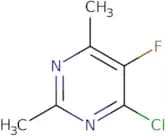
CAS:2-Bromopyrimidin-5-ol is a reactive chemical that can be used as an additive in plastics. It is also mesomorphic and polarizing, which means it can change from being liquid to solid at different temperatures. This chemical has been shown to exhibit magnetic resonance spectroscopy (MRS) and microscopy properties, as well as dichroic transitions. The 2-Bromopyrimidin-5-ol can be photopolymerized with UV irradiation, making it useful for optical applications.Formula:C4H3BrN2OPurity:Min. 95%Molecular weight:174.99 g/mol4-Chloro-5-fluoro-2,6-dimethylpyrimidine
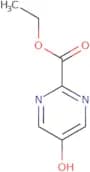
CAS:<p>Versatile small molecule scaffold</p>Formula:C6H6ClFN2Purity:Min. 95%Molecular weight:160.58 g/mol5-Hydroxy-pyrimidine-2-carboxylic acid ethyl ester
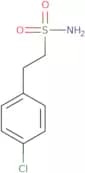
CAS:<p>Versatile small molecule scaffold</p>Formula:C7H8N2O3Purity:Min. 95%Molecular weight:168.15 g/mol2-(4-Chlorophenyl)ethane-1-sulfonamide
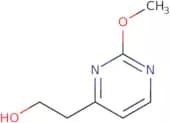
CAS:<p>Versatile small molecule scaffold</p>Formula:C8H10ClNO2SPurity:Min. 95%Molecular weight:219.69 g/mol2-(2-Methoxypyrimidin-4-yl)ethan-1-ol
CAS:<p>Versatile small molecule scaffold</p>Formula:C7H10N2O2Purity:Min. 95%Molecular weight:154.17 g/moltert-Butyl 3-(oxiran-2-yl)azetidine-1-carboxylate
CAS:<p>Versatile small molecule scaffold</p>Formula:C10H17NO3Purity:Min. 95%Molecular weight:199.2 g/mol2,8-Dioxa-5-azaspiro[3.5]nonane
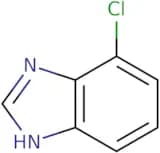
CAS:<p>Versatile small molecule scaffold</p>Formula:C6H11NO2Purity:Min. 95%Molecular weight:129.16 g/mol4-Chloro-1H-benzimidazole
CAS:<p>4-Chloro-1H-benzimidazole is a synthetic nucleophile that reacts with thioethers to form an ion pair. It can be used as a precursor for the synthesis of captopril, an antihypertensive drug. 4-Chloro-1H-benzimidazole is also known to react with carboxylic acids to form ion pairs and then dehydrate to form electrostatically bound products. The reaction mechanism starts with the nucleophilic attack of a proton on the carbonyl carbon atom in the carboxylic acid, forming an intermediate carbocation which reacts with a chloride ion. This intermediate then collapses and forms two products: one positively charged and one negatively charged. The positively charged product is a chloroformate salt while the negatively charged product is an alcohol.</p>Formula:C7H5ClN2Purity:Min. 95%Molecular weight:152.58 g/mol2-[Methyl(phenyl)carbamoyl]benzoic acid
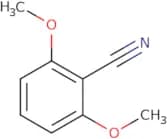
CAS:<p>Versatile small molecule scaffold</p>Formula:C15H13NO3Purity:Min. 95%Molecular weight:255.27 g/mol2,6-Dimethoxybenzonitrile
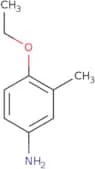
CAS:<p>2,6-Dimethoxybenzonitrile is an organic compound with the formula C8H9NO2. It is a white solid that is soluble in water and polar organic solvents. 2,6-Dimethoxybenzonitrile has three stereoisomers: Z, E and E. The Z form is usually obtained as a mixture of two diastereomers. The other two forms are obtained by reacting with methylamine or acetonitrile respectively. The photodecomposition of 2,6-dimethoxybenzonitrile starts with the generation of nitric oxide (NO) and then formation of quinones such as 9-acetylphenanthrene, which can react with triazolium to generate pyridinium. The reaction mechanism for this process involves bond cleavage followed by methylation reactions at the benzenes and cyanides.</p>Formula:C9H9NO2Purity:Min. 95%Molecular weight:163.17 g/mol4-Ethoxy-3-methylaniline
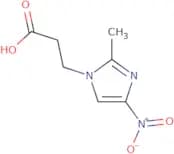
CAS:<p>Versatile small molecule scaffold</p>Formula:C9H13NOPurity:Min. 95%Molecular weight:151.21 g/mol3-(2-Methyl-4-nitro-1H-imidazol-1-yl)propanoic acid
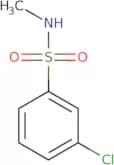
CAS:<p>Versatile small molecule scaffold</p>Formula:C7H9N3O4Purity:Min. 95%Molecular weight:199.16 g/mol3-Chloro-N-methylbenzene-1-sulfonamide
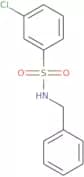
CAS:Versatile small molecule scaffoldFormula:C7H8ClNO2SPurity:Min. 95%Molecular weight:205.66 g/molN-Benzyl-3-chlorobenzene-1-sulfonamide
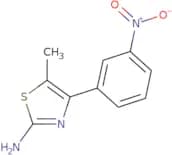
CAS:<p>Versatile small molecule scaffold</p>Formula:C13H12ClNO2SPurity:Min. 95%Molecular weight:281.76 g/mol5-Methyl-4-(3-nitrophenyl)-1,3-thiazol-2-amine
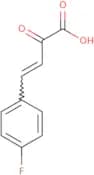
CAS:Versatile small molecule scaffoldFormula:C10H9N3O2SPurity:Min. 95%Molecular weight:235.26 g/mol4-(4-Fluorophenyl)-2-oxobut-3-enoic acid
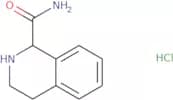
CAS:<p>4-(4-Fluorophenyl)-2-oxobut-3-enoic acid (FPA) is a chemical inhibitor that binds to the enzyme tiglic acid hydrolase, which is involved in the degradation of tiglic acid. It inhibits this enzyme irreversibly and has been shown to be active at low concentrations. FPA has potential as a biomarker for diseases such as cancer and diabetes.</p>Formula:C10H7FO3Purity:Min. 95%Molecular weight:194.16 g/mol1,2,3,4-Tetrahydroisoquinoline-1-carboxamide hydrochloride
CAS:<p>Versatile small molecule scaffold</p>Formula:C10H13ClN2OPurity:Min. 95%Molecular weight:212.67 g/mol

![3-benzyl-3-azabicyclo[3.1.1]heptan-6-one](/_next/image/?url=https%3A%2Fstatic.cymitquimica.com%2Fproducts%2F3D%2Fthumb-webp%2FQZB52914.webp&w=3840&q=75)
![4-({[1-(Ethanesulfonyl)piperidin-4-yl]carbamoyl}amino)benzoic acid](/_next/image/?url=https%3A%2Fstatic.cymitquimica.com%2Fproducts%2F3D%2Fthumb-webp%2FQZB52919.webp&w=3840&q=75)
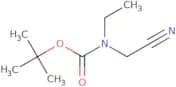
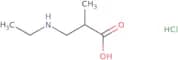
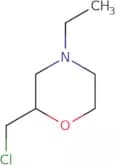
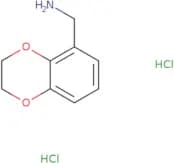
![3-[3-(Aminomethyl)phenyl]-1-phenylurea hydrochloride](/_next/image/?url=https%3A%2Fstatic.cymitquimica.com%2Fproducts%2F3D%2Fthumb-webp%2FQZB52929.webp&w=3840&q=75)

![2-Methyl-2-[(5-oxo-5,6,7,8-tetrahydronaphthalen-2-yl)oxy]propanoic acid](/_next/image/?url=https%3A%2Fstatic.cymitquimica.com%2Fproducts%2F3D%2Fthumb-webp%2FQZB52937.webp&w=3840&q=75)
![Methyl 4-({[1-(ethanesulfonyl)piperidin-4-yl]carbamoyl}amino)benzoate](/_next/image/?url=https%3A%2Fstatic.cymitquimica.com%2Fproducts%2F3D%2Fthumb-webp%2FQZB52944.webp&w=3840&q=75)
![Hexahydro-1H-pyrrolo[2,1-c]morpholine-3-carbothioamide](/_next/image/?url=https%3A%2Fstatic.cymitquimica.com%2Fproducts%2F3D%2Fthumb-webp%2FQZB52947.webp&w=3840&q=75)
![2-[6-Methyl-4-oxo-2-(pyrimidin-2-yl)-1,4-dihydropyrimidin-5-yl]acetic acid](/_next/image/?url=https%3A%2Fstatic.cymitquimica.com%2Fproducts%2F3D%2Fthumb-webp%2FQZB52949.webp&w=3840&q=75)
![{4-[(3-Fluorophenyl)methoxy]phenyl}methanamine hydrochloride](/_next/image/?url=https%3A%2Fstatic.cymitquimica.com%2Fproducts%2F3D%2Fthumb-webp%2FQZB52951.webp&w=3840&q=75)
![Benzyl 2-[(chlorosulfonyl)methyl]pyrrolidine-1-carboxylate](/_next/image/?url=https%3A%2Fstatic.cymitquimica.com%2Fproducts%2F3D%2Fthumb-webp%2FQZB52952.webp&w=3840&q=75)
![2-[5-Methyl-2-(thiophen-3-yl)-1,3-oxazol-4-yl]acetic acid](/_next/image/?url=https%3A%2Fstatic.cymitquimica.com%2Fproducts%2F3D%2Fthumb-webp%2FQZB52953.webp&w=3840&q=75)
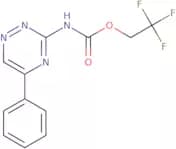
![1,3-Dimethyl-2,4-dioxo-1H,2H,3H,4H-pyrido[2,3-d]pyrimidine-6-sulfonyl chloride](/_next/image/?url=https%3A%2Fstatic.cymitquimica.com%2Fproducts%2F3D%2Fthumb-webp%2FQZB52956.webp&w=3840&q=75)

![Methyl 3-methyl-7-oxo-6H,7H-[1,2]oxazolo[3,4-d]pyridazine-4-carboxylate](/_next/image/?url=https%3A%2Fstatic.cymitquimica.com%2Fproducts%2F3D%2Fthumb-webp%2FQZB52959.webp&w=3840&q=75)
![5-Bromo-1-[2-(diethylamino)ethyl]-2,3-dihydro-1H-indole-2,3-dione hydrochloride](/_next/image/?url=https%3A%2Fstatic.cymitquimica.com%2Fproducts%2F3D%2Fthumb-webp%2FQZB52960.webp&w=3840&q=75)
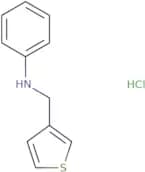
![4-[3-(3-Oxobut-1-en-1-yl)phenoxy]butanenitrile](/_next/image/?url=https%3A%2Fstatic.cymitquimica.com%2Fproducts%2F3D%2Fthumb-webp%2FQZB56250.webp&w=3840&q=75)
![tert-Butyl N-[1-(N'-hydroxycarbamimidoyl)cyclopentyl]carbamate](/_next/image/?url=https%3A%2Fstatic.cymitquimica.com%2Fproducts%2F3D%2Fthumb-webp%2FQZB56252.webp&w=3840&q=75)
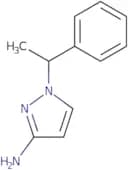
![1-[3-(4-Fluorophenoxy)propyl]-5-methyl-1H-pyrazol-3-amine](/_next/image/?url=https%3A%2Fstatic.cymitquimica.com%2Fproducts%2F3D%2Fthumb-webp%2FQZB56484.webp&w=3840&q=75)
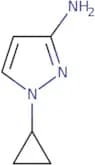
amine hydrochloride](/_next/image/?url=https%3A%2Fstatic.cymitquimica.com%2Fproducts%2F3D%2Fthumb-webp%2FQZB56641.webp&w=3840&q=75)
![3-[(2S)-4-[(tert-Butoxy)carbonyl]-2-methylpiperazin-1-yl]propanoic acid](/_next/image/?url=https%3A%2Fstatic.cymitquimica.com%2Fproducts%2F3D%2Fthumb-webp%2FQZB58686.webp&w=3840&q=75)



![tert-Butyl N-[(5-aminopyrimidin-2-yl)methyl]carbamate](/_next/image/?url=https%3A%2Fstatic.cymitquimica.com%2Fproducts%2F3D%2Fthumb-webp%2FQZB60083.webp&w=3840&q=75)






![2-{4-[(tert-Butoxy)carbonyl]piperazin-1-yl}-2-methylpropanoic acid](/_next/image/?url=https%3A%2Fstatic.cymitquimica.com%2Fproducts%2F3D%2Fthumb-webp%2FQZB61973.webp&w=3840&q=75)




![2,8-Dioxa-5-azaspiro[3.5]nonane](/_next/image/?url=https%3A%2Fstatic.cymitquimica.com%2Fproducts%2F3D%2Fthumb-webp%2FQZB72547.webp&w=3840&q=75)
![2-[Methyl(phenyl)carbamoyl]benzoic acid](/_next/image/?url=https%3A%2Fstatic.cymitquimica.com%2Fproducts%2F3D%2Fthumb-webp%2FRAA93147.webp&w=3840&q=75)