Building Blocks
This section contains fundamental products for the synthesis of organic and biological compounds. Building blocks are the essential starting materials used to construct complex molecules through various chemical reactions. They play a critical role in drug discovery, material science, and chemical research. At CymitQuimica, we offer a diverse range of high-quality building blocks to support your innovative research and industrial projects, ensuring you have the essential components for successful synthesis.
Subcategories of "Building Blocks"
- Boronic Acids & Boronic Acid Derivatives(5,756 products)
- Chiral Building Blocks(1,242 products)
- Hydrocarbon Building Blocks(6,095 products)
- Organic Building Blocks(61,055 products)
Found 199650 products of "Building Blocks"
Sort by
Purity (%)
0
100
|
0
|
50
|
90
|
95
|
100
(3-Bromoimidazo[1,2-a]pyridin-2-yl)methanol
CAS:<p>Versatile small molecule scaffold</p>Formula:C8H7BrN2OPurity:Min. 95%Molecular weight:227.06 g/mol3-Cyclopropylcyclohexan-1-one
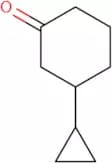
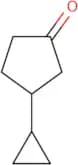
CAS:<p>Versatile small molecule scaffold</p>Formula:C9H14OPurity:Min. 95%Molecular weight:138.21 g/mol3-Cyclopropylcyclopentan-1-one
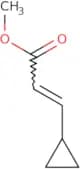
CAS:<p>Versatile small molecule scaffold</p>Formula:C8H12OPurity:Min. 95%Molecular weight:124.18 g/molMethyl (2E)-3-cyclopropylprop-2-enoate
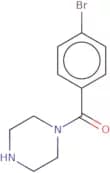
CAS:<p>Methyl (2E)-3-cyclopropylprop-2-enoate is a chiral compound. It can be synthesized from the corresponding chiral propionate by a cross-coupling reaction with cyclopropanes and triflates. The product is a racemic mixture of two diastereomers, an E and Z isomer, which can be separated using chromatography or crystallization. This compound has been used in the synthesis of natural compounds such as alkenes and esters. Methyl (2E)-3-cyclopropylprop-2-enoate can also be synthesized through the use of sodium borohydride to reduce acrylate or catalytic hydrogenation to reduce esters.</p>Formula:C7H10O2Purity:Min. 95%Molecular weight:126.15 g/mol1-(4-bromobenzoyl)piperazine
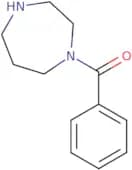
CAS:<p>Versatile small molecule scaffold</p>Formula:C11H13BrN2OPurity:Min. 95%Molecular weight:269.1 g/mol1-Benzoyl-1,4-diazepane
CAS:<p>Versatile small molecule scaffold</p>Formula:C12H16N2OPurity:Min. 95%Molecular weight:204.27 g/molPyrazolo[1,5-a]pyridin-2(1H)-one
CAS:<p>Pyrazolo[1,5-a]pyridin-2(1H)-one is a natural product that is found in plants and fungi. It has been shown to have anticancer activity by inhibiting the proliferation of cancer cells. Pyrazolo[1,5-a]pyridin-2(1H)-one may also act as a backup for dehydrogenase enzymes such as uridine 5'-diphospho-glucose dehydrogenase (UDPGDH) that are involved in the biosynthesis of nucleotides such as uridine triphosphate (UTP). Pyrazolo[1,5-a]pyridin-2(1H)-one inhibits mitochondrial membrane potential and cell proliferation in leukemia cells. The inhibition of mitochondrial membrane potential may be due to its ability to inhibit the enzyme electron transport chain complex I.</p>Formula:C7H6N2OPurity:Min. 95%Molecular weight:134.14 g/mol1-(pyrazolo[1,5-a]pyridin-3-yl)ethanone
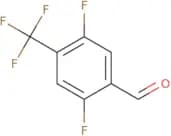
CAS:<p>Versatile small molecule scaffold</p>Formula:C9H8N2OPurity:Min. 95%Molecular weight:160.17 g/mol2,5-Difluoro-4-(trifluoromethyl)benzaldehyde
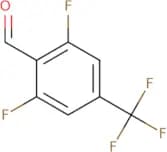
CAS:<p>Versatile small molecule scaffold</p>Formula:C8H3F5OPurity:Min. 95%Molecular weight:210.1 g/mol2,6-Difluoro-4-(trifluoromethyl)benzaldehyde
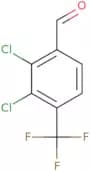
CAS:<p>Versatile small molecule scaffold</p>Formula:C8H3F5OPurity:Min. 95%Molecular weight:210.1 g/mol2,3-Dichloro-4-(trifluoromethyl)benzaldehyde
CAS:<p>Versatile small molecule scaffold</p>Formula:C8H3Cl2F3OPurity:Min. 95%Molecular weight:243.01 g/mol(3R,7aS)-1,7a-Dihydro-3-phenyl-3H,5H-pyrrolo[1,2-c]oxazol-5-one
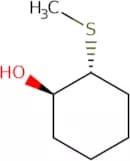
CAS:<p>Versatile small molecule scaffold</p>Formula:C12H11NO2Purity:Min. 95%Molecular weight:201.22 g/mol2-(Methylsulfanyl)cyclohexan-1-ol, trans
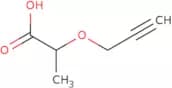
CAS:<p>Versatile small molecule scaffold</p>Formula:C7H14OSPurity:Min. 95%Molecular weight:146.3 g/mol2-(Prop-2-yn-1-yloxy)propanoic acid
CAS:<p>Versatile small molecule scaffold</p>Formula:C6H8O3Purity:Min. 95%Molecular weight:128.13 g/molBicyclo[2.2.1]heptan-1-ylmethanesulfonyl chloride
CAS:<p>Versatile small molecule scaffold</p>Formula:C8H13ClO2SPurity:Min. 95%Molecular weight:208.71 g/molEthyl 2-amino-4,5,6,7-tetrahydrobenzo[d]thiazole-6-carboxylate
CAS:<p>Versatile small molecule scaffold</p>Formula:C10H14N2O2SPurity:Min. 95%Molecular weight:226.3 g/mol1,4-Dioxaspiro[4.5]decane-8-acetic acid
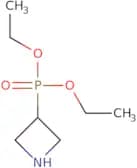
CAS:<p>Versatile small molecule scaffold</p>Formula:C10H16O4Purity:Min. 95%Molecular weight:200.23 g/molDiethyl (azetidin-3-yl)phosphonate
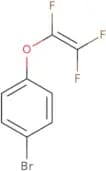
CAS:<p>Versatile small molecule scaffold</p>Formula:C7H16NO3PPurity:Min. 95%Molecular weight:193.18 g/mol1-Bromo-4-(trifluorovinyloxy)benzene
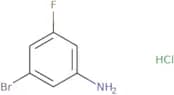
CAS:<p>1-Bromo-4-(trifluorovinyloxy)benzene is a polyether that can be used to synthesize fluorescent polymers. The vinylene group in 1-bromo-4-(trifluorovinyloxy)benzene has shown to act as a nucleophile and yield polymerized products. This compound is insoluble in organic solvents, which makes it difficult to isolate yields. It has been experimentally shown that the anomeric carbon in this compound can be converted into the alpha form by treatment with potassium bis(trimethylsilyl)amide and then subjected to Wittig reaction.</p>Formula:C8H4BrF3OPurity:Min. 95%Molecular weight:253.02 g/mol3-Bromo-5-fluoroaniline HCl
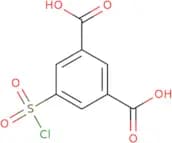
CAS:<p>Versatile small molecule scaffold</p>Formula:C6H5BrFN·HClPurity:Min. 95%Molecular weight:226.48 g/mol5-(Chlorosulfonyl)benzene-1,3-dicarboxylic acid
CAS:<p>Versatile small molecule scaffold</p>Formula:C8H5ClO6SPurity:Min. 95%Molecular weight:264.64 g/mol1-Oxaspiro[4.4]nonan-6-one
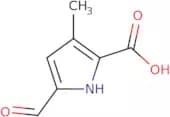
CAS:<p>1-Oxaspiro[4.4]nonan-6-one is a geometric isomer of the bicyclic compound 1,3,5-trioxaspiro[4.4]nonane. It has been synthesized by reacting 3-methylcyclohexanone with nitroethane in the presence of sodium ethoxide and potassium hydroxide. The substituents on the ring have been found to have an effect on the selectivity of 1-oxaspiro[4.4]nonan-6-one. For example, steric effects are more significant in this compound than in other six-membered rings with substituents that are not axial or equatorial. In addition, 1-oxaspiro[4.4]nonan-6-one has been shown to be a stronger diastereoselective agent than other six membered ring compounds with substituents that are not axial or equatorial due to</p>Formula:C8H12O2Purity:Min. 95%Molecular weight:140.18 g/mol5-Formyl-3-methyl-1H-pyrrole-2-carboxylic acid
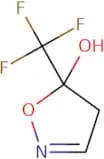
CAS:<p>Versatile small molecule scaffold</p>Formula:C7H7NO3Purity:Min. 95%Molecular weight:153.14 g/mol5-(Trifluoromethyl)-4,5-dihydroisoxazol-5-ol
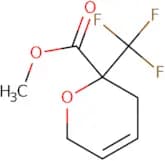
CAS:<p>Versatile small molecule scaffold</p>Formula:C4H4F3NO2Purity:Min. 95%Molecular weight:155.08 g/molMethyl 2-(trifluoromethyl)-3,6-dihydro-2H-pyran-2-carboxylate
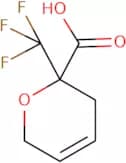
CAS:<p>Versatile small molecule scaffold</p>Formula:C8H9F3O3Purity:Min. 95%Molecular weight:210.15 g/mol2-(Trifluoromethyl)-3,6-dihydro-2H-pyran-2-carboxylic acid
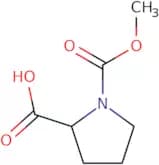
CAS:<p>Versatile small molecule scaffold</p>Formula:C7H7F3O3Purity:Min. 95%Molecular weight:196.12 g/mol1-(Methoxycarbonyl)pyrrolidine-2-carboxylic acid
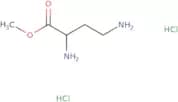
CAS:<p>Versatile small molecule scaffold</p>Formula:C7H11NO4Purity:Min. 95%Molecular weight:173.17 g/molMethyl (2S)-2,4-diaminobutanoate dihydrochloride
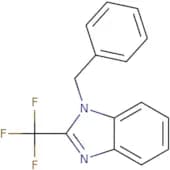
CAS:<p>Versatile small molecule scaffold</p>Formula:C5H14Cl2N2O2Purity:Min. 95%Molecular weight:205.08 g/mol1-Benzyl-2-(trifluoromethyl)-1H-1,3-benzimidazole
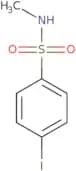
CAS:Controlled Product<p>Versatile small molecule scaffold</p>Formula:C15H11F3N2Purity:Min. 95%Molecular weight:276.26 g/mol4-Iodo-N-methylbenzenesulfonamide
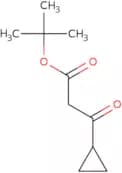
CAS:<p>Versatile small molecule scaffold</p>Formula:C7H8INO2SPurity:Min. 95%Molecular weight:297.11 g/moltert-Butyl 3-cyclopropyl-3-oxopropanoate
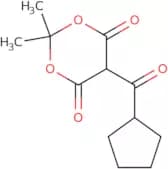
CAS:<p>Tert-Butyl 3-cyclopropyl-3-oxopropanoate is an organic compound that is used as a fungicide. It has been shown to be effective against fungi such as Botrytis cinerea, Phytophthora, and Pyricularia oryzae. Tert butyl 3-cyclopropyl-3-oxopropanoate inhibits the synthesis of ergosterol in the cell membrane by blocking its conversion to squalene. This prevents the formation of a sterol nucleus, which is required for the synthesis of dolichols and other important cell components.</p>Formula:C10H16O3Purity:Min. 95%Molecular weight:184.23 g/mol5-Cyclopentanecarbonyl-2,2-dimethyl-1,3-dioxane-4,6-dione
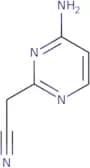
CAS:<p>Versatile small molecule scaffold</p>Formula:C12H16O5Purity:Min. 95%Molecular weight:240.25 g/mol2-(4-Aminopyrimidin-2-yl)acetonitrile
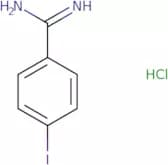
CAS:<p>Versatile small molecule scaffold</p>Formula:C6H6N4Purity:Min. 95%Molecular weight:134.14 g/mol4-Iodo-benzamidine hydrochloride
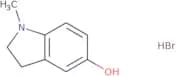
CAS:<p>Versatile small molecule scaffold</p>Formula:C7H8ClIN2Purity:Min. 95%Molecular weight:282.51 g/mol1-Methyl-2,3-dihydro-1H-indol-5-ol hydrobromide
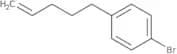
CAS:<p>Versatile small molecule scaffold</p>Formula:C9H12BrNOPurity:Min. 95%Molecular weight:230.1 g/mol1-Bromo-4-(pent-4-en-1-yl)benzene
CAS:<p>Versatile small molecule scaffold</p>Formula:C11H13BrPurity:Min. 95%Molecular weight:225.12 g/mol3-(2-Bromoethyl)-2H,3H-[1,3]oxazolo[4,5-b]pyridin-2-one
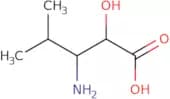
CAS:<p>Versatile small molecule scaffold</p>Formula:C8H7BrN2O2Purity:Min. 95%Molecular weight:243.06 g/mol(2S,3S)-3-Amino-2-hydroxy-4-methylpentanoic acid
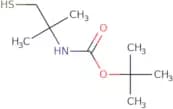
CAS:<p>Versatile small molecule scaffold</p>Formula:C6H13NO3Purity:Min. 95%Molecular weight:147.17 g/moltert-Butyl N-(2-methyl-1-sulfanylpropan-2-yl)carbamate
CAS:Versatile small molecule scaffoldFormula:C9H19NO2SPurity:Min. 95%Molecular weight:205.3 g/mol4-Methyl-3,4-dihydro-2H-benzo[b][1,4]oxazine-8-carboxylic acid
CAS:<p>Versatile small molecule scaffold</p>Formula:C10H11NO3Purity:Min. 95%Molecular weight:193.2 g/mol4-Amino-2-[(propan-2-yloxy)methyl]phenol
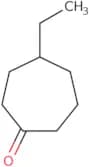
CAS:<p>Versatile small molecule scaffold</p>Formula:C10H15NO2Purity:Min. 95%Molecular weight:181.23 g/mol4-Ethylcycloheptan-1-one
CAS:<p>Versatile small molecule scaffold</p>Formula:C9H16OPurity:Min. 95%Molecular weight:140.22 g/mol8H-Pyrano[3,4-b]pyridin-8-one
CAS:<p>Versatile small molecule scaffold</p>Formula:C8H5NO2Purity:Min. 95%Molecular weight:147.13 g/mol7,7-Dimethyl-1,4-dioxaspiro[4.5]decan-8-one
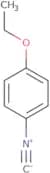
CAS:<p>Versatile small molecule scaffold</p>Formula:C10H16O3Purity:Min. 95%Molecular weight:184.23 g/mol1-Ethoxy-4-isocyanobenzene
CAS:<p>1-Ethoxy-4-isocyanobenzene is a cyclized compound that is the product of an amidation reaction. It can be synthesized by reacting aniline with sodium ethoxide in ethanol. 1-Ethoxy-4-isocyanobenzene has been used as a precursor for the synthesis of other compounds, including azides, trimethylsilyl adducts, and ethylenediamine condensation products. Amidation reactions are spontaneous and occur without the need for a catalyst or external heat.</p>Formula:C9H9NOPurity:Min. 95%Molecular weight:147.17 g/molCycloheptyl isocyanide
CAS:<p>Cycloheptyl isocyanide (CIP) is a carbonyl group that can be used as a ligand in organometallic chemistry. It has shown to react with silicon, carboxylate, phosphite, and iron catalyst to form a ruthenium complex. The CIP reacts with Grignard reagents and cyclopentadienyl to form an imine. This organic compound is insoluble in organic solvents and can be used for hydrocarbon synthesis. Cycloheptyl isocyanide has been shown to react with organic compounds such as phenols, amines, and alkenes at room temperature.</p>Formula:C8H13NPurity:Min. 95%Molecular weight:123.2 g/mol2-({[(9H-Fluoren-9-yl)methoxy]carbonyl}amino)-3-(thiophen-2-yl)propanoic acid
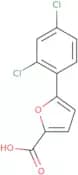
CAS:<p>2-({[(9H-Fluoren-9-yl)methoxy]carbonyl}amino)-3-(thiophen-2-yl)propanoic acid is a potent inhibitor that binds to the epoxide hydroxyl group of phospholipase A2. It has been shown to interact with solid phase synthesis and synthetic methods for evaluation of epoxide hydroxylation reactions. This compound was synthesized using fmoc-gly-oh as the protecting group, which is then removed by transition metal catalyzed ligand exchange. 2-[(9H-fluoren-9-yl)methoxy]carbonylamino]-3-(thiophen-2-yl)propanoic acid can be used in the treatment of inflammatory conditions such as asthma or arthritis.</p>Formula:C22H19NO4SPurity:Min. 95%Molecular weight:393.5 g/mol5-(2,4-Dichlorophenyl)-2-furoic acid
CAS:<p>5-(2,4-Dichlorophenyl)-2-furoic acid is an antibacterial agent that has been shown to have a cytotoxic effect on tumor cells. The biological activity of this compound has been shown in vitro and in vivo. 5-(2,4-Dichlorophenyl)-2-furoic acid has been found to inhibit the growth of tumor cells by interfering with their metabolism and inhibiting the synthesis of DNA, RNA and proteins. 5-(2,4-Dichlorophenyl)-2-furoic acid also inhibits the growth of microorganisms such as Enterococcus faecalis. This antibiotic has been shown to destroy bacterial cell walls by oxidation of chitin at the interface between the cell wall and cytoplasmic membrane. The mechanism for this action is not yet clear, but it may involve photoelectrical effects or generation of reactive oxygen species.</p>Formula:C11H6Cl2O3Purity:Min. 95%Molecular weight:257.07 g/mol(2R)-2-[(3,4-Dimethoxyphenyl)methyl]pyrrolidine
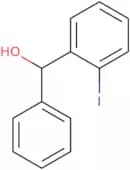
CAS:Controlled Product<p>Versatile small molecule scaffold</p>Formula:C13H19NO2Purity:Min. 95%Molecular weight:221.29 g/mol(2-Iodophenyl)(phenyl)methanol
CAS:<p>Versatile small molecule scaffold</p>Formula:C13H11IOPurity:Min. 95%Molecular weight:310.1 g/molrac-(1R,6R)-2-Oxabicyclo[4.2.0]octan-7-one
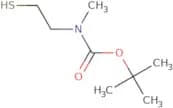
CAS:Versatile small molecule scaffoldFormula:C7H10O2Purity:Min. 95%Molecular weight:126.2 g/moltert-Butyl N-methyl-N-(2-sulfanylethyl)carbamate
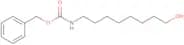
CAS:<p>Versatile small molecule scaffold</p>Formula:C8H17NO2SPurity:Min. 95%Molecular weight:191.29 g/molBenzyl N-(8-hydroxyoctyl)carbamate
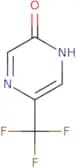
CAS:<p>Versatile small molecule scaffold</p>Formula:C16H25NO3Purity:Min. 95%Molecular weight:279.37 g/mol5-Hydroxy-2-(trifluoromethyl)pyrazine
CAS:<p>Versatile small molecule scaffold</p>Formula:C5H3F3N2OPurity:Min. 95%Molecular weight:164.08 g/molN-[(1-Ethyl-1H-pyrazol-4-yl)methylidene]hydroxylamine
CAS:<p>Versatile small molecule scaffold</p>Formula:C6H9N3OPurity:Min. 95%Molecular weight:139.16 g/mol2-[(2-Chloroquinazolin-4-yl)amino]ethan-1-ol
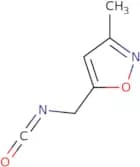
CAS:<p>2-[(2-Chloroquinazolin-4-yl)amino]ethan-1-ol (CQAEE) is a prodrug that is enzymatically hydrolyzed in vivo to the active form CQAE. It is an inhibitor of carbonic anhydrase enzymes and has been shown to be more potent than amiodarone and less toxic than acetazolamide. CQAEE has been shown to be effective in vitro against human erythrocytes, homopolymers, and amiodarone, but not in vivo against congestive heart failure. The process of hydrolysis by enzymes causes the release of a carboxylic acid and ethylene glycol which are responsible for the observed therapeutic effects. The 6-Fluoro-3-indoxyl-beta-D-galactopyranoside is an antituberculosis drug that belongs to the class of rifamycins</p>Formula:C10H10ClN3OPurity:Min. 95%Molecular weight:223.66 g/mol5-(Isocyanatomethyl)-3-methyl-1,2-oxazole
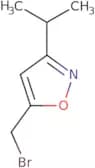
CAS:<p>Versatile small molecule scaffold</p>Formula:C6H6N2O2Purity:Min. 95%Molecular weight:138.12 g/mol5-(Bromomethyl)-3-(propan-2-yl)-1,2-oxazole
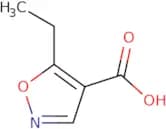
CAS:<p>5-(Bromomethyl)-3-(propan-2-yl)-1,2-oxazole is an aminoisoxazole that can be used as a precursor for the synthesis of hydroxylamine. It is also used to synthesize a hydroxylamine hydrochloride (HNHCl) salt. 5-(Bromomethyl)-3-(propan-2-yl)-1,2-oxazole is soluble in water and can be isolated by extraction with organic solvents.</p>Formula:C7H10BrNOPurity:Min. 95%Molecular weight:204.06 g/mol5-Ethyl-isoxazole-4-carboxylic acid
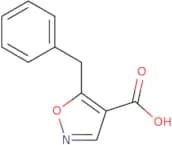
CAS:<p>Versatile small molecule scaffold</p>Formula:C6H7NO3Purity:Min. 95%Molecular weight:141.13 g/mol5-Benzyl-1,2-oxazole-4-carboxylic acid
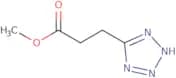
CAS:<p>Versatile small molecule scaffold</p>Formula:C11H9NO3Purity:Min. 95%Molecular weight:203.19 g/molMethyl 3-(2H-1,2,3,4-tetrazol-5-yl)propanoate
CAS:<p>Versatile small molecule scaffold</p>Formula:C5H8N4O2Purity:Min. 95%Molecular weight:156.14 g/moltert-Butyl N-[[(1S,5R)-3-azabicyclo[3.1.0]hexan-6-yl]methyl]carbamate
CAS:<p>Versatile small molecule scaffold</p>Formula:C11H20N2O2Purity:Min. 95%Molecular weight:212.29 g/mol(1R,5S,6R)-(3-Azabicyclo[3.1.0]hex-6-yl)methanol
CAS:<p>Versatile small molecule scaffold</p>Formula:C6H11NOPurity:Min. 95%Molecular weight:113.16 g/molBenzyl (1R,5S)-6-(hydroxymethyl)-3-azabicyclo[3.1.0]hexane-3-carboxylate
CAS:<p>Versatile small molecule scaffold</p>Formula:C14H17NO3Purity:Min. 95%Molecular weight:247.29 g/molExo-3-cbz-3-azabicyclo[3.1.0]hexane-6-carboxylic Acid
CAS:<p>Versatile small molecule scaffold</p>Formula:C14H15NO4Purity:Min. 95%Molecular weight:261.27 g/moltert-Butyl N-[(1S,5R)-3-Azabicyclo[3.1.0]hexan-6-yl]carbamate
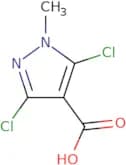
CAS:<p>Versatile small molecule scaffold</p>Formula:C10H18N2O2Purity:Min. 95%Molecular weight:198.26 g/mol3,5-Dichloro-1-methyl-1H-pyrazole-4-carboxylic acid
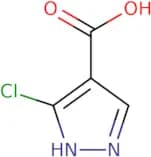
CAS:<p>3,5-Dichloro-1-methyl-1H-pyrazole-4-carboxylic acid is a carboxylic acid that belongs to the group of medicines. It is used as an organic base and a catalyst in the preparation of other chemicals. 3,5-Dichloro-1-methyl-1H-pyrazole-4-carboxylic acid also has herbicidal and chlorinating properties. In addition, it can be converted into 3,5 dichloro 1 methyl pyrazole 4 (chloromethyl) oxazole, which can be used as an amide or glycolic reagent. This chemical is also used to make phosphorus pentoxide by reacting with phosphorus pentoxide in the liquid phase.</p>Formula:C5H4Cl2N2O2Purity:Min. 95%Molecular weight:195 g/mol5-Chloro-1H-pyrazole-4-carboxylic acid
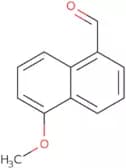
CAS:<p>Versatile small molecule scaffold</p>Formula:C4H3ClN2O2Purity:Min. 95%Molecular weight:146.53 g/mol5-Methoxynaphthalene-1-carbaldehyde
CAS:<p>Versatile small molecule scaffold</p>Formula:C12H10O2Purity:Min. 95%Molecular weight:186.21 g/moltert-Butyl N-[2-methyl-1-(methylamino)propan-2-yl]carbamate
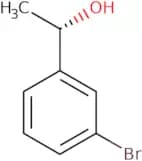
CAS:<p>Versatile small molecule scaffold</p>Formula:C10H22N2O2Purity:Min. 95%Molecular weight:202.29 g/mol(S)-1-(3-Bromophenyl)ethanol
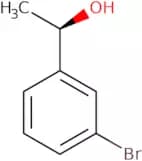
CAS:(S)-1-(3-Bromophenyl)ethanol is an aromatic ketone that is used as a substrate for the preparation of other compounds. It has been shown to be effective in the oxidation of formate, with dehydrogenase activity. The enzyme was immobilized onto an ion-exchange resin, which improved its stability and allowed for the selective removal of byproducts. The enantiopurity of (S)-1-(3-bromophenyl)ethanol was determined using preparative gas chromatography and parameters such as alcohols and chiral phenylacetaldehyde.Formula:C8H9BrOPurity:Min. 95%Molecular weight:201.06 g/mol(R)-1-(3-Bromophenyl)ethanol
CAS:<p>(R)-1-(3-Bromophenyl)ethanol is a prochiral ketone that undergoes asymmetric hydrogenation to afford racemic 1-phenylethanol. The catalytic system consists of an ionic liquid, imidazolium salt, and chiral ligands. This catalyst system can be used to transfer hydrogen to the ketone in order to generate two enantiomers with opposite optical rotation.</p>Formula:C8H9BrOPurity:Min. 95%Molecular weight:201.06 g/mol2-[(3-Cyano-4-methyl-6-oxo-1,6-dihydropyridin-2-yl)sulfanyl]acetic acid
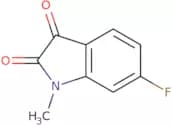
CAS:<p>Versatile small molecule scaffold</p>Formula:C9H7N2O3SPurity:Min. 95%Molecular weight:223.23 g/mol6-Fluoro-1-methyl-2,3-dihydro-1H-indole-2,3-dione
CAS:<p>Versatile small molecule scaffold</p>Formula:C9H6FNO2Purity:Min. 95%Molecular weight:179.15 g/moltert-Butyl (2Z)-2-[(dimethylamino)methylidene]-3-oxobutanoate
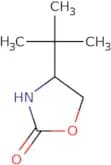
CAS:<p>Versatile small molecule scaffold</p>Formula:C11H19NO3Purity:Min. 95%Molecular weight:213.27 g/mol4-tert-Butyl-1,3-oxazolidin-2-one
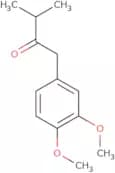
CAS:<p>4-tert-Butyl-1,3-oxazolidin-2-one is a natural product that has been isolated from the Cathayensis plant. It is an inhibitor of protein synthesis and can be used to treat bacterial infections.</p>Formula:C7H13NO2Purity:Min. 95%Molecular weight:143.18 g/mol1-(3,4-Dimethoxyphenyl)-3-methylbutan-2-one
CAS:<p>Versatile small molecule scaffold</p>Formula:C13H18O3Purity:Min. 95%Molecular weight:222.28 g/mol5-Bromo-6-methylimidazo[2,1-b][1,3]thiazole
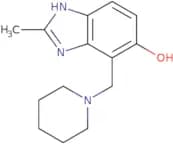
CAS:<p>Versatile small molecule scaffold</p>Formula:C6H5BrN2SPurity:Min. 95%Molecular weight:217.09 g/mol2-Methyl-4-(piperidin-1-ylmethyl)-1H-1,3-benzodiazol-5-ol
CAS:<p>Versatile small molecule scaffold</p>Formula:C14H19N3OPurity:Min. 95%Molecular weight:245.32 g/mol4-(1H-Pyrrol-2-yl)aniline
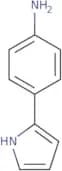
CAS:<p>Versatile small molecule scaffold</p>Formula:C10H10N2Purity:Min. 95%Molecular weight:158.2 g/mol2-[5-(Thiophen-3-yl)-1H-1,2,3,4-tetrazol-1-yl]acetic acid
CAS:<p>2-[5-(Thiophen-3-yl)-1H-1,2,3,4-tetrazol-1-yl]acetic acid is a thiazolidinone derivative that has been shown to normalize peripheral nerve function in diabetic neuropathy. This drug has been shown to improve blood flow and nerve function in the sciatic nerve of diabetic rats, and to increase blood carnitine levels. 2-[5-(Thiophen-3-yl)-1H-1,2,3,4-tetrazol-1-yl]acetic acid is an analog of L -carnitine and may be used as a treatment for cardiac abnormalities caused by diabetes. It also helps decrease hyperactivity in mice with type 1 diabetes. 2-[5-(Thiophen-3-yl)-1H-1,2,3,4-tetrazol-1-yl]acetic acid is a potent inhibitor of</p>Formula:C7H6N4O2SPurity:Min. 95%Molecular weight:210.22 g/molEthyl 2-[5-(thiophen-3-yl)-1H-1,2,3,4-tetrazol-1-yl]acetate
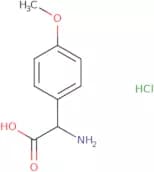
CAS:<p>Versatile small molecule scaffold</p>Formula:C9H10N4O2SPurity:Min. 95%Molecular weight:238.3 g/mol2-Amino-2-(4-methoxyphenyl)acetic acid hydrochloride
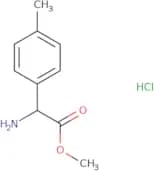
CAS:<p>Versatile small molecule scaffold</p>Formula:C9H12ClNO3Purity:Min. 95%Molecular weight:217.65 g/molmethyl 2-amino-2-(4-methylphenyl)acetate hydrochloride
CAS:<p>Versatile small molecule scaffold</p>Formula:C10H14ClNO2Purity:Min. 95%Molecular weight:215.7 g/molAcetic acid, [(1,3-dihydro-1,3-dioxo-2H-isoindol-2-yl)oxy]-
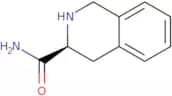
CAS:<p>Acetic acid is a molecule that contains a linker group, which can be used in the synthesis of cinnamic acid derivatives. This molecule has been shown to have antioxidant activity and is often used as a synthetic flavonoid. Acetic acid is also reactive and may react with other molecules such as cinnamic acid derivatives or perfluorinated compounds. Acetic acid can be found in kidney disease patients and has been linked to inflammatory diseases such as arthritis. Acetic acid is also used for labeling purposes and can be crosslinked with other molecules to form a long-lasting complex.</p>Formula:C10H7NO5Purity:Min. 95%Molecular weight:221.17 g/mol(S)-1,2,3,4-Tetrahydro-isoquinoline-3-carboxylic acid amide ee
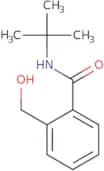
CAS:<p>Versatile small molecule scaffold</p>Formula:C10H12N2OPurity:Min. 95%Molecular weight:176.22 g/molN-tert-Butyl-2-(hydroxymethyl)benzamide
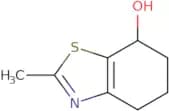
CAS:<p>Versatile small molecule scaffold</p>Formula:C12H17NO2Purity:Min. 95%Molecular weight:207.27 g/mol2-Methyl-4,5,6,7-tetrahydro-1,3-benzothiazol-7-ol
CAS:<p>Versatile small molecule scaffold</p>Formula:C8H11NOSPurity:Min. 95%Molecular weight:169.25 g/mol2-{2-Oxo-1-oxa-4-thiaspiro[4.4]nonan-3-yl}acetic acid
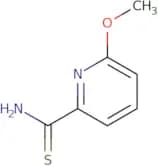
CAS:<p>Versatile small molecule scaffold</p>Formula:C9H12O4SPurity:Min. 95%Molecular weight:216.26 g/mol6-Methoxypyridine-2-carbothioamide
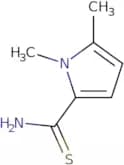
CAS:<p>Versatile small molecule scaffold</p>Formula:C7H8N2OSPurity:Min. 95%Molecular weight:168.22 g/mol1,5-Dimethyl-1H-pyrrole-2-carbothioamide
CAS:<p>Versatile small molecule scaffold</p>Formula:C7H10N2SPurity:Min. 95%Molecular weight:154.24 g/mol2-[(tert-butoxy)carbonyl]-2-azabicyclo[2.2.1]heptane-3-carboxylic acid, Mixture of diastereomers
CAS:<p>Versatile small molecule scaffold</p>Formula:C12H19NO4Purity:Min. 95%Molecular weight:241.3 g/mol3-{[(4-Chlorophenyl)methyl]sulfanyl}-1H-1,2,4-triazole
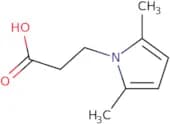
CAS:<p>Versatile small molecule scaffold</p>Formula:C9H8ClN3SPurity:Min. 95%Molecular weight:225.7 g/mol3-(2,5-Dimethyl-1H-pyrrol-1-yl)propanoic acid
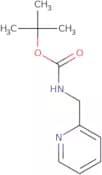
CAS:<p>3-(2,5-Dimethyl-1H-pyrrol-1-yl)propanoic acid is a neurotransmitter that is found in the brain and spinal cord. It is synthesized from glycine by the enzyme glycine decarboxylase, which converts it to 3-(2,5-dimethyl-1H-pyrrol-1-yl)propanoic acid. The oxidized form of this compound has been shown to produce some atrophy in the nervous system and also exhibits neurotoxic effects. 3-(2,5-Dimethyl-1H-pyrrol-1-yl)propanoic acid can be metabolized into propanoic acid, which may also have neurotoxic effects.</p>Formula:C9H13NO2Purity:Min. 95%Molecular weight:167.21 g/molN-Boc-2-aminomethylpyridine
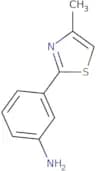
CAS:<p>N-Boc-2-aminomethylpyridine is a ligand with a pyridine ring that has been substituted with a tert-butyl group. The compound is used in the synthesis of other ligands and as a reagent for studying asymmetric reactions. It crystallizes as monoclinic crystals with the space group P21/n, which are unsymmetrical and tripodal. It is anhydrous and reacts readily with carboxaldehyde to form cyclopentane derivatives.</p>Formula:C11H18N2O2Purity:Min. 95%Molecular weight:208.26 g/mol3-(4-Methyl-1,3-thiazol-2-yl)aniline
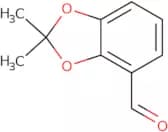
CAS:<p>Versatile small molecule scaffold</p>Formula:C10H10N2SPurity:Min. 95%Molecular weight:190.27 g/mol2,2-Dimethyl-1,3-dioxaindane-4-carbaldehyde
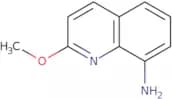
CAS:<p>Versatile small molecule scaffold</p>Formula:C10H10O3Purity:Min. 95%Molecular weight:178.18 g/mol2-Methoxyquinolin-8-amine
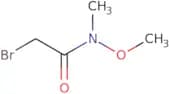
CAS:<p>Versatile small molecule scaffold</p>Formula:C10H10N2OPurity:Min. 95%Molecular weight:174.2 g/mol2-Bromo-N-methoxy-N-methyl-acetamide
CAS:<p>2-Bromo-N-methoxy-N-methylacetamide (2BMAM) is a functional compound that can be used for the synthesis of a variety of molecules, including enamines, amides and carbinols. 2BMAM functions as an electrophilic reagent in organic chemistry. It is a hydrogen transfer agent and can be used to synthesize salicylaldehyde from benzaldehyde by reducing the carbonyl group to an alcohol with hydrogen. 2BMAM is also useful in the synthesis of amides and carbinols, which are two important classes of compounds that are found in many biologically active molecules.</p>Formula:C4H8BrNO2Purity:Min. 95%Molecular weight:182.02 g/mol5-Chloro-4-(trifluoromethyl)-1,3-thiazol-2-amine
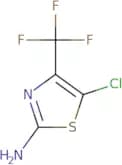
CAS:Versatile small molecule scaffoldFormula:C4H2ClF3N2SPurity:Min. 95%Molecular weight:202.59 g/mol
![(3-Bromoimidazo[1,2-a]pyridin-2-yl)methanol](/_next/image/?url=https%3A%2Fstatic.cymitquimica.com%2Fproducts%2F3D%2Fthumb-webp%2FJCA93841.webp&w=3840&q=75)

![Pyrazolo[1,5-a]pyridin-2(1H)-one](/_next/image/?url=https%3A%2Fstatic.cymitquimica.com%2Fproducts%2F3D%2Fthumb-webp%2FJCA94287.webp&w=3840&q=75)
![1-(pyrazolo[1,5-a]pyridin-3-yl)ethanone](/_next/image/?url=https%3A%2Fstatic.cymitquimica.com%2Fproducts%2F3D%2Fthumb-webp%2FJCA94295.webp&w=3840&q=75)
![(3R,7aS)-1,7a-Dihydro-3-phenyl-3H,5H-pyrrolo[1,2-c]oxazol-5-one](/_next/image/?url=https%3A%2Fstatic.cymitquimica.com%2Fproducts%2F3D%2Fthumb-webp%2FJFA10765.webp&w=3840&q=75)
![Bicyclo[2.2.1]heptan-1-ylmethanesulfonyl chloride](/_next/image/?url=https%3A%2Fstatic.cymitquimica.com%2Fproducts%2F3D%2Fthumb-webp%2FJFA12745.webp&w=3840&q=75)
![Ethyl 2-amino-4,5,6,7-tetrahydrobenzo[d]thiazole-6-carboxylate](/_next/image/?url=https%3A%2Fstatic.cymitquimica.com%2Fproducts%2F3D%2Fthumb-webp%2FJFA13600.webp&w=3840&q=75)
![1,4-Dioxaspiro[4.5]decane-8-acetic acid](/_next/image/?url=https%3A%2Fstatic.cymitquimica.com%2Fproducts%2F3D%2Fthumb-webp%2FJFA13604.webp&w=3840&q=75)
![1-Oxaspiro[4.4]nonan-6-one](/_next/image/?url=https%3A%2Fstatic.cymitquimica.com%2Fproducts%2F3D%2Fthumb-webp%2FJFA17901.webp&w=3840&q=75)
![3-(2-Bromoethyl)-2H,3H-[1,3]oxazolo[4,5-b]pyridin-2-one](/_next/image/?url=https%3A%2Fstatic.cymitquimica.com%2Fproducts%2F3D%2Fthumb-webp%2FJFA33695.webp&w=3840&q=75)
![4-Methyl-3,4-dihydro-2H-benzo[b][1,4]oxazine-8-carboxylic acid](/_next/image/?url=https%3A%2Fstatic.cymitquimica.com%2Fproducts%2F3D%2Fthumb-webp%2FJFA37261.webp&w=3840&q=75)
![4-Amino-2-[(propan-2-yloxy)methyl]phenol](/_next/image/?url=https%3A%2Fstatic.cymitquimica.com%2Fproducts%2F3D%2Fthumb-webp%2FJFA38060.webp&w=3840&q=75)
![8H-Pyrano[3,4-b]pyridin-8-one](/_next/image/?url=https%3A%2Fstatic.cymitquimica.com%2Fproducts%2F3D%2Fthumb-webp%2FJFA40796.webp&w=3840&q=75)
![7,7-Dimethyl-1,4-dioxaspiro[4.5]decan-8-one](/_next/image/?url=https%3A%2Fstatic.cymitquimica.com%2Fproducts%2F3D%2Fthumb-webp%2FJFA40906.webp&w=3840&q=75)

![2-({[(9H-Fluoren-9-yl)methoxy]carbonyl}amino)-3-(thiophen-2-yl)propanoic acid](/_next/image/?url=https%3A%2Fstatic.cymitquimica.com%2Fproducts%2F3D%2Fthumb-webp%2FJFA43924.webp&w=3840&q=75)
![(2R)-2-[(3,4-Dimethoxyphenyl)methyl]pyrrolidine](/_next/image/?url=https%3A%2Fstatic.cymitquimica.com%2Fproducts%2F3D%2Fthumb-webp%2FJFA45421.webp&w=3840&q=75)
![rac-(1R,6R)-2-Oxabicyclo[4.2.0]octan-7-one](/_next/image/?url=https%3A%2Fstatic.cymitquimica.com%2Fproducts%2F3D%2Fthumb-webp%2FJFA46060.webp&w=3840&q=75)
![N-[(1-Ethyl-1H-pyrazol-4-yl)methylidene]hydroxylamine](/_next/image/?url=https%3A%2Fstatic.cymitquimica.com%2Fproducts%2F3D%2Fthumb-webp%2FJFA51626.webp&w=3840&q=75)
![2-[(2-Chloroquinazolin-4-yl)amino]ethan-1-ol](/_next/image/?url=https%3A%2Fstatic.cymitquimica.com%2Fproducts%2F3D%2Fthumb-webp%2FJFA51734.webp&w=3840&q=75)
![tert-Butyl N-[[(1S,5R)-3-azabicyclo[3.1.0]hexan-6-yl]methyl]carbamate](/_next/image/?url=https%3A%2Fstatic.cymitquimica.com%2Fproducts%2F3D%2Fthumb-webp%2FJFA57512.webp&w=3840&q=75)
![(1R,5S,6R)-(3-Azabicyclo[3.1.0]hex-6-yl)methanol](/_next/image/?url=https%3A%2Fstatic.cymitquimica.com%2Fproducts%2F3D%2Fthumb-webp%2FJFA57513.webp&w=3840&q=75)
![Benzyl (1R,5S)-6-(hydroxymethyl)-3-azabicyclo[3.1.0]hexane-3-carboxylate](/_next/image/?url=https%3A%2Fstatic.cymitquimica.com%2Fproducts%2F3D%2Fthumb-webp%2FJFA57514.webp&w=3840&q=75)
![Exo-3-cbz-3-azabicyclo[3.1.0]hexane-6-carboxylic Acid](/_next/image/?url=https%3A%2Fstatic.cymitquimica.com%2Fproducts%2F3D%2Fthumb-webp%2FJFA57515.webp&w=3840&q=75)
![tert-Butyl N-[(1S,5R)-3-Azabicyclo[3.1.0]hexan-6-yl]carbamate](/_next/image/?url=https%3A%2Fstatic.cymitquimica.com%2Fproducts%2F3D%2Fthumb-webp%2FJFA57517.webp&w=3840&q=75)
![tert-Butyl N-[2-methyl-1-(methylamino)propan-2-yl]carbamate](/_next/image/?url=https%3A%2Fstatic.cymitquimica.com%2Fproducts%2F3D%2Fthumb-webp%2FJFA59795.webp&w=3840&q=75)
![2-[(3-Cyano-4-methyl-6-oxo-1,6-dihydropyridin-2-yl)sulfanyl]acetic acid](/_next/image/?url=https%3A%2Fstatic.cymitquimica.com%2Fproducts%2F3D%2Fthumb-webp%2FJFA61673.webp&w=3840&q=75)
![tert-Butyl (2Z)-2-[(dimethylamino)methylidene]-3-oxobutanoate](/_next/image/?url=https%3A%2Fstatic.cymitquimica.com%2Fproducts%2F3D%2Fthumb-webp%2FJFA65371.webp&w=3840&q=75)
![5-Bromo-6-methylimidazo[2,1-b][1,3]thiazole](/_next/image/?url=https%3A%2Fstatic.cymitquimica.com%2Fproducts%2F3D%2Fthumb-webp%2FJFA67013.webp&w=3840&q=75)
![2-[5-(Thiophen-3-yl)-1H-1,2,3,4-tetrazol-1-yl]acetic acid](/_next/image/?url=https%3A%2Fstatic.cymitquimica.com%2Fproducts%2F3D%2Fthumb-webp%2FJFA71773.webp&w=3840&q=75)
![Ethyl 2-[5-(thiophen-3-yl)-1H-1,2,3,4-tetrazol-1-yl]acetate](/_next/image/?url=https%3A%2Fstatic.cymitquimica.com%2Fproducts%2F3D%2Fthumb-webp%2FJFA71810.webp&w=3840&q=75)
![Acetic acid, [(1,3-dihydro-1,3-dioxo-2H-isoindol-2-yl)oxy]-](/_next/image/?url=https%3A%2Fstatic.cymitquimica.com%2Fproducts%2F3D%2Fthumb-webp%2FJFA72487.webp&w=3840&q=75)
![2-{2-Oxo-1-oxa-4-thiaspiro[4.4]nonan-3-yl}acetic acid](/_next/image/?url=https%3A%2Fstatic.cymitquimica.com%2Fproducts%2F3D%2Fthumb-webp%2FJFA76782.webp&w=3840&q=75)
![2-[(tert-butoxy)carbonyl]-2-azabicyclo[2.2.1]heptane-3-carboxylic acid, Mixture of diastereomers](/_next/image/?url=https%3A%2Fstatic.cymitquimica.com%2Fproducts%2F3D%2Fthumb-webp%2FJFA79525.webp&w=3840&q=75)
![3-{[(4-Chlorophenyl)methyl]sulfanyl}-1H-1,2,4-triazole](/_next/image/?url=https%3A%2Fstatic.cymitquimica.com%2Fproducts%2F3D%2Fthumb-webp%2FJFA79634.webp&w=3840&q=75)