Building Blocks
This section contains fundamental products for the synthesis of organic and biological compounds. Building blocks are the essential starting materials used to construct complex molecules through various chemical reactions. They play a critical role in drug discovery, material science, and chemical research. At CymitQuimica, we offer a diverse range of high-quality building blocks to support your innovative research and industrial projects, ensuring you have the essential components for successful synthesis.
Subcategories of "Building Blocks"
- Boronic Acids & Boronic Acid Derivatives(5,778 products)
- Chiral Building Blocks(1,243 products)
- Hydrocarbon Building Blocks(6,097 products)
- Organic Building Blocks(61,052 products)
Found 201390 products of "Building Blocks"
Sort by
Purity (%)
0
100
|
0
|
50
|
90
|
95
|
100
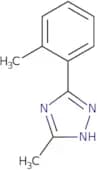
3-Methyl-5-(2-methylphenyl)-1H-1,2,4-triazole
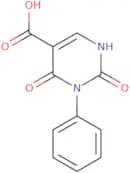
CAS:<p>Versatile small molecule scaffold</p>Formula:C10H11N3Purity:Min. 95%Molecular weight:173.21 g/mol2,4-Dioxo-3-phenyl-1,2,3,4-tetrahydropyrimidine-5-carboxylic acid
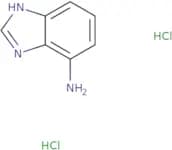
CAS:<p>Versatile small molecule scaffold</p>Formula:C11H8N2O4Purity:Min. 95%Molecular weight:232.19 g/mol1H-1,3-Benzodiazol-7-amine dihydrochloride
CAS:<p>Versatile small molecule scaffold</p>Formula:C7H9Cl2N3Purity:Min. 95%Molecular weight:206.07 g/molRef: 3D-MBA72428
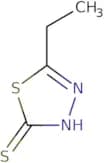
Discontinued product5-Ethyl-1,3,4-thiadiazole-2-thiol
CAS:<p>Versatile small molecule scaffold</p>Formula:C4H6N2S2Purity:Min. 95%Molecular weight:146.2 g/molRef: 3D-MBA66351
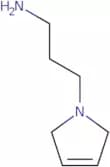
Discontinued product3-(2,5-Dihydro-1H-pyrrol-1-yl)propan-1-amine
CAS:<p>Versatile small molecule scaffold</p>Formula:C7H14N2Purity:Min. 95%Molecular weight:126.2 g/molRef: 3D-MBA63258
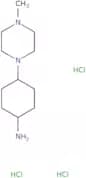
Discontinued product4-(4-Methylpiperazin-1-yl)cyclohexan-1-amine trihydrochloride
CAS:<p>Versatile small molecule scaffold</p>Formula:C11H26Cl3N3Purity:Min. 95%Molecular weight:306.7 g/molRef: 3D-LIC68922
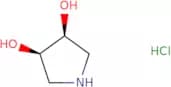
Discontinued productcis-3,4-Pyrrolidinediol hydrochloride
CAS:<p>Versatile small molecule scaffold</p>Formula:C4H10ClNO2Purity:Min. 95%Molecular weight:139.6 g/mol2-[2-(3,3,3-Trifluoropropyl)-1,3-thiazol-4-yl]acetic acid hydrochloride
CAS:<p>Versatile small molecule scaffold</p>Formula:C8H9ClF3NO2SPurity:Min. 95%Molecular weight:275.68 g/molRef: 3D-KHD06040
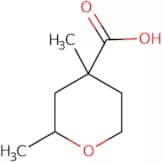
Discontinued product2,4-Dimethyloxane-4-carboxylic acid
CAS:<p>Versatile small molecule scaffold</p>Formula:C8H14O3Purity:Min. 95%Molecular weight:158.19 g/molRef: 3D-KHD04477
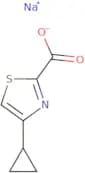
Discontinued productSodium 4-cyclopropyl-1,3-thiazole-2-carboxylate
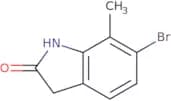
CAS:<p>Versatile small molecule scaffold</p>Formula:C7H6NNaO2SPurity:Min. 95%Molecular weight:191.18 g/mol6-Bromo-7-methyl-1,3-dihydro-indol-2-one
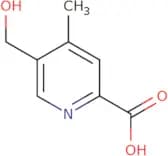
CAS:<p>Versatile small molecule scaffold</p>Formula:C9H8BrNOPurity:Min. 95%Molecular weight:226.07 g/mol5-(Hydroxymethyl)-4-methylpyridine-2-carboxylic acid
CAS:<p>Versatile small molecule scaffold</p>Formula:C8H9NO3Purity:Min. 95%Molecular weight:167.2 g/molRef: 3D-JSD45843
Discontinued product4-{3-Methyl-[1,2,4]triazolo[4,3-b]pyridazin-6-yl}piperidine dihydrochloride
CAS:<p>Versatile small molecule scaffold</p>Formula:C11H17Cl2N5Purity:Min. 95%Molecular weight:290.2 g/molRef: 3D-JSD45646
Discontinued product1-[(1-Aminobutan-2-yl)oxy]-3-methylbenzene hydrochloride
CAS:<p>Versatile small molecule scaffold</p>Formula:C11H18ClNOPurity:Min. 95%Molecular weight:215.72 g/molRef: 3D-JFC42976
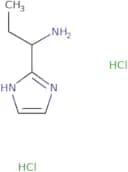
Discontinued product1-(1H-Imidazol-2-yl)propan-1-amine dihydrochloride
CAS:<p>Versatile small molecule scaffold</p>Formula:C6H13Cl2N3Purity:Min. 95%Molecular weight:198.09 g/molRef: 3D-JFC42975
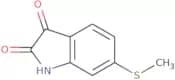
Discontinued product6-(Methylsulfanyl)-2,3-dihydro-1H-indole-2,3-dione
CAS:<p>Versatile small molecule scaffold</p>Formula:C9H7NO2SPurity:Min. 95%Molecular weight:193.22 g/molRef: 3D-JCA86843
Discontinued productQuinoline-5-carbonitrile
CAS:<p>Quinoline-5-carbonitrile is a cyanide compound that can be used in the synthesis of heterocyclic compounds. The reaction between quinoline and 5-cyanovaleric acid produces 6-nitroquinoline, which is then converted to dimethyl sulfoxide by alcoholysis. This reaction product can then be used to synthesize an amide or nucleophile. Quinoline-5-carbonitrile reacts with potassium in the presence of bifunctional hydrazide to produce a cyanide ion, which can be hydrolyzed by an acid to release hydrogen cyanide gas. This experiment has been shown as a model for reactions involving cyano compounds.</p>Formula:C10H6N2Purity:Min. 95%Molecular weight:154.17 g/molRef: 3D-JCA55102
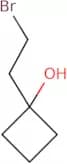
Discontinued product1-(2-Bromoethyl)cyclobutan-1-ol
CAS:<p>Versatile small molecule scaffold</p>Formula:C6H11BrOPurity:Min. 95%Molecular weight:179.05 g/molRef: 3D-JBD30961
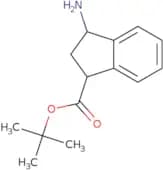
Discontinued producttert-Butyl 3-amino-2,3-dihydro-1H-indene-1-carboxylate
CAS:<p>Versatile small molecule scaffold</p>Formula:C14H19NO2Purity:Min. 95%Molecular weight:233.31 g/molRef: 3D-JBD30865
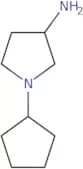
Discontinued product1-cyclopentylpyrrolidin-3-amine
CAS:<p>Versatile small molecule scaffold</p>Formula:C9H18N2Purity:Min. 95%Molecular weight:154.25 g/molRef: 3D-IMB71303
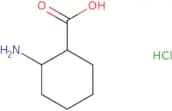
Discontinued product(1R,2R)-2-Aminocyclohexanecarboxylic acid hydrochloride
CAS:<p>Versatile small molecule scaffold</p>Formula:C7H14ClNO2Purity:Min. 95%Molecular weight:179.64 g/mol2-Methyl-3-[(propan-2-yl)amino]benzoic acid
CAS:<p>Versatile small molecule scaffold</p>Formula:C11H15NO2Purity:Min. 95%Molecular weight:193.24 g/molRef: 3D-HWB40532
Discontinued product4-{[1-(2,5-Dimethylphenyl)ethyl]amino}-3-methylbenzoic acid
CAS:<p>Versatile small molecule scaffold</p>Formula:C18H21NO2Purity:Min. 95%Molecular weight:283.4 g/molRef: 3D-HWB32519
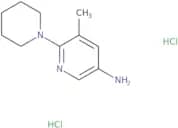
Discontinued product5-Methyl-6-(piperidin-1-yl)pyridin-3-amine dihydrochloride
CAS:<p>Versatile small molecule scaffold</p>Formula:C11H19Cl2N3Purity:Min. 95%Molecular weight:264.19 g/molRef: 3D-HHC68007
Discontinued product6-({[(tert-Butoxy)carbonyl]amino}methyl)-2-cyclopropylpyridine-3-carboxylic acid
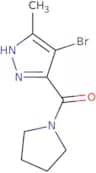
CAS:<p>Versatile small molecule scaffold</p>Formula:C15H20N2O4Purity:Min. 95%Molecular weight:292.33 g/mol(4-Bromo-5-methyl-1H-pyrazol-3-yl)(pyrrolidin-1-yl)methanone
CAS:Controlled Product<p>Versatile small molecule scaffold</p>Formula:C9H12BrN3OPurity:Min. 95%Molecular weight:258.12 g/molRef: 3D-HAC84481
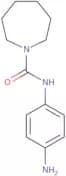
Discontinued productN-(4-Aminophenyl)azepane-1-carboxamide
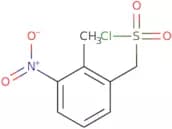
CAS:<p>N-(4-Aminophenyl)azepane-1-carboxamide is an analytical reference material, which is a secondary metabolite of plants. It is isolated from the root of the plant Scoparia dulcis, and it has been shown to have a variety of bioactive effects. N-(4-Aminophenyl)azepane-1-carboxamide has been found to inhibit the growth of various cancer cells in vitro and in vivo. It also inhibits protein synthesis and has antioxidant properties.</p>Formula:C13H19N3OPurity:Min. 95%Molecular weight:233.31 g/mol(2-Methyl-3-nitrophenyl)methanesulfonyl chloride
CAS:<p>Versatile small molecule scaffold</p>Formula:C8H8ClNO4SPurity:Min. 95%Molecular weight:249.67 g/molRef: 3D-GWB22328
Discontinued product2-([(Furan-2-ylmethyl)(methyl)carbamoyl]amino)acetic acid
CAS:<p>Versatile small molecule scaffold</p>Formula:C9H12N2O4Purity:Min. 95%Molecular weight:212.2 g/molRef: 3D-GWB17908
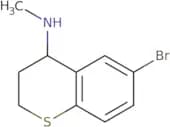
Discontinued product6-Bromo-N-methyl-3,4-dihydro-2H-1-benzothiopyran-4-amine
CAS:<p>Versatile small molecule scaffold</p>Formula:C10H12BrNSPurity:Min. 95%Molecular weight:258.18 g/molRef: 3D-GWB17719
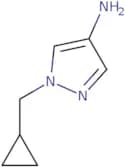
Discontinued product1-(Cyclopropylmethyl)-1H-pyrazol-4-amine
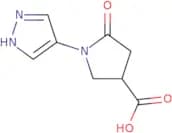
CAS:<p>Versatile small molecule scaffold</p>Formula:C7H11N3Purity:Min. 95%Molecular weight:137.18 g/mol5-Oxo-1-(1H-pyrazol-4-yl)pyrrolidine-3-carboxylic acid
CAS:<p>Versatile small molecule scaffold</p>Formula:C8H9N3O3Purity:Min. 95%Molecular weight:195.18 g/molRef: 3D-GWB16768
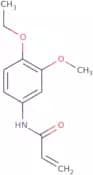
Discontinued productN-(4-Ethoxy-3-methoxyphenyl)prop-2-enamide
CAS:<p>Versatile small molecule scaffold</p>Formula:C12H15NO3Purity:Min. 95%Molecular weight:221.25 g/molRef: 3D-GWB15912
Discontinued product4-[1-Methyl-3-(trifluoromethyl)-1H-pyrazol-5-yl]aniline
CAS:<p>Versatile small molecule scaffold</p>Formula:C11H10F3N3Purity:Min. 95%Molecular weight:241.21 g/molRef: 3D-GHC38675
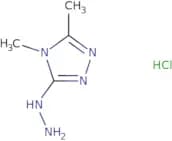
Discontinued product3-Hydrazinyl-4,5-dimethyl-4H-1,2,4-triazole hydrochloride
CAS:<p>Versatile small molecule scaffold</p>Formula:C4H10ClN5Purity:Min. 95%Molecular weight:163.61 g/molRef: 3D-GGD26892
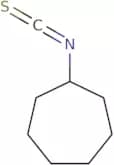
Discontinued productCycloheptyl isothiocyanate
CAS:<p>Cycloheptyl isothiocyanate is a 1-4c alkyl, azaheterocycle, isothiocyanate that has been shown to be stereoselective. It binds to the sulfur atom of thiols and sulfonylureas, preventing the formation of the reactive intermediate that leads to their hydrolysis. This property can be used for the synthesis of ensembles and aralkyls. Cycloheptyl isothiocyanate also binds to alkenyl groups, which may be useful in synthesizing cycloalkyls or haloalkyls.</p>Formula:C8H13NSPurity:Min. 95%Molecular weight:155.26 g/molRef: 3D-GDA54216
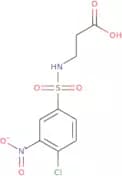
Discontinued product3-(4-Chloro-3-nitrobenzenesulfonamido)propanoic acid
CAS:<p>Versatile small molecule scaffold</p>Formula:C9H9ClN2O6SPurity:Min. 95%Molecular weight:308.7 g/molRef: 3D-GDA47368
Discontinued product1-[4-(2,3-Dihydro-1,4-benzodioxin-6-yl)-1H-imidazol-2-yl]-2-methylpropan-1-amine
CAS:<p>Versatile small molecule scaffold</p>Formula:C15H19N3O2Purity:Min. 95%Molecular weight:273.33 g/molRef: 3D-FWB45946
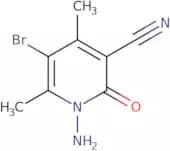
Discontinued product1-Amino-5-bromo-4,6-dimethyl-2-oxo-1,2-dihydropyridine-3-carbonitrile
CAS:<p>Versatile small molecule scaffold</p>Formula:C8H8BrN3OPurity:Min. 95%Molecular weight:242.07 g/molRef: 3D-FQC76365
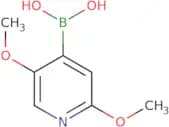
Discontinued product2,5-Dimethoxypyridine-4-boronic acid
CAS:<p>Versatile small molecule scaffold</p>Formula:C7H10BNO4Purity:Min. 95%Molecular weight:182.97 g/molMethyl 2-(3-methyloxolan-2-yl)acetates
CAS:<p>Versatile small molecule scaffold</p>Formula:C8H14O3Purity:Min. 95%Molecular weight:158.2 g/molRef: 3D-FLB98041
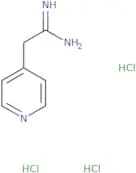
Discontinued product2-(Pyridin-4-yl)ethanimidamide trihydrochloride
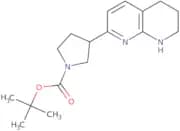
CAS:<p>Versatile small molecule scaffold</p>Formula:C7H12Cl3N3Purity:Min. 95%Molecular weight:244.5 g/moltert-Butyl 3-(5,6,7,8-tetrahydro-1,8-naphthyridin-2-yl)pyrrolidine-1-carboxylate
CAS:<p>Versatile small molecule scaffold</p>Formula:C17H25N3O2Purity:Min. 95%Molecular weight:303.4 g/molRef: 3D-FDD51811
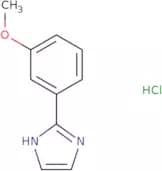
Discontinued product2-(3-Methoxyphenyl)-1H-imidazole hydrochloride
CAS:<p>Versatile small molecule scaffold</p>Formula:C10H11ClN2OPurity:Min. 95%Molecular weight:210.66 g/molRef: 3D-FDD49940
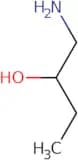
Discontinued product(S)-1-Aminobutan-2-ol
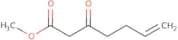
CAS:<p>Versatile small molecule scaffold</p>Formula:C4H11NOPurity:Min. 95%Molecular weight:89.14 g/molMethyl 3-oxohept-6-enoate
CAS:<p>Methyl 3-oxohept-6-enoate is a cyclopropane, which is a type of organic compound that contains one or more rings of carbon atoms. This compound can be synthesized by the chemoenzymatic process using hydrogen chloride and activated methylene chloride. The synthesis starts with an acidic condensation process, followed by the hydroalkylation of methyl 3-oxoheptanoate. The resulting product is then isolated through a chiral synthetic process and has an isolated yield of 51%.</p>Formula:C8H12O3Purity:Min. 95%Molecular weight:156.18 g/molRef: 3D-FBA41457
Discontinued product4-(2-Bromophenyl)-1,3-thiazole
CAS:<p>Versatile small molecule scaffold</p>Formula:C9H6BrNSPurity:Min. 95%Molecular weight:240.12 g/molRef: 3D-FBA21649
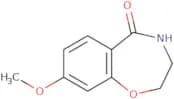
Discontinued product8-Methoxy-2,3,4,5-tetrahydro-1,4-benzoxazepin-5-one
CAS:<p>Versatile small molecule scaffold</p>Formula:C10H11NO3Purity:Min. 95%Molecular weight:193.2 g/mol2-Oxaspiro[4.4]nonane-1,3-dione
CAS:<p>2-Oxaspiro[4.4]nonane-1,3-dione is a heterocycle that has been developed as a lead molecule for the treatment of cancer. It was discovered by researchers at the University of Illinois who were investigating the use of Friedel-Crafts reaction to synthesize triazoles. 2-Oxaspiro[4.4]nonane-1,3-dione has physicochemical parameters that make it ideal for pharmaceutical research and development. This molecule has been shown to have anti-inflammatory properties and can be used to focus on carbon bond synthesis in order to synthesize pyridazines and ketocarboxylic acid derivatives.</p>Formula:C8H10O3Purity:Min. 95%Molecular weight:154.16 g/molRef: 3D-FAA62390
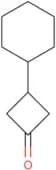
Discontinued product3-Cyclohexylcyclobutan-1-one
CAS:<p>Versatile small molecule scaffold</p>Formula:C10H16OPurity:Min. 95%Molecular weight:152.23 g/molRef: 3D-ERB08067
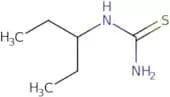
Discontinued product(Pentan-3-yl)thiourea
CAS:<p>Versatile small molecule scaffold</p>Formula:C6H14N2SPurity:Min. 95%Molecular weight:146.26 g/molRef: 3D-EJB65468
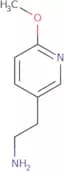
Discontinued product2-(6-Methoxypyridin-3-yl) ethanamine
CAS:<p>Versatile small molecule scaffold</p>Formula:C8H12N2OPurity:Min. 95%Molecular weight:152.19 g/molEthyl 2-cyano-2-methyl-3-phenylpropanoate
CAS:<p>Versatile small molecule scaffold</p>Formula:C13H15NO2Purity:Min. 95%Molecular weight:217.26 g/molRef: 3D-EEA87635
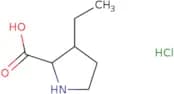
Discontinued product3-Ethylpyrrolidine-2-carboxylic acid hydrochloride
CAS:<p>Versatile small molecule scaffold</p>Formula:C7H14ClNO2Purity:Min. 95%Molecular weight:179.64 g/molRef: 3D-EEA75747
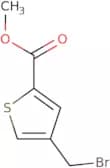
Discontinued productMethyl 4-(bromomethyl)thiophene-2-carboxylate
CAS:<p>Versatile small molecule scaffold</p>Formula:C7H7BrO2SPurity:Min. 95%Molecular weight:235.1 g/mol1-(4-Methylphenyl)-1H,4H,5H-pyrazolo[3,4-d]pyrimidin-4-one
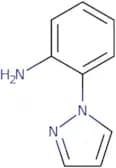
CAS:<p>Versatile small molecule scaffold</p>Formula:C12H10N4OPurity:Min. 95%Molecular weight:226.23 g/mol1-(2-Aminophenyl)-1H-pyrazole
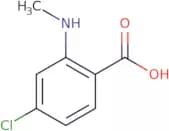
CAS:<p>1-(2-Aminophenyl)-1H-pyrazole is a chemical compound that is used in the synthesis of other compounds. It can be produced by various reactions from benzyl chloride and ammonia. The reactivity of 1-(2-aminophenyl)-1H-pyrazole has been studied using single crystal X-ray diffraction. This technique was used to determine the structure and reaction pathway of this molecule as well as to study its catalytic properties. 1-(2-Aminophenyl)-1H-pyrazole is a ligand that binds to metal ions, such as aluminium, in order to form complexes with different functional groups.</p>Formula:C9H9N3Purity:Min. 95%Molecular weight:159.19 g/mol4-Chloro-2-(methylamino)benzoic acid
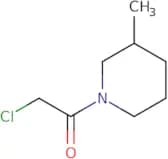
CAS:<p>Versatile small molecule scaffold</p>Formula:C8H8ClNO2Purity:Min. 95%Molecular weight:185.61 g/mol2-Chloro-1-(3-methyl-piperidin-1-yl)-ethanone
CAS:<p>Versatile small molecule scaffold</p>Formula:C8H14ClNOPurity:Min. 95%Molecular weight:175.66 g/mol1,7-Dibromoheptane
CAS:<p>1,7-Dibromoheptane is an α2-adrenergic receptor antagonist that prevents the activation of these receptors by blocking the binding of endogenous noradrenaline and adrenaline. It has been shown to inhibit hydrochloric acid-induced gastric ulceration in rats. 1,7-Dibromoheptane also has a high detection sensitivity and can be used for the qualitative identification of fatty acids. The compound's viscosity is affected by changes in temperature and it forms dipoles due to its structure. This compound has been used as a covid-19 pandemic flu vaccine adjuvant.</p>Formula:C7H14Br2Purity:Min. 95%Molecular weight:258 g/moltert-Butyl N-[2-(chlorosulfonyl)thiophen-3-yl]carbamate
CAS:<p>Versatile small molecule scaffold</p>Formula:C9H12ClNO4S2Purity:Min. 95%Molecular weight:297.8 g/molRef: 3D-DXC59366
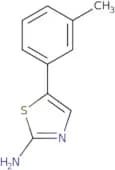
Discontinued product5-(3-Methylphenyl)-1,3-thiazol-2-amine
CAS:<p>Versatile small molecule scaffold</p>Formula:C10H10N2SPurity:Min. 95%Molecular weight:190.27 g/molRef: 3D-DXB16892
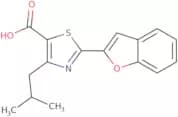
Discontinued product2-(1-Benzofuran-2-yl)-4-(2-methylpropyl)-1,3-thiazole-5-carboxylic acid
CAS:<p>Versatile small molecule scaffold</p>Formula:C16H15NO3SPurity:Min. 95%Molecular weight:301.4 g/molRef: 3D-DWC62314
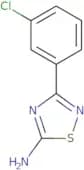
Discontinued product3-(3-Chlorophenyl)-1,2,4-thiadiazol-5-amine
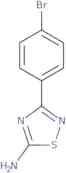
CAS:<p>Versatile small molecule scaffold</p>Formula:C8H6ClN3SPurity:Min. 95%Molecular weight:211.67 g/mol3-(4-bromophenyl)-1,2,4-thiadiazol-5-amine
CAS:<p>Versatile small molecule scaffold</p>Formula:C8H6BrN3SPurity:Min. 95%Molecular weight:256.1 g/molRef: 3D-DWB97685
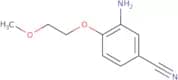
Discontinued product3-Amino-4-(2-methoxyethoxy)benzonitrile
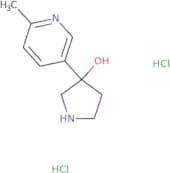
CAS:<p>Versatile small molecule scaffold</p>Formula:C10H12N2O2Purity:Min. 95%Molecular weight:192.21 g/mol3-(6-Methylpyridin-3-yl)pyrrolidin-3-ol dihydrochloride
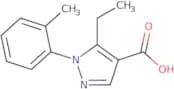
CAS:<p>Versatile small molecule scaffold</p>Formula:C10H16Cl2N2OPurity:Min. 95%Molecular weight:251.15 g/mol5-Ethyl-1-(2-methylphenyl)-1H-pyrazole-4-carboxylic acid
CAS:<p>Versatile small molecule scaffold</p>Formula:C13H14N2O2Purity:Min. 95%Molecular weight:230.26 g/molRef: 3D-DQB17735
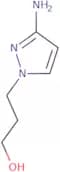
Discontinued product3-(3-Amino-1H-pyrazol-1-yl)propan-1-ol
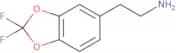
CAS:<p>Versatile small molecule scaffold</p>Formula:C6H11N3OPurity:Min. 95%Molecular weight:141.17 g/mol2-(2,2-Difluoro-1,3-dioxaindan-5-yl)ethan-1-amine
CAS:<p>Versatile small molecule scaffold</p>Formula:C9H9F2NO2Purity:Min. 95%Molecular weight:201.17 g/mol3-Morpholin-4-ylmethyl-2,3-dihydro-1H-indole
CAS:<p>Versatile small molecule scaffold</p>Formula:C13H18N2OPurity:Min. 95%Molecular weight:218.29 g/molRef: 3D-DKB61741
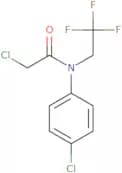
Discontinued product2-Chloro-N-(4-chlorophenyl)-N-(2,2,2-trifluoroethyl)acetamide
CAS:<p>Versatile small molecule scaffold</p>Formula:C10H8Cl2F3NOPurity:Min. 95%Molecular weight:286.07 g/molRef: 3D-DKB46633
Discontinued product2-Chloro-N-{[5-(2-chlorophenyl)-1,3,4-oxadiazol-2-yl]methyl}-N-cyclopropylacetamide
CAS:Versatile small molecule scaffoldFormula:C14H13Cl2N3O2Purity:Min. 95%Molecular weight:326.2 g/molEthyl 3-(2-aminoethyl)-1H-indole-2-carboxylate hydrochloride
CAS:<p>Versatile small molecule scaffold</p>Formula:C13H17ClN2O2Purity:Min. 95%Molecular weight:268.7 g/molRef: 3D-DCA59032
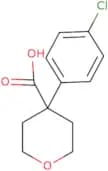
Discontinued product4-(4-Chloro-phenyl)-tetrahydro-pyran-4-carboxylic acid
CAS:<p>Versatile small molecule scaffold</p>Formula:C12H13ClO3Purity:Min. 95%Molecular weight:240.68 g/molRef: 3D-DAA64857
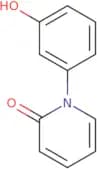
Discontinued product1-(3-Hydroxyphenyl)-1,2-dihydropyridin-2-one
CAS:<p>Versatile small molecule scaffold</p>Formula:C11H9NO2Purity:Min. 95%Molecular weight:187.19 g/molRef: 3D-DAA53460
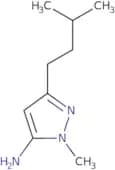
Discontinued product1-Methyl-3-(3-methylbutyl)-1H-pyrazol-5-amine
CAS:<p>Versatile small molecule scaffold</p>Formula:C9H17N3Purity:Min. 95%Molecular weight:167.25 g/molRef: 3D-CWB70775
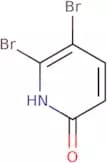
Discontinued product5,6-Dibromopyridin-2-ol
CAS:<p>Versatile small molecule scaffold</p>Formula:C5H3Br2NOPurity:Min. 95%Molecular weight:252.89 g/mol2-Acetylbenzoic acid
CAS:<p>2-Acetylbenzoic acid is a functional molecule that contains an acetyl group. It can form hydrogen bonds with other molecules and has been shown to induce apoptosis in cells. The reaction products of 2-acetylbenzoic acid are malonic acid, acetylsalicylic acid, and 2-benzoylbenzoic acid. These three compounds are made by the addition of hydrogen or hydroxide to the molecule 2-acetylbenzoic acid. The molecule has two functional groups: a carbonyl group and an acetyl group. The chemical structure of this molecule can be seen in the figure below.<br>2-Acetylbenzoic Acid</p>Formula:C9H8O3Purity:Min. 95%Color and Shape:PowderMolecular weight:164.16 g/molRef: 3D-FA05086
Discontinued producttert-Butyl 5-bromo-3,4-dihydro-2,7-naphthyridine-2(1H)-carboxylate
CAS:<p>Versatile small molecule scaffold</p>Formula:C13H17BrN2O2Purity:Min. 95%Molecular weight:313.19 g/mol3-Methylbenzo[b]thiophene-2-carboxylic acid
CAS:<p>3-Methylbenzo[b]thiophene-2-carboxylic acid (MBTCA) is a heterocyclic compound that is an intermediate in the synthesis of 3-methylthiophene-2-carboxylic acid, a precursor to other drugs. MBTCA is an aerobic, nonpolar compound that has shown antimicrobial activity against some bacteria and fungi. It also has been shown to have practicality as a biomolecular probe for methyl groups in organic solvents. MBTCA can be synthesized by nitration of benzene in the presence of sulfur and sulfoxides. This reaction produces nitrobenzene, which can then be oxidized by potassium permanganate or hydrogen peroxide to produce MBTCA. The most common isomer of MBTCA is 2-(3,5-dimethoxybenzylidene)tetrahydrofuran, with three methyl groups on the</p>Formula:C10H8O2SPurity:Min. 95%Molecular weight:192.23 g/mol1-[3-(Dimethylamino)propyl]-1-(4-fluorophenyl)-1,3-dihydro-3-oxo-5-isobenzofurancarbonitrile
CAS:<p>Please enquire for more information about 1-[3-(Dimethylamino)propyl]-1-(4-fluorophenyl)-1,3-dihydro-3-oxo-5-isobenzofurancarbonitrile including the price, delivery time and more detailed product information at the technical inquiry form on this page</p>Formula:C20H19FN2O2Purity:Min. 95%Molecular weight:338.38 g/molRef: 3D-FD184085
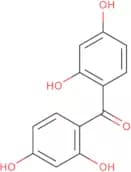
Discontinued product2,2',4,4'-tetrahydroxybenzophenone
CAS:<p>2,2',4,4'-tetrahydroxybenzophenone is a hydroxylated benzophenone that has immunomodulatory effects. It binds to the receptor in the immune system and can cause an increase in cytokine production. 2,2',4,4'-tetrahydroxybenzophenone is cytotoxic and has significant toxicity in vitro. The molecule has been shown to disrupt mitochondrial membrane potential. This may be due to its ability to form hydrogen bonds with molecules on the mitochondrial membrane. 2,2',4,4'-tetrahydroxybenzophenone also modulates transcriptional regulation of genes involved in cell proliferation and apoptosis. The drug is detectable at low levels by mass spectrometry and is not known to have any toxicological effects.END>></p>Formula:C13H10O5Purity:Min. 95%Color and Shape:Green PowderMolecular weight:246.22 g/molRef: 3D-FT55663
Discontinued product3-(Methoxycarbonyl)pyridine-4-carboxylic acid
CAS:<p>Versatile small molecule scaffold</p>Formula:C8H7NO4Purity:Min. 95%Molecular weight:181.15 g/mol4-(Methylamino)benzene-1-sulfonamide
CAS:<p>Versatile small molecule scaffold</p>Formula:C7H10N2O2SPurity:Min. 95%Molecular weight:186.23 g/mol2-Bromo-3,3,3-trifluoro-1-propene
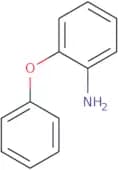
CAS:Controlled Product<p>2-Bromo-3,3,3-trifluoro-1-propene is a chemical compound that has been synthesized in an asymmetric reaction. The reactant is bromopropane and the product is 2,2,2-trifluoropropene. The methylene group on the propene molecule is activated by the nucleophilic attack of a fluoride ion from hydrogen fluoride to form a cavity with a highly strained bond. The kinetic study of this reaction revealed that the activation energy for the reaction is 42 kJ/mol. Palladium-catalyzed coupling reactions are catalyzed by palladium and require nonpolar solvents such as toluene or dichloromethane. This type of reaction has been shown to be exothermic with an isolated yield of 1%.</p>Formula:C3H2BrF3Purity:Min. 95%Color and Shape:Colorless PowderMolecular weight:174.95 g/mol2-Phenoxyaniline
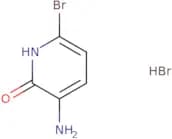
CAS:<p>2-Phenoxyaniline is a nitro compound that can be converted to the corresponding palladium complexes. It is an inhibitor of the acylation reaction, which is a type of chemical reaction in which an organic molecule reacts with an acid. The inhibition of this reaction has been shown to have an effect on heart disease, specifically by lowering cholesterol levels and reducing atherosclerosis. 2-Phenoxyaniline has also been shown to inhibit the activation energy for electron transfer reactions, making it useful as a catalyst in analytical methods. 2-Phenoxyaniline also undergoes vibrational spectroscopy when exposed to liquid chromatography and other analytical methods.</p>Formula:C12H11NOPurity:Min. 95%Color and Shape:Brown PowderMolecular weight:185.22 g/mol3-amino-6-bromopyridin-2-ol hydrobromide
CAS:<p>Versatile small molecule scaffold</p>Formula:C5H6Br2N2OPurity:Min. 95%Molecular weight:269.9 g/molH-Ser-Ala-Glu-Glu-Tyr-Glu-Tyr-Pro-Ser OH trifluoroacetate
CAS:<p>Please enquire for more information about H-Ser-Ala-Glu-Glu-Tyr-Glu-Tyr-Pro-Ser OH trifluoroacetate including the price, delivery time and more detailed product information at the technical inquiry form on this page</p>Formula:C47H63N9O20•(C2HF3O2)xPurity:Min. 95%Ref: 3D-FS183525
Discontinued productGivinostat hydrochloride
CAS:<p>Givinostat hydrochloride is a research chemical that has shown potential in various fields. It is a molybdenum-based compound that has been studied for its effects on dopamine release and hydrogen evolution. Givinostat hydrochloride has also been investigated as an osteoclast inhibitor, which may be beneficial in the treatment of bone-related disorders such as osteoporosis. Additionally, it has shown promise as a retinoid and calpain inhibitor, suggesting its potential use in dermatological conditions and neurodegenerative diseases. The compound contains fluorine atoms, making it suitable for imaging studies using fluorine MRI techniques. Givinostat hydrochloride has been tested on MDA-MB-231 cells and has shown inhibitory effects on their growth, indicating its potential as an anticancer agent.</p>Formula:C24H27N3O4·HClPurity:Min. 95%Molecular weight:457.95 g/mol

![2-[2-(3,3,3-Trifluoropropyl)-1,3-thiazol-4-yl]acetic acid hydrochloride](/_next/image/?url=https%3A%2Fstatic.cymitquimica.com%2Fproducts%2F3D%2Fthumb-webp%2FKHD06040.webp&w=3840&q=75)
![4-{3-Methyl-[1,2,4]triazolo[4,3-b]pyridazin-6-yl}piperidine dihydrochloride](/_next/image/?url=https%3A%2Fstatic.cymitquimica.com%2Fproducts%2F3D%2Fthumb-webp%2FJSD45646.webp&w=3840&q=75)
![1-[(1-Aminobutan-2-yl)oxy]-3-methylbenzene hydrochloride](/_next/image/?url=https%3A%2Fstatic.cymitquimica.com%2Fproducts%2F3D%2Fthumb-webp%2FJFC42976.webp&w=3840&q=75)
![2-Methyl-3-[(propan-2-yl)amino]benzoic acid](/_next/image/?url=https%3A%2Fstatic.cymitquimica.com%2Fproducts%2F3D%2Fthumb-webp%2FHWB40532.webp&w=3840&q=75)
![4-{[1-(2,5-Dimethylphenyl)ethyl]amino}-3-methylbenzoic acid](/_next/image/?url=https%3A%2Fstatic.cymitquimica.com%2Fproducts%2F3D%2Fthumb-webp%2FHWB32519.webp&w=3840&q=75)
![6-({[(tert-Butoxy)carbonyl]amino}methyl)-2-cyclopropylpyridine-3-carboxylic acid](/_next/image/?url=https%3A%2Fstatic.cymitquimica.com%2Fproducts%2F3D%2Fthumb-webp%2FHHC67821.webp&w=3840&q=75)
![2-([(Furan-2-ylmethyl)(methyl)carbamoyl]amino)acetic acid](/_next/image/?url=https%3A%2Fstatic.cymitquimica.com%2Fproducts%2F3D%2Fthumb-webp%2FGWB17908.webp&w=3840&q=75)
![4-[1-Methyl-3-(trifluoromethyl)-1H-pyrazol-5-yl]aniline](/_next/image/?url=https%3A%2Fstatic.cymitquimica.com%2Fproducts%2F3D%2Fthumb-webp%2FGHC38675.webp&w=3840&q=75)
![1-[4-(2,3-Dihydro-1,4-benzodioxin-6-yl)-1H-imidazol-2-yl]-2-methylpropan-1-amine](/_next/image/?url=https%3A%2Fstatic.cymitquimica.com%2Fproducts%2F3D%2Fthumb-webp%2FFWB45946.webp&w=3840&q=75)

![2-Oxaspiro[4.4]nonane-1,3-dione](/_next/image/?url=https%3A%2Fstatic.cymitquimica.com%2Fproducts%2F3D%2Fthumb-webp%2FFAA62390.webp&w=3840&q=75)

![1-(4-Methylphenyl)-1H,4H,5H-pyrazolo[3,4-d]pyrimidin-4-one](/_next/image/?url=https%3A%2Fstatic.cymitquimica.com%2Fproducts%2F3D%2Fthumb-webp%2FECA73875.webp&w=3840&q=75)

![tert-Butyl N-[2-(chlorosulfonyl)thiophen-3-yl]carbamate](/_next/image/?url=https%3A%2Fstatic.cymitquimica.com%2Fproducts%2F3D%2Fthumb-webp%2FDXC59366.webp&w=3840&q=75)

![2-Chloro-N-{[5-(2-chlorophenyl)-1,3,4-oxadiazol-2-yl]methyl}-N-cyclopropylacetamide](/_next/image/?url=https%3A%2Fstatic.cymitquimica.com%2Fproducts%2F3D%2Fthumb-webp%2FDKB46528.webp&w=3840&q=75)



![3-Methylbenzo[b]thiophene-2-carboxylic acid](/_next/image/?url=https%3A%2Fstatic.cymitquimica.com%2Fproducts%2F3D%2Fthumb-webp%2FDAA13378.webp&w=3840&q=75)
![1-[3-(Dimethylamino)propyl]-1-(4-fluorophenyl)-1,3-dihydro-3-oxo-5-isobenzofurancarbonitrile](/_next/image/?url=https%3A%2Fstatic.cymitquimica.com%2Fproducts%2F3D%2Fthumb-webp%2FFD184085.webp&w=3840&q=75)