Building Blocks
Subcategories of "Building Blocks"
- Boronic Acids & Boronic Acid Derivatives(5,778 products)
- Chiral Building Blocks(1,243 products)
- Hydrocarbon Building Blocks(6,099 products)
- Organic Building Blocks(61,038 products)
Found 205376 products of "Building Blocks"
4-Chloro-3-iodo-quinoline
CAS:4-Chloro-3-iodo-quinoline is a ligand that has been shown to have agonistic activity with the immune system. It has been demonstrated to be an adjuvant in vaccines, and has been shown to be effective against furan, chlorine, and azide. 4-Chloro-3-iodo-quinoline is structurally related to 3-(trifluoromethyl)quinoline, which is a pharmacological agent used for the treatment of rheumatoid arthritis. The pharmacological effects of 4-chloro-3-iodo quinoline may be due to its ability to bind with toll like receptor.
Formula:C9H5ClINPurity:Min. 95%Molecular weight:289.5 g/molN1-Cyclobutylbenzene-1,2-diamine
CAS:Versatile small molecule scaffold
Formula:C10H14N2Purity:Min. 95%Molecular weight:162.23 g/mol(1S,2R)-Boc-2-aminocyclohexane carboxylic acid
CAS:Versatile small molecule scaffoldFormula:C12H21NO4Purity:Min. 95%Molecular weight:243.3 g/mol2-Amino-5-cyanobenzene-1-sulfonamide
CAS:Versatile small molecule scaffoldFormula:C7H7N3O2SPurity:Min. 95%Molecular weight:197.22 g/molRef: 3D-QJA13971
Discontinued productEthyl 5-bromo-1,2-oxazole-4-carboxylate
CAS:Versatile small molecule scaffold
Formula:C6H6BrNO3Purity:Min. 95%Molecular weight:220.02 g/molRef: 3D-QID58265
Discontinued product2,4-Dimethylfuran-3-carboxylic acid
CAS:2,4-Dimethylfuran-3-carboxylic acid is a dianion that is used as a fungicide. It has been shown to be effective against many plant diseases, including powdery mildews, rusts, and sooty molds. The methyl ester of 2,4-dimethylfuran-3-carboxylic acid can be synthesized in the laboratory from cyclohexanone and methylamine. The reactive methyl group of the dianion catalyzes the reaction with hydroxyl groups on other molecules, forming an amide or alkylating agent. This reaction occurs stereoselectively when one of the hydrogens on the carbon adjacent to the carboxylate group is also replaced by a methyl group.
Formula:C7H8O3Purity:Min. 95%Molecular weight:140.14 g/mol(2-Cyanopyrimidin-5-yl)boronic acid
CAS:Versatile small molecule scaffold
Formula:C5H4BN3O2Purity:Min. 95%Molecular weight:148.92 g/molRef: 3D-PWB10081
Discontinued productN'-(3-Hydroxyphenyl)-N,N-dimethylsulfamide
CAS:Versatile small molecule scaffold
Formula:C8H12N2O3SPurity:Min. 95%Molecular weight:216.26 g/molRef: 3D-PWA80729
Discontinued product1-Methyl-3-[(propan-2-yl)carbamoyl]-1H-pyrazole-5-carboxylic acid
CAS:Versatile small molecule scaffoldFormula:C9H13N3O3Purity:Min. 95%Molecular weight:211.22 g/molRef: 3D-PVA81813
Discontinued productEthyl 2-(3-nitrophenyl)acetate
CAS:Ethyl 2-(3-nitrophenyl)acetate is an organic compound. It is a chloride channel blocker that has been shown to inhibit the activity of multidrug-resistant proteins (e.g., p-glycoprotein and multidrug resistance protein). The uptake of this drug in cells is limited by its low oral bioavailability and its interaction with aluminium ions. This drug interacts with multidrug-resistance proteins, which are involved in the transport of drugs or toxins out of the cell, by competing for binding sites. Ethyl 2-(3-nitrophenyl)acetate inhibits the catalytic activity of these proteins, leading to a regression in multidrug resistance. It can also inhibit the activity of isoxazoles and alcohols.br>br>/p>
Formula:C10H11NO4Purity:Min. 95%Molecular weight:209.2 g/mol(5R)-5-(Aminomethyl)-1,3-oxazolidin-2-one HCl ee
CAS:Versatile small molecule scaffold
Formula:C4H9ClN2O2Purity:Min. 95%Molecular weight:152.58 g/molRef: 3D-NWC03627
Discontinued productEthyl 3-(3-methyl-1,2,4-oxadiazol-5-yl)propanoate
CAS:Versatile small molecule scaffold
Formula:C8H12N2O3Purity:Min. 95%Molecular weight:184.19 g/molRef: 3D-NLC89698
Discontinued product5-Iodo-2-(pentan-3-yl)-3,4-dihydropyrimidin-4-one
CAS:Versatile small molecule scaffold
Formula:C9H13IN2OPurity:Min. 95%Molecular weight:292.12 g/molRef: 3D-NLC80919
Discontinued product(3-bromo-5-iodophenyl)methanol
CAS:Versatile small molecule scaffold
Formula:C7H6BrIOPurity:Min. 95%Molecular weight:312.9 g/molRef: 3D-NHA81308
Discontinued product5-(Trifluoromethyl)-1,4-diazepane
CAS:Versatile small molecule scaffold
Formula:C6H11F3N2Purity:Min. 95%Molecular weight:168.16 g/molRef: 3D-MTB80067
Discontinued product2,2,2-Trifluoroethyl N-(3-chloro-2-fluorophenyl)carbamate
CAS:Versatile small molecule scaffold
Formula:C9H6ClF4NO2Purity:Min. 95%Molecular weight:271.59 g/molRef: 3D-MTB79810
Discontinued product3-[(5-Bromopyrimidin-2-yl)oxy]benzoic acid
CAS:Versatile small molecule scaffold
Formula:C11H7BrN2O3Purity:Min. 95%Molecular weight:295.09 g/mol2,6-Difluoro-4-methoxyphenylacetonitrile
CAS:Versatile small molecule scaffold
Formula:C9H7F2NOPurity:Min. 95%Molecular weight:183.16 g/mol2-Fluoro-5-(trifluoromethoxy)phenylacetic acid
CAS:Versatile small molecule scaffoldFormula:C9H6F4O3Purity:Min. 95%Molecular weight:238.14 g/mol2-Chloro-4-trifluoromethyl-5,6,7,8-tetrahydro-quinazoline
CAS:Versatile small molecule scaffoldFormula:C9H8ClF3N2Purity:Min. 95%Molecular weight:236.62 g/molRef: 3D-LKB49400
Discontinued product4-chloro-3-methylpyridine-2-carbonitrile
CAS:Rabeprazole is a proton pump inhibitor with antacid and anti-ulcer properties. It works by reducing the amount of acid produced in the stomach. Rabeprazole is used to treat conditions that cause excess stomach acid, such as Zollinger-Ellison syndrome and gastroesophageal reflux disease (GERD). Rabeprazole sodium is an alternative formulation of rabeprazole that has been modified to make it easier to dissolve in water.Formula:C7H5ClN2Purity:Min. 95%Molecular weight:152.58 g/mol2-(3,4-Dimethylphenyl)-1,3-thiazole-5-carboxylic acid
CAS:Versatile small molecule scaffold
Formula:C12H11NO2SPurity:Min. 95%Molecular weight:233.29 g/mol1-(2-Methylphenyl)cyclopropanecarboxylic Acid
CAS:Versatile small molecule scaffold
Formula:C11H12O2Purity:Min. 95%Molecular weight:176.21 g/molRef: 3D-LKB36610
Discontinued product3-Methyl-6-oxopiperidine-3-carbonitrile
CAS:Versatile small molecule scaffoldFormula:C7H10N2OPurity:Min. 95%Molecular weight:138.17 g/molRef: 3D-LCD60619
Discontinued productMethyl 3-(6-chloropyridin-3-yl)propanoate
CAS:Versatile small molecule scaffold
Formula:C9H10ClNO2Purity:Min. 95%Molecular weight:199.63 g/molRef: 3D-KWC37717
Discontinued productN,N-Dimethyl-octahydro-1H-isoindol-5-amine
CAS:Versatile small molecule scaffold
Formula:C10H20N2Purity:Min. 95%Molecular weight:168.28 g/molRef: 3D-KCD26889
Discontinued product3-(4-Nitrophenoxy)propionic acid
CAS:3-(4-Nitrophenoxy)propionic acid is a promiscuous compound that can be used to synthesize other compounds. It reacts with hydrochloric acid, nitro groups, and phosphorus pentoxide to produce nitro compounds. 3-(4-Nitrophenoxy)propionic acid reacts with benzoylamine in the presence of a cocatalyst to form alkoxycarbonyl products. The cocatalyst is typically a metal such as zinc or magnesium. 3-(4-Nitrophenoxy)propionic acid is also used as an agrochemical for controlling influenza virus and Influenzae bacteria.
!--Formula:C9H9NO5Purity:Min. 95%Molecular weight:211.17 g/mol4-(Furan-2-yl)-4-oxobutanoic acid
CAS:Versatile small molecule scaffold
Formula:C8H8O4Purity:Min. 95%Molecular weight:168.15 g/molRef: 3D-KAA56400
Discontinued product2-Chloro-9H-carbazole
CAS:2-Chloro-9H-carbazole (2CzC) is a heterocyclic compound that belongs to the group of carbazoles. It can be used as medicine and has been shown to be a good control experiment for other carbazoles. The nucleophilicity of 2CzC is affected by the functional groups present in the molecule, and it has been shown to react with anions such as Cl-, Br-, or I-. This heterocycle also has two resonance forms, which are generated by the electron delocalization in the ring system. The gas phase kinetics of 2CzC have been found to follow an Arrhenius relationship, with k = 3.6x10^3 M^-1 s^-1 at 298 K. Yields for this compound have been found to be high, with 90% yield when synthesized from chloroacetone and phenylmagnesium bromide.
Formula:C12H8ClNPurity:Min. 95%Molecular weight:201.65 g/molN-(3,4-Dimethoxyphenyl)-4,5-dihydro-1,3-thiazol-2-amine
CAS:Versatile small molecule scaffoldFormula:C11H14N2O2SPurity:Min. 95%Molecular weight:238.31 g/molRef: 3D-JGA09188
Discontinued product3-[(Furan-2-ylmethyl)sulfanyl]prop-2-enoic acid
CAS:Versatile small molecule scaffold
Formula:C8H8O3SPurity:Min. 95%Molecular weight:184.21 g/molRef: 3D-JFC43383
Discontinued product4-Chloronaphthalene-2-sulfonyl chloride
CAS:Versatile small molecule scaffoldFormula:C10H6Cl2O2SPurity:Min. 95%Molecular weight:261.12 g/molRef: 3D-JFC43112
Discontinued product4-(Hydroxymethyl)-1-methylpyrrolidin-2-one
CAS:Versatile small molecule scaffold
Formula:C6H11NO2Purity:Min. 95%Molecular weight:129.16 g/molRef: 3D-JCA88720
Discontinued product1-Bromo-4-cyclopentylbenzene
CAS:1-Bromo-4-cyclopentylbenzene (1-BCPB) is a chlorinated aromatic compound that can be synthesized by reacting 1-bromo-4-chlorobenzene and cyclopentylmagnesium bromide. The reaction sequence begins with the addition of hydrochloric acid to the first reactant, followed by magnesium chloride and ether. The mixture is heated to produce a liquid solution of ethylhexyloxy pyridine, which reacts with the second reactant in a sequence that leads to the desired product. 1-BCPB is used as an intermediate in organic synthesis. It has been shown to have moderate interaction with paraldehyde and pyridinium salts at room temperature, but it does not react with cycloalkyls or pyridinium salts at elevated temperatures.
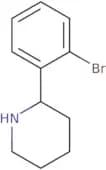
Formula:C11H13BrPurity:Min. 95%Molecular weight:225.13 g/mol2-(2-Bromophenyl)piperidine
CAS:Versatile small molecule scaffold
Formula:C11H14BrNPurity:Min. 95%Molecular weight:240.14 g/mol2-[2-(Furan-3-yl)-1,3-thiazol-4-yl]acetic acid
CAS:Versatile small molecule scaffold
Formula:C9H7NO3SPurity:Min. 95%Molecular weight:209.22 g/mol4-(Hydroxymethyl)-1-methyl-5-(thiophen-2-yl)pyrrolidin-2-one
CAS:Versatile small molecule scaffold
Formula:C10H13NO2SPurity:Min. 95%Molecular weight:211.28 g/molRef: 3D-IDC52490
Discontinued product2-(5-Methylthiophen-3-yl)pyridin-3-amine
CAS:Versatile small molecule scaffold
Formula:C10H10N2SPurity:Min. 95%Molecular weight:190.27 g/mol(2-Methoxyethyl)(2-phenylethyl)amine
CAS:Controlled ProductVersatile small molecule scaffold
Formula:C11H17NOPurity:Min. 95%Molecular weight:179.26 g/molRef: 3D-HMB00572
Discontinued product2-(2,5,5-Trimethylpyrrolidin-2-yl)acetic acid
CAS:Versatile small molecule scaffold
Formula:C9H17NO2Purity:Min. 95%Molecular weight:171.24 g/molRef: 3D-HDA83090
Discontinued productMabuprofen
CAS:Mabuprofen is a nonsteroidal anti-inflammatory drug that belongs to the class of NSAIDs. It is used to treat pain, inflammation, and stiffness caused by osteoarthritis, rheumatoid arthritis, and other joint diseases. Mabuprofen is a prodrug that has been shown to inhibit the production of prostaglandins in the brain and spinal cord. This inhibition leads to an increase in cyclic adenosine monophosphate (cAMP) levels which can then reduce the production of proteins in cells. This can have anti-inflammatory effects that are beneficial for people with inflammatory bowel disease or hyperproliferative diseases such as cancer. Mabuprofen has also been shown to decrease the levels of soybean trypsin inhibitor in rats with bowel disease. The mechanism for this activity may be due to its ability to act as a substrate molecule for enzyme reactions, such as soybean trypsin inhibitors.
Formula:C15H23NO2Purity:Min. 95%Molecular weight:249.35 g/moltert-butyl N-[(2R)-1-oxopropan-2-yl]carbamate
CAS:Versatile small molecule scaffoldFormula:C8H15NO3Purity:Min. 95%Molecular weight:173.2 g/mol5,6,7,8-Tetrahydroquinoline-3-carboxylic acid
CAS:5,6,7,8-Tetrahydroquinoline-3-carboxylic acid is a quinoline derivative that has been shown to have bacteriostatic activity against Staphylococcus aureus. It binds to the hydroxyl groups of the bacterial cell membrane and inhibits the production of enzymes necessary for protein synthesis. The interaction between the 5,6,7,8-tetrahydroquinoline-3-carboxylic acid and the hydroxyl group is reversible. 5,6,7,8-Tetrahydroquinoline-3-carboxylic acid also has bacteriostatic activity against other bacteria such as Mycobacterium tuberculosis and Mycobacterium avium complex.Formula:C10H11NO2Purity:Min. 95%Molecular weight:177.2 g/mol2-Cyanobenzaldehyde
CAS:2-Cyanobenzaldehyde is an aldehyde that reacts with nucleophiles such as trifluoromethanesulfonic acid to form a molecule. 2-Cyanobenzaldehyde has potent inhibitory activity against the kinase glycogen synthase kinase 3 (GSK3) and can be used to treat autoimmune diseases. It also reacts with hydrochloric acid in solution to form an intermediate, which is then reacted with glycine and ATP to produce a chiral compound. The product of this reaction has been shown to be active methylene, which was synthesized by asymmetric synthesis.
Formula:C8H5NOPurity:Min. 95%Color and Shape:PowderMolecular weight:131.13 g/mol4-Chloro-N-[2-(diethylamino)ethyl]aniline
CAS:Versatile small molecule scaffoldFormula:C12H19ClN2Purity:Min. 95%Molecular weight:226.74 g/molRef: 3D-FAA42735
Discontinued product2,5-Dimethyl-N-(piperidin-4-yl)furan-3-carboxamide
CAS:Versatile small molecule scaffoldFormula:C12H18N2O2Purity:Min. 95%Molecular weight:222.28 g/molRef: 3D-ENB57150
Discontinued product3-(1,2,3,4-Tetrahydroisoquinolin-5-yl)-1,3-oxazolidin-2-one hydrochloride
CAS:Versatile small molecule scaffold
Formula:C12H15ClN2O2Purity:Min. 95%Molecular weight:254.71 g/molRef: 3D-EEC96303
Discontinued product2-Methyl-6-nitro-4-(1,2,3,6-tetrahydropyridin-4-yl)aniline hydrochloride
CAS:Versatile small molecule scaffold
Formula:C12H16ClN3O2Purity:Min. 95%Molecular weight:269.73 g/molRef: 3D-EEC96073
Discontinued product4-(1,3-Dioxaindan-5-yl)-2-methyl-5-propyl-2,3-dihydro-1H-pyrazol-3-imine
CAS:Versatile small molecule scaffold
Formula:C14H17N3O2Purity:Min. 95%Molecular weight:259.3 g/molRef: 3D-EEC96042
Discontinued product5-(3-Fluorophenyl)-2,3-dihydro-1H-indole hydrochloride
CAS:Versatile small molecule scaffoldFormula:C14H13ClFNPurity:Min. 95%Molecular weight:249.71 g/molRef: 3D-EEC95999
Discontinued product2,2,2-Trifluoroethyl N-[3-fluoro-4-(1H-pyrazol-1-yl)phenyl]carbamate
CAS:Versatile small molecule scaffoldFormula:C12H9F4N3O2Purity:Min. 95%Molecular weight:303.21 g/molRef: 3D-EEC95905
Discontinued product4-[2-(2-Methylphenyl)ethyl]piperidine
CAS:Versatile small molecule scaffold
Formula:C14H21NPurity:Min. 95%Molecular weight:203.32 g/mol4-Bromo-2-(4-methylphenoxy)aniline
CAS:Versatile small molecule scaffold
Formula:C13H12BrNOPurity:Min. 95%Molecular weight:278.14 g/molRef: 3D-DJC67568
Discontinued product2-Chloro-6-(chloromethyl)pyridine
CAS:2-Chloro-6-(chloromethyl)pyridine (2C6CP) is a chloride precursor that can be used for the synthesis of metal chlorides, such as copper chlorides. 2C6CP is synthesized by reacting thionyl chloride with the substituted pyridine under anhydrous conditions at -78°C. The resultant 2C6CP is then hydrolyzed to produce the desired chloride.
2C6CP has been shown to act as a ligand in coordination chemistry. It was first synthesized by reacting 3-chloropyridine with thionyl chloride and then hydrolyzing it to 2-chloropyridine. This method was later modified to use 4-chlorobenzoyl chloride instead of 3-chloropyridine, producing 2,4-dichloropyridine.Formula:C6H5Cl2NPurity:Min. 95%Molecular weight:162.02 g/molRef: 3D-DDA84688
Discontinued product2-Phenoxycyclopentan-1-one
CAS:Versatile small molecule scaffold
Formula:C11H12O2Purity:Min. 95%Molecular weight:176.21 g/molRef: 3D-DDA72616
Discontinued product3-(4-tert-Butylphenyl)propan-1-ol
CAS:Versatile small molecule scaffold
Formula:C13H20OPurity:Min. 95%Molecular weight:192.3 g/molRef: 3D-DDA57408
Discontinued product1-Benzothiophene-5-carbonitrile
CAS:1-Benzothiophene-5-carbonitrile is a heterocyclic compound that is formed by condensation of ethyl azidoacetate with indole under catalysis. It can be used in the synthesis of heterocycles. The yield of 1-benzothiophene-5-carbonitrile is about 56%.
Formula:C9H5NSPurity:Min. 95%Molecular weight:159.21 g/mol(1R)-1-(2,4-Difluorophenyl)ethan-1-ol
CAS:Versatile small molecule scaffold
Formula:C8H8F2OPurity:Min. 95%Molecular weight:158.14 g/mol5-(Iodomethyl)oxolan-2-one
CAS:Versatile small molecule scaffold
Formula:C5H7IO2Purity:Min. 95%Molecular weight:226.01 g/mol1-(2-Methylpyridin-3-yl)ethanone
CAS:1-(2-Methylpyridin-3-yl)ethanone is a ketone that can be synthesized using the reaction of methyl sulfone, benzyl sulfone, and sulphone. It has been shown to have anti-inflammatory properties by inhibiting prostaglandin synthesis and has been used as a nonsteroidal anti-inflammatory drug (NSAID). 1-(2-Methylpyridin-3-yl)ethanone has also been shown to have analgesic effects in mice. This synthetic compound may be useful in treating inflammation, pain, and fever.
Formula:C8H9NOPurity:Min. 95%Molecular weight:135.16 g/mol6-Chloro-9-(propan-2-yl)-9H-purine
CAS:6-Chloro-9-(propan-2-yl)-9H-purine is an intermediate in the synthesis of nucleoside analogues. It is obtained by the catalyzed reaction of acetonitrile and purines, which undergoes regioisomerization to form a mixture of 6-chloro-9-(propyl)- and 6-chloro-9-(butyl)purine. This intermediate can be used for the alkynylation of amino acids or peptides with alkynes. The selective formation of one regioisomer can be achieved by using a chiral catalyst or by reacting with an optically active reagent such as (+)-camphor sulfonic acid.
Formula:C8H9ClN4Purity:Min. 95%Molecular weight:196.64 g/molRef: 3D-AVA53908
Discontinued product(4-Fluorophenyl)methanesulfonamide
CAS:Versatile small molecule scaffold
Formula:C7H8FNO2SPurity:Min. 95%Molecular weight:189.21 g/mol4-(Dimethyl-1,2-oxazol-4-yl)phenol
CAS:Versatile small molecule scaffold
Formula:C11H11NO2Purity:Min. 95%Molecular weight:189.21 g/molRef: 3D-AKB62875
Discontinued product4-[2-(4-Iodophenyl)ethyl]morpholine
CAS:Versatile small molecule scaffold
Formula:C12H16INOPurity:Min. 95%Molecular weight:317.17 g/molRef: 3D-AEA83946
Discontinued product1,2,3,4,5-Pentachlorobenzene
CAS:1,2,3,4,5-Pentachlorobenzene is a chlorinated hydrocarbon that is used in the production of pesticides and herbicides. It is an ingredient in the manufacturing of pentachlorophenol and pentachloronitrobenzene. 1,2,3,4,5-Pentachlorobenzene has been used as a chemical intermediate or solvent for the production of other chemicals. The emissions from this chemical can be harmful to humans and animals because it has been shown to affect enzyme activities at sublethal doses. It also affects rat liver microsomes and causes DNA damage that can lead to cancer.
Formula:C6HCl5Purity:Min. 95%Molecular weight:250.34 g/mol2,2-Dibromopropane
CAS:2,2-Dibromopropane is a synthetic chemical that has been used as a precursor in the production of nylon. It is an activator that can be used to form covalent bonds with reactive groups on other molecules. The activation energy for the reaction with piperazine is between 104 and 106 kJ/mol. 2,2-Dibromopropane undergoes acylation reactions under certain conditions, forming reaction products such as 2,2-dibromoethyl acetate and 2,2-dibromoethanol. The molecular weight of 2,2-dibromopropane is 192.19 g/mol and its structural formula is CHBrCHBrCHBrCHBrC≡C≡C≡C≡C≡C≡CC(O)OH.
Formula:C3H6Br2Purity:Min. 95%Molecular weight:201.89 g/mol1-Monotetranoin
CAS:1-Monotetranoin is a fatty ester that is involved in the process of lipolysis, which is the breakdown of fat cells. Lipolysis occurs when an enzyme called lipase hydrolyzes triglycerides into glycerol and three fatty acids. 1-Monotetranoin has been shown to be a potent stimulator of growth factor production and cell proliferation in vivo models. It has also been shown to be effective at inhibiting angiogenic processes in vitro, including the release of growth factors from fat cells. The neutral pH optimum for 1-monotetranoin is between 7 and 8, which may be due to its hydrophobic nature.
Formula:C7H14O4Purity:Min. 95%Molecular weight:162.18 g/molRef: 3D-AAA55725
Discontinued product1-Hydroxycyclopentane-1-carbonitrile
CAS:1-Hydroxycyclopentane-1-carbonitrile is a monomer that is hydrolyzed to form benzoin and cyanohydrins. It can be used in the production of scifinder as a monomer or dimerizer.
Formula:C6H9NOPurity:Min. 95%Molecular weight:111.14 g/mol2-Bromo-3,3,3-trifluoro-1-propene
CAS:Controlled Product2-Bromo-3,3,3-trifluoro-1-propene is a chemical compound that has been synthesized in an asymmetric reaction. The reactant is bromopropane and the product is 2,2,2-trifluoropropene. The methylene group on the propene molecule is activated by the nucleophilic attack of a fluoride ion from hydrogen fluoride to form a cavity with a highly strained bond. The kinetic study of this reaction revealed that the activation energy for the reaction is 42 kJ/mol. Palladium-catalyzed coupling reactions are catalyzed by palladium and require nonpolar solvents such as toluene or dichloromethane. This type of reaction has been shown to be exothermic with an isolated yield of 1%.
Formula:C3H2BrF3Purity:Min. 95%Color and Shape:Colorless PowderMolecular weight:174.95 g/moltert-Butyl (2,2-difluoro-3-hydroxypropyl)carbamate
CAS:Versatile small molecule scaffoldFormula:C10H13NO4Purity:Min. 95%Molecular weight:211.21 g/mol4-Chloro-2-hydroxy-6-methylphenylboronic acid
CAS:Versatile small molecule scaffoldFormula:C7H8BClO3Purity:Min. 95%Molecular weight:186.4 g/mol4,5-Dihydro-1H-imidazol-2-amine hydrochloride
CAS:Please enquire for more information about 4,5-Dihydro-1H-imidazol-2-amine hydrochloride including the price, delivery time and more detailed product information at the technical inquiry form on this page
Formula:C3H7N3•HClPurity:Min. 95%Molecular weight:121.57 g/molRef: 3D-FD183639
Discontinued product3-Hydroxy-5-methylpyridine
CAS:3-Hydroxy-5-methylpyridine (3HMP) is a chemical substance that has been classified as an amine. It is a product of the metabolism of purines, which are nitrogenous bases found in DNA and RNA. 3HMP is produced by aerogenic bacteria (such as Enterobacter), and can be used to estimate the number of these bacteria present in water samples. 3HMP has been shown to have antiviral properties against influenza virus, and can be used as a biomarker for the presence of other viruses in animals. 3HMP also has mineralization properties, which have been studied extensively, particularly with regards to pancreatic disease.
Formula:C6H7NOPurity:Min. 95%Color and Shape:PowderMolecular weight:109.13 g/molRef: 3D-FH16174
Discontinued product8-Bromo-2-methylimidazo[1,2-a]pyridine
CAS:Versatile small molecule scaffold
Formula:C8H7N2BrPurity:Min. 95%Molecular weight:211.05 g/mol4,5-Dihydroxy-2,3-Pentanedione
CAS:4,5-Dihydroxy-2,3-pentanedione is a carbonyl compound that is the product of the oxidation of ascorbic acid. It is used in wastewater treatment and has antimicrobial properties against infectious diseases. This compound has been shown to inhibit protein synthesis by binding to the ribosome and preventing the formation of peptide bonds between amino acids. 4,5-Dihydroxy-2,3-pentanedione has also been shown to bind to plasma proteins, which may be due to its acyl chain structure. 4,5-Dihydroxy-2,3-pentanedione can be synthesized in a catalytic mechanism that involves dehydroascorbic acid and molecular oxygen.
Formula:C5H8O4Purity:Min. 95%Color and Shape:PowderMolecular weight:132.11 g/molRef: 3D-FD180770
Discontinued productPiperyline
CAS:Piperyline is an alkanoic acid that has shown to be effective against skin cancer. It also has antimicrobial properties, which may be due to its ability to bind metal ions and form polymeric compounds. Piperyline inhibits microbial growth by inhibiting the synthesis of proteins and nucleic acids. The antimicrobial activity is related to its cationic polymerization with hydroxyl groups, which forms a structure that can inhibit microbial enzymes and disrupt microbial cell membranes. This compound also interacts with the skin's natural lipids, making it difficult for microorganisms to attach and grow on the skin. Piperyline is synthesized in organic chemistry laboratories as an amide precursor of other pharmaceuticals such as penicillin.
Formula:C16H17NO3Purity:Min. 95%Molecular weight:271.31 g/mol