Building Blocks
Subcategories of "Building Blocks"
- Boronic Acids & Boronic Acid Derivatives(5,774 products)
- Chiral Building Blocks(1,237 products)
- Hydrocarbon Building Blocks(6,098 products)
- Organic Building Blocks(60,970 products)
Found 205134 products of "Building Blocks"
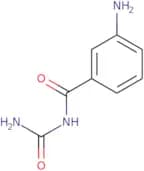
(3-Aminobenzoyl)urea
CAS:Versatile small molecule scaffold
Formula:C8H9N3O2Purity:Min. 95%Molecular weight:179.18 g/molRef: 3D-TIA93575
Discontinued product3-[(3-Methoxypropyl)carbamoyl]propanoic acid
CAS:Versatile small molecule scaffold
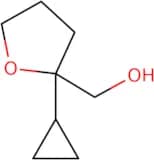
Formula:C8H15NO4Purity:Min. 95%Molecular weight:189.21 g/mol(2-Cyclopropyloxolan-2-yl)methanol
CAS:Versatile small molecule scaffold
Formula:C8H14O2Purity:Min. 95%Molecular weight:142.2 g/molRef: 3D-LCD67577
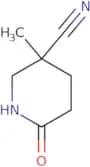
Discontinued product3-Methyl-6-oxopiperidine-3-carbonitrile
CAS:Versatile small molecule scaffoldFormula:C7H10N2OPurity:Min. 95%Molecular weight:138.17 g/molRef: 3D-LCD60619
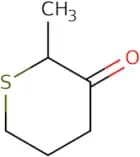
Discontinued product2-Methylthian-3-one
CAS:2-Methylthian-3-one is an alkylating agent that has been used to synthesize substituted pyridines. It is a six-membered ring with two methyl groups on the same side of the ring, which gives it its name. This compound has been shown to undergo stereoselective alkylation reactions at carbons adjacent to both the axial and equatorial positions with alkyl halides. The chemical shift for 2-methylthian-3-one is constant, at -1.6 ppm in chloroform solution and -0.5 ppm in DMSO solution. The parameters that affect the chemical shift are conformational and axial substituents on the ring, as well as substitution patterns on the other carbon atoms of the molecule.
Formula:C6H10OSPurity:Min. 95%Molecular weight:130.21 g/molRef: 3D-UCA26129
Discontinued product2-Bromo-4-tert-butyl-1-methyl-benzene
CAS:2-Bromo-4-tert-butyl-1-methyl-benzene (2BTMB) is a congener of polychlorinated biphenyls (PCBs). It is an oily liquid that is insoluble in water. 2BTMB is metabolized by the liver, and has been found in the blood, adipose tissue, and eggs of salmonids. 2BTMB has shown to have physicochemical properties that are similar to other PCB congeners. The toxicity of 2BTMB is largely unknown because it has not been extensively studied. 2BTMB can magnify up the food chain through bioaccumulation and biomagnification.
Formula:C11H15BrPurity:Min. 95%Color and Shape:PowderMolecular weight:227.14 g/molRef: 3D-LCA02494
Discontinued product2-[(2-Methyl-1H-indol-3-yl)sulfanyl]ethan-1-amine
CAS:Versatile small molecule scaffoldFormula:C11H14N2SPurity:Min. 95%Molecular weight:206.31 g/mol1-(Pyridin-3-yl)-1H-pyrazole-4-carboxylic acid hydrochloride
CAS:Versatile small molecule scaffold
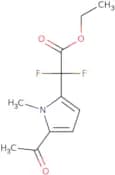
Formula:C9H8ClN3O2Purity:Min. 95%Molecular weight:225.63 g/molEthyl 2-(5-acetyl-1-methyl-1H-pyrrol-2-yl)-2,2-difluoroacetate
CAS:Versatile small molecule scaffoldFormula:C11H13F2NO3Purity:Min. 95%Molecular weight:245.22 g/molRef: 3D-LBC79284
Discontinued product[1-(Propan-2-yl)-1H-1,2,4-triazol-5-yl]methanamine
CAS:Versatile small molecule scaffoldFormula:C6H12N4Purity:Min. 95%Molecular weight:140.19 g/molRef: 3D-UIC24186
Discontinued producttert-Butyl N-[(1-acetylpiperidin-4-yl)methyl]carbamate
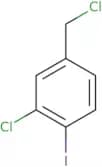
CAS:Versatile small molecule scaffoldFormula:C13H24N2O3Purity:Min. 95%Molecular weight:256.34 g/mol2-Chloro-4-(chloromethyl)-1-iodobenzene
CAS:Versatile small molecule scaffoldFormula:C7H5Cl2IPurity:Min. 95%Molecular weight:286.92 g/molRef: 3D-LAC44995
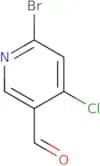
Discontinued product6-bromo-4-chloropyridine-3-carbaldehyde
CAS:Versatile small molecule scaffold
Formula:C6H3BrClNOPurity:Min. 95%Molecular weight:220.5 g/molRef: 3D-KSB81124
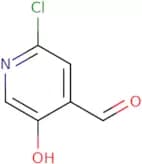
Discontinued product2-Chloro-5-hydroxyisonicotinaldehyde
CAS:Versatile small molecule scaffoldFormula:C6H4ClNO2Purity:Min. 95%Molecular weight:157.55 g/molMethyl 3-(4-nitro-1H-pyrazol-1-yl)propanoate
CAS:Versatile small molecule scaffold
Formula:C7H9N3O4Purity:Min. 95%Molecular weight:199.16 g/molRef: 3D-UUA74722
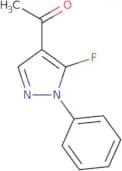
Discontinued product1-(5-Fluoro-1-phenyl-1H-pyrazol-4-yl)ethan-1-one
CAS:Versatile small molecule scaffold
Formula:C11H9FN2OPurity:Min. 95%Molecular weight:204.2 g/molRef: 3D-RSC00051
Discontinued product1-Azabicyclo[3.2.1]octan-4-one
CAS:Versatile small molecule scaffold
Formula:C7H11NOPurity:Min. 95%Molecular weight:125.17 g/molN-{1-[4-(1H-1,2,4-Triazol-1-yl)phenyl]ethylidene}hydroxylamine
CAS:Versatile small molecule scaffoldFormula:C10H10N4OPurity:Min. 95%Molecular weight:202.21 g/molRef: 3D-RMB40050
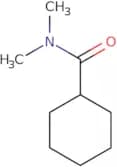
Discontinued productN,N-Dimethylcyclohexanecarboxamide
CAS:N,N-Dimethylcyclohexanecarboxamide is an acid salt of besylate that is used as a drug for the treatment of hyperglycemia. It has been shown to have a rapid onset and short duration of action. The chemical name for N,N-Dimethylcyclohexanecarboxamide is 1-[2-(2-methoxyethoxy)ethyl]-4-methyl-1,4-dihydropyridine 2,4-dicarboxylic acid methyl ester. This compound inhibits insulin release from the pancreas and stimulates glucagon release from the alpha cells in the pancreas. These effects lead to an increase in blood glucose levels.
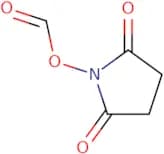
Formula:C9H17NOPurity:Min. 95%Molecular weight:155.24 g/mol2,5-Dioxopyrrolidin-1-yl formate
CAS:2,5-Dioxopyrrolidin-1-yl formate is a solubilized ATP analog that has been clinically developed for the treatment of cancer. This drug binds to cell membranes and causes alkylation of the acidic phospholipids in the membrane, leading to increased permeability of the membrane and release of intracellular components. 2,5-Dioxopyrrolidin-1-yl formate also interacts with lysosomes and increases their acidity, which may lead to an increase in lysosomal enzyme activity. This drug has been shown to inhibit tumor growth in a mouse model by binding to erythrocytes while it was being simultaneously administered intravenously. The chemical structures of this drug are closely related to those of phaseolus, which is known for its anticancer effects.
Formula:C5H5NO4Purity:Min. 95%Molecular weight:143.1 g/molRef: 3D-SAA59254
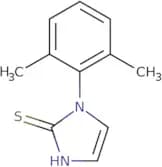
Discontinued product1-(2,6-Dimethylphenyl)-2,3-dihydro-1H-imidazole-2-thione
CAS:Versatile small molecule scaffold
Formula:C11H12N2SPurity:Min. 95%Molecular weight:204.29 g/molRef: 3D-SAA45219
Discontinued product1-(4-Chlorophenyl)-1H-imidazole-2(3H)-thione
CAS:1-(4-Chlorophenyl)-1H-imidazole-2(3H)-thione is a crystalline solid that belongs to the class of imidazoles. It has been synthesized by reacting 1,2-dibromoethane with sodium methoxide in methanol. The compound was found to have a melting point of about 183°C and a molecular weight of 212.06 g/mol. This compound has been shown to interact with methanol, methoxide, and ethoxy groups. Crystallization occurs when the substance is heated to about 183°C in vacuum and then cooled slowly.
Formula:C9H7ClN2SPurity:Min. 95%Molecular weight:210.68 g/molMethyl 2-[2-(hydroxyimino)cyclohexyl]acetate
CAS:Versatile small molecule scaffold
Formula:C9H15NO3Purity:Min. 95%Molecular weight:185.22 g/molRef: 3D-SAA44849
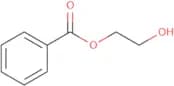
Discontinued product2-Hydroxyethyl benzoate
CAS:2-Hydroxyethyl benzoate is a model system that has been used to study the mechanism of hydrolysis of an ester with a hydroxyl group. The reaction products are a metal hydroxide and a chloride ion. 2-Hydroxyethyl benzoate is an antimicrobial agent that has shown activity against bacteria, fungi, and protozoa. It is thought to work by reacting with fatty acids in the cell membrane, leading to disruption of the membrane and leakage of cellular contents. It also reacts with chloride ions to form hydroxybenzoic acid and water molecules. The activation energy for this reaction was found to be around 19 kJ mol−1.
Formula:C9H10O3Purity:Min. 95%Molecular weight:166.17 g/mol4-Chloro-2-hydroxy-6-methylphenylboronic acid
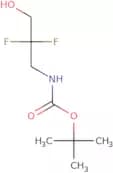
CAS:Versatile small molecule scaffoldFormula:C7H8BClO3Purity:Min. 95%Molecular weight:186.4 g/moltert-Butyl (2,2-difluoro-3-hydroxypropyl)carbamate
CAS:Versatile small molecule scaffoldFormula:C10H13NO4Purity:Min. 95%Molecular weight:211.21 g/mol8-Bromo-2-methylimidazo[1,2-a]pyridine
CAS:Versatile small molecule scaffold
Formula:C8H7N2BrPurity:Min. 95%Molecular weight:211.05 g/mol2-Bromo-3,3,3-trifluoro-1-propene
CAS:Controlled Product2-Bromo-3,3,3-trifluoro-1-propene is a chemical compound that has been synthesized in an asymmetric reaction. The reactant is bromopropane and the product is 2,2,2-trifluoropropene. The methylene group on the propene molecule is activated by the nucleophilic attack of a fluoride ion from hydrogen fluoride to form a cavity with a highly strained bond. The kinetic study of this reaction revealed that the activation energy for the reaction is 42 kJ/mol. Palladium-catalyzed coupling reactions are catalyzed by palladium and require nonpolar solvents such as toluene or dichloromethane. This type of reaction has been shown to be exothermic with an isolated yield of 1%.
Formula:C3H2BrF3Purity:Min. 95%Color and Shape:Colorless PowderMolecular weight:174.95 g/mol4,5-Dihydro-1H-imidazol-2-amine hydrochloride
CAS:Please enquire for more information about 4,5-Dihydro-1H-imidazol-2-amine hydrochloride including the price, delivery time and more detailed product information at the technical inquiry form on this page
Formula:C3H7N3•HClPurity:Min. 95%Molecular weight:121.57 g/molRef: 3D-FD183639
Discontinued product1-Hydroxycyclopentane-1-carbonitrile
CAS:1-Hydroxycyclopentane-1-carbonitrile is a monomer that is hydrolyzed to form benzoin and cyanohydrins. It can be used in the production of scifinder as a monomer or dimerizer.
Formula:C6H9NOPurity:Min. 95%Molecular weight:111.14 g/mol3-Hydroxy-5-methylpyridine
CAS:3-Hydroxy-5-methylpyridine (3HMP) is a chemical substance that has been classified as an amine. It is a product of the metabolism of purines, which are nitrogenous bases found in DNA and RNA. 3HMP is produced by aerogenic bacteria (such as Enterobacter), and can be used to estimate the number of these bacteria present in water samples. 3HMP has been shown to have antiviral properties against influenza virus, and can be used as a biomarker for the presence of other viruses in animals. 3HMP also has mineralization properties, which have been studied extensively, particularly with regards to pancreatic disease.
Formula:C6H7NOPurity:Min. 95%Color and Shape:PowderMolecular weight:109.13 g/molRef: 3D-FH16174
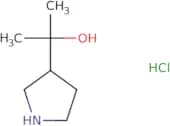
Discontinued product(S)-2-(3-Pyrrolidinyl)-2-propanol Hydrochloride ee
CAS:Versatile small molecule scaffold
Formula:C7H16ClNOPurity:Min. 95%Molecular weight:165.66 g/mol4,5-Dihydroxy-2,3-Pentanedione
CAS:4,5-Dihydroxy-2,3-pentanedione is a carbonyl compound that is the product of the oxidation of ascorbic acid. It is used in wastewater treatment and has antimicrobial properties against infectious diseases. This compound has been shown to inhibit protein synthesis by binding to the ribosome and preventing the formation of peptide bonds between amino acids. 4,5-Dihydroxy-2,3-pentanedione has also been shown to bind to plasma proteins, which may be due to its acyl chain structure. 4,5-Dihydroxy-2,3-pentanedione can be synthesized in a catalytic mechanism that involves dehydroascorbic acid and molecular oxygen.
Formula:C5H8O4Purity:Min. 95%Color and Shape:PowderMolecular weight:132.11 g/molRef: 3D-FD180770
Discontinued productPiperyline
CAS:Piperyline is an alkanoic acid that has shown to be effective against skin cancer. It also has antimicrobial properties, which may be due to its ability to bind metal ions and form polymeric compounds. Piperyline inhibits microbial growth by inhibiting the synthesis of proteins and nucleic acids. The antimicrobial activity is related to its cationic polymerization with hydroxyl groups, which forms a structure that can inhibit microbial enzymes and disrupt microbial cell membranes. This compound also interacts with the skin's natural lipids, making it difficult for microorganisms to attach and grow on the skin. Piperyline is synthesized in organic chemistry laboratories as an amide precursor of other pharmaceuticals such as penicillin.
Formula:C16H17NO3Purity:Min. 95%Molecular weight:271.31 g/mol

![3-[(3-Methoxypropyl)carbamoyl]propanoic acid](/_next/image/?url=https%3A%2Fstatic.cymitquimica.com%2Fproducts%2F3D%2Fthumb-webp%2FLGA78591.webp&w=3840&q=75)

![2-[(2-Methyl-1H-indol-3-yl)sulfanyl]ethan-1-amine](/_next/image/?url=https%3A%2Fstatic.cymitquimica.com%2Fproducts%2F3D%2Fthumb-webp%2FLCA02166.webp&w=3840&q=75)

![[1-(Propan-2-yl)-1H-1,2,4-triazol-5-yl]methanamine](/_next/image/?url=https%3A%2Fstatic.cymitquimica.com%2Fproducts%2F3D%2Fthumb-webp%2FUIC24186.webp&w=3840&q=75)
![tert-Butyl N-[(1-acetylpiperidin-4-yl)methyl]carbamate](/_next/image/?url=https%3A%2Fstatic.cymitquimica.com%2Fproducts%2F3D%2Fthumb-webp%2FLBC27314.webp&w=3840&q=75)

![1-Azabicyclo[3.2.1]octan-4-one](/_next/image/?url=https%3A%2Fstatic.cymitquimica.com%2Fproducts%2F3D%2Fthumb-webp%2FSAA60477.webp&w=3840&q=75)
![N-{1-[4-(1H-1,2,4-Triazol-1-yl)phenyl]ethylidene}hydroxylamine](/_next/image/?url=https%3A%2Fstatic.cymitquimica.com%2Fproducts%2F3D%2Fthumb-webp%2FRMB40050.webp&w=3840&q=75)

![Methyl 2-[2-(hydroxyimino)cyclohexyl]acetate](/_next/image/?url=https%3A%2Fstatic.cymitquimica.com%2Fproducts%2F3D%2Fthumb-webp%2FSAA44849.webp&w=3840&q=75)

![8-Bromo-2-methylimidazo[1,2-a]pyridine](/_next/image/?url=https%3A%2Fstatic.cymitquimica.com%2Fproducts%2F3D%2Fthumb-webp%2FUXB37475.webp&w=3840&q=75)