Building Blocks
Subcategories of "Building Blocks"
- Boronic Acids & Boronic Acid Derivatives(5,774 products)
- Chiral Building Blocks(1,237 products)
- Hydrocarbon Building Blocks(6,098 products)
- Organic Building Blocks(60,970 products)
Found 205134 products of "Building Blocks"
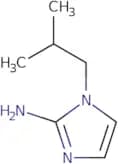
1-(2-Methylpropyl)-1H-imidazol-2-amine
CAS:Versatile small molecule scaffold
Formula:C7H13N3Purity:Min. 95%Molecular weight:139.2 g/molRef: 3D-JXB01789
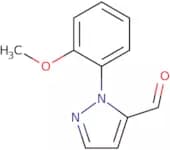
Discontinued product1-(2-Methoxyphenyl)-1H-pyrazole-5-carbaldehyde
CAS:Versatile small molecule scaffold
Formula:C11H10N2O2Purity:Min. 95%Molecular weight:202.21 g/molRef: 3D-JWB83034
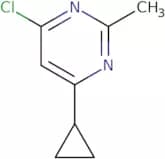
Discontinued product4-Chloro-6-cyclopropyl-2-methylpyrimidine
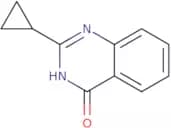
CAS:Versatile small molecule scaffoldFormula:C8H9ClN2Purity:Min. 95%Molecular weight:168.62 g/mol2-cyclopropylquinazolin-4(3h)-one
CAS:Versatile small molecule scaffold
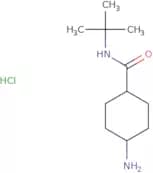
Formula:C11H10N2OPurity:Min. 95%Molecular weight:186.21 g/mol4-Amino-N-tert-butylcyclohexane-1-carboxamide hydrochloride
CAS:Versatile small molecule scaffoldFormula:C11H23ClN2OPurity:Min. 95%Molecular weight:234.8 g/molRef: 3D-JSD46134
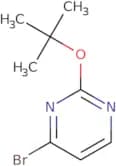
Discontinued product4-Bromo-2-(tert-butoxy)pyrimidine
CAS:Versatile small molecule scaffold
Formula:C8H11BrN2OPurity:Min. 95%Molecular weight:231.09 g/molRef: 3D-JNB24097
Discontinued product[5-(Morpholine-4-sulfonyl)-thiophen-2-yl]-acetic acid
CAS:Versatile small molecule scaffold
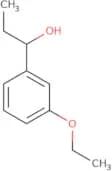
Formula:C10H13NO5S2Purity:Min. 95%Molecular weight:291.35 g/mol1-(3-Ethoxyphenyl)propan-1-ol
CAS:Versatile small molecule scaffold
Formula:C11H16O2Purity:Min. 95%Molecular weight:180.24 g/molRef: 3D-JLB56759
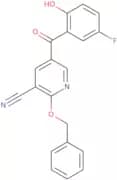
Discontinued product2-(Benzyloxy)-5-(5-fluoro-2-hydroxybenzoyl)pyridine-3-carbonitrile
CAS:Versatile small molecule scaffold
Formula:C20H13FN2O3Purity:Min. 95%Molecular weight:348.3 g/molRef: 3D-JHD94871
Discontinued product3-[(2-Aminoethyl)amino]pyrrolidine-2,5-dione dihydrochloride
CAS:Versatile small molecule scaffoldFormula:C6H13Cl2N3O2Purity:Min. 95%Molecular weight:230.09 g/molRef: 3D-JHD93765
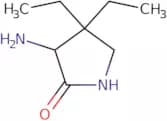
Discontinued product3-Amino-4,4-diethylpyrrolidin-2-one
CAS:Versatile small molecule scaffoldFormula:C8H16N2OPurity:Min. 95%Molecular weight:156.23 g/molRef: 3D-JHD93650
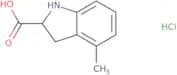
Discontinued product4-Methyl-2,3-dihydro-1H-indole-2-carboxylic acid hydrochloride
CAS:Versatile small molecule scaffoldFormula:C10H12ClNO2Purity:Min. 95%Molecular weight:213.66 g/molRef: 3D-JHD93296
Discontinued productrac-(3R,4R)-3-Hydroxy-4-[(2-phenylethyl)amino]-1lambda6-thiolane-1,1-dione
CAS:Versatile small molecule scaffold
Formula:C12H17NO3SPurity:Min. 95%Molecular weight:255.34 g/molRef: 3D-JHD90934
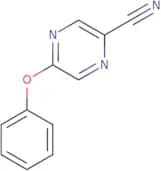
Discontinued product5-Phenoxypyrazine-2-carbonitrile
CAS:Versatile small molecule scaffold
Formula:C11H7N3OPurity:Min. 95%Molecular weight:197.19 g/molRef: 3D-JGC74686
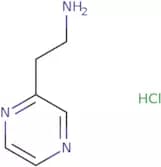
Discontinued product2-Pyrazin-2-yl-ethylamine HCl
CAS:Versatile small molecule scaffold
Formula:C6H10ClN3Purity:Min. 95%Molecular weight:159.62 g/molRef: 3D-JGA63086
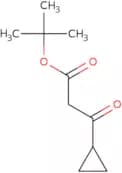
Discontinued producttert-Butyl 3-cyclopropyl-3-oxopropanoate
CAS:Tert-Butyl 3-cyclopropyl-3-oxopropanoate is an organic compound that is used as a fungicide. It has been shown to be effective against fungi such as Botrytis cinerea, Phytophthora, and Pyricularia oryzae. Tert butyl 3-cyclopropyl-3-oxopropanoate inhibits the synthesis of ergosterol in the cell membrane by blocking its conversion to squalene. This prevents the formation of a sterol nucleus, which is required for the synthesis of dolichols and other important cell components.Formula:C10H16O3Purity:Min. 95%Molecular weight:184.23 g/molRef: 3D-JFA30207
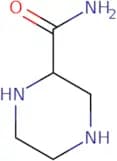
Discontinued productPiperazine-2-carboxamide
CAS:Piperazine-2-carboxamide is a synthetic drug that is used to treat tuberculosis. It binds to the mycolic acid of the bacterial cell wall, preventing it from forming an outer layer and disrupting its function. Piperazine-2-carboxamide also inhibits the synthesis of fatty acids and amines in bacteria, which are necessary for their survival. This drug can be synthesized by reacting piperazine with formaldehyde and acetamide.
Formula:C5H11N3OPurity:Min. 95%Molecular weight:129.16 g/mol[2-(1H-Indol-4-yl)ethyl]dimethylamine
CAS:Controlled ProductVersatile small molecule scaffold
Formula:C12H16N2Purity:Min. 95%Molecular weight:188.27 g/molRef: 3D-JDA40101
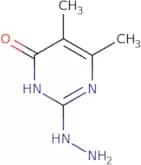
Discontinued product2-Hydrazinyl-5,6-dimethyl-3,4-dihydropyrimidin-4-one
CAS:Versatile small molecule scaffold
Formula:C6H10N4OPurity:Min. 95%Molecular weight:154.17 g/molRef: 3D-JCA22410
Discontinued productMethyl 8-aminooctanoate
CAS:Methyl 8-aminooctanoate is a fatty acid amide that inhibits the HIV virus by binding to its receptor. Methyl 8-aminooctanoate has been shown to inhibit the production of human immunodeficiency virus (HIV) in vitro, which may be due to its ability to inhibit the interaction between HIV and its receptor. Methyl 8-aminooctanoate is metabolized by esterases in vivo and excreted in urine. The pharmacokinetic properties of this drug have been evaluated in humans and optimized for a long-chain fatty ester form.
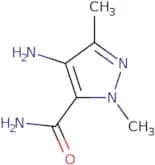
Formula:C9H19NO2Purity:Min. 95%Molecular weight:173.25 g/mol4-Amino-1,3-dimethyl-1H-pyrazole-5-carboxamide
CAS:Versatile small molecule scaffold
Formula:C6H10N4OPurity:Min. 95%Molecular weight:154.17 g/molRef: 3D-JCA02332
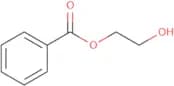
Discontinued product2-Hydroxyethyl benzoate
CAS:2-Hydroxyethyl benzoate is a model system that has been used to study the mechanism of hydrolysis of an ester with a hydroxyl group. The reaction products are a metal hydroxide and a chloride ion. 2-Hydroxyethyl benzoate is an antimicrobial agent that has shown activity against bacteria, fungi, and protozoa. It is thought to work by reacting with fatty acids in the cell membrane, leading to disruption of the membrane and leakage of cellular contents. It also reacts with chloride ions to form hydroxybenzoic acid and water molecules. The activation energy for this reaction was found to be around 19 kJ mol−1.
Formula:C9H10O3Purity:Min. 95%Molecular weight:166.17 g/moltert-Butyl (2,2-difluoro-3-hydroxypropyl)carbamate
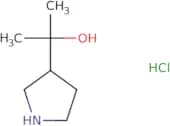
CAS:Versatile small molecule scaffoldFormula:C10H13NO4Purity:Min. 95%Molecular weight:211.21 g/mol(S)-2-(3-Pyrrolidinyl)-2-propanol Hydrochloride ee
CAS:Versatile small molecule scaffold
Formula:C7H16ClNOPurity:Min. 95%Molecular weight:165.66 g/mol2-Bromo-3,3,3-trifluoro-1-propene
CAS:Controlled Product2-Bromo-3,3,3-trifluoro-1-propene is a chemical compound that has been synthesized in an asymmetric reaction. The reactant is bromopropane and the product is 2,2,2-trifluoropropene. The methylene group on the propene molecule is activated by the nucleophilic attack of a fluoride ion from hydrogen fluoride to form a cavity with a highly strained bond. The kinetic study of this reaction revealed that the activation energy for the reaction is 42 kJ/mol. Palladium-catalyzed coupling reactions are catalyzed by palladium and require nonpolar solvents such as toluene or dichloromethane. This type of reaction has been shown to be exothermic with an isolated yield of 1%.
Formula:C3H2BrF3Purity:Min. 95%Color and Shape:Colorless PowderMolecular weight:174.95 g/mol3-Hydroxy-5-methylpyridine
CAS:3-Hydroxy-5-methylpyridine (3HMP) is a chemical substance that has been classified as an amine. It is a product of the metabolism of purines, which are nitrogenous bases found in DNA and RNA. 3HMP is produced by aerogenic bacteria (such as Enterobacter), and can be used to estimate the number of these bacteria present in water samples. 3HMP has been shown to have antiviral properties against influenza virus, and can be used as a biomarker for the presence of other viruses in animals. 3HMP also has mineralization properties, which have been studied extensively, particularly with regards to pancreatic disease.
Formula:C6H7NOPurity:Min. 95%Color and Shape:PowderMolecular weight:109.13 g/molRef: 3D-FH16174
Discontinued product4,5-Dihydro-1H-imidazol-2-amine hydrochloride
CAS:Please enquire for more information about 4,5-Dihydro-1H-imidazol-2-amine hydrochloride including the price, delivery time and more detailed product information at the technical inquiry form on this page
Formula:C3H7N3•HClPurity:Min. 95%Molecular weight:121.57 g/molRef: 3D-FD183639
Discontinued product4-Chloro-2-hydroxy-6-methylphenylboronic acid
CAS:Versatile small molecule scaffoldFormula:C7H8BClO3Purity:Min. 95%Molecular weight:186.4 g/mol1-Hydroxycyclopentane-1-carbonitrile
CAS:1-Hydroxycyclopentane-1-carbonitrile is a monomer that is hydrolyzed to form benzoin and cyanohydrins. It can be used in the production of scifinder as a monomer or dimerizer.
Formula:C6H9NOPurity:Min. 95%Molecular weight:111.14 g/mol8-Bromo-2-methylimidazo[1,2-a]pyridine
CAS:Versatile small molecule scaffold
Formula:C8H7N2BrPurity:Min. 95%Molecular weight:211.05 g/mol4-Bromo-2,3-difluoropyridine
CAS:Versatile small molecule scaffold
Formula:C5H2BrF2NPurity:Min. 95%Molecular weight:193.98 g/mol4,5-Dihydroxy-2,3-Pentanedione
CAS:4,5-Dihydroxy-2,3-pentanedione is a carbonyl compound that is the product of the oxidation of ascorbic acid. It is used in wastewater treatment and has antimicrobial properties against infectious diseases. This compound has been shown to inhibit protein synthesis by binding to the ribosome and preventing the formation of peptide bonds between amino acids. 4,5-Dihydroxy-2,3-pentanedione has also been shown to bind to plasma proteins, which may be due to its acyl chain structure. 4,5-Dihydroxy-2,3-pentanedione can be synthesized in a catalytic mechanism that involves dehydroascorbic acid and molecular oxygen.
Formula:C5H8O4Purity:Min. 95%Color and Shape:PowderMolecular weight:132.11 g/molRef: 3D-FD180770
Discontinued productPiperyline
CAS:Piperyline is an alkanoic acid that has shown to be effective against skin cancer. It also has antimicrobial properties, which may be due to its ability to bind metal ions and form polymeric compounds. Piperyline inhibits microbial growth by inhibiting the synthesis of proteins and nucleic acids. The antimicrobial activity is related to its cationic polymerization with hydroxyl groups, which forms a structure that can inhibit microbial enzymes and disrupt microbial cell membranes. This compound also interacts with the skin's natural lipids, making it difficult for microorganisms to attach and grow on the skin. Piperyline is synthesized in organic chemistry laboratories as an amide precursor of other pharmaceuticals such as penicillin.
Formula:C16H17NO3Purity:Min. 95%Molecular weight:271.31 g/molMacaridine
CAS:Please enquire for more information about Macaridine including the price, delivery time and more detailed product information at the technical inquiry form on this page
Formula:C13H13NO2Purity:Min. 95%Molecular weight:215.25 g/molRef: 3D-FM183770
Discontinued product

![[5-(Morpholine-4-sulfonyl)-thiophen-2-yl]-acetic acid](/_next/image/?url=https%3A%2Fstatic.cymitquimica.com%2Fproducts%2F3D%2Fthumb-webp%2FJMA28276.webp&w=3840&q=75)
![3-[(2-Aminoethyl)amino]pyrrolidine-2,5-dione dihydrochloride](/_next/image/?url=https%3A%2Fstatic.cymitquimica.com%2Fproducts%2F3D%2Fthumb-webp%2FJHD93765.webp&w=3840&q=75)
![rac-(3R,4R)-3-Hydroxy-4-[(2-phenylethyl)amino]-1lambda6-thiolane-1,1-dione](/_next/image/?url=https%3A%2Fstatic.cymitquimica.com%2Fproducts%2F3D%2Fthumb-webp%2FJHD90934.webp&w=3840&q=75)
![[2-(1H-Indol-4-yl)ethyl]dimethylamine](/_next/image/?url=https%3A%2Fstatic.cymitquimica.com%2Fproducts%2F3D%2Fthumb-webp%2FJDA40101.webp&w=3840&q=75)







![8-Bromo-2-methylimidazo[1,2-a]pyridine](/_next/image/?url=https%3A%2Fstatic.cymitquimica.com%2Fproducts%2F3D%2Fthumb-webp%2FUXB37475.webp&w=3840&q=75)