


Building Blocks
This section contains fundamental products for the synthesis of organic and biological compounds. Building blocks are the essential starting materials used to construct complex molecules through various chemical reactions. They play a critical role in drug discovery, material science, and chemical research. At CymitQuimica, we offer a diverse range of high-quality building blocks to support your innovative research and industrial projects, ensuring you have the essential components for successful synthesis.
Subcategories of "Building Blocks"
- Boronic Acids & Boronic Acid Derivatives(5,778 products)
- Chiral Building Blocks(1,242 products)
- Hydrocarbon Building Blocks(6,098 products)
- Organic Building Blocks(61,059 products)
Found 199580 products of "Building Blocks"
Sort by
Purity (%)
0
100
|
0
|
50
|
90
|
95
|
100
2-[(3,5-Dioxo-2,3,4,5-tetrahydro-1,2,4-triazin-6-yl)sulfanyl]acetohydrazide
CAS:<p>Versatile small molecule scaffold</p>Formula:C5H7N5O3SPurity:Min. 95%Molecular weight:217.21 g/molRef: 3D-ENA70986
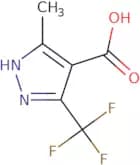
Discontinued product5-Methyl-3-(trifluoromethyl)-1H-pyrazole-4-carboxylic acid
CAS:<p>Versatile small molecule scaffold</p>Formula:C6H5F3N2O2Purity:Min. 95%Molecular weight:194.11 g/molRef: 3D-CGC44701
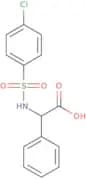
Discontinued product2-(4-Chlorobenzenesulfonamido)-2-phenylacetic acid
CAS:<p>Versatile small molecule scaffold</p>Formula:C14H12ClNO4SPurity:Min. 95%Molecular weight:325.8 g/mol2-Fluoro-1-(2-fluorophenyl)ethanone
CAS:<p>Versatile small molecule scaffold</p>Formula:C8H6F2OPurity:Min. 95%Molecular weight:156.13 g/molRef: 3D-CGC41284
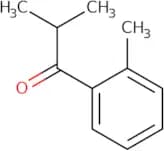
Discontinued product2-Methyl-1-(2-methylphenyl)propan-1-one
CAS:<p>Versatile small molecule scaffold</p>Formula:C11H14OPurity:Min. 95%Molecular weight:162.23 g/mol1H-Imidazo[4,5-b]pyridin-6-amine
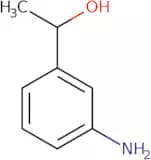
CAS:<p>Versatile small molecule scaffold</p>Formula:C6H6N4Purity:Min. 95%Molecular weight:134.14 g/mol(1R)-1-(3-Aminophenyl)ethan-1-ol
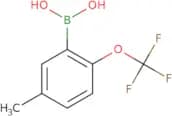
CAS:<p>Versatile small molecule scaffold</p>Formula:C8H11NOPurity:Min. 95%Molecular weight:137.18 g/mol5-Methyl-2-(trifluoromethoxy)phenylboronic acid
CAS:<p>Versatile small molecule scaffold</p>Formula:C8H8BF3O3Purity:Min. 95%Molecular weight:219.95 g/molRef: 3D-ETB40245
Discontinued productMethyl trans-2-hydroxymethylcyclopentane-1-carboxylate
CAS:<p>Versatile small molecule scaffold</p>Formula:C8H14O3Purity:Min. 95%Molecular weight:158.19 g/molRef: 3D-CVA65066
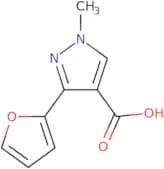
Discontinued product3-(Furan-2-yl)-1-methyl-1H-pyrazole-4-carboxylic acid
CAS:<p>Versatile small molecule scaffold</p>Formula:C9H8N2O3Purity:Min. 95%Molecular weight:192.17 g/molRef: 3D-CWB50987
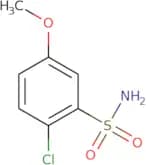
Discontinued product2-Chloro-5-methoxybenzene-1-sulfonamide
CAS:<p>2-Chloro-5-methoxybenzene-1-sulfonamide is a selective nematicide that has been shown to be effective against parasitic nematodes. It is a member of the class of compounds known as parasitic nematides. This compound is active against both larval and adult forms of these worms, but it does not affect other organisms or plants. 2-Chloro-5-methoxybenzene-1-sulfonamide is believed to act by binding to specific sites on the nematode's body and interfering with their biological properties.</p>Formula:C7H8ClNO3SPurity:Min. 95%Molecular weight:221.66 g/molMethyl 2-bromo-6-(bromomethyl)benzoate
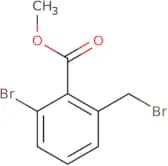
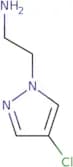
CAS:<p>Methyl 2-bromo-6-(bromomethyl)benzoate is a pharmacological agent that belongs to the group of dopamine D2-like receptor ligands. It has been shown to bind to the dopamine D2-like receptor in rat brain tissue, and has affinity for this receptor. Methyl 2-bromo-6-(bromomethyl)benzoate may induce behavioral effects by interacting with the dopamine system in the central nervous system. This compound binds to dopamine receptors, especially those with affinity for D2-like subtypes. The binding of this compound induces conformational changes in the receptor, which leads to changes in downstream signal transduction and ultimately influences behavior.</p>Formula:C9H8Br2O2Purity:Min. 95%Molecular weight:307.97 g/mol2-(4-Chloro-1H-pyrazol-1-yl)ethanamine
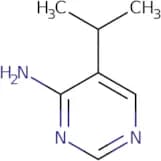
CAS:<p>Versatile small molecule scaffold</p>Formula:C5H8ClN3Purity:Min. 95%Molecular weight:145.59 g/mol5-(Propan-2-yl)pyrimidin-4-amine
CAS:<p>Versatile small molecule scaffold</p>Formula:C7H11N3Purity:Min. 95%Molecular weight:137.18 g/molRef: 3D-FAA00030
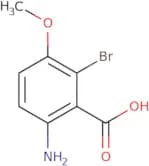
Discontinued product6-Amino-2-bromo-3-methoxybenzoic acid
CAS:<p>Versatile small molecule scaffold</p>Formula:C8H8BrNO3Purity:Min. 95%Molecular weight:246.06 g/molRef: 3D-CGA94638
Discontinued product2-Hydroxy-4-(phenylmethoxy)benzoic Acid Methyl Ester
CAS:<p>2-Hydroxy-4-(phenylmethoxy)benzoic Acid Methyl Ester is a benzene derivative that inhibits the binding of xanthones to the benzene ring in a variety of ways. This compound is formed by reacting phenol with methyl benzoate in the presence of acid and heat. The low energy ligand inhibits the binding of xanthones to benzene by forming hydrogen bonds, covalent bonds, or van der Waals forces with the anion. 2-Hydroxy-4-(phenylmethoxy)benzoic acid methyl ester has shown anti-inflammatory properties, which may be due to its ability to inhibit leukocyte adhesion at inflammatory sites.</p>Formula:C15H14O4Purity:Min. 95%Molecular weight:258.27 g/molRef: 3D-FAA42729
Discontinued productMethyl 2-{bis[(tert-butoxy)carbonyl]amino}prop-2-enoate
CAS:<p>Versatile small molecule scaffold</p>Formula:C14H23NO6Purity:Min. 95%Molecular weight:301.34 g/mol2-(2,6-Dimethoxyphenoxymethyl)oxirane
CAS:<p>Versatile small molecule scaffold</p>Formula:C11H14O4Purity:Min. 95%Molecular weight:210.23 g/molRef: 3D-FAA43529
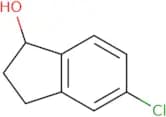
Discontinued product(1R)-5-Chloro-2,3-dihydro-1H-inden-1-ol
CAS:<p>Versatile small molecule scaffold</p>Formula:C9H9ClOPurity:Min. 95%Molecular weight:168.62 g/molRef: 3D-BEC63000
Discontinued product[5-(2-Fluorophenyl)-1,2-oxazol-3-yl]methanamine hydrochloride
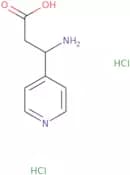
CAS:<p>Versatile small molecule scaffold</p>Formula:C10H10ClFN2OPurity:Min. 95%Molecular weight:228.65 g/mol3-Amino-3-(pyridin-4-yl)propanoic acid dihydrochloride
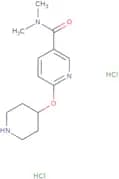
CAS:Versatile small molecule scaffoldFormula:C8H12Cl2N2O2Purity:Min. 95%Molecular weight:239.1 g/molN,N-Dimethyl-6-(piperidin-4-yloxy)pyridine-3-carboxamide dihydrochloride
CAS:<p>Versatile small molecule scaffold</p>Formula:C13H21Cl2N3O2Purity:Min. 95%Molecular weight:322.2 g/molRef: 3D-FDD53991
Discontinued product3-[(4-Methylphenyl)methyl]azetidine hydrochloride
CAS:<p>Versatile small molecule scaffold</p>Formula:C11H16ClNPurity:Min. 95%Molecular weight:197.7 g/mol[4-(Pyridin-2-yl)-1,3-thiazol-2-yl]methanamine dihydrochloride
CAS:<p>Versatile small molecule scaffold</p>Formula:C9H11Cl2N3SPurity:Min. 95%Molecular weight:264.17 g/mol1-[(4-Bromo-2-chlorophenyl)methyl]-1H-pyrazol-4-amine
CAS:<p>Versatile small molecule scaffold</p>Formula:C10H9BrClN3Purity:Min. 95%Molecular weight:286.55 g/molRef: 3D-CPC18522
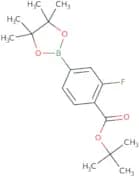
Discontinued producttert-Butyl 2-fluoro-4-(4,4,5,5-tetramethyl-1,3,2-dioxaborolan-2-yl)benzoate
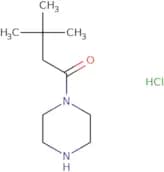
CAS:<p>Versatile small molecule scaffold</p>Formula:C17H24BFO4Purity:Min. 95%Molecular weight:322.2 g/mol3,3-Dimethyl-1-(piperazin-1-yl)butan-1-one hydrochloride
CAS:<p>Versatile small molecule scaffold</p>Formula:C10H21ClN2OPurity:Min. 95%Molecular weight:220.74 g/mol4-(2-Hydroxyethoxy)oxane-4-carbonitrile
CAS:<p>Versatile small molecule scaffold</p>Formula:C8H13NO3Purity:Min. 95%Molecular weight:171.19 g/molRef: 3D-BTC84537
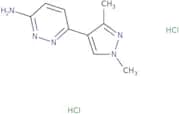
Discontinued product6-(1,3-Dimethyl-1H-pyrazol-4-yl)pyridazin-3-amine dihydrochloride
CAS:<p>Versatile small molecule scaffold</p>Formula:C9H13Cl2N5Purity:Min. 95%Molecular weight:262.14 g/molRef: 3D-FDD54856
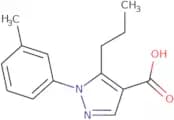
Discontinued product1-(3-Methylphenyl)-5-propyl-1H-pyrazole-4-carboxylic acid
CAS:Versatile small molecule scaffoldFormula:C14H16N2O2Purity:Min. 95%Molecular weight:244.29 g/molRef: 3D-CWB88210
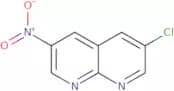
Discontinued product3-Chloro-6-nitro-1,8-naphthyridine
CAS:<p>Versatile small molecule scaffold</p>Formula:C8H4ClN3O2Purity:Min. 95%Molecular weight:209.59 g/molRef: 3D-BSB37261
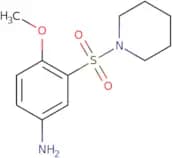
Discontinued product4-Methoxy-3-(piperidine-1-sulfonyl)aniline
CAS:<p>Versatile small molecule scaffold</p>Formula:C12H18N2O3SPurity:Min. 95%Molecular weight:270.35 g/mol(1R,2R,6S,7S)-4,9-Diazatricyclo[5.3.0.0,2,6]decane dihydrochloride
CAS:<p>Versatile small molecule scaffold</p>Formula:C8H16Cl2N2Purity:Min. 95%Molecular weight:211.1 g/molRef: 3D-CND73121
Discontinued productBenzyl[(1-ethyl-1H-pyrazol-5-yl)methyl]amine
CAS:<p>Versatile small molecule scaffold</p>Formula:C13H17N3Purity:Min. 95%Molecular weight:215.29 g/mol2-({5,6-Dimethylthieno[2,3-d]pyrimidin-4-yl}sulfanyl)benzoic acid
CAS:Controlled Product<p>2-({5,6-Dimethylthieno[2,3-d]pyrimidin-4-yl}sulfanyl)benzoic acid is a synthetic nonpeptide compound that belongs to the group of ligands. This inhibitor binds to nicotinic acetylcholine receptors and inhibits their activity. 2-({5,6-Dimethylthieno[2,3-d]pyrimidin-4-yl}sulfanyl)benzoic acid has been shown to be a potent activator of these receptors. This compound also inhibits voltage dependent potassium channels and calcium channels.</p>Formula:C15H12N2O2S2Purity:Min. 95%Molecular weight:316.4 g/molRef: 3D-BEB15117
Discontinued product1-[4-(2,3-Dihydro-1,4-benzodioxin-6-yl)-1H-imidazol-2-yl]-2-methylpropan-1-amine
CAS:<p>Versatile small molecule scaffold</p>Formula:C15H19N3O2Purity:Min. 95%Molecular weight:273.33 g/molRef: 3D-FWB45946
Discontinued product(2-{[(Furan-2-ylmethyl)(methyl)amino]methyl}phenyl)methanamine
CAS:<p>Versatile small molecule scaffold</p>Formula:C14H18N2OPurity:Min. 95%Molecular weight:230.31 g/molRef: 3D-FWB48087
Discontinued product2-[3-(Trifluoromethyl)phenyl]-1H-imidazole
CAS:<p>Versatile small molecule scaffold</p>Formula:C10H7F3N2Purity:Min. 95%Molecular weight:212.17 g/mol4-(1-Phenyl-1H-pyrazol-4-yl)-1H-pyrrole-3-carboxylic acid
CAS:<p>Versatile small molecule scaffold</p>Formula:C14H11N3O2Purity:Min. 95%Molecular weight:253.26 g/molRef: 3D-CWB96426
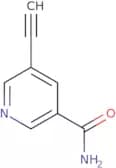
Discontinued product5-Ethynylpyridine-3-carboxamide
CAS:<p>Versatile small molecule scaffold</p>Formula:C8H6N2OPurity:Min. 95%Molecular weight:146.15 g/molRef: 3D-GAC81870
Discontinued product3-(4-Phenylpiperazin-1-yl)propanehydrazide
CAS:<p>Versatile small molecule scaffold</p>Formula:C13H20N4OPurity:Min. 95%Molecular weight:248.32 g/molRef: 3D-BNA91858
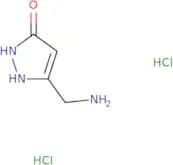
Discontinued product5-(Aminomethyl)-2,3-dihydro-1H-pyrazol-3-one dihydrochloride
CAS:<p>Versatile small molecule scaffold</p>Formula:C4H9Cl2N3OPurity:Min. 95%Molecular weight:186.04 g/molRef: 3D-CBA37756
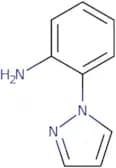
Discontinued product1-(2-Aminophenyl)-1H-pyrazole
CAS:<p>1-(2-Aminophenyl)-1H-pyrazole is a chemical compound that is used in the synthesis of other compounds. It can be produced by various reactions from benzyl chloride and ammonia. The reactivity of 1-(2-aminophenyl)-1H-pyrazole has been studied using single crystal X-ray diffraction. This technique was used to determine the structure and reaction pathway of this molecule as well as to study its catalytic properties. 1-(2-Aminophenyl)-1H-pyrazole is a ligand that binds to metal ions, such as aluminium, in order to form complexes with different functional groups.</p>Formula:C9H9N3Purity:Min. 95%Molecular weight:159.19 g/mol3-[(2-Methyl-2,3-dihydro-1H-indol-1-yl)sulfonyl]benzoic acid
CAS:Controlled Product<p>3-[(2-Methyl-2,3-dihydro-1H-indol-1-yl)sulfonyl]benzoic acid is a synthetic sulfonamide that has been used as an inhibitor of the protein tyrosine phosphatase SHP2. In cell biology, it has been used as a research tool to study the cellular functions of proteins such as ion channels and receptors. 3-[(2-Methyl-2,3-dihydro-1H-indol-1-yl)sulfonyl]benzoic acid can be used in pharmacology to study the effects of ligands on cells or tissue. It is also known to activate certain receptors in the brain and central nervous system. This compound is highly pure with a CAS number of 326619-13-0, and it has an ionization constant (pKa) of 7.6 at pH 7.4.</p>Formula:C16H15NO4SPurity:Min. 95%Molecular weight:317.4 g/molRef: 3D-BNA61913
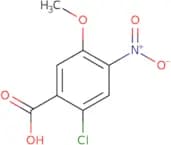
Discontinued product2-Chloro-5-methoxy-4-nitrobenzoic acid
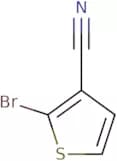
CAS:<p>Versatile small molecule scaffold</p>Formula:C8H6ClNO5Purity:Min. 95%Molecular weight:231.59 g/mol2-Bromothiophene-3-carbonitrile
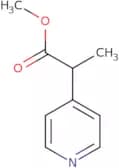
CAS:<p>Versatile small molecule scaffold</p>Formula:C5H2BrNSPurity:Min. 95%Molecular weight:188.04 g/molMethyl 2-(pyridin-4-yl)propanoate
CAS:<p>Versatile small molecule scaffold</p>Formula:C9H11NO2Purity:Min. 95%Molecular weight:165.19 g/molRef: 3D-GCA21503
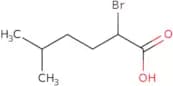
Discontinued product2-Bromo-5-methylhexanoic acid
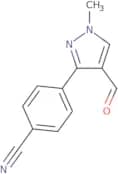
CAS:<p>Versatile small molecule scaffold</p>Formula:C7H13BrO2Purity:Min. 95%Molecular weight:209.08 g/mol4-(4-Formyl-1-methyl-1H-pyrazol-3-yl)benzonitrile
CAS:<p>Versatile small molecule scaffold</p>Formula:C12H9N3OPurity:Min. 95%Molecular weight:211.22 g/molRef: 3D-CWB50850
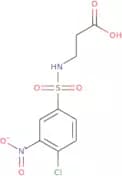
Discontinued product3-(4-Chloro-3-nitrobenzenesulfonamido)propanoic acid
CAS:<p>Versatile small molecule scaffold</p>Formula:C9H9ClN2O6SPurity:Min. 95%Molecular weight:308.7 g/molRef: 3D-GDA47368
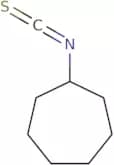
Discontinued productCycloheptyl isothiocyanate
CAS:<p>Cycloheptyl isothiocyanate is a 1-4c alkyl, azaheterocycle, isothiocyanate that has been shown to be stereoselective. It binds to the sulfur atom of thiols and sulfonylureas, preventing the formation of the reactive intermediate that leads to their hydrolysis. This property can be used for the synthesis of ensembles and aralkyls. Cycloheptyl isothiocyanate also binds to alkenyl groups, which may be useful in synthesizing cycloalkyls or haloalkyls.</p>Formula:C8H13NSPurity:Min. 95%Molecular weight:155.26 g/molRef: 3D-GDA54216
Discontinued product3-({[6-(Ethoxycarbonyl)-5-methyl-4-oxo-3H,4H-thieno[2,3-d]pyrimidin-2-yl]methyl}sulfanyl)propanoic acid
CAS:<p>Versatile small molecule scaffold</p>Formula:C14H16N2O5S2Purity:Min. 95%Molecular weight:356.4 g/molRef: 3D-GGB62660
Discontinued productLithium 2-{[(tert-butoxy)carbonyl]amino}-2-cyanoacetate
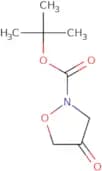
CAS:<p>Versatile small molecule scaffold</p>Formula:C8H11LiN2O4Purity:Min. 95%Molecular weight:206.1 g/moltert-Butyl 4-oxo-1,2-oxazolidine-2-carboxylate
CAS:<p>Versatile small molecule scaffold</p>Formula:C8H13NO4Purity:Min. 95%Molecular weight:187.19 g/molRef: 3D-GGD25921
Discontinued productEthyl 6-oxospiro[2.4]heptane-5-carboxylate
CAS:<p>Versatile small molecule scaffold</p>Formula:C10H14O3Purity:Min. 95%Molecular weight:182.2 g/molRef: 3D-GNB08814
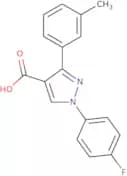
Discontinued product1-(4-Fluorophenyl)-3-(3-methylphenyl)-1H-pyrazole-4-carboxylic acid
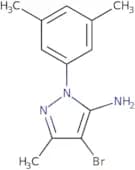
CAS:<p>Versatile small molecule scaffold</p>Formula:C17H13FN2O2Purity:Min. 95%Molecular weight:296.29 g/mol4-Bromo-1-(3,5-dimethylphenyl)-3-methyl-1H-pyrazol-5-amine
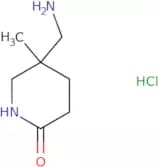
CAS:<p>Versatile small molecule scaffold</p>Formula:C12H14BrN3Purity:Min. 95%Molecular weight:280.16 g/mol5-(Aminomethyl)-5-methylpiperidin-2-one hydrochloride
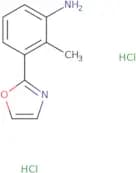
CAS:<p>Versatile small molecule scaffold</p>Formula:C7H15ClN2OPurity:Min. 95%Molecular weight:178.66 g/mol2-Methyl-3-(1,3-oxazol-2-yl)aniline dihydrochloride
CAS:<p>Versatile small molecule scaffold</p>Formula:C10H12Cl2N2OPurity:Min. 95%Molecular weight:247.12 g/molRef: 3D-JBD31004
Discontinued product1-[4-(1-Aminoethyl)phenyl]piperidin-2-one
CAS:<p>Versatile small molecule scaffold</p>Formula:C13H18N2OPurity:Min. 95%Molecular weight:218.29 g/molRef: 3D-CJC72691
Discontinued productN1-[6-Methyl-2-(propan-2-yl)pyrimidin-4-yl]ethane-1,2-diamine
CAS:<p>Versatile small molecule scaffold</p>Formula:C10H18N4Purity:Min. 95%Molecular weight:194.28 g/molRef: 3D-BMB19425
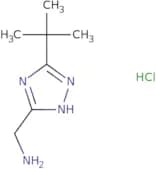
Discontinued product(5-tert-Butyl-1H-1,2,4-triazol-3-yl)methanamine hydrochloride
CAS:<p>Versatile small molecule scaffold</p>Formula:C7H15ClN4Purity:Min. 95%Molecular weight:190.67 g/molRef: 3D-JBD31251
Discontinued product1-(4-Methylphenyl)-1H,4H,5H-pyrazolo[3,4-d]pyrimidin-4-one
CAS:<p>Versatile small molecule scaffold</p>Formula:C12H10N4OPurity:Min. 95%Molecular weight:226.23 g/mol[4-(Difluoromethoxy)oxan-4-yl]methanamine
CAS:<p>Versatile small molecule scaffold</p>Formula:C7H13F2NO2Purity:Min. 95%Molecular weight:181.18 g/mol{Bicyclo[2.2.2]oct-5-en-2-yl}methanamine hydrochloride
CAS:<p>Versatile small molecule scaffold</p>Formula:C9H16ClNPurity:Min. 95%Molecular weight:173.68 g/molRef: 3D-JBD31357
Discontinued product2-Phenoxyaniline
CAS:<p>2-Phenoxyaniline is a nitro compound that can be converted to the corresponding palladium complexes. It is an inhibitor of the acylation reaction, which is a type of chemical reaction in which an organic molecule reacts with an acid. The inhibition of this reaction has been shown to have an effect on heart disease, specifically by lowering cholesterol levels and reducing atherosclerosis. 2-Phenoxyaniline has also been shown to inhibit the activation energy for electron transfer reactions, making it useful as a catalyst in analytical methods. 2-Phenoxyaniline also undergoes vibrational spectroscopy when exposed to liquid chromatography and other analytical methods.</p>Formula:C12H11NOPurity:Min. 95%Color and Shape:Brown PowderMolecular weight:185.22 g/mol3-amino-6-bromopyridin-2-ol hydrobromide
CAS:<p>Versatile small molecule scaffold</p>Formula:C5H6Br2N2OPurity:Min. 95%Molecular weight:269.9 g/mol(2S,3R)-2-((((9H-Fluoren-9-yl)methoxy)carbonyl)amino)-3-methoxybutanoic acid
CAS:<p>Versatile small molecule scaffold</p>Formula:C20H21NO5Purity:Min. 95%Molecular weight:355.4 g/mol3-[5-(Aminomethyl)-1-oxo-2,3-dihydro-1H-isoindol-2-yl]piperidine-2,6-dione hydrochloride
CAS:<p>Versatile small molecule scaffold</p>Formula:C14H16ClN3O3Purity:Min. 95%Molecular weight:309.75 g/mol3-(Methoxycarbonyl)pyridine-4-carboxylic acid
CAS:<p>Versatile small molecule scaffold</p>Formula:C8H7NO4Purity:Min. 95%Molecular weight:181.15 g/mol4-(Methylamino)benzene-1-sulfonamide
CAS:<p>Versatile small molecule scaffold</p>Formula:C7H10N2O2SPurity:Min. 95%Molecular weight:186.23 g/moltert-Butyl 5-bromo-3,4-dihydro-2,7-naphthyridine-2(1H)-carboxylate
CAS:<p>Versatile small molecule scaffold</p>Formula:C13H17BrN2O2Purity:Min. 95%Molecular weight:313.19 g/mol3-Methylbenzo[b]thiophene-2-carboxylic acid
CAS:<p>3-Methylbenzo[b]thiophene-2-carboxylic acid (MBTCA) is a heterocyclic compound that is an intermediate in the synthesis of 3-methylthiophene-2-carboxylic acid, a precursor to other drugs. MBTCA is an aerobic, nonpolar compound that has shown antimicrobial activity against some bacteria and fungi. It also has been shown to have practicality as a biomolecular probe for methyl groups in organic solvents. MBTCA can be synthesized by nitration of benzene in the presence of sulfur and sulfoxides. This reaction produces nitrobenzene, which can then be oxidized by potassium permanganate or hydrogen peroxide to produce MBTCA. The most common isomer of MBTCA is 2-(3,5-dimethoxybenzylidene)tetrahydrofuran, with three methyl groups on the</p>Formula:C10H8O2SPurity:Min. 95%Molecular weight:192.23 g/mol2,2',4,4'-tetrahydroxybenzophenone
CAS:<p>2,2',4,4'-tetrahydroxybenzophenone is a hydroxylated benzophenone that has immunomodulatory effects. It binds to the receptor in the immune system and can cause an increase in cytokine production. 2,2',4,4'-tetrahydroxybenzophenone is cytotoxic and has significant toxicity in vitro. The molecule has been shown to disrupt mitochondrial membrane potential. This may be due to its ability to form hydrogen bonds with molecules on the mitochondrial membrane. 2,2',4,4'-tetrahydroxybenzophenone also modulates transcriptional regulation of genes involved in cell proliferation and apoptosis. The drug is detectable at low levels by mass spectrometry and is not known to have any toxicological effects.END>></p>Formula:C13H10O5Purity:Min. 95%Color and Shape:Green PowderMolecular weight:246.22 g/molRef: 3D-FT55663
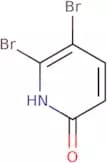
Discontinued product5,6-Dibromopyridin-2-ol
CAS:<p>Versatile small molecule scaffold</p>Formula:C5H3Br2NOPurity:Min. 95%Molecular weight:252.89 g/mol2-Acetylbenzoic acid
CAS:<p>2-Acetylbenzoic acid is a functional molecule that contains an acetyl group. It can form hydrogen bonds with other molecules and has been shown to induce apoptosis in cells. The reaction products of 2-acetylbenzoic acid are malonic acid, acetylsalicylic acid, and 2-benzoylbenzoic acid. These three compounds are made by the addition of hydrogen or hydroxide to the molecule 2-acetylbenzoic acid. The molecule has two functional groups: a carbonyl group and an acetyl group. The chemical structure of this molecule can be seen in the figure below.<br>2-Acetylbenzoic Acid</p>Formula:C9H8O3Purity:Min. 95%Color and Shape:PowderMolecular weight:164.16 g/molRef: 3D-FA05086
Discontinued product2-Bromo-3,3,3-trifluoro-1-propene
CAS:Controlled Product<p>2-Bromo-3,3,3-trifluoro-1-propene is a chemical compound that has been synthesized in an asymmetric reaction. The reactant is bromopropane and the product is 2,2,2-trifluoropropene. The methylene group on the propene molecule is activated by the nucleophilic attack of a fluoride ion from hydrogen fluoride to form a cavity with a highly strained bond. The kinetic study of this reaction revealed that the activation energy for the reaction is 42 kJ/mol. Palladium-catalyzed coupling reactions are catalyzed by palladium and require nonpolar solvents such as toluene or dichloromethane. This type of reaction has been shown to be exothermic with an isolated yield of 1%.</p>Formula:C3H2BrF3Purity:Min. 95%Color and Shape:Colorless PowderMolecular weight:174.95 g/mol1-[3-(Dimethylamino)propyl]-1-(4-fluorophenyl)-1,3-dihydro-3-oxo-5-isobenzofurancarbonitrile
CAS:<p>Please enquire for more information about 1-[3-(Dimethylamino)propyl]-1-(4-fluorophenyl)-1,3-dihydro-3-oxo-5-isobenzofurancarbonitrile including the price, delivery time and more detailed product information at the technical inquiry form on this page</p>Formula:C20H19FN2O2Purity:Min. 95%Molecular weight:338.38 g/molRef: 3D-FD184085
Discontinued productH-Ser-Ala-Glu-Glu-Tyr-Glu-Tyr-Pro-Ser OH trifluoroacetate
CAS:<p>Please enquire for more information about H-Ser-Ala-Glu-Glu-Tyr-Glu-Tyr-Pro-Ser OH trifluoroacetate including the price, delivery time and more detailed product information at the technical inquiry form on this page</p>Formula:C47H63N9O20•(C2HF3O2)xPurity:Min. 95%Ref: 3D-FS183525
Discontinued productGivinostat hydrochloride
CAS:<p>Givinostat hydrochloride is a research chemical that has shown potential in various fields. It is a molybdenum-based compound that has been studied for its effects on dopamine release and hydrogen evolution. Givinostat hydrochloride has also been investigated as an osteoclast inhibitor, which may be beneficial in the treatment of bone-related disorders such as osteoporosis. Additionally, it has shown promise as a retinoid and calpain inhibitor, suggesting its potential use in dermatological conditions and neurodegenerative diseases. The compound contains fluorine atoms, making it suitable for imaging studies using fluorine MRI techniques. Givinostat hydrochloride has been tested on MDA-MB-231 cells and has shown inhibitory effects on their growth, indicating its potential as an anticancer agent.</p>Formula:C24H27N3O4·HClPurity:Min. 95%Molecular weight:457.95 g/mol
![2-[(3,5-Dioxo-2,3,4,5-tetrahydro-1,2,4-triazin-6-yl)sulfanyl]acetohydrazide](/_next/image/?url=https%3A%2Fstatic.cymitquimica.com%2Fproducts%2F3D%2Fthumb-webp%2FENA70986.webp&w=3840&q=75)


![1H-Imidazo[4,5-b]pyridin-6-amine](/_next/image/?url=https%3A%2Fstatic.cymitquimica.com%2Fproducts%2F3D%2Fthumb-webp%2FENA94699.webp&w=3840&q=75)
![Methyl 2-{bis[(tert-butoxy)carbonyl]amino}prop-2-enoate](/_next/image/?url=https%3A%2Fstatic.cymitquimica.com%2Fproducts%2F3D%2Fthumb-webp%2FBIA33862.webp&w=3840&q=75)

![[5-(2-Fluorophenyl)-1,2-oxazol-3-yl]methanamine hydrochloride](/_next/image/?url=https%3A%2Fstatic.cymitquimica.com%2Fproducts%2F3D%2Fthumb-webp%2FBEC59563.webp&w=3840&q=75)
![3-[(4-Methylphenyl)methyl]azetidine hydrochloride](/_next/image/?url=https%3A%2Fstatic.cymitquimica.com%2Fproducts%2F3D%2Fthumb-webp%2FFDD54017.webp&w=3840&q=75)
![[4-(Pyridin-2-yl)-1,3-thiazol-2-yl]methanamine dihydrochloride](/_next/image/?url=https%3A%2Fstatic.cymitquimica.com%2Fproducts%2F3D%2Fthumb-webp%2FFDD54132.webp&w=3840&q=75)
![1-[(4-Bromo-2-chlorophenyl)methyl]-1H-pyrazol-4-amine](/_next/image/?url=https%3A%2Fstatic.cymitquimica.com%2Fproducts%2F3D%2Fthumb-webp%2FCPC18522.webp&w=3840&q=75)

![(1R,2R,6S,7S)-4,9-Diazatricyclo[5.3.0.0,2,6]decane dihydrochloride](/_next/image/?url=https%3A%2Fstatic.cymitquimica.com%2Fproducts%2F3D%2Fthumb-webp%2FCND73121.webp&w=3840&q=75)
![Benzyl[(1-ethyl-1H-pyrazol-5-yl)methyl]amine](/_next/image/?url=https%3A%2Fstatic.cymitquimica.com%2Fproducts%2F3D%2Fthumb-webp%2FFQB63126.webp&w=3840&q=75)
![2-({5,6-Dimethylthieno[2,3-d]pyrimidin-4-yl}sulfanyl)benzoic acid](/_next/image/?url=https%3A%2Fstatic.cymitquimica.com%2Fproducts%2F3D%2Fthumb-webp%2FBEB15117.webp&w=3840&q=75)
![1-[4-(2,3-Dihydro-1,4-benzodioxin-6-yl)-1H-imidazol-2-yl]-2-methylpropan-1-amine](/_next/image/?url=https%3A%2Fstatic.cymitquimica.com%2Fproducts%2F3D%2Fthumb-webp%2FFWB45946.webp&w=3840&q=75)
![(2-{[(Furan-2-ylmethyl)(methyl)amino]methyl}phenyl)methanamine](/_next/image/?url=https%3A%2Fstatic.cymitquimica.com%2Fproducts%2F3D%2Fthumb-webp%2FFWB48087.webp&w=3840&q=75)
![2-[3-(Trifluoromethyl)phenyl]-1H-imidazole](/_next/image/?url=https%3A%2Fstatic.cymitquimica.com%2Fproducts%2F3D%2Fthumb-webp%2FCBA42380.webp&w=3840&q=75)


![3-[(2-Methyl-2,3-dihydro-1H-indol-1-yl)sulfonyl]benzoic acid](/_next/image/?url=https%3A%2Fstatic.cymitquimica.com%2Fproducts%2F3D%2Fthumb-webp%2FBNA61913.webp&w=3840&q=75)
![3-({[6-(Ethoxycarbonyl)-5-methyl-4-oxo-3H,4H-thieno[2,3-d]pyrimidin-2-yl]methyl}sulfanyl)propanoic…](/_next/image/?url=https%3A%2Fstatic.cymitquimica.com%2Fproducts%2F3D%2Fthumb-webp%2FGGB62660.webp&w=3840&q=75)
![Lithium 2-{[(tert-butoxy)carbonyl]amino}-2-cyanoacetate](/_next/image/?url=https%3A%2Fstatic.cymitquimica.com%2Fproducts%2F3D%2Fthumb-webp%2FGGD25857.webp&w=3840&q=75)
![Ethyl 6-oxospiro[2.4]heptane-5-carboxylate](/_next/image/?url=https%3A%2Fstatic.cymitquimica.com%2Fproducts%2F3D%2Fthumb-webp%2FGNB08814.webp&w=3840&q=75)
![1-[4-(1-Aminoethyl)phenyl]piperidin-2-one](/_next/image/?url=https%3A%2Fstatic.cymitquimica.com%2Fproducts%2F3D%2Fthumb-webp%2FCJC72691.webp&w=3840&q=75)
![N1-[6-Methyl-2-(propan-2-yl)pyrimidin-4-yl]ethane-1,2-diamine](/_next/image/?url=https%3A%2Fstatic.cymitquimica.com%2Fproducts%2F3D%2Fthumb-webp%2FBMB19425.webp&w=3840&q=75)
![1-(4-Methylphenyl)-1H,4H,5H-pyrazolo[3,4-d]pyrimidin-4-one](/_next/image/?url=https%3A%2Fstatic.cymitquimica.com%2Fproducts%2F3D%2Fthumb-webp%2FECA73875.webp&w=3840&q=75)
![[4-(Difluoromethoxy)oxan-4-yl]methanamine](/_next/image/?url=https%3A%2Fstatic.cymitquimica.com%2Fproducts%2F3D%2Fthumb-webp%2FCJC65759.webp&w=3840&q=75)
![{Bicyclo[2.2.2]oct-5-en-2-yl}methanamine hydrochloride](/_next/image/?url=https%3A%2Fstatic.cymitquimica.com%2Fproducts%2F3D%2Fthumb-webp%2FJBD31357.webp&w=3840&q=75)



![3-[5-(Aminomethyl)-1-oxo-2,3-dihydro-1H-isoindol-2-yl]piperidine-2,6-dione hydrochloride](/_next/image/?url=https%3A%2Fstatic.cymitquimica.com%2Fproducts%2F3D%2Fthumb-webp%2FIWB26469.webp&w=3840&q=75)


![3-Methylbenzo[b]thiophene-2-carboxylic acid](/_next/image/?url=https%3A%2Fstatic.cymitquimica.com%2Fproducts%2F3D%2Fthumb-webp%2FDAA13378.webp&w=3840&q=75)



![1-[3-(Dimethylamino)propyl]-1-(4-fluorophenyl)-1,3-dihydro-3-oxo-5-isobenzofurancarbonitrile](/_next/image/?url=https%3A%2Fstatic.cymitquimica.com%2Fproducts%2F3D%2Fthumb-webp%2FFD184085.webp&w=3840&q=75)

