Building Blocks
Subcategories of "Building Blocks"
- Boronic Acids & Boronic Acid Derivatives(5,778 products)
- Chiral Building Blocks(1,243 products)
- Hydrocarbon Building Blocks(6,098 products)
- Organic Building Blocks(61,036 products)
Found 205240 products of "Building Blocks"
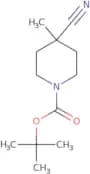
tert-Butyl 4-cyano-4-methylpiperidine-1-carboxylate
CAS:Versatile small molecule scaffold
Formula:C12H20N2O2Purity:Min. 95%Molecular weight:224.3 g/molRef: 3D-FWA11596
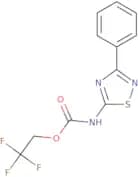
Discontinued product2,2,2-Trifluoroethyl N-(3-phenyl-1,2,4-thiadiazol-5-yl)carbamate
CAS:Versatile small molecule scaffold
Formula:C11H8F3N3O2SPurity:Min. 95%Molecular weight:303.26 g/molRef: 3D-EEC95162
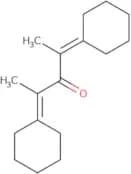
Discontinued product1-cyclohexylidenepropan-2-one
CAS:1-cyclohexylidenepropan-2-one is a carboxylic acid that is used in the synthesis of medicines and other organic compounds. It has been shown to have antioxidant, anti-inflammatory, and hypocholesterolaemic properties. 1-cyclohexylidenepropan-2-one is also used as a pheromone in insects.
Formula:C9H14OPurity:Min. 95%Molecular weight:138.21 g/mol7-Oxa-1-azaspiro[3.5]nonan-2-one
CAS:Versatile small molecule scaffold
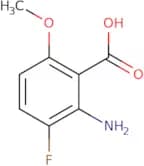
Formula:C7H11NO2Purity:Min. 95%Molecular weight:141.17 g/mol2-Amino-3-fluoro-6-methoxybenzoic acid
CAS:Versatile small molecule scaffoldFormula:C8H8FNO3Purity:Min. 95%Molecular weight:185.15 g/molRef: 3D-EEC94983
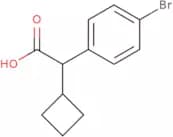
Discontinued product(4-Bromo-phenyl)-cyclobutyl-acetic acid
CAS:Versatile small molecule scaffoldFormula:C12H13BrO2Purity:Min. 95%Molecular weight:269.13 g/molRef: 3D-HTB45352
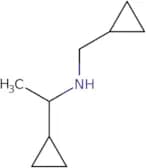
Discontinued product(1-Cyclopropylethyl)(cyclopropylmethyl)amine
CAS:Versatile small molecule scaffold
Formula:C9H17NPurity:Min. 95%Molecular weight:139.24 g/molRef: 3D-UQB56165
Discontinued product(1R)-1-(1H-Imidazol-2-yl)ethan-1-amine dihydrochloride
CAS:Versatile small molecule scaffold
Formula:C5H11Cl2N3Purity:Min. 95%Molecular weight:184.06 g/molRef: 3D-HXC91437
Discontinued product1-[(2-bromophenyl)methyl]-2,5-dihydro-1H-pyrrole-2,5-dione
CAS:Versatile small molecule scaffold
Formula:C11H8BrNO2Purity:Min. 95%Molecular weight:266.09 g/molRef: 3D-QFA48093
Discontinued productrac-(3R,4R)-3-Hydroxy-4-[(2-phenylethyl)amino]-1lambda6-thiolane-1,1-dione
CAS:Versatile small molecule scaffold
Formula:C12H17NO3SPurity:Min. 95%Molecular weight:255.34 g/molRef: 3D-JHD90934
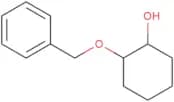
Discontinued productrac-(1R,2R)-2-(Benzyloxy)cyclohexan-1-ol
CAS:Versatile small molecule scaffold
Formula:C13H18O2Purity:Min. 95%Molecular weight:206.28 g/molRef: 3D-BCA32929
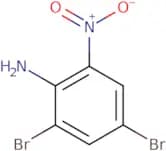
Discontinued product2,4-Dibromo-6-nitroaniline
CAS:2,4-Dibromo-6-nitroaniline is a nitro compound that has been used in the production of dyes. It is also used as a component in the synthesis of other organic compounds. 2,4-Dibromo-6-nitroaniline can be produced by electrolysis of an acid solution containing radical cations and benzene. The radical cations are formed by proton transfer from the acid to the benzene, followed by electron transfer from benzene to the electrode. This process results in the formation of nitro groups on the benzene ring, which undergoes oxidation to form 2,4-dibromo-6-nitroaniline. The cyclic voltammetry shows that this process occurs via two pathways: one with a fast rate and one with a slow rate. The mechanism for this reaction is not yet known.
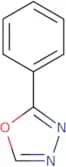
Formula:C6H4Br2N2O2Purity:Min. 95%Molecular weight:295.92 g/mol2-Phenyl-1,3,4-oxadiazole
CAS:2-Phenyl-1,3,4-oxadiazole is a 2-phenyloxazole with an oxygen atom at the 1 position. It is a white crystalline solid that is soluble in water and has antibacterial properties. This chemical can be used as a catalyst for the synthesis of organic compounds. 2-Phenyl-1,3,4-oxadiazole reacts with nitro groups to form oxime derivatives and has been shown to inhibit the growth of fungi such as Candida albicans and Aspergillus niger. 2-Phenyl-1,3,4-oxadiazole can also be used as an antifungal agent against Trichophyton rubrum.
2-Phenyl-1,3,4-oxadiazole may be synthesized by reacting phenol with acetone in the presence of nitric acid or sulfuric acid. The structural formula for this compound isFormula:C8H6N2OPurity:Min. 95%Molecular weight:146.15 g/moltert-Butyl 3-amino-2-(oxan-4-yl)propanoate
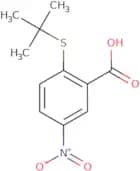
CAS:Versatile small molecule scaffoldFormula:C12H23NO3Purity:Min. 95%Molecular weight:229.3 g/mol2-(tert-Butylsulfanyl)-5-nitrobenzoic acid
CAS:Versatile small molecule scaffold
Formula:C11H13NO4SPurity:Min. 95%Molecular weight:255.29 g/mol3-(Aminomethyl)-2,2-difluoropentane hydrochloride
CAS:Versatile small molecule scaffoldFormula:C6H14ClF2NPurity:Min. 95%Molecular weight:173.6 g/molRef: 3D-LUD64101
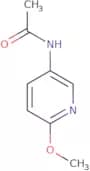
Discontinued productN-(6-Methoxypyridin-3-yl)acetamide
CAS:Versatile small molecule scaffold
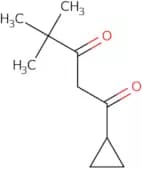
Formula:C8H10N2O2Purity:Min. 95%Molecular weight:166.18 g/mol1-Cyclopropyl-4,4-dimethylpentane-1,3-dione
CAS:Versatile small molecule scaffold
Formula:C10H16O2Purity:Min. 95%Molecular weight:168.23 g/molRef: 3D-SCA07876
Discontinued product8-Fluoro-3-methyl-1,2,3,4-tetrahydroquinoline hydrochloride
CAS:Versatile small molecule scaffold
Formula:C10H13ClFNPurity:Min. 95%Molecular weight:201.67 g/molRef: 3D-PID25606
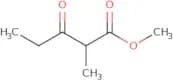
Discontinued product2-Methyl-3-oxo-pentanoicacid methyl ester
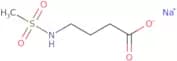
CAS:The synthesis of 2-methyl-3-oxo-pentanoic acid methyl ester is accomplished by a three step process. The first step is the intramolecular condensation of 2,2-dimethylpropionic acid with acetone to form a 1:1 mixture of 3,4-dihydroxybutyl and 4,4-dihydroxybutyl esters. The second step is the selective transesterification of the 3,4-dihydroxybutyl ester with benzaldehyde. This reaction provides an optically pure 2-methyl-3-oxo-pentanoic acid methyl ester as the major product. The third step is an aldol condensation between the ketone from the second step and acetone to produce another optically pure 2,2 dimethylpropionic acid methyl ester.Formula:C7H12O3Purity:Min. 95%Molecular weight:144.17 g/molSodium 4-methanesulfonamidobutanoate
CAS:Versatile small molecule scaffold
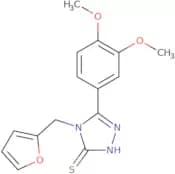
Formula:C5H10NNaO4SPurity:Min. 95%Molecular weight:203.19 g/mol5-(3,4-Dimethoxyphenyl)-4-(furan-2-ylmethyl)-4H-1,2,4-triazole-3-thiol
CAS:Versatile small molecule scaffold
Formula:C15H15N3O3SPurity:Min. 95%Molecular weight:317.4 g/molRef: 3D-SQA23740
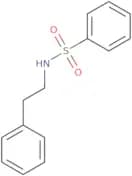
Discontinued productN-(2-Phenylethyl)benzenesulfonamide
CAS:N-(2-Phenylethyl)benzenesulfonamide is a biodegradable and aerobic catalyst that is used in the production of nitrates. It can be recycled and has a high solubility, which allows for efficient extraction from wastewater effluents. The reactor system can be operated at an aerobic or anaerobic conditions. N-(2-Phenylethyl)benzenesulfonamide is soluble in water and can be hydrolyzed by acids or bases to release ammonia gas. The process can also be sustainable due to the use of renewable energy sources such as solar, wind, tidal, or biomass power.
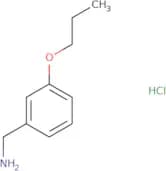
Formula:C14H15NO2SPurity:Min. 95%Molecular weight:261.34 g/mol(3-Propoxyphenyl)methanamine hydrochloride
CAS:Versatile small molecule scaffold
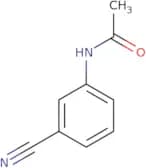
Formula:C10H16ClNOPurity:Min. 95%Molecular weight:201.69 g/molN-(3-Cyanophenyl)acetamide
CAS:N-(3-Cyanophenyl)acetamide is a hydrogen-bonding molecule that has been detected in the gas phase. It has also been observed to interact with water, forming hydrogen bonding interactions and solvatochromism. The equilibrium of N-(3-cyanophenyl)acetamide can be shifted by changing the solvent conditions and pH. This molecule has three conformations when it is in the gaseous phase, including a planar conformation. In addition, N-(3-cyanophenyl)acetamide can be used as a probe for determining hydrogen bonding interactions and conformations due to its ability to form hydrogen bonds with other molecules.
Formula:C9H8N2OPurity:Min. 95%Molecular weight:160.18 g/molRef: 3D-ICA20284
Discontinued product6-Chloro-3-methyl-[1,2,4]triazolo[3,4-a]-phthalazine
CAS:Versatile small molecule scaffold
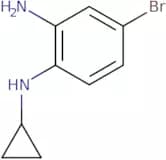
Formula:C10H7ClN4Purity:Min. 95%Molecular weight:218.65 g/mol4-Bromo-1-N-cyclopropylbenzene-1,2-diamine
CAS:Versatile small molecule scaffoldFormula:C9H11BrN2Purity:Min. 95%Molecular weight:227.1 g/molRef: 3D-STB29141
Discontinued product2-[Ethyl(propan-2-yl)amino]ethan-1-ol
CAS:Controlled ProductVersatile small molecule scaffold
Formula:C7H17NOPurity:Min. 95%Molecular weight:131.22 g/mol[2-(3-Methoxyphenyl)ethyl][(trimethyl-1H-pyrazol-4-yl)methyl]amine
CAS:Versatile small molecule scaffold
Formula:C16H23N3OPurity:Min. 95%Molecular weight:273.37 g/molRef: 3D-VWB92946
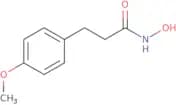
Discontinued productN-Hydroxy-3-(4-methoxyphenyl)propanamide
CAS:Versatile small molecule scaffold
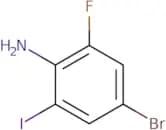
Formula:C10H13NO3Purity:Min. 95%Molecular weight:195.21 g/mol4-Bromo-2-fluoro-6-iodoaniline
CAS:Versatile small molecule scaffold
Formula:C6H4BrFINPurity:Min. 95%Molecular weight:315.91 g/molPB-22 3-carboxyindole metabolite solution
CAS:Controlled ProductPB-22 is a synthetic cannabinoid, which can be classified as a CB1 receptor agonist. It is one of the many cannabinoids that have been created in an attempt to circumvent drug laws by creating compounds that are similar to those found in cannabis but have different chemical structures. PB-22 has shown to increase locomotor activity and stimulate the cb1 receptor in mice. Magnetic resonance spectroscopy (MRS) and assays were used to determine the binding affinity of PB-22 for the CB1 receptor. The MRS data showed that PB-22 bound with high affinity to the CB1 receptor and had a lower affinity for CB2 receptors. This suggests that PB-22 may be more potent than other synthetic cannabinoids, such as JWH-018 and CP 55,940, which bind better with CB2 receptors than CB1 receptors.
PB-22 is an analog of JWH-073 and has been shown to have a stronger effect on locomotor activity than JWHFormula:C14H17NO2Purity:Min. 95%Molecular weight:231.29 g/mol2-Amino-4-chloro-3-methoxybenzoic acid
CAS:Versatile small molecule scaffold
Formula:C8H8ClNO3Purity:Min. 95%Molecular weight:201.61 g/molRef: 3D-SCA30346
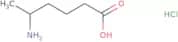
Discontinued product5-Aminohexanoic acid hydrochloride
CAS:Versatile small molecule scaffold
Formula:C6H14ClNO2Purity:Min. 95%Molecular weight:167.63 g/molRef: 3D-FJB91365
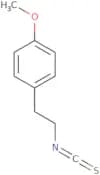
Discontinued product1-(2-Isothiocyanatoethyl)-4-methoxybenzene
CAS:Versatile small molecule scaffold
Formula:C10H11NOSPurity:Min. 95%Molecular weight:193.27 g/molRef: 3D-SAA42737
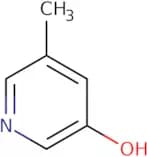
Discontinued product3-Hydroxy-5-methylpyridine
CAS:3-Hydroxy-5-methylpyridine (3HMP) is a chemical substance that has been classified as an amine. It is a product of the metabolism of purines, which are nitrogenous bases found in DNA and RNA. 3HMP is produced by aerogenic bacteria (such as Enterobacter), and can be used to estimate the number of these bacteria present in water samples. 3HMP has been shown to have antiviral properties against influenza virus, and can be used as a biomarker for the presence of other viruses in animals. 3HMP also has mineralization properties, which have been studied extensively, particularly with regards to pancreatic disease.
Formula:C6H7NOPurity:Min. 95%Color and Shape:PowderMolecular weight:109.13 g/molRef: 3D-FH16174
Discontinued product2-Bromo-3,3,3-trifluoro-1-propene
CAS:Controlled Product2-Bromo-3,3,3-trifluoro-1-propene is a chemical compound that has been synthesized in an asymmetric reaction. The reactant is bromopropane and the product is 2,2,2-trifluoropropene. The methylene group on the propene molecule is activated by the nucleophilic attack of a fluoride ion from hydrogen fluoride to form a cavity with a highly strained bond. The kinetic study of this reaction revealed that the activation energy for the reaction is 42 kJ/mol. Palladium-catalyzed coupling reactions are catalyzed by palladium and require nonpolar solvents such as toluene or dichloromethane. This type of reaction has been shown to be exothermic with an isolated yield of 1%.
Formula:C3H2BrF3Purity:Min. 95%Color and Shape:Colorless PowderMolecular weight:174.95 g/mol4-Chloro-2-hydroxy-6-methylphenylboronic acid
CAS:Versatile small molecule scaffoldFormula:C7H8BClO3Purity:Min. 95%Molecular weight:186.4 g/mol4,5-Dihydroxy-2,3-Pentanedione
CAS:4,5-Dihydroxy-2,3-pentanedione is a carbonyl compound that is the product of the oxidation of ascorbic acid. It is used in wastewater treatment and has antimicrobial properties against infectious diseases. This compound has been shown to inhibit protein synthesis by binding to the ribosome and preventing the formation of peptide bonds between amino acids. 4,5-Dihydroxy-2,3-pentanedione has also been shown to bind to plasma proteins, which may be due to its acyl chain structure. 4,5-Dihydroxy-2,3-pentanedione can be synthesized in a catalytic mechanism that involves dehydroascorbic acid and molecular oxygen.
Formula:C5H8O4Purity:Min. 95%Color and Shape:PowderMolecular weight:132.11 g/molRef: 3D-FD180770
Discontinued productPiperyline
CAS:Piperyline is an alkanoic acid that has shown to be effective against skin cancer. It also has antimicrobial properties, which may be due to its ability to bind metal ions and form polymeric compounds. Piperyline inhibits microbial growth by inhibiting the synthesis of proteins and nucleic acids. The antimicrobial activity is related to its cationic polymerization with hydroxyl groups, which forms a structure that can inhibit microbial enzymes and disrupt microbial cell membranes. This compound also interacts with the skin's natural lipids, making it difficult for microorganisms to attach and grow on the skin. Piperyline is synthesized in organic chemistry laboratories as an amide precursor of other pharmaceuticals such as penicillin.
Formula:C16H17NO3Purity:Min. 95%Molecular weight:271.31 g/mol

![7-Oxa-1-azaspiro[3.5]nonan-2-one](/_next/image/?url=https%3A%2Fstatic.cymitquimica.com%2Fproducts%2F3D%2Fthumb-webp%2FDHA24292.webp&w=3840&q=75)

![1-[(2-bromophenyl)methyl]-2,5-dihydro-1H-pyrrole-2,5-dione](/_next/image/?url=https%3A%2Fstatic.cymitquimica.com%2Fproducts%2F3D%2Fthumb-webp%2FQFA48093.webp&w=3840&q=75)
![rac-(3R,4R)-3-Hydroxy-4-[(2-phenylethyl)amino]-1lambda6-thiolane-1,1-dione](/_next/image/?url=https%3A%2Fstatic.cymitquimica.com%2Fproducts%2F3D%2Fthumb-webp%2FJHD90934.webp&w=3840&q=75)



![6-Chloro-3-methyl-[1,2,4]triazolo[3,4-a]-phthalazine](/_next/image/?url=https%3A%2Fstatic.cymitquimica.com%2Fproducts%2F3D%2Fthumb-webp%2FSCA45838.webp&w=3840&q=75)
![2-[Ethyl(propan-2-yl)amino]ethan-1-ol](/_next/image/?url=https%3A%2Fstatic.cymitquimica.com%2Fproducts%2F3D%2Fthumb-webp%2FCAA89361.webp&w=3840&q=75)
![[2-(3-Methoxyphenyl)ethyl][(trimethyl-1H-pyrazol-4-yl)methyl]amine](/_next/image/?url=https%3A%2Fstatic.cymitquimica.com%2Fproducts%2F3D%2Fthumb-webp%2FVWB92946.webp&w=3840&q=75)