Building Blocks
This section contains fundamental products for the synthesis of organic and biological compounds. Building blocks are the essential starting materials used to construct complex molecules through various chemical reactions. They play a critical role in drug discovery, material science, and chemical research. At CymitQuimica, we offer a diverse range of high-quality building blocks to support your innovative research and industrial projects, ensuring you have the essential components for successful synthesis.
Subcategories of "Building Blocks"
- Boronic Acids & Boronic Acid Derivatives(5,778 products)
- Chiral Building Blocks(1,242 products)
- Hydrocarbon Building Blocks(6,098 products)
- Organic Building Blocks(61,059 products)
Found 199580 products of "Building Blocks"
Sort by
Purity (%)
0
100
|
0
|
50
|
90
|
95
|
100
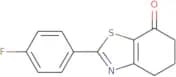
2-(4-Fluorophenyl)-4,5,6,7-tetrahydro-1,3-benzothiazol-7-one
CAS:<p>Versatile small molecule scaffold</p>Formula:C13H10FNOSPurity:Min. 95%Molecular weight:247.29 g/mol(2,3-Dihydro-1,4-benzodioxin-5-ylmethyl)(ethyl)amine hydrochloride
CAS:<p>Versatile small molecule scaffold</p>Formula:C11H16ClNO2Purity:Min. 95%Molecular weight:229.7 g/molRef: 3D-BAC92453
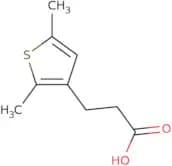
Discontinued product3-(2,5-Dimethylthiophen-3-yl)propanoic acid
CAS:<p>Versatile small molecule scaffold</p>Formula:C9H12O2SPurity:Min. 95%Molecular weight:184.26 g/molRef: 3D-BBA42138
Discontinued productQuinoline-5-carbonitrile
CAS:<p>Quinoline-5-carbonitrile is a cyanide compound that can be used in the synthesis of heterocyclic compounds. The reaction between quinoline and 5-cyanovaleric acid produces 6-nitroquinoline, which is then converted to dimethyl sulfoxide by alcoholysis. This reaction product can then be used to synthesize an amide or nucleophile. Quinoline-5-carbonitrile reacts with potassium in the presence of bifunctional hydrazide to produce a cyanide ion, which can be hydrolyzed by an acid to release hydrogen cyanide gas. This experiment has been shown as a model for reactions involving cyano compounds.</p>Formula:C10H6N2Purity:Min. 95%Molecular weight:154.17 g/molRef: 3D-JCA55102
Discontinued productEthyl 1,4-dioxaspiro[4.5]dec-8-ylideneacetate
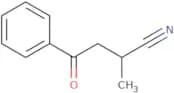
CAS:<p>Versatile small molecule scaffold</p>Formula:C12H18O4Purity:Min. 95%Molecular weight:226.27 g/mol2-Methyl-4-oxo-4-phenylbutanenitrile
CAS:<p>2-Methyl-4-oxo-4-phenylbutanenitrile is a chemical compound that is used in the synthesis of pharmaceuticals. It can be obtained by reacting an organic base with an organic acid. This reaction takes place in a reaction vessel and requires an inorganic base and inorganic reagents. The process also requires ethyl cyanoacetate as the starting material and produces 2-methyl-4-oxo-4-phenylbutanenitrile as the product. The use of this chemical has been linked to environmental pollution, so it should never be released into the environment or come into contact with water.</p>Formula:C11H11NOPurity:Min. 95%Molecular weight:173.21 g/molRef: 3D-BCA76578
Discontinued product4-Chloro-3-methyl-[1,2]oxazolo[5,4-d]pyrimidine
CAS:<p>Versatile small molecule scaffold</p>Formula:C6H4ClN3OPurity:Min. 95%Molecular weight:169.57 g/molRef: 3D-BCA85060
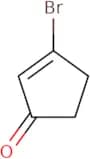
Discontinued product3-Bromocyclopent-2-en-1-one
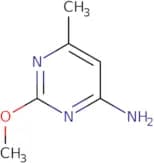
CAS:<p>3-Bromocyclopent-2-en-1-one is an organic compound that belongs to the group of cycloalkenones. It is a methyl ester with a cyclopentane backbone and a ketone group at the end of the molecule. 3-Bromocyclopent-2-en-1-one is synthesized by a cross-coupling reaction between zinc chloride and 3,4,5,6,7,8,9,10,11 bromodecane. The product can be isolated in crystalline form as well as in yields up to 90%. The product has been shown to act as an analog for prostaglandin E2.</p>Formula:C5H5BrOPurity:Min. 95%Molecular weight:161 g/mol2-Methoxy-6-methylpyrimidine-4-yl-amine
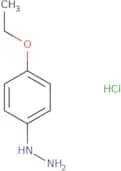
CAS:<p>Versatile small molecule scaffold</p>Formula:C6H9N3OPurity:Min. 95%Molecular weight:139.15 g/mol(4-Ethoxyphenyl)hydrazine hydrochloride
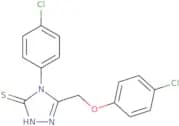
CAS:<p>Versatile small molecule scaffold</p>Formula:C8H13ClN2OPurity:Min. 95%Molecular weight:188.66 g/mol5-(4-Chlorophenoxymethyl)-4-(4-chlorophenyl)-4H-1,2,4-triazole-3-thiol
CAS:<p>Versatile small molecule scaffold</p>Formula:C15H11Cl2N3OSPurity:Min. 95%Molecular weight:352.2 g/molRef: 3D-BDA11124
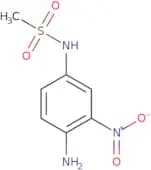
Discontinued productN-(4-Amino-3-nitrophenyl)methanesulfonamide
CAS:<p>Versatile small molecule scaffold</p>Formula:C7H9N3O4SPurity:Min. 95%Molecular weight:231.23 g/mol1-(2,3-Dihydro-1H-isoindol-5-yl)ethan-1-one hydrochloride
CAS:<p>Versatile small molecule scaffold</p>Formula:C10H12ClNOPurity:Min. 95%Molecular weight:197.66 g/molRef: 3D-JBD34859
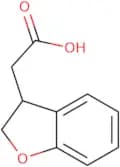
Discontinued product2-(2,3-Dihydro-1-benzofuran-3-yl)acetic acid
CAS:<p>Versatile small molecule scaffold</p>Formula:C10H10O3Purity:Min. 95%Molecular weight:178.18 g/molRef: 3D-BDA57083
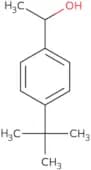
Discontinued product(1S)-1-(4-tert-Butylphenyl)ethan-1-ol
CAS:<p>Versatile small molecule scaffold</p>Formula:C12H18OPurity:Min. 95%Molecular weight:178.27 g/molRef: 3D-BEA32514
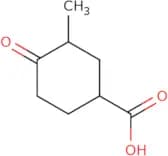
Discontinued product3-Methyl-4-oxocyclohexane-1-carboxylic acid
CAS:<p>Versatile small molecule scaffold</p>Formula:C8H12O3Purity:Min. 95%Molecular weight:156.18 g/molRef: 3D-BEA56736
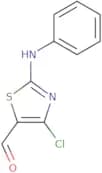
Discontinued product4-Chloro-2-(phenylamino)-1,3-thiazole-5-carbaldehyde
CAS:<p>Versatile small molecule scaffold</p>Formula:C10H7ClN2OSPurity:Min. 95%Molecular weight:238.69 g/molRef: 3D-BFA19327
Discontinued product1-[2-Amino-5-(propan-2-yl)phenyl]ethan-1-one
CAS:<p>Versatile small molecule scaffold</p>Formula:C11H15NOPurity:Min. 95%Molecular weight:177.2 g/molRef: 3D-BFA27290
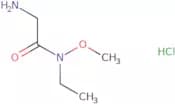
Discontinued product2-Amino-N-ethyl-N-methoxyacetamide hydrochloride
CAS:<p>Versatile small molecule scaffold</p>Formula:C5H13ClN2O2Purity:Min. 95%Molecular weight:168.62 g/molRef: 3D-JBD33754
Discontinued product(7S)-5-Oxo-5H,6H,7H,8H-imidazo[1,5-c]pyrimidine-7-carboxylic acid hydrochloride
CAS:<p>Versatile small molecule scaffold</p>Formula:C7H8ClN3O3Purity:Min. 95%Molecular weight:217.61 g/molRef: 3D-BGA11205
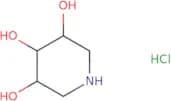
Discontinued productrac-(3R,4S,5S)-Piperidine-3,4,5-triol hydrochloride
CAS:<p>Versatile small molecule scaffold</p>Formula:C5H12ClNO3Purity:Min. 95%Molecular weight:169.61 g/molRef: 3D-BHA59775
Discontinued productMethyl 2-{bis[(tert-butoxy)carbonyl]amino}prop-2-enoate
CAS:<p>Versatile small molecule scaffold</p>Formula:C14H23NO6Purity:Min. 95%Molecular weight:301.34 g/mol4-[4-(Propan-2-yl)piperazin-1-yl]butanoic acid dihydrochloride
CAS:<p>Versatile small molecule scaffold</p>Formula:C11H24Cl2N2O2Purity:Min. 95%Molecular weight:287.22 g/molRef: 3D-JBD33718
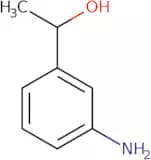
Discontinued product(1R)-1-(3-Aminophenyl)ethan-1-ol
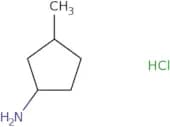
CAS:<p>Versatile small molecule scaffold</p>Formula:C8H11NOPurity:Min. 95%Molecular weight:137.18 g/mol3-Methylcyclopentan-1-amine hydrochloride
CAS:<p>Versatile small molecule scaffold</p>Formula:C6H14ClNPurity:Min. 95%Molecular weight:135.63 g/molRef: 3D-BJA54899
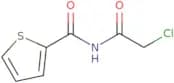
Discontinued productN-(2-Chloroacetyl)thiophene-2-carboxamide
CAS:<p>Versatile small molecule scaffold</p>Formula:C7H6ClNO2SPurity:Min. 95%Molecular weight:203.65 g/molMethyl 7-fluoro-3,4-dihydro-2H-1,4-benzoxazine-2-carboxylate hydrochloride
CAS:<p>Versatile small molecule scaffold</p>Formula:C10H11ClFNO3Purity:Min. 95%Molecular weight:247.65 g/molRef: 3D-JBD32014
Discontinued product1-{[(9H-Fluoren-9-ylmethoxy)carbonyl]amino}-4-phenylcyclohexane-1-carboxylic acid
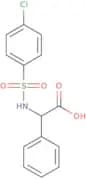
CAS:<p>Versatile small molecule scaffold</p>Formula:C28H27NO4Purity:Min. 95%Molecular weight:441.5 g/mol2-(4-Chlorobenzenesulfonamido)-2-phenylacetic acid
CAS:<p>Versatile small molecule scaffold</p>Formula:C14H12ClNO4SPurity:Min. 95%Molecular weight:325.8 g/mol2-Chloro-N-[4-(1-pyrrolidinyl)phenyl]acetamide
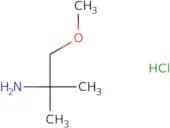
CAS:<p>Versatile small molecule scaffold</p>Formula:C12H15ClN2OPurity:Min. 95%Molecular weight:238.72 g/mol1-Methoxy-2-methylpropan-2-amine hydrochloride
CAS:<p>Versatile small molecule scaffold</p>Formula:C5H14ClNOPurity:Min. 95%Molecular weight:139.62 g/molRef: 3D-BKA66096
Discontinued product{Bicyclo[2.2.2]oct-5-en-2-yl}methanamine hydrochloride
CAS:<p>Versatile small molecule scaffold</p>Formula:C9H16ClNPurity:Min. 95%Molecular weight:173.68 g/molRef: 3D-JBD31357
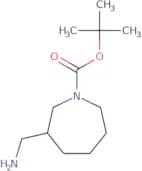
Discontinued producttert-butyl 3-(aminomethyl)azepane-1-carboxylate
CAS:<p>Versatile small molecule scaffold</p>Formula:C12H24N2O2Purity:Min. 95%Molecular weight:228.3 g/molRef: 3D-BKB14747
Discontinued product1-Hydroxypropan-2-yl 2-(3-benzoylphenyl)propanoate
CAS:<p>Versatile small molecule scaffold</p>Formula:C19H20O4Purity:Min. 95%Molecular weight:312.4 g/molRef: 3D-BKD16179
Discontinued productMethyl 1-(chlorosulfonyl)imidazo[1,5-a]pyridine-6-carboxylate
CAS:Versatile small molecule scaffoldFormula:C9H7ClN2O4SPurity:Min. 95%Molecular weight:274.68 g/molRef: 3D-BKD16195
Discontinued product2-Amino-1-(5-hydroxypyridin-3-yl)ethan-1-one dihydrochloride
CAS:<p>Versatile small molecule scaffold</p>Formula:C7H10Cl2N2O2Purity:Min. 95%Molecular weight:225.1 g/molRef: 3D-BKD16320
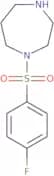
Discontinued product1-(4-Fluorobenzenesulfonyl)-1,4-diazepane
CAS:<p>Versatile small molecule scaffold</p>Formula:C11H15FN2O2SPurity:Min. 95%Molecular weight:258.31 g/molN'-Hydroxy-4-(morpholin-4-ylmethyl)benzene-1-carboximidamide
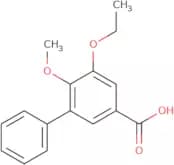
CAS:<p>Versatile small molecule scaffold</p>Formula:C12H17N3O2Purity:Min. 95%Molecular weight:235.28 g/mol3-Ethoxy-4-methoxy-5-phenylbenzoic acid
CAS:<p>Versatile small molecule scaffold</p>Formula:C16H16O4Purity:Min. 95%Molecular weight:272.29 g/molRef: 3D-BMB20081
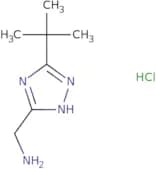
Discontinued product(5-tert-Butyl-1H-1,2,4-triazol-3-yl)methanamine hydrochloride
CAS:<p>Versatile small molecule scaffold</p>Formula:C7H15ClN4Purity:Min. 95%Molecular weight:190.67 g/molRef: 3D-JBD31251
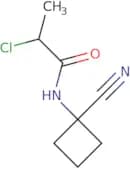
Discontinued product2-Chloro-N-(1-cyanocyclobutyl)propanamide
CAS:<p>Versatile small molecule scaffold</p>Formula:C8H11ClN2OPurity:Min. 95%Molecular weight:186.64 g/molRef: 3D-BMB21268
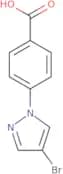
Discontinued product4-(4-bromo-1H-pyrazol-1-yl)benzoic acid
CAS:<p>Versatile small molecule scaffold</p>Formula:C10H7BrN2O2Purity:Min. 95%Molecular weight:267.1 g/molRef: 3D-BMB21284
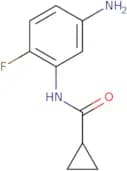
Discontinued productN-(5-Amino-2-fluorophenyl)cyclopropanecarboxamide
CAS:<p>Versatile small molecule scaffold</p>Formula:C10H11FN2OPurity:Min. 95%Molecular weight:194.21 g/mol6-Bromo-2-[2-(pyridin-3-yl)ethenyl]quinoline-4-carboxylic acid
CAS:<p>Versatile small molecule scaffold</p>Formula:C17H11BrN2O2Purity:Min. 95%Molecular weight:355.2 g/molRef: 3D-BMB26032
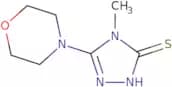
Discontinued product4-Methyl-5-(morpholin-4-yl)-4H-1,2,4-triazole-3-thiol
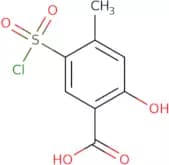
CAS:<p>Versatile small molecule scaffold</p>Formula:C7H12N4OSPurity:Min. 95%Molecular weight:200.26 g/mol5-(Chlorosulfonyl)-2-hydroxy-4-methylbenzoic acid
CAS:<p>Versatile small molecule scaffold</p>Formula:C8H7ClO5SPurity:Min. 95%Molecular weight:250.66 g/molRef: 3D-BMB27090
Discontinued product[3-(3,3,3-Trifluoropropoxy)pyridin-4-yl]methanamine
CAS:<p>Versatile small molecule scaffold</p>Formula:C9H11F3N2OPurity:Min. 95%Molecular weight:220.19 g/molRef: 3D-BMC39428
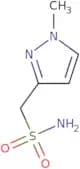
Discontinued product(1-Methyl-1H-pyrazol-3-yl)methanesulfonamide
CAS:<p>Versatile small molecule scaffold</p>Formula:C5H9N3O2SPurity:Min. 95%Molecular weight:175.21 g/molRef: 3D-BMC82830
Discontinued producttert-Butyl 4-methyl-4-(prop-2-en-1-yloxy)piperidine-1-carboxylate
CAS:<p>Versatile small molecule scaffold</p>Formula:C14H25NO3Purity:Min. 95%Molecular weight:255.4 g/molRef: 3D-BMC89648
Discontinued product3-[(2-Methyl-2,3-dihydro-1H-indol-1-yl)sulfonyl]benzoic acid
CAS:Controlled Product<p>3-[(2-Methyl-2,3-dihydro-1H-indol-1-yl)sulfonyl]benzoic acid is a synthetic sulfonamide that has been used as an inhibitor of the protein tyrosine phosphatase SHP2. In cell biology, it has been used as a research tool to study the cellular functions of proteins such as ion channels and receptors. 3-[(2-Methyl-2,3-dihydro-1H-indol-1-yl)sulfonyl]benzoic acid can be used in pharmacology to study the effects of ligands on cells or tissue. It is also known to activate certain receptors in the brain and central nervous system. This compound is highly pure with a CAS number of 326619-13-0, and it has an ionization constant (pKa) of 7.6 at pH 7.4.</p>Formula:C16H15NO4SPurity:Min. 95%Molecular weight:317.4 g/molRef: 3D-BNA61913
Discontinued product3-(4-Phenylpiperazin-1-yl)propanehydrazide
CAS:<p>Versatile small molecule scaffold</p>Formula:C13H20N4OPurity:Min. 95%Molecular weight:248.32 g/molRef: 3D-BNA91858
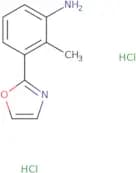
Discontinued product2-Methyl-3-(1,3-oxazol-2-yl)aniline dihydrochloride
CAS:<p>Versatile small molecule scaffold</p>Formula:C10H12Cl2N2OPurity:Min. 95%Molecular weight:247.12 g/molRef: 3D-JBD31004
Discontinued product1-(1-Benzothiophen-2-yl)-2-methoxyethan-1-one
CAS:<p>Versatile small molecule scaffold</p>Formula:C11H10O2SPurity:Min. 95%Molecular weight:206.3 g/molRef: 3D-BPC71122
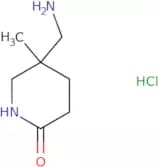
Discontinued product5-(Aminomethyl)-5-methylpiperidin-2-one hydrochloride
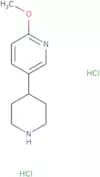
CAS:<p>Versatile small molecule scaffold</p>Formula:C7H15ClN2OPurity:Min. 95%Molecular weight:178.66 g/mol2-Methoxy-5-(piperidin-4-yl)pyridine dihydrochloride
CAS:<p>Versatile small molecule scaffold</p>Formula:C11H18Cl2N2OPurity:Min. 95%Molecular weight:265.18 g/molRef: 3D-JBD30495
Discontinued productrac-[(2R,3S)-1-Cyclopropyl-2-(1-methyl-1H-pyrazol-5-yl)piperidin-3-yl]methanamine
CAS:<p>Versatile small molecule scaffold</p>Formula:C13H22N4Purity:Min. 95%Molecular weight:234.3 g/molRef: 3D-JBD29468
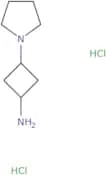
Discontinued productrac-(1S,3S)-3-(Pyrrolidin-1-yl)cyclobutan-1-amine dihydrochloride
CAS:<p>Versatile small molecule scaffold</p>Formula:C8H18Cl2N2Purity:Min. 95%Molecular weight:213.15 g/molRef: 3D-JBD28873
Discontinued product3-[3-(Trifluoromethoxy)phenyl]cyclobutan-1-amine hydrochloride
CAS:<p>Versatile small molecule scaffold</p>Formula:C11H13ClF3NOPurity:Min. 95%Molecular weight:267.67 g/molRef: 3D-JBD28849
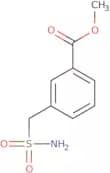
Discontinued productMethyl 3-(sulfamoylmethyl)benzoate
CAS:<p>Versatile small molecule scaffold</p>Formula:C9H11NO4SPurity:Min. 95%Molecular weight:229.26 g/molRef: 3D-BQB40412
Discontinued product2-[(Piperidin-4-yl)methyl]-1,3-thiazole-4-carboxylic acid dihydrochloride
CAS:<p>Versatile small molecule scaffold</p>Formula:C10H16Cl2N2O2SPurity:Min. 95%Molecular weight:299.2 g/molRef: 3D-YPD34383
Discontinued productSpiro[bicyclo[2.2.1]heptane-2,1'-cyclobutane]-3'-one
CAS:<p>Versatile small molecule scaffold</p>Formula:C10H14OPurity:Min. 95%Molecular weight:150.2 g/molRef: 3D-YPD28718
Discontinued productrac-(4aR,7aS)-1H,2H,4aH,5H,7H,7aH-Furo[3,4-b]pyridine hydrochloride
CAS:<p>Versatile small molecule scaffold</p>Formula:C7H12ClNOPurity:Min. 95%Molecular weight:161.6 g/molRef: 3D-YPD28574
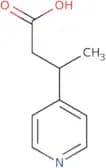
Discontinued product3-(Pyridin-4-yl)butanoic acid
CAS:<p>Versatile small molecule scaffold</p>Formula:C9H11NO2Purity:Min. 95%Molecular weight:165.19 g/molRef: 3D-YPA35633
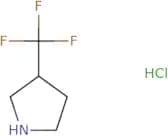
Discontinued product(3R)-3-(Trifluoromethyl)pyrrolidine hydrochloride
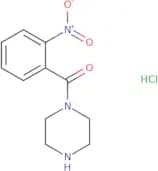
CAS:<p>Versatile small molecule scaffold</p>Formula:C5H9ClF3NPurity:Min. 95%Molecular weight:175.58 g/mol1-(2-Nitrobenzoyl)piperazine hydrochloride
CAS:<p>Versatile small molecule scaffold</p>Formula:C11H14ClN3O3Purity:Min. 95%Molecular weight:271.7 g/molRef: 3D-YMC05256
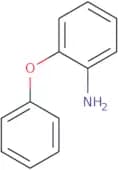
Discontinued product2-Phenoxyaniline
CAS:<p>2-Phenoxyaniline is a nitro compound that can be converted to the corresponding palladium complexes. It is an inhibitor of the acylation reaction, which is a type of chemical reaction in which an organic molecule reacts with an acid. The inhibition of this reaction has been shown to have an effect on heart disease, specifically by lowering cholesterol levels and reducing atherosclerosis. 2-Phenoxyaniline has also been shown to inhibit the activation energy for electron transfer reactions, making it useful as a catalyst in analytical methods. 2-Phenoxyaniline also undergoes vibrational spectroscopy when exposed to liquid chromatography and other analytical methods.</p>Formula:C12H11NOPurity:Min. 95%Color and Shape:Brown PowderMolecular weight:185.22 g/mol2-Acetylbenzoic acid
CAS:<p>2-Acetylbenzoic acid is a functional molecule that contains an acetyl group. It can form hydrogen bonds with other molecules and has been shown to induce apoptosis in cells. The reaction products of 2-acetylbenzoic acid are malonic acid, acetylsalicylic acid, and 2-benzoylbenzoic acid. These three compounds are made by the addition of hydrogen or hydroxide to the molecule 2-acetylbenzoic acid. The molecule has two functional groups: a carbonyl group and an acetyl group. The chemical structure of this molecule can be seen in the figure below.<br>2-Acetylbenzoic Acid</p>Formula:C9H8O3Purity:Min. 95%Color and Shape:PowderMolecular weight:164.16 g/molRef: 3D-FA05086
Discontinued product3-Methylbenzo[b]thiophene-2-carboxylic acid
CAS:<p>3-Methylbenzo[b]thiophene-2-carboxylic acid (MBTCA) is a heterocyclic compound that is an intermediate in the synthesis of 3-methylthiophene-2-carboxylic acid, a precursor to other drugs. MBTCA is an aerobic, nonpolar compound that has shown antimicrobial activity against some bacteria and fungi. It also has been shown to have practicality as a biomolecular probe for methyl groups in organic solvents. MBTCA can be synthesized by nitration of benzene in the presence of sulfur and sulfoxides. This reaction produces nitrobenzene, which can then be oxidized by potassium permanganate or hydrogen peroxide to produce MBTCA. The most common isomer of MBTCA is 2-(3,5-dimethoxybenzylidene)tetrahydrofuran, with three methyl groups on the</p>Formula:C10H8O2SPurity:Min. 95%Molecular weight:192.23 g/moltert-Butyl 5-bromo-3,4-dihydro-2,7-naphthyridine-2(1H)-carboxylate
CAS:<p>Versatile small molecule scaffold</p>Formula:C13H17BrN2O2Purity:Min. 95%Molecular weight:313.19 g/mol4-(Methylamino)benzene-1-sulfonamide
CAS:<p>Versatile small molecule scaffold</p>Formula:C7H10N2O2SPurity:Min. 95%Molecular weight:186.23 g/mol3-(Methoxycarbonyl)pyridine-4-carboxylic acid
CAS:<p>Versatile small molecule scaffold</p>Formula:C8H7NO4Purity:Min. 95%Molecular weight:181.15 g/mol2-Bromo-3,3,3-trifluoro-1-propene
CAS:Controlled Product<p>2-Bromo-3,3,3-trifluoro-1-propene is a chemical compound that has been synthesized in an asymmetric reaction. The reactant is bromopropane and the product is 2,2,2-trifluoropropene. The methylene group on the propene molecule is activated by the nucleophilic attack of a fluoride ion from hydrogen fluoride to form a cavity with a highly strained bond. The kinetic study of this reaction revealed that the activation energy for the reaction is 42 kJ/mol. Palladium-catalyzed coupling reactions are catalyzed by palladium and require nonpolar solvents such as toluene or dichloromethane. This type of reaction has been shown to be exothermic with an isolated yield of 1%.</p>Formula:C3H2BrF3Purity:Min. 95%Color and Shape:Colorless PowderMolecular weight:174.95 g/mol3-[5-(Aminomethyl)-1-oxo-2,3-dihydro-1H-isoindol-2-yl]piperidine-2,6-dione hydrochloride
CAS:<p>Versatile small molecule scaffold</p>Formula:C14H16ClN3O3Purity:Min. 95%Molecular weight:309.75 g/mol(2S,3R)-2-((((9H-Fluoren-9-yl)methoxy)carbonyl)amino)-3-methoxybutanoic acid
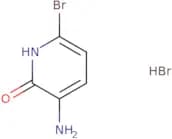
CAS:<p>Versatile small molecule scaffold</p>Formula:C20H21NO5Purity:Min. 95%Molecular weight:355.4 g/mol3-amino-6-bromopyridin-2-ol hydrobromide
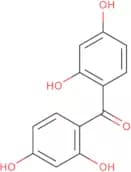
CAS:<p>Versatile small molecule scaffold</p>Formula:C5H6Br2N2OPurity:Min. 95%Molecular weight:269.9 g/mol2,2',4,4'-tetrahydroxybenzophenone
CAS:<p>2,2',4,4'-tetrahydroxybenzophenone is a hydroxylated benzophenone that has immunomodulatory effects. It binds to the receptor in the immune system and can cause an increase in cytokine production. 2,2',4,4'-tetrahydroxybenzophenone is cytotoxic and has significant toxicity in vitro. The molecule has been shown to disrupt mitochondrial membrane potential. This may be due to its ability to form hydrogen bonds with molecules on the mitochondrial membrane. 2,2',4,4'-tetrahydroxybenzophenone also modulates transcriptional regulation of genes involved in cell proliferation and apoptosis. The drug is detectable at low levels by mass spectrometry and is not known to have any toxicological effects.END>></p>Formula:C13H10O5Purity:Min. 95%Color and Shape:Green PowderMolecular weight:246.22 g/molRef: 3D-FT55663
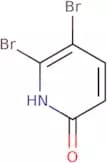
Discontinued product5,6-Dibromopyridin-2-ol
CAS:<p>Versatile small molecule scaffold</p>Formula:C5H3Br2NOPurity:Min. 95%Molecular weight:252.89 g/mol1-[3-(Dimethylamino)propyl]-1-(4-fluorophenyl)-1,3-dihydro-3-oxo-5-isobenzofurancarbonitrile
CAS:<p>Please enquire for more information about 1-[3-(Dimethylamino)propyl]-1-(4-fluorophenyl)-1,3-dihydro-3-oxo-5-isobenzofurancarbonitrile including the price, delivery time and more detailed product information at the technical inquiry form on this page</p>Formula:C20H19FN2O2Purity:Min. 95%Molecular weight:338.38 g/molRef: 3D-FD184085
Discontinued productH-Ser-Ala-Glu-Glu-Tyr-Glu-Tyr-Pro-Ser OH trifluoroacetate
CAS:<p>Please enquire for more information about H-Ser-Ala-Glu-Glu-Tyr-Glu-Tyr-Pro-Ser OH trifluoroacetate including the price, delivery time and more detailed product information at the technical inquiry form on this page</p>Formula:C47H63N9O20•(C2HF3O2)xPurity:Min. 95%Ref: 3D-FS183525
Discontinued productGivinostat hydrochloride
CAS:<p>Givinostat hydrochloride is a research chemical that has shown potential in various fields. It is a molybdenum-based compound that has been studied for its effects on dopamine release and hydrogen evolution. Givinostat hydrochloride has also been investigated as an osteoclast inhibitor, which may be beneficial in the treatment of bone-related disorders such as osteoporosis. Additionally, it has shown promise as a retinoid and calpain inhibitor, suggesting its potential use in dermatological conditions and neurodegenerative diseases. The compound contains fluorine atoms, making it suitable for imaging studies using fluorine MRI techniques. Givinostat hydrochloride has been tested on MDA-MB-231 cells and has shown inhibitory effects on their growth, indicating its potential as an anticancer agent.</p>Formula:C24H27N3O4·HClPurity:Min. 95%Molecular weight:457.95 g/mol


![Ethyl 1,4-dioxaspiro[4.5]dec-8-ylideneacetate](/_next/image/?url=https%3A%2Fstatic.cymitquimica.com%2Fproducts%2F3D%2Fthumb-webp%2FBCA65691.webp&w=3840&q=75)
![4-Chloro-3-methyl-[1,2]oxazolo[5,4-d]pyrimidine](/_next/image/?url=https%3A%2Fstatic.cymitquimica.com%2Fproducts%2F3D%2Fthumb-webp%2FBCA85060.webp&w=3840&q=75)

![1-[2-Amino-5-(propan-2-yl)phenyl]ethan-1-one](/_next/image/?url=https%3A%2Fstatic.cymitquimica.com%2Fproducts%2F3D%2Fthumb-webp%2FBFA27290.webp&w=3840&q=75)
![(7S)-5-Oxo-5H,6H,7H,8H-imidazo[1,5-c]pyrimidine-7-carboxylic acid hydrochloride](/_next/image/?url=https%3A%2Fstatic.cymitquimica.com%2Fproducts%2F3D%2Fthumb-webp%2FBGA11205.webp&w=3840&q=75)
![Methyl 2-{bis[(tert-butoxy)carbonyl]amino}prop-2-enoate](/_next/image/?url=https%3A%2Fstatic.cymitquimica.com%2Fproducts%2F3D%2Fthumb-webp%2FBIA33862.webp&w=3840&q=75)
![4-[4-(Propan-2-yl)piperazin-1-yl]butanoic acid dihydrochloride](/_next/image/?url=https%3A%2Fstatic.cymitquimica.com%2Fproducts%2F3D%2Fthumb-webp%2FJBD33718.webp&w=3840&q=75)

![1-{[(9H-Fluoren-9-ylmethoxy)carbonyl]amino}-4-phenylcyclohexane-1-carboxylic acid](/_next/image/?url=https%3A%2Fstatic.cymitquimica.com%2Fproducts%2F3D%2Fthumb-webp%2FBJB30775.webp&w=3840&q=75)
![2-Chloro-N-[4-(1-pyrrolidinyl)phenyl]acetamide](/_next/image/?url=https%3A%2Fstatic.cymitquimica.com%2Fproducts%2F3D%2Fthumb-webp%2FBKA09715.webp&w=3840&q=75)
![{Bicyclo[2.2.2]oct-5-en-2-yl}methanamine hydrochloride](/_next/image/?url=https%3A%2Fstatic.cymitquimica.com%2Fproducts%2F3D%2Fthumb-webp%2FJBD31357.webp&w=3840&q=75)
![Methyl 1-(chlorosulfonyl)imidazo[1,5-a]pyridine-6-carboxylate](/_next/image/?url=https%3A%2Fstatic.cymitquimica.com%2Fproducts%2F3D%2Fthumb-webp%2FBKD16195.webp&w=3840&q=75)

![6-Bromo-2-[2-(pyridin-3-yl)ethenyl]quinoline-4-carboxylic acid](/_next/image/?url=https%3A%2Fstatic.cymitquimica.com%2Fproducts%2F3D%2Fthumb-webp%2FBMB26032.webp&w=3840&q=75)
![[3-(3,3,3-Trifluoropropoxy)pyridin-4-yl]methanamine](/_next/image/?url=https%3A%2Fstatic.cymitquimica.com%2Fproducts%2F3D%2Fthumb-webp%2FBMC39428.webp&w=3840&q=75)
![3-[(2-Methyl-2,3-dihydro-1H-indol-1-yl)sulfonyl]benzoic acid](/_next/image/?url=https%3A%2Fstatic.cymitquimica.com%2Fproducts%2F3D%2Fthumb-webp%2FBNA61913.webp&w=3840&q=75)

![rac-[(2R,3S)-1-Cyclopropyl-2-(1-methyl-1H-pyrazol-5-yl)piperidin-3-yl]methanamine](/_next/image/?url=https%3A%2Fstatic.cymitquimica.com%2Fproducts%2F3D%2Fthumb-webp%2FJBD29468.webp&w=3840&q=75)
![3-[3-(Trifluoromethoxy)phenyl]cyclobutan-1-amine hydrochloride](/_next/image/?url=https%3A%2Fstatic.cymitquimica.com%2Fproducts%2F3D%2Fthumb-webp%2FJBD28849.webp&w=3840&q=75)
![2-[(Piperidin-4-yl)methyl]-1,3-thiazole-4-carboxylic acid dihydrochloride](/_next/image/?url=https%3A%2Fstatic.cymitquimica.com%2Fproducts%2F3D%2Fthumb-webp%2FYPD34383.webp&w=3840&q=75)
![Spiro[bicyclo[2.2.1]heptane-2,1'-cyclobutane]-3'-one](/_next/image/?url=https%3A%2Fstatic.cymitquimica.com%2Fproducts%2F3D%2Fthumb-webp%2FYPD28718.webp&w=3840&q=75)
![rac-(4aR,7aS)-1H,2H,4aH,5H,7H,7aH-Furo[3,4-b]pyridine hydrochloride](/_next/image/?url=https%3A%2Fstatic.cymitquimica.com%2Fproducts%2F3D%2Fthumb-webp%2FYPD28574.webp&w=3840&q=75)

![3-Methylbenzo[b]thiophene-2-carboxylic acid](/_next/image/?url=https%3A%2Fstatic.cymitquimica.com%2Fproducts%2F3D%2Fthumb-webp%2FDAA13378.webp&w=3840&q=75)


![3-[5-(Aminomethyl)-1-oxo-2,3-dihydro-1H-isoindol-2-yl]piperidine-2,6-dione hydrochloride](/_next/image/?url=https%3A%2Fstatic.cymitquimica.com%2Fproducts%2F3D%2Fthumb-webp%2FIWB26469.webp&w=3840&q=75)

![1-[3-(Dimethylamino)propyl]-1-(4-fluorophenyl)-1,3-dihydro-3-oxo-5-isobenzofurancarbonitrile](/_next/image/?url=https%3A%2Fstatic.cymitquimica.com%2Fproducts%2F3D%2Fthumb-webp%2FFD184085.webp&w=3840&q=75)