


Building Blocks
This section contains fundamental products for the synthesis of organic and biological compounds. Building blocks are the essential starting materials used to construct complex molecules through various chemical reactions. They play a critical role in drug discovery, material science, and chemical research. At CymitQuimica, we offer a diverse range of high-quality building blocks to support your innovative research and industrial projects, ensuring you have the essential components for successful synthesis.
Subcategories of "Building Blocks"
- Boronic Acids & Boronic Acid Derivatives(5,756 products)
- Chiral Building Blocks(1,242 products)
- Hydrocarbon Building Blocks(6,095 products)
- Organic Building Blocks(61,055 products)
Found 199650 products of "Building Blocks"
Sort by
Purity (%)
0
100
|
0
|
50
|
90
|
95
|
100
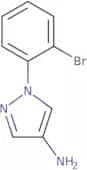
1-(2-Bromophenyl)-1H-pyrazol-4-amine
CAS:<p>Versatile small molecule scaffold</p>Formula:C9H8BrN3Purity:Min. 95%Molecular weight:238.08 g/molRef: 3D-DWB03945
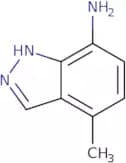
Discontinued product4-Methyl-1H-indazol-7-amine
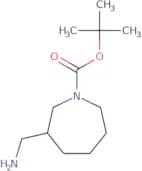
CAS:<p>Versatile small molecule scaffold</p>Formula:C8H9N3Purity:Min. 95%Molecular weight:147.18 g/moltert-butyl 3-(aminomethyl)azepane-1-carboxylate
CAS:<p>Versatile small molecule scaffold</p>Formula:C12H24N2O2Purity:Min. 95%Molecular weight:228.3 g/molRef: 3D-BKB14747
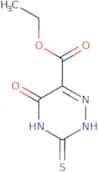
Discontinued productEthyl 5-oxo-3-thioxo-2H-1,2,4-triazine-6-carboxylate
CAS:<p>Ethyl 5-oxo-3-thioxo-2H-1,2,4-triazine-6-carboxylate is an acid ethyl ester of the triazine compound ethyl 3,5,6,7,8,-tetrahydro-2H-[1]benzothiopyran-2,4(3H)-dione. It has been shown to inhibit bacterial growth by binding to the enzyme ribonucleotide reductase.</p>Formula:C6H7N3O3SPurity:Min. 95%Molecular weight:201.21 g/mol2-[2-(Furan-2-yl)-2-oxoethylidene]-3-methyl-1,3-thiazolidin-4-one
CAS:<p>Versatile small molecule scaffold</p>Formula:C10H9NO3SPurity:Min. 95%Molecular weight:223.25 g/molRef: 3D-AQB93221
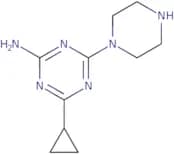
Discontinued product4-Cyclopropyl-6-(piperazin-1-yl)-1,3,5-triazin-2-amine
CAS:<p>Versatile small molecule scaffold</p>Formula:C10H16N6Purity:Min. 95%Molecular weight:220.27 g/molRef: 3D-AAD33568
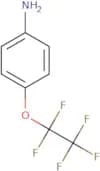
Discontinued product4-(Perfluoroethoxy)aniline
CAS:<p>Versatile small molecule scaffold</p>Formula:C8H6F5NOPurity:Min. 95%Molecular weight:227.13 g/molRef: 3D-AAA71785
Discontinued product5H,6H,7H-Pyrrolo[3,4-b]pyridine-2-carboxylic acid hydrochloride
CAS:<p>Versatile small molecule scaffold</p>Formula:C8H9ClN2O2Purity:Min. 95%Molecular weight:200.62 g/molRef: 3D-FDD55460
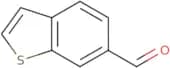
Discontinued product1-Benzothiophene-6-carboxaldehyde
CAS:<p>1-Benzothiophene-6-carboxaldehyde (BTA) is a heterocyclic compound that contains sulfur. It is a colorless liquid with a sweet odor. BTA is used in the manufacture of pesticides, pharmaceuticals, and other organic chemicals. It is also used as a building block in the synthesis of other compounds and has been shown to have anti-inflammatory properties.</p>Formula:C9H6OSPurity:Min. 95%Molecular weight:162.21 g/molRef: 3D-GAA38680
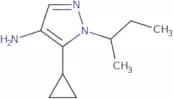
Discontinued product1-(Butan-2-yl)-5-cyclopropyl-1H-pyrazol-4-amine
CAS:<p>Versatile small molecule scaffold</p>Formula:C10H17N3Purity:Min. 95%Molecular weight:179.26 g/molRef: 3D-GQB45453
Discontinued productMethyl 2-[4-(2-aminoethyl)phenoxy]acetate hydrochloride
CAS:<p>Versatile small molecule scaffold</p>Formula:C11H16ClNO3Purity:Min. 95%Molecular weight:245.7 g/molQuinoline-5-carbonitrile
CAS:<p>Quinoline-5-carbonitrile is a cyanide compound that can be used in the synthesis of heterocyclic compounds. The reaction between quinoline and 5-cyanovaleric acid produces 6-nitroquinoline, which is then converted to dimethyl sulfoxide by alcoholysis. This reaction product can then be used to synthesize an amide or nucleophile. Quinoline-5-carbonitrile reacts with potassium in the presence of bifunctional hydrazide to produce a cyanide ion, which can be hydrolyzed by an acid to release hydrogen cyanide gas. This experiment has been shown as a model for reactions involving cyano compounds.</p>Formula:C10H6N2Purity:Min. 95%Molecular weight:154.17 g/molRef: 3D-JCA55102
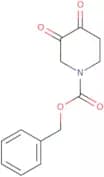
Discontinued productBenzyl 3,4-dioxopiperidine-1-carboxylate
CAS:<p>Versatile small molecule scaffold</p>Formula:C13H13NO4Purity:Min. 95%Molecular weight:247.25 g/molRef: 3D-JHD94774
Discontinued product[(1-Amino-2-methylpropan-2-yl)oxy]benzene hydrochloride
CAS:<p>Versatile small molecule scaffold</p>Formula:C10H16ClNOPurity:Min. 95%Molecular weight:201.69 g/molRef: 3D-LCC31526
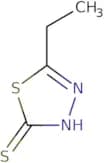
Discontinued product5-Ethyl-1,3,4-thiadiazole-2-thiol
CAS:<p>Versatile small molecule scaffold</p>Formula:C4H6N2S2Purity:Min. 95%Molecular weight:146.2 g/molRef: 3D-MBA66351
Discontinued product3-Methoxyazetidine-3-carboxamide hydrochloride
CAS:Versatile small molecule scaffoldFormula:C5H11ClN2O2Purity:Min. 95%Molecular weight:166.6 g/molRef: 3D-MRD33097
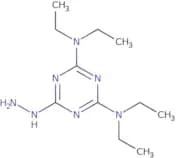
Discontinued productN2,N2,N4,N4-Tetraethyl-6-hydrazinylidene-3,6-dihydro-1,3,5-triazine-2,4-diamine
CAS:<p>Tetrodotoxin is a potent neurotoxin that blocks the transfer of nerve impulses. It is used as a pharmacological treatment for diseases of the urinary tract such as bladder and urethral spasms, bladder dysfunction, and urinary retention. Tetrodotoxin can also be used for the treatment of other conditions that affect the target tissue such as stenosis or cavity. This drug has been shown to be beneficial in autoimmune diseases, inflammatory diseases, and infections. Tetrodotoxin is implanted into the body through devices such as catheters or balloons to treat these conditions. The drug has anticholinergic properties which may cause side effects like dry mouth, blurred vision, difficulty urinating, and dizziness.</p>Formula:C11H23N7Purity:Min. 95%Molecular weight:253.35 g/molRef: 3D-NAA95736
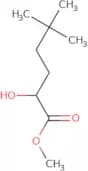
Discontinued productMethyl 2-hydroxy-5,5-dimethylhexanoate
CAS:<p>Versatile small molecule scaffold</p>Formula:C9H18O3Purity:Min. 95%Molecular weight:174.24 g/molRef: 3D-NJC68939
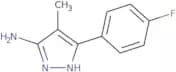
Discontinued product5-(4-Fluoro-phenyl)-4-methyl-2H-pyrazol-3-ylamine
CAS:<p>Versatile small molecule scaffold</p>Formula:C10H10FN3Purity:Min. 95%Molecular weight:191.2 g/molRef: 3D-TTB06047
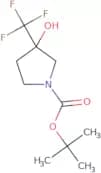
Discontinued producttert-Butyl 3-hydroxy-3-(trifluoromethyl)pyrrolidine-1-carboxylate
CAS:<p>Versatile small molecule scaffold</p>Formula:C10H16F3NO3Purity:Min. 95%Molecular weight:255.23 g/mol1-(4H,6H,7H-Pyrano[4,3-d][1,3]thiazol-2-yl)ethan-1-ol
CAS:<p>Versatile small molecule scaffold</p>Formula:C8H11NO2SPurity:Min. 95%Molecular weight:185.25 g/molRef: 3D-UDC36735
Discontinued productrac-(1R,5S,6R)-3-Benzyl-3-azabicyclo[3.1.0]hexan-6-amine dihydrochloride
CAS:<p>Versatile small molecule scaffold</p>Formula:C12H18Cl2N2Purity:Min. 95%Molecular weight:261.19 g/molRef: 3D-DJD39547
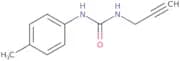
Discontinued product1-(4-Methylphenyl)-3-(prop-2-yn-1-yl)urea
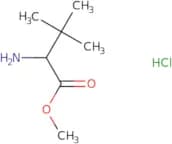
CAS:<p>1-(4-Methylphenyl)-3-(prop-2-yn-1-yl)urea is a fluorescent derivative that can be detected with certain techniques. It has been used to detect phosphatases in cervical cancer cells and tumor cells. This compound is a ligand for the surface antigen of placental alkaline phosphatase (PLAP). It can also bind to other organic ligands, such as recombinant human erythropoietin (EPO), which may be useful for redirecting the action of this protein. 1-(4-Methylphenyl)-3-(prop-2-yn-1-yl)urea is an organic bispecific molecule that binds to two receptors, one on tumor cells and one on normal cells. This binding leads to cell death by apoptosis through the release of cytochrome c from mitochondria.</p>Formula:C11H12N2OPurity:Min. 95%Molecular weight:188.23 g/molMethyl 2-amino-3,3-dimethylbutanoate hydrochloride
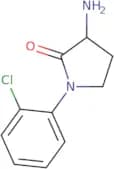
CAS:<p>Versatile small molecule scaffold</p>Formula:C7H16ClNO2Purity:Min. 95%Molecular weight:181.66 g/mol3-Amino-1-(2-chlorophenyl)pyrrolidin-2-one
CAS:<p>Versatile small molecule scaffold</p>Formula:C10H11ClN2OPurity:Min. 95%Molecular weight:210.66 g/molRef: 3D-AAC28734
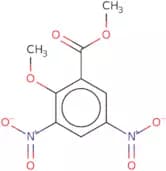
Discontinued productMethyl 2-methoxy-3,5-dinitrobenzoate
CAS:<p>Versatile small molecule scaffold</p>Formula:C9H8N2O7Purity:Min. 95%Molecular weight:256.2 g/mol[1-(1H-Pyrazole-4-sulfonyl)piperidin-3-yl]methanamine
CAS:<p>Versatile small molecule scaffold</p>Formula:C9H16N4O2SPurity:Min. 95%Molecular weight:244.32 g/molRef: 3D-XZB14507
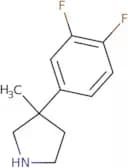
Discontinued product3-(3,4-Difluorophenyl)-3-methylpyrrolidine
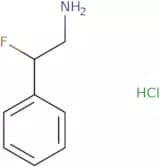
CAS:<p>Versatile small molecule scaffold</p>Formula:C11H13F2NPurity:Min. 95%Molecular weight:197.22 g/mol(2S)-2-Fluoro-2-phenylethan-1-amine hydrochloride
CAS:<p>Versatile small molecule scaffold</p>Formula:C8H11ClFNPurity:Min. 95%Molecular weight:175.63 g/molRef: 3D-XZB16372
Discontinued product2-(4,5-Dichloro-2-nitrophenyl)-4,4,5,5-tetramethyl-1,3,2-dioxaborolane
CAS:<p>Versatile small molecule scaffold</p>Formula:C12H14BCl2NO4Purity:Min. 95%Molecular weight:317.96 g/molRef: 3D-CVD60911
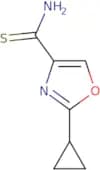
Discontinued product2-Cyclopropyl-1,3-oxazole-4-carbothioamide
CAS:<p>Versatile small molecule scaffold</p>Formula:C7H8N2OSPurity:Min. 95%Molecular weight:168.22 g/molRef: 3D-BKD17844
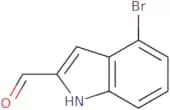
Discontinued product4-bromo-1H-indole-2-carbaldehyde
CAS:<p>Versatile small molecule scaffold</p>Formula:C9H6BrNOPurity:Min. 95%Molecular weight:224.1 g/molrac-tert-Butyl N-[(3R,4S)-4-(4-fluorophenyl)pyrrolidin-3-yl]carbamate
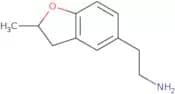
CAS:<p>Versatile small molecule scaffold</p>Formula:C15H21FN2O2Purity:Min. 95%Molecular weight:280.34 g/mol2-(2-Methyl-2,3-dihydro-1-benzofuran-5-yl)ethan-1-amine
CAS:Controlled Product<p>Versatile small molecule scaffold</p>Formula:C11H15NOPurity:Min. 95%Molecular weight:177.24 g/mol2-Ethoxycyclopentan-1-one
CAS:<p>Versatile small molecule scaffold</p>Formula:C7H12O2Purity:Min. 95%Molecular weight:128.17 g/molRef: 3D-ZAA06581
Discontinued product7-Bromopyrazolo[1,5-a]pyrimidine
CAS:<p>Versatile small molecule scaffold</p>Formula:C6H4BrN3Purity:Min. 95%Molecular weight:198.02 g/molRef: 3D-JWB98304
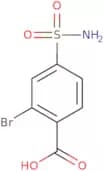
Discontinued product2-Bromo-4-sulfamoylbenzoic acid
CAS:<p>Versatile small molecule scaffold</p>Formula:C7H6BrNO4SPurity:Min. 95%Molecular weight:280.1 g/molRef: 3D-JGA73367
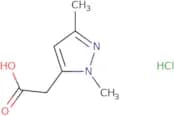
Discontinued product2-(1,3-Dimethyl-1H-pyrazol-5-yl)acetic acid hydrochloride
CAS:<p>Versatile small molecule scaffold</p>Formula:C7H11ClN2O2Purity:Min. 95%Molecular weight:190.6 g/mol[6-(Pyridin-2-yl)pyridin-3-yl]methanol
CAS:<p>Versatile small molecule scaffold</p>Formula:C11H10N2OPurity:Min. 95%Molecular weight:186.21 g/molRef: 3D-WFA58187
Discontinued product7-Chloro-5-fluoro-1,3-benzoxazole-2-thiol
CAS:<p>Versatile small molecule scaffold</p>Formula:C7H3ClFNOSPurity:Min. 95%Molecular weight:203.62 g/molN-[(5-Methyl-2-thienyl)methyl]cyclopropanamine hydrochloride
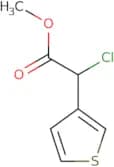
CAS:<p>Versatile small molecule scaffold</p>Formula:C9H14ClNSPurity:Min. 95%Molecular weight:203.73 g/molMethyl 2-chloro-2-(thiophen-3-yl)acetate
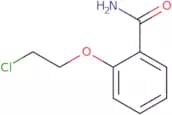
CAS:<p>Versatile small molecule scaffold</p>Formula:C7H7ClO2SPurity:Min. 95%Molecular weight:190.65 g/mol2-(2-Chloroethoxy)benzamide
CAS:<p>Versatile small molecule scaffold</p>Formula:C9H10ClNO2Purity:Min. 95%Molecular weight:199.63 g/molRef: 3D-EBA57913
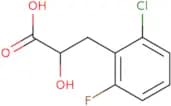
Discontinued product3-(2-Chloro-6-fluorophenyl)-2-hydroxypropanoic acid
CAS:<p>Versatile small molecule scaffold</p>Formula:C9H8ClFO3Purity:Min. 95%Molecular weight:218.61 g/molRef: 3D-GXB56152
Discontinued productThieno[2,3-b]pyridine-5-carbonitrile
CAS:<p>Thienopyridine analogs are a class of chemical compounds that function as agonists of the receptor α. These compounds have been shown to inhibit fatty acid oxidation and ATP production in rat liver cells, which may be due to their ability to activate AMP-activated protein kinase (AMPK). Thienopyridine analogs are being investigated for use as anti-inflammatory agents and cancer treatments.</p>Formula:C8H4N2SPurity:Min. 95%Molecular weight:160.2 g/molRef: 3D-WAA34431
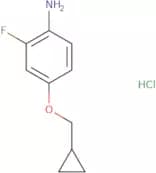
Discontinued product4-(Cyclopropylmethoxy)-2-fluoroaniline hydrochloride
CAS:<p>Versatile small molecule scaffold</p>Formula:C10H13ClFNOPurity:Min. 95%Molecular weight:217.67 g/mol(2R,5R)-5-Phenylpyrrolidine-2-carboxamide hydrochloride
CAS:<p>Versatile small molecule scaffold</p>Formula:C11H15ClN2OPurity:Min. 95%Molecular weight:226.7 g/molRef: 3D-TYC44959
Discontinued product4-(1-Naphthyl)piperidine hydrochloride
CAS:<p>Versatile small molecule scaffold</p>Formula:C15H18ClNPurity:Min. 95%Molecular weight:247.76 g/mol2-Bromo-3,3,3-trifluoro-1-propene
CAS:Controlled Product<p>2-Bromo-3,3,3-trifluoro-1-propene is a chemical compound that has been synthesized in an asymmetric reaction. The reactant is bromopropane and the product is 2,2,2-trifluoropropene. The methylene group on the propene molecule is activated by the nucleophilic attack of a fluoride ion from hydrogen fluoride to form a cavity with a highly strained bond. The kinetic study of this reaction revealed that the activation energy for the reaction is 42 kJ/mol. Palladium-catalyzed coupling reactions are catalyzed by palladium and require nonpolar solvents such as toluene or dichloromethane. This type of reaction has been shown to be exothermic with an isolated yield of 1%.</p>Formula:C3H2BrF3Purity:Min. 95%Color and Shape:Colorless PowderMolecular weight:174.95 g/mol3-Boc-3-azabicyclo[3.2.1]octan-8-amine
CAS:<p>Versatile small molecule scaffold</p>Formula:C12H22N2O2Purity:Min. 95%Molecular weight:226.32 g/mol

![2-[2-(Furan-2-yl)-2-oxoethylidene]-3-methyl-1,3-thiazolidin-4-one](/_next/image/?url=https%3A%2Fstatic.cymitquimica.com%2Fproducts%2F3D%2Fthumb-webp%2FAQB93221.webp&w=3840&q=75)
![5H,6H,7H-Pyrrolo[3,4-b]pyridine-2-carboxylic acid hydrochloride](/_next/image/?url=https%3A%2Fstatic.cymitquimica.com%2Fproducts%2F3D%2Fthumb-webp%2FFDD55460.webp&w=3840&q=75)
![Methyl 2-[4-(2-aminoethyl)phenoxy]acetate hydrochloride](/_next/image/?url=https%3A%2Fstatic.cymitquimica.com%2Fproducts%2F3D%2Fthumb-webp%2FHFA22482.webp&w=3840&q=75)
![[(1-Amino-2-methylpropan-2-yl)oxy]benzene hydrochloride](/_next/image/?url=https%3A%2Fstatic.cymitquimica.com%2Fproducts%2F3D%2Fthumb-webp%2FLCC31526.webp&w=3840&q=75)
![1-(4H,6H,7H-Pyrano[4,3-d][1,3]thiazol-2-yl)ethan-1-ol](/_next/image/?url=https%3A%2Fstatic.cymitquimica.com%2Fproducts%2F3D%2Fthumb-webp%2FUDC36735.webp&w=3840&q=75)
![rac-(1R,5S,6R)-3-Benzyl-3-azabicyclo[3.1.0]hexan-6-amine dihydrochloride](/_next/image/?url=https%3A%2Fstatic.cymitquimica.com%2Fproducts%2F3D%2Fthumb-webp%2FDJD39547.webp&w=3840&q=75)
![[1-(1H-Pyrazole-4-sulfonyl)piperidin-3-yl]methanamine](/_next/image/?url=https%3A%2Fstatic.cymitquimica.com%2Fproducts%2F3D%2Fthumb-webp%2FXZB14507.webp&w=3840&q=75)
![rac-tert-Butyl N-[(3R,4S)-4-(4-fluorophenyl)pyrrolidin-3-yl]carbamate](/_next/image/?url=https%3A%2Fstatic.cymitquimica.com%2Fproducts%2F3D%2Fthumb-webp%2FDQC54964.webp&w=3840&q=75)
![7-Bromopyrazolo[1,5-a]pyrimidine](/_next/image/?url=https%3A%2Fstatic.cymitquimica.com%2Fproducts%2F3D%2Fthumb-webp%2FJWB98304.webp&w=3840&q=75)
![[6-(Pyridin-2-yl)pyridin-3-yl]methanol](/_next/image/?url=https%3A%2Fstatic.cymitquimica.com%2Fproducts%2F3D%2Fthumb-webp%2FWFA58187.webp&w=3840&q=75)
![N-[(5-Methyl-2-thienyl)methyl]cyclopropanamine hydrochloride](/_next/image/?url=https%3A%2Fstatic.cymitquimica.com%2Fproducts%2F3D%2Fthumb-webp%2FASB21404.webp&w=3840&q=75)
![Thieno[2,3-b]pyridine-5-carbonitrile](/_next/image/?url=https%3A%2Fstatic.cymitquimica.com%2Fproducts%2F3D%2Fthumb-webp%2FWAA34431.webp&w=3840&q=75)


![3-Boc-3-azabicyclo[3.2.1]octan-8-amine](/_next/image/?url=https%3A%2Fstatic.cymitquimica.com%2Fproducts%2F3D%2Fthumb-webp%2FFDC76351.webp&w=3840&q=75)