


Building Blocks
This section contains fundamental products for the synthesis of organic and biological compounds. Building blocks are the essential starting materials used to construct complex molecules through various chemical reactions. They play a critical role in drug discovery, material science, and chemical research. At CymitQuimica, we offer a diverse range of high-quality building blocks to support your innovative research and industrial projects, ensuring you have the essential components for successful synthesis.
Subcategories of "Building Blocks"
- Boronic Acids & Boronic Acid Derivatives(5,778 products)
- Chiral Building Blocks(1,243 products)
- Hydrocarbon Building Blocks(6,097 products)
- Organic Building Blocks(61,052 products)
Found 201390 products of "Building Blocks"
Sort by
Purity (%)
0
100
|
0
|
50
|
90
|
95
|
100
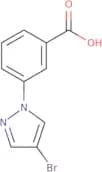
3-(4-bromo-1H-pyrazol-1-yl)benzoic acid
CAS:<p>Versatile small molecule scaffold</p>Formula:C10H7BrN2O2Purity:Min. 95%Molecular weight:267.1 g/mol1-[(3-Methylphenyl)carbamoyl]piperidine-3-carboxylic acid
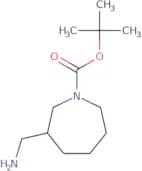
CAS:<p>Versatile small molecule scaffold</p>Formula:C14H18N2O3Purity:Min. 95%Molecular weight:262.3 g/moltert-butyl 3-(aminomethyl)azepane-1-carboxylate
CAS:<p>Versatile small molecule scaffold</p>Formula:C12H24N2O2Purity:Min. 95%Molecular weight:228.3 g/molRef: 3D-BKB14747
Discontinued product2-Chloro-N-[4-(1-pyrrolidinyl)phenyl]acetamide
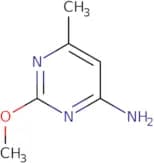
CAS:<p>Versatile small molecule scaffold</p>Formula:C12H15ClN2OPurity:Min. 95%Molecular weight:238.72 g/mol2-Methoxy-6-methylpyrimidine-4-yl-amine
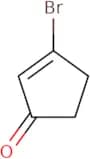
CAS:<p>Versatile small molecule scaffold</p>Formula:C6H9N3OPurity:Min. 95%Molecular weight:139.15 g/mol3-Bromocyclopent-2-en-1-one
CAS:<p>3-Bromocyclopent-2-en-1-one is an organic compound that belongs to the group of cycloalkenones. It is a methyl ester with a cyclopentane backbone and a ketone group at the end of the molecule. 3-Bromocyclopent-2-en-1-one is synthesized by a cross-coupling reaction between zinc chloride and 3,4,5,6,7,8,9,10,11 bromodecane. The product can be isolated in crystalline form as well as in yields up to 90%. The product has been shown to act as an analog for prostaglandin E2.</p>Formula:C5H5BrOPurity:Min. 95%Molecular weight:161 g/mol4-Chloro-3-methyl-[1,2]oxazolo[5,4-d]pyrimidine
CAS:<p>Versatile small molecule scaffold</p>Formula:C6H4ClN3OPurity:Min. 95%Molecular weight:169.57 g/molRef: 3D-BCA85060
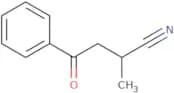
Discontinued product2-Methyl-4-oxo-4-phenylbutanenitrile
CAS:<p>2-Methyl-4-oxo-4-phenylbutanenitrile is a chemical compound that is used in the synthesis of pharmaceuticals. It can be obtained by reacting an organic base with an organic acid. This reaction takes place in a reaction vessel and requires an inorganic base and inorganic reagents. The process also requires ethyl cyanoacetate as the starting material and produces 2-methyl-4-oxo-4-phenylbutanenitrile as the product. The use of this chemical has been linked to environmental pollution, so it should never be released into the environment or come into contact with water.</p>Formula:C11H11NOPurity:Min. 95%Molecular weight:173.21 g/molRef: 3D-BCA76578
Discontinued productEthyl 1,4-dioxaspiro[4.5]dec-8-ylideneacetate
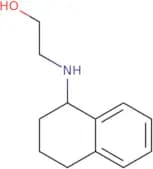
CAS:<p>Versatile small molecule scaffold</p>Formula:C12H18O4Purity:Min. 95%Molecular weight:226.27 g/mol2-((1,2,3,4-Tetrahydronaphthalen-1-yl)amino)ethanol
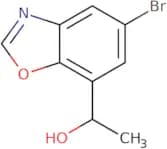
CAS:<p>Versatile small molecule scaffold</p>Formula:C12H17NOPurity:Min. 95%Molecular weight:191.27 g/mol1-(5-Bromo-1,3-benzoxazol-7-yl)ethan-1-ol
CAS:<p>Versatile small molecule scaffold</p>Formula:C9H8BrNO2Purity:Min. 95%Molecular weight:242.07 g/molRef: 3D-AZB87957
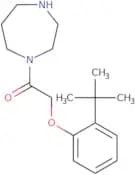
Discontinued product2-(2-tert-Butylphenoxy)-1-(1,4-diazepan-1-yl)ethan-1-one
CAS:<p>Versatile small molecule scaffold</p>Formula:C17H26N2O2Purity:Min. 95%Molecular weight:290.4 g/molRef: 3D-AZB72710
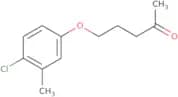
Discontinued product5-(4-Chloro-3-methylphenoxy)pentan-2-one
CAS:<p>Versatile small molecule scaffold</p>Formula:C12H15ClO2Purity:Min. 95%Molecular weight:226.7 g/molRef: 3D-AZB53774
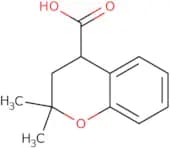
Discontinued product2,2-Dimethyl-3,4-dihydro-2H-1-benzopyran-4-carboxylic acid
CAS:<p>Versatile small molecule scaffold</p>Formula:C12H14O3Purity:Min. 95%Molecular weight:206.24 g/molRef: 3D-AZB50310
Discontinued product[1-(Pyrrolidin-2-ylmethyl)pyrrolidin-2-yl]methanol
CAS:<p>Versatile small molecule scaffold</p>Formula:C10H20N2OPurity:Min. 95%Molecular weight:184.28 g/molRef: 3D-AFC98706
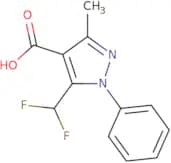
Discontinued product5-(Difluoromethyl)-3-methyl-1-phenyl-1H-pyrazole-4-carboxylic acid
CAS:<p>Versatile small molecule scaffold</p>Formula:C12H10F2N2O2Purity:Min. 95%Molecular weight:252.22 g/molRef: 3D-AFC47355
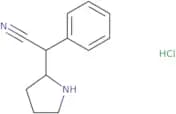
Discontinued product2-Phenyl-2-(pyrrolidin-2-yl)acetonitrile hydrochloride
CAS:<p>Versatile small molecule scaffold</p>Formula:C12H15ClN2Purity:Min. 95%Molecular weight:222.71 g/molRef: 3D-AFC47353
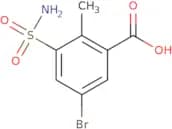
Discontinued product5-Bromo-2-methyl-3-sulfamoylbenzoic acid
CAS:<p>Versatile small molecule scaffold</p>Formula:C8H8BrNO4SPurity:Min. 95%Molecular weight:294.12 g/molRef: 3D-AFC47231
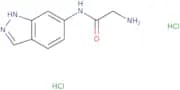
Discontinued product2-Amino-N-(2H-indazol-6-yl)acetamide dihydrochloride
CAS:<p>Versatile small molecule scaffold</p>Formula:C9H12Cl2N4OPurity:Min. 95%Molecular weight:263.12 g/molRef: 3D-AFC47212
Discontinued product6-(Trifluoromethyl)-2-azabicyclo[3.1.0]hexane hydrochloride
CAS:<p>Versatile small molecule scaffold</p>Formula:C6H9ClF3NPurity:Min. 95%Molecular weight:187.59 g/molRef: 3D-AFC47169
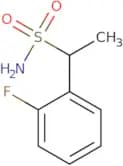
Discontinued product1-(2-Fluorophenyl)ethane-1-sulfonamide
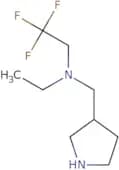
CAS:<p>Versatile small molecule scaffold</p>Formula:C8H10FNO2SPurity:Min. 95%Molecular weight:203.24 g/molEthyl(pyrrolidin-3-ylmethyl)(2,2,2-trifluoroethyl)amine
CAS:<p>Versatile small molecule scaffold</p>Formula:C9H17F3N2Purity:Min. 95%Molecular weight:210.24 g/molRef: 3D-AAC82034
Discontinued product1-{4H,6H,7H-Pyrano[4,3-d][1,3]thiazol-2-yl}ethan-1-amine
CAS:<p>Versatile small molecule scaffold</p>Formula:C8H12N2OSPurity:Min. 95%Molecular weight:184.26 g/molRef: 3D-AAC71900
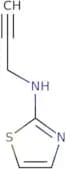
Discontinued productN-(Prop-2-yn-1-yl)-1,3-thiazol-2-amine
CAS:<p>N-(Prop-2-yn-1-yl)-1,3-thiazol-2-amine (P2Y) is a nonselective antagonist for the P2Y receptors. It has been shown to inhibit hyperplasia in the rat prostate and to reduce gland size in rabbits with induced hyperplasia. It also has been shown to be effective in preventing cancer development in an animal model. This drug is used as a pharmaceutical formulation to treat prostate conditions such as benign prostatic hyperplasia and prostatitis.</p>Formula:C6H6N2SPurity:Min. 95%Molecular weight:138.19 g/molRef: 3D-AAC67692
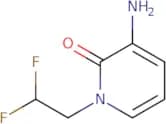
Discontinued product3-Amino-1-(2,2-difluoroethyl)-1,2-dihydropyridin-2-one
CAS:<p>Versatile small molecule scaffold</p>Formula:C7H8F2N2OPurity:Min. 95%Molecular weight:174.15 g/molRef: 3D-AAC64665
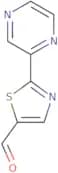
Discontinued product2-(Pyrazin-2-yl)-1,3-thiazole-5-carbaldehyde
CAS:Versatile small molecule scaffoldFormula:C8H5N3OSPurity:Min. 95%Molecular weight:191.21 g/molRef: 3D-AAC59409
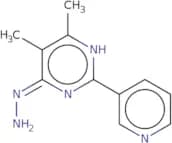
Discontinued product4-Hydrazinylidene-5,6-dimethyl-2-(pyridin-3-yl)-1,4-dihydropyrimidine
CAS:<p>Versatile small molecule scaffold</p>Formula:C11H13N5Purity:Min. 95%Molecular weight:215.3 g/molRef: 3D-AAC57157
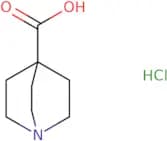
Discontinued productQuinuclidine-4-carboxylic acid hydrochloride
CAS:<p>Versatile small molecule scaffold</p>Formula:C8H14ClNO2Purity:Min. 95%Molecular weight:191.66 g/mol4-(Cyclopropylmethoxy)benzaldehyde
CAS:<p>4-(Cyclopropylmethoxy)benzaldehyde is a flavonoid that has been shown to be able to inhibit the activity of monoamine oxidase and monoamine oxidases. It also has a selectivity index of 38, which means it is more selective for inhibiting the enzyme MAO-A than MAO-B. 4-(Cyclopropylmethoxy)benzaldehyde is a dietary flavonoid that has been shown to have a variety of neurological benefits, including anti-inflammatory and anti-depressant effects.</p>Formula:C11H12O2Purity:Min. 95%Molecular weight:176.21 g/molRef: 3D-PGA52099
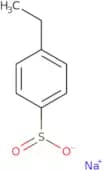
Discontinued productSodium 4-ethylbenzene-1-sulfinate
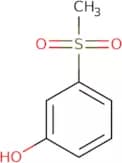
CAS:<p>Versatile small molecule scaffold</p>Formula:C8H9NaO2SPurity:Min. 95%Molecular weight:192.21 g/mol3-Methanesulfonylphenol
CAS:<p>3-Methanesulfonylphenol is a reactive and computationally descriptors, damages, neutralizing, piperidine, vector, oxygen species, molecular descriptors, antioxidant, phenolic lead compound that was synthesized for the purpose of identifying new potential antioxidants. 3-Methanesulfonylphenol has been shown to inhibit the oxidation of lipids and proteins in cells. It also has a strong antioxidant activity against peroxyl radicals and hydroxyl radicals. 3-Methanesulfonylphenol also inhibits the production of hydrogen peroxide by reacting with peroxides in vivo. This results in reduced levels of lipid hydroperoxides and protein carbonyls.</p>Formula:C7H8O3SPurity:Min. 95%Molecular weight:172.2 g/molRef: 3D-PAA76361
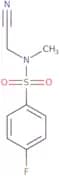
Discontinued product1-Cyano-S-(4-fluorophenyl)-N-methylmethanesulfonamido
CAS:<p>Versatile small molecule scaffold</p>Formula:C9H9FN2O2SPurity:Min. 95%Molecular weight:228.25 g/molRef: 3D-SAC04753
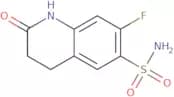
Discontinued product7-Fluoro-2-oxo-1,2,3,4-tetrahydroquinoline-6-sulfonamide
CAS:<p>Versatile small molecule scaffold</p>Formula:C9H9FN2O3SPurity:Min. 95%Molecular weight:244.24 g/molRef: 3D-SDC48271
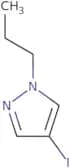
Discontinued product4-Iodo-1-propyl-1H-pyrazole
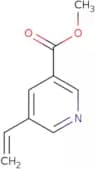
CAS:<p>Versatile small molecule scaffold</p>Formula:C6H9IN2Purity:Min. 95%Molecular weight:236.05 g/mol5-Vinylnicotinic acid methyl ester
CAS:<p>5-Vinylnicotinic acid methyl ester belongs to the group of antimicrobial agents. It is a chemical compound that has been shown to be effective against cervical cancer and may have potential as an anticancer drug. 5-Vinylnicotinic acid methyl ester inhibits the growth of human chorionic gonadotropin (HCG) in women, which is a hormone necessary for ovulation and pregnancy. This compound also inhibits the growth of viruses, such as herpes simplex virus type 1 (HSV-1), and bacteria, such as dittrichia sp., which causes inflammation of the throat. 5-Vinylnicotinic acid methyl ester has also been shown to inhibit protein synthesis in human osteosarcoma cells at low concentrations, but not at high concentrations.</p>Formula:C9H9NO2Purity:Min. 95%Molecular weight:163.17 g/molRef: 3D-NBA94067
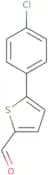
Discontinued product5-(4-Chlorophenyl)thiophene-2-carbaldehyde
CAS:<p>Versatile small molecule scaffold</p>Formula:C11H7ClOSPurity:Min. 95%Molecular weight:222.69 g/mol1-Methoxybicyclo[3.3.1]nonan-3-amine hydrochloride
CAS:<p>Versatile small molecule scaffold</p>Formula:C10H20ClNOPurity:Min. 95%Molecular weight:205.7 g/molRef: 3D-MRD34349
Discontinued product2-Amino-4H,5H,6H-cyclopenta[b]thiophene-3-carboxylic acid hydrochloride
CAS:<p>Versatile small molecule scaffold</p>Formula:C8H10ClNO2SPurity:Min. 95%Molecular weight:219.7 g/molRef: 3D-MRD34223
Discontinued product2-{Bicyclo[2.2.1]heptan-1-yl}ethan-1-amine hydrochloride
CAS:<p>Versatile small molecule scaffold</p>Formula:C9H18ClNPurity:Min. 95%Molecular weight:175.7 g/molRef: 3D-MRD33501
Discontinued product3-Methoxyazetidine-3-carboxamide hydrochloride
CAS:Versatile small molecule scaffoldFormula:C5H11ClN2O2Purity:Min. 95%Molecular weight:166.6 g/molRef: 3D-MRD33097
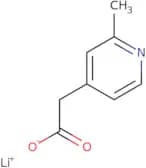
Discontinued product2-(2-methylpyridin-4-yl)acetate lithium
CAS:<p>Versatile small molecule scaffold</p>Formula:C8H8LiNO2Purity:Min. 95%Molecular weight:157.1 g/molRef: 3D-MRD33084
Discontinued product6-Chloroquinoline-7-carboxylic acid hydrochloride
CAS:<p>Versatile small molecule scaffold</p>Formula:C10H7Cl2NO2Purity:Min. 95%Molecular weight:244.1 g/molRef: 3D-MRD32323
Discontinued product1-(Dimethoxy-1,2-thiazol-4-yl)ethan-1-amine hydrochloride
CAS:<p>Versatile small molecule scaffold</p>Formula:C7H13ClN2O2SPurity:Min. 95%Molecular weight:224.7 g/molRef: 3D-MRD31462
Discontinued product(5-bromo-2-methoxypyridin-3-yl)methanamine
CAS:<p>Versatile small molecule scaffold</p>Formula:C7H9BrN2OPurity:Min. 95%Molecular weight:217.1 g/mol7-Oxa-1,3-diazaspiro[4.5]decane-2,4-dione
CAS:<p>Versatile small molecule scaffold</p>Formula:C7H10N2O3Purity:Min. 95%Molecular weight:170.2 g/molRef: 3D-SDC66034
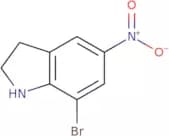
Discontinued product7-Bromo-5-nitroindoline
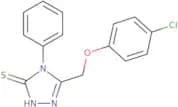
CAS:<p>7-Bromo-5-nitroindoline is a synthetic compound that has been shown to bind to auxin, which is a plant hormone. It has been used in photoaffinity labeling and can be used in the synthesis of other compounds. 7-Bromo-5-nitroindoline binds reversibly and covalently to auxin in the presence of light. The regiospecificity of this binding allows for the determination of specific properties of auxin binding. 7-Bromo-5-nitroindoline is also used as a tritiated label in syntheses and as a deuterated label for photoaffinity labeling.</p>Formula:C8H7BrN2O2Purity:Min. 95%Molecular weight:243.06 g/mol5-(4-Chlorophenoxymethyl)-4-phenyl-4H-1,2,4-triazole-3-thiol
CAS:<p>Versatile small molecule scaffold</p>Formula:C15H12ClN3OSPurity:Min. 95%Molecular weight:317.8 g/molRef: 3D-TCA21226
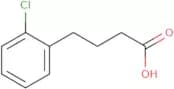
Discontinued product2-Chloro-benzenebutanoic acid
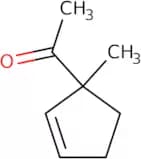
CAS:<p>Versatile small molecule scaffold</p>Formula:C10H11ClO2Purity:Min. 95%Molecular weight:198.65 g/mol1-(1-Methylcyclopent-2-en-1-yl)ethan-1-one
CAS:<p>Versatile small molecule scaffold</p>Formula:C8H12OPurity:Min. 95%Molecular weight:124.18 g/molRef: 3D-TCA75216
Discontinued product1-{5H,6H,7H,8H-Pyrido[4,3-c]pyridazin-3-yl}pyrrolidine dihydrochloride
CAS:<p>Versatile small molecule scaffold</p>Formula:C11H18Cl2N4Purity:Min. 95%Molecular weight:277.2 g/molRef: 3D-TID58230
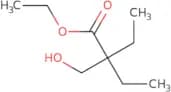
Discontinued productEthyl 2-ethyl-2-(hydroxymethyl)butanoate
CAS:<p>Versatile small molecule scaffold</p>Formula:C9H18O3Purity:Min. 95%Molecular weight:174.24 g/molRef: 3D-TJA83598
Discontinued product5-(Trifluoromethyl)benzo[D]isoxazol-3-amine
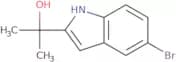
CAS:<p>Versatile small molecule scaffold</p>Formula:C8H5F3N2OPurity:Min. 95%Molecular weight:202.14 g/mol2-(5-Bromo-1H-indol-2-yl)propan-2-ol
CAS:<p>Versatile small molecule scaffold</p>Formula:C11H12BrNOPurity:Min. 95%Molecular weight:254.12 g/molRef: 3D-TJB69202
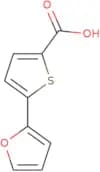
Discontinued product5-(Fur-2-yl)thiophene-2-carboxylic acid
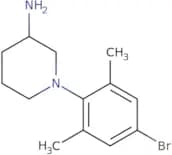
CAS:<p>Versatile small molecule scaffold</p>Formula:C9H6O3SPurity:Min. 95%Molecular weight:194.21 g/mol1-(4-Bromo-2,6-dimethylphenyl)piperidin-3-amine
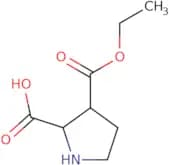
CAS:<p>Versatile small molecule scaffold</p>Formula:C13H19BrN2Purity:Min. 95%Molecular weight:283.21 g/molrac-(2R,3S)-3-(Ethoxycarbonyl)pyrrolidine-2-carboxylic acid
CAS:<p>Versatile small molecule scaffold</p>Formula:C8H13NO4Purity:Min. 95%Molecular weight:187.2 g/molRef: 3D-TTD96447
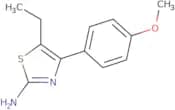
Discontinued product5-Ethyl-4-(4-methoxy-phenyl)-thiazol-2-ylamine
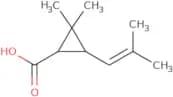
CAS:<p>Versatile small molecule scaffold</p>Formula:C12H14N2OSPurity:Min. 95%Molecular weight:234.32 g/molChrysanthemic acid
CAS:<p>Chrysanthemic acid is a chiral molecule that has been shown to have anti-inflammatory properties. The hydroxyl group in the molecule reacts with malonic acid, forming a chrysanthemic ester. Chrysanthemic acid is also known as an analytical method for determining the degree of unsaturation of fatty acids. Chrysanthemic acid is used in the synthesis of monoclonal antibodies, which can be applied for the treatment and prevention of diseases such as cancer, rheumatoid arthritis, Crohn's disease, and other autoimmune disorders. It can also be used to treat infections caused by bacteria that are resistant to antibiotics. The basic structure of chrysanthemic acid is an inorganic acid that contains a hydroxyl group and an asymmetric carbon atom.</p>Formula:C10H16O2Purity:Min. 95%Molecular weight:168.23 g/mol1-[(tert-butoxy)carbonyl]azepane-2-carboxylic acid
CAS:<p>Versatile small molecule scaffold</p>Formula:C12H21NO4Purity:Min. 95%Molecular weight:243.3 g/mol1-Methanesulfonyl-2-methylpropan-2-amine hydrochloride
CAS:<p>Versatile small molecule scaffold</p>Formula:C5H14ClNO2SPurity:Min. 95%Molecular weight:187.69 g/molRef: 3D-JRA09577
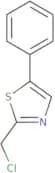
Discontinued product2-(Chloromethyl)-5-phenyl-1,3-thiazole
CAS:<p>Versatile small molecule scaffold</p>Formula:C10H8ClNSPurity:Min. 95%Molecular weight:209.7 g/molRef: 3D-JJB47058
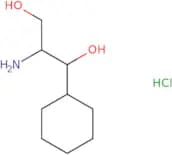
Discontinued product2-Amino-1-cyclohexylpropane-1,3-diol hydrochloride
CAS:<p>Versatile small molecule scaffold</p>Formula:C9H20ClNO2Purity:Min. 95%Molecular weight:209.71 g/molRef: 3D-JJB05329
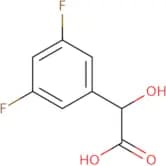
Discontinued productBenzeneacetic acid, 3,5-difluoro-hydroxy-, (S)-
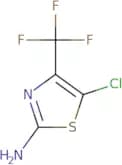
CAS:<p>Benzeneacetic acid, 3,5-difluoro-hydroxy-, (S)- is a ligand that can bind to transition metals such as copper or iron. It has been shown to be a good sensing ligand for the detection of mandelate and enantioselective for the synthesis of chiral molecules. The divalent bonding between the benzeneacetic acid and the metal may be due to coordination or dipyridyl. The stability of this molecule is also dependent on the type of metal it is bonded with.</p>Formula:C8H6F2O3Purity:Min. 95%Molecular weight:188.13 g/mol5-Chloro-4-(trifluoromethyl)-1,3-thiazol-2-amine
CAS:Versatile small molecule scaffoldFormula:C4H2ClF3N2SPurity:Min. 95%Molecular weight:202.59 g/mol{Bicyclo[2.2.2]oct-5-en-2-yl}methanamine hydrochloride
CAS:<p>Versatile small molecule scaffold</p>Formula:C9H16ClNPurity:Min. 95%Molecular weight:173.68 g/molRef: 3D-JBD31357
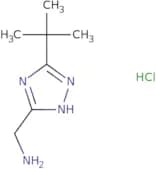
Discontinued product(5-tert-Butyl-1H-1,2,4-triazol-3-yl)methanamine hydrochloride
CAS:<p>Versatile small molecule scaffold</p>Formula:C7H15ClN4Purity:Min. 95%Molecular weight:190.67 g/molRef: 3D-JBD31251
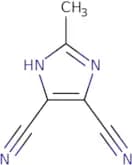
Discontinued product2-Methyl-1H-imidazole-4,5-dicarbonitrile
CAS:<p>Versatile small molecule scaffold</p>Formula:C6H4N4Purity:Min. 95%Molecular weight:132.12 g/mol4-[2-(Trimethylsilyl)ethyl]aniline
CAS:<p>Versatile small molecule scaffold</p>Formula:C11H19NSiPurity:Min. 95%Molecular weight:193.36 g/molRef: 3D-SAA96195
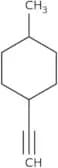
Discontinued product1-Ethynyl-4-methylcyclohexane
CAS:<p>Versatile small molecule scaffold</p>Formula:C9H14Purity:Min. 95%Molecular weight:122.21 g/molRef: 3D-RMC91882
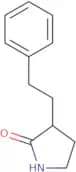
Discontinued product3-(2-Phenylethyl)pyrrolidin-2-one
CAS:<p>Versatile small molecule scaffold</p>Formula:C12H15NOPurity:Min. 95%Molecular weight:189.25 g/molRef: 3D-RMC53079
Discontinued product1-tert-Butyl-5-iodo-1H-pyrazole-4-carboxylic acid
CAS:<p>Versatile small molecule scaffold</p>Formula:C8H11IN2O2Purity:Min. 95%Molecular weight:294.09 g/molRef: 3D-RMC25290
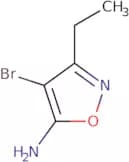
Discontinued product4-Bromo-3-ethyl-1,2-oxazol-5-amine
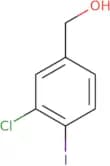
CAS:<p>Versatile small molecule scaffold</p>Formula:C5H7BrN2OPurity:Min. 95%Molecular weight:191.03 g/mol3-Chloro-4-iodobenzyl alcohol
CAS:<p>Versatile small molecule scaffold</p>Formula:C7H6OClIPurity:Min. 95%Molecular weight:268.47 g/molRef: 3D-RGA38660
Discontinued product1-[4-(4-Chlorophenyl)-5-methyl-1,3-thiazol-2-yl]ethan-1-amine
CAS:<p>Versatile small molecule scaffold</p>Formula:C12H13ClN2SPurity:Min. 95%Molecular weight:252.76 g/molRef: 3D-SAB92946
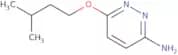
Discontinued product6-(3-Methylbutoxy)pyridazin-3-amine
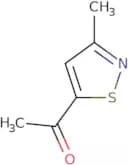
CAS:<p>Versatile small molecule scaffold</p>Formula:C9H15N3OPurity:Min. 95%Molecular weight:181.23 g/mol1-(3-Methyl-isothiazol-5-yl)-ethanone
CAS:<p>Versatile small molecule scaffold</p>Formula:C6H7NOSPurity:Min. 95%Molecular weight:141.19 g/molRef: 3D-QDA72449
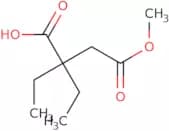
Discontinued product2,2-Diethyl-4-methoxy-4-oxobutanoic acid
CAS:<p>Versatile small molecule scaffold</p>Formula:C9H16O4Purity:Min. 95%Molecular weight:188.22 g/molRef: 3D-QDA64779
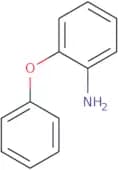
Discontinued product2-Phenoxyaniline
CAS:<p>2-Phenoxyaniline is a nitro compound that can be converted to the corresponding palladium complexes. It is an inhibitor of the acylation reaction, which is a type of chemical reaction in which an organic molecule reacts with an acid. The inhibition of this reaction has been shown to have an effect on heart disease, specifically by lowering cholesterol levels and reducing atherosclerosis. 2-Phenoxyaniline has also been shown to inhibit the activation energy for electron transfer reactions, making it useful as a catalyst in analytical methods. 2-Phenoxyaniline also undergoes vibrational spectroscopy when exposed to liquid chromatography and other analytical methods.</p>Formula:C12H11NOPurity:Min. 95%Color and Shape:Brown PowderMolecular weight:185.22 g/mol2-Bromo-3,3,3-trifluoro-1-propene
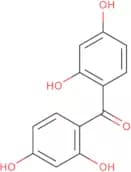
CAS:Controlled Product<p>2-Bromo-3,3,3-trifluoro-1-propene is a chemical compound that has been synthesized in an asymmetric reaction. The reactant is bromopropane and the product is 2,2,2-trifluoropropene. The methylene group on the propene molecule is activated by the nucleophilic attack of a fluoride ion from hydrogen fluoride to form a cavity with a highly strained bond. The kinetic study of this reaction revealed that the activation energy for the reaction is 42 kJ/mol. Palladium-catalyzed coupling reactions are catalyzed by palladium and require nonpolar solvents such as toluene or dichloromethane. This type of reaction has been shown to be exothermic with an isolated yield of 1%.</p>Formula:C3H2BrF3Purity:Min. 95%Color and Shape:Colorless PowderMolecular weight:174.95 g/mol2,2',4,4'-tetrahydroxybenzophenone
CAS:<p>2,2',4,4'-tetrahydroxybenzophenone is a hydroxylated benzophenone that has immunomodulatory effects. It binds to the receptor in the immune system and can cause an increase in cytokine production. 2,2',4,4'-tetrahydroxybenzophenone is cytotoxic and has significant toxicity in vitro. The molecule has been shown to disrupt mitochondrial membrane potential. This may be due to its ability to form hydrogen bonds with molecules on the mitochondrial membrane. 2,2',4,4'-tetrahydroxybenzophenone also modulates transcriptional regulation of genes involved in cell proliferation and apoptosis. The drug is detectable at low levels by mass spectrometry and is not known to have any toxicological effects.END>></p>Formula:C13H10O5Purity:Min. 95%Color and Shape:Green PowderMolecular weight:246.22 g/molRef: 3D-FT55663
Discontinued product2-Acetylbenzoic acid
CAS:<p>2-Acetylbenzoic acid is a functional molecule that contains an acetyl group. It can form hydrogen bonds with other molecules and has been shown to induce apoptosis in cells. The reaction products of 2-acetylbenzoic acid are malonic acid, acetylsalicylic acid, and 2-benzoylbenzoic acid. These three compounds are made by the addition of hydrogen or hydroxide to the molecule 2-acetylbenzoic acid. The molecule has two functional groups: a carbonyl group and an acetyl group. The chemical structure of this molecule can be seen in the figure below.<br>2-Acetylbenzoic Acid</p>Formula:C9H8O3Purity:Min. 95%Color and Shape:PowderMolecular weight:164.16 g/molRef: 3D-FA05086
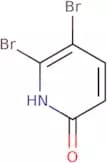
Discontinued product5,6-Dibromopyridin-2-ol
CAS:<p>Versatile small molecule scaffold</p>Formula:C5H3Br2NOPurity:Min. 95%Molecular weight:252.89 g/moltert-Butyl 5-bromo-3,4-dihydro-2,7-naphthyridine-2(1H)-carboxylate
CAS:<p>Versatile small molecule scaffold</p>Formula:C13H17BrN2O2Purity:Min. 95%Molecular weight:313.19 g/mol3-Methylbenzo[b]thiophene-2-carboxylic acid
CAS:<p>3-Methylbenzo[b]thiophene-2-carboxylic acid (MBTCA) is a heterocyclic compound that is an intermediate in the synthesis of 3-methylthiophene-2-carboxylic acid, a precursor to other drugs. MBTCA is an aerobic, nonpolar compound that has shown antimicrobial activity against some bacteria and fungi. It also has been shown to have practicality as a biomolecular probe for methyl groups in organic solvents. MBTCA can be synthesized by nitration of benzene in the presence of sulfur and sulfoxides. This reaction produces nitrobenzene, which can then be oxidized by potassium permanganate or hydrogen peroxide to produce MBTCA. The most common isomer of MBTCA is 2-(3,5-dimethoxybenzylidene)tetrahydrofuran, with three methyl groups on the</p>Formula:C10H8O2SPurity:Min. 95%Molecular weight:192.23 g/mol4-(Methylamino)benzene-1-sulfonamide
CAS:<p>Versatile small molecule scaffold</p>Formula:C7H10N2O2SPurity:Min. 95%Molecular weight:186.23 g/mol1-[3-(Dimethylamino)propyl]-1-(4-fluorophenyl)-1,3-dihydro-3-oxo-5-isobenzofurancarbonitrile
CAS:<p>Please enquire for more information about 1-[3-(Dimethylamino)propyl]-1-(4-fluorophenyl)-1,3-dihydro-3-oxo-5-isobenzofurancarbonitrile including the price, delivery time and more detailed product information at the technical inquiry form on this page</p>Formula:C20H19FN2O2Purity:Min. 95%Molecular weight:338.38 g/molRef: 3D-FD184085
Discontinued product3-amino-6-bromopyridin-2-ol hydrobromide
CAS:<p>Versatile small molecule scaffold</p>Formula:C5H6Br2N2OPurity:Min. 95%Molecular weight:269.9 g/mol3-(Methoxycarbonyl)pyridine-4-carboxylic acid
CAS:<p>Versatile small molecule scaffold</p>Formula:C8H7NO4Purity:Min. 95%Molecular weight:181.15 g/molH-Ser-Ala-Glu-Glu-Tyr-Glu-Tyr-Pro-Ser OH trifluoroacetate
CAS:<p>Please enquire for more information about H-Ser-Ala-Glu-Glu-Tyr-Glu-Tyr-Pro-Ser OH trifluoroacetate including the price, delivery time and more detailed product information at the technical inquiry form on this page</p>Formula:C47H63N9O20•(C2HF3O2)xPurity:Min. 95%Ref: 3D-FS183525
Discontinued productGivinostat hydrochloride
CAS:<p>Givinostat hydrochloride is a research chemical that has shown potential in various fields. It is a molybdenum-based compound that has been studied for its effects on dopamine release and hydrogen evolution. Givinostat hydrochloride has also been investigated as an osteoclast inhibitor, which may be beneficial in the treatment of bone-related disorders such as osteoporosis. Additionally, it has shown promise as a retinoid and calpain inhibitor, suggesting its potential use in dermatological conditions and neurodegenerative diseases. The compound contains fluorine atoms, making it suitable for imaging studies using fluorine MRI techniques. Givinostat hydrochloride has been tested on MDA-MB-231 cells and has shown inhibitory effects on their growth, indicating its potential as an anticancer agent.</p>Formula:C24H27N3O4·HClPurity:Min. 95%Molecular weight:457.95 g/mol

![1-[(3-Methylphenyl)carbamoyl]piperidine-3-carboxylic acid](/_next/image/?url=https%3A%2Fstatic.cymitquimica.com%2Fproducts%2F3D%2Fthumb-webp%2FBMB23836.webp&w=3840&q=75)
![2-Chloro-N-[4-(1-pyrrolidinyl)phenyl]acetamide](/_next/image/?url=https%3A%2Fstatic.cymitquimica.com%2Fproducts%2F3D%2Fthumb-webp%2FBKA09715.webp&w=3840&q=75)
![4-Chloro-3-methyl-[1,2]oxazolo[5,4-d]pyrimidine](/_next/image/?url=https%3A%2Fstatic.cymitquimica.com%2Fproducts%2F3D%2Fthumb-webp%2FBCA85060.webp&w=3840&q=75)
![Ethyl 1,4-dioxaspiro[4.5]dec-8-ylideneacetate](/_next/image/?url=https%3A%2Fstatic.cymitquimica.com%2Fproducts%2F3D%2Fthumb-webp%2FBCA65691.webp&w=3840&q=75)
![[1-(Pyrrolidin-2-ylmethyl)pyrrolidin-2-yl]methanol](/_next/image/?url=https%3A%2Fstatic.cymitquimica.com%2Fproducts%2F3D%2Fthumb-webp%2FAFC98706.webp&w=3840&q=75)
![6-(Trifluoromethyl)-2-azabicyclo[3.1.0]hexane hydrochloride](/_next/image/?url=https%3A%2Fstatic.cymitquimica.com%2Fproducts%2F3D%2Fthumb-webp%2FAFC47169.webp&w=3840&q=75)
![1-{4H,6H,7H-Pyrano[4,3-d][1,3]thiazol-2-yl}ethan-1-amine](/_next/image/?url=https%3A%2Fstatic.cymitquimica.com%2Fproducts%2F3D%2Fthumb-webp%2FAAC71900.webp&w=3840&q=75)

![1-Methoxybicyclo[3.3.1]nonan-3-amine hydrochloride](/_next/image/?url=https%3A%2Fstatic.cymitquimica.com%2Fproducts%2F3D%2Fthumb-webp%2FMRD34349.webp&w=3840&q=75)
![2-Amino-4H,5H,6H-cyclopenta[b]thiophene-3-carboxylic acid hydrochloride](/_next/image/?url=https%3A%2Fstatic.cymitquimica.com%2Fproducts%2F3D%2Fthumb-webp%2FMRD34223.webp&w=3840&q=75)
![2-{Bicyclo[2.2.1]heptan-1-yl}ethan-1-amine hydrochloride](/_next/image/?url=https%3A%2Fstatic.cymitquimica.com%2Fproducts%2F3D%2Fthumb-webp%2FMRD33501.webp&w=3840&q=75)


![7-Oxa-1,3-diazaspiro[4.5]decane-2,4-dione](/_next/image/?url=https%3A%2Fstatic.cymitquimica.com%2Fproducts%2F3D%2Fthumb-webp%2FSDC66034.webp&w=3840&q=75)
![1-{5H,6H,7H,8H-Pyrido[4,3-c]pyridazin-3-yl}pyrrolidine dihydrochloride](/_next/image/?url=https%3A%2Fstatic.cymitquimica.com%2Fproducts%2F3D%2Fthumb-webp%2FTID58230.webp&w=3840&q=75)
![5-(Trifluoromethyl)benzo[D]isoxazol-3-amine](/_next/image/?url=https%3A%2Fstatic.cymitquimica.com%2Fproducts%2F3D%2Fthumb-webp%2FTJB27114.webp&w=3840&q=75)
![1-[(tert-butoxy)carbonyl]azepane-2-carboxylic acid](/_next/image/?url=https%3A%2Fstatic.cymitquimica.com%2Fproducts%2F3D%2Fthumb-webp%2FJRB70826.webp&w=3840&q=75)

![{Bicyclo[2.2.2]oct-5-en-2-yl}methanamine hydrochloride](/_next/image/?url=https%3A%2Fstatic.cymitquimica.com%2Fproducts%2F3D%2Fthumb-webp%2FJBD31357.webp&w=3840&q=75)
![4-[2-(Trimethylsilyl)ethyl]aniline](/_next/image/?url=https%3A%2Fstatic.cymitquimica.com%2Fproducts%2F3D%2Fthumb-webp%2FSAA96195.webp&w=3840&q=75)

![1-[4-(4-Chlorophenyl)-5-methyl-1,3-thiazol-2-yl]ethan-1-amine](/_next/image/?url=https%3A%2Fstatic.cymitquimica.com%2Fproducts%2F3D%2Fthumb-webp%2FSAB92946.webp&w=3840&q=75)



![3-Methylbenzo[b]thiophene-2-carboxylic acid](/_next/image/?url=https%3A%2Fstatic.cymitquimica.com%2Fproducts%2F3D%2Fthumb-webp%2FDAA13378.webp&w=3840&q=75)

![1-[3-(Dimethylamino)propyl]-1-(4-fluorophenyl)-1,3-dihydro-3-oxo-5-isobenzofurancarbonitrile](/_next/image/?url=https%3A%2Fstatic.cymitquimica.com%2Fproducts%2F3D%2Fthumb-webp%2FFD184085.webp&w=3840&q=75)



